Period 6, Day 1: Boss Tweed & the Gilded Age
star
star
star
star
star
Last updated about 2 years ago
17 Nsɛmmisa
Hyɛ no nsow a efi ɔkyerɛwfo no hɔ:
0
0
0
Ɛhia
1
Ɛhia
1
1
1
1
Ɛhia
1
0
Content Objective: I will be able to contextualize the Gilded Age and explain how Boss Tweed is emblematic of larger societal issues.
Standard Objective: I will be able to draw reasonable inferences and logical conclusions from a political cartoon.
Absent? Just want to review the slides? Click here!
Content Objective: I will be able to contextualize the Gilded Age and explain how Boss Tweed is emblematic of larger societal issues.
Standard Objective: I will be able to draw reasonable inferences and logical conclusions from a political cartoon.
Absent? Just want to review the slides? Click here!
Warm Up: Please rate how well you understood last night's pre-work on a scale from 1 to 4. If you have any questions, drop them in the "Show Your Work" area.
Warm Up: Do you consider yourself to be funny? Explain your sense of humor. Provide examples as necessary!
Warm Up: One interesting historical fact I learned from the pre-work is…
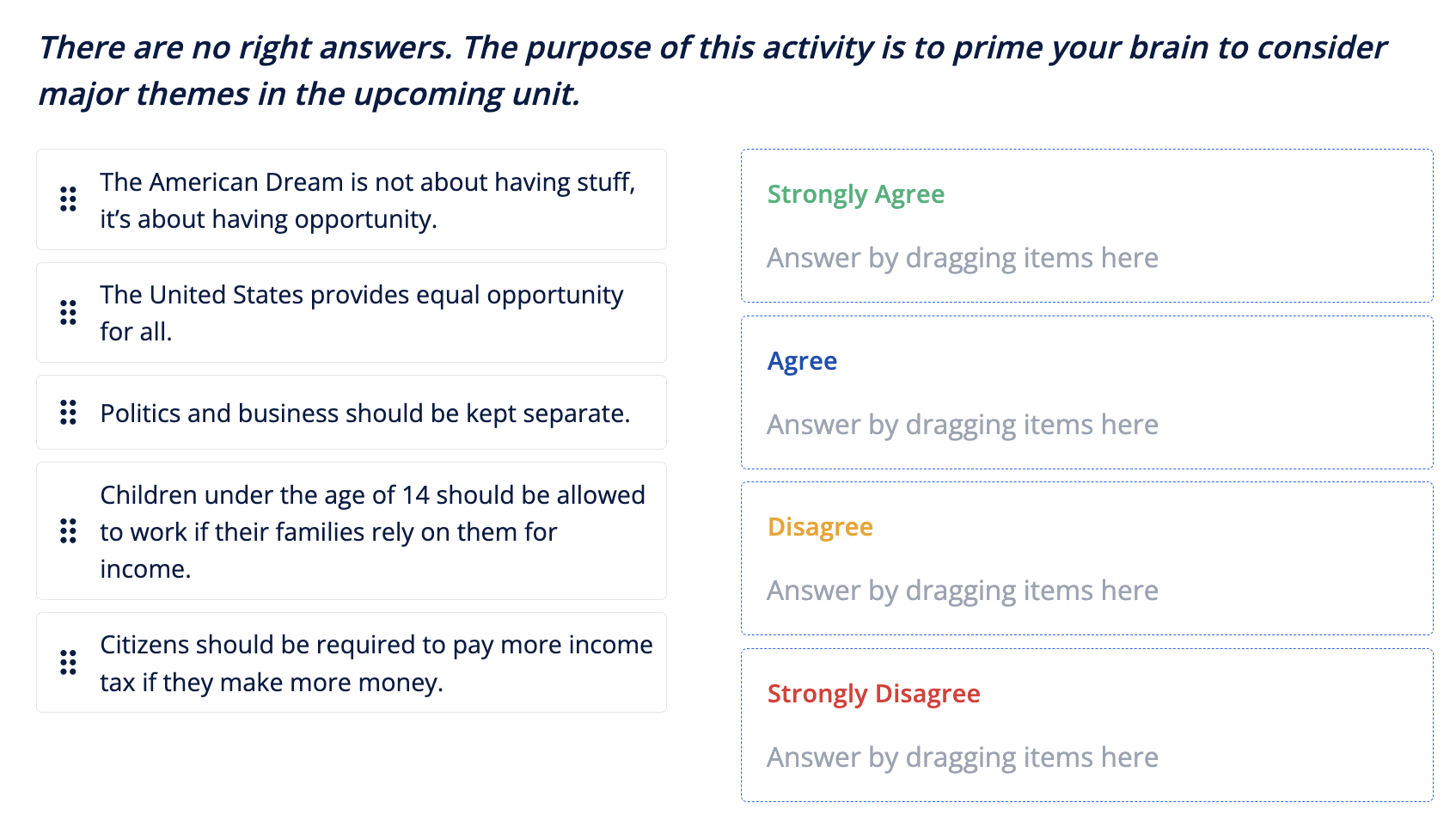
Four Corners Reflection: Yesterday, we discussed the following statements.
What was one thing that surprised you about our conversation?
What was one thing you learned about yourself?
What was one thing you learned about others?
The Gilded Age (1860-1896) was characterized by a lack of
The political party system was characterized by a
Think-Pair-Share: The act of “gilding” is to cover something in a thin layer of gold. Where do you think the “Gilded” Age gets its name from?
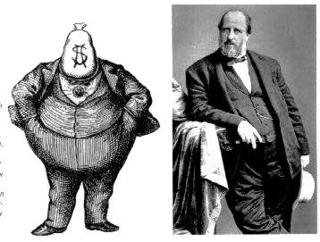
William Magear Tweed was an American politician. Most notably depicted as the “boss” of Tammany Hall, the Democratic Party headquarters, “Boss Tweed” ran the “
Thomas Nast was a German-born American
A political cartoon is a cartoon that makes a
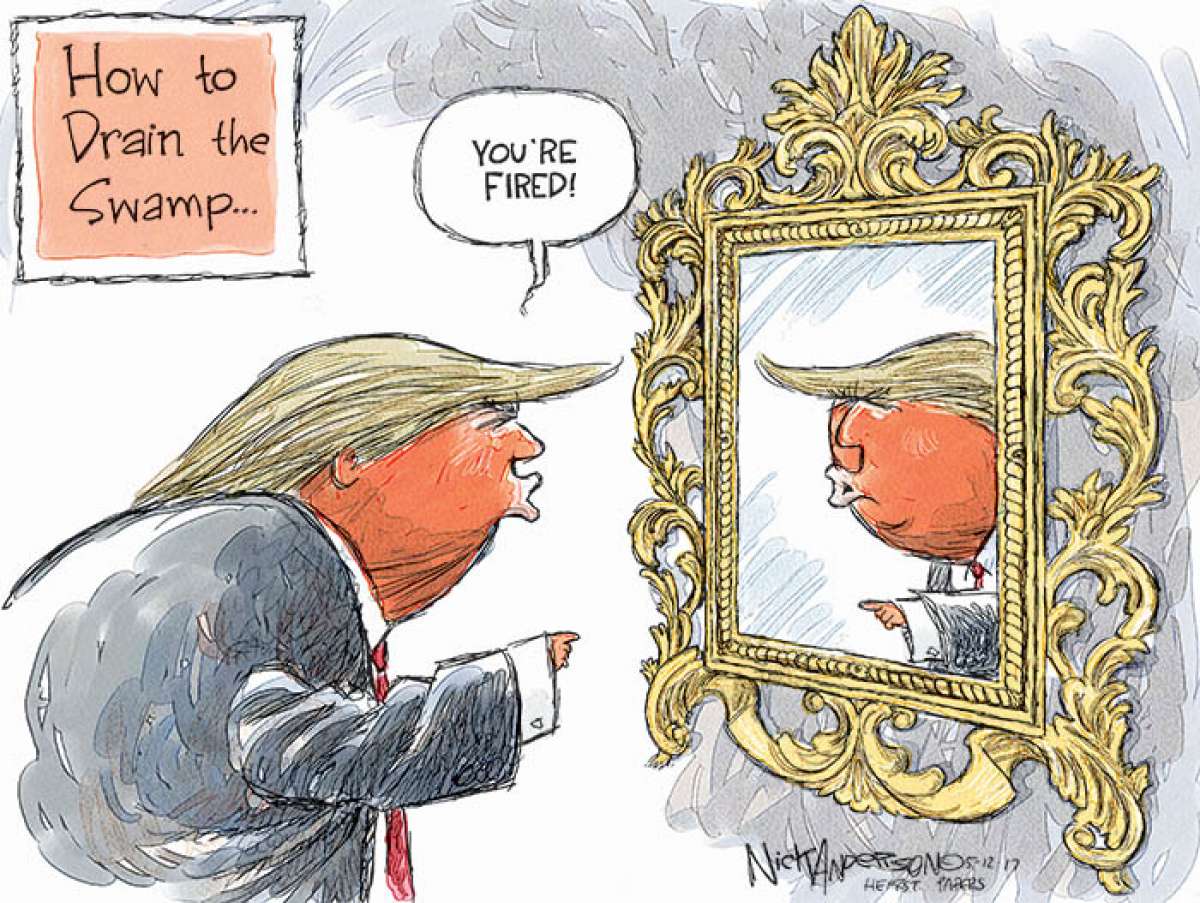
Think-Pair-Share: Why would some people consider this political cartoon to be funny?
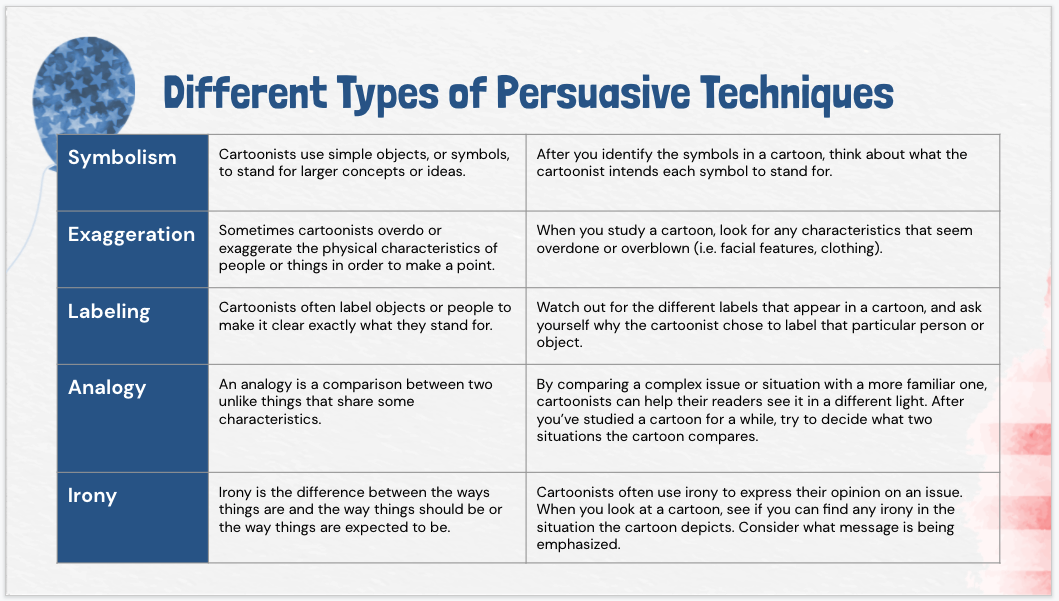
Cartoonists use several methods, or
However, don’t assume their message is truth; consider any potential
If you want to review the examples we went over in class, they are available on slide #20-24 here.
Think-Pair-Share: Why would some people consider this political cartoon to be ironic?
Thursday, 2/15 Warm Up: Have you noticed any examples of persuasive techniques in your everyday since we went over them yesterday? Explain.
Irony, Symbolism, Analogy, Exaggeration, Labeling
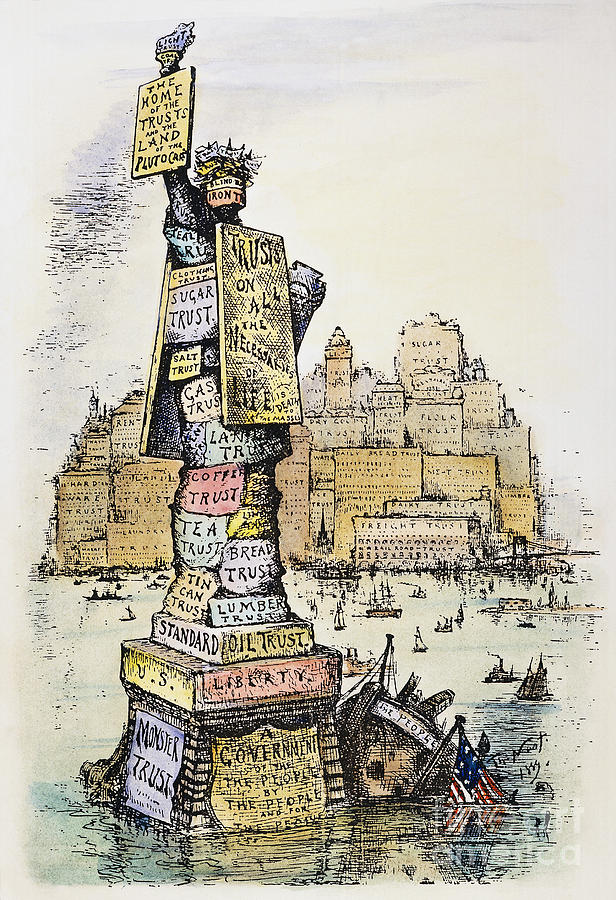
Applying Knowledge: Let's take a look at another political cartoon from the time period we're studying.
Meet the Cartoon: What do you notice first? (Circle the 3 most obvious elements in "Show Your Work")
Observe the Visuals: List the people, objects, and places. Consider actions or activities as you caption each element. Which ones do you think are symbolic?
Consider the Words: Which words or phrases are most significant? List adjectives that describe the emotions portrayed in your captions.
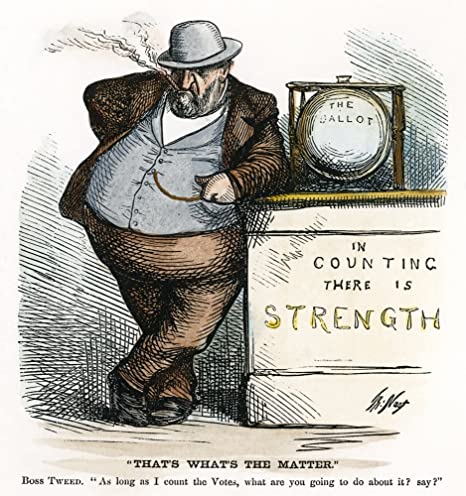
4. Dig Even Deeper: Who drew this cartoon? What do we know about them? When is it from? What was happening historically at the time it was created?
5. Use as Evidence: What is the overall message of this image?
Exit Ticket: Which persuasive techniques were used in the Boss Tweed political cartoon?
Exit Ticket: Please evaluate how well you understood today’s lesson on a scale from 1 to 4: