APUSH Chapter 24 - Industry Comes of Age (1865-1900) - SY23
star
star
star
star
star
Last updated about 2 years ago
22 Nsɛmmisa
Ɛhia
0
Ɛhia
0
Have you ever played the board game Monopoly before?
If so, practice contextualizing by explaining how to play it.
If no, look it up via Google and explain it in your own words.
Guided Viewing: In your own words, what is a monopoly?
Guided Viewing: Why did Lizzie McGee create the Monopoly board game?
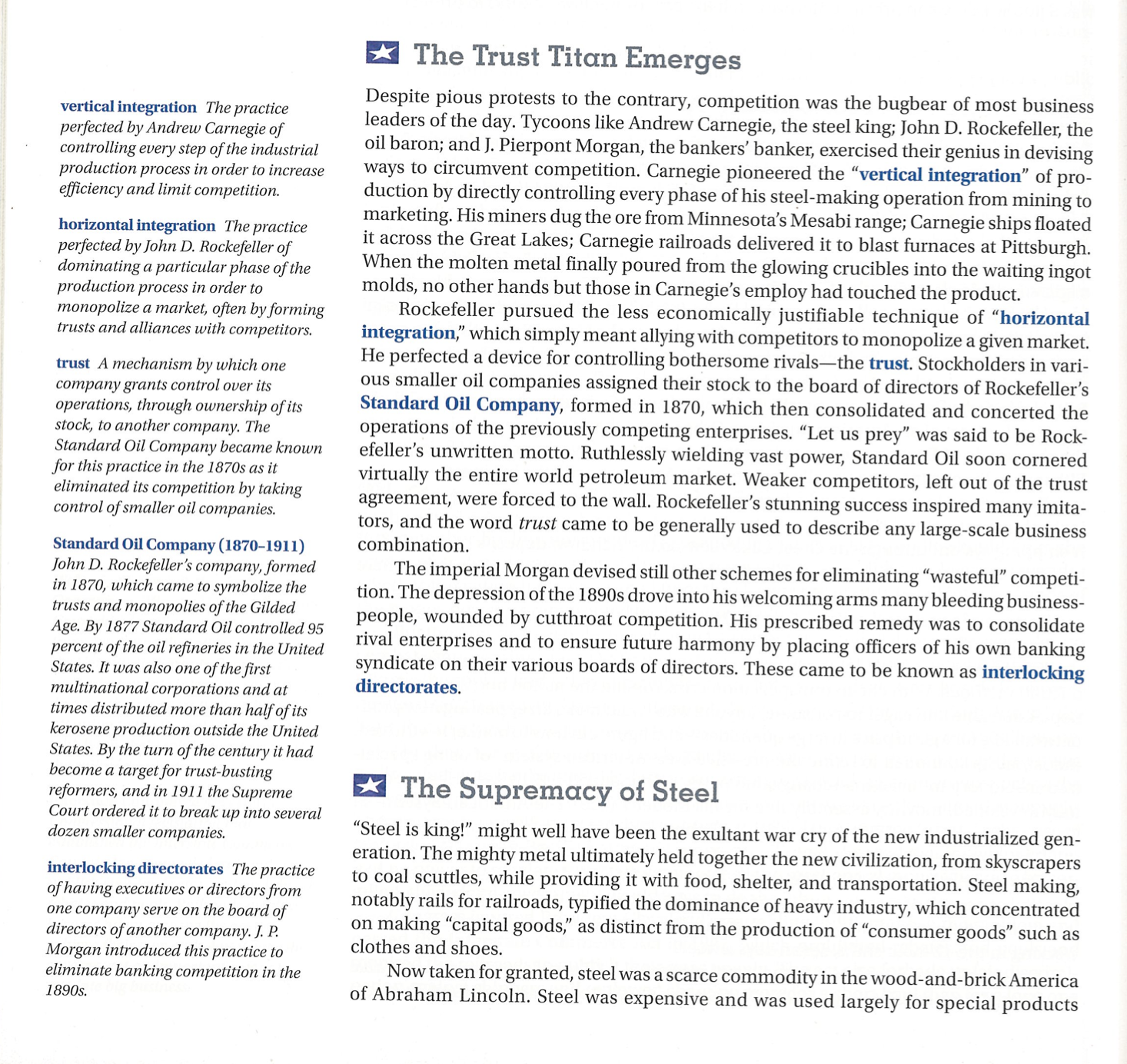
John D. Rockefeller was able to monopolize the oil industry by
Draw a picture to demonstrate your understanding of how Carnegie used vertical integration to become the "Steel King."
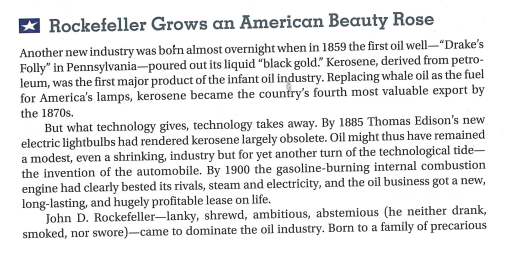
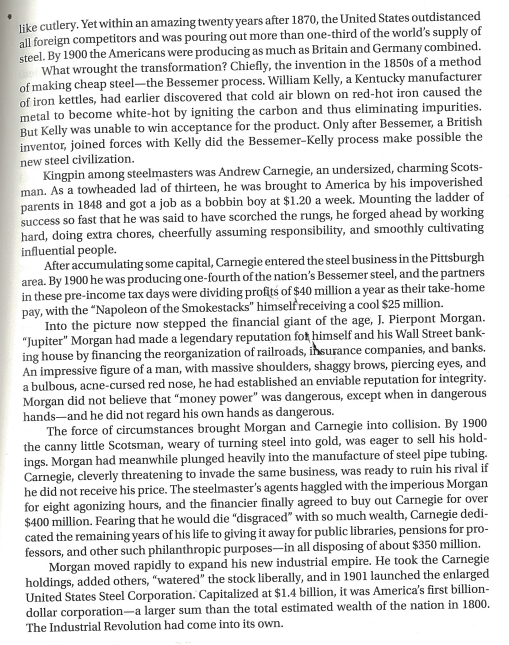
America's first billion-dollar corporation was
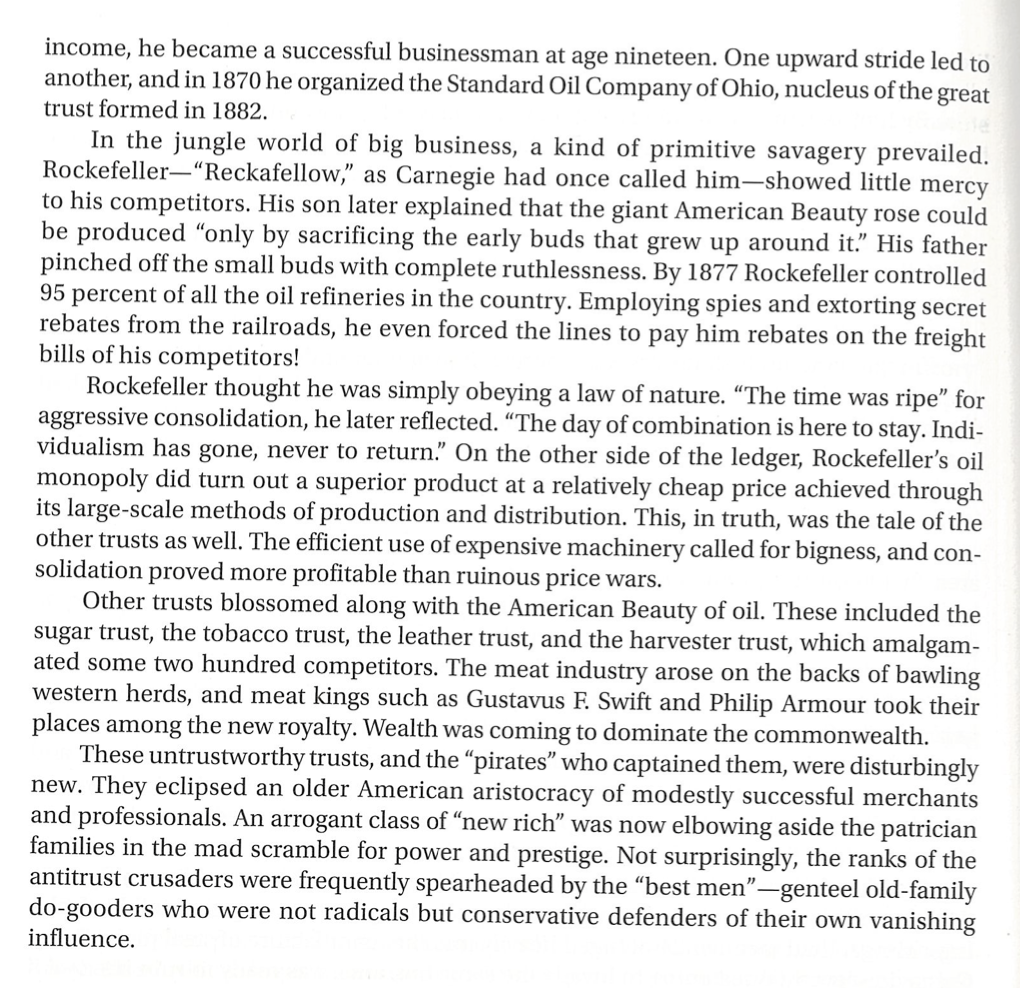
As used throughout the 3rd full paragraph, "trust" most nearly means

That's all that is due for Thursday, 2/23/2023. Any questions?
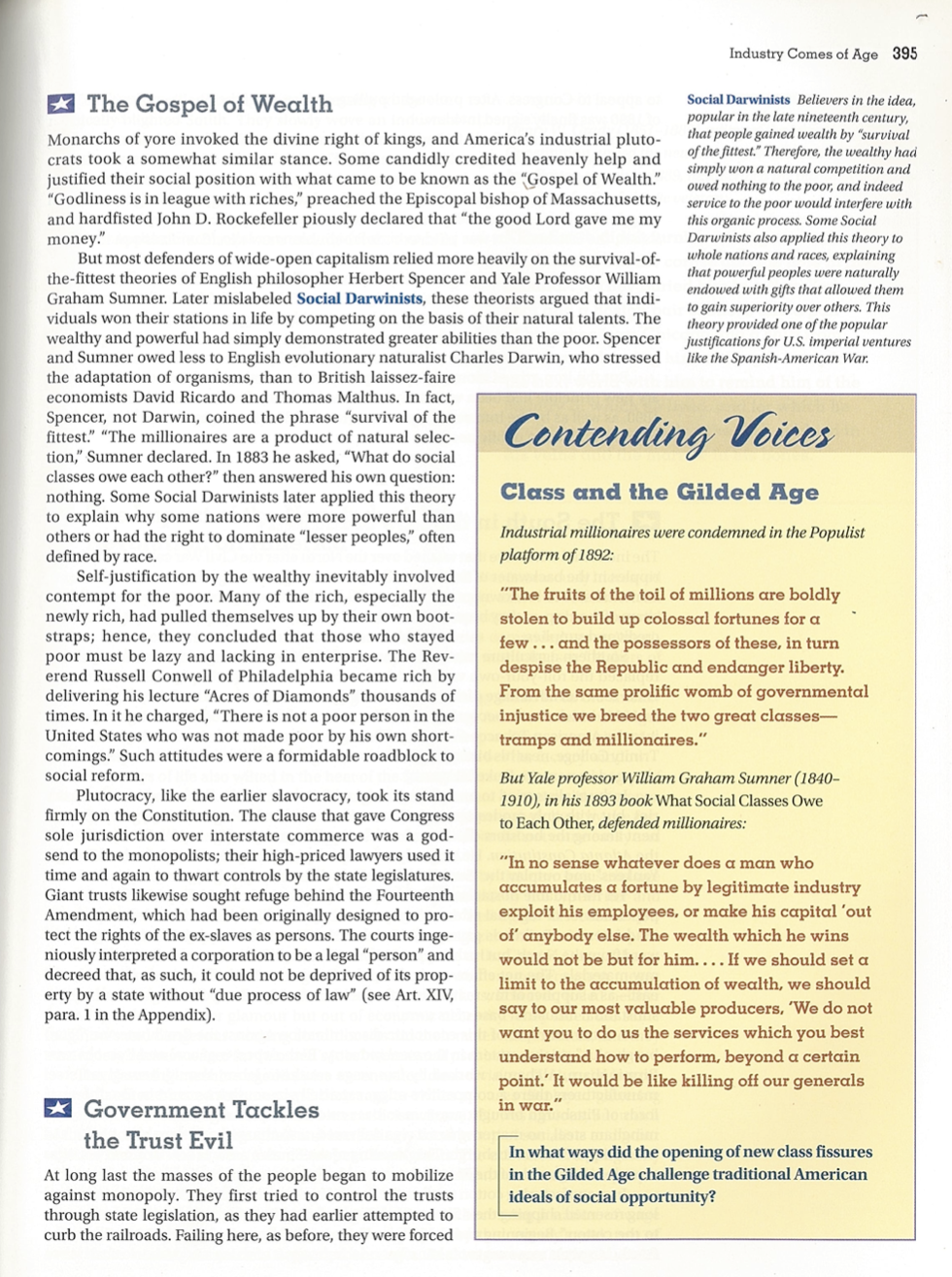
The phrase “survival of the fittest” was coined by
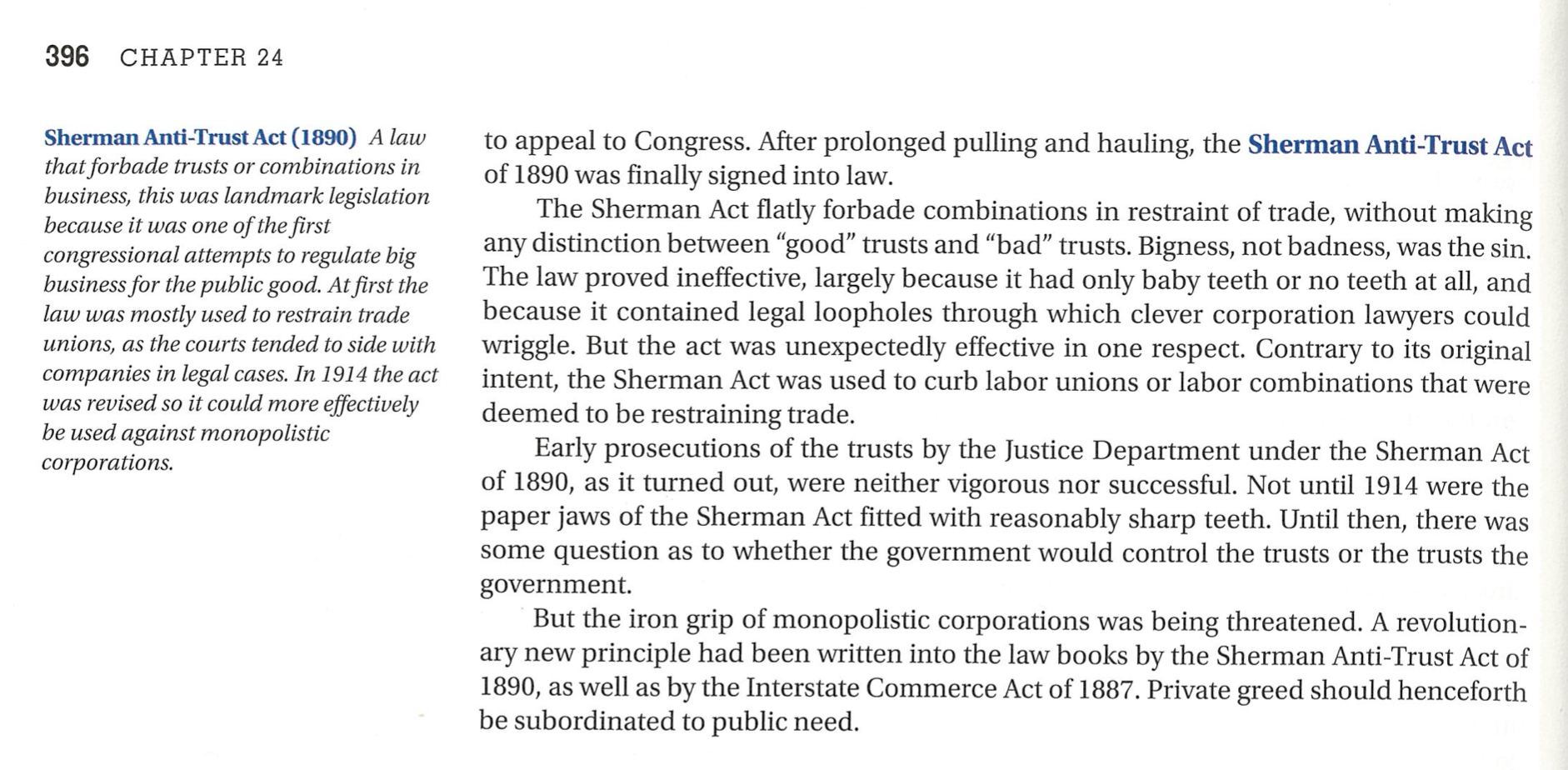
Contrary to its original intent, the Sherman Anti-Trust Act was at first used to curb the power of
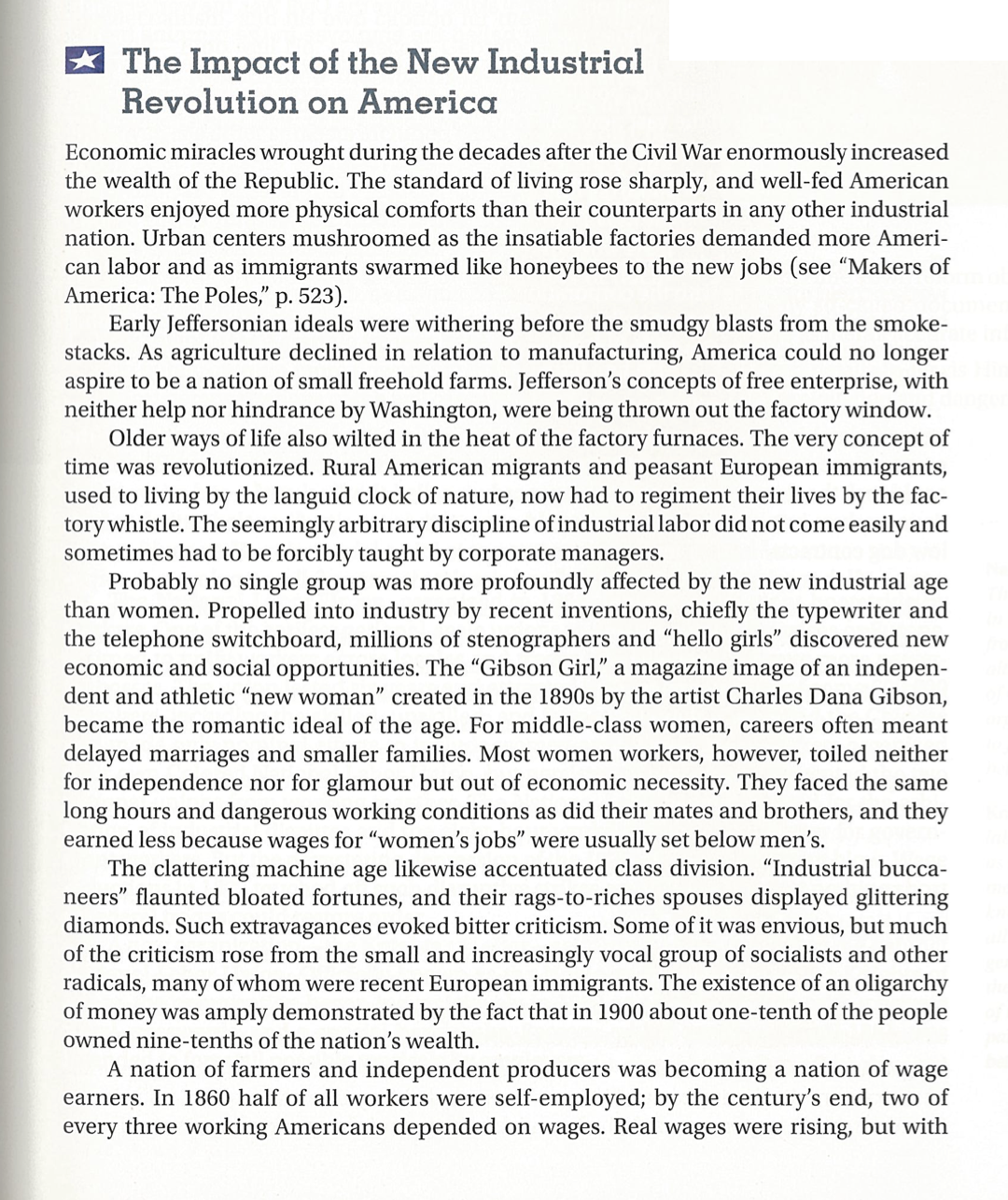
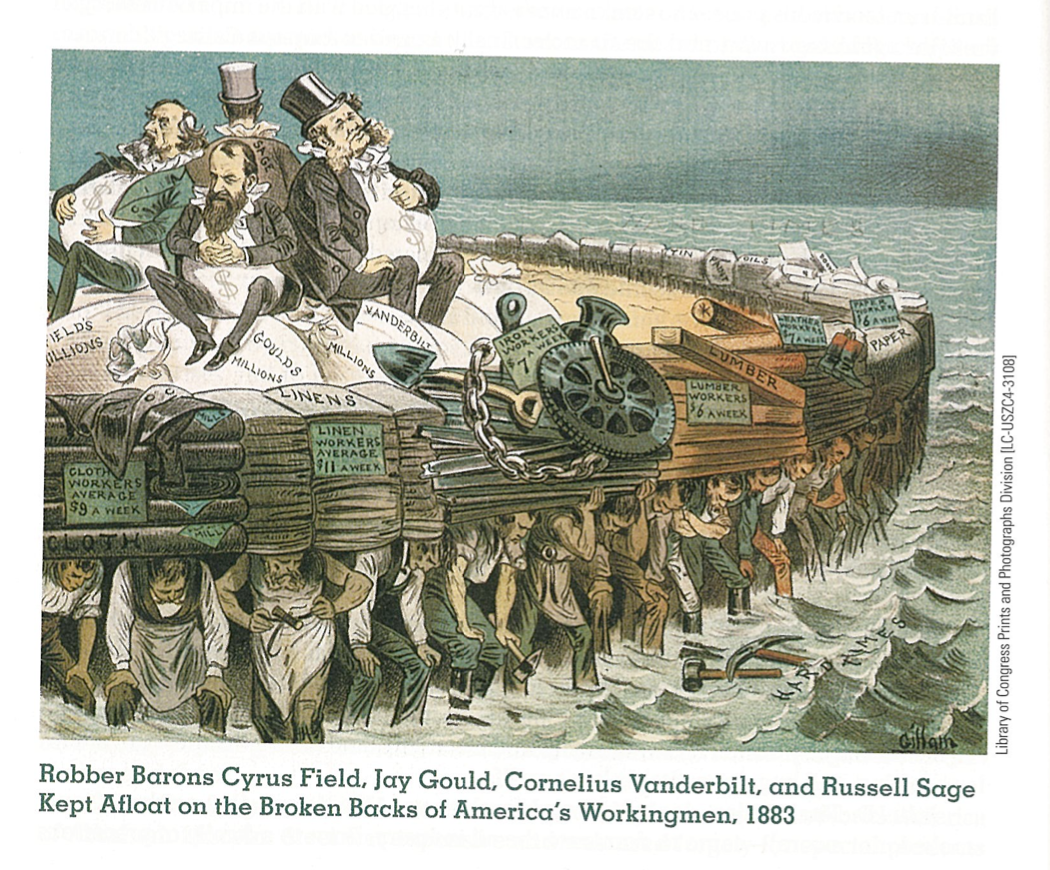
Industrialization came with an increasing sense of class distinctions, and by 1900, ________ of the population controlled 90 percent of the nation’s wealth.
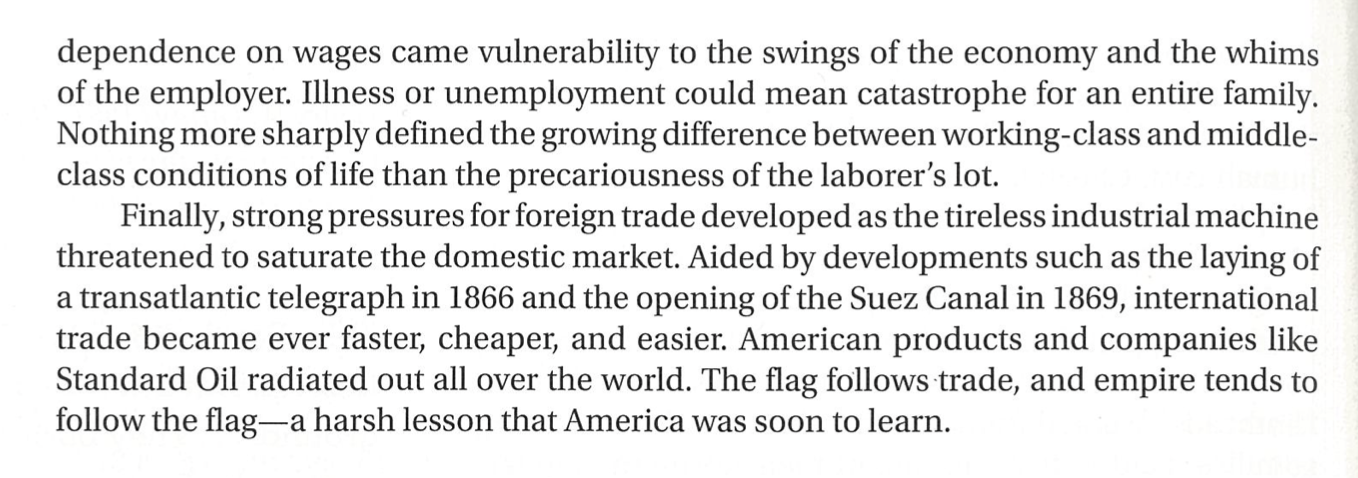
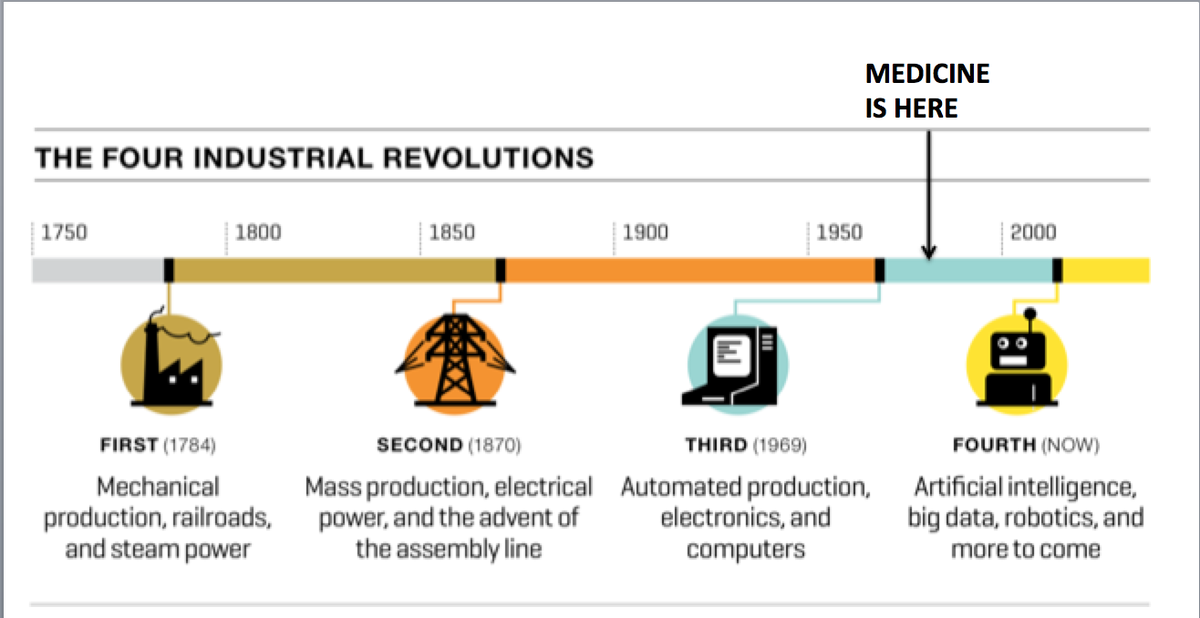
Based on the main idea of the section above, our study of the Gilded Age overlaps with the _____ Industrial Revolution.
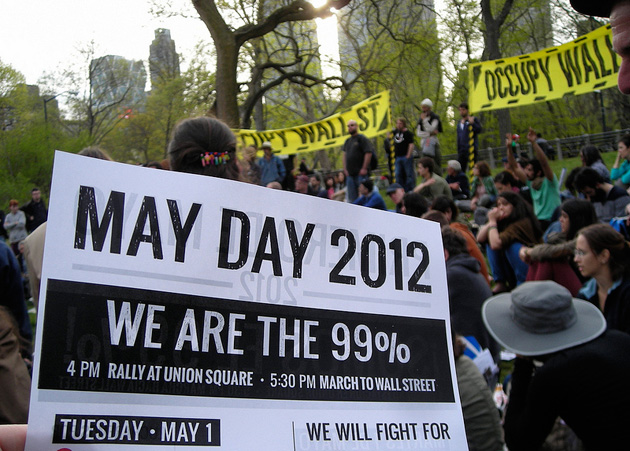
Class Poll: Have you ever heard of the Occupy Wall Street movement?
On September 17, 2011, hundreds of activists gather around Zuccotti Park in lower Manhattan for the first day of the Occupy Wall Street Movement—a weeks-long sit-in in New York City’s Financial District protesting income inequality and corporate corruption. While the movement failed to see any of its goals or policy proposals come to fruition, years later, Occupy Wall Street is still considered a blueprint for decentralized activism.
The terms 99 and 1 percenter, fist coined by the Hells Angeles motorcycle club, were popularized by the Occupy movement; the first refers to the majority of people living in the United States, and the second represents Wall Street and the wealthiest portion of the population. These terms—and Occupy Wall Street’s social media strategy—would be modeled by movements including #MeToo and #BlackLivesMatter.
Do you feel like the issues raised in Occupy Wall Street are still an issue today? Explain.
That's all that is due for Friday, 2/24/2023. Any questions?
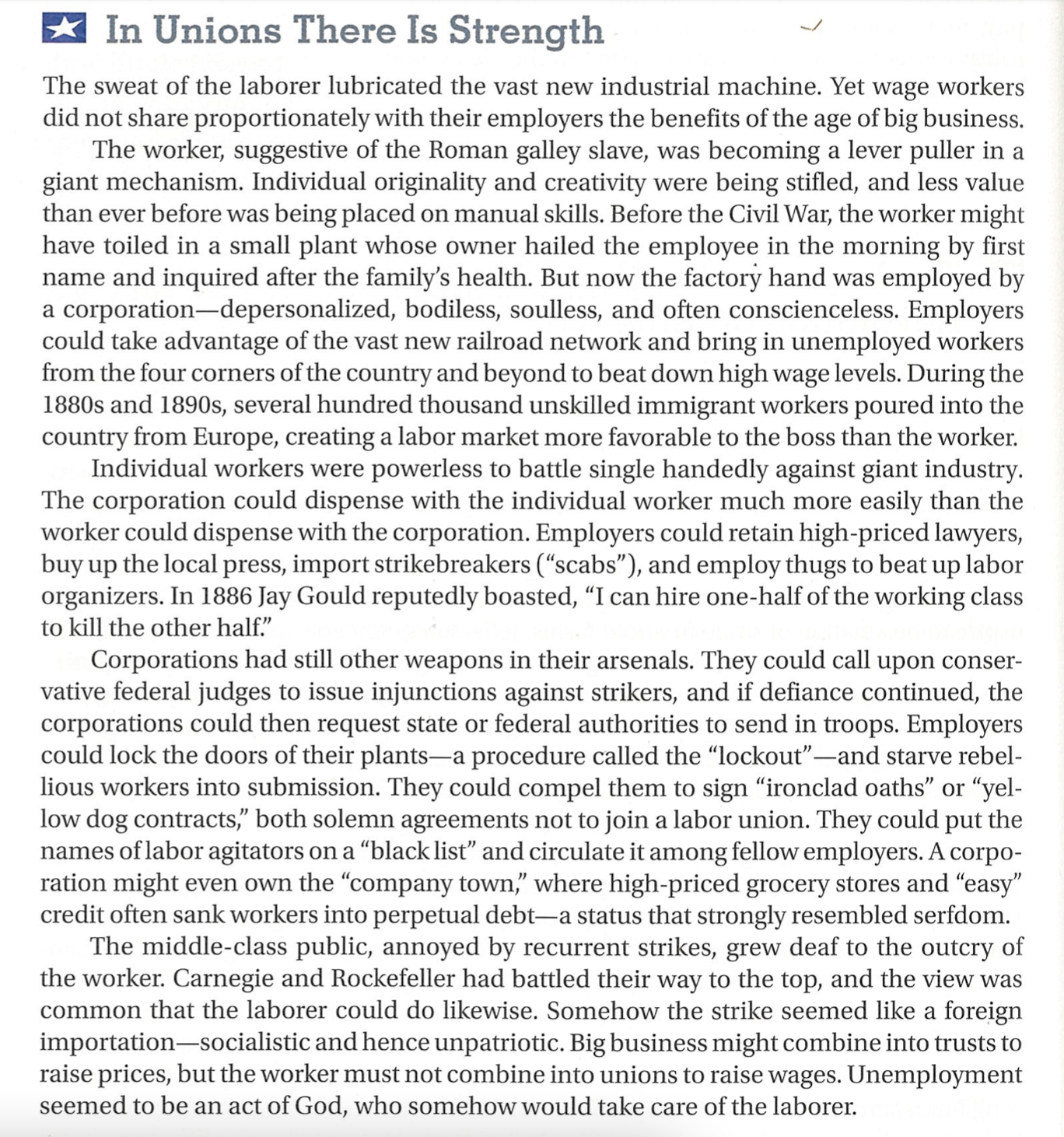
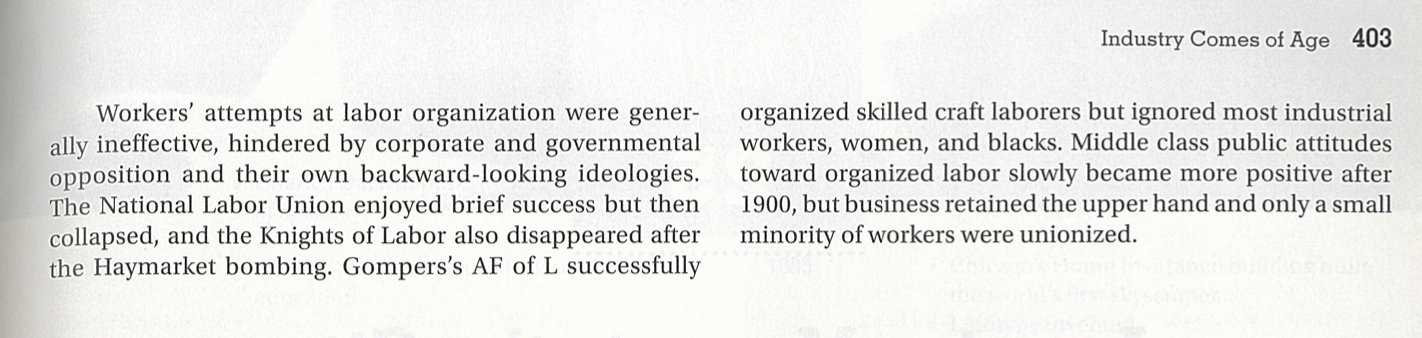
How did the federal courts suppress labor unions in the late nineteenth century?
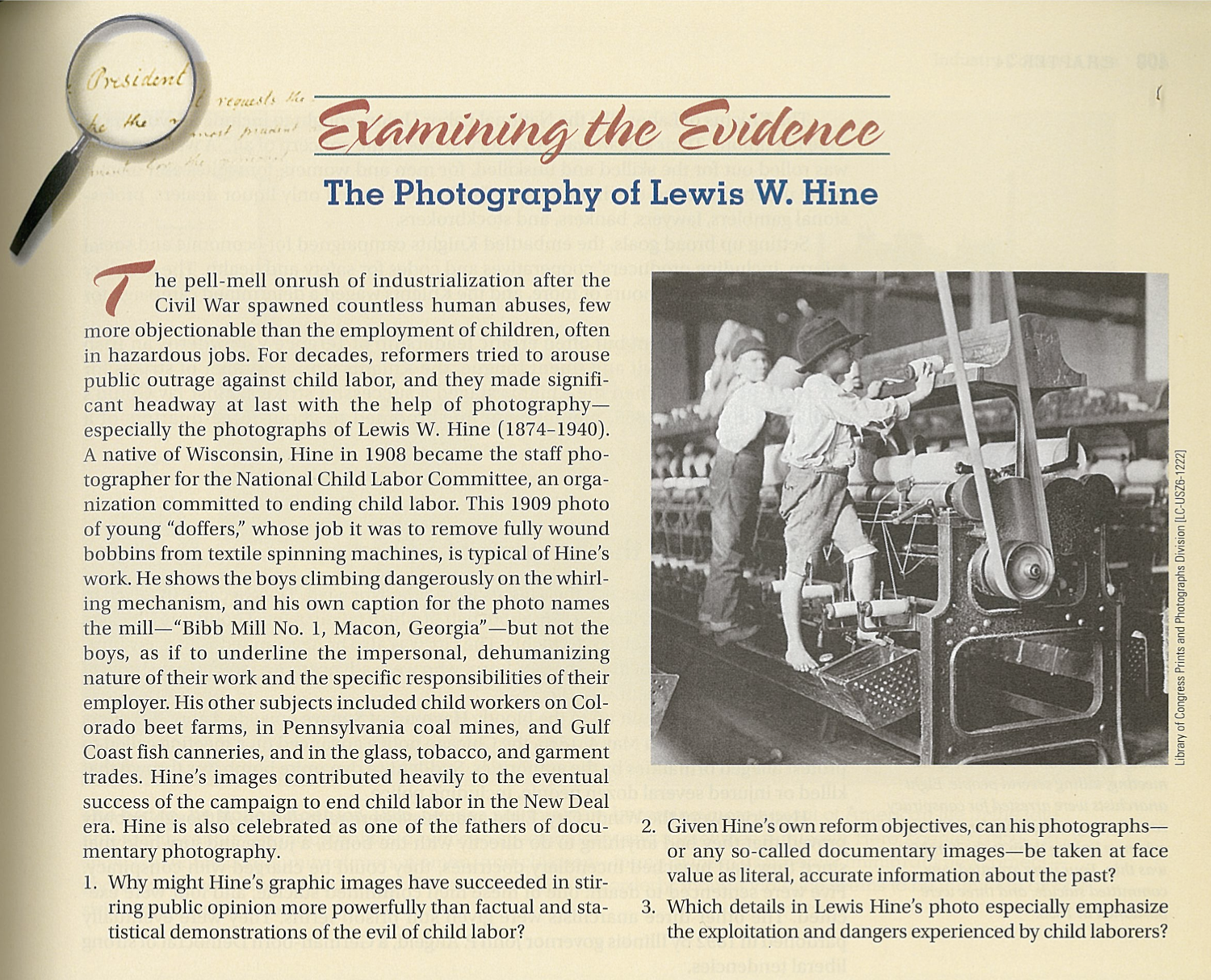
The passage indicates that the industrialization of the Gilded Age
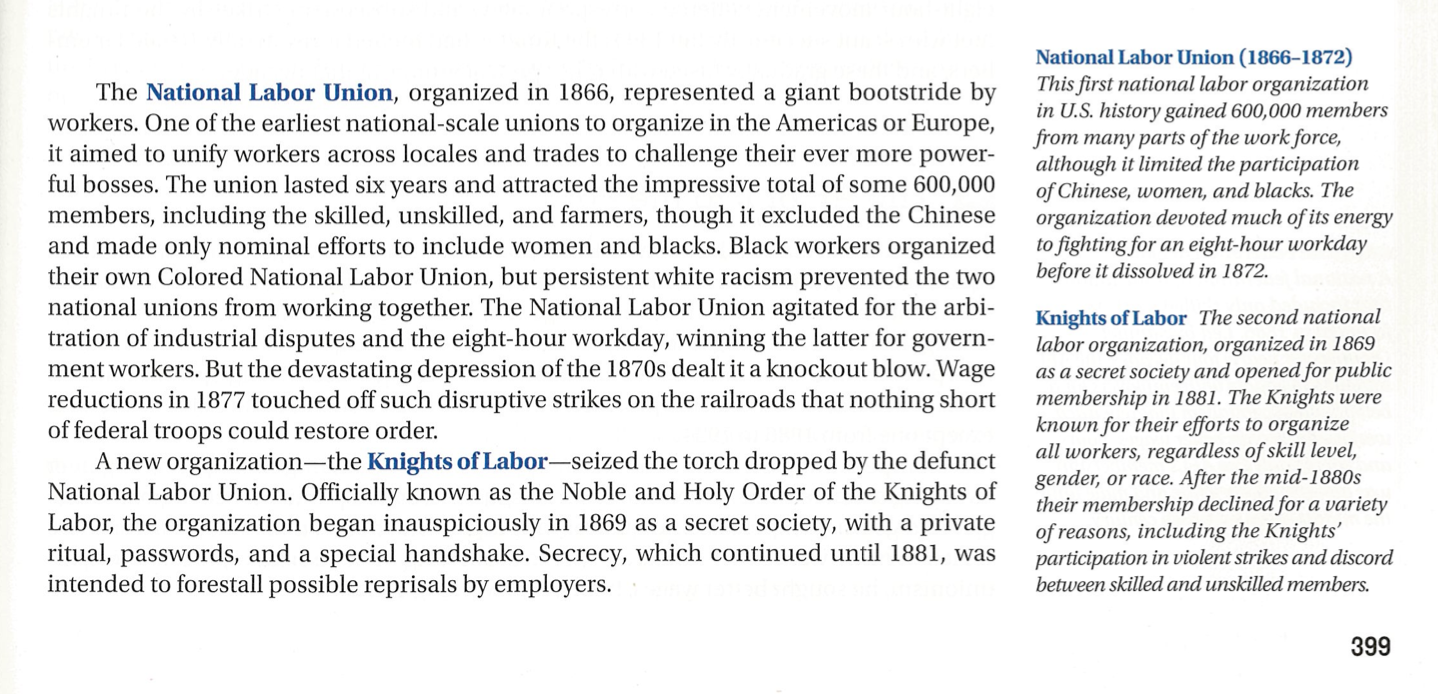
What was the National Labor Union's greatest success?
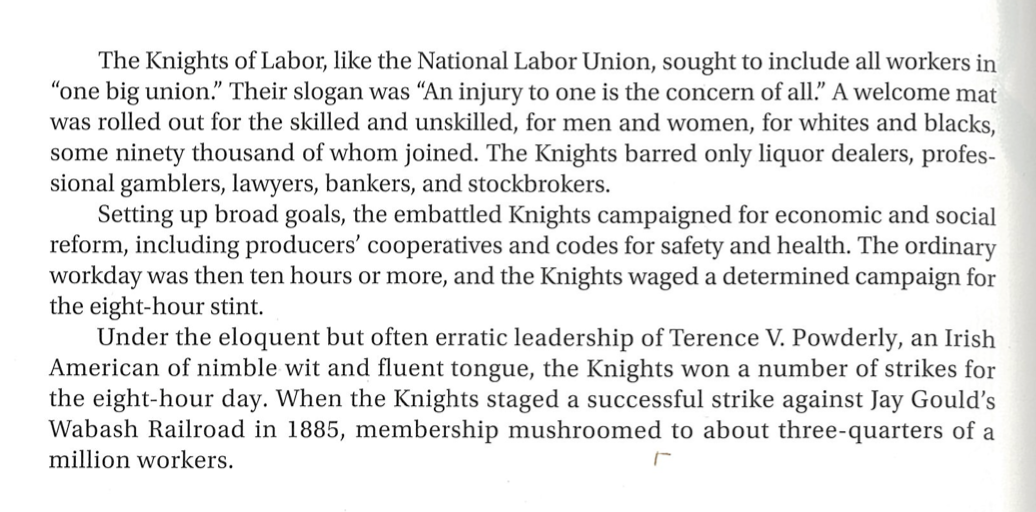
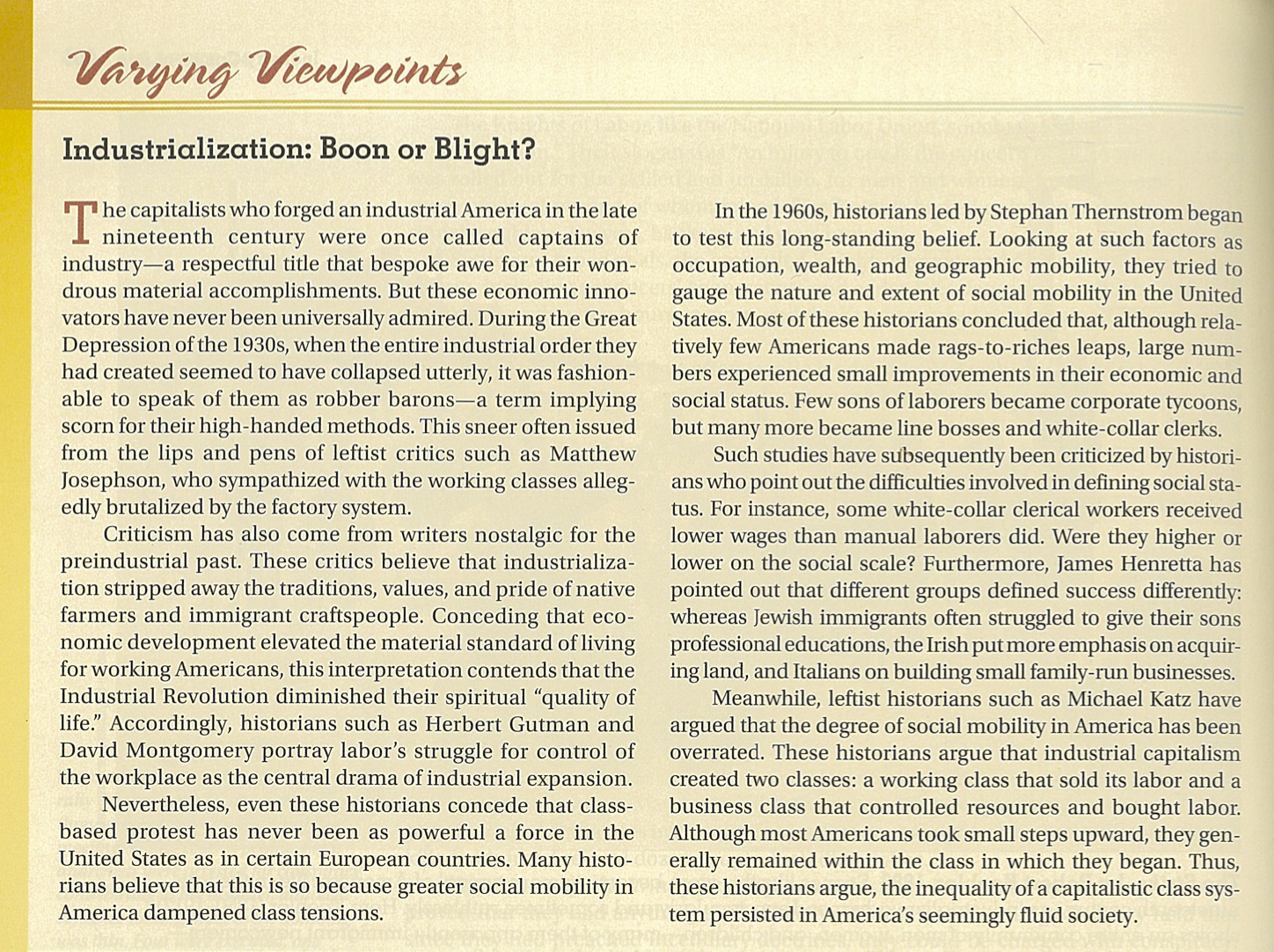
The people who have found fault with the "captains of industry" generally argued that these businessmen
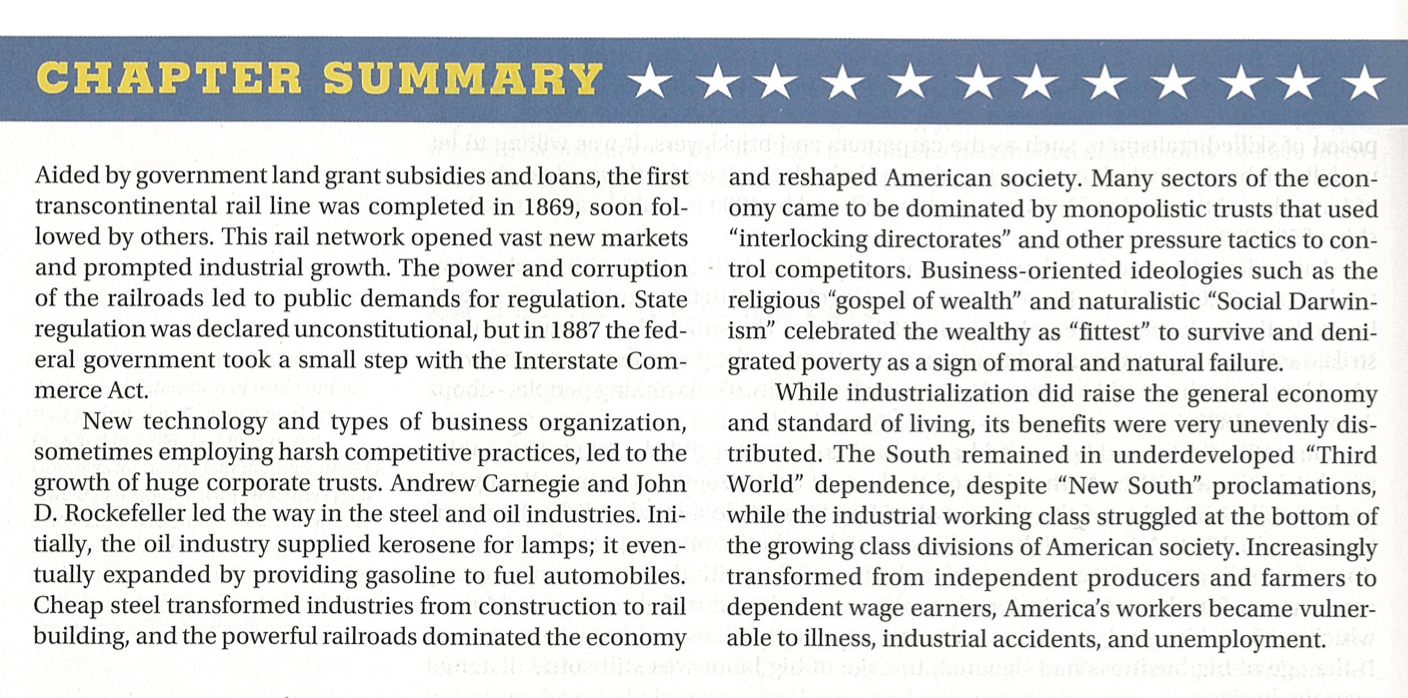
Excellent reading! Close out this Chapter by reviewing the "Chapter Summary" and using the "rectangle" tool to box the 5 most important key terms in the space provided.

Chapter 24 complete! Any questions?
The gospel of wealth, which associated godliness with wealth,