Period 6, Day 4: The Sherman Anti-Trust Act (1890) - SY23
star
star
star
star
star
Last updated about 2 years ago
10 Nsɛmmisa
Hyɛ no nsow a efi ɔkyerɛwfo no hɔ:
0
1
0
Ɛhia
1
Ɛhia
1
0
Content Objective: I will be able to understand the conditions that led to the rise of monopolies [trusts] in the Gilded Age.
Standard Objective: I will be able to draw reasonable inferences and logical conclusions from a political cartoon.
Absent? Just want to review the slides? Click here.
Content Objective: I will be able to understand the conditions that led to the rise of monopolies [trusts] in the Gilded Age.
Standard Objective: I will be able to draw reasonable inferences and logical conclusions from a political cartoon.
Absent? Just want to review the slides? Click here.
Warm Up: Please rate how well you understood last night's pre-work on a scale from 1 to 4. If you have any questions, drop them in the "Show Your Work" area.
Warm Up: Do you think corporations have too much power in the United States? Explain why or why not. Try to come up with specific examples as necessary.
Warm Up: One interesting historical fact I learned from the pre-work is…
The Sherman Antitrust Act was a law passed by Congress in 1890 that was designed to combat the
Think-Pair-Share: Is there a difference between a “trust” and a big corporation?

The Sherman Antitrust Act was the first federal law that placed
At first, the Act was largely
Despite these early setbacks, the Sherman Antitrust Act was important in setting the stage for more strict government
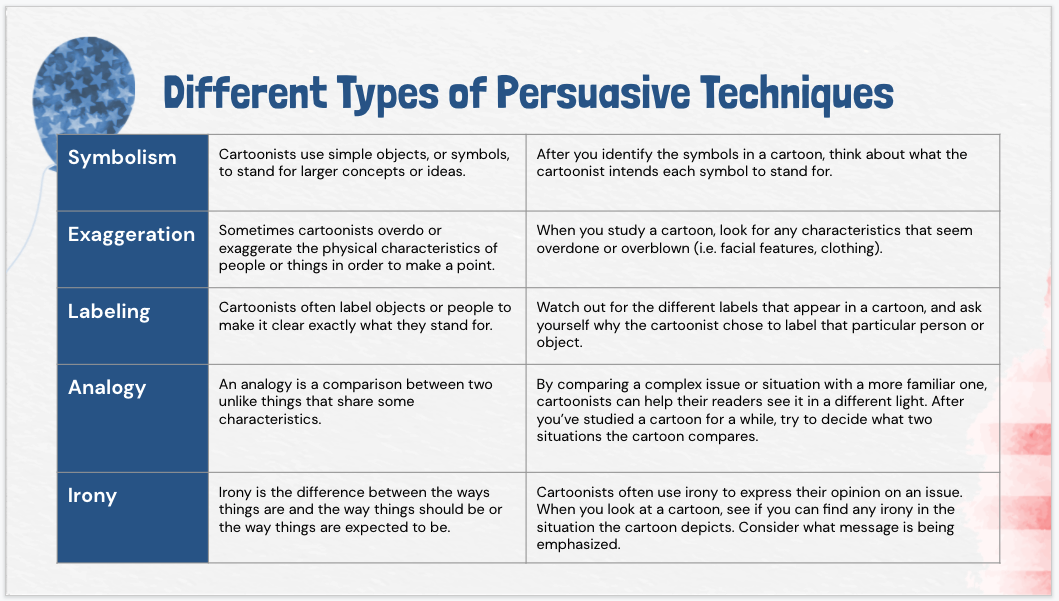
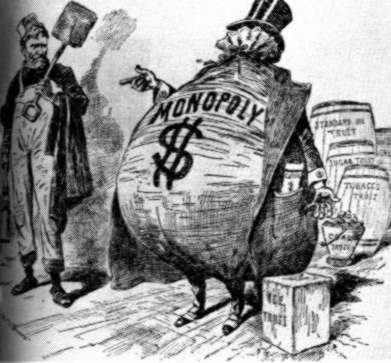
Applying Knowledge Together: Today, we are going to analyze a political cartoon from the time that the Chinese Exclusion Act was passed. Recall the persuasive techniques of political cartoons that we learned last week
Applying Knowledge: Let's take a look at another political cartoon from the time period we're studying.
Meet the Cartoon: What do you notice first? (Circle the 3 most obvious elements in "Show Your Work")
Observe the Visuals: List the people, objects, and places. Consider actions or activities as you caption each element. Which ones do you think are symbolic?
Consider the Words: Which words or phrases are most significant? List adjectives that describe the emotions portrayed in your captions.
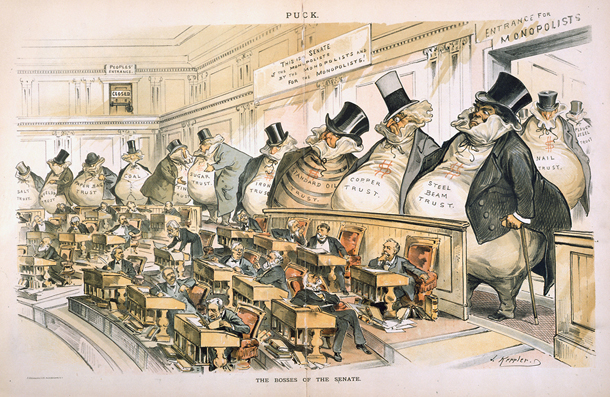
4. Dig Even Deeper: When was the cartoon created? What was happening historically at the time? Who drew this cartoon? What do we know about them?
5. Use as Evidence: What is the overall message of this image?
The Exit Ticket question is based on the following excerpt.
“Every contract, combination in the form of trust or otherwise, or conspiracy, in restraint of trade or commerce among the several States, or with foreign nations, is hereby declared to be illegal. Every person who shall make any such contract or engage in any such combination or conspiracy, shall be deemed guilty of a misdemeanor, and, on conviction thereof, shall be punished by fine not exceeding five thousand dollars, or by imprisonment not exceeding one year, or by both said punishments, at the discretion of the court.”
-Sherman Antitrust Act, 1890
Exit Ticket: The Sherman Antitrust Act was
Exit Ticket: Please evaluate how well you understood today’s lesson on a scale from 1 to 4: