Unit 4.6 Classwork: Monopolies in the Gilded Age
star
star
star
star
star
Last updated over 1 year ago
11 questions
Note from the author:
Content Objective: I will be able to understand the conditions that led to the rise of monopolies [trusts] in the Gilded Age.
Standard Objective: I will be able to draw reasonable inferences and logical conclusions from a political cartoon.
Absent? Just want to review the slides? Click here.
Content Objective: I will be able to understand the conditions that led to the rise of monopolies [trusts] in the Gilded Age.
Standard Objective: I will be able to draw reasonable inferences and logical conclusions from a political cartoon.
Absent? Just want to review the slides? Click here.
1
Warm Up: Have you ever played the game Monopoly before? Explain. If you have not played the game Monopoly before, look up the rules on Google and explain the goal in one complete sentence.
Required
1
Guided Viewing: Why did Lizzie Magie create the Monopoly board game? Explain the historical context.

Required
1
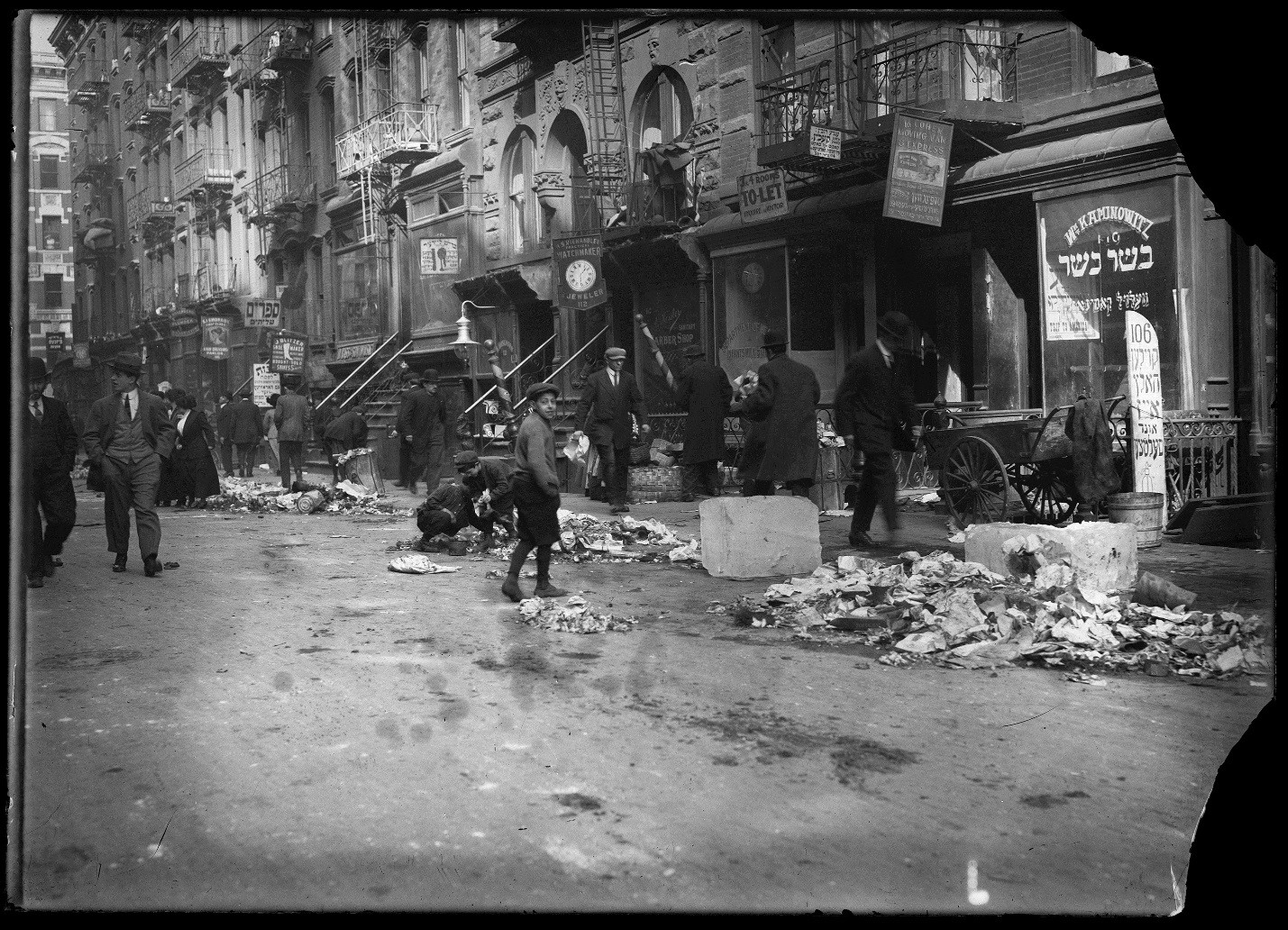
The Gilded Age (1860-1896) refers to the time period during and _______ the _______ Era when America became extremely _______ [wealthy] and saw unprecedented [never seen before] growth in industry and technology.
However, this era in American history is also known for the greed and _______ of industrialists, bankers, and politicians who enjoyed extraordinary wealth at the expense of the _______ . The U.S. government was characterized by a lack of _______ as bribery, grafting [using power to get $ and other perks], and fraudulent elections were common practices.
Required
1
The Gilded Age was a result of the Industrial _______, when America shifted from an agricultural (farm-based) society to an _______ (factory-based) one.
Millions of immigrants and struggling farmers arrived in cities such as New York, Boston, and Chicago, looking for work. This led to the rapid _______ of America. By 1900, about _______ percent of Americans lived in major cities.
Most cities were _______ for rapid population growth. Housing was limited, and slums sprung up nationwide. Heating, lighting, _______ and medical care were poor or nonexistent, and millions died from preventable _______ .

Required
1
Many new _______ were unskilled and willing to work long hours for little pay. As time went on, the income _______ between wealthy and poor became more and more glaring. While most Americans of the working class lived well below the _______ line, the industrialists and business _______ of the Gilded Age lived extravagantly.

Required
1
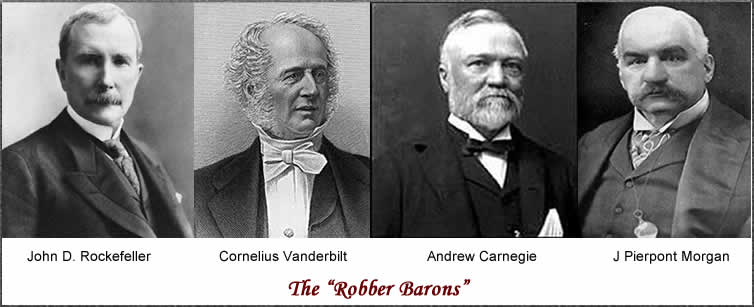
These wealthy industrialists and businessmen became critically known as “_______.”
Robber Barons made a fortune by _______ huge industries such as _______. They often engaged in _______ business practices and _______ [took advantage of] lower-class immigrant workers.
The best known Robber Barons were John D. _______ , Andrew _______ , Cornelius Vanderbilt, and J.P. Morgan.
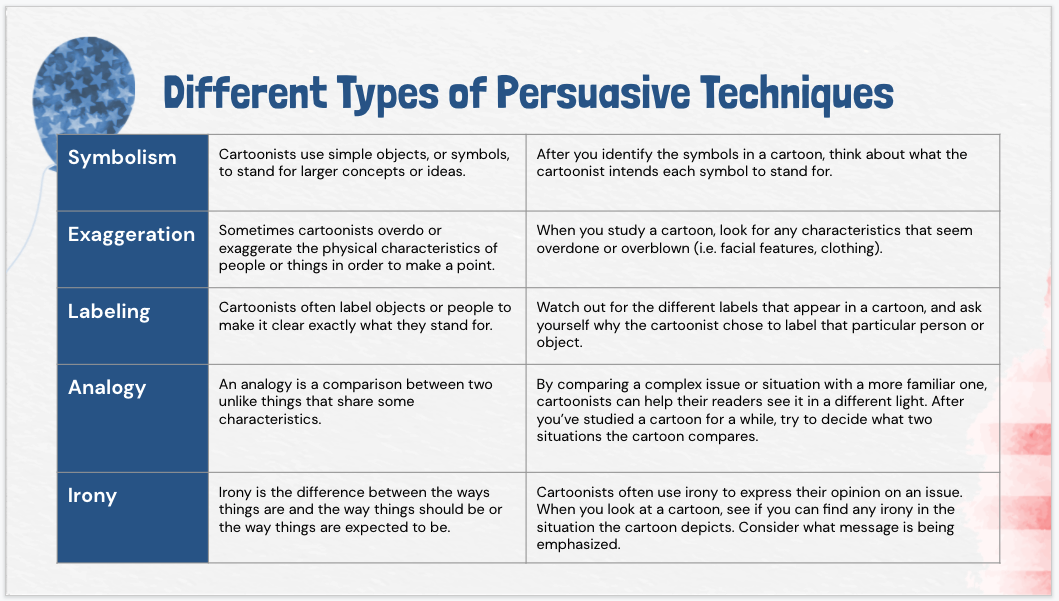
Applying Knowledge Together: Today, we are going to analyze a political cartoon from the Gilded Age. Recall the persuasive techniques of political cartoons that we learned last week
Required
1
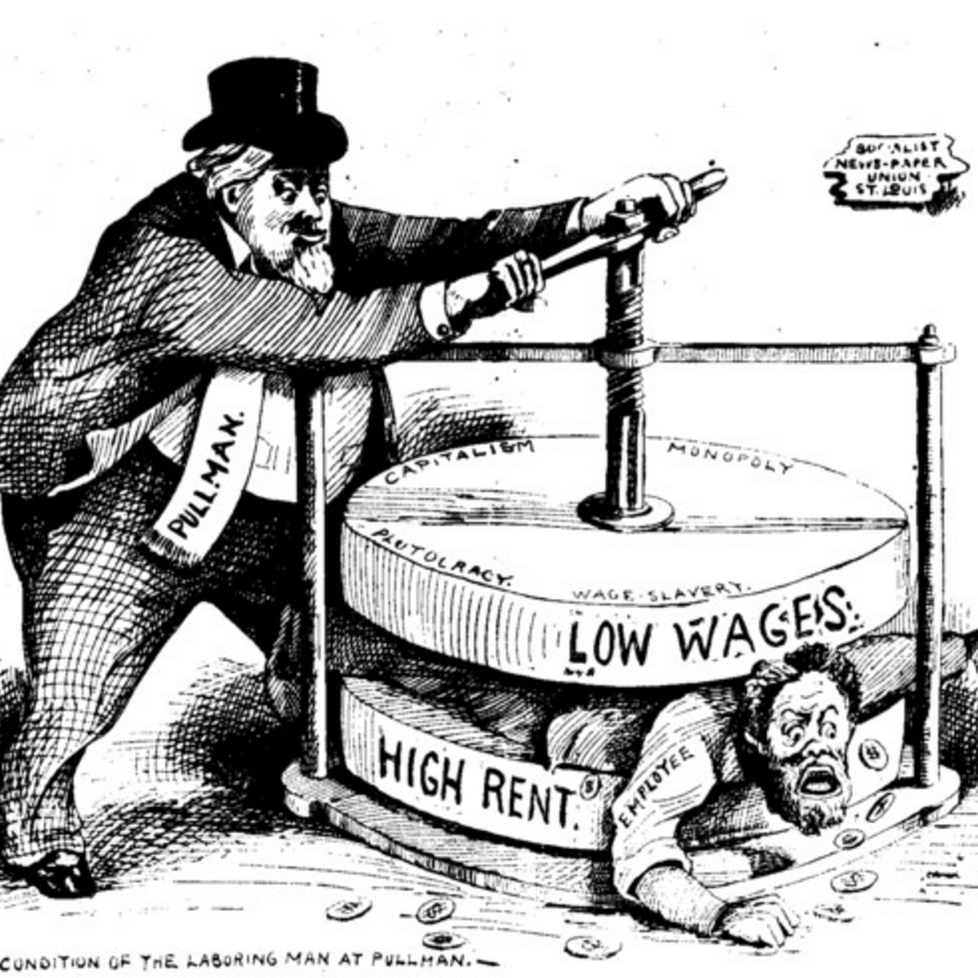
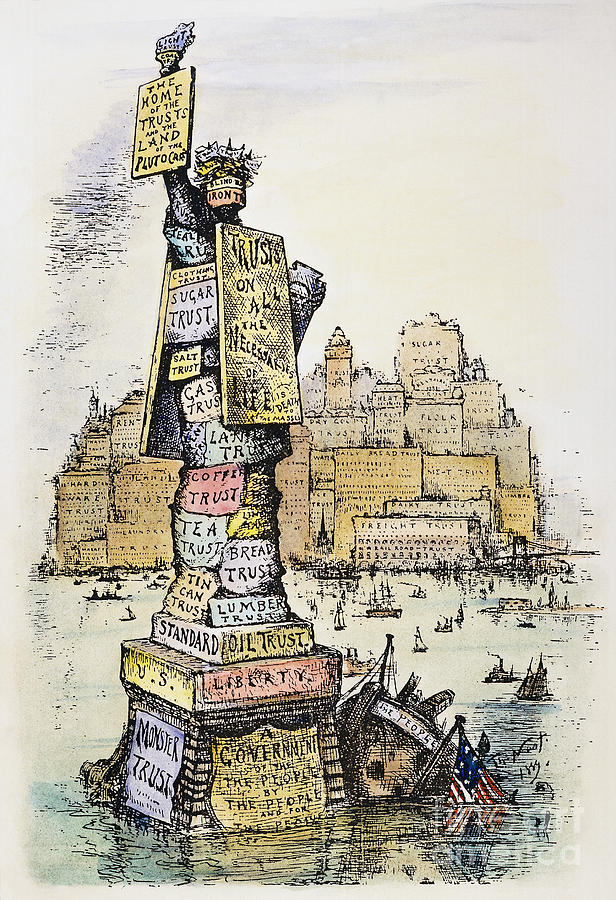
Applying Knowledge: Let's take a look at another political cartoon from the time period we're studying.- Meet the Cartoon: What do you notice first? (Circle the 3 most obvious elements in "Show Your Work")
- Observe the Visuals: List the people, objects, and places. Consider actions or activities as you caption each element. Which ones do you think are symbolic?
- Consider the Words: Which words or phrases are most significant? List adjectives that describe the emotions portrayed in your captions.
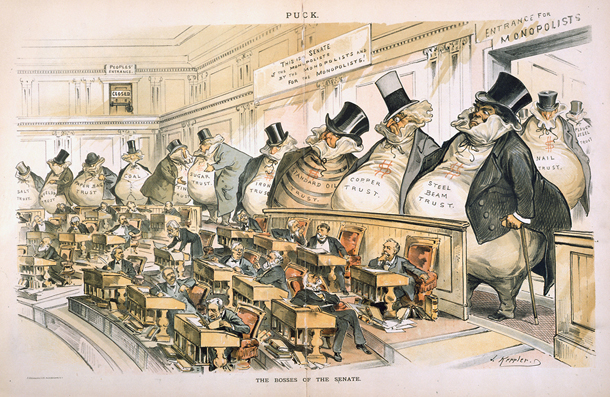
Applying Knowledge: Let's take a look at another political cartoon from the time period we're studying.
- Meet the Cartoon: What do you notice first? (Circle the 3 most obvious elements in "Show Your Work")
- Observe the Visuals: List the people, objects, and places. Consider actions or activities as you caption each element. Which ones do you think are symbolic?
- Consider the Words: Which words or phrases are most significant? List adjectives that describe the emotions portrayed in your captions.

Required
1
4. Dig Even Deeper: When was the cartoon created? What was happening historically at the time? Who drew this cartoon? What do we know about them?
Required
1
5. Use as Evidence: What is the overall message of this image?
Required
1
Exit Ticket: The perspective of the artist who created the "Bosses of the Senate" political cartoon is that the U.S. Senate
0
Exit Ticket: Please evaluate how well you understood today’s lesson on a scale from 1 to 4: