Unit 4.8 Classwork: The 1893 Chicago World's Fair
star
star
star
star
star
Last updated over 1 year ago
10 questions
Note from the author:
Content Objective: I will be able to understand the legacy of the 1893 Chicago World's Fair.
Skill Objective: I will be able to identify concepts explicitly stated in the text.
Absent? Just want to review the slides? Click here.
Content Objective: I will be able to understand the legacy of the 1893 Chicago World's Fair.
Skill Objective: I will be able to identify concepts explicitly stated in the text.
Absent? Just want to review the slides? Click here.
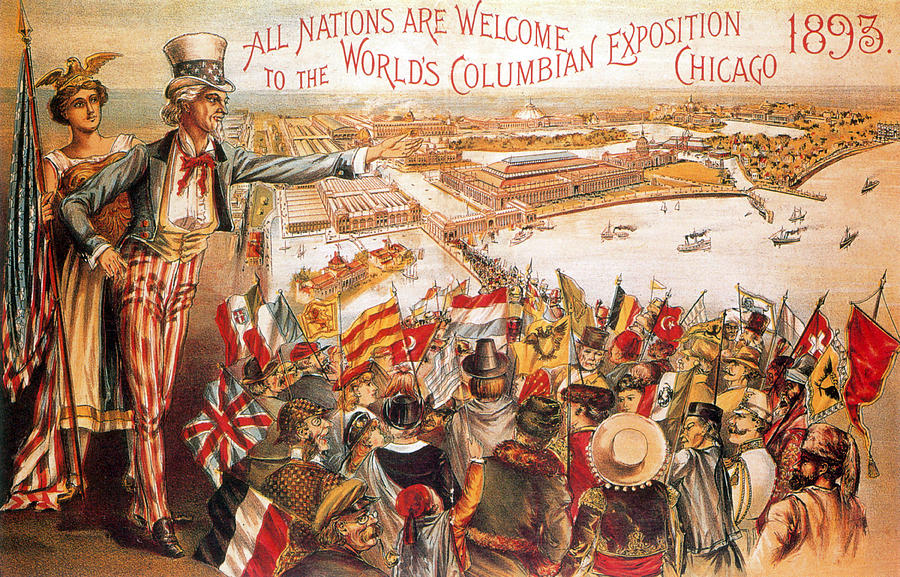
One of Chicago's greatest historical achievements was hosting the World's Columbian Exposition (better known as the World's Fair of 1893) as a celebration of Christopher Columbus's voyage to the continent four hundred years earlier. Chicago beat out New York, St. Louis, and Washington, D.C. for the privilege of hosting the fair.
The fair provided a showcase for the abundance of new inventions and amount of power that the United States gained during the Gilded Age.
Required
1
The purpose of the Chicago World's Fair was to
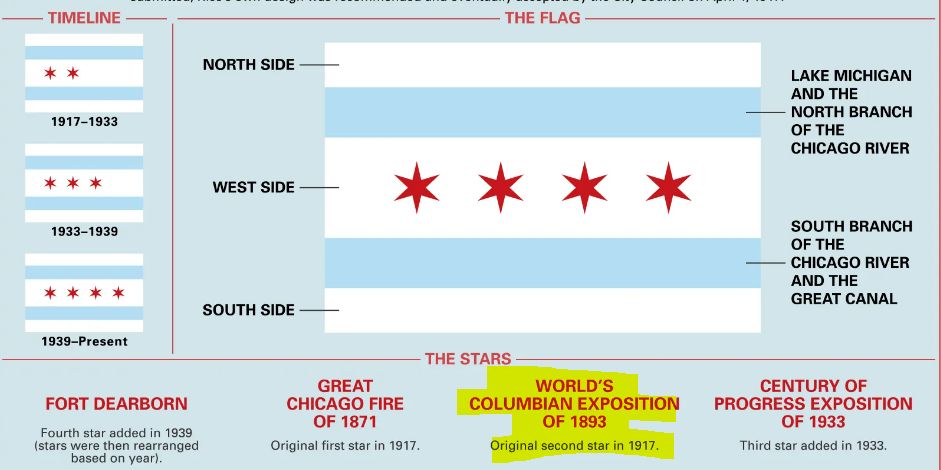
The fair built awareness among visitors that Chicago was taking its place as the “second city” after New York. Local Chicagoans were proud of the enormous progress and growth that were achieved in the two decades following the Great Chicago Fire of 1871. So momentous was the fair that it is represented as a star on the Chicago flag.
Required
1
Did you know that each part of the Chicago flag represents an element of Chicago history? Which part of the flag are you represented on (North, West, or South side?)
Architecture of the World's Fair
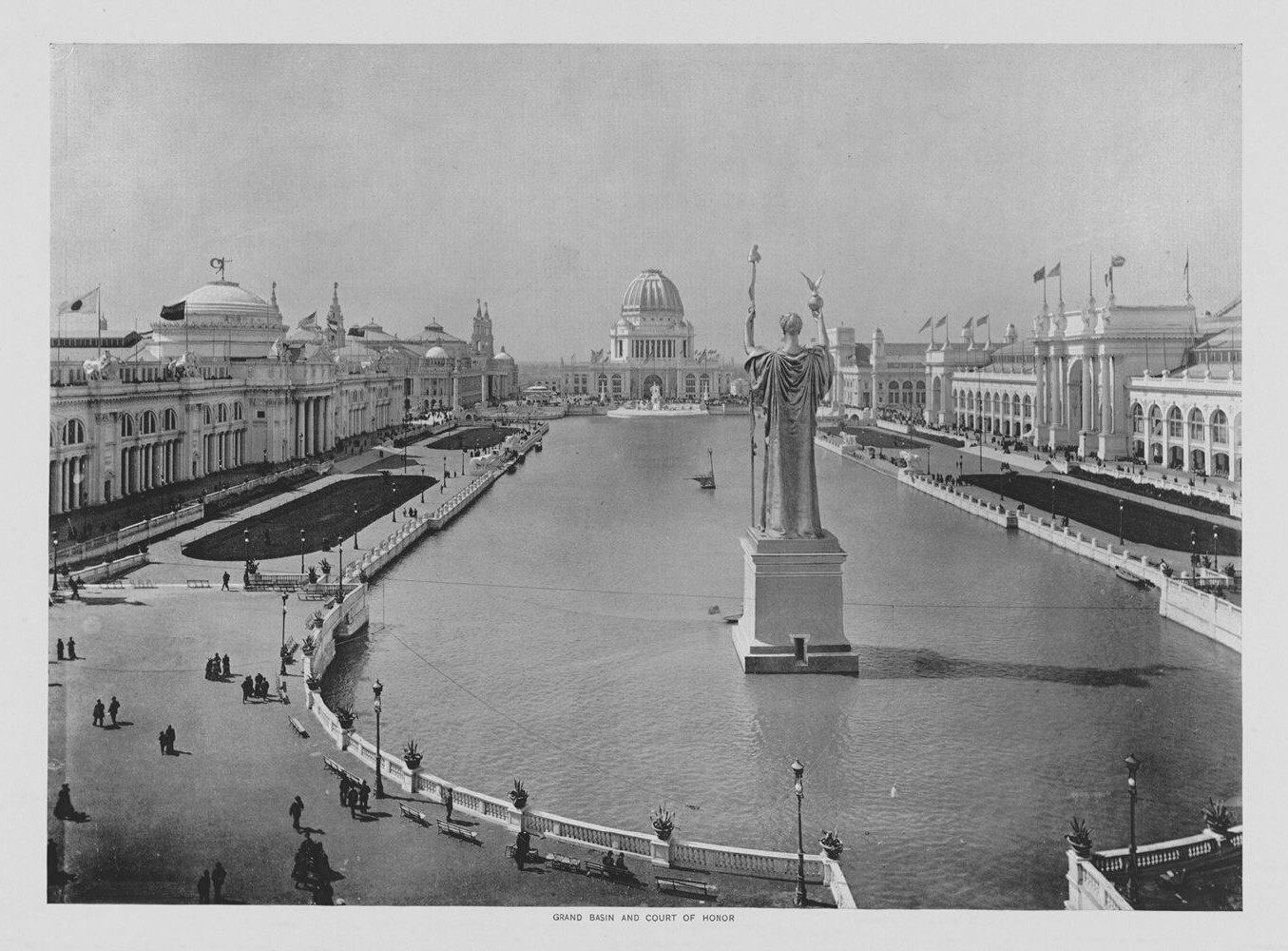
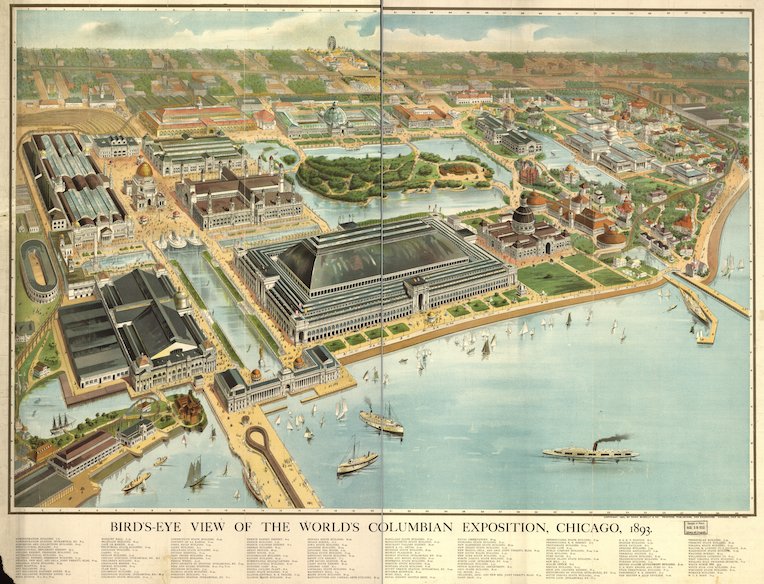
The site of the fair itself gained the nickname the “White City” due to the appearance of its massive white buildings.
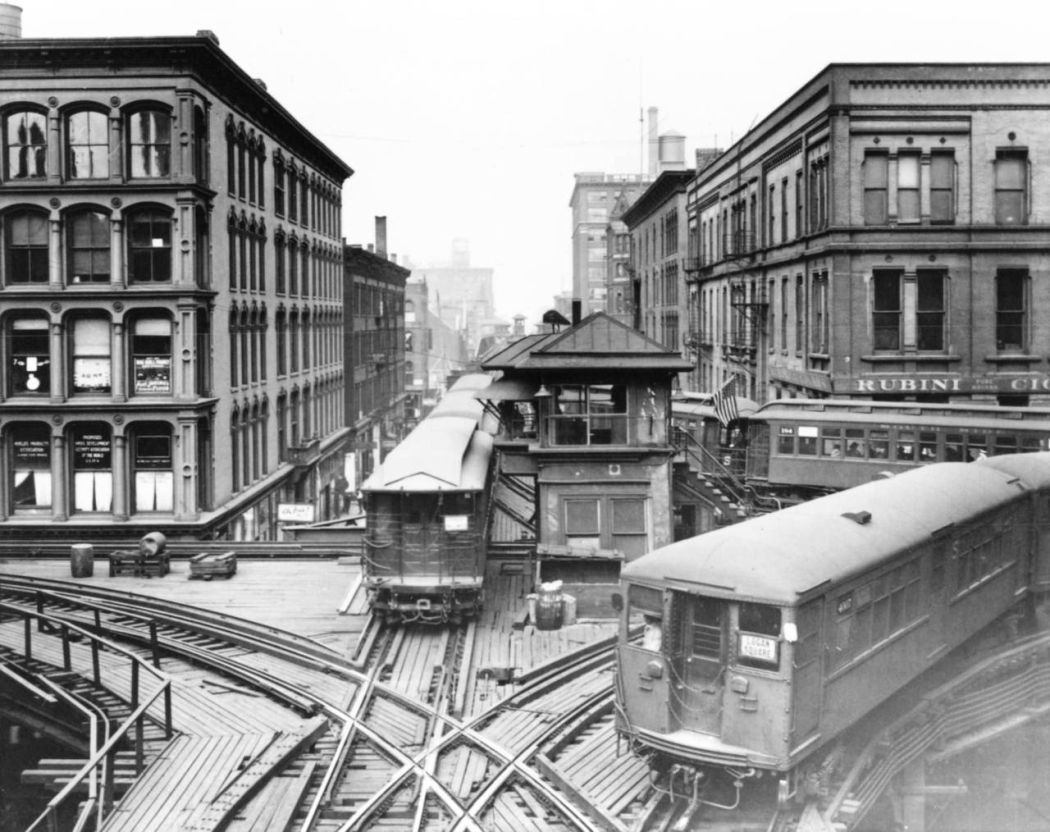
One of the main successes of the fair was that it promoted the rapid urbanization of the South Side (where the fair took place.) New developments grew along the lakefront, and the new elevated “L” train line was built for the fair’s workers on the South side.
Required
1
How did the 1893 World’s Columbian Exposition impact the architecture of Chicago?
Jackson Park was the main setting of the 1893 World’s Fair. During the fair, the manicured grounds were home to more than 200 buildings, islands, lagoons, gardens, and more.
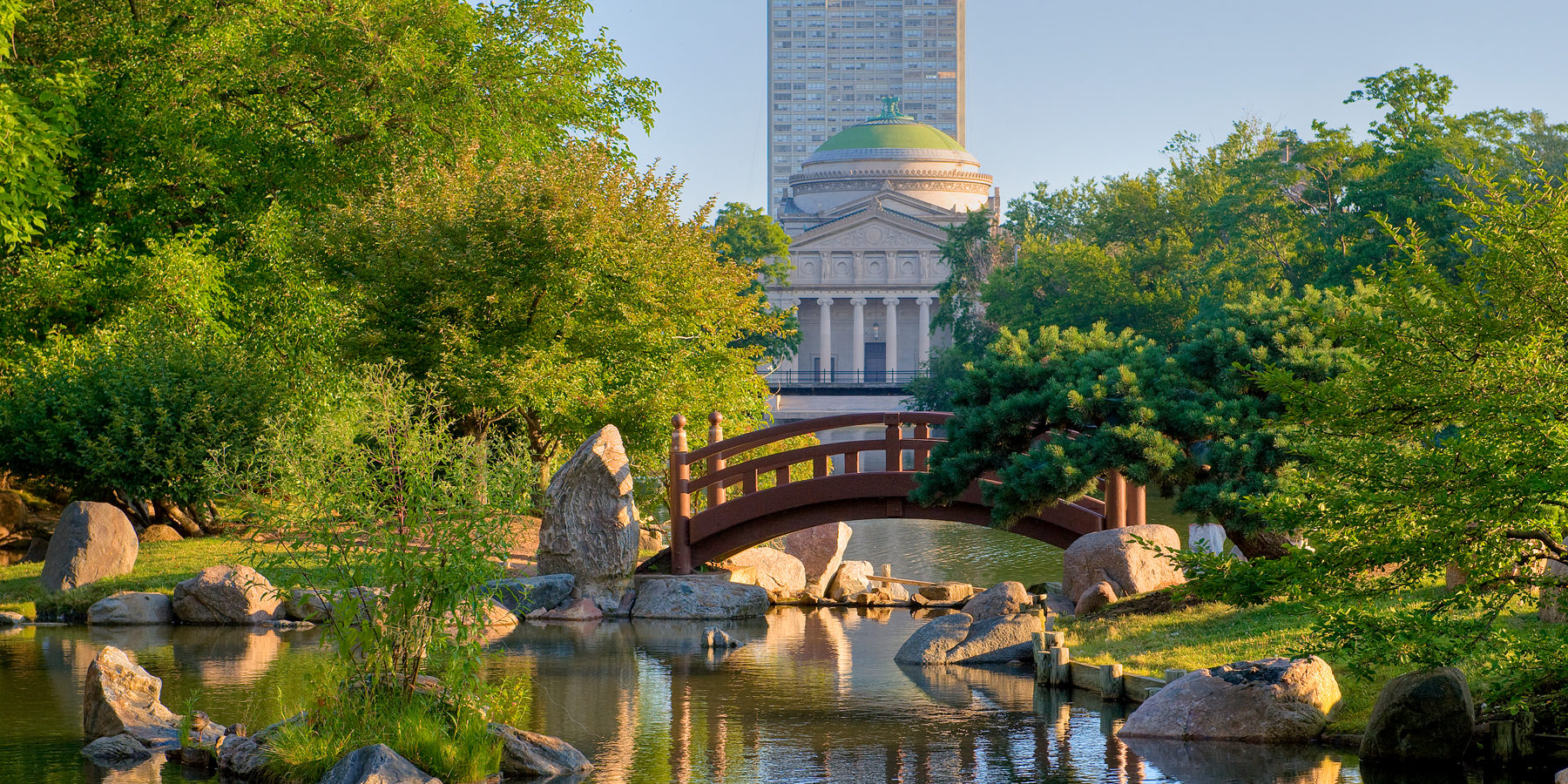
Today, the fair’s structures are largely gone, but much of the landscape architecture remains.
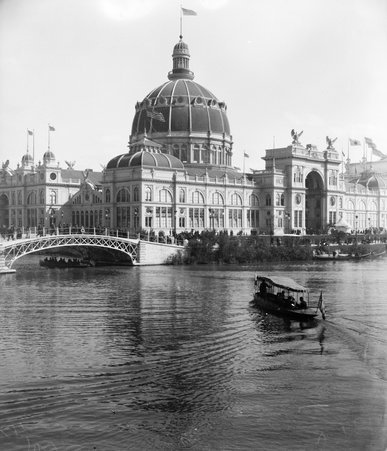
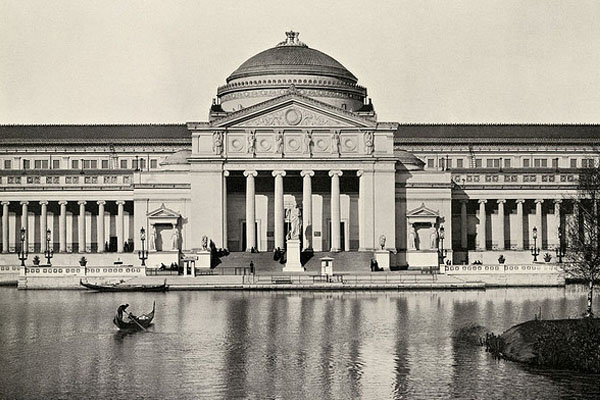
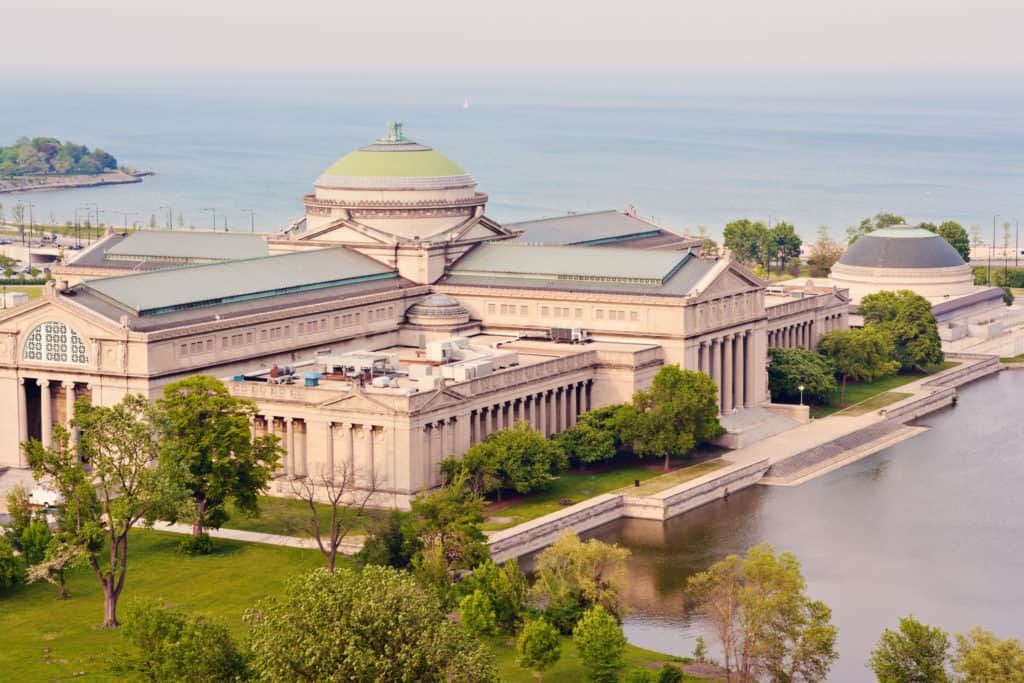
The Museum of Science and Industry is one of the only two remaining buildings from the 1893 World’s Fair.
Why did this building last so much longer than the fair’s other structures? While many buildings were made with plaster, the Palace of Fine Arts was built with brick and steel because many nations wouldn’t allow their art to be displayed in a non-fireproof building.
The Art Institute of Chicago is the second of the two remaining buildings from the 1893 World’s Columbian Exposition.
Required
1
Which two Chicago buildings still exist from the World's Fair today? (Check two)
New Inventions at the World's Fair
The World's Fair introduced us to the Ferris Wheel, the zipper, the automatic dishwasher, spray paint, the moving sidewalk (like in airports today) and a number of new foods including Wrigley’s Juicy Fruit gum, Aunt Jemima's pancake mix, diet carbonated drinks, and Cracker Jacks.
Required
1
What were two new inventions displayed at the World's Fair? (Choose 2)
Paris, France held its World’s Fair in 1889 to mark the 100th anniversary of the French revolution. The Eiffel Tower was built to serve as the entrance.
The organizers of the Chicago World's Fair were determined to build something that could outshine the Eiffel Tower.
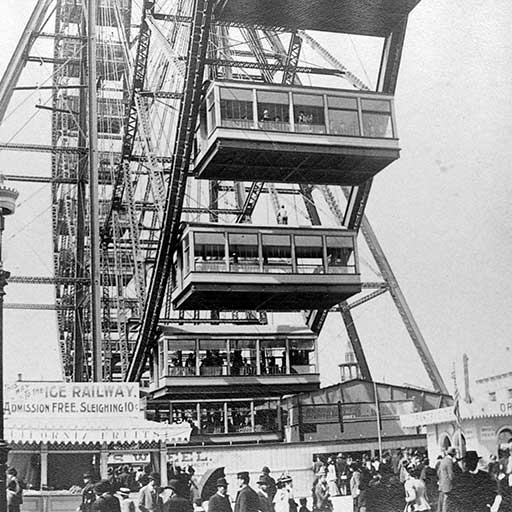
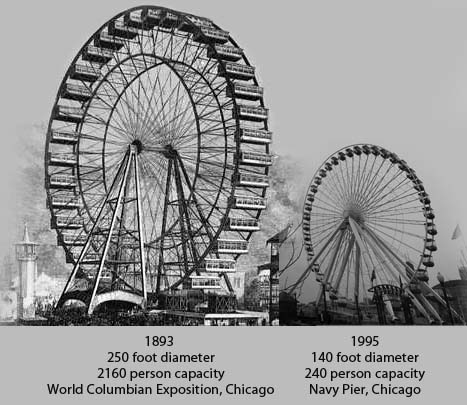
George Washington Ferris suggested a huge wheel with passenger cars, reaching over 250 feet skyward. His first three designs for the Ferris Wheel were rejected because fair organizers thought it would be too dangerous.
The Ferris Wheel cost 50 cents to ride—twice the price of a ticket to the fair itself. The cars could accommodate over 2,000 people! It was a huge hit.
Required
1
What major structure did the Chicago World's Fair try to outshine with the Ferris Wheel?
1
Have you ever been on the ferris wheel at Navy Pier?
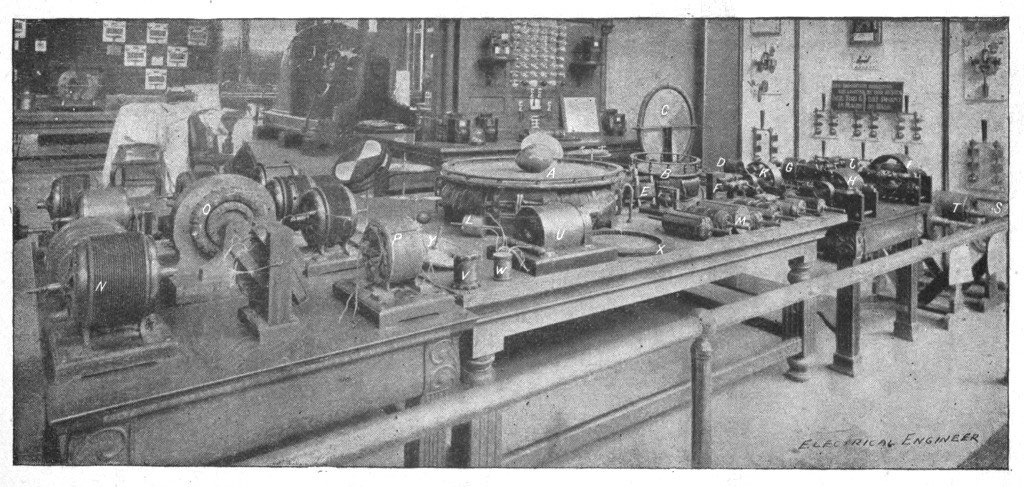
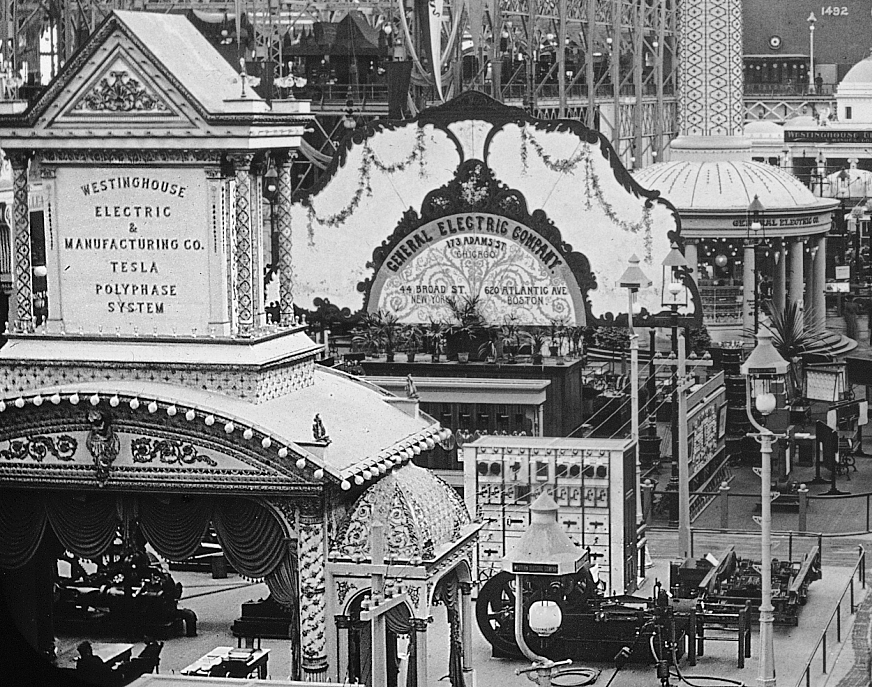
The Electricity Building was another popular attraction. President Cleveland threw the switch starting the massive 3,000 horsepower stream engine that powered the building.
The electrical inventions included lamps, sewing machines, an elevator, and a typewriter.
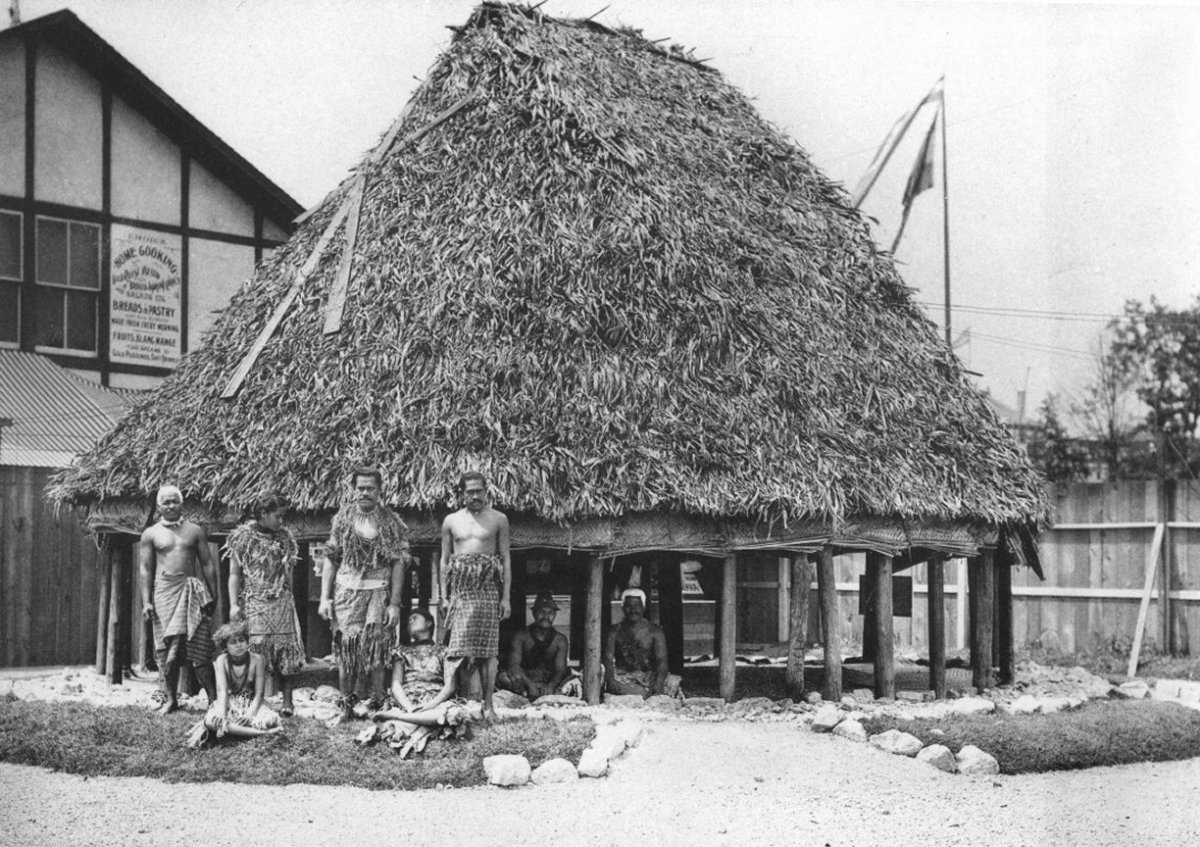
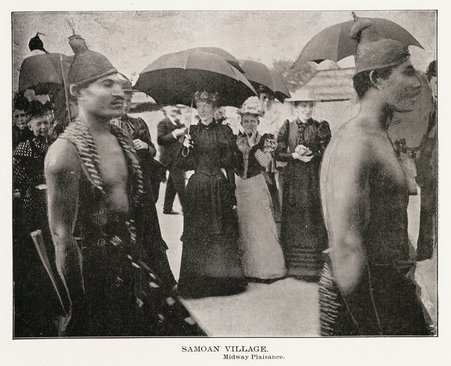
One of the main attractions at the fair was an amusement park that displayed human beings in elaborately set up ‘ethnic villages’ to expose Americans to "different cultures."
Samoan islanders and Egyptians were among the groups ‘imported’ to Chicago to inhabit ‘ethnic villages’ and present visitors with a living example of ‘foreign’ cultures.
This attraction involved performances, such as theater plays, collective marches, folk dances, sacred rituals, and everyday tasks.

Required
1
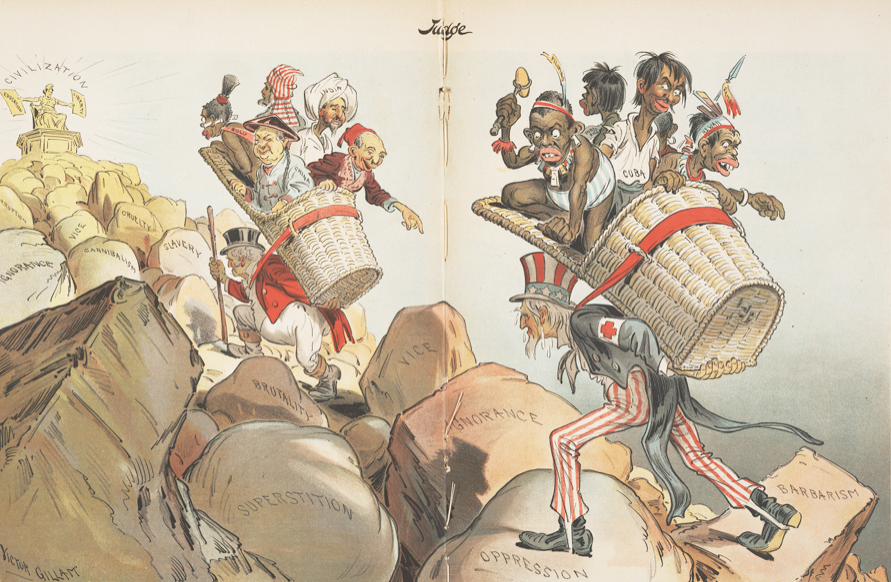
Examine the image to the left. What thoughts do you think was going through the minds of the men and women in the photo? Describe what you think each group was thinking below.
The ethnic villages enforced stereotypes of other cultures that were prominent during the Gilded Age. The World's Fair was meant to create support for U.S. imperial efforts. The park brought alive the “white man’s burden”, as American vistors saw these ethnic villages as places that clearly needed civilizing.
Additionally, for African American leaders, the World's Fair seemed like the perfect opportunity to exhibit the contributions, achievements, and racial progress of African Americans in the nearly 30 years since the end of slavery.
However, while fair organizers planned attractions that would dazzle fairgoers with American accomplishments, they refused to give African Americans a voice in the fair.
Black Americans were allowed to participate as low-level workers and paying guests, but white organizers kept them from any meaningful positions of influence or authority.
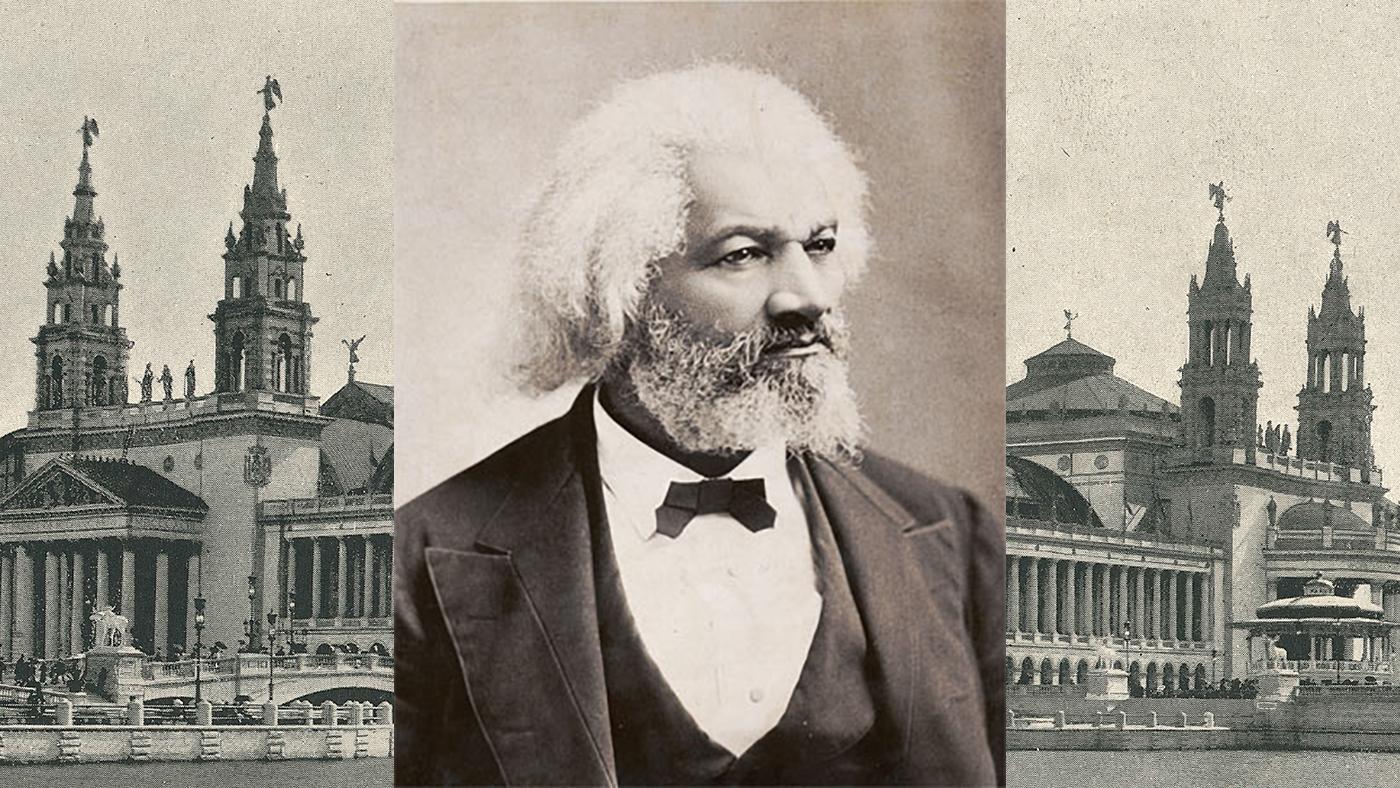
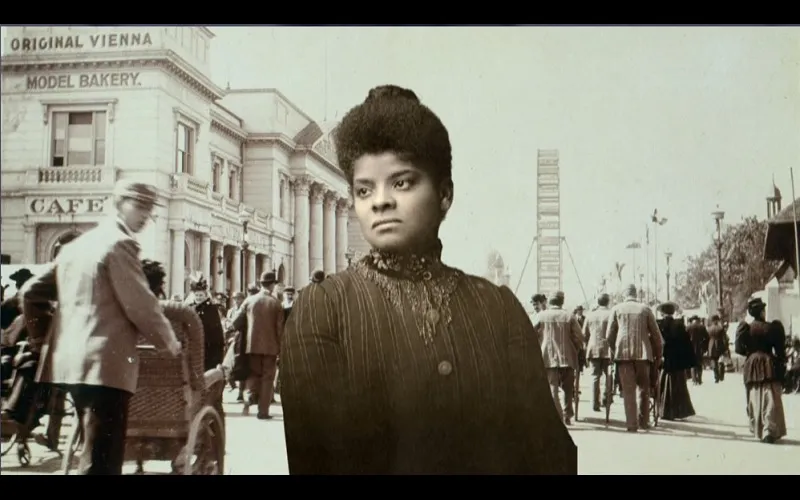
Social reformers Ida B. Wells, and Frederick Douglass wrote a protest pamphlet titled "The Reason Why the Colored American Is Not in the World's Columbian Exposition." The pamphlet was written to make international visitors aware of both the achievements of Black Americans since emancipation and the difficult and dangerous conditions they continued to face after slavery.
Required
1
Why did Black Americans protest the Chicago World's Fair?
Required
1
Putting It All Together:
After learning about the 1893 World's Fair held in Chicago, do you think Chicagoans should be proud of the fair today?
Please explain why or why not in at least two complete sentences.
Sentence-Starter: I think that Chicagoans should/should not be proud of the 1893 World's Fair because...
Putting It All Together:
After learning about the 1893 World's Fair held in Chicago, do you think Chicagoans should be proud of the fair today?
Please explain why or why not in at least two complete sentences.
Sentence-Starter: I think that Chicagoans should/should not be proud of the 1893 World's Fair because...