Ɛhia
1
Ɛhia
1
Ɛhia
1
Ɛhia
1
Open your textbook to Unit 9 pg 150 on Energy
Work your way through the Formative, following the instructions and answering the questions as you go.
For this entire activity, take gravitational acceleration to be 9,8 m.s-2.
PLEASE ENSURE THAT YOU WRITE ALL CALCULATIONS ON A PIECE OF PAPER AND HAND IT IN TO MS BLAIR/MRS KÜHN AT THE END OF THE SESSION. IF THIS IS NOT RECEIVED, YOUR ANSWERS FOR THE CALCULATIONS WILL NOT BE MARKED.
Open your textbook to Unit 9 pg 150 on Energy
Work your way through the Formative, following the instructions and answering the questions as you go.
For this entire activity, take gravitational acceleration to be 9,8 m.s-2.
PLEASE ENSURE THAT YOU WRITE ALL CALCULATIONS ON A PIECE OF PAPER AND HAND IT IN TO MS BLAIR/MRS KÜHN AT THE END OF THE SESSION. IF THIS IS NOT RECEIVED, YOUR ANSWERS FOR THE CALCULATIONS WILL NOT BE MARKED.
Watch the video which explains the notes and answer the questions based on the video.
If you are having trouble with the video, click on this link to watch it in drive, and then return here to answer the questions: energy video part 1
Match the following scenarios with the most appropriate form of energy:
| Draggable item | arrow_right_alt | Corresponding Item |
|---|---|---|
sun | arrow_right_alt | chemical potential energy |
nuclear power station | arrow_right_alt | electrical energy |
light bulb | arrow_right_alt | potential energy |
cyclist | arrow_right_alt | gravitational potential energy |
electrical cables | arrow_right_alt | kinetic energy |
brick raised above the ground | arrow_right_alt | radiant energy |
stretched bow | arrow_right_alt | nuclear energy |
petrol | arrow_right_alt | light energy |
What type of energy makes up the mechanical energy of an object when it is moving along the ground?
What type of energy makes up the mechanical energy of an object when it is positioned above the ground and not moving?
What type of energy makes up the mechanical energy of an object when it is positioned above the ground and moving?
GRAVITATIONAL POTENTIAL ENERGY
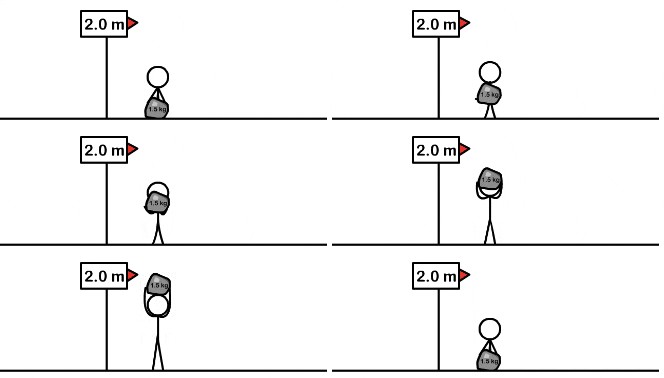
Watch the clip showing a man lifting a rock to a height of 2 m above his head. The rock has a mass of 1,5 kg. Take gravitational acceleration to be 9,8 m.s-2.
KINETIC ENERGY
Watch the clip showing a remote-controlled aeroplane of mass 4 kg flying at a speed of 2,42 m.s-1.

What is the kinetic energy of the plane?
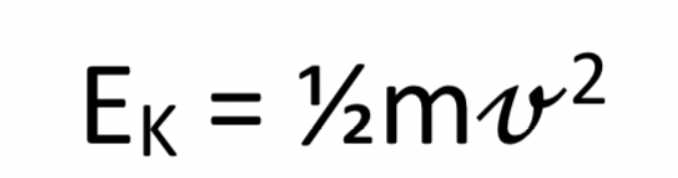
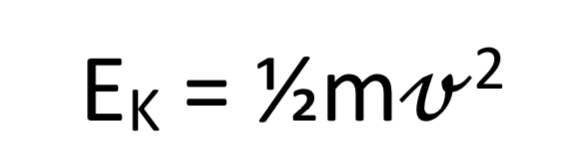
Consider the formula for kinetic energy:
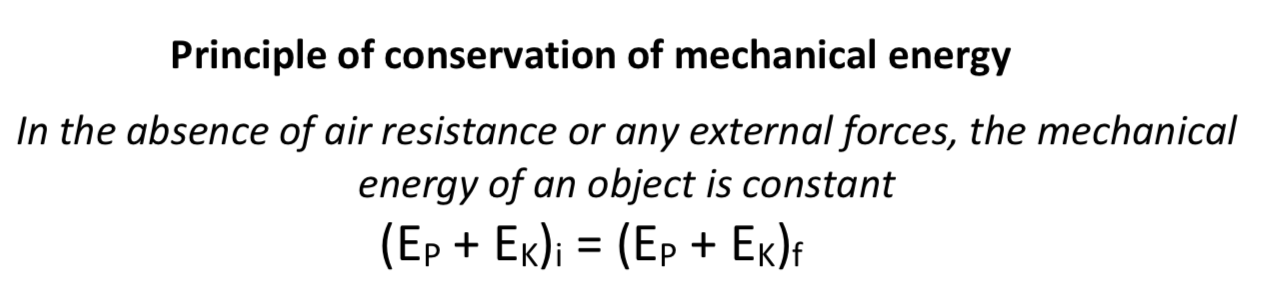
Watch what happens to an object's mechanical energy when it is dropped (assuming a closed system, i.e. without friction).
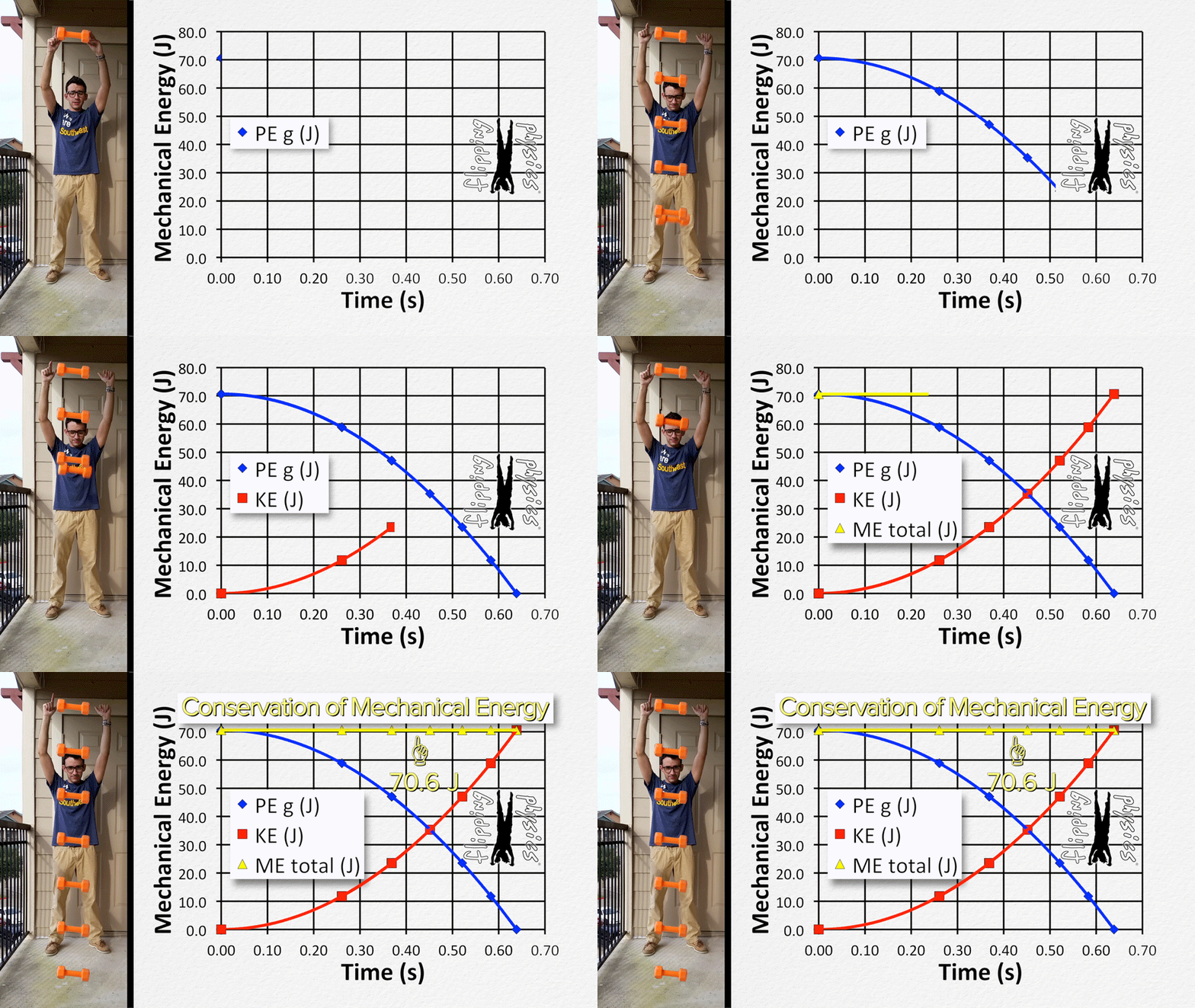
Does the following increase, decrease, or stay the same in an ideal situation as it falls to the ground?
| Draggable item | arrow_right_alt | Corresponding Item |
|---|---|---|
Gravitational potential energy | arrow_right_alt | increases |
Mechanical energy | arrow_right_alt | decreases |
Kinetic energy | arrow_right_alt | remains the same |
If the system is not closed, what most likely would the energy be lost as?
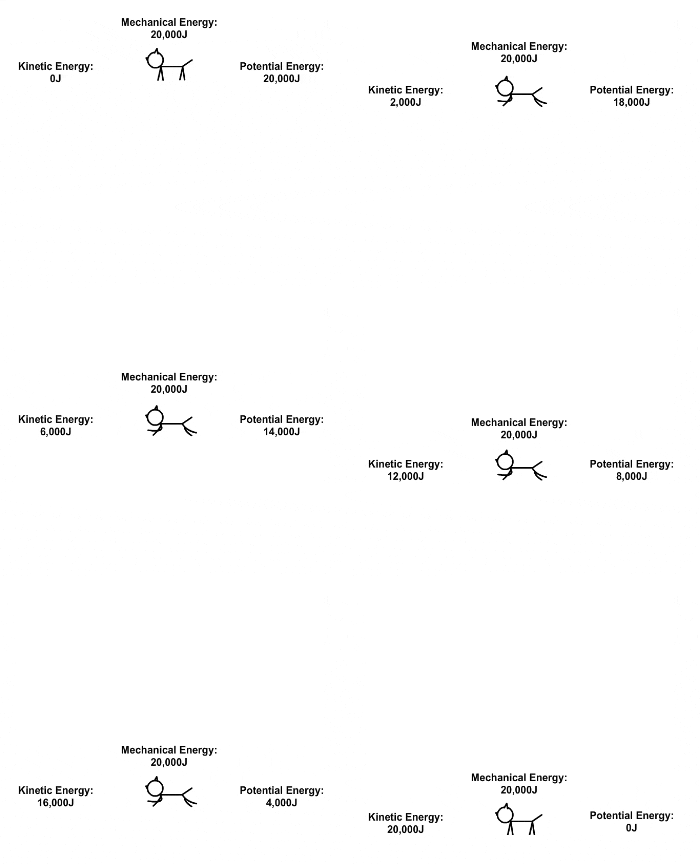
What is the mass of the cat? Round your answer to the nearest whole number and use the correct units.
Match the following values of EK and EP for the cat as it falls towards the ground.
| Draggable item | arrow_right_alt | Corresponding Item |
|---|---|---|
EK = 12 000 J | arrow_right_alt | EP = 20 000 J |
EK = 20 000 J | arrow_right_alt | EP = 18 000 J |
EK = 2 000 J | arrow_right_alt | EP = 8 000 J |
EK = 0 J | arrow_right_alt | EP = 0 J |
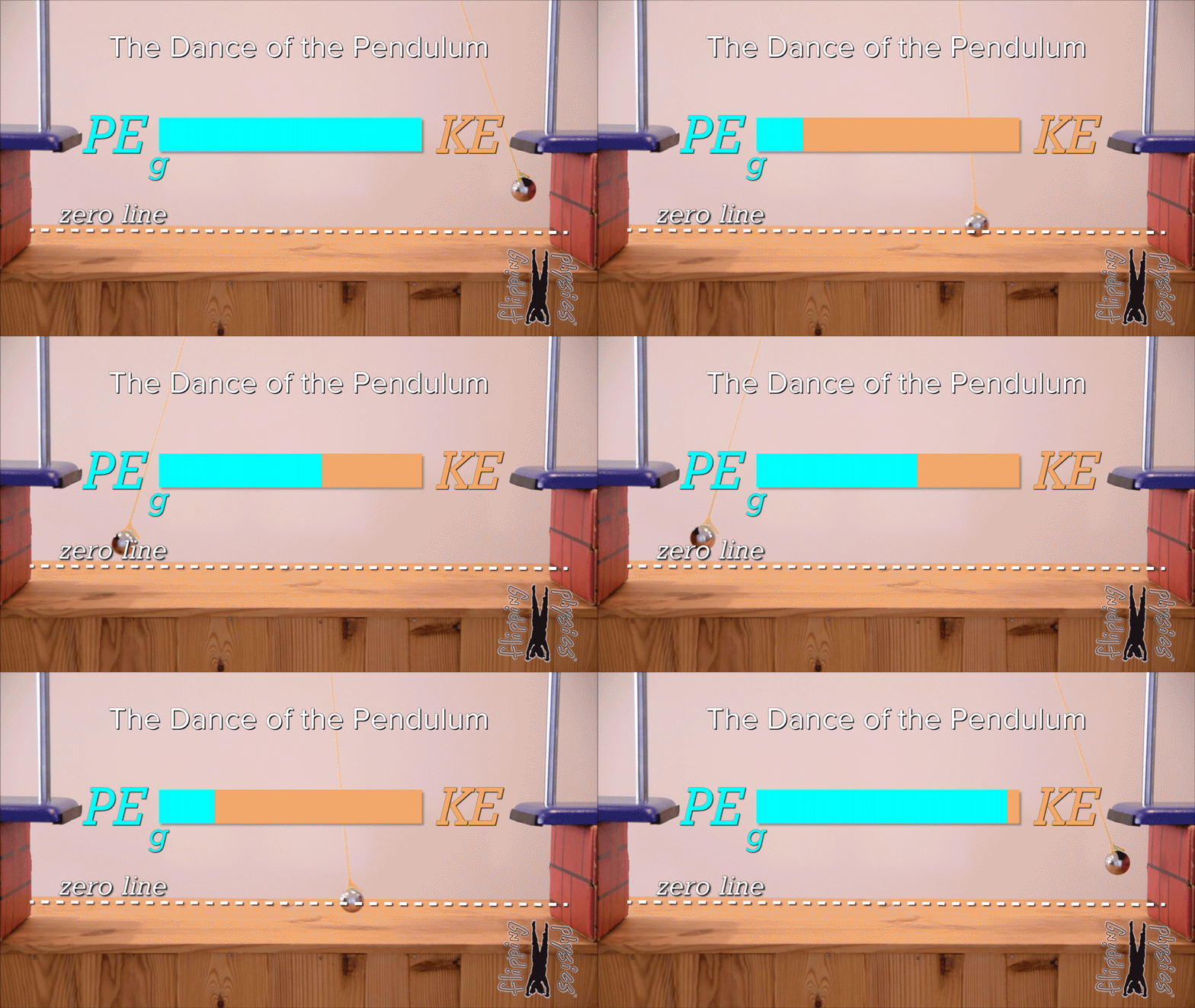
Look at the clip showing a pendulum swinging. What energy is at a maximum value when the pendulum is in this position (19)?
Look at the clip showing a pendulum swinging. What is at a maximum value when the pendulum is in this position (20)?
PLEASE COMPLETE ACTIVITY 9.1 IN YOUR WORKBOOK.
IT IS DUE BY THE END OF TERM 2
THIS SECTION WILL BE INCLUDED IN YOUR MIDYEAR EXAM.
I acknowledge that I have seen this instruction to finish Activity 9.1 in my own time, due by end of Term 2
What is the gravitational potential energy of the rock when it is on the ground?
What is the gravitational potential energy of the rock when it is at its maximum height?
What is the kinetic energy of the rock when it is at its maximum height?
What is the total mechanical energy of the rock when it is at its maximum height?
What is the mathematical relationship between kinetic energy and mass?
This relationship means that if the mass of the object is doubled, the kinetic energy of the object will .....
What is the mathematical relationship between kinetic energy and velocity?
This relationship means that if the speed of the object is doubled, the kinetic energy of the object will .....
Assume the cat has a mass of 4 kg. What is the speed of the cat (in m.s-1) when it hits the ground? Round to nearest whole number (if necessary). No units.
Use the law of conservation of mechanical energy to perform the following calculations.
and if the object is dropped
Take gravitational acceleration to be 9,8 m.s-2.
A 1,5 kg rock has 50 J of gravitational potential energy when dropped. What is its kinetic energy when it hits the ground? Round to nearest whole number and include the appropriate unit.
A 1,5 kg rock is dropped from a height of 10 meters. What is its kinetic energy when it hits the ground? Round to nearest whole number (if necessary) and include the appropriate unit.
A 1,5 kg rock is falling. When it is 35 m above the ground, its speed is 6 m.s-1. How much kinetic energy does it have at the moment it hits the ground? Round to nearest whole number (if necessary) and include the appropriate unit.
A 1,5 kg rock is dropped from a height of 46 meters. What is its speed (in m.s-1) when it hits the ground? Round your answer to the nearest whole number (if necessary. No units.
A 1,5 kg rock is falling. When it is 35 m above the ground, its speed is 6 m.s-1. What is its speed when it hits the ground? Round your answer to the nearest whole number (if necessary). No units.
A 1,5 kg rock is falling. When it is 35 m above the ground, its speed is 6 m.s-1. What is its speed when it is 5 meters off the ground? Round your answer to the nearest whole number (if necessary). No units.
How much potential energy does a 1,5 kg rock have when dropped, if it has a speed of 26 m.s-1 when it is 5 meters above the ground? Round to nearest whole number (if necessary) and include the appropriate unit.
How much mechanical energy does a 1, 5 kg rock which is dropped have, if it has 20 J of kinetic energy and 15 J of potential energy a few seconds later? Round to nearest whole number (if necessary) and include the appropriate unit.