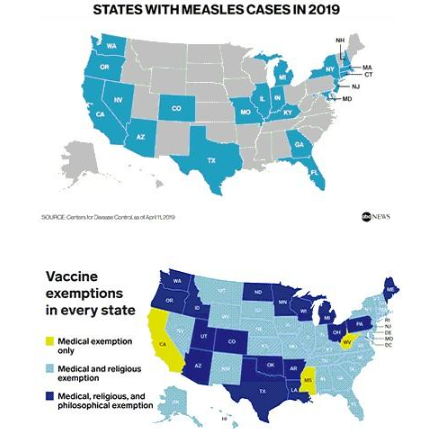
There are two multiple choice questions for the following data.
3
Which exemptions seem to have the highest rate of measles outbreaks? (LS1.A)
Which exemptions seem to have the highest rate of measles outbreaks? (LS1.A)
3
NGSS LS1-2 CCC: Systems and Patterns DCI: LS1.A
NGSS LS1-2 CCC: Systems and Patterns DCI: LS1.A
In microbiology, bacteria that are classified as "lactose fermenters" must produce specific enzymes to utilize lactose as a carbon source. Which enzyme is responsible for the actual chemical breakdown (hydrolysis) of the disaccharide lactose into the monosaccharides glucose and galactose?
The E. coli that normally live in the human large intestines and produce vitamin K for the body to use would best be termed a ________ relationship. (LS1.A)
The term facultative refers to (LS1.A)
Which best describes how athlete’s foot is spread to other individuals? (LS1.A)
The outcome of the Gram stain is based on differences in the cells (LS1.A)
Which would most likely prevent a cold virus from spreading through a classroom? (LS1.A)
Which of the following is not a function of DNA and RNA? (LS1.A)
Which type of medium can distinguish different species or types of microorganisms based on an observable change in the colonies or in the medium? (LS1.A)
Which of the following is not a characteristic of bacteria? (LS1.A)
The site(s) for most ATP synthesis in bacterial cells is (are) the (LS1.A)
Which of the following is NOT a characteristic of viruses?
Non essential DNA which can aide in antibiotic resistance in bacterial cells is located here (LS1.A)
The term "antibiotic resistant" refers to bacteria that ___. (LS1.A)
How do enveloped viruses differ from non-enveloped viruses?
When observing bacterial growth on MacConkey agar, how can you distinguish a lactose fermenter (like E. coli) from a non-lactose fermenter (like Salmonella)?
Gram-positive bacteria retain the primary crystal violet stain and appear purple under a microscope primarily because of which structural feature?
An organism that uses CO2 and light for its food needs would be called a(n) (LS1.A)
The movement of non-water substances from higher to lower concentration across a semipermeable membrane that does not need expenditure of energy is called (LS1.A)
When humans manipulate the genes of microorganisms, the process is called (LS1.A)
Agar is an important component of media because (LS1.A)
There are two multiple choice questions for the following data.
Which exemptions seem to have the highest rate of measles outbreaks? (LS1.A)
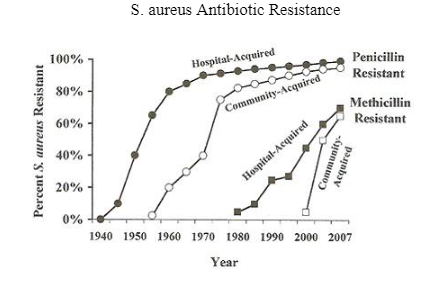
There are 4 multiple choice and 2 short answers with the following graph.
Predict what will occur to staph resistance by 2030. Why?
How would it be possible to stall the rising percentage of methicillin resistance S. aureus?
PE Question: LS2-1 Worth 5 pts
a. How do people use the idea of viral replication to argue that viruses are not alive?
b. Explain how viral replication can only occur with the use of host cells.
c. Create a model showing how a virus uses a cell's materials to create more viruses.
CCC: Cause and Effect:
You have been told to obtain mucus from a patient's lung and to perform microbiological staining in order to determine the identity of the pathogen causing a patient’s illness.
You first perform a Gram stain, but upon microscopic analysis you visualize a mixture of pink bacilli and purple cocci.
Explain the results you have just observed and discuss what you may now do in order to identify the pathogen.
For full credit: Include the 5 I's and the process of using selective and differential media to help you determine the potential pathogens
CER:
Bacterial and eukaryotic diseases are two different types of infections that affect the human body. Bacterial diseases are caused by bacteria, which are single-celled organisms that can reproduce and multiply on their own. Some common bacterial diseases include strep throat, tuberculosis, and urinary tract infections. On the other hand, eukaryotic diseases are caused by organisms that have a defined nucleus, such as fungi, parasites, and certain types of protists. Examples of eukaryotic diseases include athlete's foot, malaria, and giardiasis. While both types of diseases can have similar symptoms, such as fever and fatigue, they require different treatment approaches. Bacterial diseases are often treated with antibiotics, which target and kill the bacteria. Eukaryotic diseases, on the other hand, may be treated with antifungal medications, antiparasitic drugs, or other specific treatments depending on the type of infection. Understanding the differences between bacterial and eukaryotic diseases is important for effective diagnosis and treatment.
Question:
Are diseases due to eukaryotic microorganisms more devastating than bacterial diseases?
a. answer the claim with a because
b. use evidence in the above paragraph and your knowledge gained throughout the class
c. include how your evidence supports your claim
*Explain your choice by convincing someone that has the opposite idea as you. Use evidence and reasons to support your claim.
In the year 2000, measles was considered eradicated. In 2014, only 5 states reported cases of measles. More people are deciding not to vaccinate their children. Based on the trends, how many states will report measles in the year 2030? (LS1.A)
According to the data, where are you most likely to acquire methicillin resistant S. aureus (LS1.A)
You have staph skin infection and would like to receive penicillin to treat the infection. Why wouldn't this be a good idea? (LS1.A)
What trend is occurring in methicillin resistant S. aureus? (LS1.A)
Based on the graph, how quickly are bacteria able to evolve to a harsh environment. (LS1.A)