1
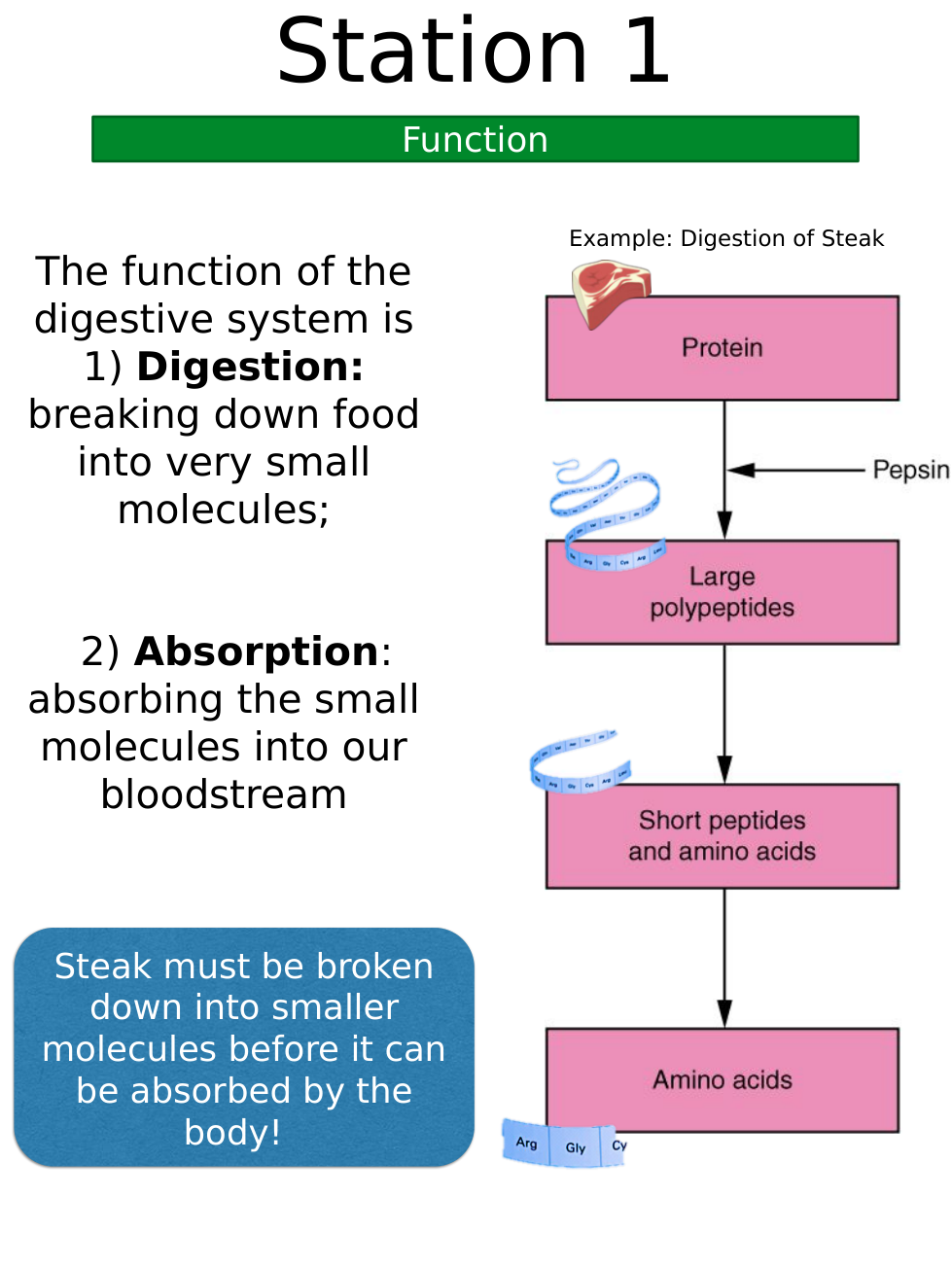
The function of the digestive system is:
1.
2.
1
What must happen to food before it can be absorbed by the body?
What must happen to food before it can be absorbed by the body?
The function of the digestive system is:
1.
2.
What must happen to food before it can be absorbed by the body?
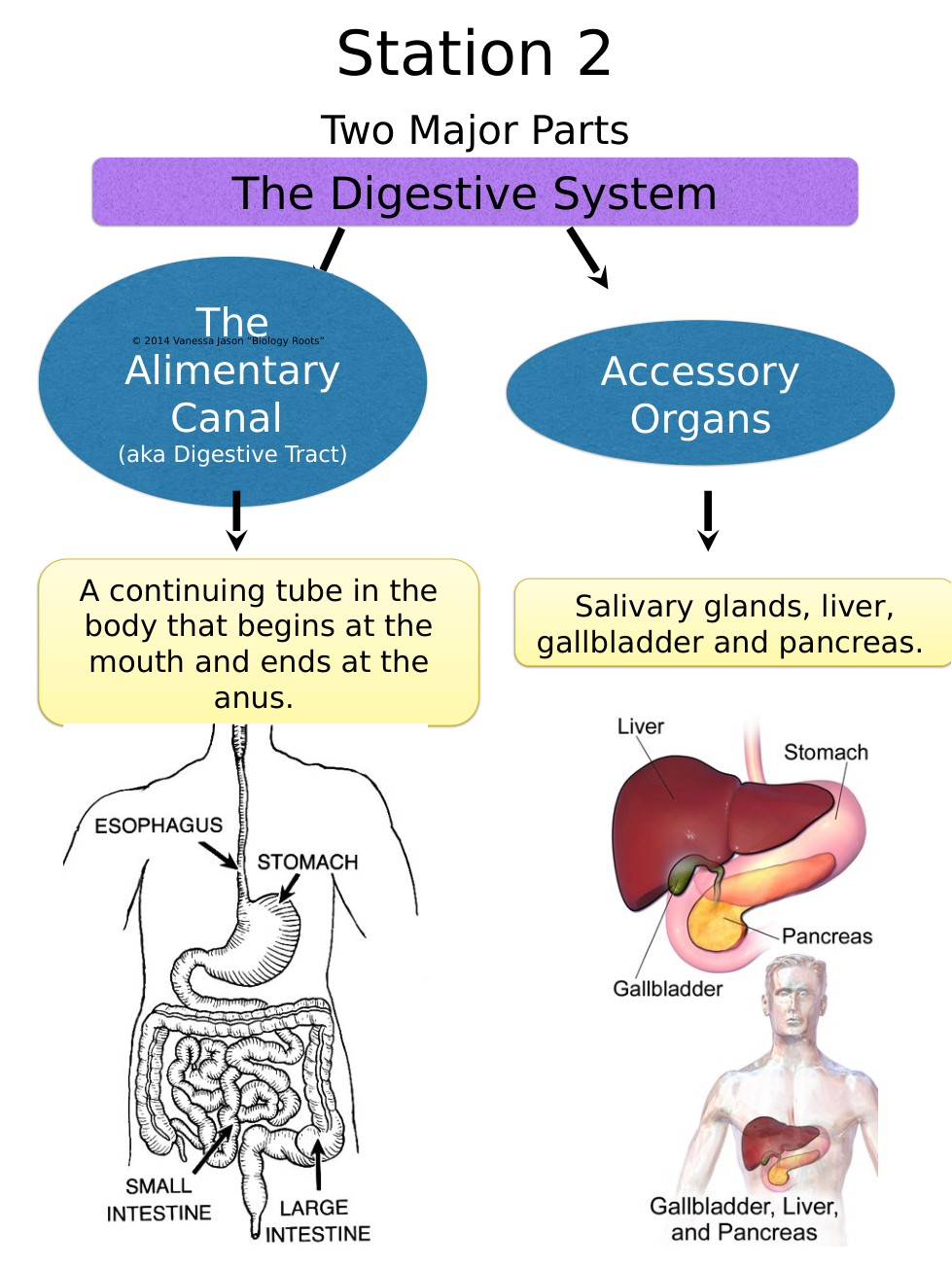
Another name for the digestive tract is the
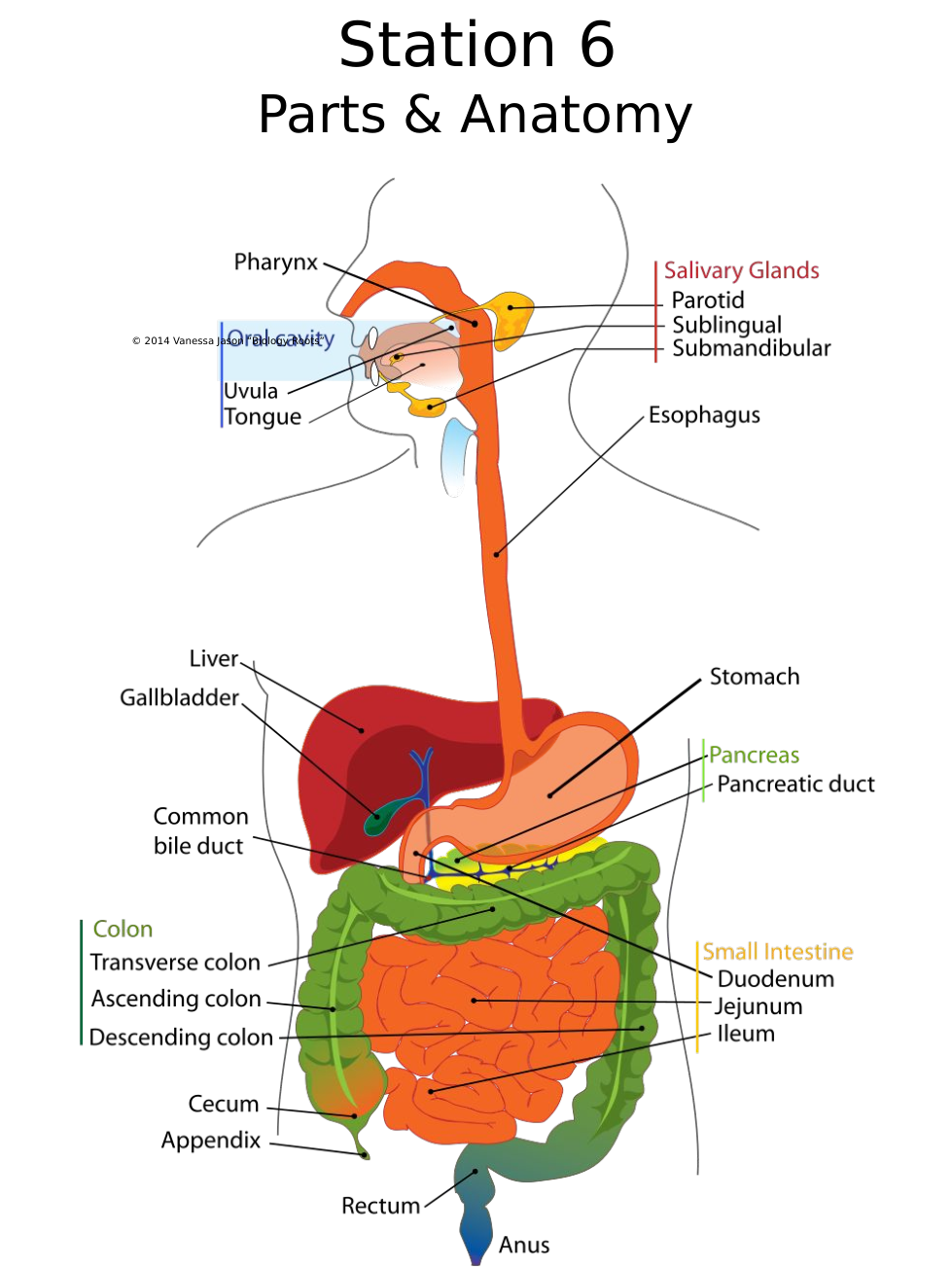
Categorize the 2 major parts of the digestive system
Digestive Tract
begins at mouth, end at the anus
esophagus
stomach
large and small intestines
salivary glands
liver
gallbladder
pancreas
Alimentary Canal
Accessory Organs
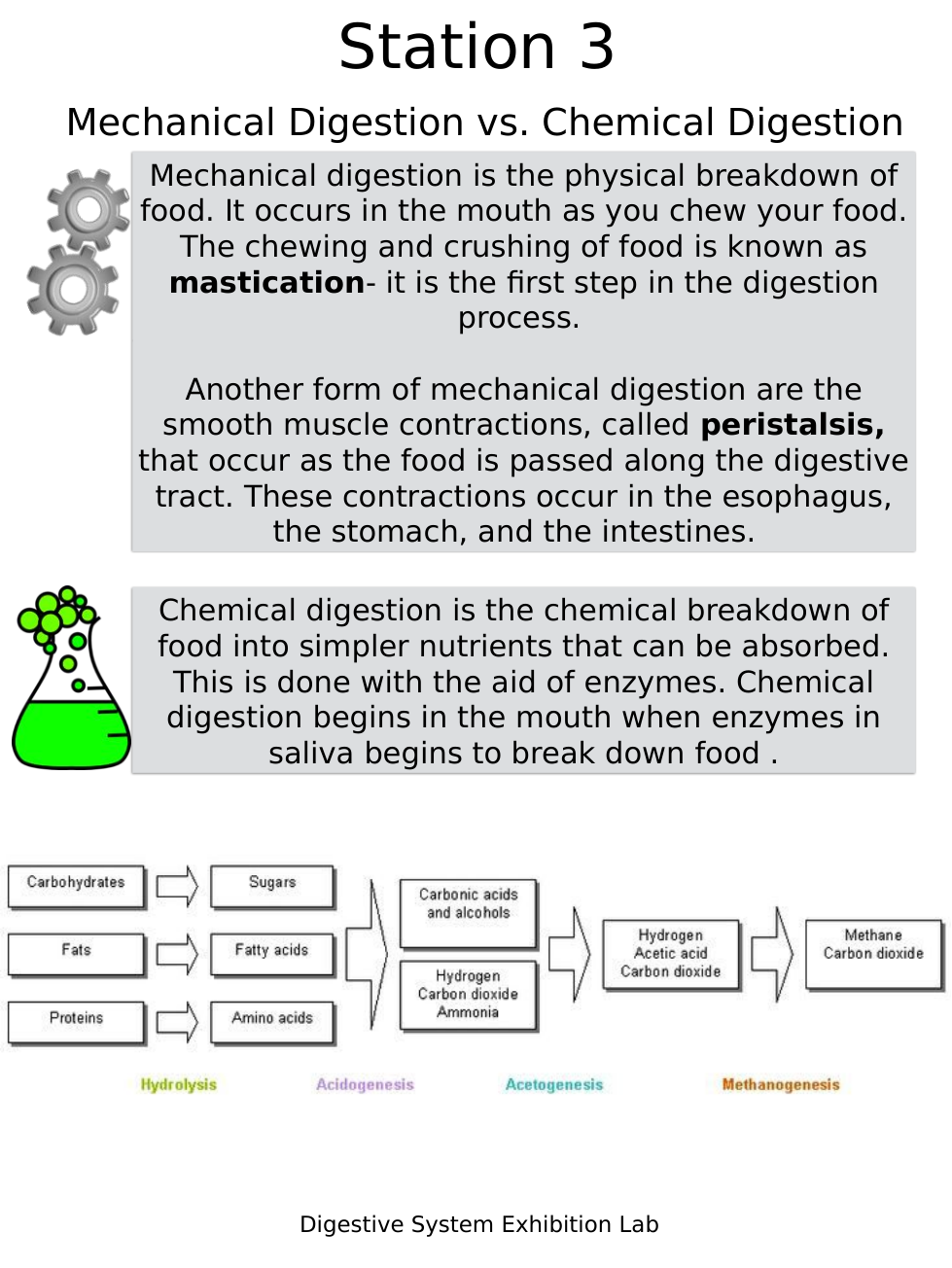
Mechanical digestion is the
Chemical digestion begins in the mouth when enzymes in
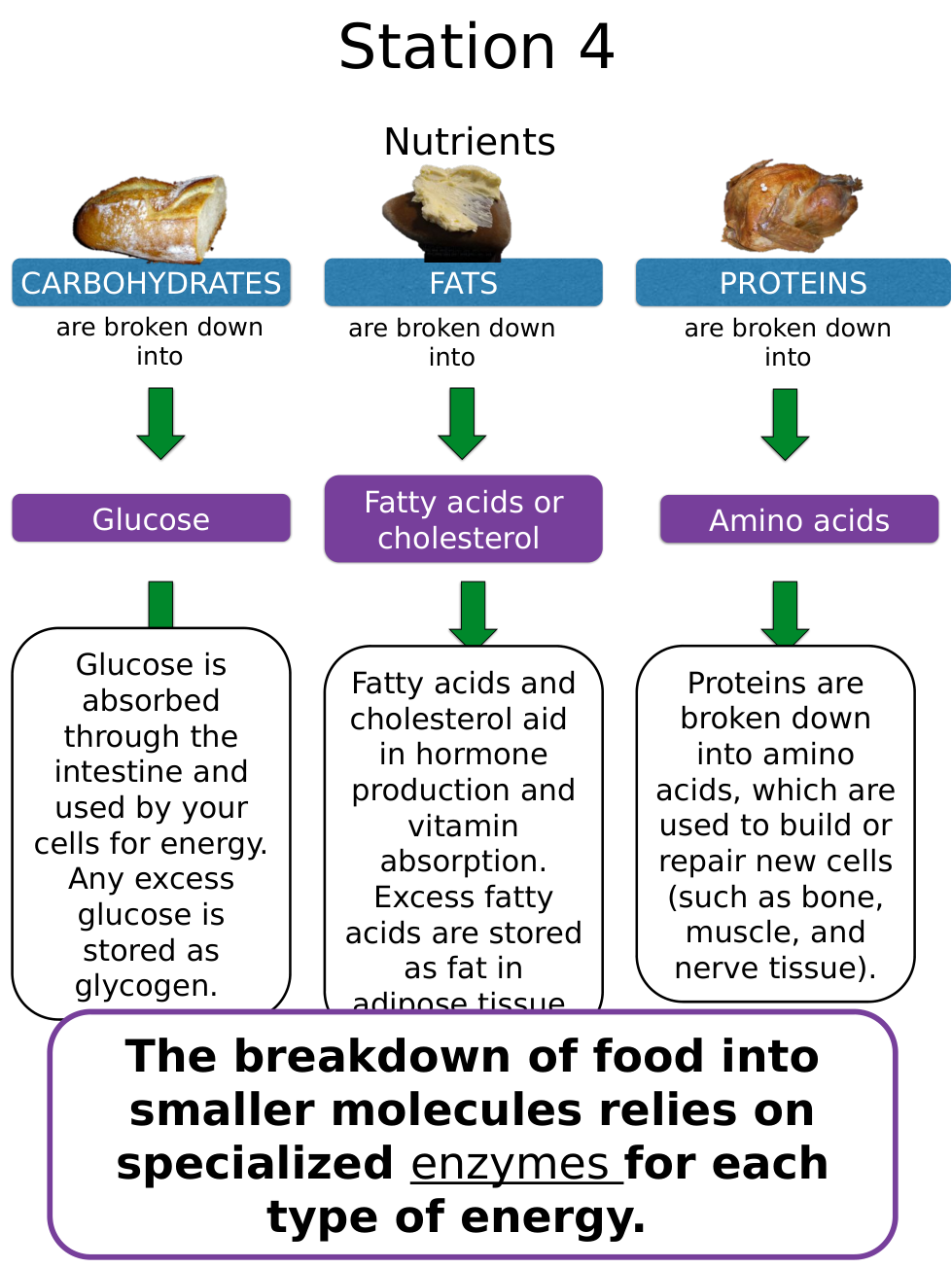
Carbohydrates, such as bread, rice and potatoes are broken down into
Fats, such as butter are broken down into
Proteins, such as chicken and fish, are broken down into
The breakdown of food into smaller molecules relies on specialized
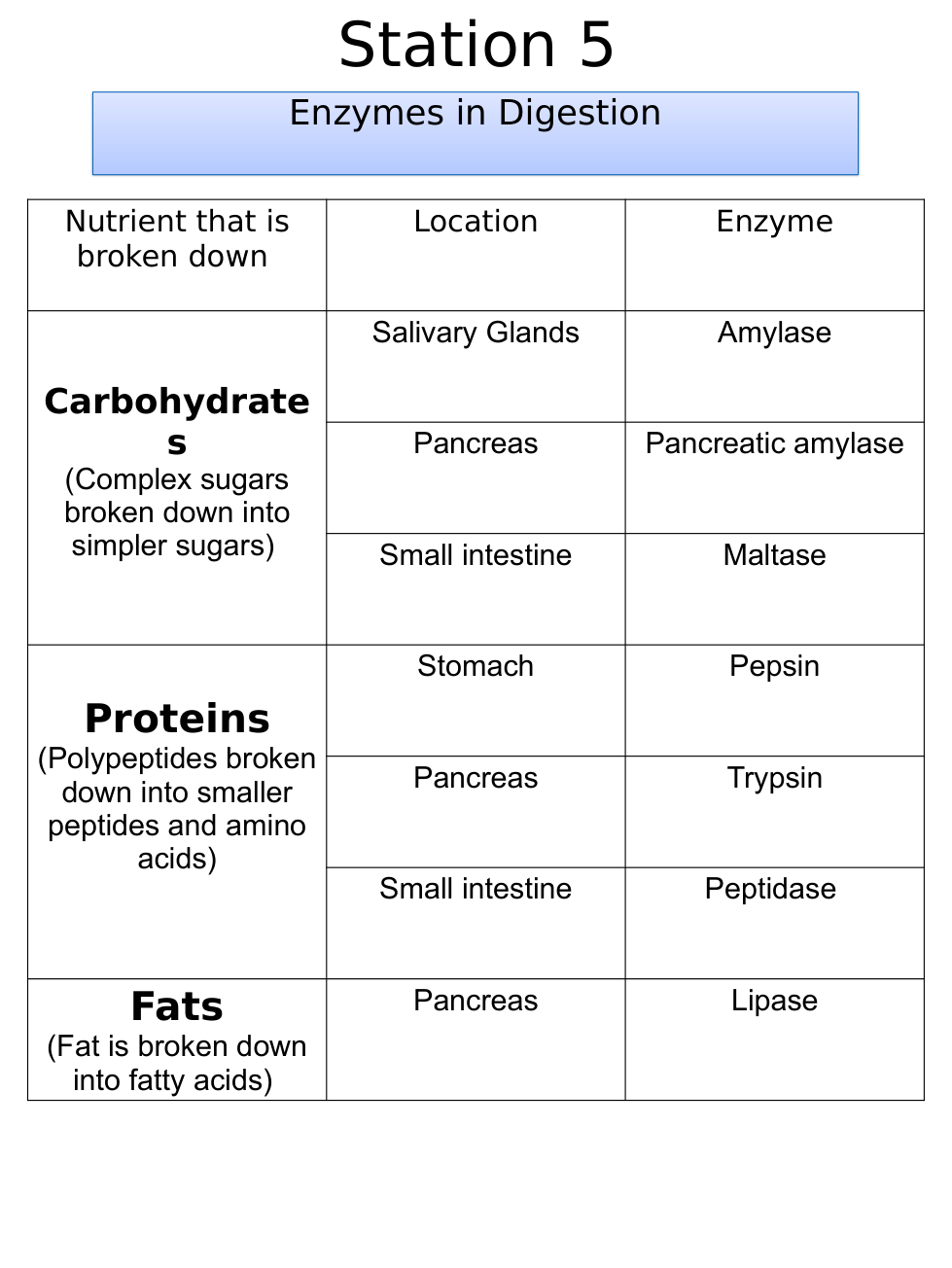
Enzymes which break down carbohydrates are
Enzymes which break down proteins are
Fats are broken down into fatty acids in the

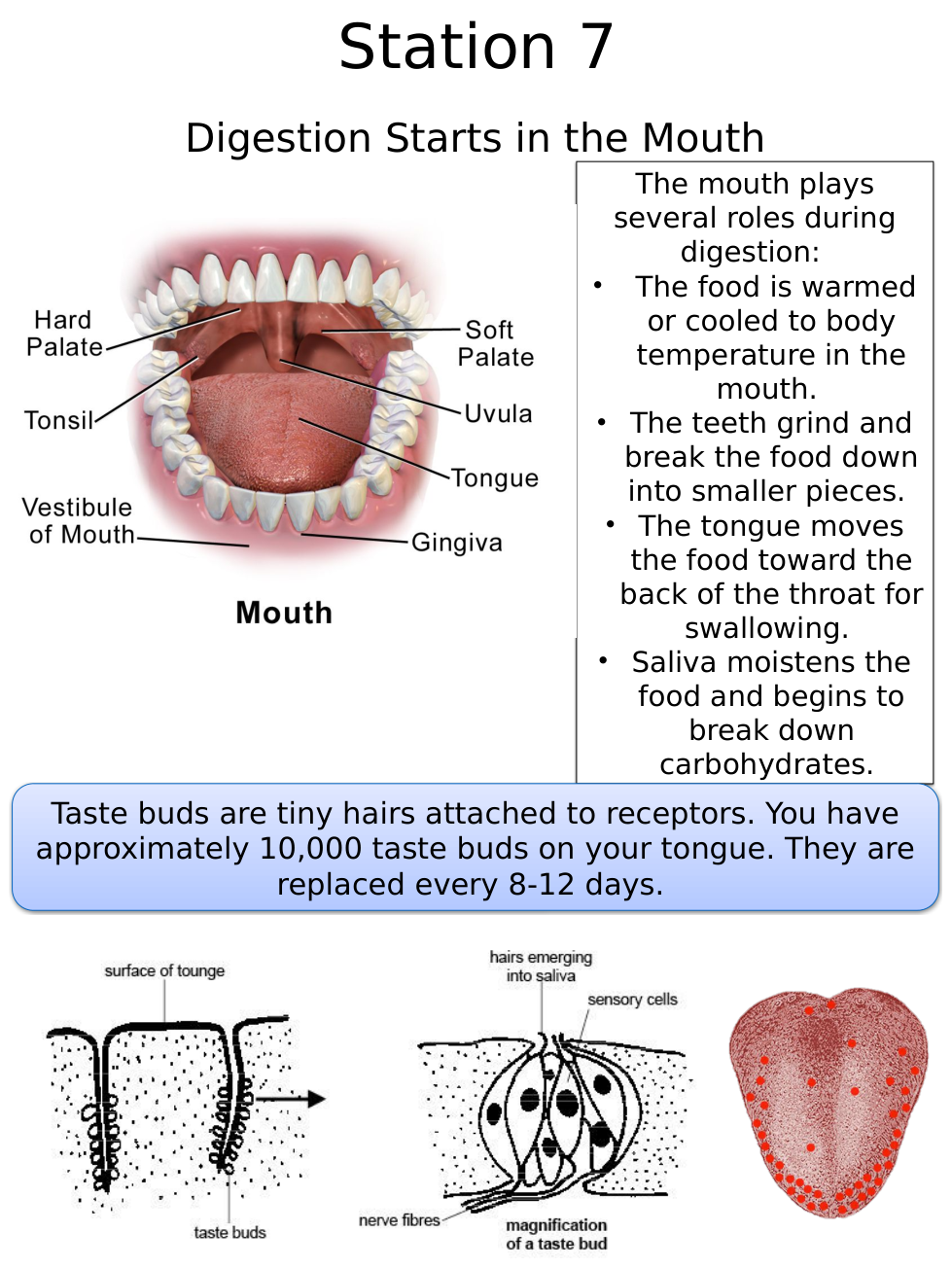
In the mouth, your food is
The teeth
The tongue
What are taste buds?
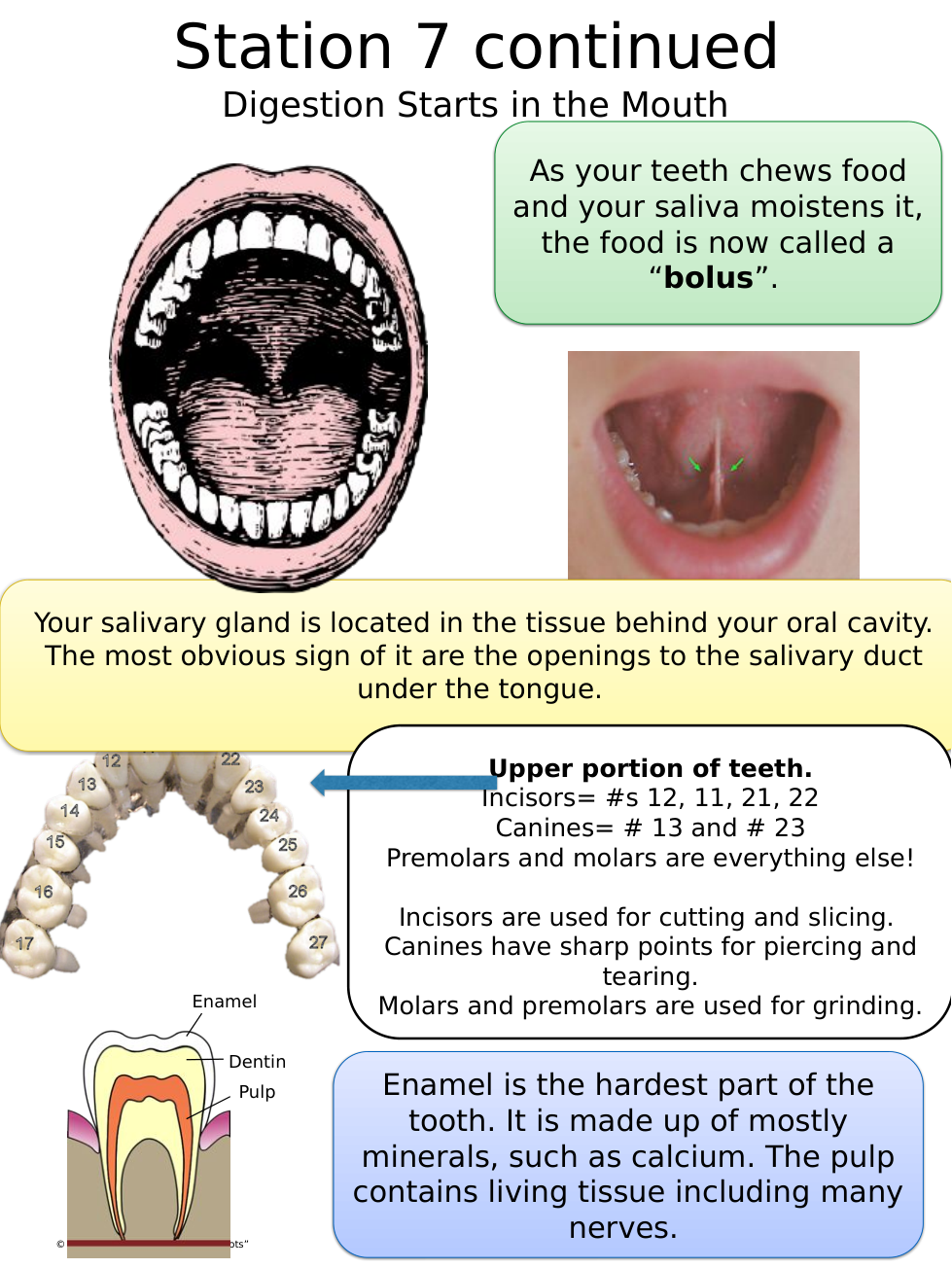
Once the mouth has digested food, the food is called a
Incisors are used for
Canines are used for
Molars and premolars are used for
There are many nerves in the
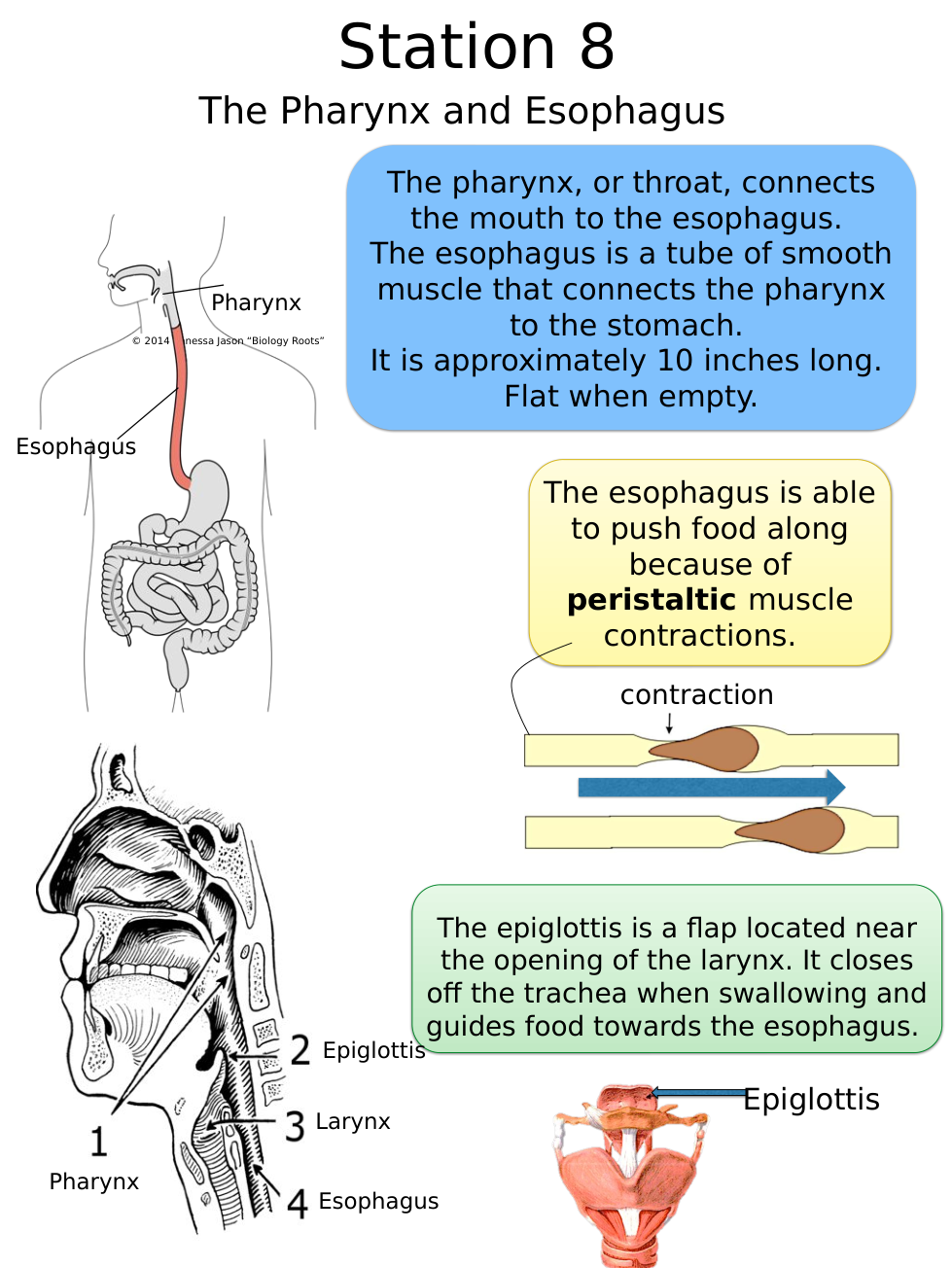
The
The esophagus is a tube made out of
The esophagus can push food toward the stomach because of
What is the role of the epiglottis?
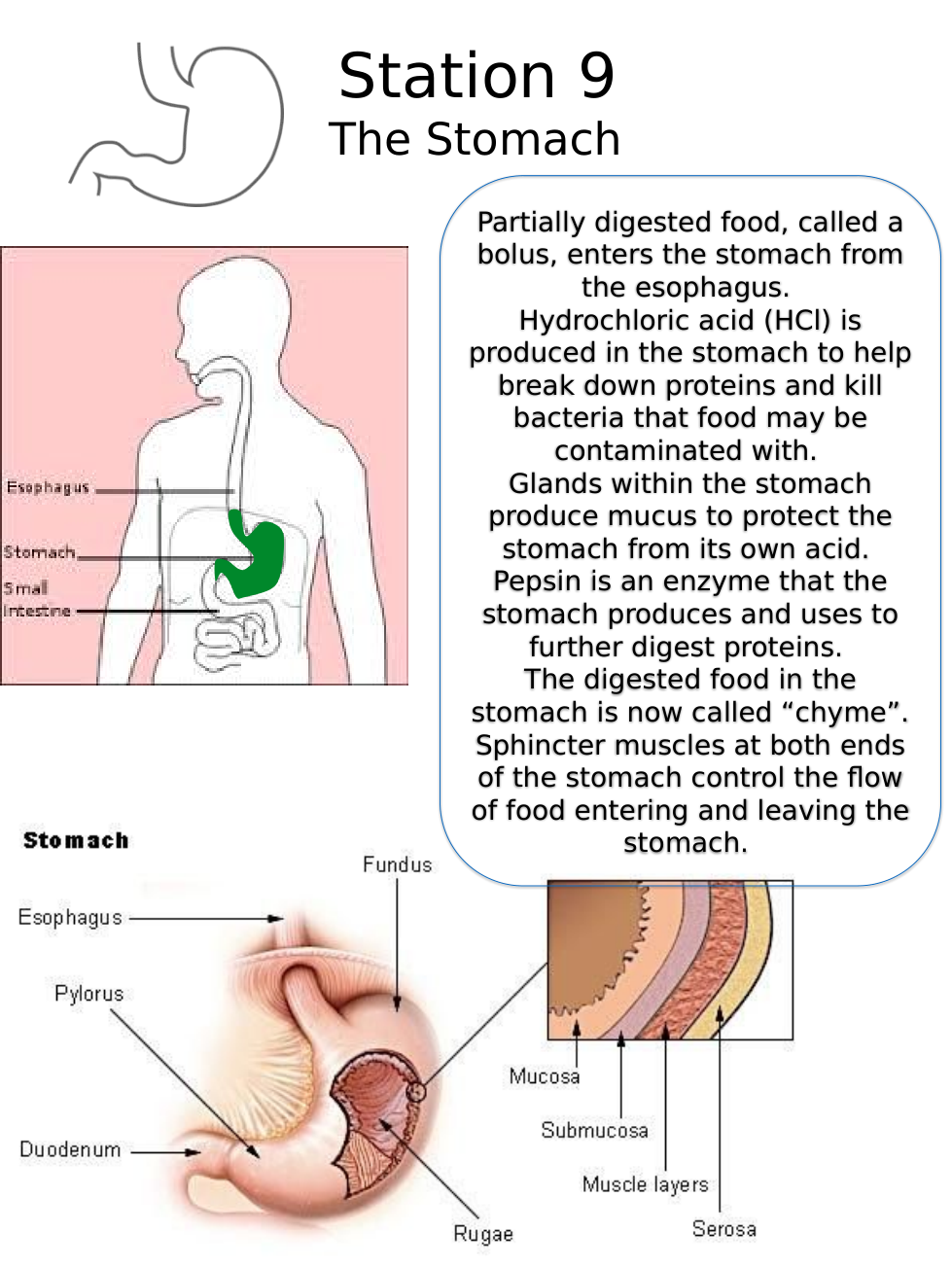
What is the role of Hydrochloric acid in digestion?
Glands in your stomach produce
Digested food in the stomach is called
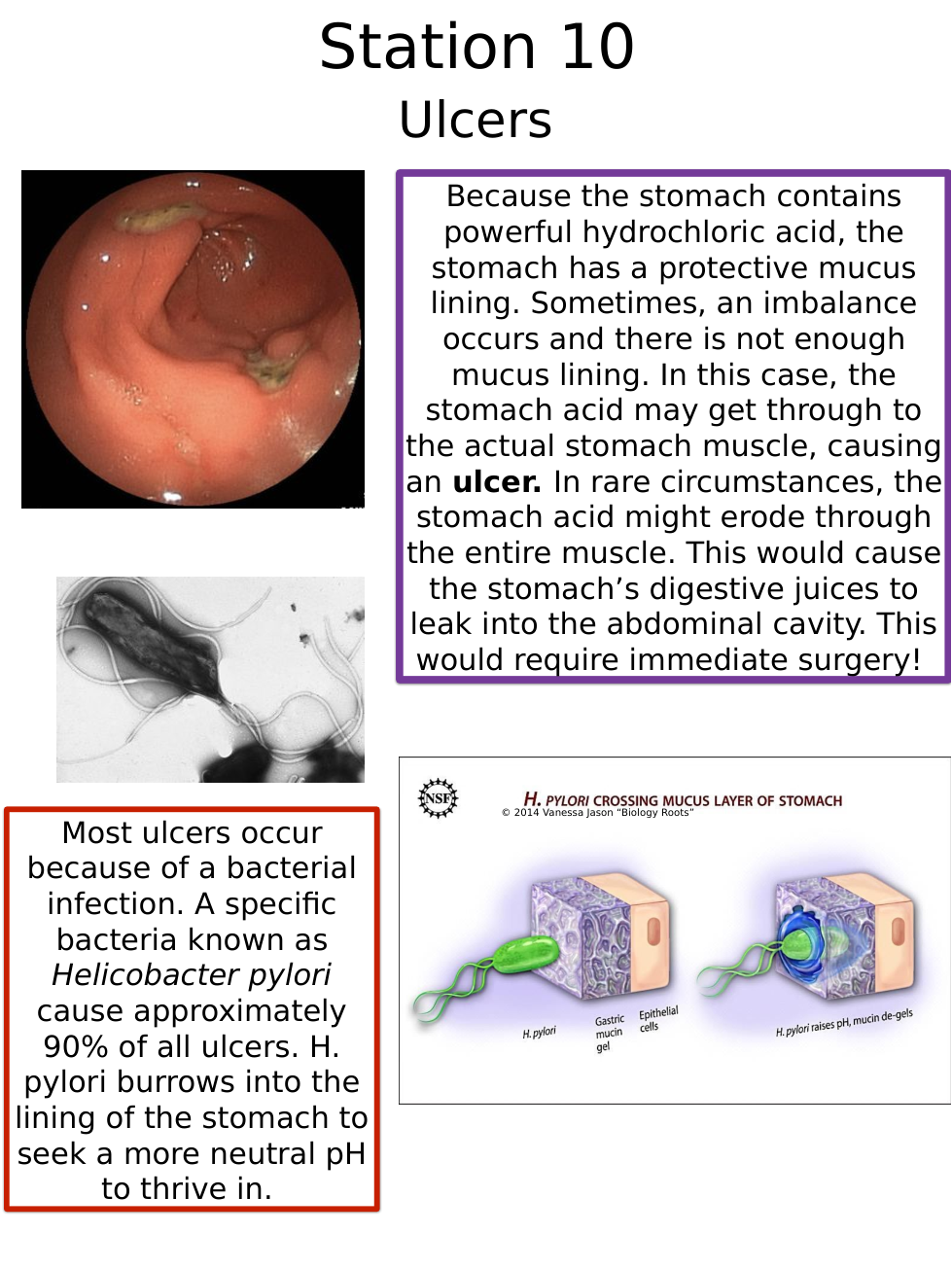
How do ulcers form?
Most ulcers occur because of a
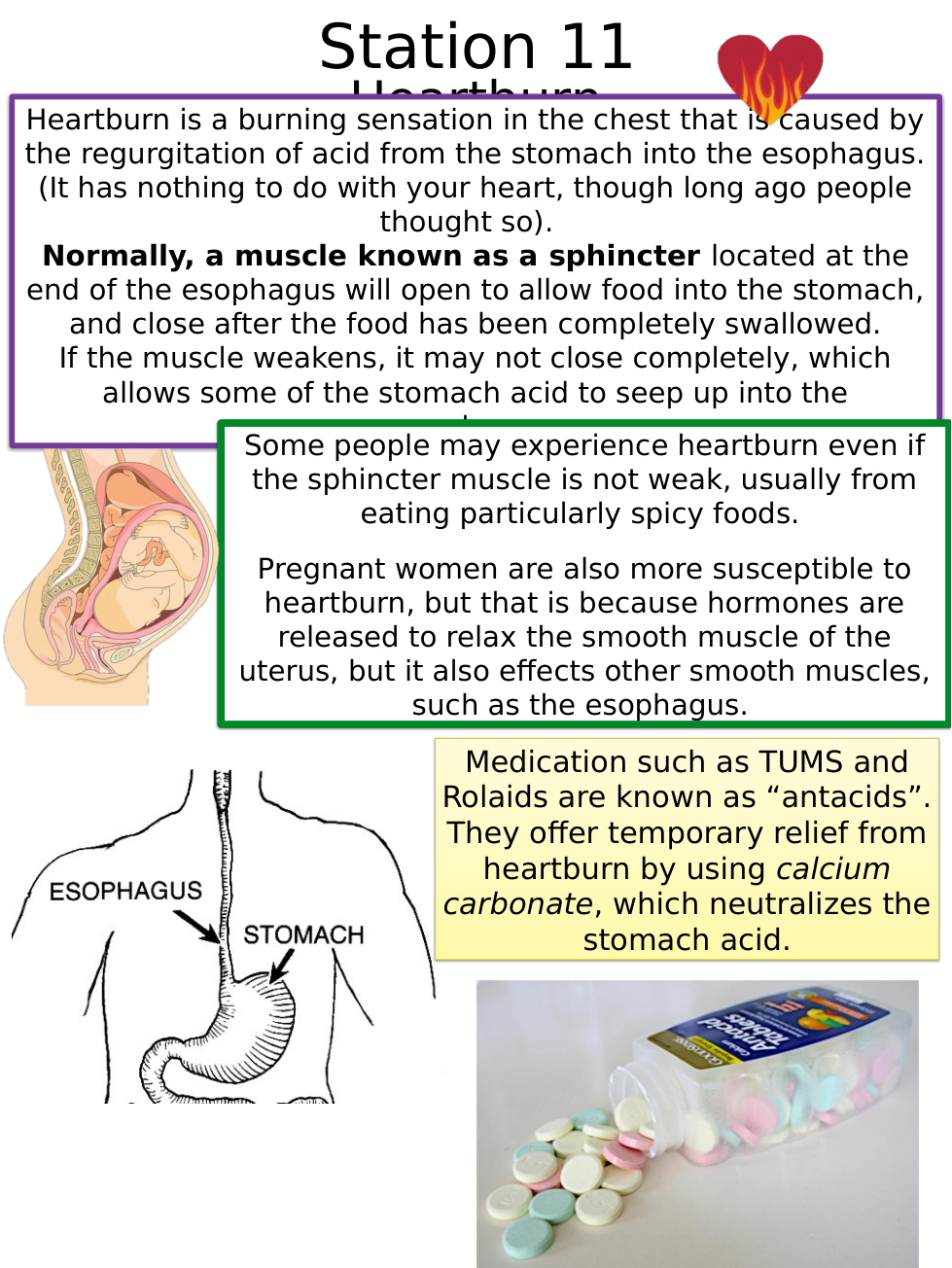
Why does heartburn occur more frequently during pregnancy?
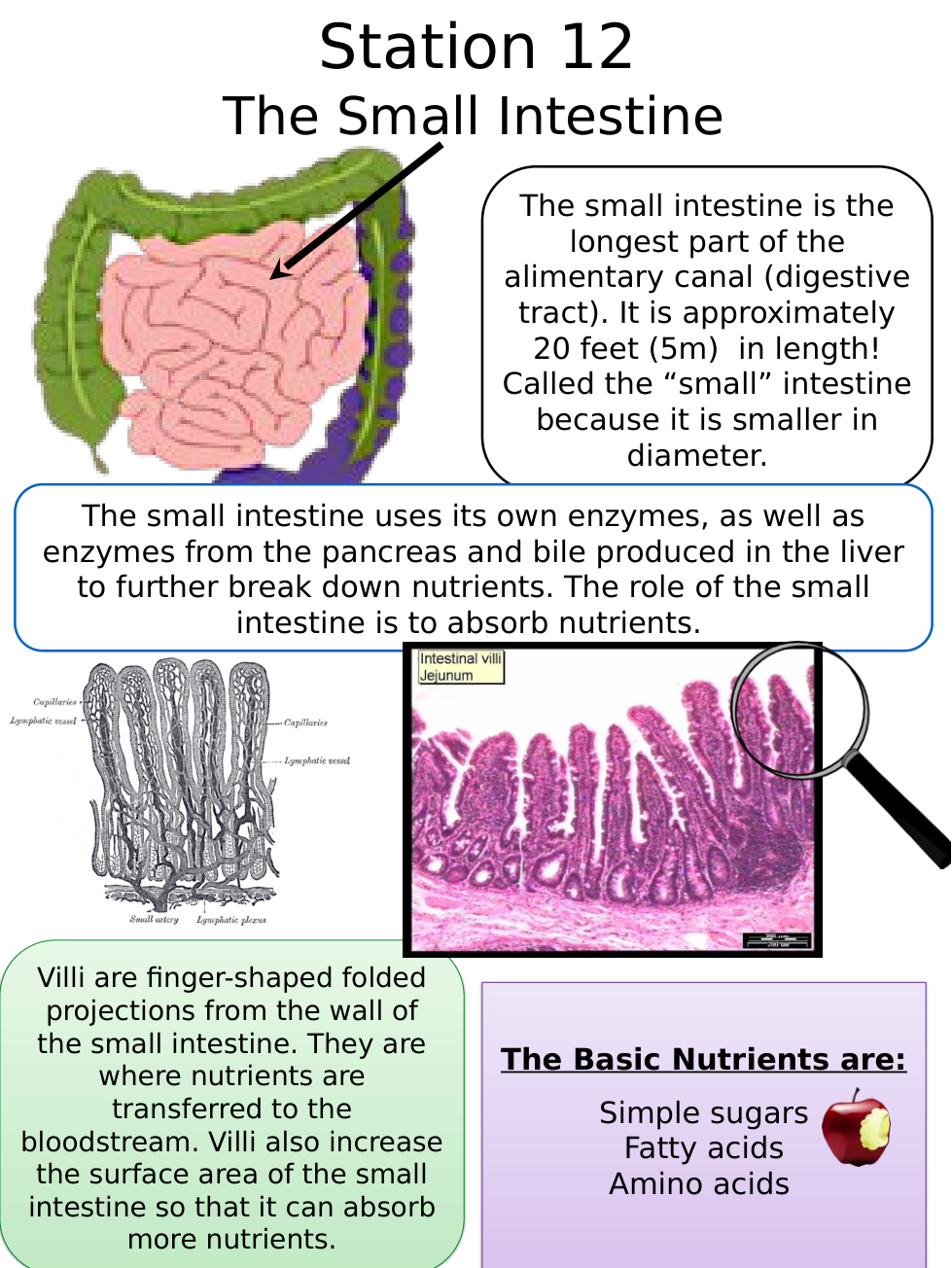
The small intestine is
The small intestine uses enzymes produced on its own, as well as enzymes from the
The role of the small intestine is to
What are villi and why are they important?
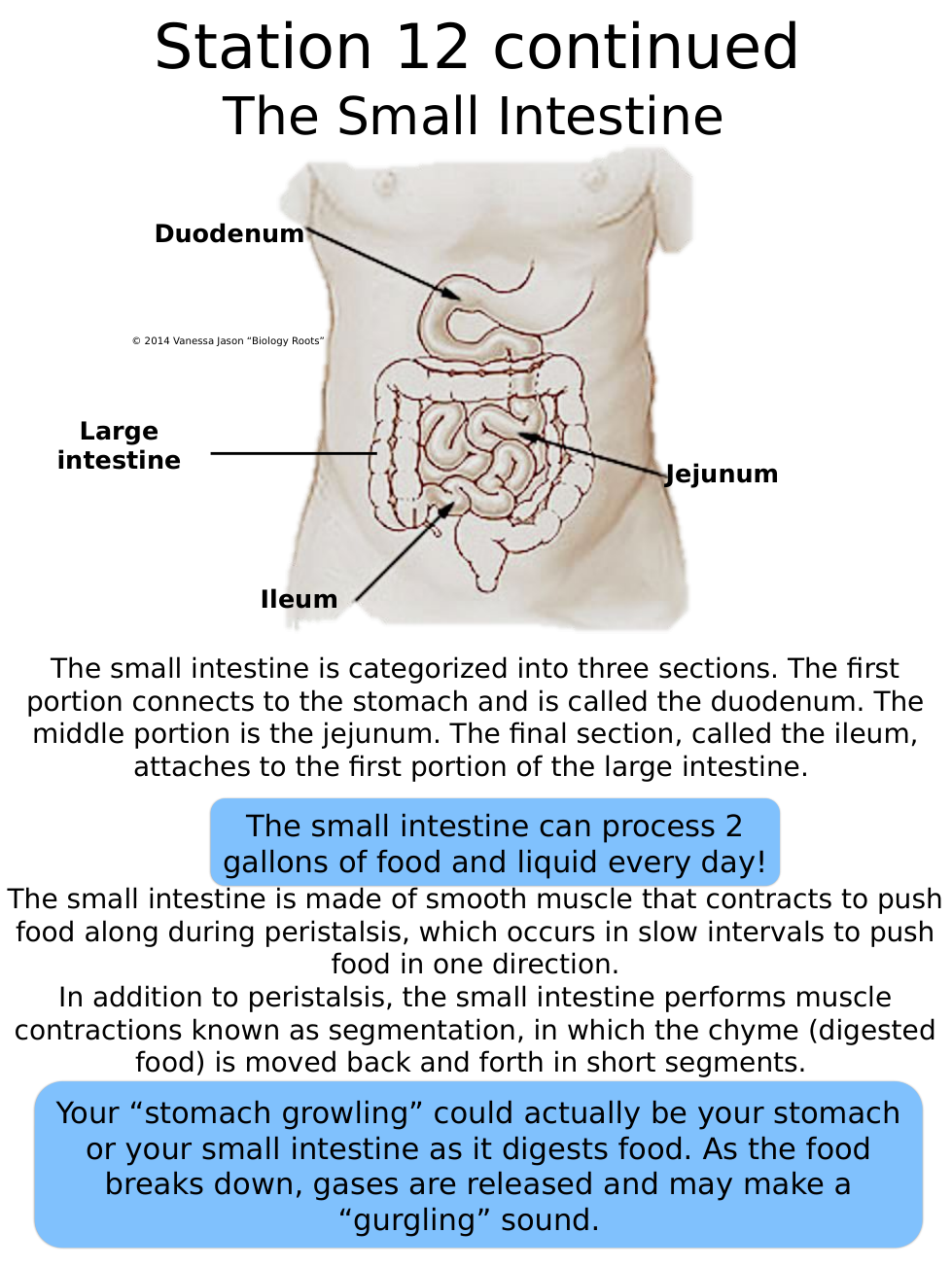
The first portion of the small intestine that connects to the stomach is called the
The middle portion of the small intestine is called the
The final portion that connects to the
The small intestine performs two types of muscle contractions known as
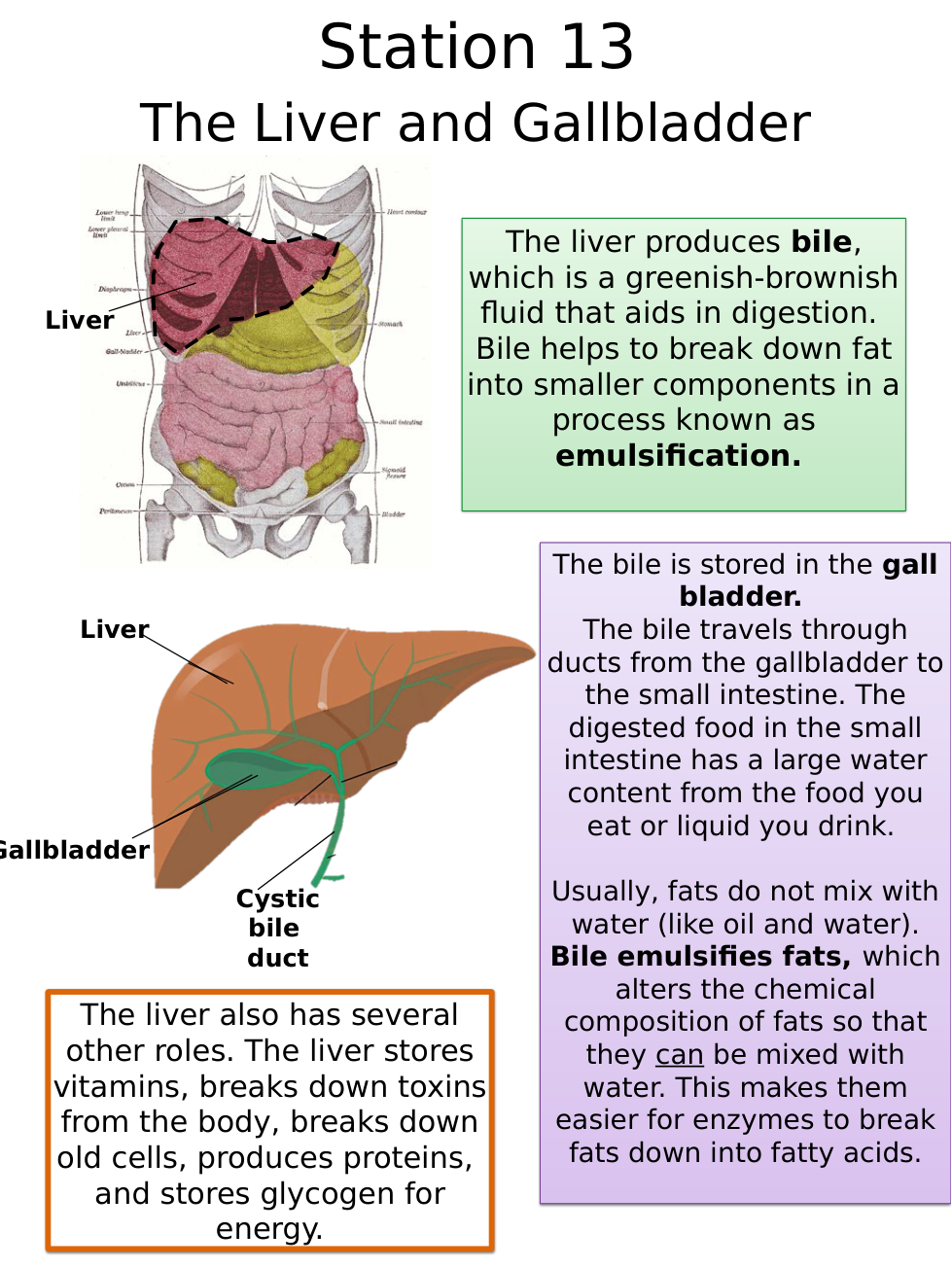
The liver produces
Bile breaks down
Bile is stored in the
Where is bile used?
What is emulsification?
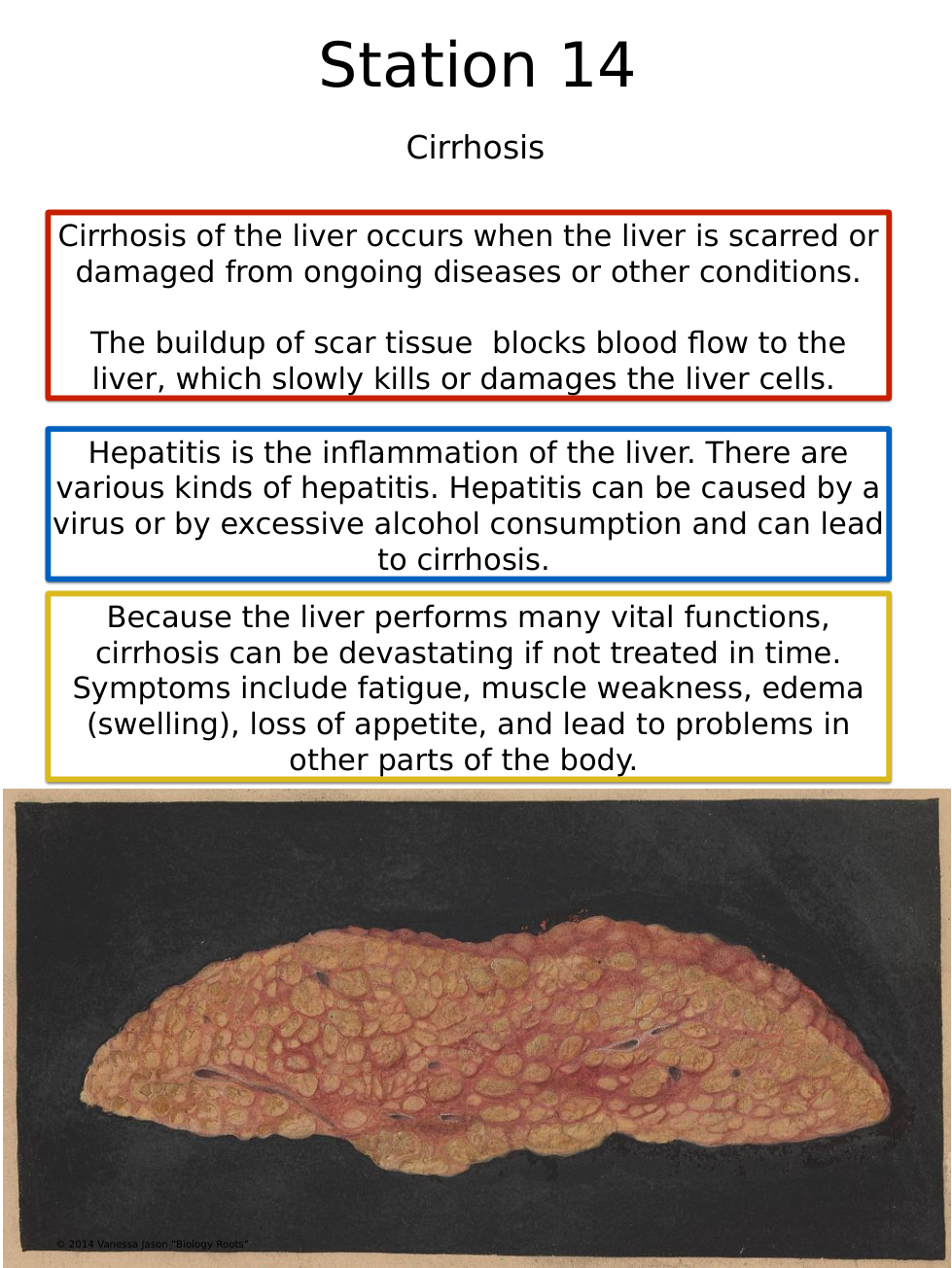
Cirrhosis of the liver occurs when the liver is
Scar tissue blocks
Symptoms of
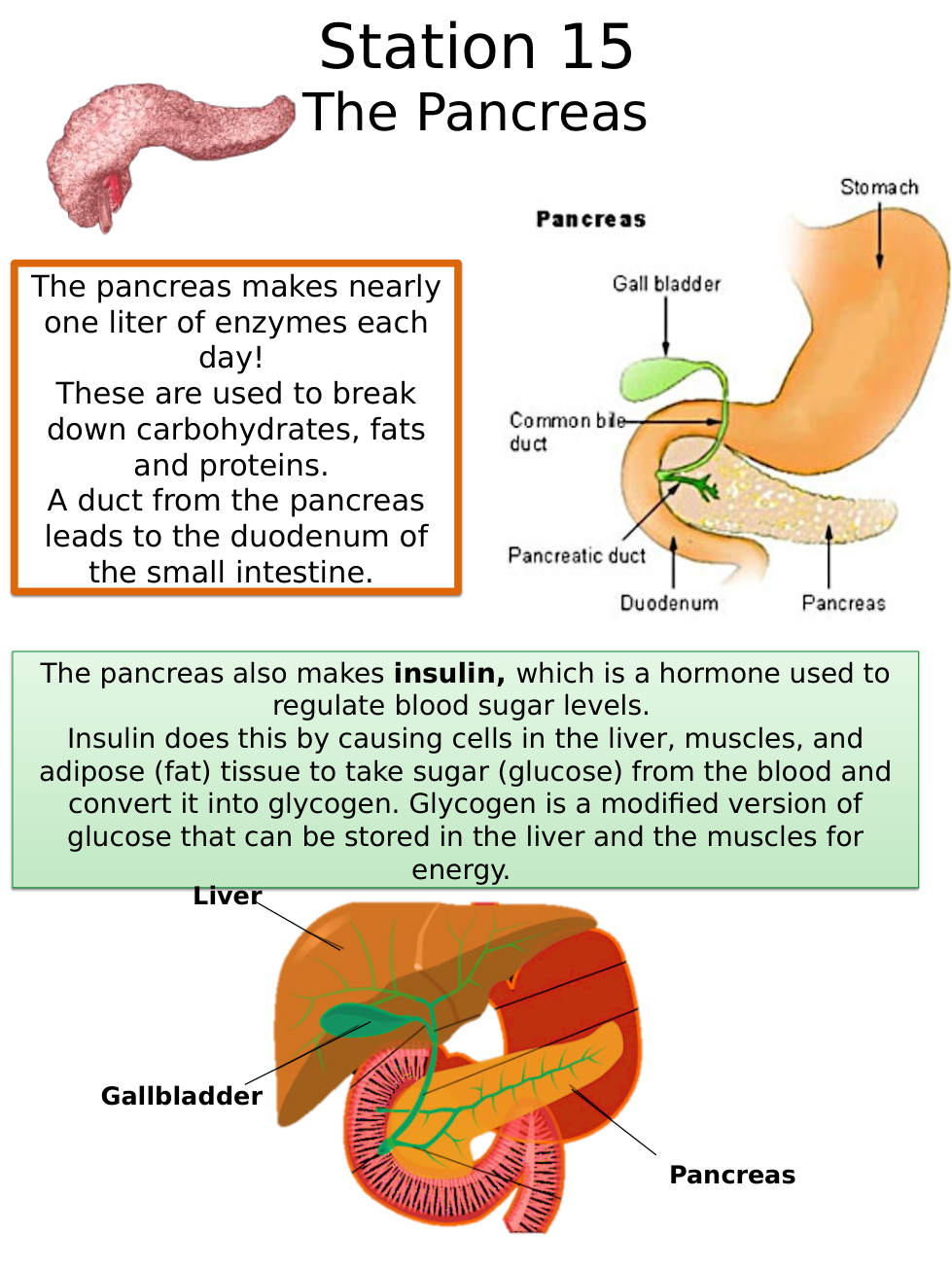
The pancreas makes about
A
The pancreas makes
Insulin can regulate the level of glucose in the blood by causing cells in the liver, muscles and adipose tissue to take glucose from the blood and store it as
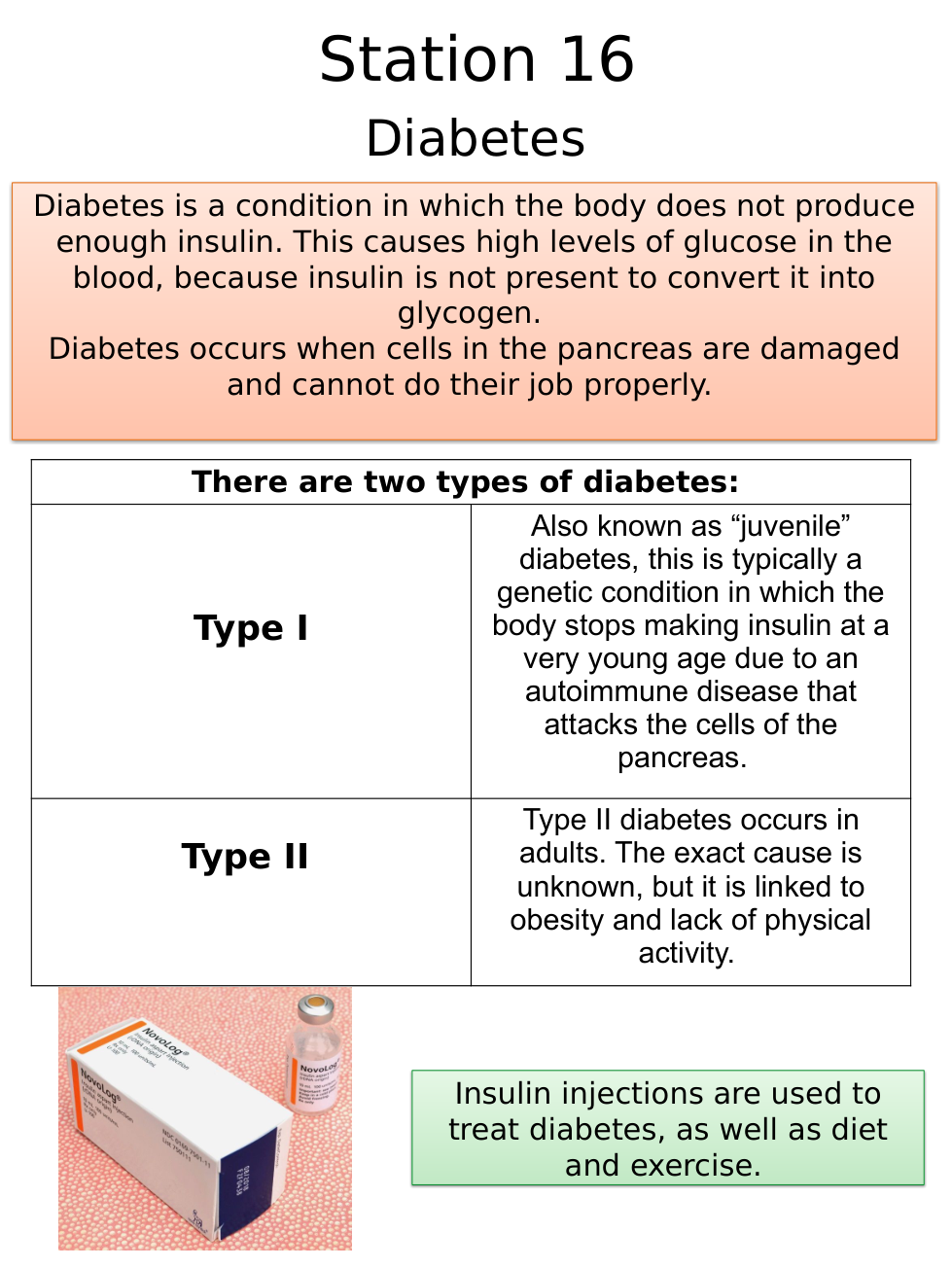
What is diabetes?
Insulin converts
Type I diabetes is also known as
Type II diabetes occurs in
Diet and exercise can treat diabetes as well as
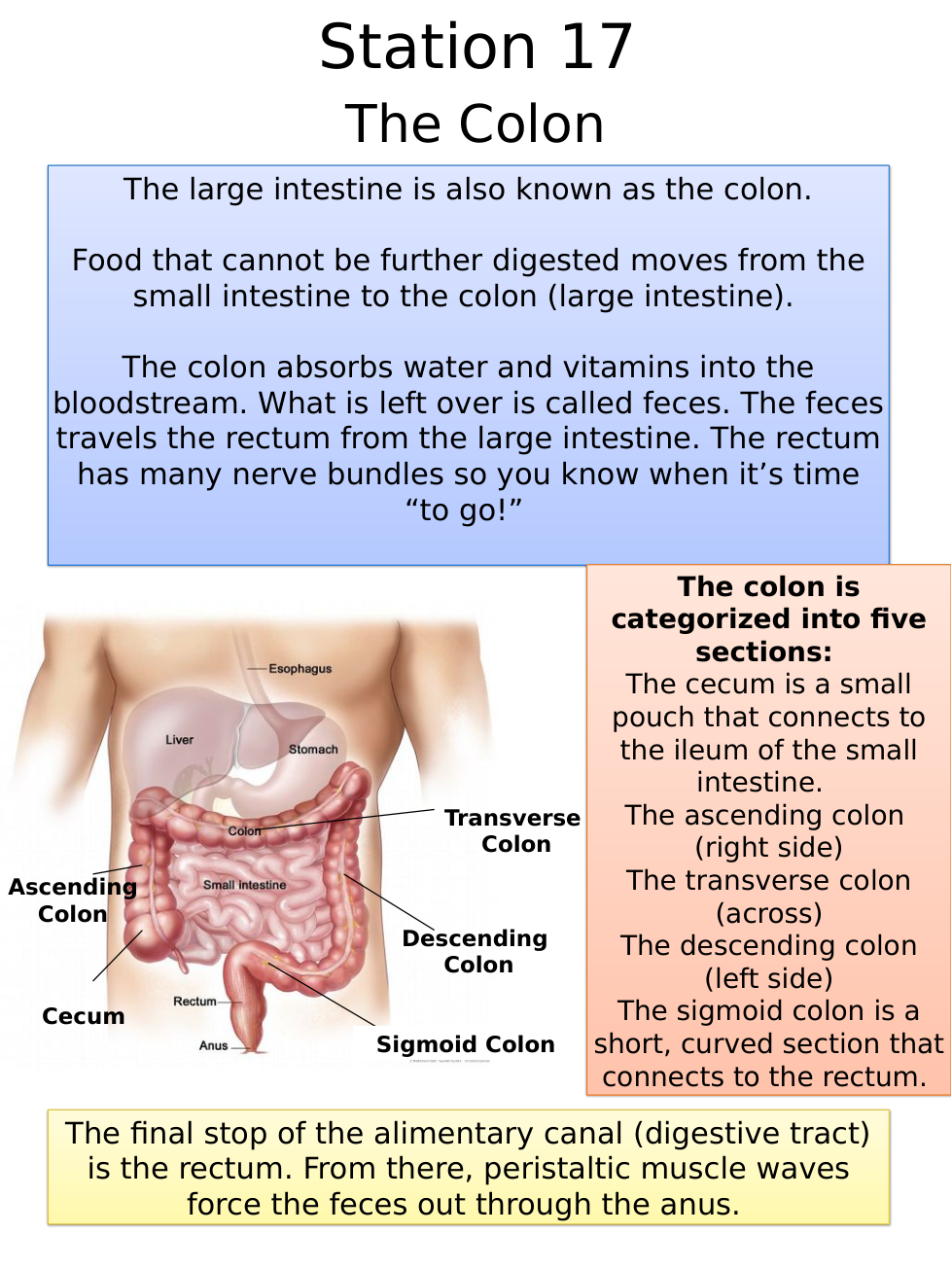
Another name for the colon is the
The colon absorbs
From the colon, the feces travels to the
The cecum is a small
In the
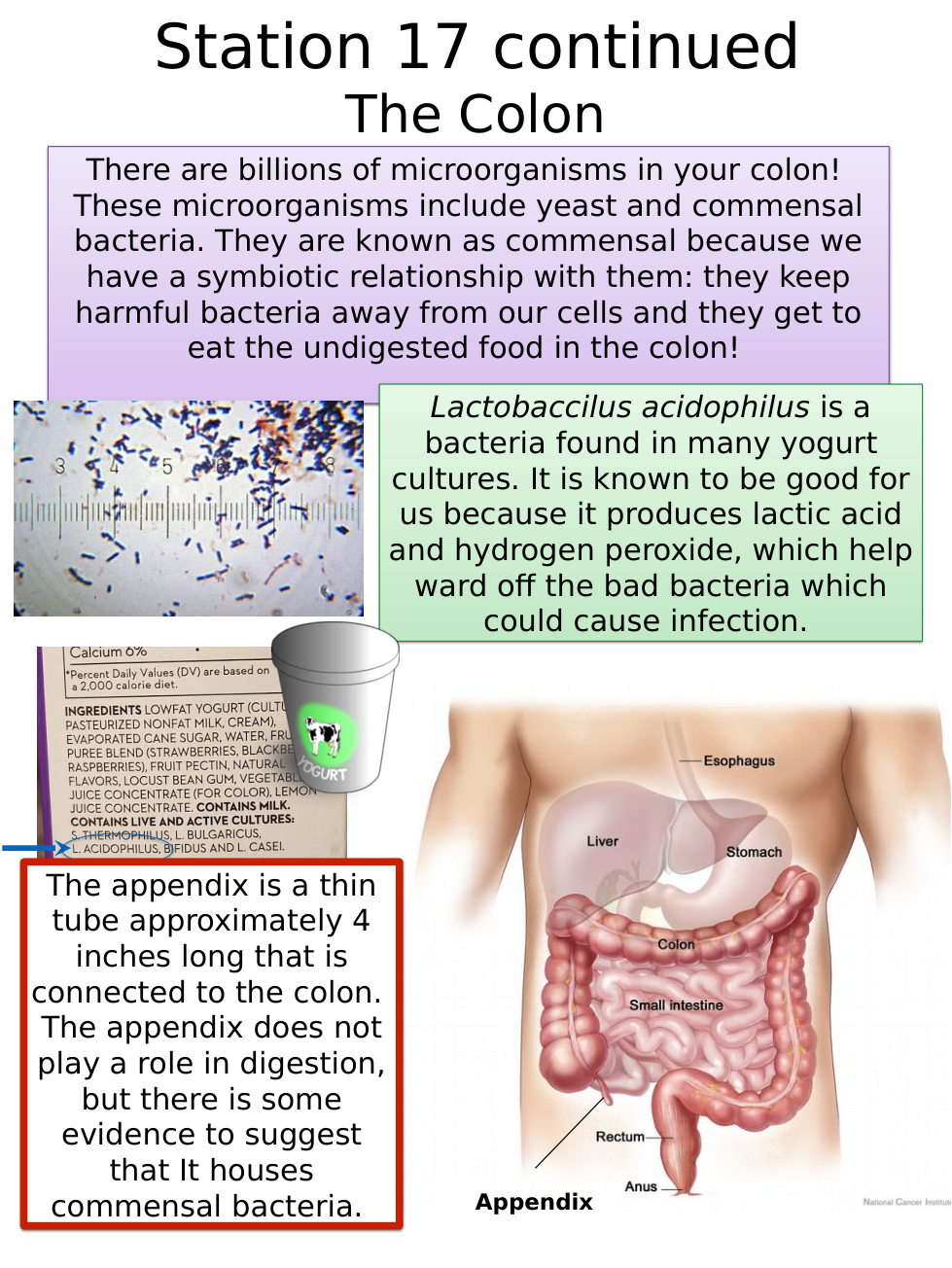
What’s in your colon?
What is meant by "commensal"?
Why is yogurt good for you?
What is the appendix?
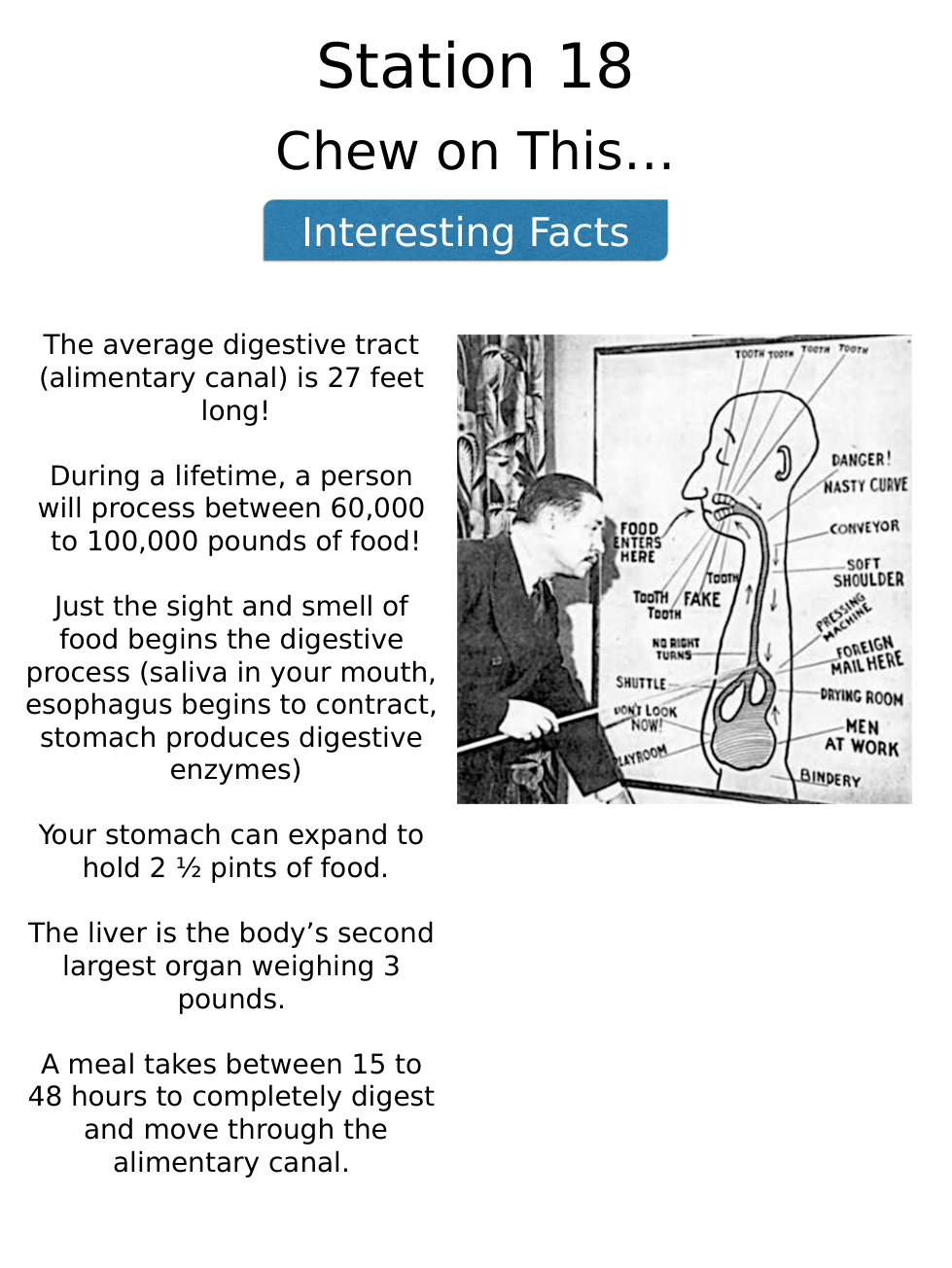
What are your 2 favorite facts?
Both chemical and mechanical digestion begin in the
Match the macromolecule to its function
| Draggable item | arrow_right_alt | Corresponding Item |
|---|---|---|
Fatty acids or cholesterol | arrow_right_alt | absorbed through the intestine and used by your cells for energy |
Glucose | arrow_right_alt | used to build or repair new cells |
Proteins | arrow_right_alt | aid in hormone production and vitamin absorption |
Excess glucose is stored as
Excess fatty acids is stored as
Your tongue has approximately

How are peristalsis and segmentation different?
What causes your stomach to growl?

The liver stores
The appendix plays an important role in digestion.