Log in
Sign up for FREE
arrow_back
Library

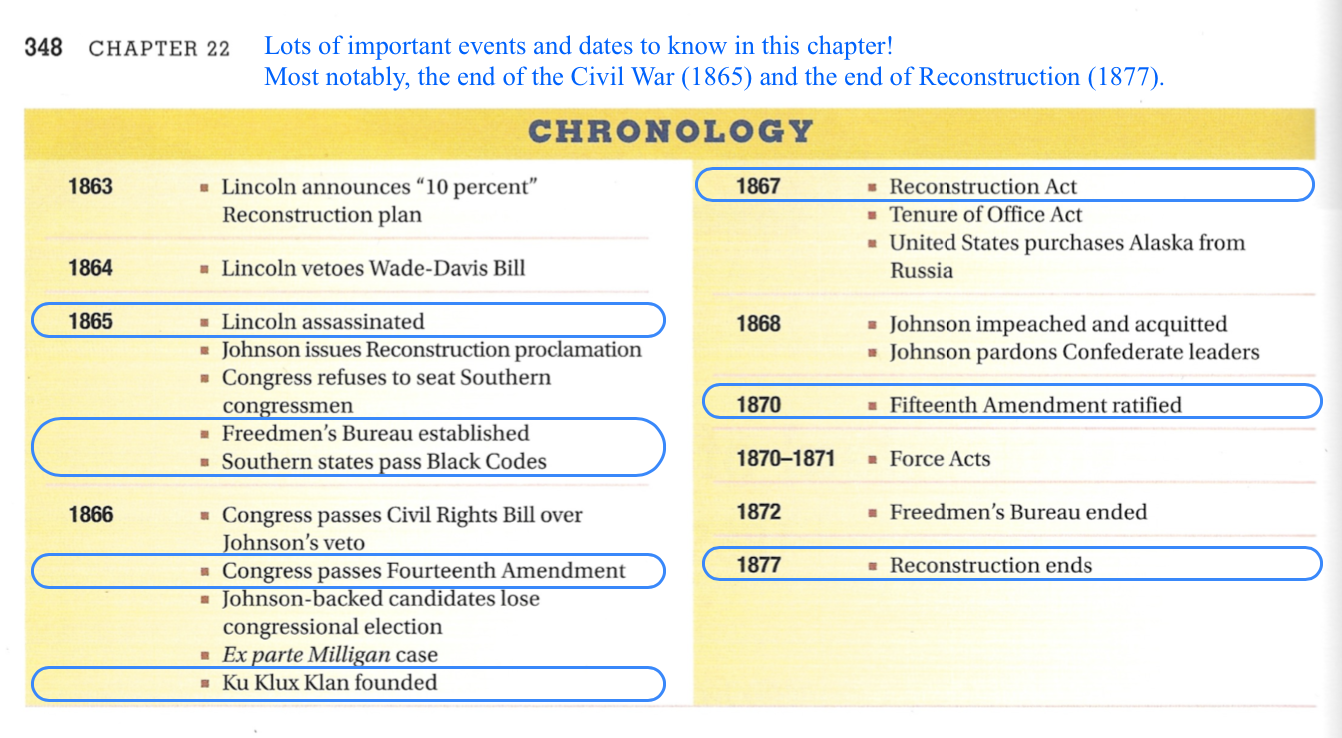
APUSH Chapter 22: The Ordeal of Reconstruction (1865-1877) - SY23

star
star
star
star
star
Last updated over 1 year ago
25 questions
Required
1
IITE.01
Required
1
RPV.01
Required
1
IITE.01
Required
1
IITE.01
Required
1
Required
1
1
IIUR.01
Welcome to your Chapter 22 reading! As you read, consider the following essential question:
  • Was the Reconstruction Period a success or failure?
As always, "Focus Questions" should guide your reading and notes, but you do not necessarily have to explicitly answer them.
Required
1
Question 1
1.

IIRC.01
Required
1
Question 2
2.

IIRC.02
Question 3
3.

Which choice provides the best evidence for the answer to the previous question?

Required
1
IIWD.01
Question 5
5.

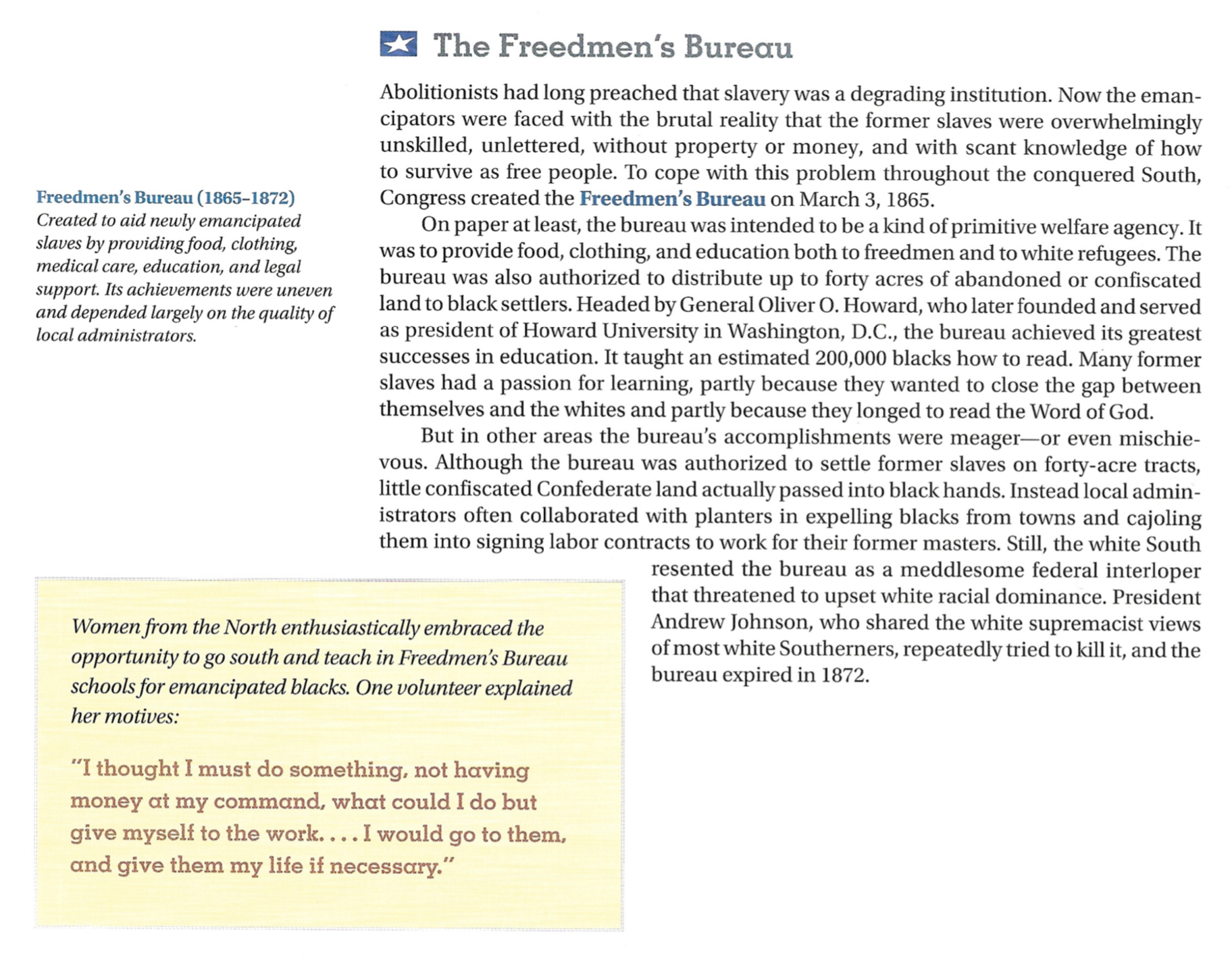
Which choice best reflects the perspective of the white South regarding the Freedmen's Bureau?

0
Question 6
6.

That's all that is due for Wednesday, 2/1/2023! Any questions?

Required
1
Question 7
7.

IIRC.01
Required
1
IIRC.02
Question 9
9.

Which choice provides the best evidence for the answer to the previous question?

Required
1
IIWD.01
Required
1
Question 11
11.

IIRC.01
Question 12
12.

Which choice provides the best evidence for the answer to the previous question?

Enfranchise is just a fancy word for granting the right to vote!

You may have heard the word disenfranchise before, which means the exact opposite since dis = not.
Required
1
Required
1
Question 14
14.

Data in the map about Military Reconstruction most strongly supports which of the following statements?

SQN.01
Required
1
Question 15
15.

IIRC.02
Question 16
16.

Which choice provides the best evidence for the answer to the previous question?

0
Question 17
17.

That's all due Thursday, 2/2/2023! Do you have any questions or topics that you want to go over in class?


Required
1
IIWD.01
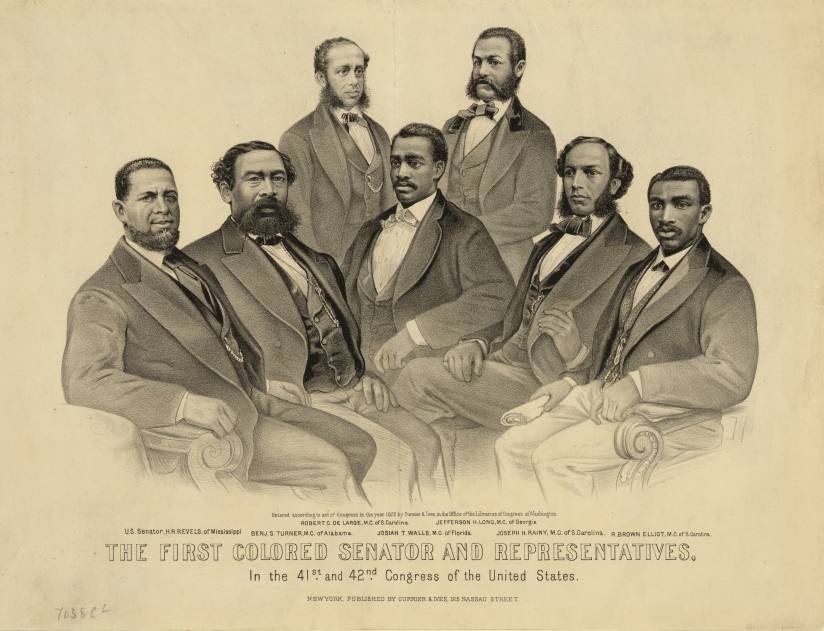
One achievement of the Reconstruction era was the election of the first African American senator, Hiram Revels of Mississippi (pictured on the far left), and several members of the House of Representatives from the South.
Required
1
Question 19
19.

IIRC.01
Question 20
20.

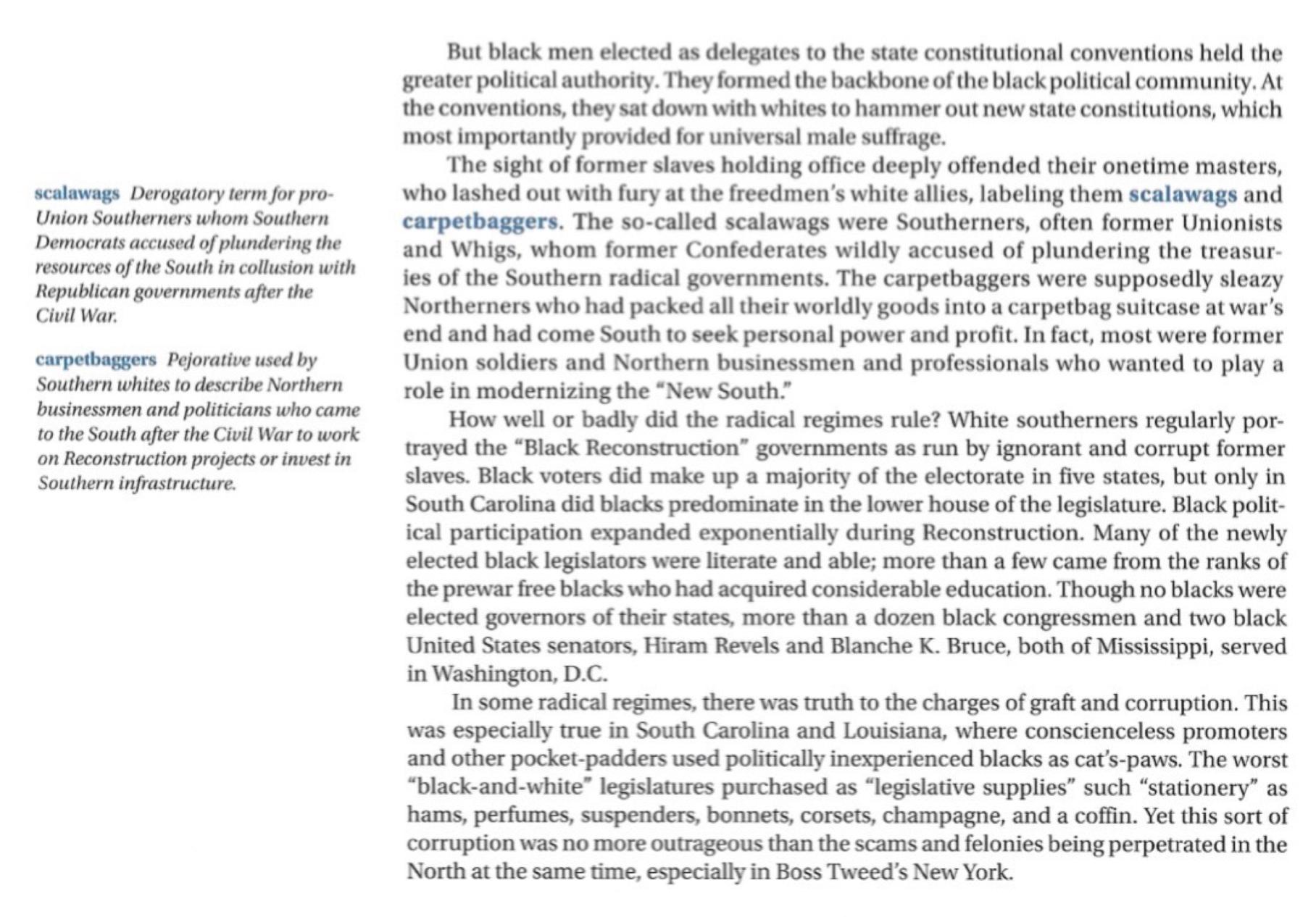
Please match each key term to the appropriate definition:

Draggable itemarrow_right_altCorresponding Item
Carpetbaggers
arrow_right_alt
Northerners accused of using Reconstruction policies to take resources from the South
Scalawags
arrow_right_alt
Southerners who were looked down upon for supporting Reconstruction in the South
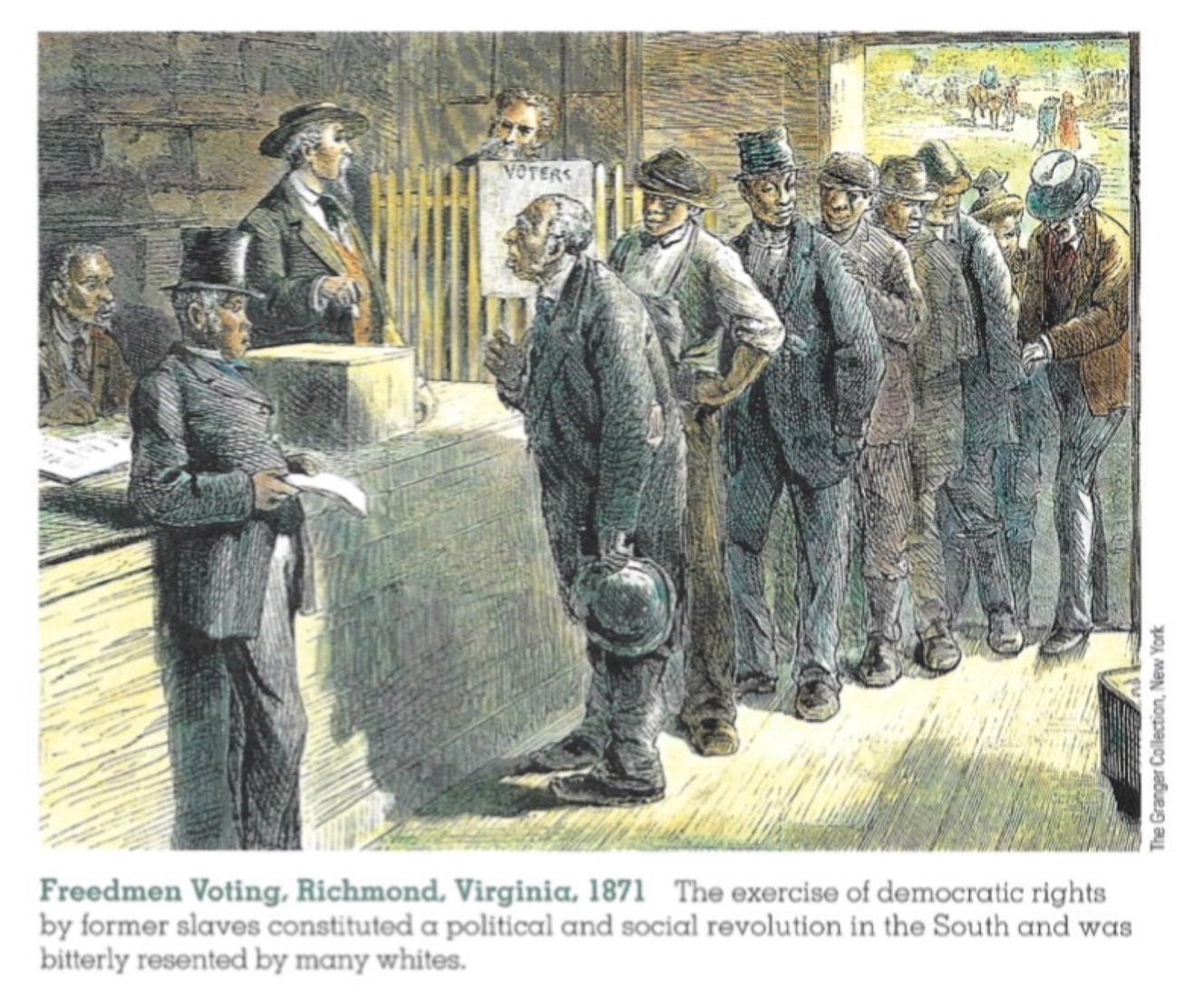
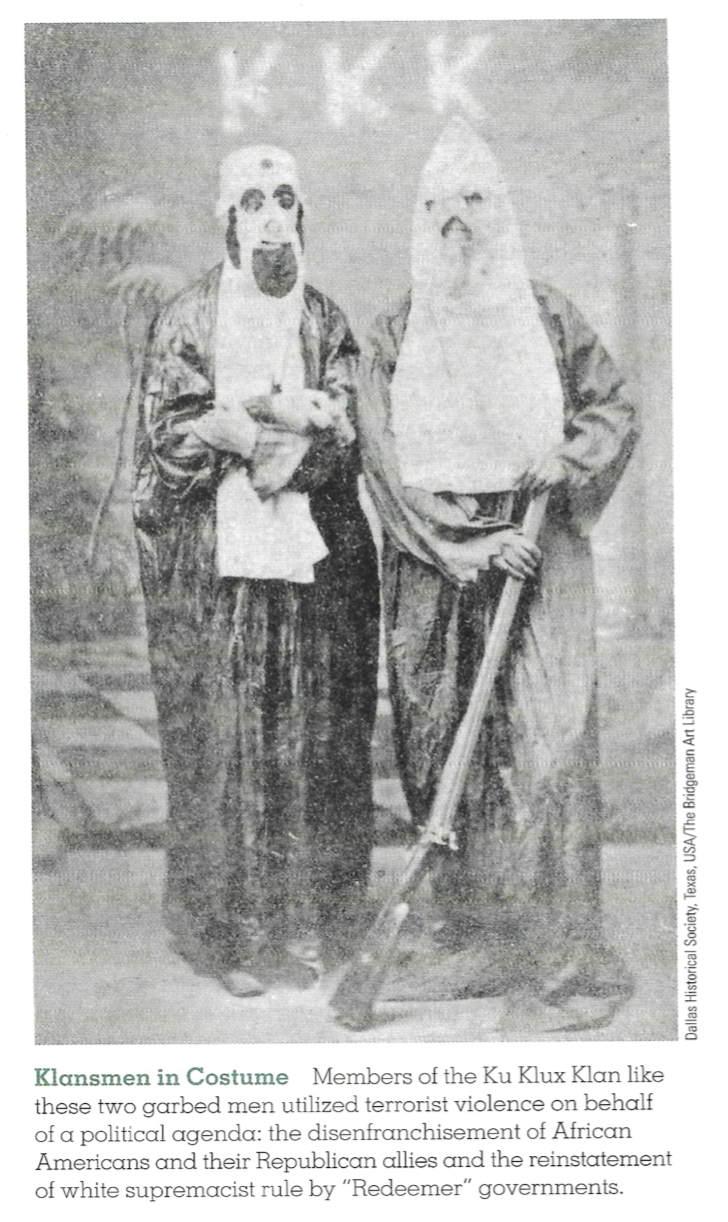
After a brief period of Republican control in the South which saw major improvements in the lives of African Americans, Southern states instituted new laws aimed at intimidating black political activities.
1
Question 21
21.

The passage indicates that the goal of the Ku Klux Klan was to

IIRC.01
Question 22
22.

The passage indicates that the Ku Klux Klan (KKK) formed as a direct result of

0
Question 23
23.

Use the scale in the "Show Your Work" section to indicate how successful you think that Radical Reconstruction was.

0
Question 24
24.

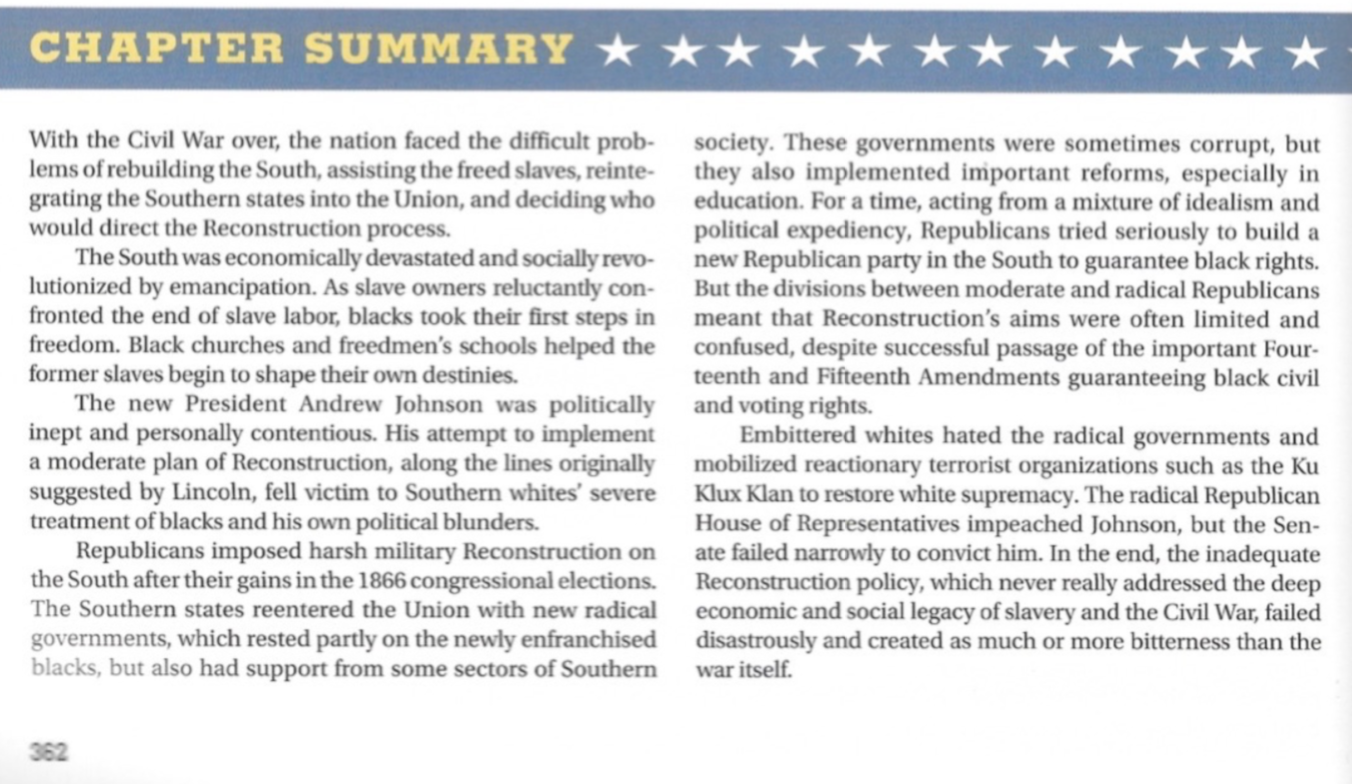
Excellent reading! Close out this Chapter by reviewing the "Chapter Summary" and using the "rectangle" tool to box the 5 most important key terms in the space provided.

0
Question 25
25.

Chapter 22 complete! Any questions?

Chapter 22 complete! Be sure to click "Submit" and then "Mark as Done" in Google Classroom by Friday, 2/3/2023.
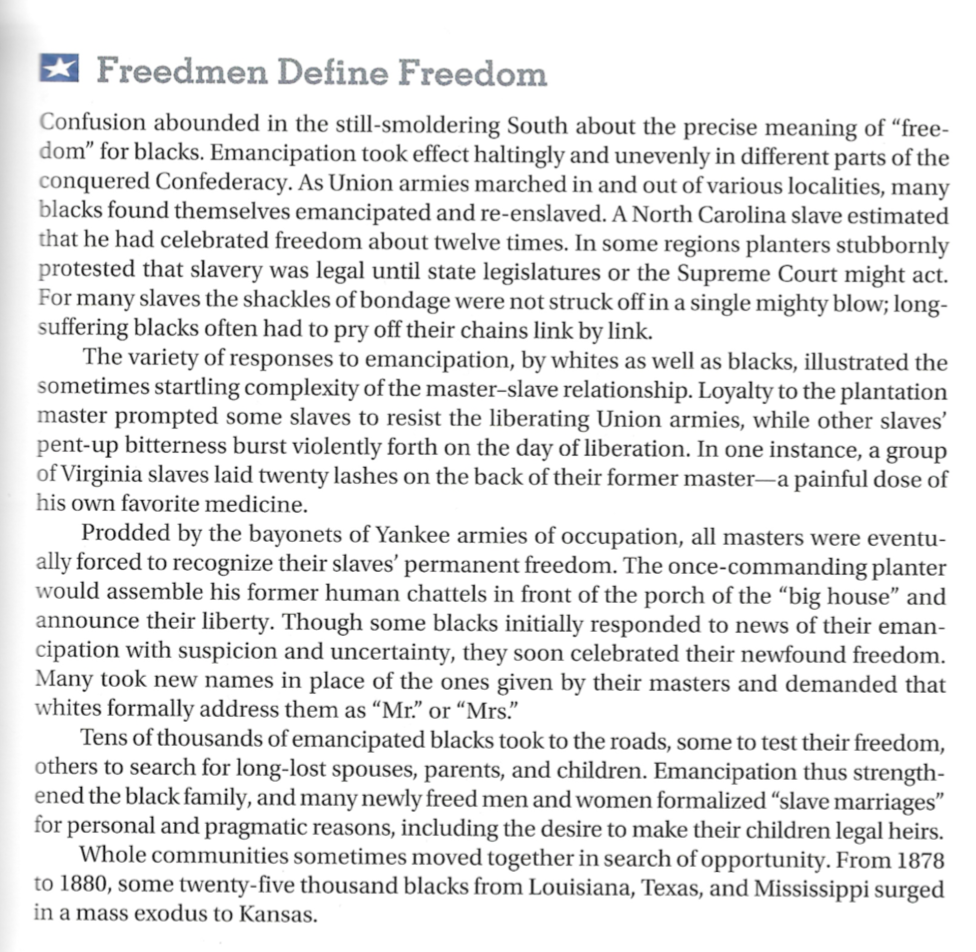
The passage indicates that, after the Civil War ended in 1865, Confederate leaders
were all pardoned by December 1868, even Davis and Lee.
were all pardoned except Davis and Lee, who received life sentences.
were barred from holding political office ever again.
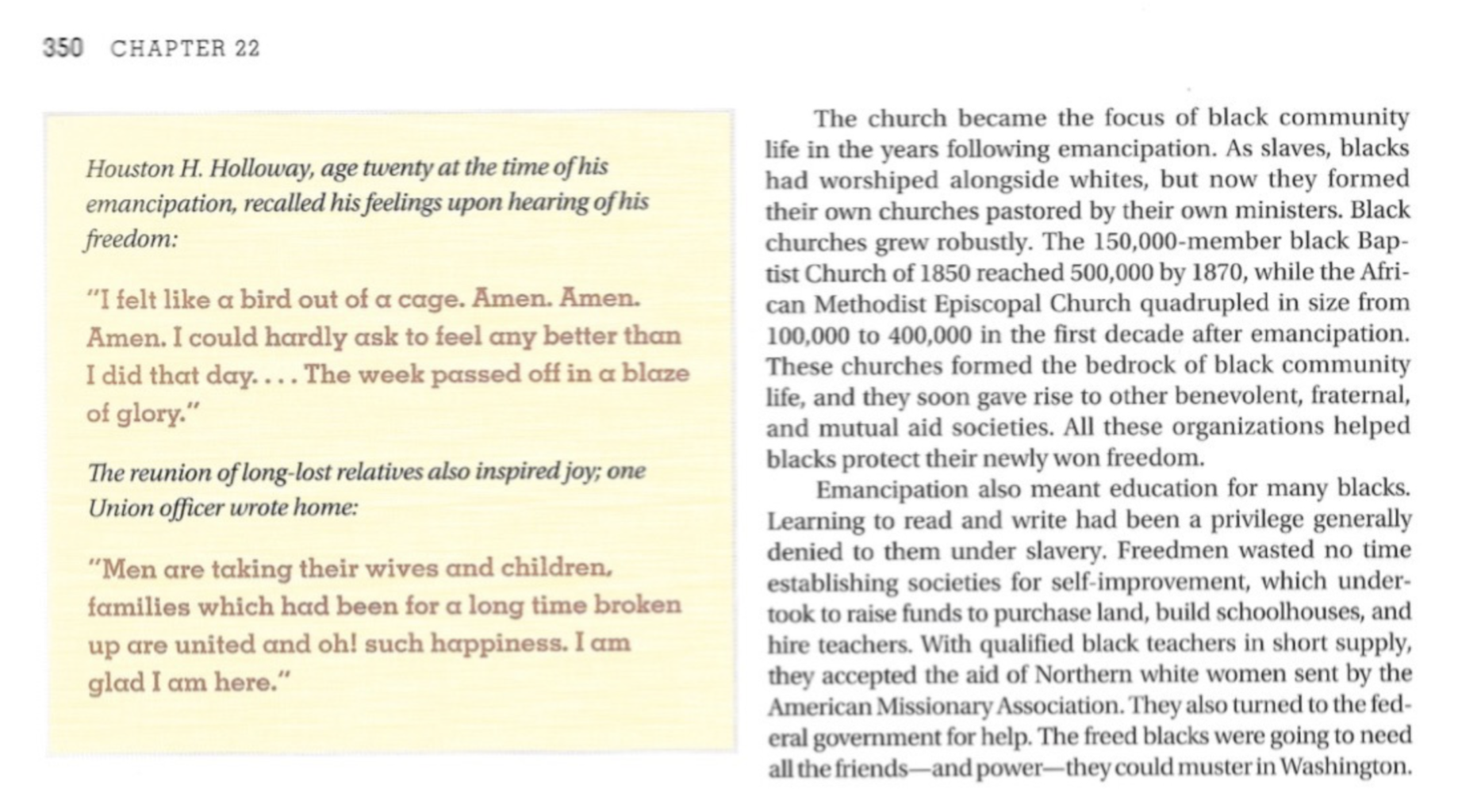
The passage suggests that freedom for Southern blacks at the end of the Civil War


came haltingly and unevenly in different parts of the conquered Confederacy.
was officially recognized by the 15th Amendment.
caused the widespread scattering of black families.
Paragraph 5, Line 26-28 ("From 1878... to Kansas")
Question 4
4.

As used in line 1, "focus" most nearly means
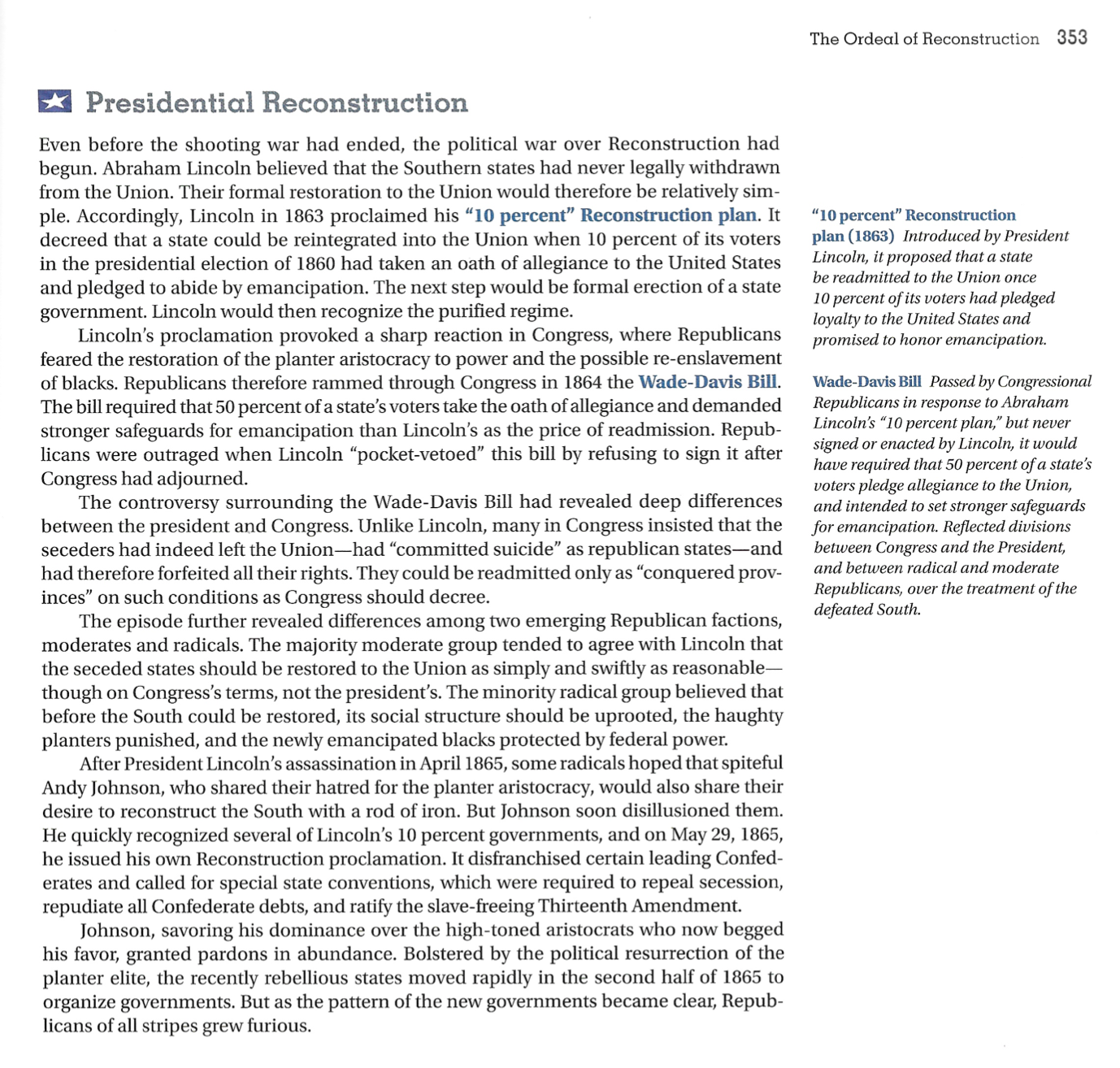
The controversy surrounding the Wade-Davis Bill and the readmission of the Confederate states to the Union demonstrated
that there were deep differences between President Lincoln and Congress.
the close ties that were developing between President Lincoln and the Democrats.
President Lincoln's desire for a harsh reconstruction plan.
that a Congressional majority believed that the South had never legally left the Union.
Question 8
8.

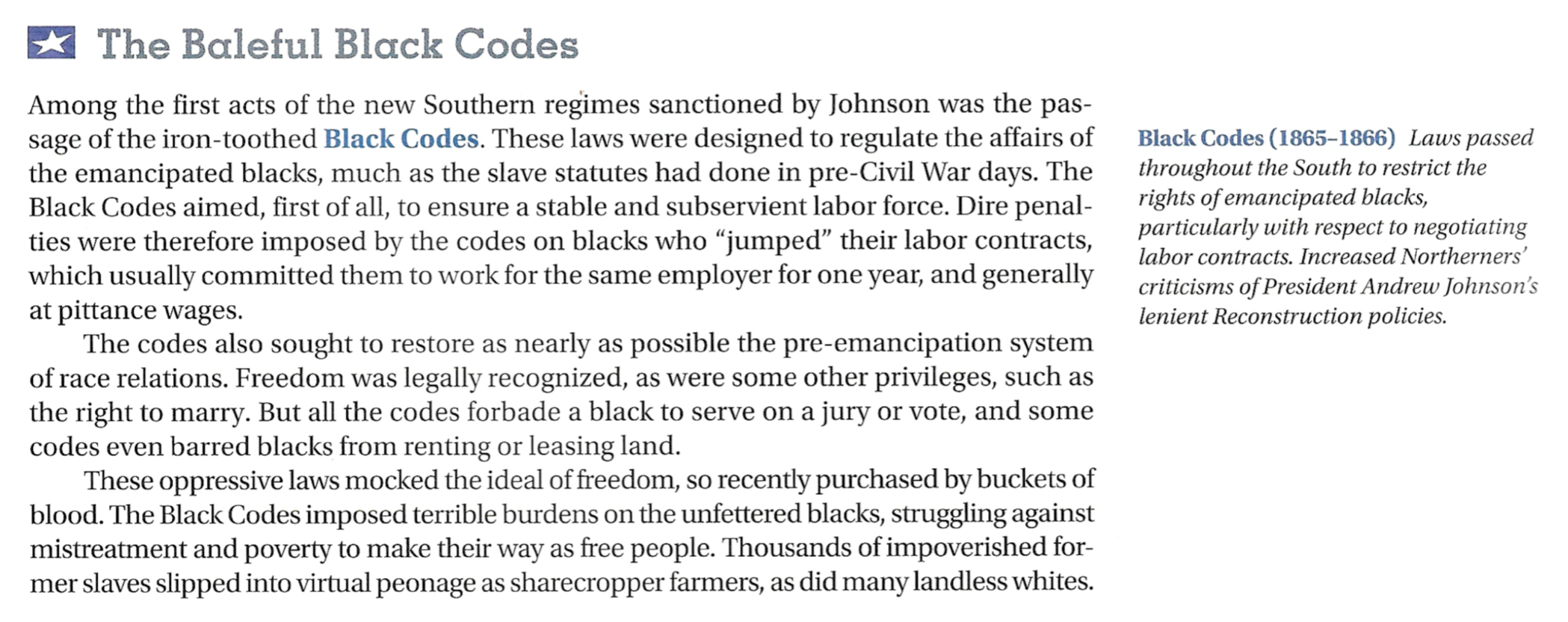
It can be reasonably inferred that the main purpose of the Black Codes was to

Paragraph 3, Line 14-15 ("Thousands of... landless whites")
Question 10
10.

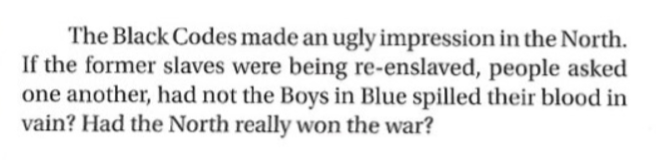
As used in line 1, "ugly" most nearly means
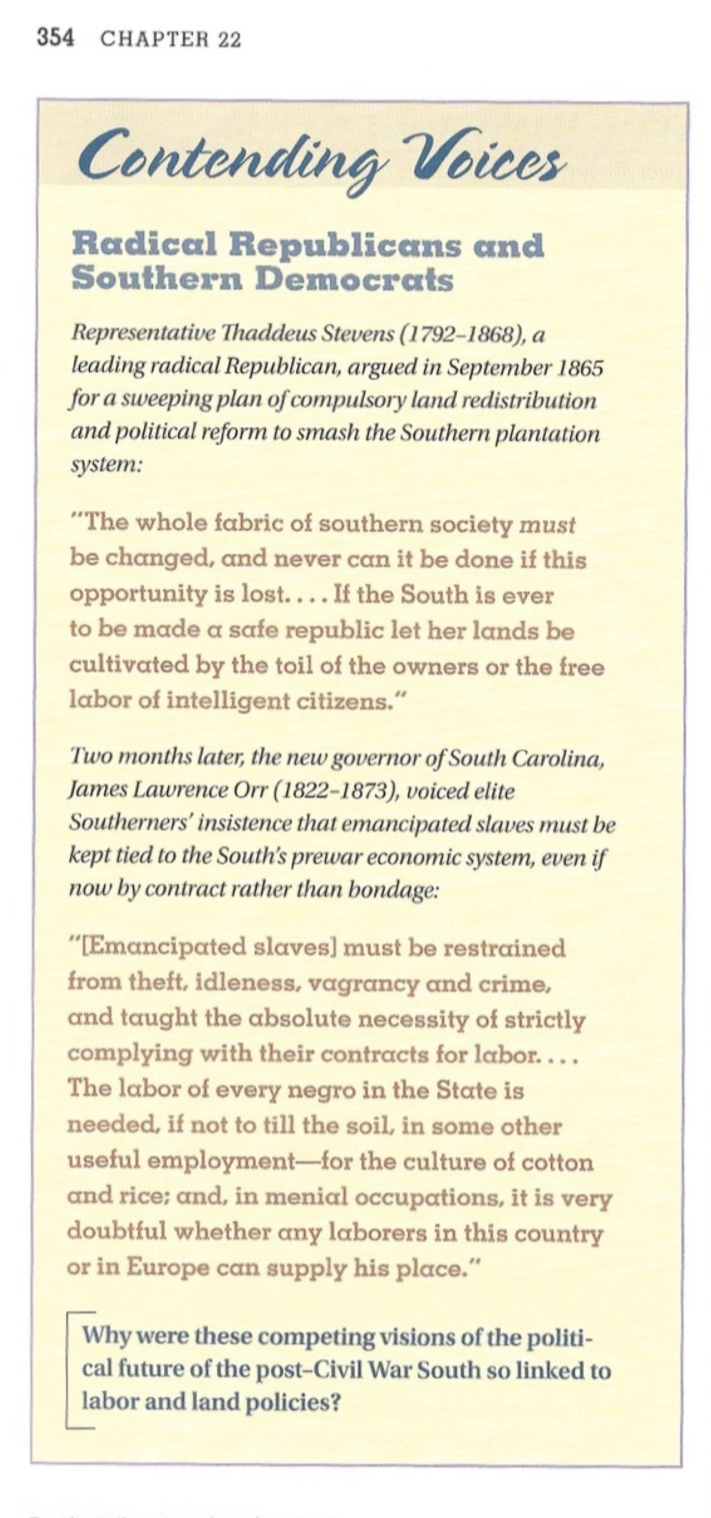
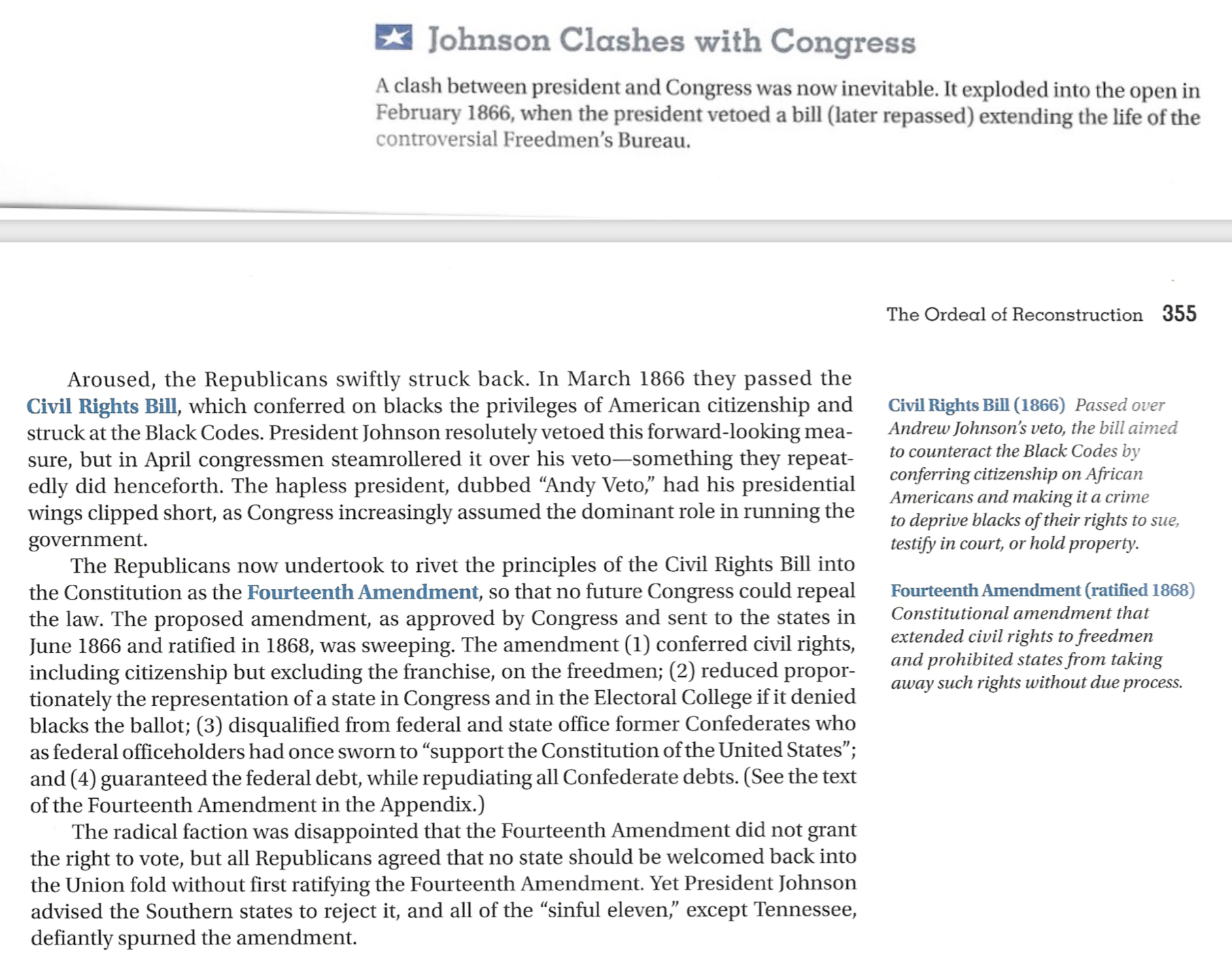
The passage indicates that Johnson's veto of the Civil Rights Bill of 1866 prompted
Congress to pass the Fourteenth Amendment.
Congress to pass the Thirteenth Amendment.
a law to overturn the Black Codes.
an extension of the Freedmen's Bureau.
Paragraph 2, Line 11-13 ("The Republicans... the law")
Question 13
13.

As used in line 1, "erupted" most likely means
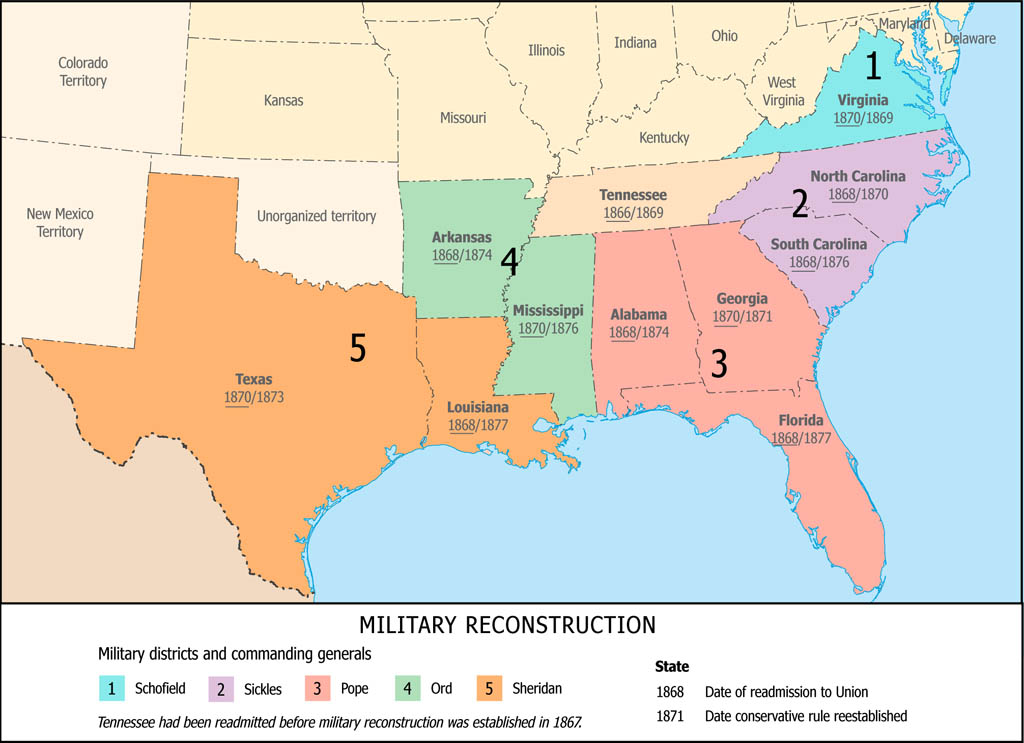
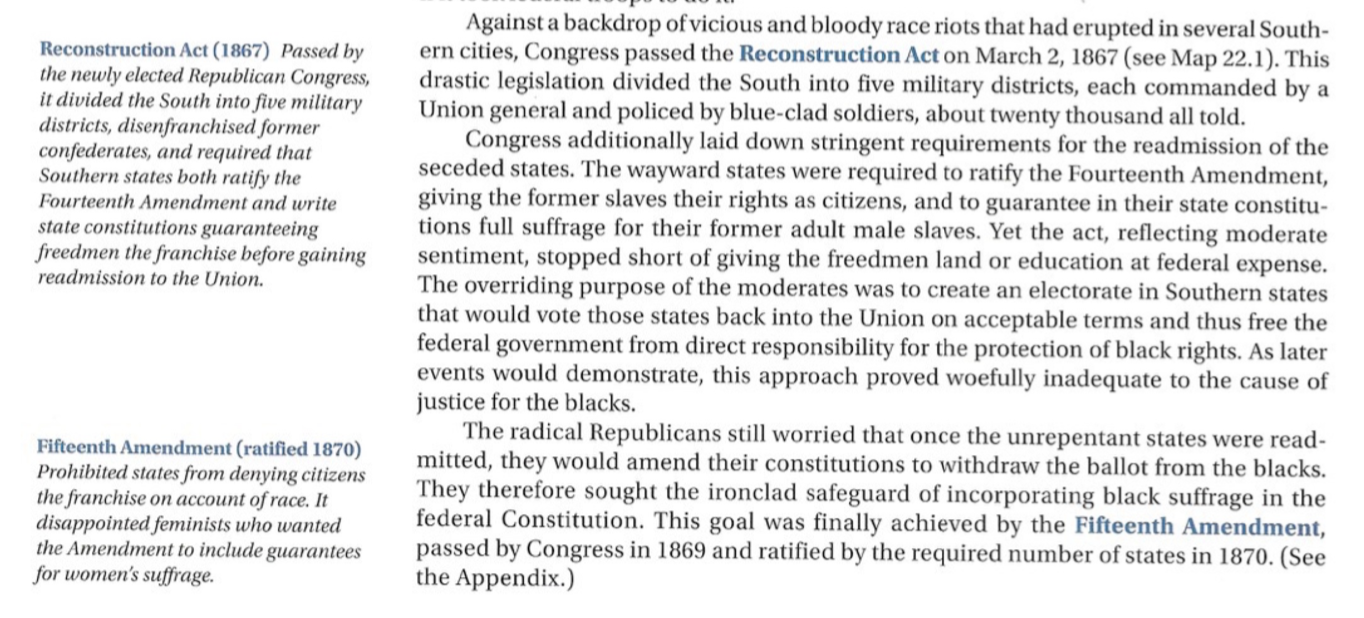
After the CIvil War, the Confederate South was divided into 5 districts under the military rule of a Union general.
South Carolina was the first state to leave the Union, but the first to rejoin at the end of the Civil War.
The Reconstruction Act of 1867 grouped Arkansas and Mississippi in separate military districts.
Texas was the earliest Confederate state to rejoin the United States in 1870.
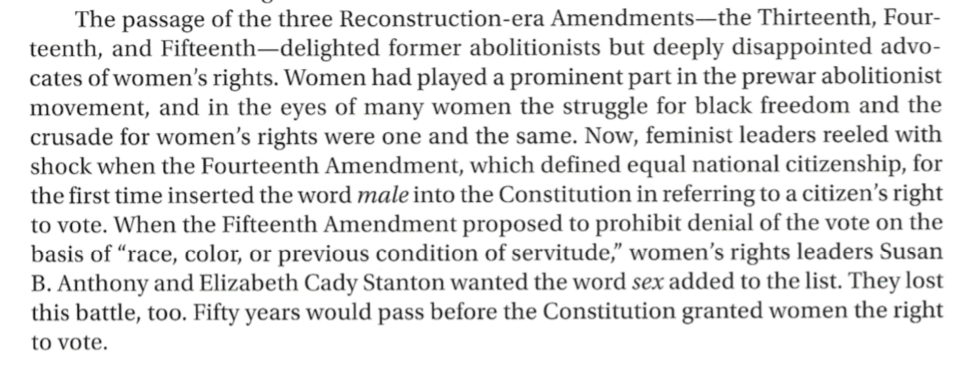
Many feminist leaders were deeply disappointed with the Fifteenth Amendment because
they failed to give women the right to serve on juries.
it failed to define what constituted equal national citizenship.
it gave suffrage to African American males but not to women.
Line 8-11 ("When the... battle, too")
Question 18
18.

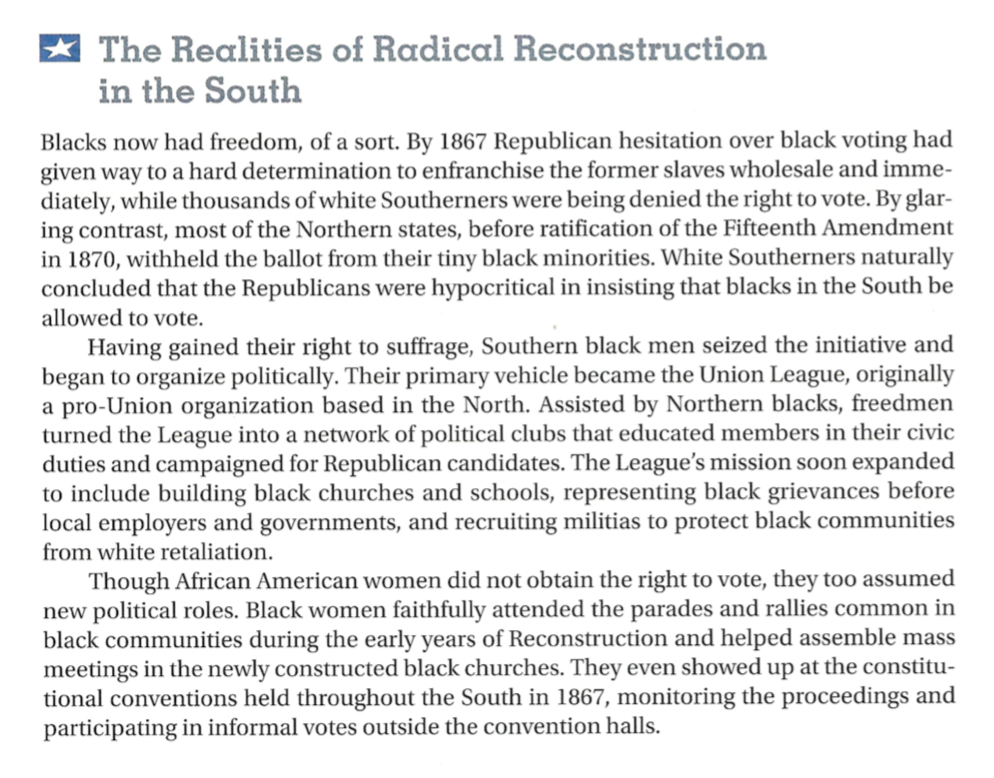
As used in line 2 of paragraph 3, "faithfully" most nearly means
The passage indicates that, after Black men gained suffrage, they were able to
freely exercise their right to vote with few obstacles and repercussions.
take over the U.S. government and enact radical policies to help the entire Black community.
advocate for Black women to gain the right to vote by the end of Reconstruction.
represent their communities in elected positions in state and local governments.
relocating ex-slaves to western territories.
enforcing the Force Acts of 1870 and 1871.
keeping blacks “in their place" -- that is, subservient to whites.
preventing blacks from having their own churches.
attention
hideous
spewed out
truly