1
Asemmisa {{asɛmmisaAhyɛnsode}}
1.
1
Asemmisa {{asɛmmisaAhyɛnsode}}
2.
1
Asemmisa {{asɛmmisaAhyɛnsode}}
3.
1
1
1
Dihybrid Crosses
Sex-linked traits
Incomplete and co-dominance
Pedigrees
Dihybrid Crosses
Sex-linked traits
Incomplete and co-dominance
Pedigrees
An allele is a form of a gene. In the cross HhSs x hhss, how many alleles does a kitten inherit from the mother?
How many alleles does a kitten inherit from the father?
Gametes, which are sex cells, carry the alleles. Why must a gamete carry one allele (represented by a letter) from each gene? Meaning, why can’t a gamete carry an “hh” instead of an “hs” or an “Hh” instead of a “HS?”
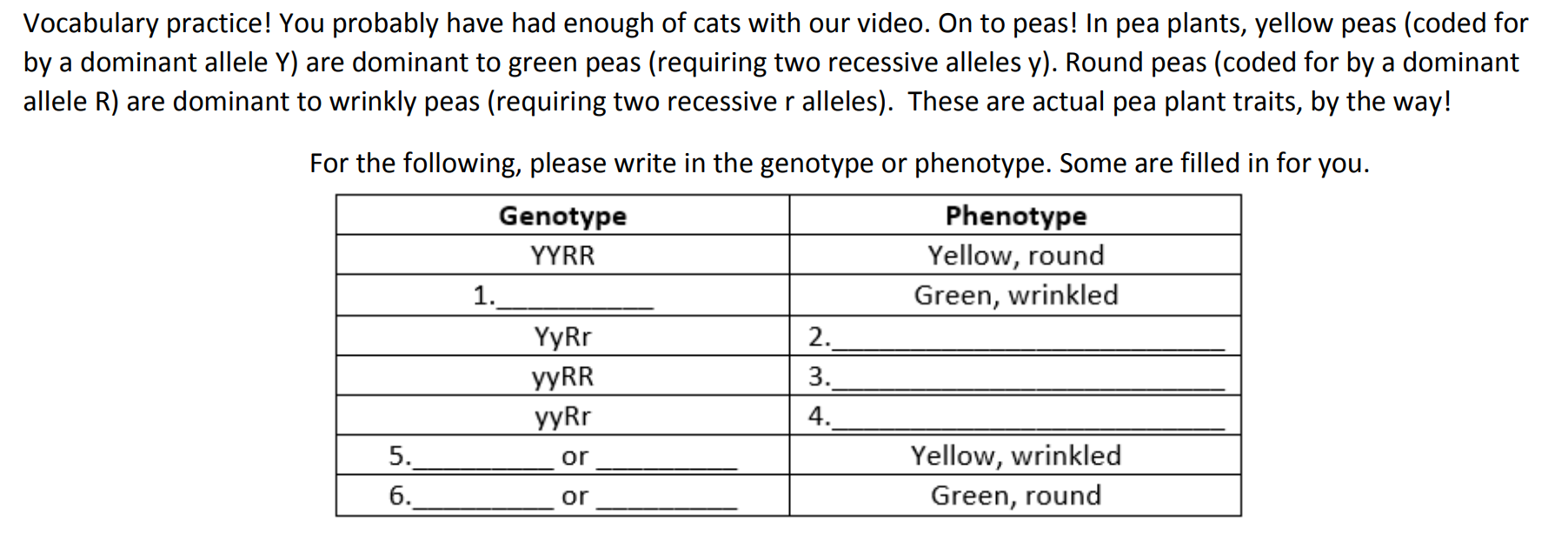
Read the beginning part about pea plants again. Bernard really likes growing peas in his garden, but the peas he likes are green. He also likes them to have a wrinkled texture, because he thinks they look much more interesting that way. Please work out a YyRr x YyRr (heterozygous cross) in the Show Your Work Box. After showing your work to use as support, what is the chance that Bernard will have pea plant offspring that match the phenotype he is looking for (green, wrinkled)?
What is the phenotype percentages of this heterozygous cross?
If Bernard did not receive any pea plants that were green and wrinkled in actuality, would you know for sure that the parent genotypes were incorrect? Why or why not?
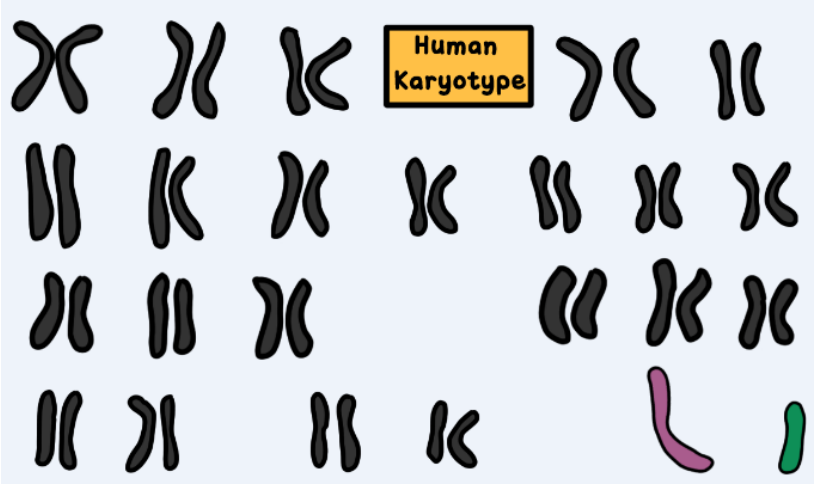
How many PAIRS of chromosomes do humans have?
How many total chromosomes do humans have?
How many sex chromosomes are there? Which ones are they?
Is the individual in the karyotype above male or female? How do you know?
Color blindness is a sex-linked recessive disorder on the X chromosome. If the allele “b” is used to denote color blindness, click on the the genotype(s) that correctly represent(s) a female that is color blind.

Color blindness is a sex-linked recessive disorder on the X chromosome. If the allele “b” is used to denote color blindness, click on the the genotype(s) that correctly represent(s) a male that is color blind.
Bob is color blind, but he knows that neither of his parents were color blind. He is wondering if he received the gene for color blindness from his mother, his father, or both of his parents. What would you tell Bob? Show a Punnett square to prove your answer!
Consider the below Punnett square cross. Explain how you could use it to determine which parent determines the biological sex of a baby---is it the mother, father, or both? Different depending on the genotype of the offspring? Why?
In the video example, the sex-linked disorder was a recessive trait. However, sex-linked disorders can be dominant! Conduct a search to see some of the sex-linked dominant disorders that exist and list one in the answer space.
Sex-linked dominant disorders will show even if there is only one dominant allele present. Using the allele D to stand for a dominant sex-linked trait, show a cross of a woman who does not have a dominant sex-linked disorder (XdXd ) with a man that does. Will the disorder in this particular cross be more common in daughters or sons?
In plants known as “four o’clocks”, the allele for the dominant red-flower color is incompletely dominant over the allele for white-flowers. A gardener allows several heterozygous pink-flowered four o’clocks to self pollinate and collects 200 seeds.
Draw a Punnett square for the cross. Identify the flower color phenotypes and theoretical percentage.
Phenotype Percentage:
Red
White
Pink
In rabbits, white coat color (CW) and black coat color (CB) are codominant, and both of these alleles are dominant over albino (c); heterozygotes (CWCB) are spotted.
Fill in the phenotypes for each possible genotype. Remember, there are FOUR possibilities: black, white, spotted, or albino
CWCW
CWCB
CWc
CBCB
CBc
cc
Draw a Punnett Square that shows the genotypes and phenotypes of the offspring from a heterozygous black-coated rabbit and a homozygous white-coated rabbit
Basic body color for horses is influenced by several genes, one of which has several different alleles. Two of these alleles—the chestnut (dark brown) allele and a diluting (pale cream) allele—display incomplete dominance. A horse heterozygous for these two alleles is a palomino (golden body color with flaxen mane and tail).
CBCB Dark Brown Horse
CCCC Cream Horse
CBCC Palomino Horse
Is it possible to produce an entire herd of pure-breeding palomino horses? Why or why not? Work the Punnett’s square for mating a palomino to a palomino and predict the phenotypic ratio among their offspring.
In humans, the alleles for blood type are designated IA (A-type blood), IB (B-type blood) and i (O-type blood). IA and IB are co-dominant (AB blood type) and both are dominant over i. What are the expected percentages of phenotypes in the mating of a person with AB blood and a person heterozygous for B blood?
IAIA (Type A)
IAIB (Type AB)
IAi (Type A)
IBIB (Type B)
IBi (Type B)
ii (Type O)
Blood type analysis is used frequently as evidence in paternity suits. Consider the following hypothetical case: The blood type of the mother is A and child is O; which blood type(s) MUST be the father’s? (There could be more than one option)
Important Note!
In Pedigrees, Males are always SQUARE and Females are always ROUND
The shading depends on what trait you are tracking. It is not related to whether the trait is dominant or recessive, it is related to the what trait you are interesting in find out about.
Look at each individual, determine if they are a PTC Taster or non-taster, round or square, shaded or not shaded (MAKE SURE YOU SCROLL TO THE RIGHT TO GET ALL THE COLUMNS!)
PTC Taster | PTC NonTaster | Square | Round | Shaded | Not shaded | |
|---|---|---|---|---|---|---|
Male with genotype TT | ||||||
Male with genotype Tt | ||||||
Male with genotype tt | ||||||
Female with genotype TT | ||||||
Female with genotype Tt | ||||||
Female with genotype tt |
A couple with the ability to taste PTC have two grown sons and one grown daughter. The sons have the ability to taste PTC. Their daughter is a PTC non-taster. She married a PTC non-taster man, and they have two sons.
Draw a pedigree in the Show Your Work Box that fully represents the above scenario and tracks the inability to taste PTC (non-taster), which is caused by two recessive “t” alleles. In your illustrated pedigree, please make sure that:
(A) generations are listed as Roman numerals and the individuals are numbered.
(B) the correct shapes for males and females are used.
(C) the shapes that require shading are shaded.
You do not have to list the genotypes on the shapes unless it helps you
In #49, what is the phenotype of the sons in generation III? How do you know?
What about tracking an autosomal dominant trait, such as having a widow’s peak? The presence of one dominant allele for this widow’s peak hairline (H) will result in an individual having a widow’s peak. Since this pedigree is tracking an autosomal dominant trait, shaded shapes have a widow’s peak hairline. *Note: In reality, this trait may be more complex than just a simple gene.
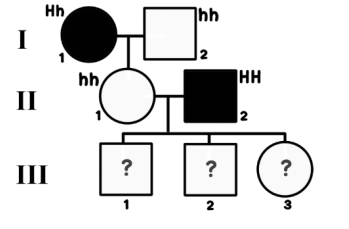
Is it possible to know the genotypes of the three children in generation III? Should they be shaded or not? How do you know?
In some pedigrees, instead of writing genotypes they use partially shaded shapes to show heterozygous individuals. These individuals are known as carriers because they have the recessive gene, even though they don't express it because they only have one.
Which of the following individuals are carriers? (Choose ALL that apply)
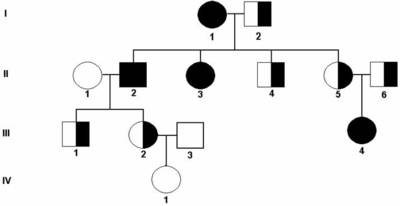
How many grandchildren did I-1 and I-2 have?
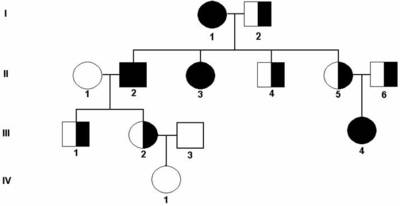
Although there are many different types of family in real life, and family terms are used very differently across cultures, in biology, there are specific definitions of family relationships.
Mother/Father - biological parents of an offspring
Aunt/Uncle - biological brother/sister of the biological mother or father
Cousin - biological offspring of the biological aunt/uncle
Grandmother/father - biological parents of a biological parent of the offspring
How is III-2 related to III-4?
This pedigree tracks hemophelia in a family. How many of II-2's grandsons have hemophelia?
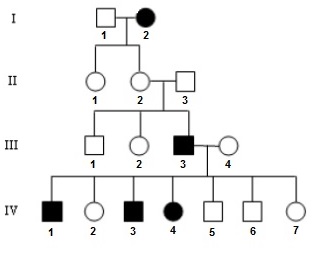
What are clues that a trait is recessive? (Choose ALL that apply)
The pedigree below tracks the appearance of a recessive trait:
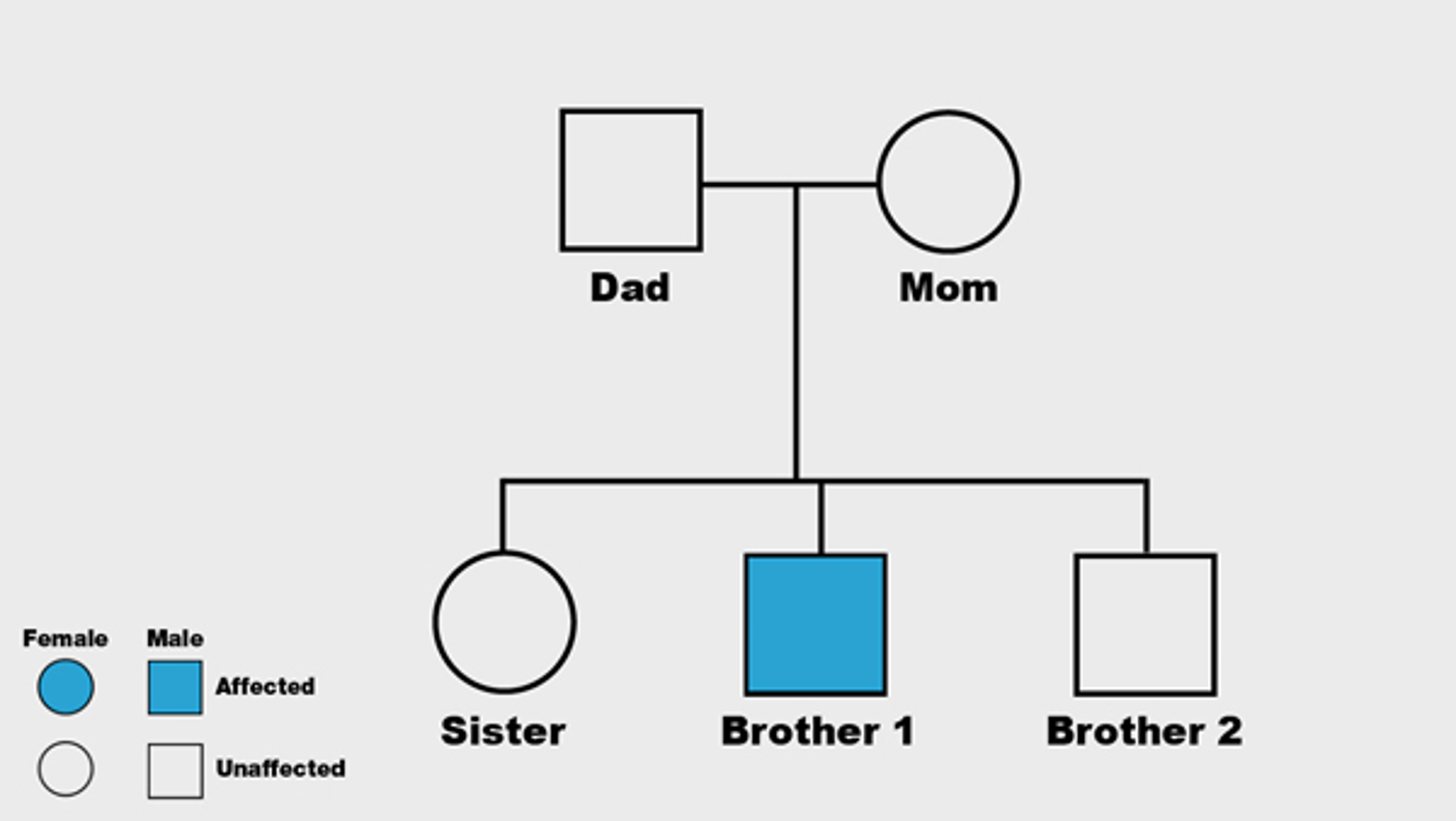
Match each individual on the left with the correct genotype on the right.
Dad
Mom
Sister
Brother 1
Brother 2
Definitely homozygous dominant
Definitely heterozygous
Definitely homozygous recessive
Could be homozygous dominant or heterozygous


Complete the Heredity and Traits STEM Case on Gizmos
Login with teacher username MrsTAButler
password math plus your initials, all lowercase, all one word
There is no worksheet for this, it's all on Gizmos.
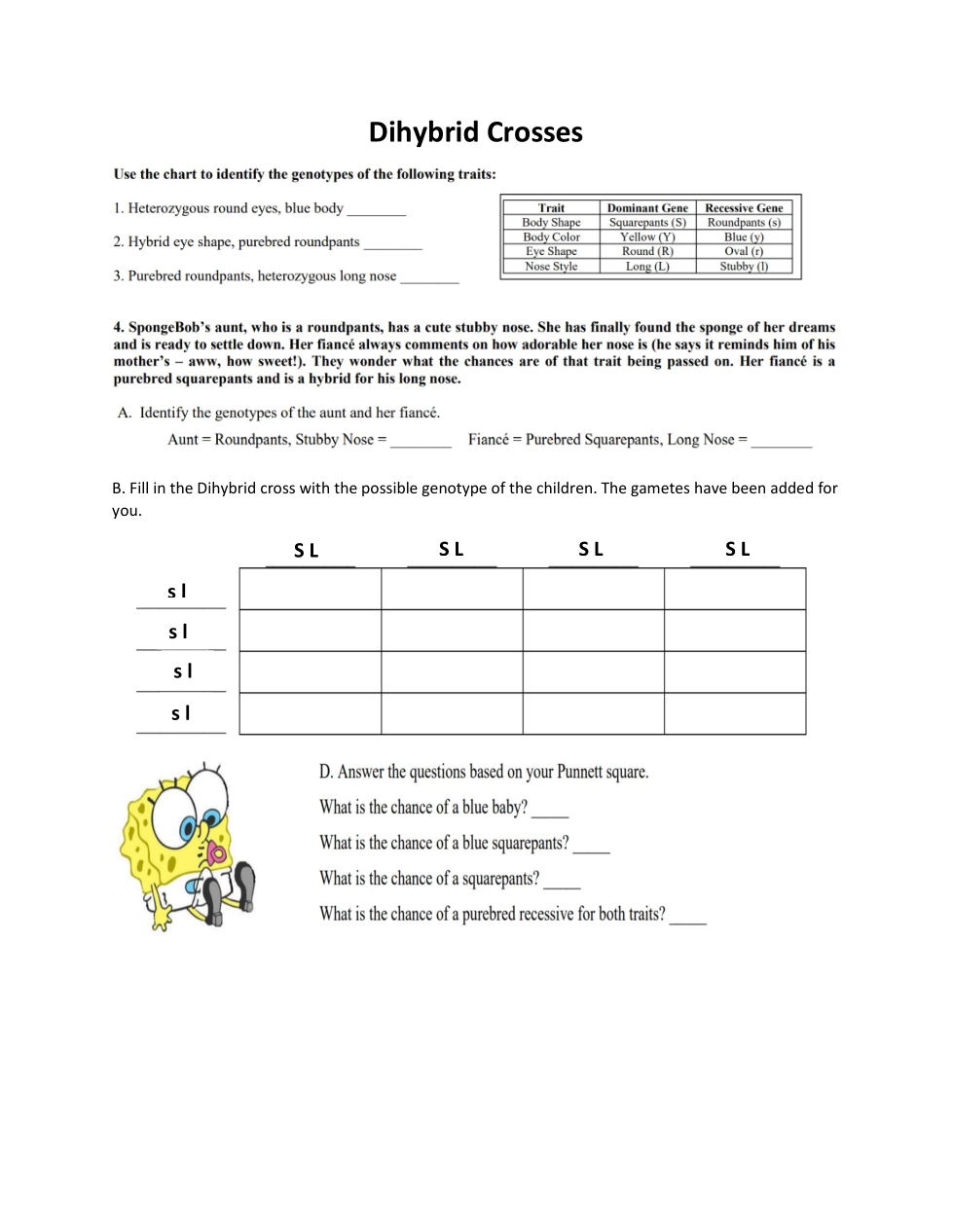
1) What is the genotype? (You should have 4 letters in your answer. No spaces)
2) What is the genotype? (You should have 4 letters in your answer. No spaces)
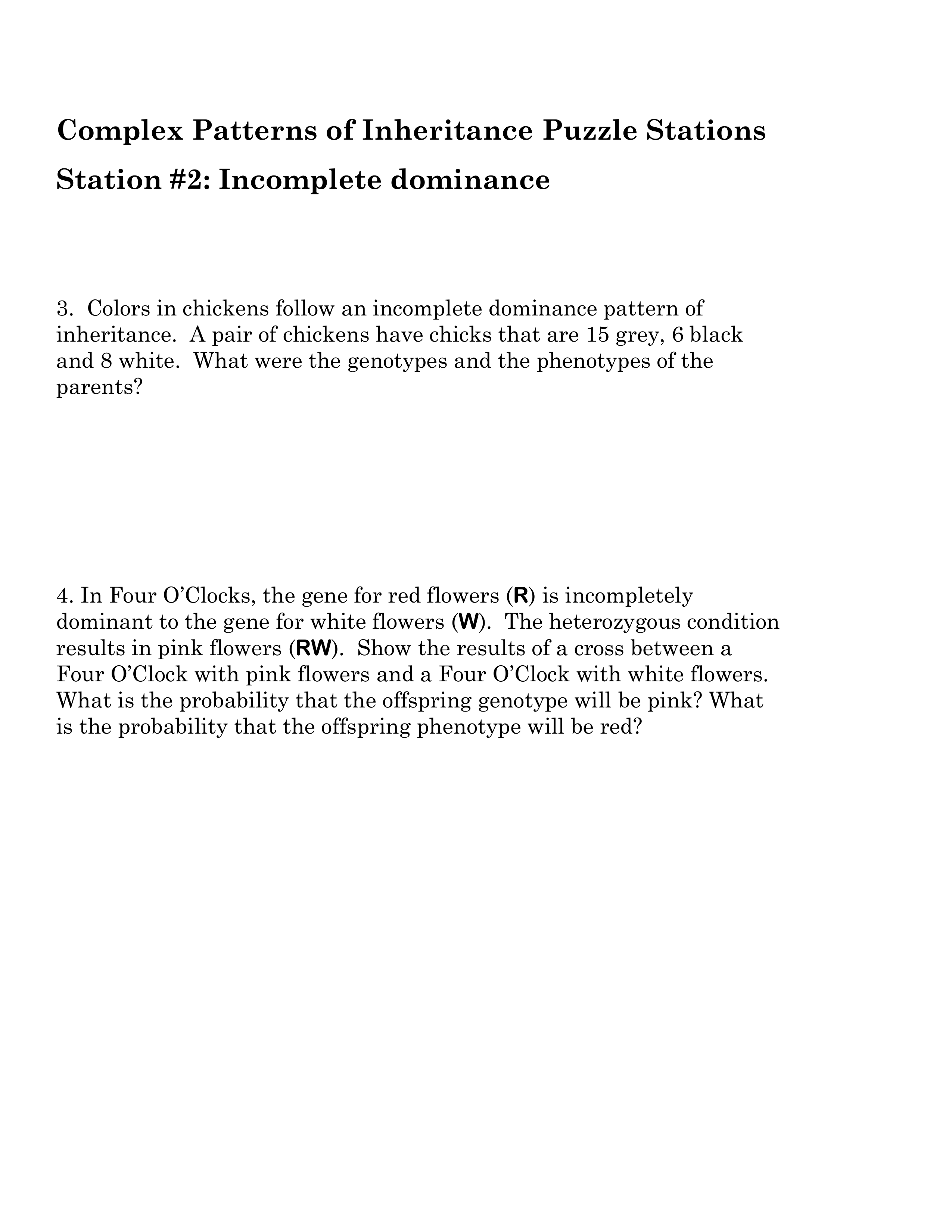
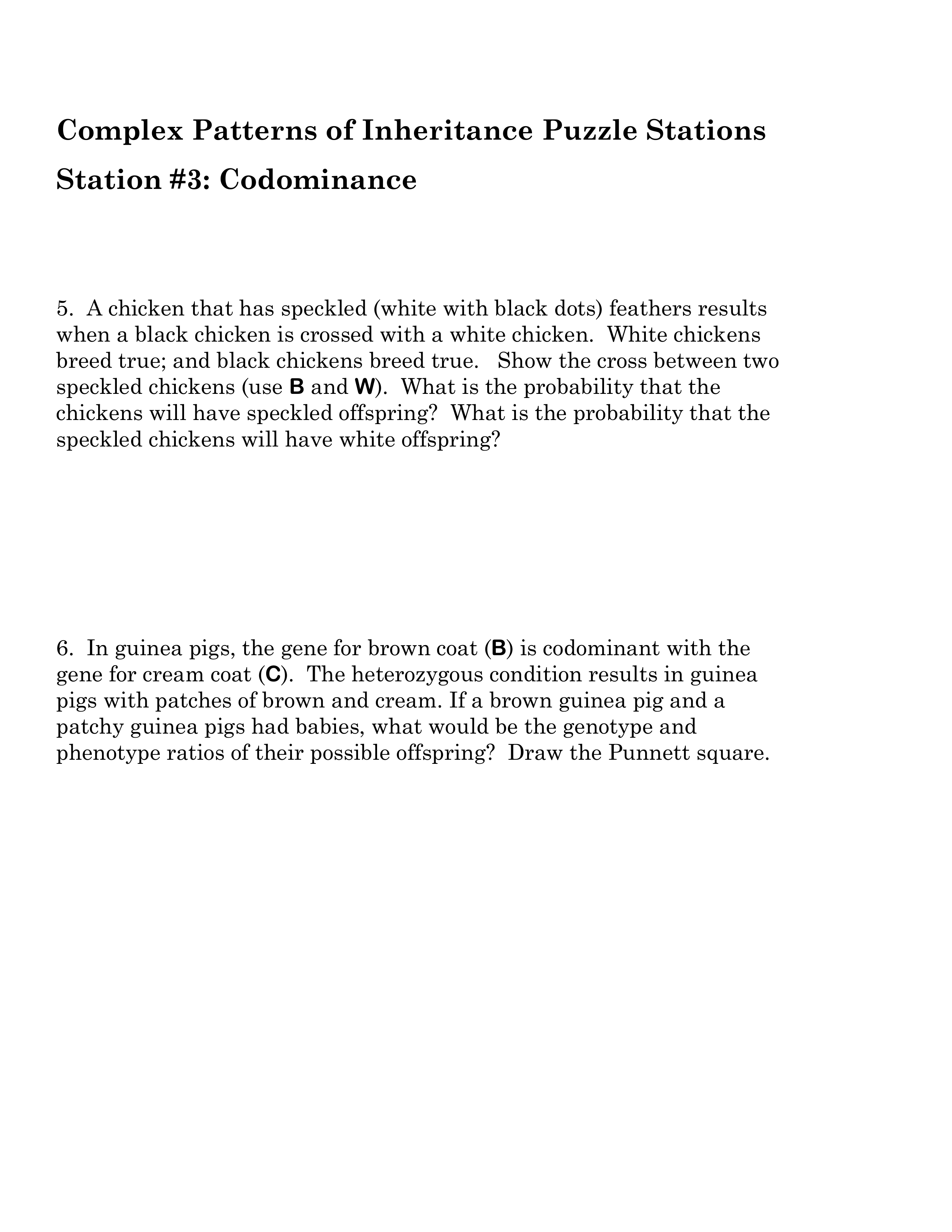
In the future, scientists discover that there is a sex-linked gene for flat molar teeth. Flat teeth are dominant, bumpy teeth are recessive. Cross a carrier female with a male who has bumpy teeth.
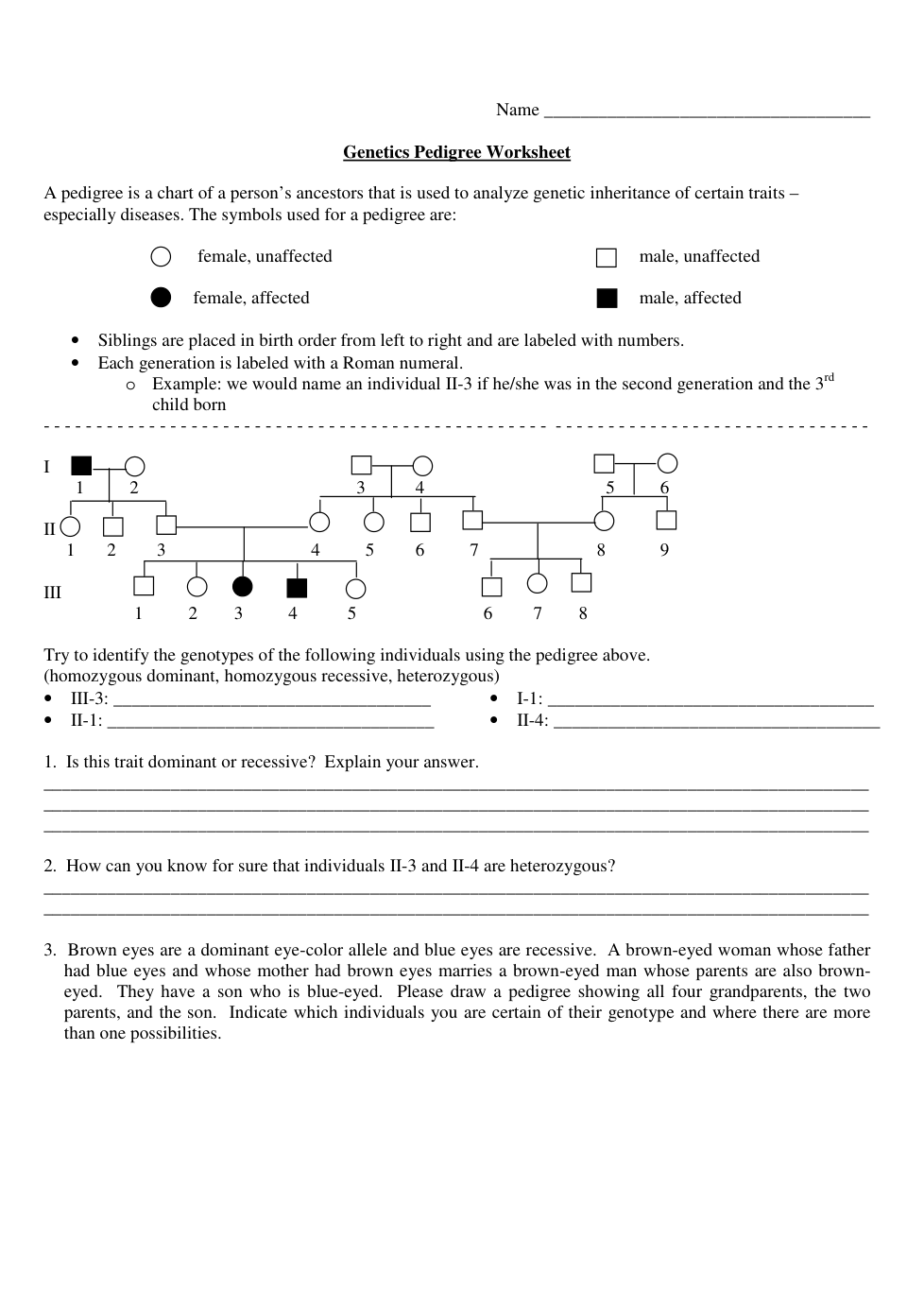
Determine the genotype of #1
Determine the genotype of #3
Determine the genotype of #4
Determine the genotype of #5
Determine the genotype of #6
Determine the genotype of #7
Determine the genotype of #9
Determine the genotype of #11
Determine the genotype of #12
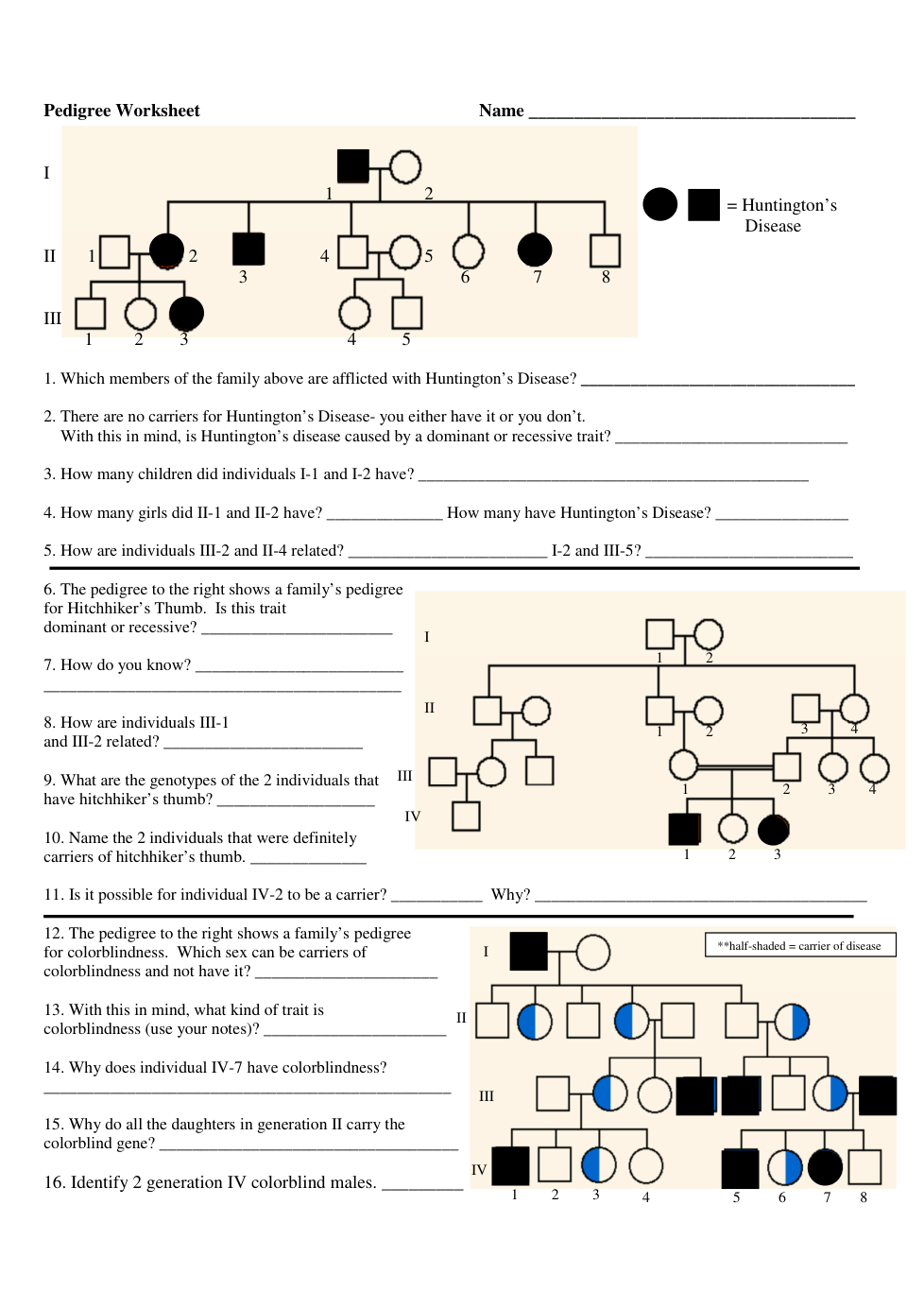
Identify the genotype of individual #1
Identify the genotype of individual #2
Identify the genotype of individual #3
Identify the genotype of individual #4
Identify the genotype of individual #5
Identify the genotype of individual #6
Identify the genotype of individual #7
Identify the genotype of individual #10
Identify the genotype of individual #11
Identify the genotype of individual #12
Identify the genotype of individual #13
3) What is the genotype? (You should have 4 letters in your answer. No spaces)
4a) What is the genotype? (You should have 4 letters in your answer. No spaces)
4a) What is the genotype? (You should have 4 letters in your answer. No spaces)
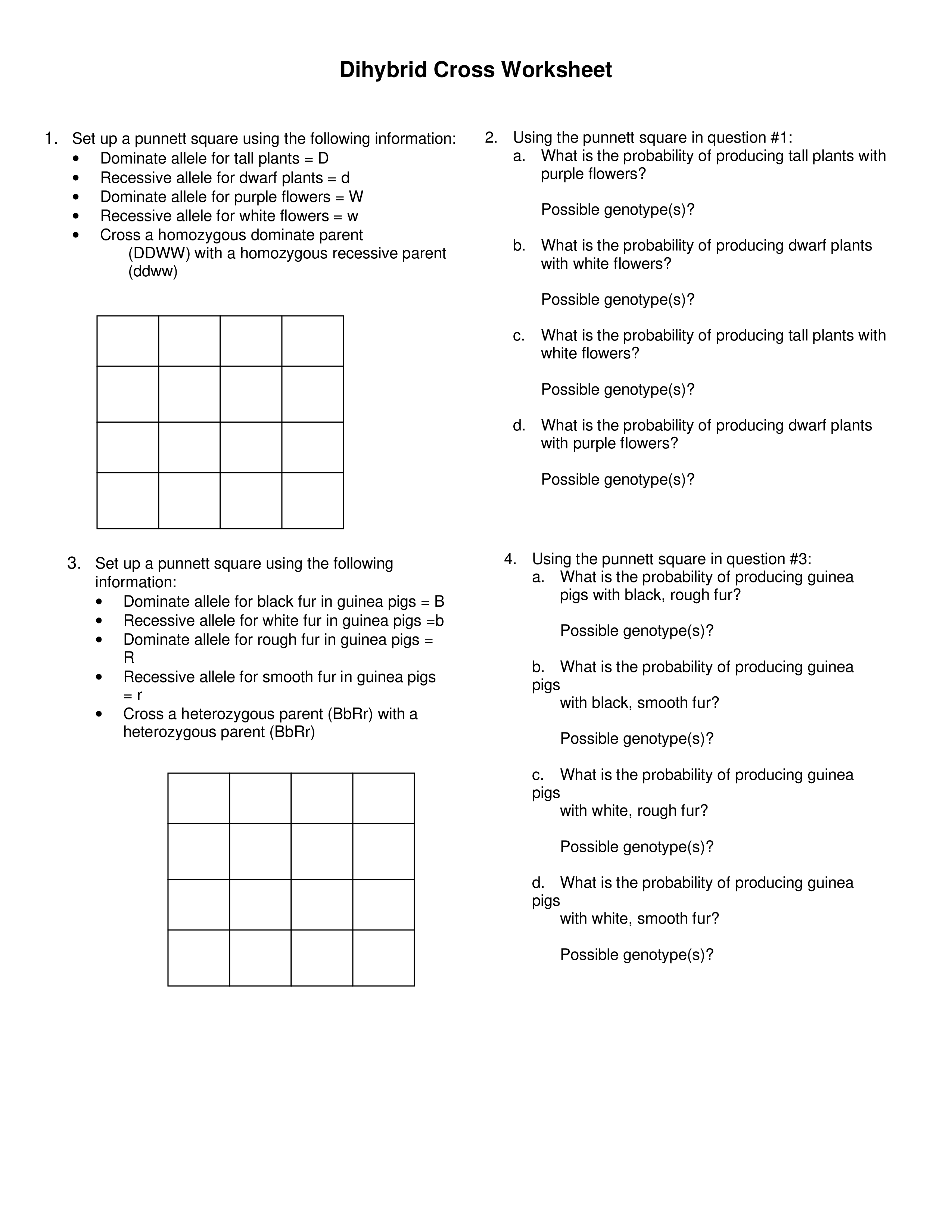
Complete the in the Dihybrid cross and give the probability of each outcome. The Parent gametes have been filled in for you.
CHALLENGE! (Optional)