Grade 12 Alternate E-Day Task (Photons and Electrons)
star
star
star
star
star
Last updated 10 months ago
28 questions
Note from the author:
This task will take you through the topic on electrons and photons. It forms part of your course work as outlined in the IEB SAGS document.
Watch the videos and answer the questions that follow.
This is a timed assignment and must be completed in one sitting.
This task will take you through the topic on electrons and photons. It forms part of your course work as outlined in the IEB SAGS document.
Watch the videos and answer the questions that follow.
This is a timed assignment and must be completed in one sitting.
Electromagnetic Waves
Required
1 point
1
Question 1
1.
Which electromagnetic radiation (EMR) was discovered by placing a thermometer next to the red light?
Required
1 point
1
Question 2
2.
The greater the frequency of the EMR, the smaller its wave.
Required
1 point
1
Question 3
3.
Which radio waves are the most damaging?_____________________
Other Answer Choices:
Microwaves
Radio waves
Ultraviolet rays
The Photoelectric Effect
The following video demonstrates the Photoelectric effect using visible light and UV Light.
Required
1 point
1
Question 4
4.
What metal is placed on the electroscope?
Required
1 point
1
Question 5
5.
The plate has to be negatively charged.
Required
2 points
2
Question 6
6.
Match the correct observations. Drag the observation to the correct light source.
Draggable item
arrow_right_alt
Corresponding Item
gold leave drops
arrow_right_alt
UV Light
gold leave remains in upright position
arrow_right_alt
visible light from the desk lamp
Required
1 point
1
Question 7
7.
The brightness of the visible light will cause the gold leave to drop.
Required
1 point
1
Question 8
8.
One photon of light releases
1 point
1
Question 9
9.
Visible light unable to release an electron from the metal in the demonstration because it has _______ energy than a photon of UV light.
Watch the following video on the basic concepts involved in the photoelectric effect.
Answer the questions according to the time stamps on the video.
2 points
2
Question 10
10.
Describe the photoelectric effect.
2 points
2
Question 11
11.
Define threshold frequency (cut-off frequency).
2 points
2
Question 12
12.
Define work function of a metal.
Untitled Section
Watch the following video on the basic concepts involved in the photoelectric effect.
Answer the questions according to the time stamps on the video.
You may begin viewing at time: 10:44 (first marker on the video time line)
1 point
1
Question 13
13.
What metal is placed on the electrode?
1 point
1
Question 14
14.
What was the wavelength of the incident waves when the first observed electrons moved away from the cathode? Write down the value(number) only using ? (unit is nm)
1 point
1
Question 15
15.
Use the formula
to determine the frequency in Hz of this incident radiation. write down the value only.
3 points
3
Question 16
16.
Use the equation above to match the correct options with each term. E ______________________ = Wo______________________ + Ek______________________
Other Answer Choices:
pertains to the photo electron
Energy of photon
Energy required by a metal to release an electron
1 point
1
Question 17
17.
If the frequency of incident radiation is
Hz, calculate the energy carried by one photon of this light ?
2 points
2
Question 18
18.
Explain what is meant by the photoelectric effect.
1 point
1
Question 19
19.
How does an increasing the intensity of light affect the current in the circuit. Assume the light has a frequency greater than the threshold frequency. (increase, decrease, remains unchanged)
1 point
1
Question 20
20.
Are electrons ejected from a metal when the the incident radiation is below the threshold frequency? (yes/No)
1 point
1
Question 21
21.
Which metal is placed on the cathode now?
1 point
1
Question 22
22.
Why does this metal require a greater frequency of incident radiation to cause electrons to be ejected ?
1 point
1
Question 23
23.
What maximum wavelength is required to eject electrons from this metal
Watch video until 25:20
1 point
1
Question 24
24.
What does an increase in intensity of incident radiation produce before it strikes the metal?
Watch the video to the end.
Untitled Section
The Duality of Light: Is a light a wave or is it a particle? Watch the video below and answer the question that follow.
2 points
2
Question 25
25.
Light is made up of
Required
1 point
1
Question 26
26.
What other name is give to the "wave packets" of light?
Required
1 point
1
Question 27
27.
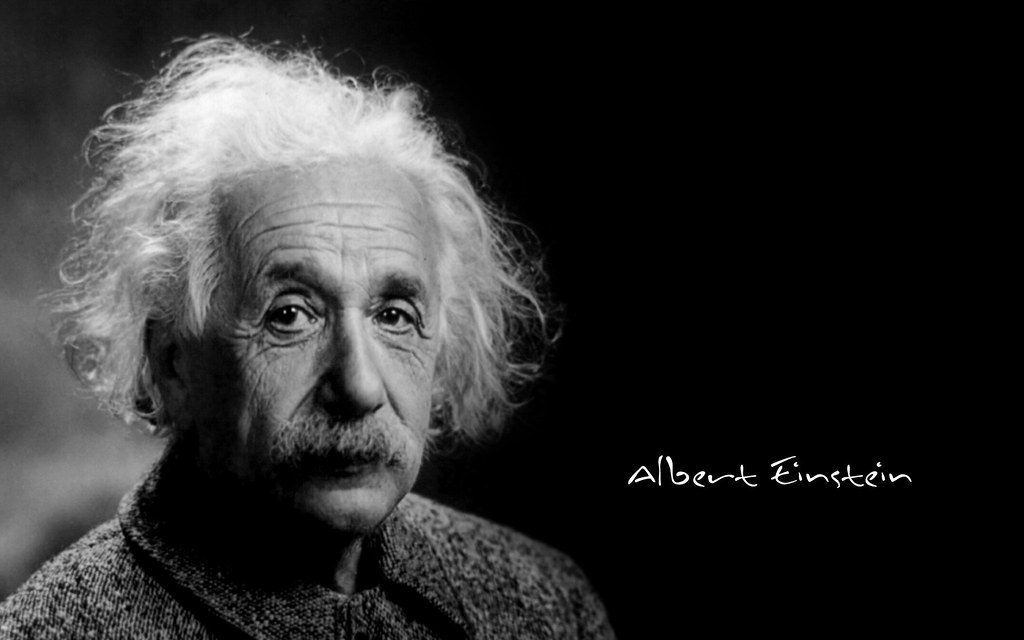
What field of physics did this discovery by Albert Einstein open up?
Activity 9.1 in your workbook page 274
1 point
1
Question 28
28.
Complete Activity 9.1 in your workbook page 274 and upload your answers