1/25- Fractions: Lesson 3 - Simplifying Fractions ✌🏽 (6th grade)
star
star
star
star
star
Last updated over 3 years ago
1 Asɛmmisa

SIMPLIFY FRACTIONS with your friend, GCF!
Watch: FLOCABULARY - GCF & LCM
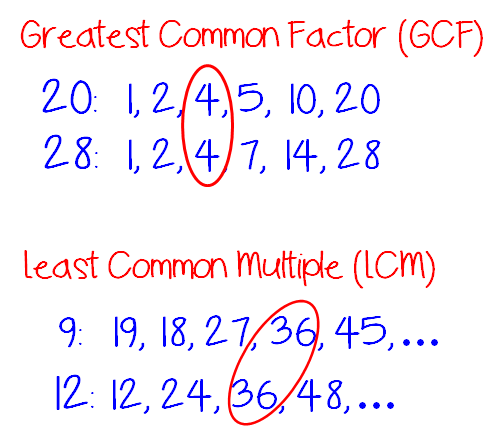
GCF stands for greatest common factor, and it's useful when simplifying fractions. Common factors are whole numbers that divide evenly into both of the numbers in question, and the greatest common factor is the largest of those whole numbers.
20 ⁄ 28 is the sort of answer you might get after adding or multiplying fractions, but you may need to simplify your answer as a final step. Use the GCF to reduce
20 ⁄ 28 to its simplest form: 5 ⁄ 7.
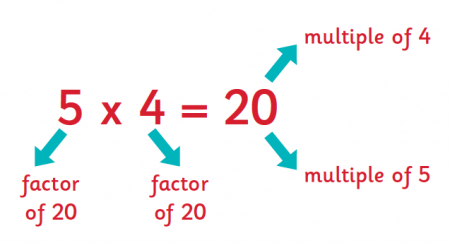
Multiples are like the opposite of factors: they are the bigger numbers that a smaller number can go into evenly. We get multiples when we multiply a number by another whole number. Don't forget that any number is always a multiple of itself since it equals itself when multiplied by one.
Two numbers will share a lot of multiples, but the Least Common Multiple, or smallest multiple that two numbers have in common, is what we're after. The LCM comes in handy when adding and subtracting fractions, since you have to make the denominator the same for those operations.
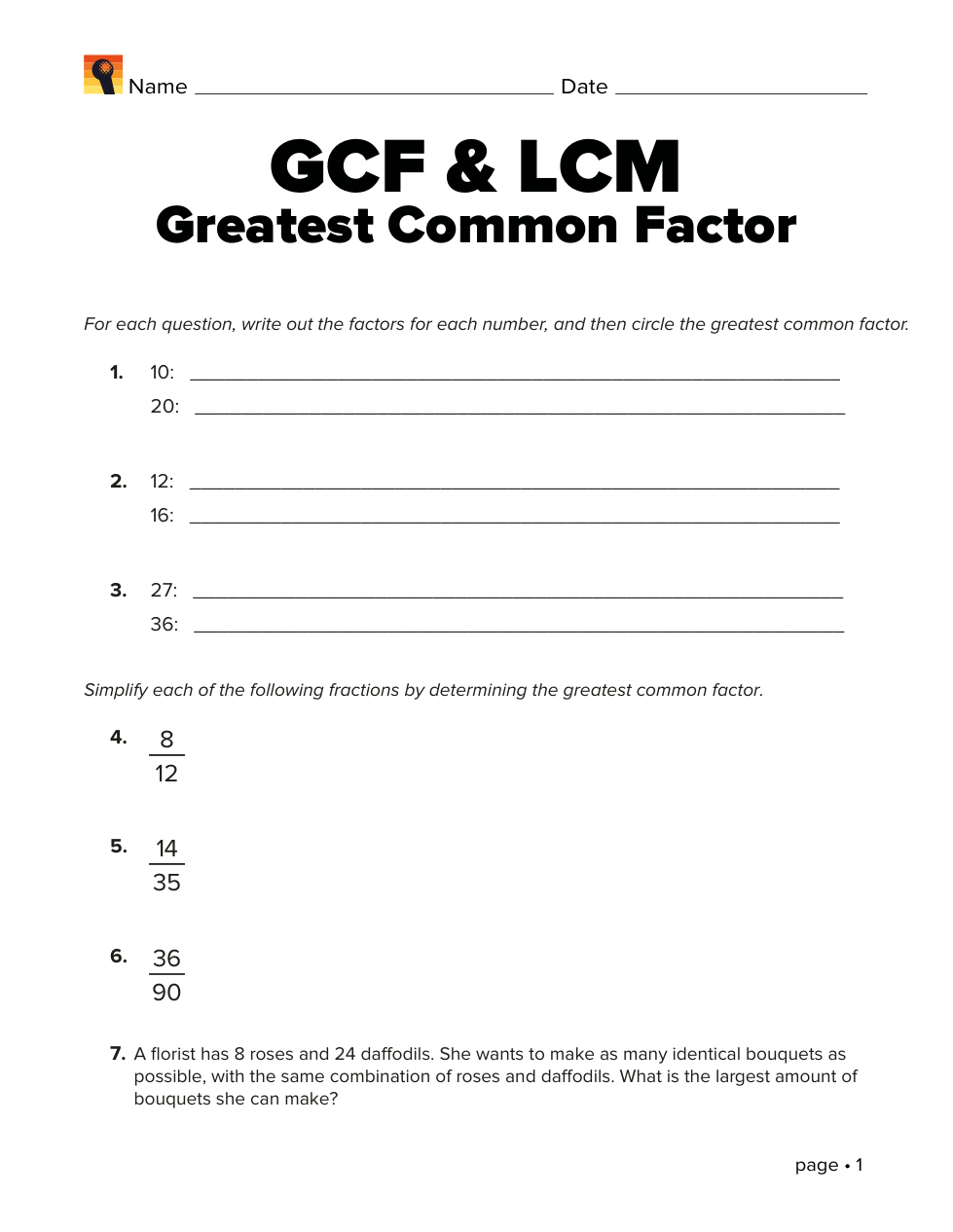
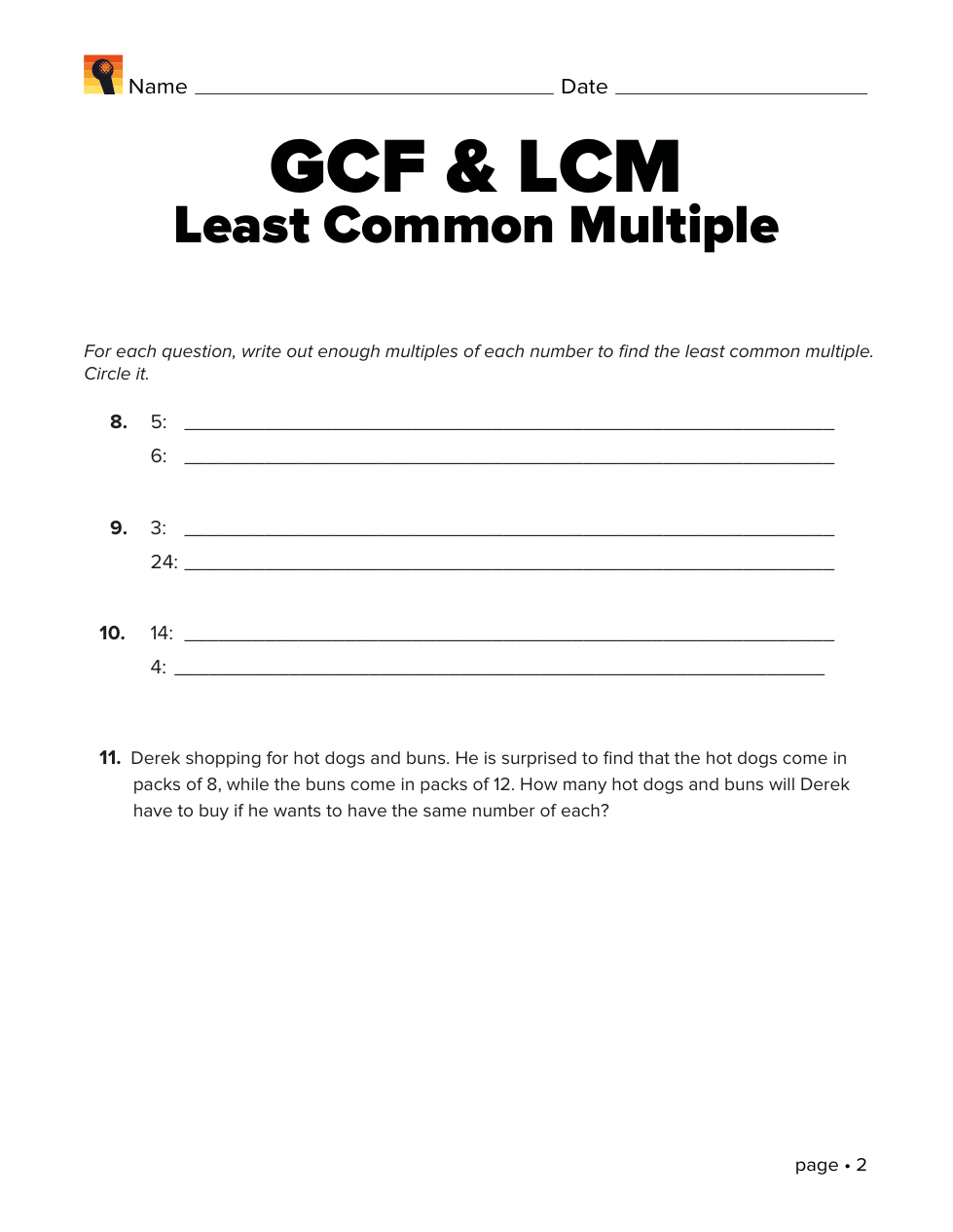
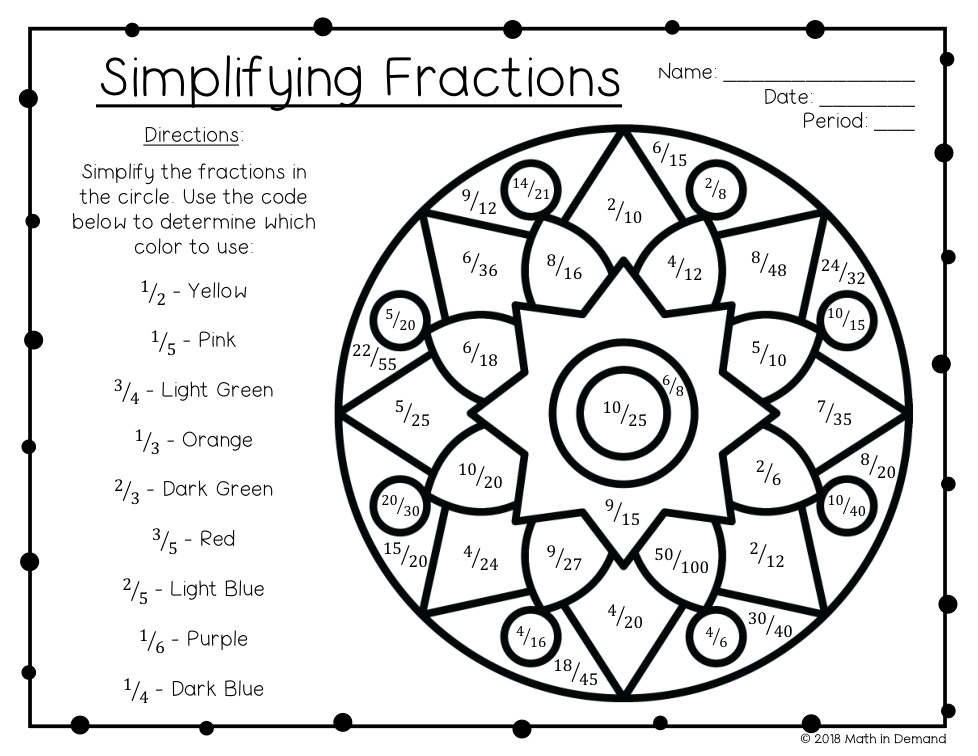
Click "Edit background", click on the image icon, and upload a photo of your completed work: