Examine the map handed to you and your partner. What do you think the Emancipation Proclamation is based on these images? Where does it apply to, and how can you tell from the map?
In one sentence, please describe what the Emancipation Proclamation was in your own words.
Using slide one, please explain why the Civil War was different from all the wars before it.
Using slide two, what were two disadvantages of wet plate photography?
Based on the quote on slide three, what can you infer about the public's response to this new technology?
Analysis #1
Which photo are you analyzing?
Analysis #2
Which photo are you analyzing?

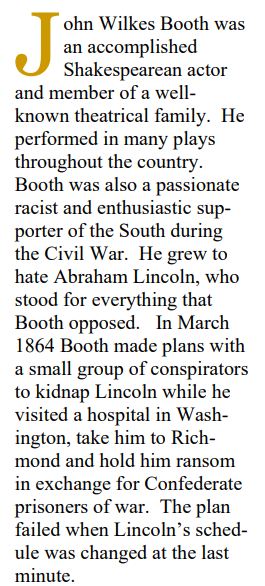
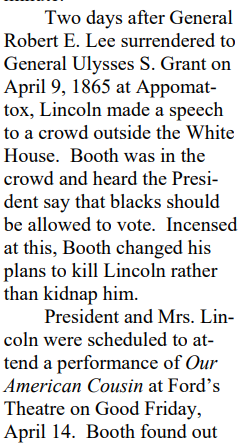
2. Directions: After completing the guided notes, read the story of Lincoln's assassination aloud with your group.
Is the document dated? If yes, what is the date? If no, are there clues in the document to help you date it? For what audience was the document written? How can you tell?
List three things the author said that you think are important.
List two things the document tells you that can help you infer what life in the United States was like at the time it was written.
Write a question to the author that is left unanswered by the document.
Did the Emancipation Proclamation free all slaves in the United States? Explain your answer below.
How long had the United States been a country when the American Civil War broke out?
Why was Lincoln against Southern secession?
During the Civil War, what were escaped slaves that ran to the Union called?
What opportunity does the Emancipation Proclamation present to escaped slaves?
How did Black soldiers help the Union win the Civil War?
What details do you notice about the photograph? Describe each element of the photograph in depth.
Based on the title and your observations, what do you think this photo depicts?
How would this photograph help depict the reality of war to the American public in the 1860s?
What details do you notice about the photograph? Describe each element of the photograph in depth.
Based on the title and your observations, what do you think this photo depicts?
How would this photograph help depict the reality of war to the American public in the 1860s?