Log in
Sign up for FREE
arrow_back
Library

Five Ponds Chapter 7 Our Changing Earth (Geology)

star
star
star
star
star
Last updated over 3 years ago
45 questions
Required
1
Required
1
Required
1
Required
1
Required
1
Required
1
Required
1
Required
1
Required
1
Required
1
Required
1
Required
1
Required
1
Required
1
Required
1
Required
1
Required
1
Required
1
Question 1
1.

Question 2
2.

Required
1
Required
1
Required
1
Question 6
6.

Required
1
Question 8
8.

Question 9
9.

Question 10
10.

Required
1
Required
1
Question 13
13.

Question 14
14.

Question 15
15.

Required
1
Required
1
Required
1
Required
1
Required
1
Required
1
Question 22
22.

Required
1
Required
1
Required
1
Required
1
Question 27
27.

Question 28
28.

Required
1
Required
1
Required
1
Question 32
32.

Required
1
Question 34
34.

Required
1
Required
1
Required
1
Question 38
38.

Required
1
Required
1
Required
1
Required
1
Question 43
43.

Question 44
44.

Question 45
45.

Large continent-sized plates move slowly on Earth’s surface due to —
thermal energy from the sun
radiant energy from the sun
thermal energy moving material within Earth
mechanical energy moving wind and water currents
Why would a civil engineer learn about faults?
To know where plate boundaries are located
To measure the number of earthquakes
To be able to mark a volcano on a map
To observe eroded landscapes before building
Question 3
3.

Question 4
4.

Question 5
5.

Why are certain layers of Earth’s interior liquid?
Hot temperatures
Intense pressure
Moving plates
Magnetic forces
Question 7
7.

Rocks that have formed due to layers of sediment cemented together are called —
magma rocks
igneous rocks
sedimentary rocks
metamorphic rocks
What evidence has been discovered that leads scientists to conclude that parts of Virginia were once covered by an ocean?
Salinity levels in Virginia’s soil have been tested.
Satellite pictures of an ocean covering Virginia have been studied.
Fossils of ocean animals have been found in Virginia.
Special minerals made from salt have been discovered in Virginia
Which is likely to cause erosion to happen more quickly?
Trimming bushes
Planting trees
Using pesticides
Cutting down trees
Question 11
11.

Question 12
12.

From the Earth’s crust toward the inner core, pressure and temperature —
decrease
remain the same
become equal
increase
Why are fossils most commonly found in sedimentary rock?
Sedimentary rock is formed when rocks are melted in lava.
Sedimentary rock is formed when layers of material are pressed together.
Sedimentary rock is formed from weathering and erosion.
Sedimentary rock is formed when organisms and plants are frozen together.
All Earth systems are seamlessly connected through the —
flow of matter and energy
movement of tectonic plates
formation of rocks
layers of the Earth
Question 16
16.

Question 17
17.

Question 18
18.

Question 19
19.

Question 20
20.

Question 21
21.

A student’s home is located along a river and the front yard is eroding into the river a little each year. What is one way the student can help slow down the erosion?
Plant trees along the riverbank
Clear the riverbank of plant overgrowth
Plant grasses and shrubs along the riverbank
Add more layers of soil to the riverbank
Question 23
23.

Question 24
24.

Question 25
25.

Question 26
26.

Geological features on the continents, such as mountain ranges, are caused by —
volcanoes
plate movements
ocean trenches
deposition
Why does a paleontologist study fossils?
To learn about the threat of upcoming earthquakes
To understand life and conditions from the past
To recognize future climate change
To harness the sun’s radiant energy
Question 29
29.

Question 30
30.

Question 31
31.

Erosion happens when rocks and sediments are picked up and moved to another place by —
animals and plants
water and wind
humans and animals
earthquakes and volcanoes
Question 33
33.

Which of these changes to Earth’s surface was most likely formed by weathering?
Mountain range
Canyon
Desert
Sand dune
Question 35
35.

Question 36
36.

Question 37
37.

Which set of words are related to igneous rocks?
Layers, fossils, decaying plants and animals
Heat, pressure, chemical changes
Magma, crystals, heating and cooling
Sand, sediment, fossils
Question 39
39.

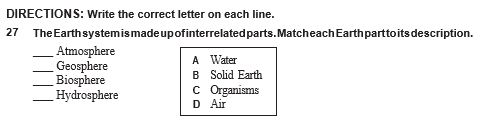
What part of the Earth matches the description atmosphere?

Question 40
40.

What part of the Earth matches the description geosphere?

Question 41
41.

What part of the Earth matches the description biosphere?

Question 42
42.

What part of the Earth matches the description hydrosphere?

The two outer layers of Earth are composed primarily of —
iron
nickel
rocky material
liquid material
Rocks that are formed by melting and cooling are categorized as —
igneous
sedimentary
glaciers
metamorphic
Where can fossils be found?
The inner core of the Earth
In the bark of old trees
The atmosphere
In different layers of rock
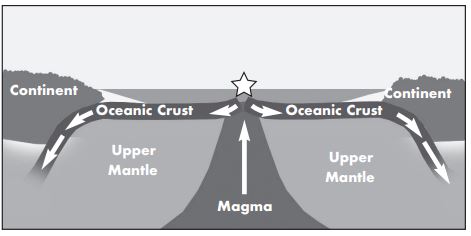
Which type of plate tectonic boundary is shown in the area marked with the star?
Convergent
Divergent
Transform
Sliding
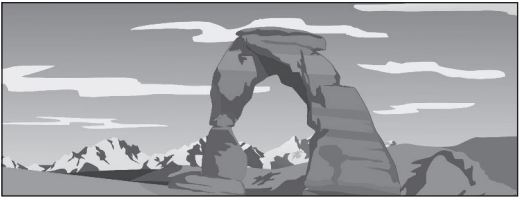
What best explains why the rock formation shown looks like an arch?
Sediment and erosion
Erosion and deposition
Weathering and erosion
Sediment and weathering
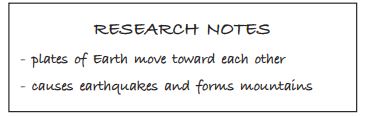
A student recorded notes on plate tectonic boundaries. What type of boundary is described in the student’s notes shown?
Convergent
Divergent
Transform
Sliding
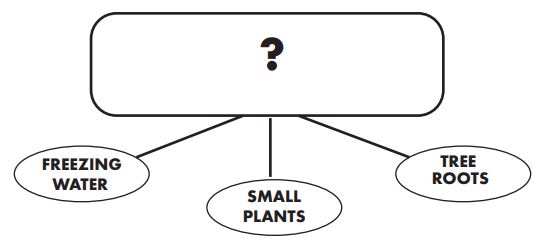
Which is the best title for the graphic organizer?
Places of Deposition
Methods of Erosion
Weather Conditions
Ways Rocks Weather
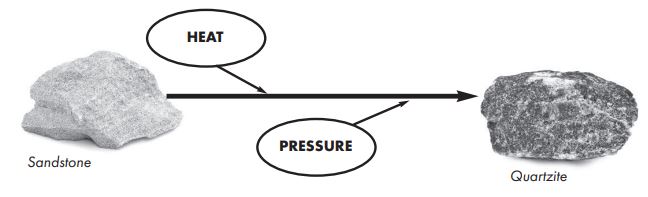
Based on the diagram, what type of rock is quartzite?
Magma
Igneous
Sedimentary
Metamorphic
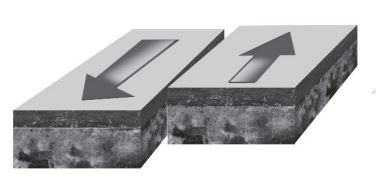
When two tectonic plates slide past each other, it is likely that -
land will fall into the magma
earthquakes can occur
volcanoes are likely to form
a trench will develop
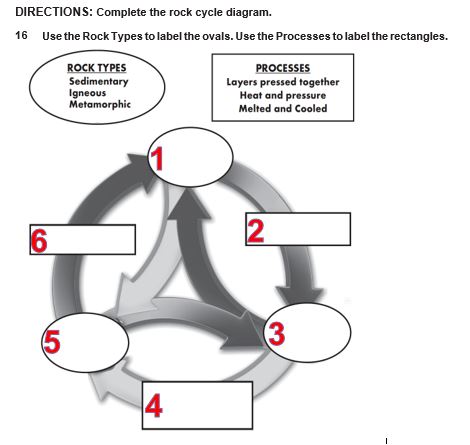
Label #1
Sedimentary
Igneous
Metamorphic
Layers pressed together
Heat and pressure
Melted and cooled
Label #2
Sedimentary
Igneous
Metamorphic
Layers pressed together
Heat and pressure
Melted and cooled
Label #3
Sedimentary
Igneous
Metamorphic
Layers pressed together
Heat and pressure
Melted and cooled
Label #4
Sedimentary
Igneous
Metamorphic
Layers pressed together
Heat and pressure
Melted and cooled
Label #5
Sedimentary
Igneous
Metamorphic
Layers pressed together
Heat and pressure
Melted and cooled
Label #6
Sedimentary
Igneous
Metamorphic
Layers pressed together
Heat and pressure
Melted and cooled
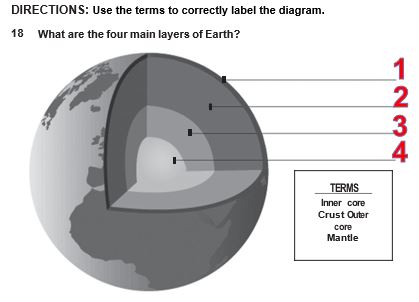
Label #1
Inner core
Crust
Outer core
Mantle
Label #2
Inner core
Crust
Outer core
Mantle
Label #3
Inner core
Crust
Outer core
Mantle
Label #4
Inner core
Crust
Outer core
Mantle
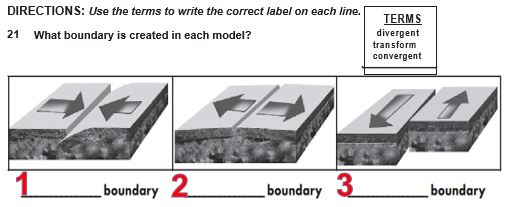
Label #1
divergent
transform
convergent
Label #2
divergent
transform
convergent
Label #3
divergent
transform
convergent
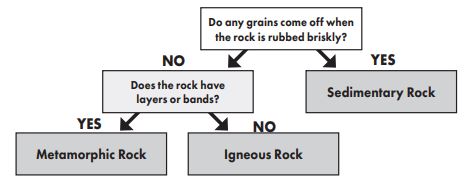
The dichotomous key could be used to —
list tectonic boundaries
show the rock cycle
identify and classify rock types
describe how to find a rock
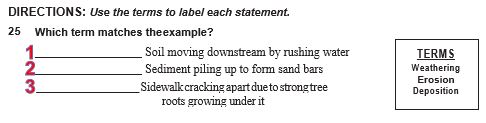
Label #1
weathering
erosion
deposition
Label #2
weathering
erosion
deposition
Label #3
weathering
erosion
deposition