Refer to Discovery Education's chemistry text: Unit 3.2 Ionic Bonding to answer the following questions. Additional questions may be added so check your work before turning in and make sure everything has been responded to.
Enagage: Deconstructing Salts
Required
1 point
1
Question 1
1.
What do you already know about ionic compounds?
Required
1 point
1
Question 2
2.
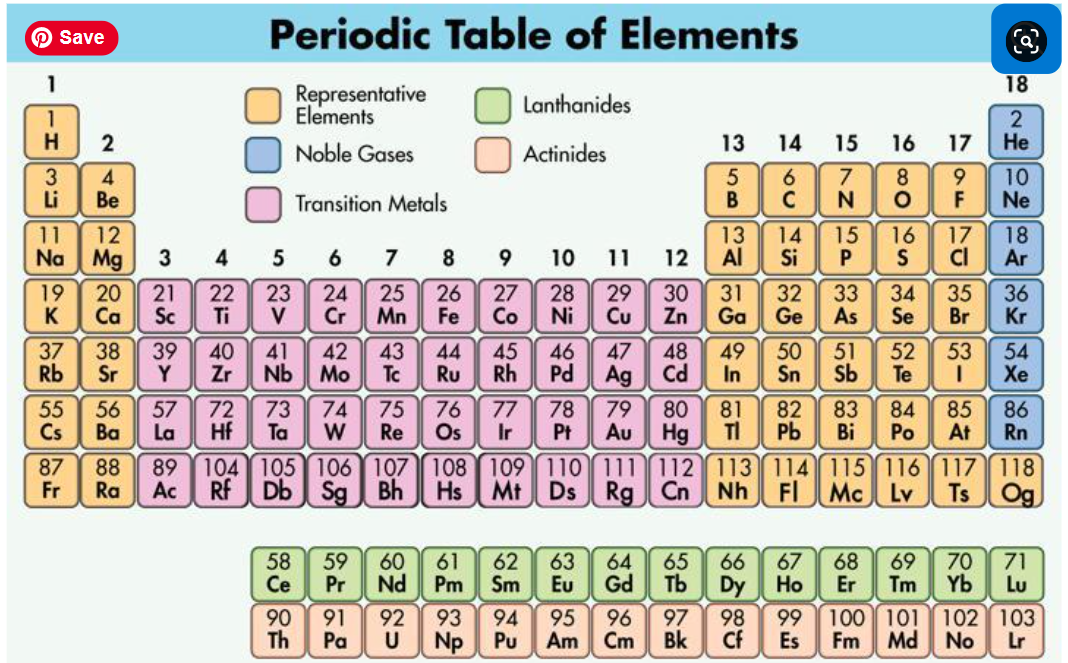
Examine the periodic table of the elements and identify which groups of elements are metals and which are nonmetals.
Required
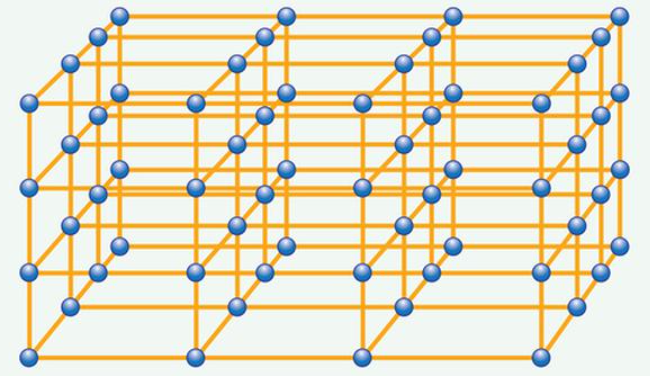
2 points
2
Question 3
3.
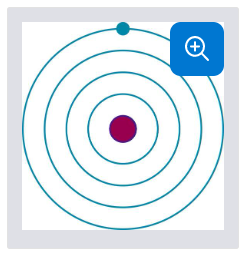
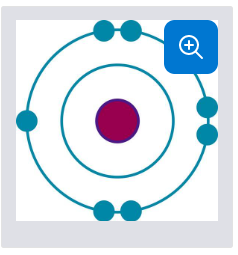
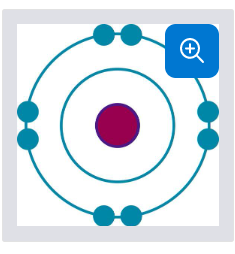
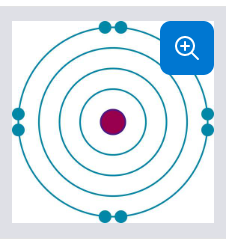
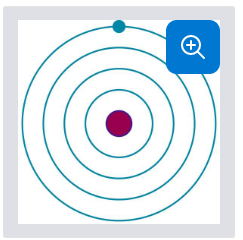
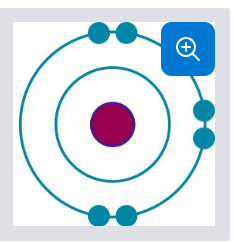
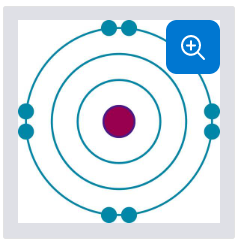
For each of the original atoms shown on the right (top), select the image on the left that depicts the ion that would most commonly be formed.
Required
8 points
8
Question 4
4.
Match the ion characteristics with the type of ion that they describe. If the characteristic describes both anions and cations, place the characteristic in the both column.
is negatively charged
has the same number of protons as original atom
is more stable than the original atom
Loses one or more electrons
is a charged atom
gains one or more electrons
is positively charged
has a full valence shell
Anions
Cations
Both
Explore 1
Required
1 point
1
Question 5
5.
The simplest ionic compounds consist of the atoms of only two elements known as
Required
3 points
3
Question 6
6.
Magnesium chloride (MgCl2) is another example of a binary ionic compound. In this case, a single _______ atom transfers _______, one to each of two _______ atoms.
Required
2 points
2
Question 7
7.
Explain why the net charge of sodium nitride, Na3N, zero?
Required
1 point
1
Question 8
8.
Use the periodic table to determine how many electrons will be lost or gained by each element when it forms an ion.
Potassium: __________
Required
1 point
1
Question 9
9.
Use the periodic table to determine how many electrons will be lost or gained by each element when it forms an ion.
Sulfur: __________
Required
1 point
1
Question 10
10.
Use the periodic table to determine how many electrons will be lost or gained by each element when it forms an ion.
Bromine: __________
Required
1 point
1
Question 11
11.
Use the periodic table to determine how many electrons will be lost or gained by each element when it forms an ion.
Calcium: __________
Required
1 point
1
Question 12
12.
Which of these compounds is NOT a binary ionic compound?
Explore 2
Required
3 points
3
Question 13
13.
_______ is a measure of the attraction of an atom for electrons in a chemical bond. Elements with higher electronegativity values are more reactive. Whether an ionic bond forms or does not form is determined by taking the _______ between the electronegativities of two atoms. If the difference is equal to or greater than _______ , an ionic bond will form.
Required
1 point
1
Question 14
14.
Which difference in electronegativity will have two atoms form an ionic bond?
Required
1 point
1
Question 15
15.
How are the arrangements of compounds held together by ionic bonds described?
Required
2 points
2
Question 16
16.
According to the video (watch in DE), the coordination number for the Titanium ion was _______ and the coordination number for the oxygen ion was _______ .
Required
1 point
1
Question 17
17.
Which of the following explanations best describes the process by which the elements calcium and oxygen combine to form the binary compound calcium oxide?
2Ca(s) + O2(g) -> 2CaO(s)
Check for Understanding (Quiz)
1 point
1
Question 18
18.
How do atoms form ions that then combine to form crystals?
1 point
1
Question 19
19.
How do ionic bonds form in binary compounds?
1 point
1
Question 20
20.
How Is Electronegativity Used to Determine Which Atoms Form Ionic Bonds?
1 point
1
Question 21
21.
What type of bond holds two electrically charged atoms (ions) together by their opposite charge?
1 point
1
Question 22
22.
_______ ionic compounds refer to the simplest ionic compounds consisting of atoms of only two elements.