Conceptual 5-1 (A)
star
star
star
star
star
Last updated about 3 years ago
10 Nsɛmmisa
Hyɛ no nsow a efi ɔkyerɛwfo no hɔ:
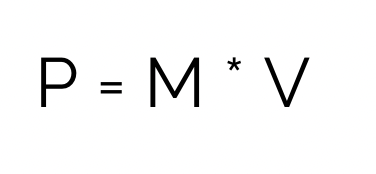
1
1
1
1
The units for momentum are:
Michael Phelps (who has a mass of 98 kg) is swimming 1.5 m/s in a lake. He gets passed by a canoe (mass = 55 kg) moving at 2.2 m/s.
What is Michael Phelps' momentum? (must include units)
What is the momentum of the canoe? (must include units)
How fast would the canoe have to move to have the same momentum as Michael Phelps?
(must include units)
A watermelon (1.5 kg) is falling with 12.5 kgm/s of momentum downwards. What is its velocity?
A giant hockey puck (mass = 0.8 kg) is sliding across the ice at 1.2 m/s.
What is the initial momentum of the puck?
(must include units)
A player then pushes it with their stick until it reaches a speed of 3.4 m/s. What is the new momentum of the puck?
By how much did the puck's momentum change?
(must include units)
Can an object still have momentum if it is moving at a constant velocity (no acceleration)?
True or False: The momentum of an object can change