Twa kɔ nsɛm atitiriw so
Log in
Sign up for FREE
arrow_back
Laabri

OAT Lesson 6: Explore Multiplication Strategies with Rectangles

star
star
star
star
star
Last updated almost 3 years ago
16 Nsɛmmisa

Develop Understanding

Today's Learning Goal: (G3, U4, L7)

  • Use area diagrams to explore strategies based on properties of multiplication

Today's Materials:

  • Laptop

  • Laptop charger

  • Pen/Pencil/Paper/Expo Marker (optional)

Please complete the Jump Start (activator). You have 5 minutes before we review. This is independent it should be silent.

Reminders:

1. Ready for class

2. No cellphones

3. Volume must be low.

4. Read and follow all directions

5.) Take your bag off and immediately begin the Activator.

JUMP START: How Many Do You See: Squares - ( 5min)

Ɛhia
0
Asemmisa {{asɛmmisaAhyɛnsode}}
1.

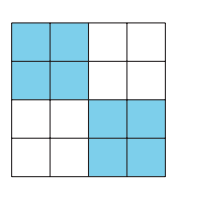
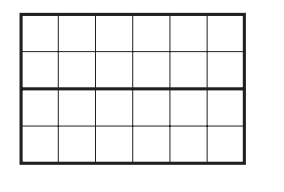
How many do you see? How do you see them?

a.)
b.)
c.)
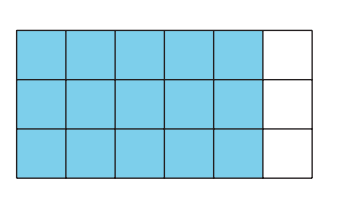
Launch: Strategies with Rectangles) - (10 min)

I do (question 2)

We do (question 3)

You do (question 4)

Ɛhia
0
Asemmisa {{asɛmmisaAhyɛnsode}}
2.

Represent each diagram with expression. Then find the value of the expression.

Ɛhia
0
Asemmisa {{asɛmmisaAhyɛnsode}}
3.

Represent each diagram with an expression. Then find the value of the expression.

Ɛhia
0
Asemmisa {{asɛmmisaAhyɛnsode}}
4.

Represent each diagram with an expression. Then find the value of the expression.

Activity 1: From Diagrams to Expressions - (20 minutes)

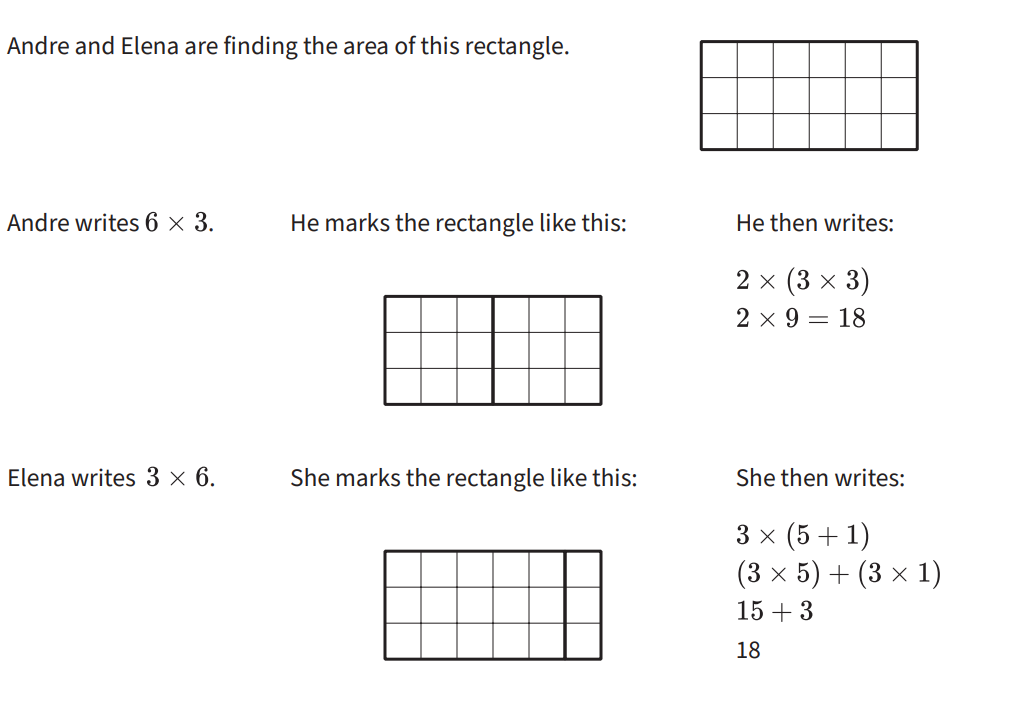
Given the diagrams below:

Ɛhia
0
Asemmisa {{asɛmmisaAhyɛnsode}}
5.

How are Andre and Elena’s strategies alike? How are they different?
Ɛhia
0
Ɛhia
0

Here is another rectangle. Its area can be found by finding.

Ɛhia
0
Ɛhia
0

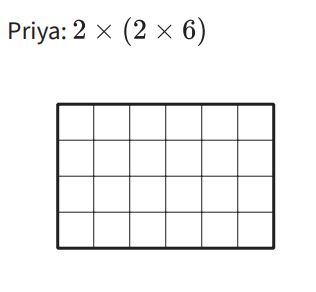
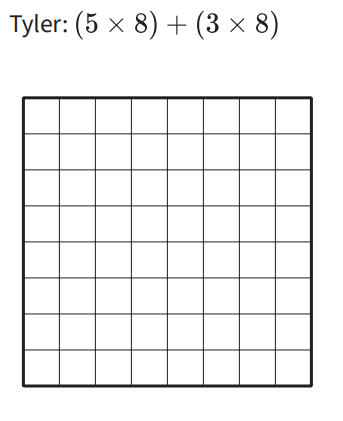
Activity 2: From Expressions to Diagrams-(15 min)

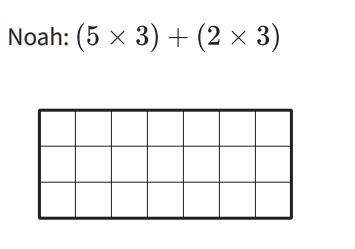
Here are some rectangles and expressions that show how three students saw the area of the rectangles.

For each rectangle:

  • Name the two factors that can be multiplied to find its area.

  • Mark or shade each rectangle to show how each student saw the area. Be prepared to explain your reasoning.

Ɛhia
0
Asemmisa {{asɛmmisaAhyɛnsode}}
10.

Ɛhia
0
Asemmisa {{asɛmmisaAhyɛnsode}}
11.

Ɛhia
0

Lesson Synthesis: - (5 min)

Today, we used diagrams to find the area of rectangles with certain side lengths. We decomposed the rectangles in different ways and wrote different expressions.

Ɛhia
0
Asemmisa {{asɛmmisaAhyɛnsode}}
13.

What were some strategies for decomposing the rectangles to find their areas?

Ɛhia
0
Asemmisa {{asɛmmisaAhyɛnsode}}
14.

How might these strategies help us multiply two numbers?

Cool Down: Mark or Shade Parts to Find Area - (5 min)

Ɛhia
4
Asemmisa {{asɛmmisaAhyɛnsode}}
15.

Here is a rectangle whose area can be found by finding.

Mark or shade the rectangle to show that we can write.

2 x (3 x 7) or (6 x 5) + (6 x 2)

Ɛhia
4
Asemmisa {{asɛmmisaAhyɛnsode}}
16.

What is the value of

? Explain or show your reasoning by drawing a representation.

Closure Questions:

  • How do you feel about today's material?

  • What's the difference between an expression and an equation?

  • Name the four representations we've seen in class so far?

Asemmisa {{asɛmmisaAhyɛnsode}}
6.

How are the numbers in Andre’s expressions related to his diagram?

Asemmisa {{asɛmmisaAhyɛnsode}}
7.

How are the numbers in Elena’s expressions related to her diagram?

Asemmisa {{asɛmmisaAhyɛnsode}}
8.

Mark or shade the rectangle in a way that would help you find its area.

Asemmisa {{asɛmmisaAhyɛnsode}}
9.

Write one or more expressions that can represent your work on the diagram and show how you find the area.
Asemmisa {{asɛmmisaAhyɛnsode}}
12.