
Ɛhia
1
Ɛhia
1
Ɛhia
1
Ɛhia
1
Ɛhia
1
Ɛhia
1
Ɛhia
1
Ɛhia
1
Ɛhia
1
Ɛhia
1
Ɛhia
1
Ɛhia
1
ClO2
NaCl
copper(II)acetate
methane
Solid silver chloride and an aqueous solution of nitric acid are produced when a solution of silver nitrate is reacted with a solution of hydrochloric acid.
Solid silver chloride and an aqueous solution of nitric acid are produced when a solution of silver nitrate is reacted with a solution of hydrochloric acid.
Solid silver chloride and an aqueous solution of nitric acid are produced when a solution of silver nitrate is reacted with a solution of hydrochloric acid.
Solid silver chloride and an aqueous solution of nitric acid are produced when a solution of silver nitrate is reacted with a solution of hydrochloric acid.
Solid silver chloride and an aqueous solution of nitric acid are produced when a solution of silver nitrate is reacted with a solution of hydrochloric acid.
Solid silver chloride and an aqueous solution of nitric acid are produced when a solution of silver nitrate is reacted with a solution of hydrochloric acid.
Solid silver chloride and an aqueous solution of nitric acid are produced when a solution of silver nitrate is reacted with a solution of hydrochloric acid.
Solid silver chloride and an aqueous solution of nitric acid are produced when a solution of silver nitrate is reacted with a solution of hydrochloric acid.
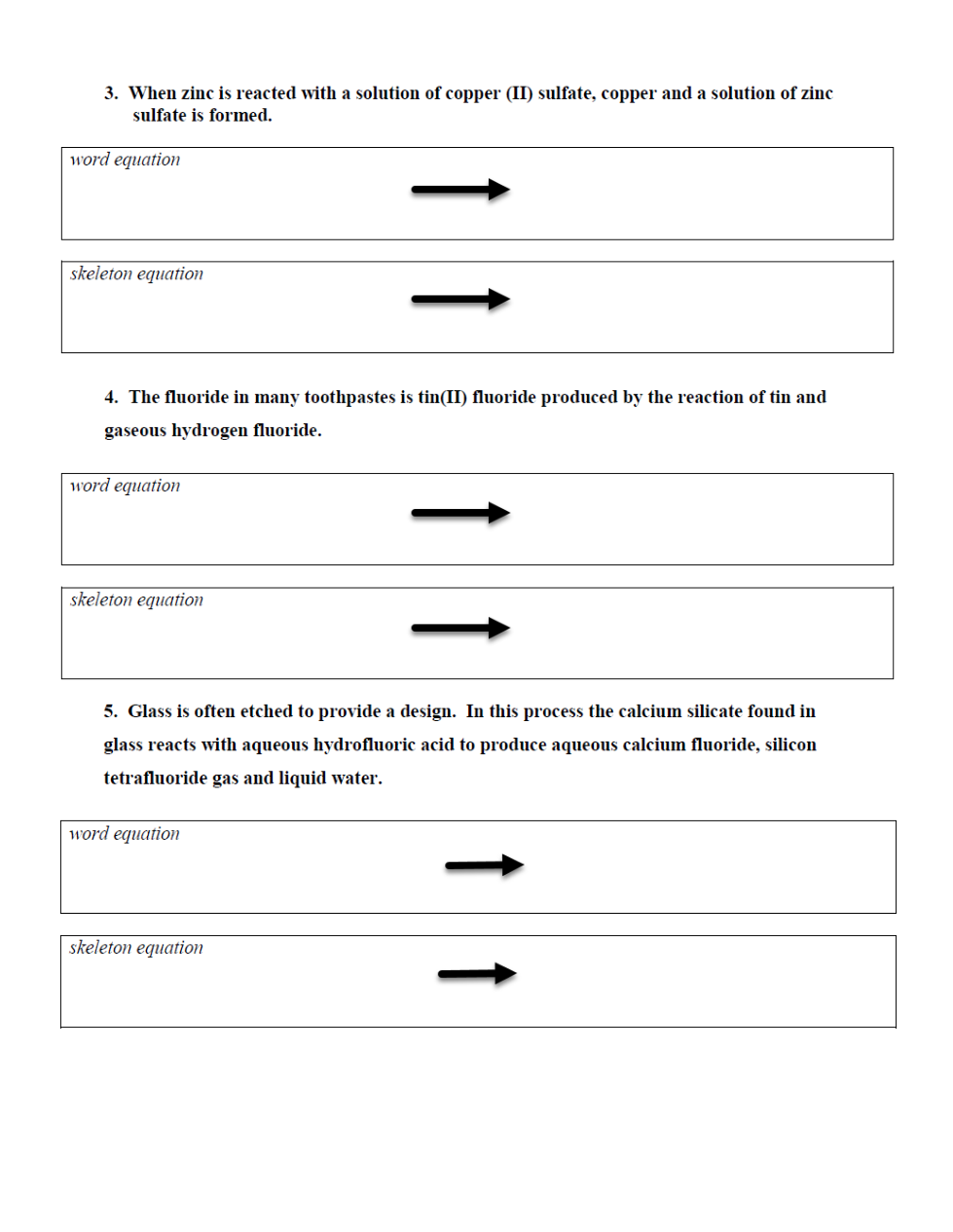
When zinc is reacted with a solution of copper(II)sulfate, copper and a solution of zinc sulfate is formed.
When zinc is reacted with a solution of copper(II)sulfate, copper and a solution of zinc sulfate is formed.
When zinc is reacted with a solution of copper(II)sulfate, copper and a solution of zinc sulfate is formed.
When zinc is reacted with a solution of copper(II)sulfate, copper and a solution of zinc sulfate is formed.
When zinc is reacted with a solution of copper(II)sulfate, copper and a solution of zinc sulfate is formed.
When zinc is reacted with a solution of copper(II)sulfate, copper and a solution of zinc sulfate is formed.
When zinc is reacted with a solution of copper(II)sulfate, copper and a solution of zinc sulfate is formed.
When zinc is reacted with a solution of copper(II)sulfate, copper and a solution of zinc sulfate is formed.
The fluoride in many toothpastes is solid tin(II)fluoride produced by the reaction of tin and gaseous hydrogen fluoride.
The fluoride in many toothpastes is solid tin(II)fluoride produced by the reaction of tin and gaseous hydrogen fluoride.
The fluoride in many toothpastes is solid tin(II)fluoride produced by the reaction of tin and gaseous hydrogen fluoride.
The fluoride in many toothpastes is solid tin(II)fluoride produced by the reaction of tin and gaseous hydrogen fluoride.
The fluoride in many toothpastes is solid tin(II)fluoride produced by the reaction of tin and gaseous hydrogen fluoride.
The fluoride in many toothpastes is solid tin(II)fluoride produced by the reaction of tin and gaseous hydrogen fluoride.
Glass is often etched to provide a design. In this process the calcium silicate found in glass reacts with aqueous hydrofluoric acid to produce aqueous calcium fluoride, silicon tetrafluoride gas and liquid water. Silicate = SiO4 with a -2 charge
Glass is often etched to provide a design. In this process the calcium silicate found in glass reacts with aqueous hydrofluoric acid to produce aqueous calcium fluoride, silicon tetrafluoride gas and liquid water. Silicate = SiO4 with a -2 charge
Glass is often etched to provide a design. In this process the calcium silicate found in glass reacts with aqueous hydrofluoric acid to produce aqueous calcium fluoride, silicon tetrafluoride gas and liquid water. Silicate = SiO4 with a -2 charge
Glass is often etched to provide a design. In this process the calcium silicate found in glass reacts with aqueous hydrofluoric acid to produce aqueous calcium fluoride, silicon tetrafluoride gas and liquid water. Silicate = SiO4 with a -2 charge
Glass is often etched to provide a design. In this process the calcium silicate found in glass reacts with aqueous hydrofluoric acid to produce aqueous calcium fluoride, silicon tetrafluoride gas and liquid water. Silicate = SiO4 with a -2 charge
Glass is often etched to provide a design. In this process the calcium silicate found in glass reacts with aqueous hydrofluoric acid to produce aqueous calcium fluoride, silicon tetrafluoride gas and liquid water. Silicate = SiO4 with a -2 charge
Glass is often etched to provide a design. In this process the calcium silicate found in glass reacts with aqueous hydrofluoric acid to produce aqueous calcium fluoride, silicon tetrafluoride gas and liquid water. Silicate = SiO4 with a -2 charge
Glass is often etched to provide a design. In this process the calcium silicate found in glass reacts with aqueous hydrofluoric acid to produce aqueous calcium fluoride, silicon tetrafluoride gas and liquid water. Silicate = SiO4 with a -2 charge
Glass is often etched to provide a design. In this process the calcium silicate found in glass reacts with aqueous hydrofluoric acid to produce aqueous calcium fluoride, silicon tetrafluoride gas and liquid water. Silicate = SiO4 with a -2 charge
Glass is often etched to provide a design. In this process the calcium silicate found in glass reacts with aqueous hydrofluoric acid to produce aqueous calcium fluoride, silicon tetrafluoride gas and liquid water. Silicate = SiO4 with a -2 charge
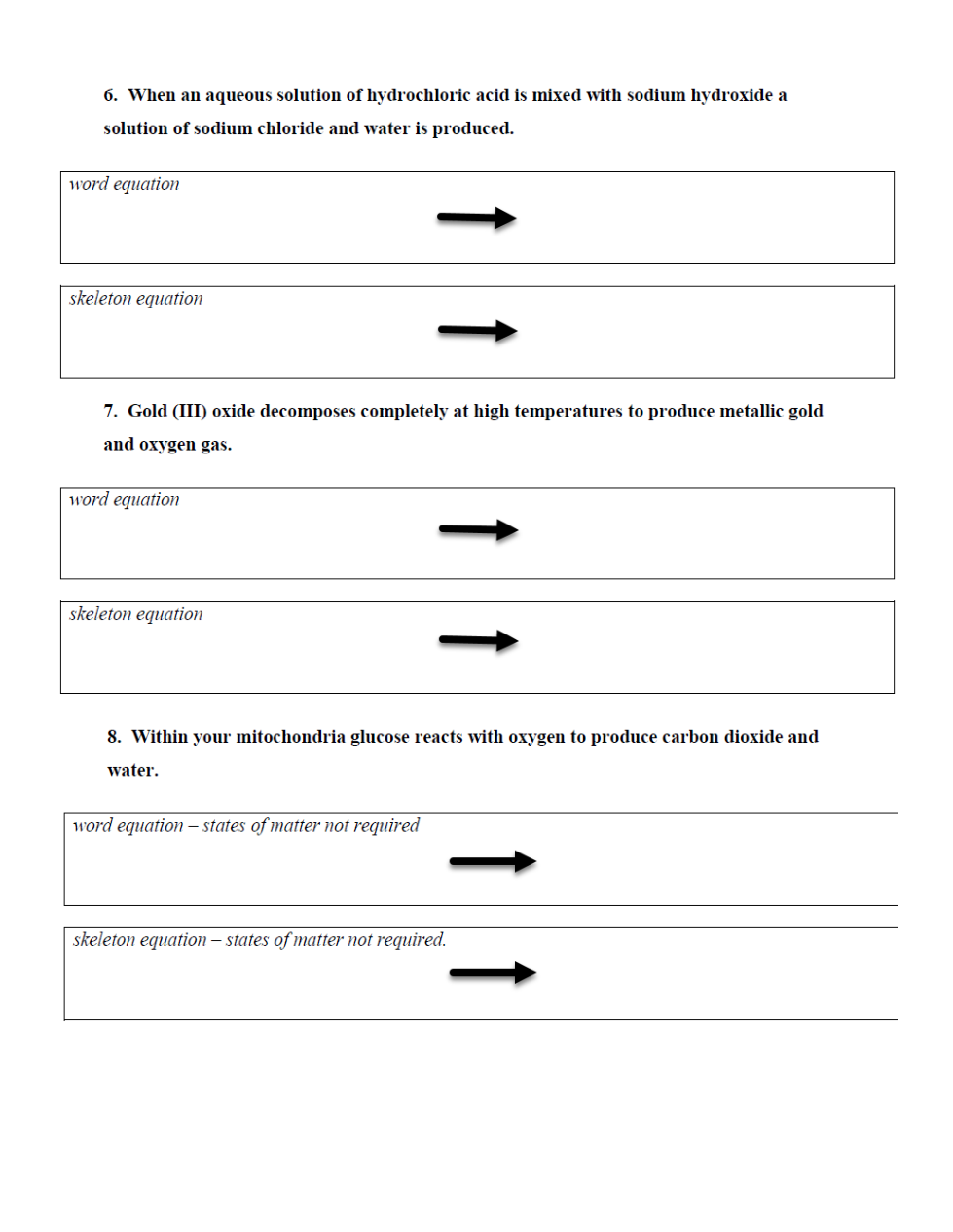
When an aqueous solution of hydrochloric acid is mixed with sodium hydroxide, a solution of sodium chloride and water is produced.
When an aqueous solution of hydrochloric acid is mixed with sodium hydroxide, a solution of sodium chloride and water is produced.
When an aqueous solution of hydrochloric acid is mixed with sodium hydroxide, a solution of sodium chloride and water is produced.
When an aqueous solution of hydrochloric acid is mixed with sodium hydroxide, a solution of sodium chloride and water is produced.
When an aqueous solution of hydrochloric acid is mixed with sodium hydroxide, a solution of sodium chloride and water is produced.
When an aqueous solution of hydrochloric acid is mixed with sodium hydroxide, a solution of sodium chloride and water is produced.
When an aqueous solution of hydrochloric acid is mixed with sodium hydroxide, a solution of sodium chloride and water is produced.
When an aqueous solution of hydrochloric acid is mixed with sodium hydroxide, a solution of sodium chloride and water is produced.
Gold(III)oxide decomposes completely at high temperatures to produce metallic gold and oxygen gas.
Gold(III)oxide decomposes completely at high temperatures to produce metallic gold and oxygen gas.
Gold(III)oxide decomposes completely at high temperatures to produce metallic gold and oxygen gas.
Gold(III)oxide decomposes completely at high temperatures to produce metallic gold and oxygen gas.
Gold(III)oxide decomposes completely at high temperatures to produce metallic gold and oxygen gas.
Gold(III)oxide decomposes completely at high temperatures to produce metallic gold and oxygen gas.
Within your mitochondria glucose (C6H12O6) reacts with oxygen to produce carbon dioxide and water.
(state of matter not required)
Within your mitochondria glucose (C6H12O6) reacts with oxygen to produce carbon dioxide and water.
(state of matter not required)
Within your mitochondria glucose (C6H12O6) reacts with oxygen to produce carbon dioxide and water.
(state of matter not required)
Within your mitochondria glucose (C6H12O6) reacts with oxygen to produce carbon dioxide and water.
(state of matter not required)
Within your mitochondria glucose (C6H12O6) reacts with oxygen to produce carbon dioxide and water.
(state of matter not required)
Within your mitochondria glucose (C6H12O6) reacts with oxygen to produce carbon dioxide and water.
(state of matter not required)
Within your mitochondria glucose (C6H12O6) reacts with oxygen to produce carbon dioxide and water.
(state of matter not required)
Within your mitochondria glucose (C6H12O6) reacts with oxygen to produce carbon dioxide and water.
(state of matter not required)