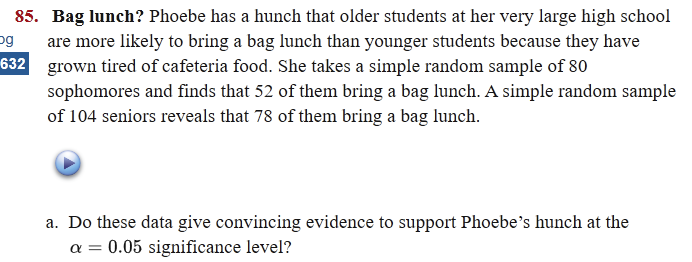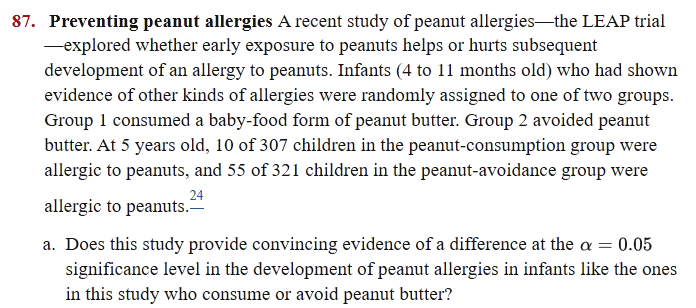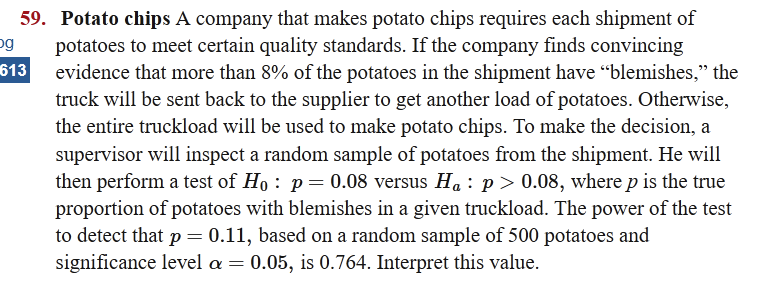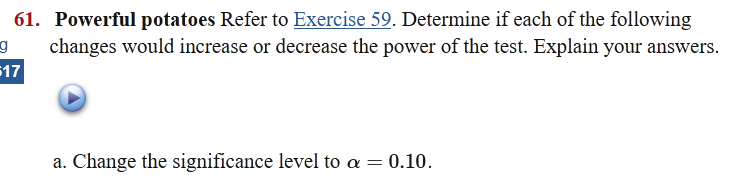
STATE:
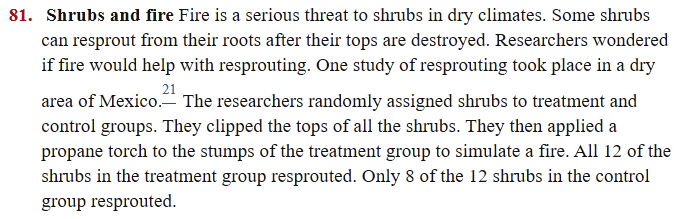
We want to test
H0: P1-P2
Ha: P1-P2
Where
P1= the true proportion of shrubs that would resprout after being clipped and burned
P2= the true proportion of shrubs that would resprout after being clipped
In the original study, the researchers sent resumés with commonly-white or commonly-black names (randomly assigned) to firms in Boston and Chicago. In total, 246 out of 2445 commonly white named resumés received a callback and 164 out of 2445 commonly-black named resumés received a callback.
Conduct a significance test using a significance level of 0.05 to determine if these results give convincing evidence that commonly white named resumés receive a higher proportion of callbacks than commonly black named resumés.
STATE
PLAN
DO
CONCLUDE
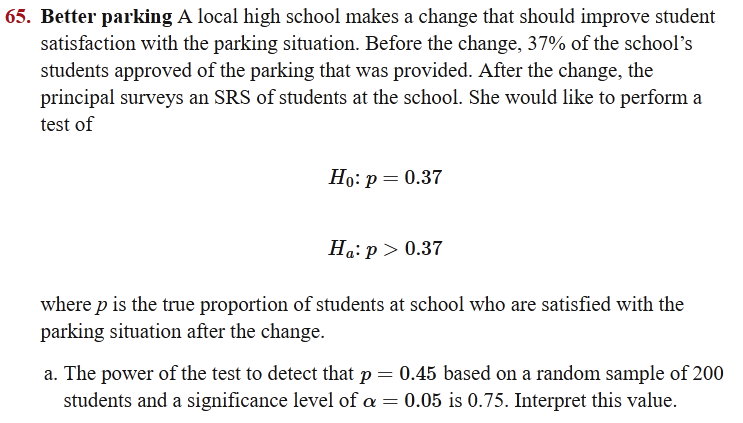
A statistics major and a finance major decide to get married. They are trying to save money to pay for the wedding and need to figure out how many people will actually attend out of the 200 they plan to invite. For most weddings, data suggests that about 75% of people you invite to a wedding actually come. They suspect their friends and family are more dedicated than most, so they believe more than 75% will come.
They want to test the hypothesis:
H0: p = 0.75
Ha: p > 0.75
Where p is the true proportion of invited people that will actually come to the wedding.
Significance Level = 0.10
What is the probability of a Type 1 Error?
They will randomly select 20 guests and ask if they are planning on coming to the wedding. Even though the national average is 75%, they think 90% of their guest will come.
If their assumption is true, this test will have a power of 56%
Interpret the power
What is the probability of a type 2 error?
What would happen to the power if you decreased the significance level to 1%?
What would happen to the power if you increased the significance level to 20%?
What would happen to the power if you increased the sample size to 40?
What would happen to the power if the couple assumed 85% of their guest would come instead of 90%?
STATE:
We want to test
H0: P1-P2
Ha: P1-P2
Where
P1= the true proportion of shrubs that would resprout after being clipped and burned
P2= the true proportion of shrubs that would resprout after being clipped
PLAN
Random: Shrubs were randomly assigned
10%: 12 is less than 10% of all shrubs
Large Counts:
p^c =
n1(p^c) =
n1(1-p^c) =
n2(p^c) =
n2(1-p^c) =
Are all conditions met?
DO (pretend conditions are met)
Round all to the nearest hundredth
Standardized Test Statistic
P-Value
CONCLUDE (At a significance level of 0.05)
Explain
Explain
What is the probability of a Type 1 Error?
What is the probability of a Type 2 Error?
Are there any problems above that you would like to go over in class? Indicate the question numbers below (Numbers refer to the Formative question number). I'll try to cover anything that is highly requested.