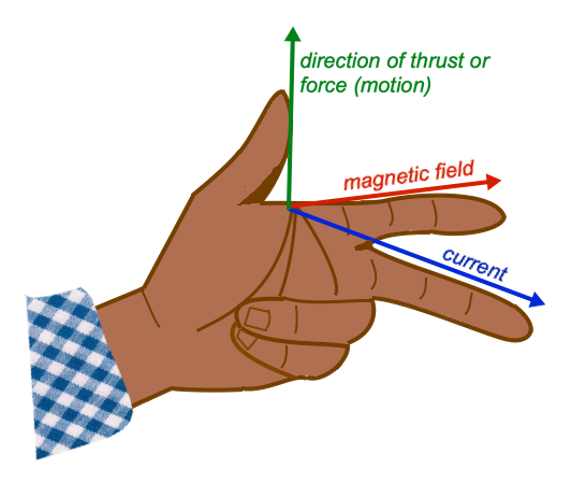
1
What must charge do in order to produce a magnetic field?
What must charge do in order to produce a magnetic field?
1
1
3
This coursework will introduce you to Electrodynamics.
We will start off with Fields, specifically magnetic and electric fields and then move on to electrodynamics and finally see how a DC Motor functions.
Watch the relevant videos and answer the questions that follow.
Please ensure you have your Physics Textbook with you.
This coursework will introduce you to Electrodynamics.
We will start off with Fields, specifically magnetic and electric fields and then move on to electrodynamics and finally see how a DC Motor functions.
Watch the relevant videos and answer the questions that follow.
Please ensure you have your Physics Textbook with you.
What must charge do in order to produce a magnetic field?
The following shows the flow of conventional current through the coils. Indicate on the diagram the North and South Poles as well as the direction of the current through the coils.
Use any colour other than black.
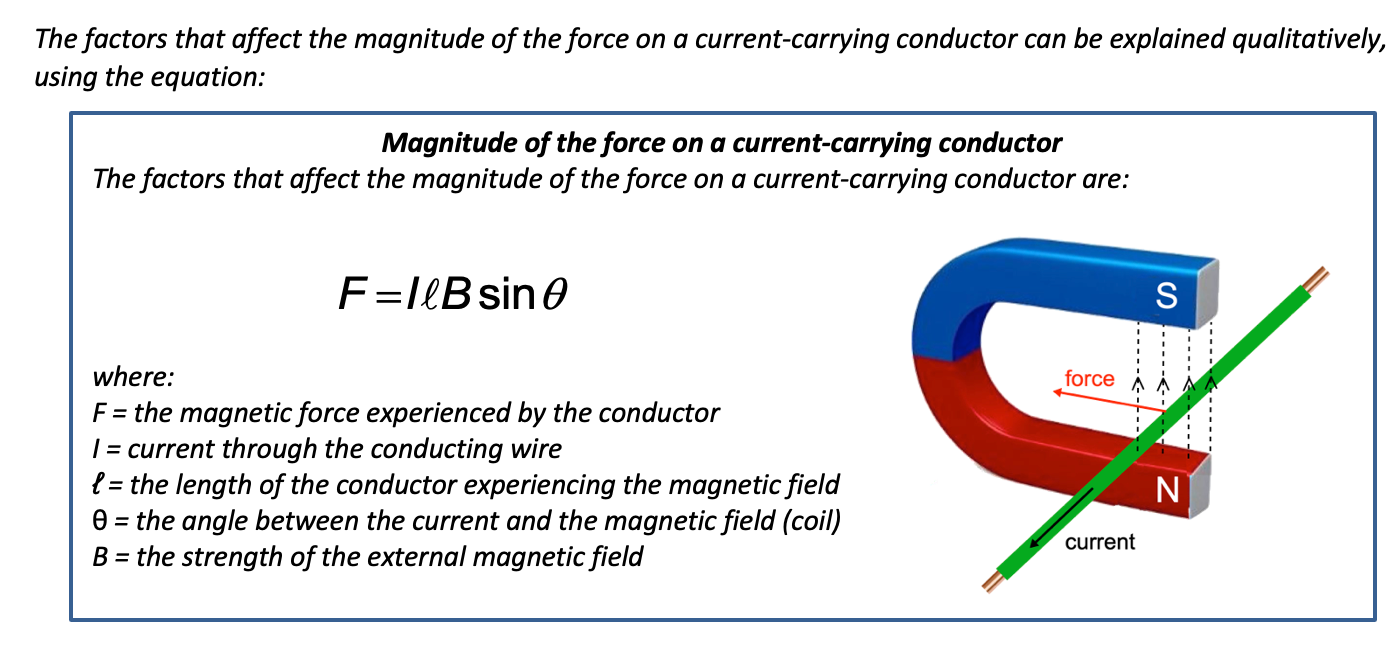
Explain how we can increase the Force acting on a wire according to the following diagram.
Increase | Decrease | |
|---|---|---|
Current in wire passing through magnetic Field | ||
Length of conductor in magnetic field | ||
Magnetic field strength |
The best angle between the current in the wire and magnetic field, to experience maximum force is? (you may make more than one selection)
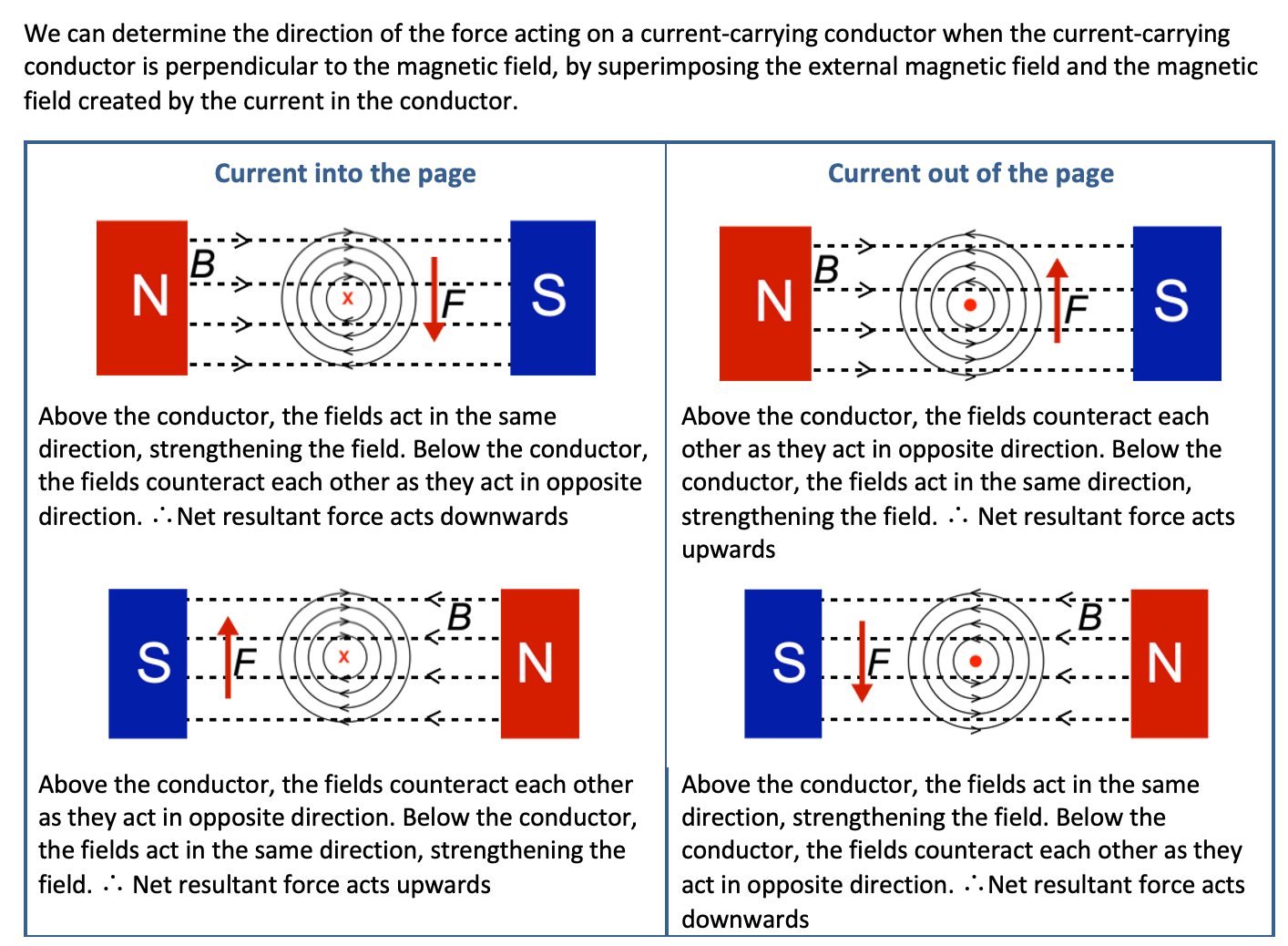
The following image explains why the force exerted on the current carrying conductor exists and also in which direction it is exerted.
Arrange the following choices in the correct sequence in order to explain how a simple d.c. motor works
the split ring reverses the direction of the current in the coil every half turn.
one side will experience a force downward and the other side will experience a force upwards
the magnetic field interacts with the field of the magnet causing a force to be exerted on the coil
the armature rotates
d.c. current passes through the coil
which keeps the coil spinning in one direction
the current creates a magnetic field around the coil
which reverses the forces on acting on the coil
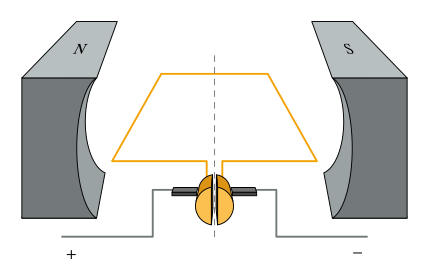
Predict which direction the armature would spin.
Describe the motion of the armature if the battery was connected directly without an a split ring commutator.
What type of field surrounds a straight current carrying conductor?
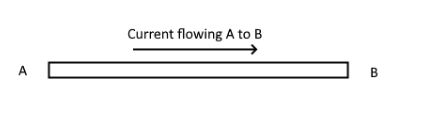
Draw the field around the current carrying conductor and include its direction by means of arrows
A cross-section of a current carrying conductor is shown.
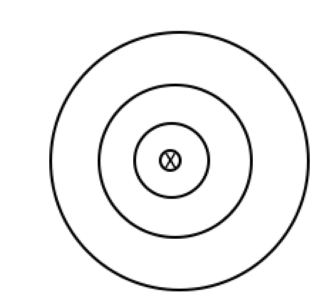
Choose the statements that apply: