Modeling Wastewater Treatment
Overview: This activity simulates the treatment of wastewater at a wastewater treatment plant using a step-by-step experiment.
Overview: This activity simulates the treatment of wastewater at a wastewater treatment plant using a step-by-step experiment.
Fill in the blanks.
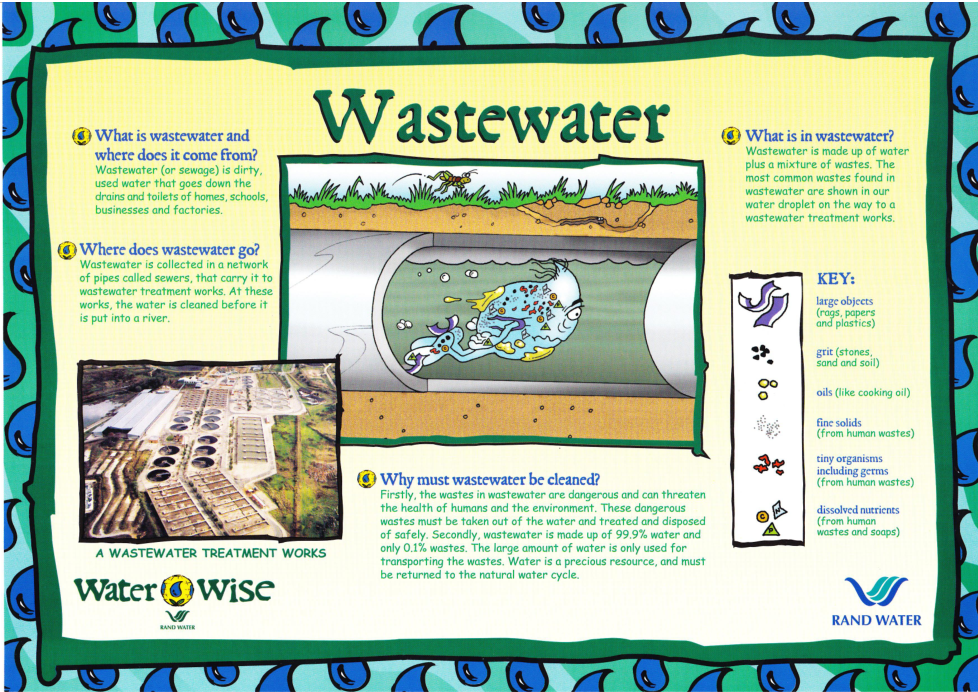
Examine Poster #1: Wastewater
What is another reason for cleaning wastewater, besides disposing of dangerous pathogens and chemicals that threaten humans and wildlife?
Follow instructions for step 2/Examine Poster #2: Screening
What was trapped in your model?
Why is this step needed?
Where are the screenings taken in real life (and where in the classroom)?
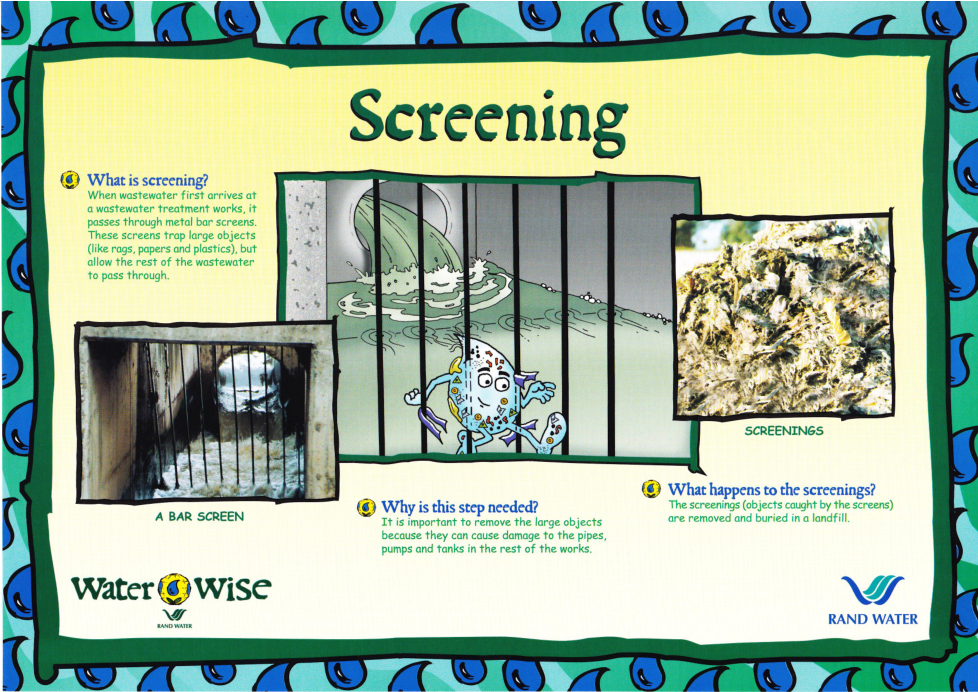
Follow instructions for step 3/Examine Poster #3: Grit Removal
Why is this step needed?
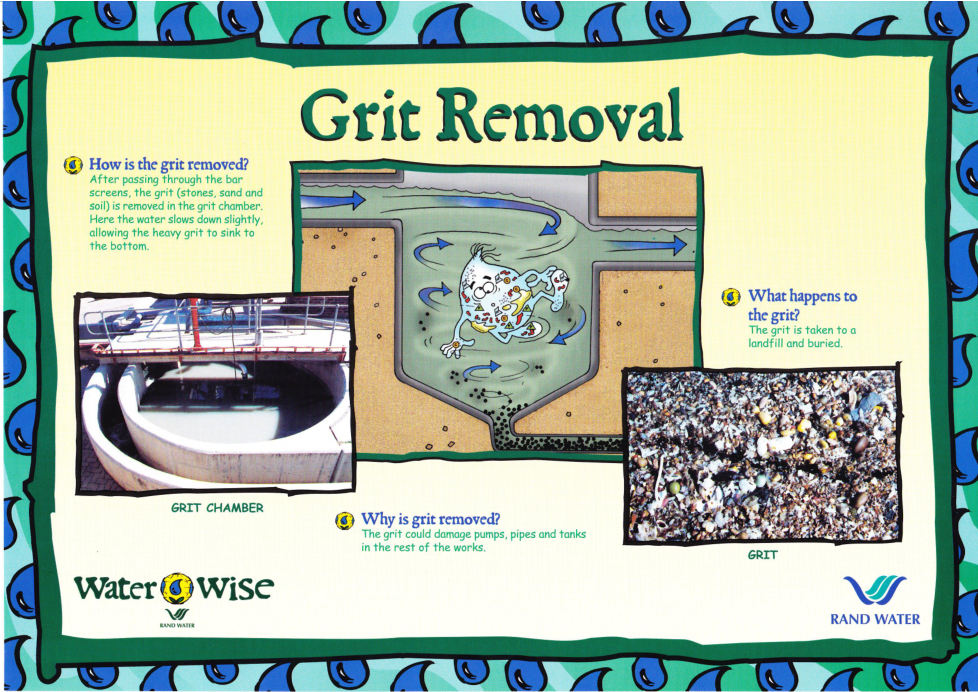
Follow instructions for step 4/Examine Poster #4: Primary Settling
What is being removed from your wastewater now?
What is sludge and what happens to it?
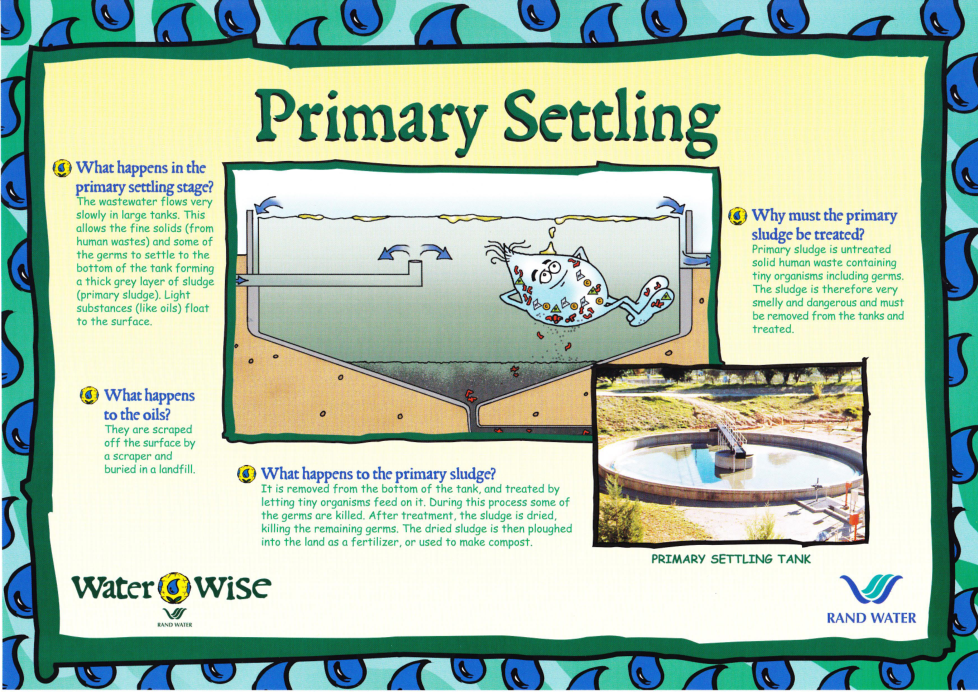
Follow instructions for step 5/Examine Poster #5: Biological Treatment
Note: The “tiny organisms” are types of bacteria, especially nitrifying bacteria.
What types of dissolved nutrients are being removed? Where did they originate?
What would happen if these nutrients were not removed? (use info from class, not just the poster)
What are we using to represent the nitrifying bacteria?
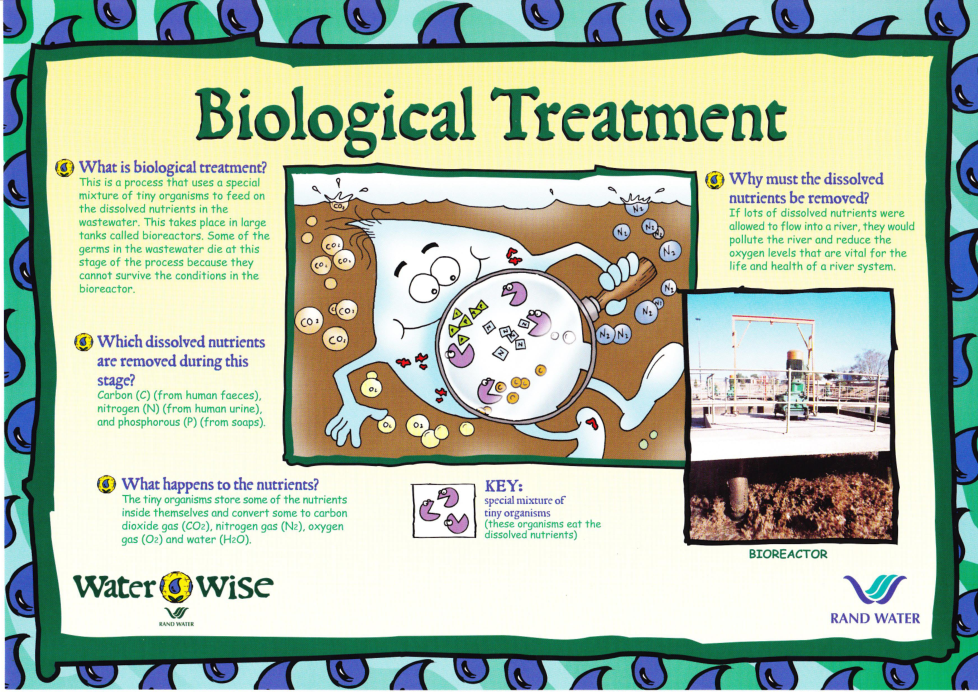
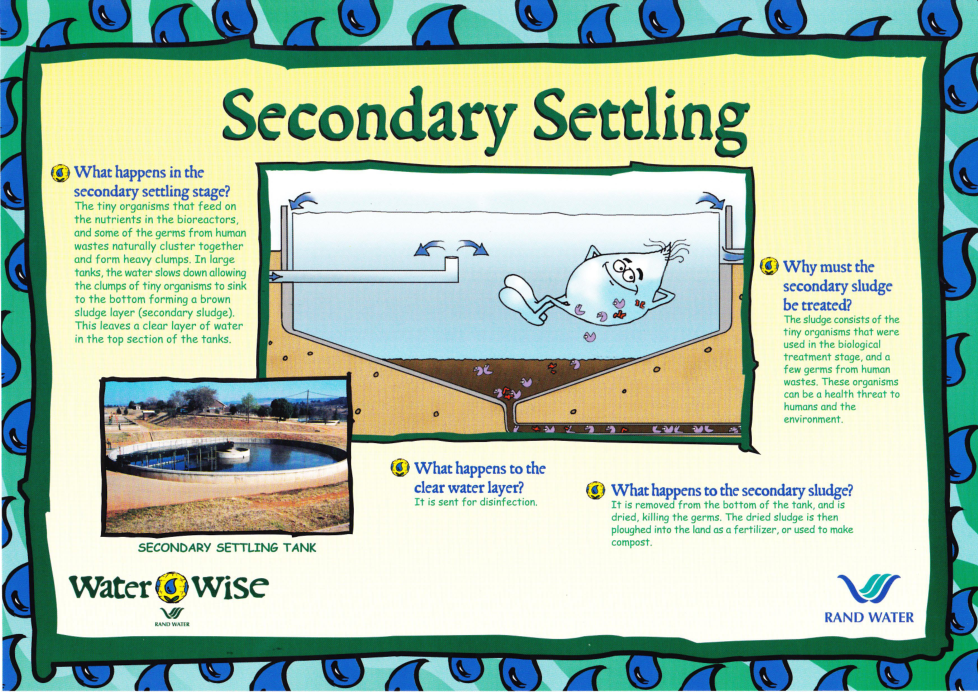
Follow instructions for step 6/Examine Poster #6: Secondary Settling
What is secondary sludge?
Where does the secondary sludge go?
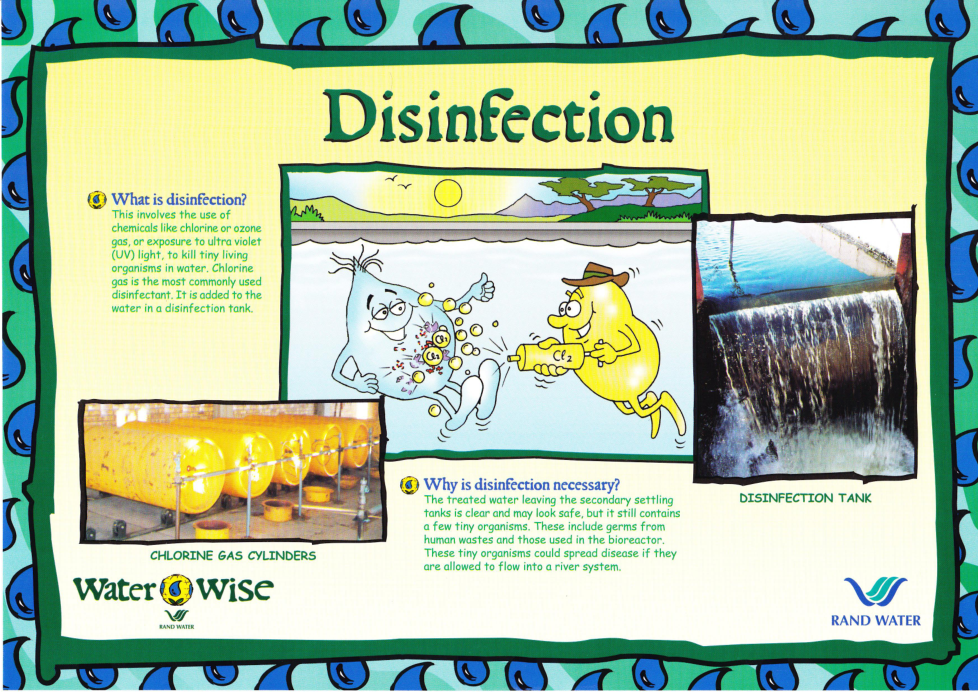
Follow instructions for step 7/Examine Poster #7: Disinfection
What waste is still present in the water when it enters this chamber?
What is disinfection and why is it necessary?
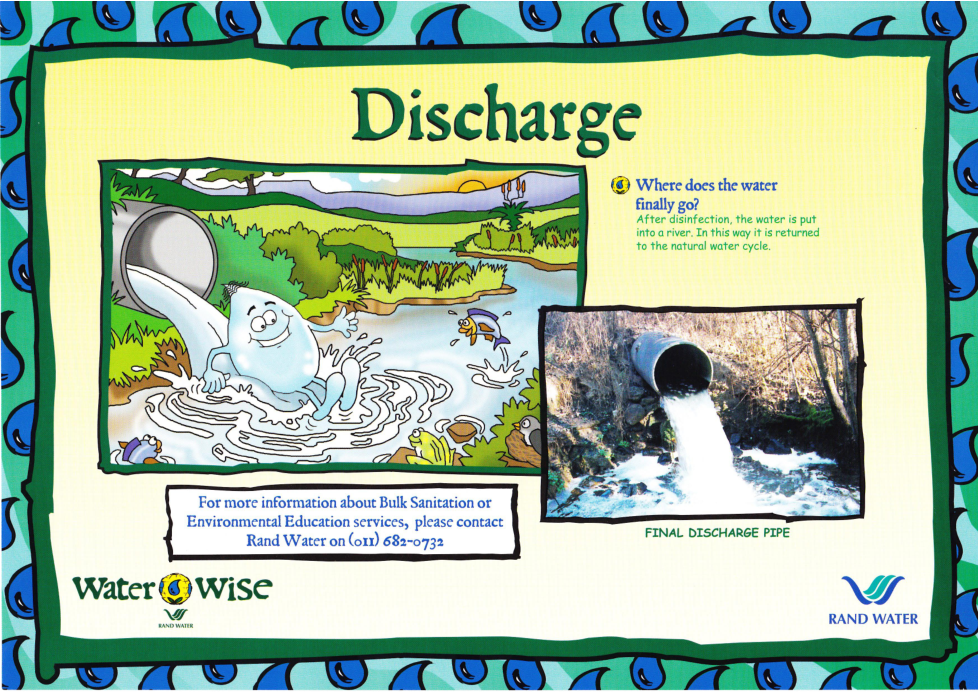
Examine Poster 8: Discharge
Discuss some of the environmental problems that could occur in the stream if these treatment steps were not carried out. Remember, even in developed countries, often raw sewage is directly released into waterways, both legally and illegally, by accident and on purpose.
Describe the environment in the video.
Describe what kind of primary treatment happens before the water reaches the wetland.
Describe what happens after the primary treatment.
Describe what step in traditional secondary treatment this replaces.
Describe the ecological and economic incentives are to using wetlands to treat wastewater.
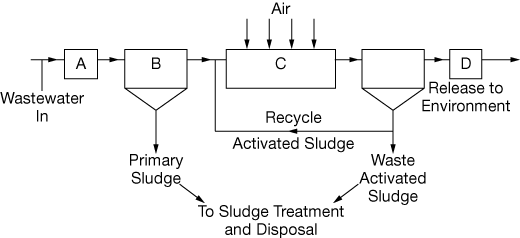
The diagram illustrates a sewage treatment plant. The different processes at the plant are labeled A to D.
This process results in the biological breakdown of most of the organic matter in the sewage.
The diagram illustrates a sewage treatment plant. The different processes at the plant are labeled A to D.
Large objects, such as sticks and rocks, are screened out and removed during this process.
The diagram illustrates a sewage treatment plant. The different processes at the plant are labeled A to D.
This process uses chlorine, ultraviolet radiation, or ozone as part of the disinfection of wastewater.
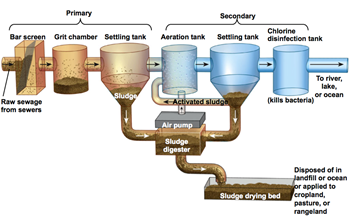
Drag and drop the stages of wastewater treatment onto the picture.