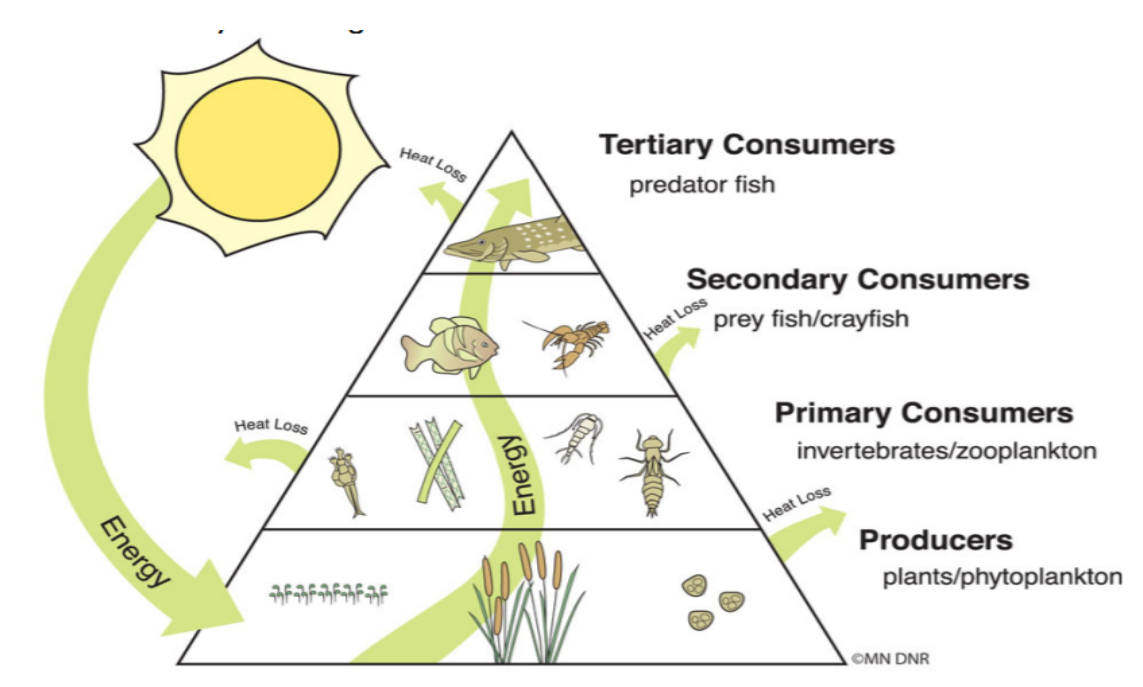
Use the diagram and the passage to help you answer the questions.
Using the aquatic food pyramid above, where does the energy for the producers come from?
If a primary consumer was introduced into the food chain, with no natural predator to control its population, what level of the pyramid would be directly affected?
Invasive Species Part 2
There are four species of Asian carp in the United States and in Tennessee. All are from the Yangtze and Amur River systems in China. They were imported into the United States for various purposes back as early as 1970. They were unintentionally introduced into the waters of our country in the late 1980s and early 1990s when they escaped from ponds in the delta areas of the Mississippi River during extreme floods.
All four Asian carp species were first found in the Mississippi River, where they are still abundant, and they migrated into Tennessee waters via locks at Kentucky and Barkley dams. Carp are also known to have entered Reelfoot Lake during high flows through its spillway. All four Asian carp species can affect fish and aquatic life in numerous ways.
Asian Carp have the capacity to deplete and alter the current food web of the reservoirs that support natural resources, including highly-valued recreational and commercial fisheries. Silver and Bighead Carp are both filter feeders that feed on microscopic plankton. This plankton is a vital food for some species of fish, and young fish of all species. By out-competing native fish for a limited resource, the silver and bighead carp have the ability to reduce the growth rates of native fish or displace them almost completely. The black Carp pose a risk to Tennessee’s diverse and already threatened mussel population.
After reading the passage above, choose TWO answers that explain how the Asian carp have affected Tennessee waterways.
Common and Grass carps are able to do a lot of damage to wetlands and other water habitats by destroying a lot of plant life that is necessary for other native species that depend on it for food, shelter, and reproducing. They only digest half of the plant material they eat and let the rest expel into the water. This causes more algae in the water, makes the water murky, and lowers the oxygen levels. In addition, grass carps sometimes carry parasites and diseases.
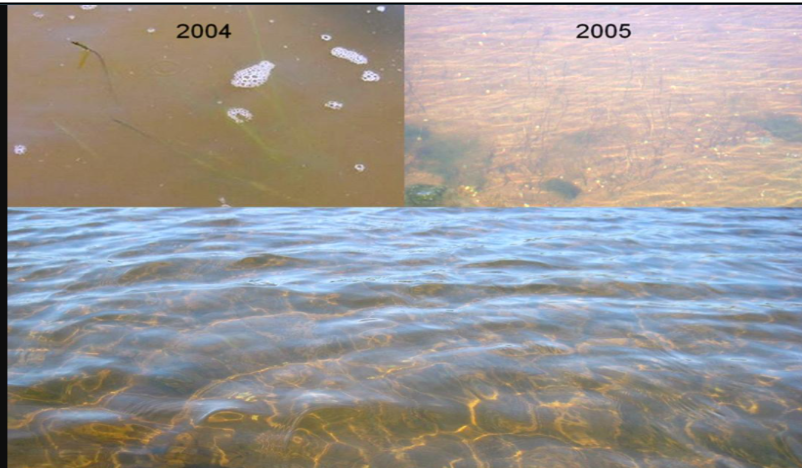
The picture below shows how waterways have changed over the course of three years in the part of a lake that has a vast amount of Asian Carp. What might be a cause for the change in the water clarity?
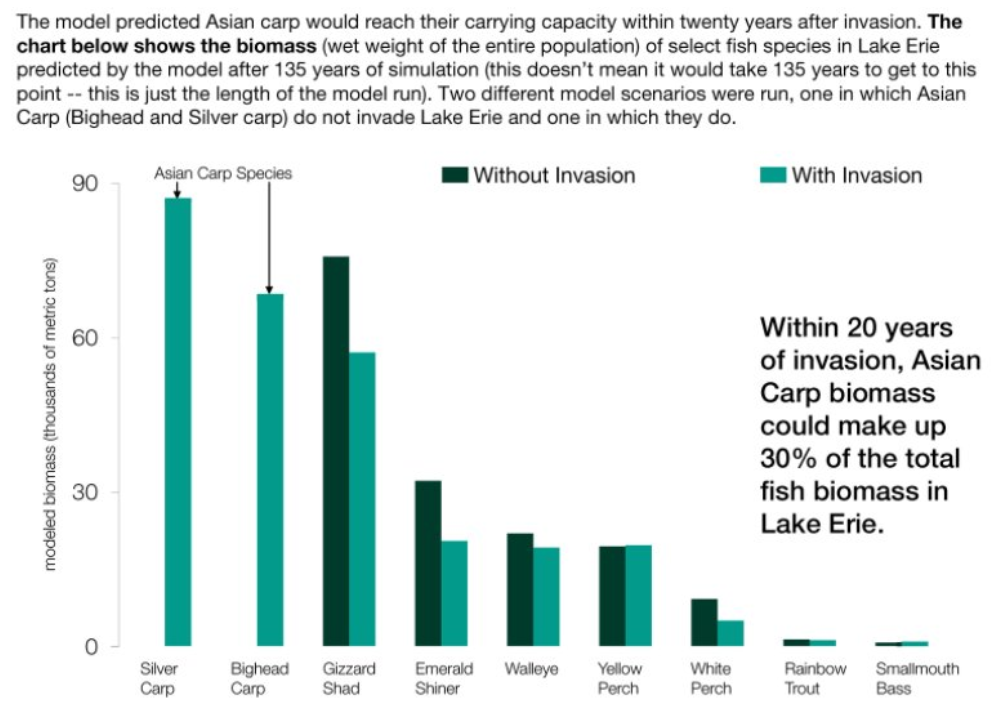
Analyze the bar graph above. What will likely happen to the populations of native fish if the population of the carp are not controlled?