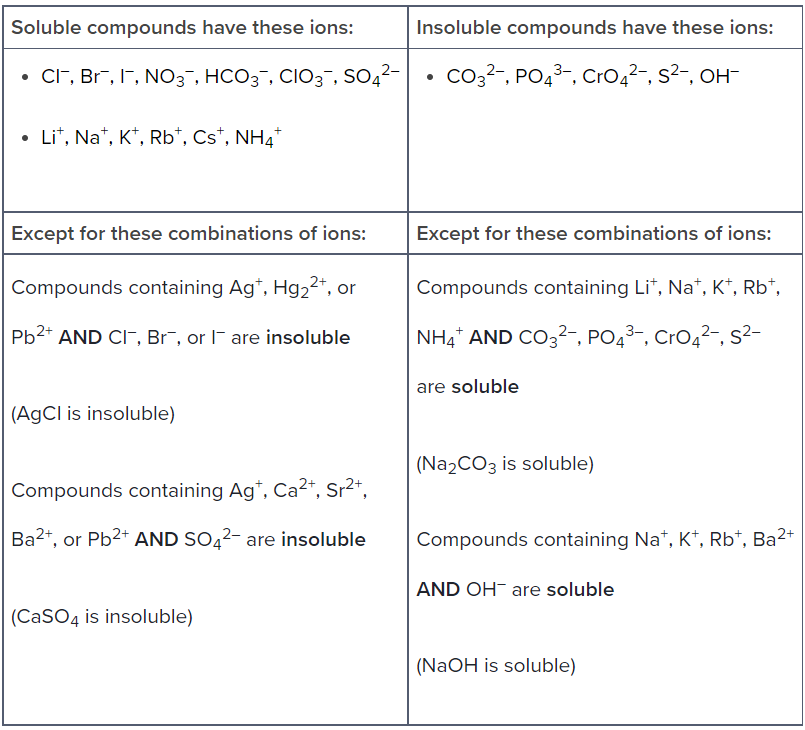
Salts dissociate into component ions when placed in
What is the approximate pOH of a strong base?
Match the following acid/base theories with the correct definition.
| Stavka koja se može prevući | arrow_right_alt | Odgovarajuća stavka |
|---|---|---|
Brønsted-Lowry acid | arrow_right_alt | any substance that can accept a hydrogen ion (proton) |
Lewis acid | arrow_right_alt | any substance that can donate a hydrogen ion (proton) |
Arrhenius base | arrow_right_alt | any substance which, when dissolved in water, tends to increase the number of H+ ions present |
Brønsted-Lowry base | arrow_right_alt | any substance which, when dissolved in water, tends to decrease the number of H+ ions present |
Lewis base | arrow_right_alt | electron pair acceptor |
Arrhenius acid | arrow_right_alt | electron pair donor |
Amphoterism is the ability of a chemical to act as
The concentration of an acid or base is defined as the ratio of the amount of _____.

CO3SO4
Na2SO4
CuCO3
Na2CO3
CuSO4
Na2Cu
Normality (N) is a direct expression of
Use the given pH and pOH values to arrange the solutions from most acidic to most alkaline.
pH 2
pH 12
pH 6
pOH 11
pOH 4
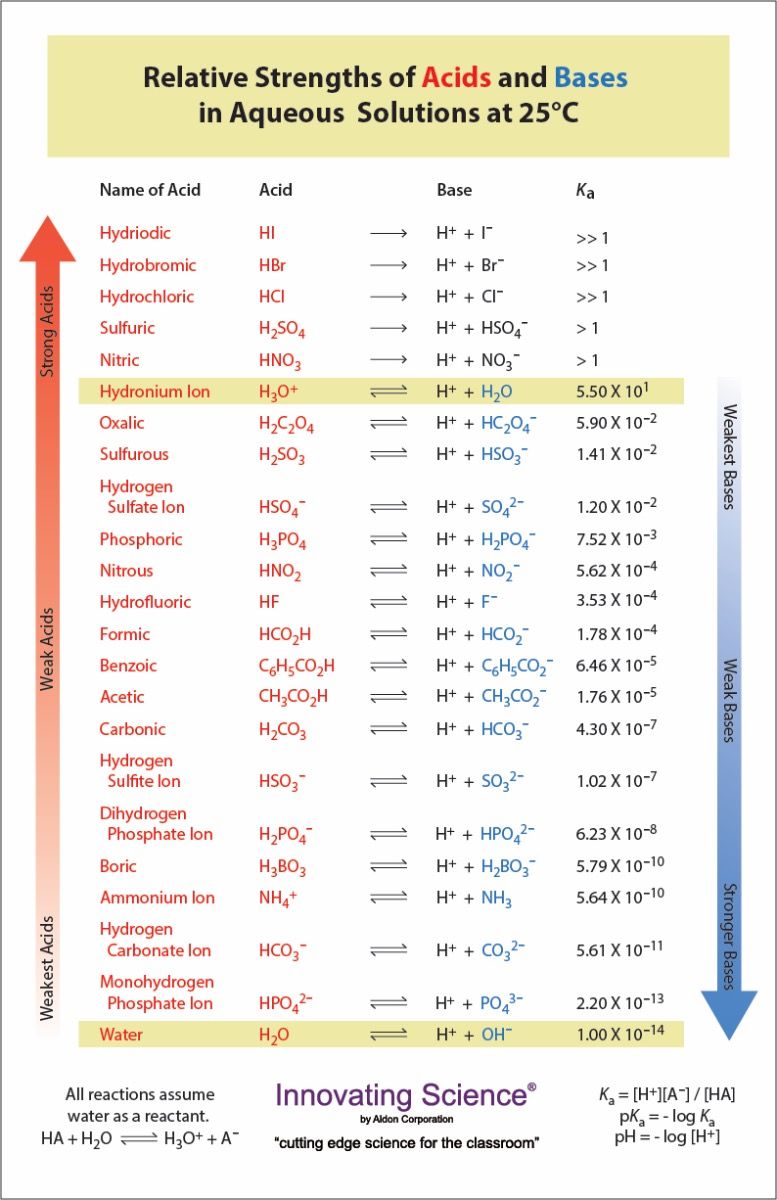
Arrange these acids from weakest to strongest based on their K(a) value at 25°C.
Benzoic Acid:
Oxalic Acid:
Ethanoic Acid:
Nitrous Acid:
Phosphoric Acid:
If the concentration of H⁺ ions in a solution is
3.16 x 10⁻⁴ mol/L, then what is the concentration of OH⁻ ions?
A solution of pH 4 is _______ times more acidic than a solution of pH 5.
What volume of 1.3 M Mg(OH)2 (strong base) is required to neutralize 650 mL of 0.70 M HBr (strong acid).
(Remember to include your units)
CO3-
SO4-
CuCO3
Na2SO4
Cu+
2Na+
NaCO3