CFU on 6.LS2.1, 6.LS2.5, and 6.LS2.6

Last updated almost 3 years ago
10 questions
1

This graph shows the carrying capacity for a population of grass eating animals on the Great Plains of the United States.
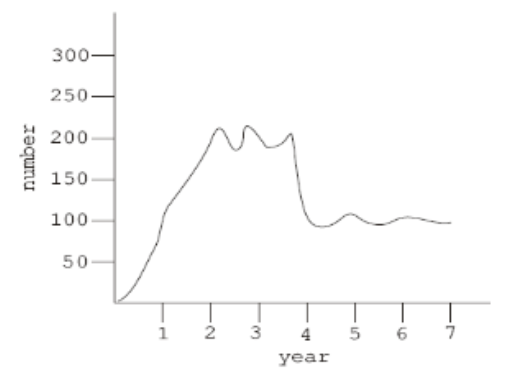

Which explanation below is the best reason why the carrying capacity dropped during years 4 to 7?
1

A population of small fish and a population of small squids eat the same type of krill in the same ecosystem. Krill is the main source of food for both fish and squid. If the squid grows faster than the fish population, what will most likely happen to the fish population?

1

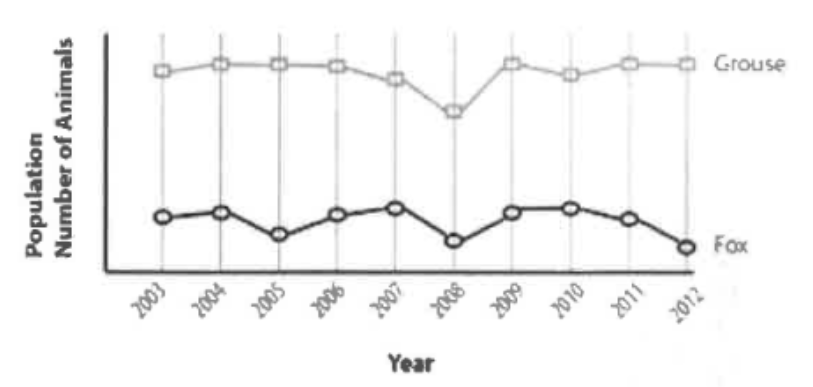
The graph below shows the populations, over several years, for two animals that share a habitat. Foxes are mammals that hunt for food, and grouse are birds, a common prey animal of foxes. According to the data, in which year did the population of foxes show a decrease that is most likely the result of a decrease in the availability of a source of food?

1

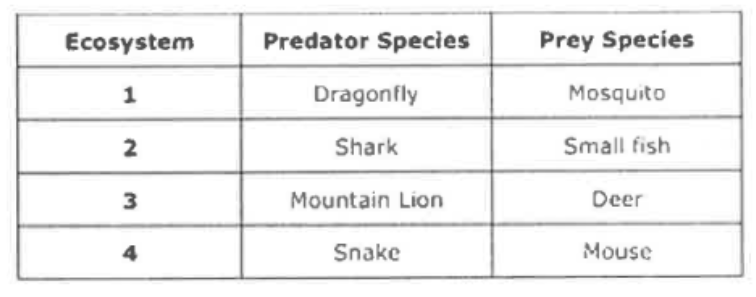
An example of a predator and a prey species for four separate ecosystems is provided below. Which of the following would demonstrate an appropriate prediction for the changes to one of the populations of organisms due to a predator/prey interaction?

1

Which of the following is an example of a threat of invasive species to a native species?

1

Which of the following is NOT a way to limit the spread of invasive species?

1

Why do the populations of invasive species grow so quickly?

1

A farmer stops cultivating a large tract of farmland and abandons it. The natural changes taking place soon afterwards, such as the growth of wild grasses and weeds, can be considered secondary succession because

1

How do pioneer species make ecological succession possible on an island following a volcanic eruption?

1

Key deer are found on the islands of the Florida Keys and feed on the native trees. Which is most likely to happen to populations of Key deer if the forests are cleared where they live?