Classify the following equations as balanced or unbalanced.
Classify the following equations as balanced or unbalanced.
Balanced
Unbalanced
What do you already know about chemical reactions?
Classify the following equations as balanced or unbalanced.
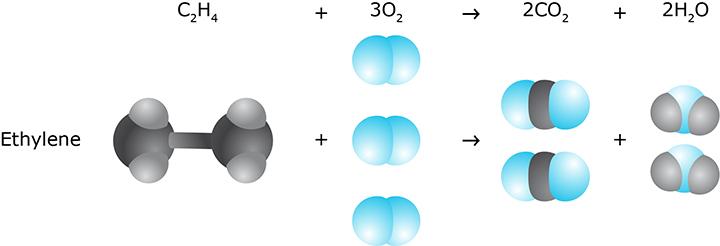
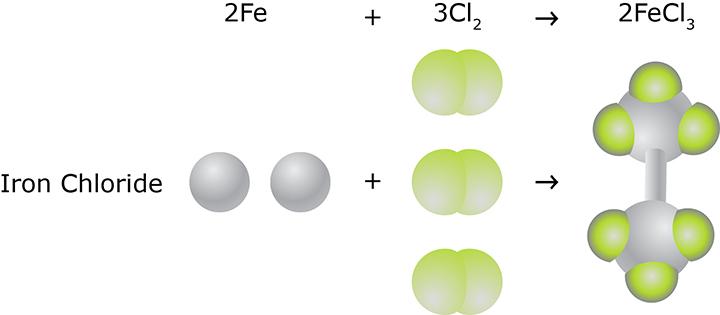
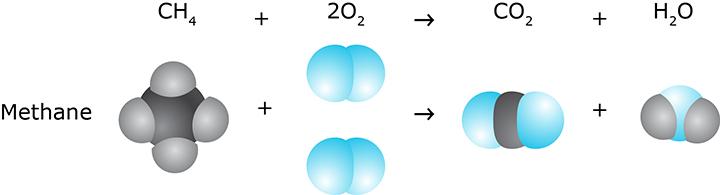
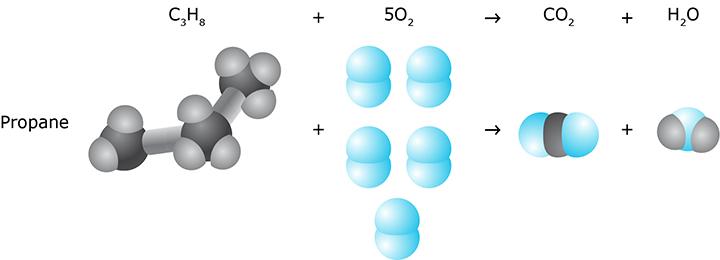
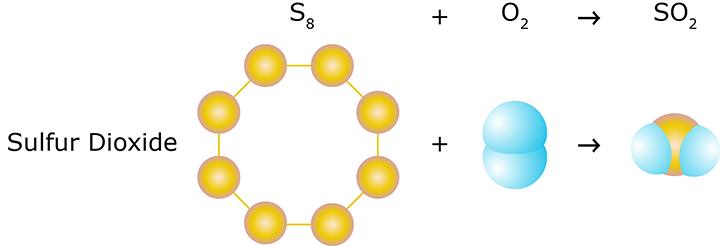
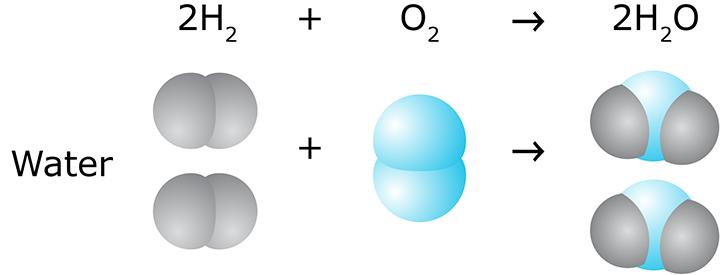
Balanced
Unbalanced
How much do you know about reactions?
Some reactions are endothermic and absorb heat energy, and other reactions are exothermic and release heat energy. Think about the following scenarios and sort them into endothermic or exothermic reactions.
baking bread
making ice
cooking an egg
melting ice
burning wood
evaporation of water
burning leaves
condensation
Endothermic
Exothermic
A chemical reaction that can only proceed in a single direction is considered
If you totaled up the mass of the reactants, they would _____ the mass of the product.
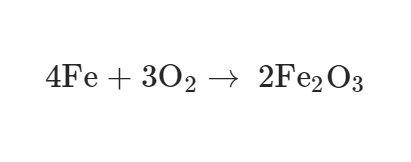
The products of the reaction is .
The reactants of the reaction is (a metal) and (a nonmetal).
The coefficient of O2 is .
The coefficient of Fe2O3 is .
FeO2
Fe2O3
O2
In irreversible reactions, all of the
When a chemical reaction is at equilibrium, the concentration of reactants and products does not change. A constant value that describes this reaction is the equilibrium constant, or Keq.
For the reaction, aA + bB ⇄ cC + dD , the equilibrium constant, Keq, is described as _____.
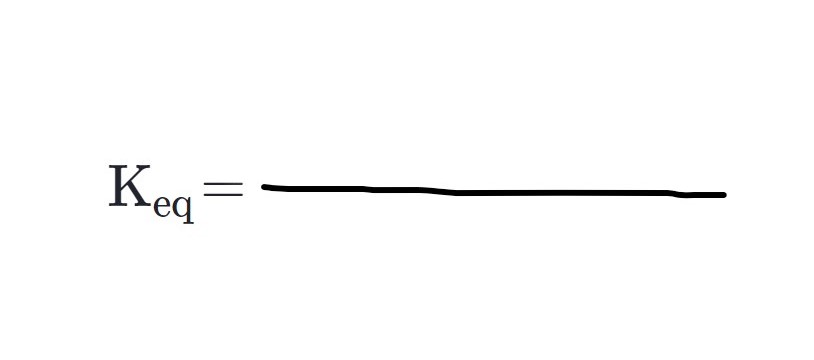
[A]a
[B]b
[C]c
[D]d
Solid substances and liquid water are not included in equilibrium calculations. This is due to the structure of the particles in both liquids and solids.
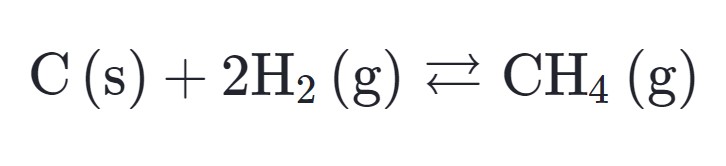
Which is the correct equilibrium constant for the following equation:
When a reaction is at equilibrium, the concentrations of reactants and products are always equal.
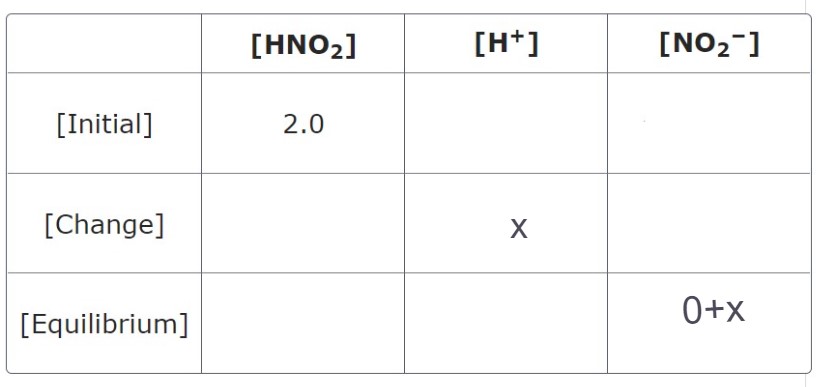
Nitric acid dissociates in water according to the following equilibrium equation:
Use the ICE table and chemical equation from the previous question to calculate the concentrations of H+ Ions that will be present at equilibrium.
The equilibrium constant, Keq, at 25°C,
for this is 4.0 × 10⁻⁴.
Le Chatelier’s Principle is used to describe the shift in equilibrium that occurs when a system experiences changes in:
Which of the following statements will increase the amount of product that is created in a chemical reaction?
If the ion product is Ksp, then a precipitate will not form.
If the ion product from the mixture is Ksp, then a precipitate will form.
The solubility constant of MnS is 2.3 ×10⁻¹³ at 25°C. What is the concentration of sulfide ions in a saturated solution of MnS at equilibrium?
Iron carbonate, FeCO3, is added to water until the saturation point is reached. What concentration of carbonate ion, CO32-, is present in this solution? The solubility constant for FeCO3 is 2.1×10⁻¹¹ at 25°C.
The solubility constant of Ba(OH)2 is 5.0 ×10⁻³ at 25°C. Calculate the equilibrium concentration of hydroxide ions in a saturated solution?
Which of the following statements about catalysts is NOT true?
Choose one or more of the following statements that can lead to a chemical reaction to occur faster.
A
Choose one or more of the following statements that can lead to a chemical reaction to occur faster.
The change in entropy is positive, this means that entropy _____.
1.0 mol HNO2 is dissolved in water to make 0.50 liters of solution. Construct an ICE table to represent the problem.