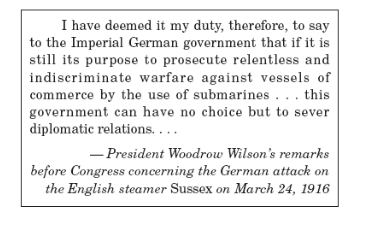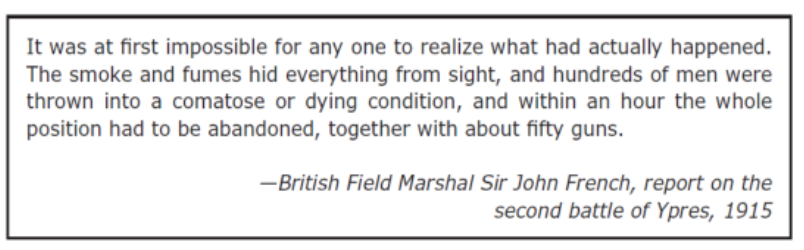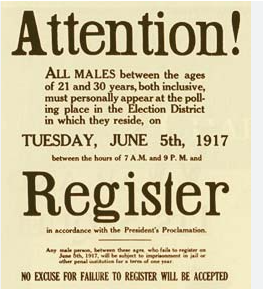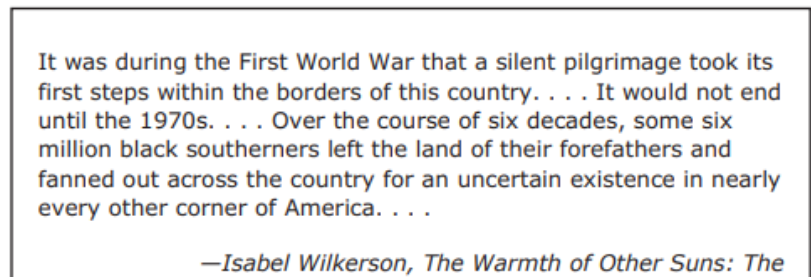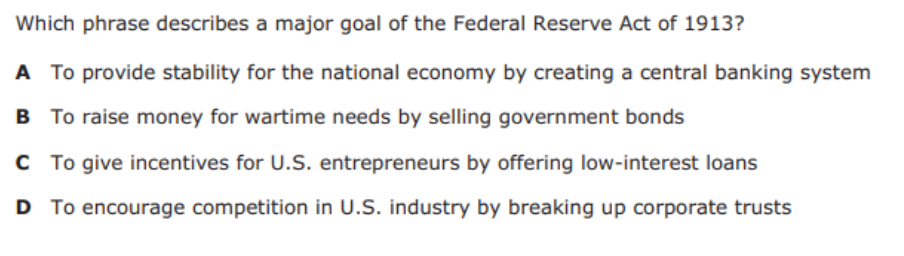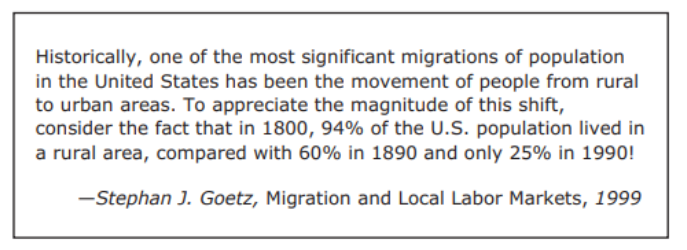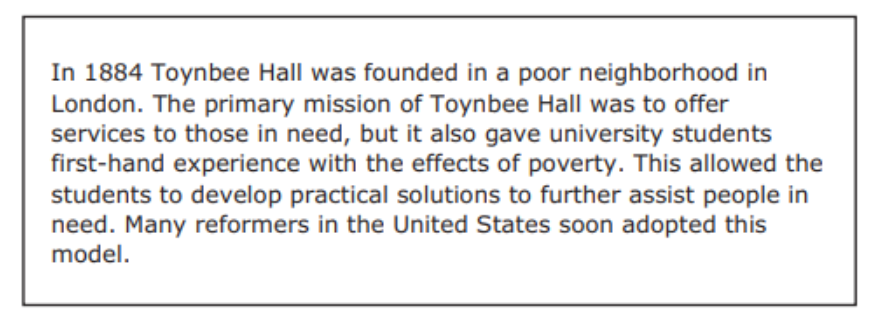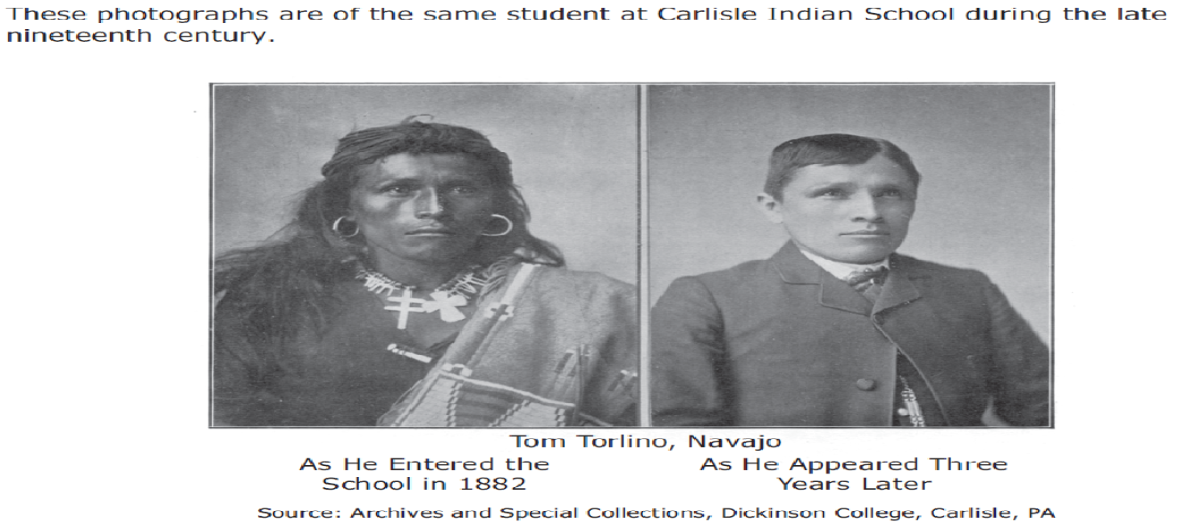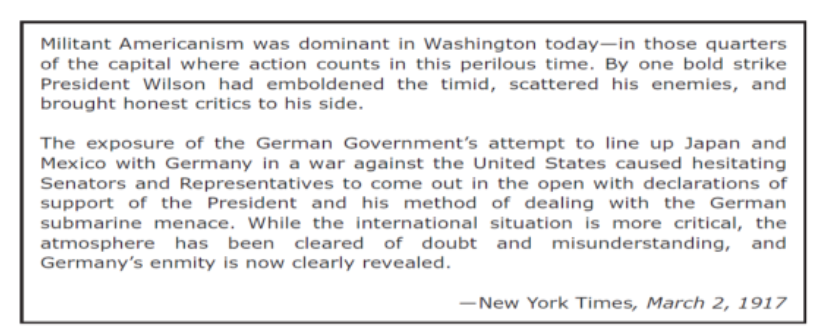
Select all responses that describe the except cited above.
Select all responses that describe the except cited above.
Select all responses that describe the except cited above.
Select all responses that describe the except cited above.
Select all responses that describe the excerpt cited above.
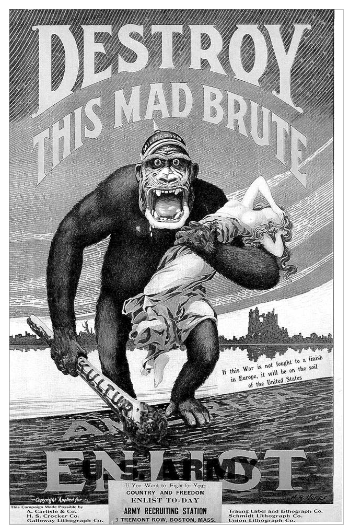
Select all responses that describe the poster cited above.
Select all responses that describe the excerpt cited above.
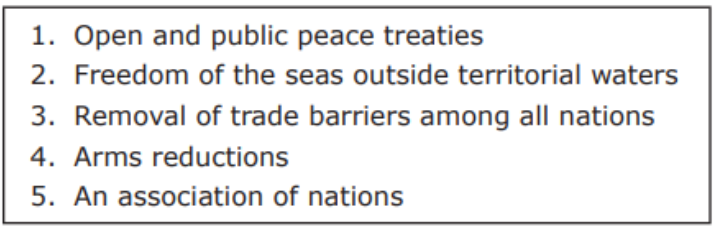
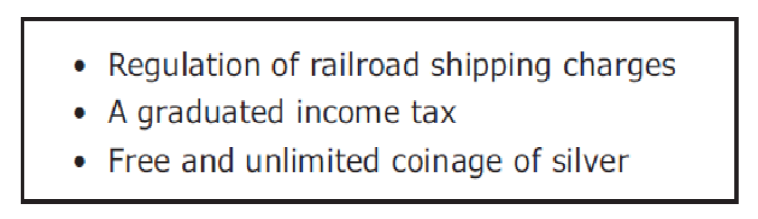
Select all responses that describe the list cited above.
Select all responses that describe the except cites above.
Select all responses that describe the excerpt cited above.
In June 1917, Congress passed a piece of legislation gave postal officials the authority to ban newspapers and magazines from the mails and threatened individuals convicted of obstructing the draft with $10,000 fines and 20 years in jail.
In 1918 Congress passed an additional act which made it a federal offense to use "disloyal, profane, scurrilous, or abusive language" about the Constitution, the government, the American uniform, or the flag. The government prosecuted over 2,100 people under these acts.
Select all responses that describe the except cited above.
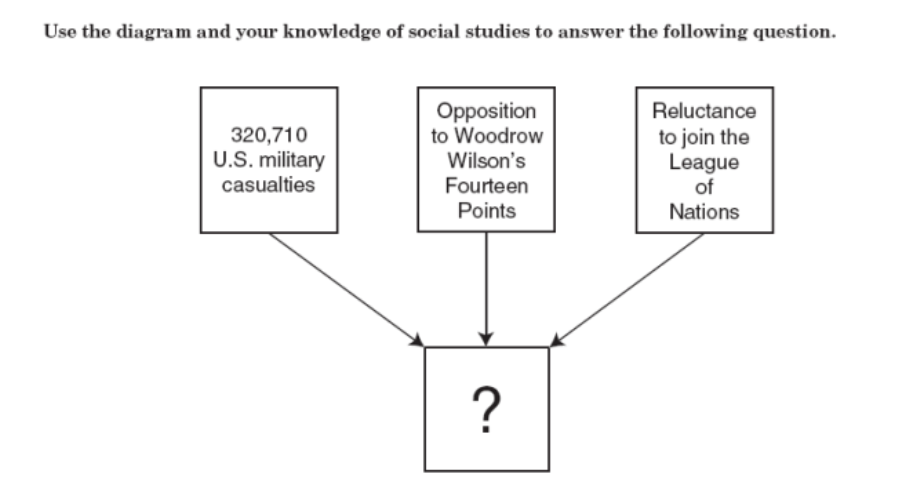
Select all the causes of World War I
Select all the reasons the United States entered World War I.
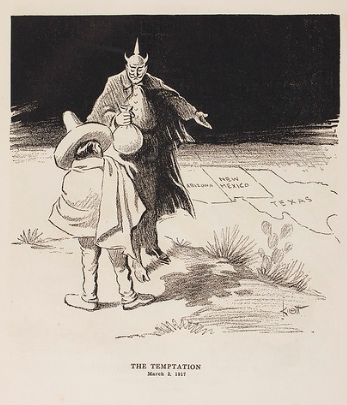
In one or two complete sentences describe the significance of the illustration cited above.
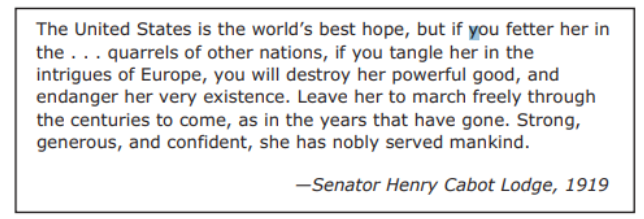
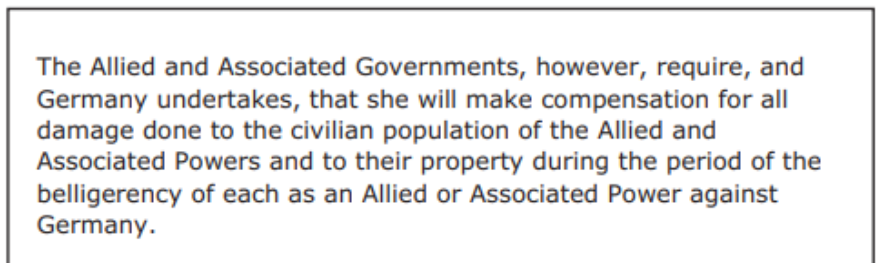
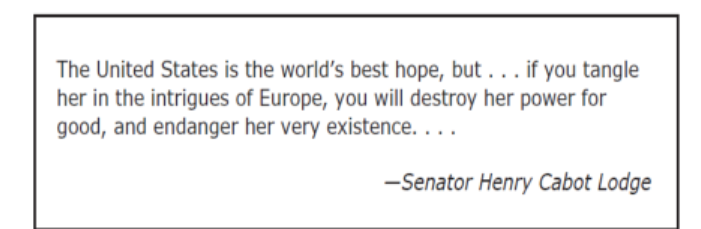
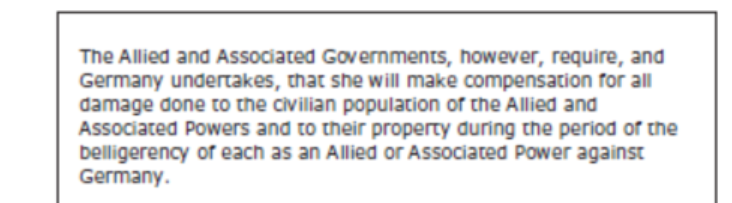
Select all responses that describe the excerpts cited above.
Select all responses that describe the excerpt cited above.
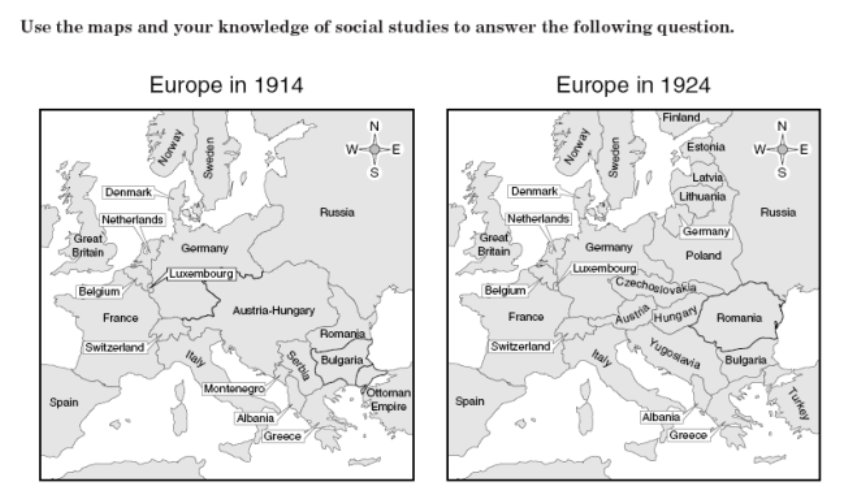
Select all responses that describe the maps cited above.
Select all responses that describe the excerpt cited above.
He received the Medal of Honor for leading an attack on a German machine gun nest, taking 32 machine guns, killing 28 German soldiers, and capturing 132 others in WWI. This action occurred during the United States-led portion of the Meuse-Argonne Offensive in France.
During World War I, socialists Charles Schenck and Elizabeth Baer distributed leaflets declaring that the draft violated the Thirteenth Amendment prohibition against involuntary servitude. The leaflets urged the public to disobey the draft, but advised only peaceful action. Schenck was charged with conspiracy to violate the law by attempting to cause insubordination in the military and to obstruct recruitment. Schenck and Baer were convicted of violating this law and appealed on the grounds that the statute violated the First Amendment.
Select all responses that describe the excerpt cited above.
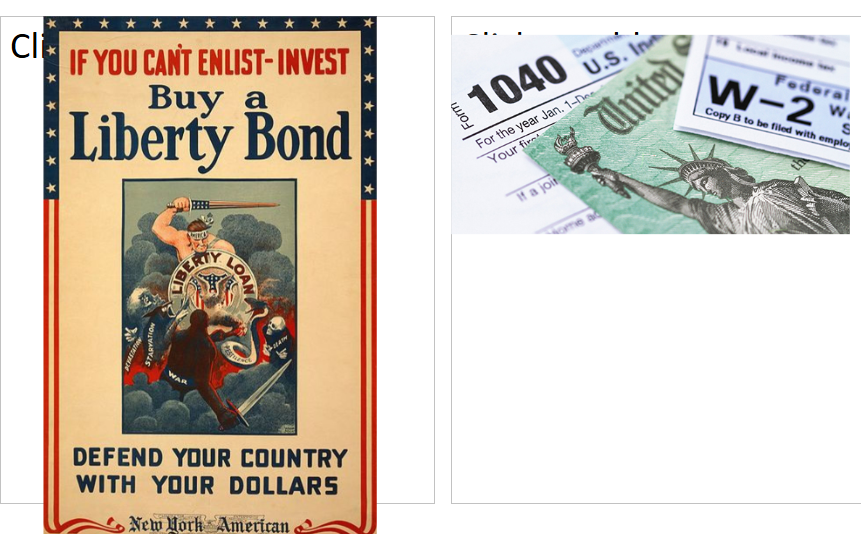
Select all responses that describe the excerpt illustrations cited above.
Select all responses that describe the excerpt illustration cited above.
Identify the following document:
We hold these truths to be self-evident, that all men are created equal, that they are endowed by their Creator with certain unalienable Rights, that among these are Life, Liberty and the pursuit of Happiness.--That to secure these rights, Governments are instituted among Men, deriving their just powers from the consent of the governed, --That whenever any Form of Government becomes destructive of these ends, it is the Right of the People to alter or to abolish it, and to institute new Government, laying its foundation on such principles and organizing its powers in such form, as to them shall seem most likely to effect their Safety and Happiness.
Explain the importance of the following excerpt:
--That whenever any Form of Government becomes destructive of these ends, it is the Right of the People to alter or to abolish it, and to institute new Government,
Choose all correct answers:
We the People of the United States, in Order to form a more perfect Union, establish Justice, insure domestic Tranquility, provide for the common defense, promote the general Welfare, and secure the Blessings of Liberty to ourselves and our Posterity, do ordain and establish this Constitution for the United States of America.
Select all responses that pertain to the paragraph cited above:
A had only to be the head of a household or at least 21 years of age to claim a 160-acre parcel of land. Settlers from all walks of life including newly arrived immigrants, farmers without land of their own from the East, single women and former slaves came to meet the challenge of “proving up” and keeping this . Each homesteader had to live on the land, build a home, make improvements and farm for 5 years before they were eligible to “prove up.” A total filing fee of $18 was the only money required. . . .
—National Park Service, www.nps.gov (accessed November 14, 2013)
Select all your civic responsibilities
Select all responses that are associated with voting
Which statement would most likely be found in history of the economic impact of the Spanish American War on the United States.
Statement 1: The U.S. oil industry boomed due to oil deposits found in conquered territories
Statement 2: Rebuilding its devastated army cost the United States as enormous amount of
money.
Statement 3: The acquisition of new territories allowed for the expansion of U.S. commercial
trade.
Statement 4: Territorial losses forced the United States to purchase expensive natural resources from other countries.
money.
trade.
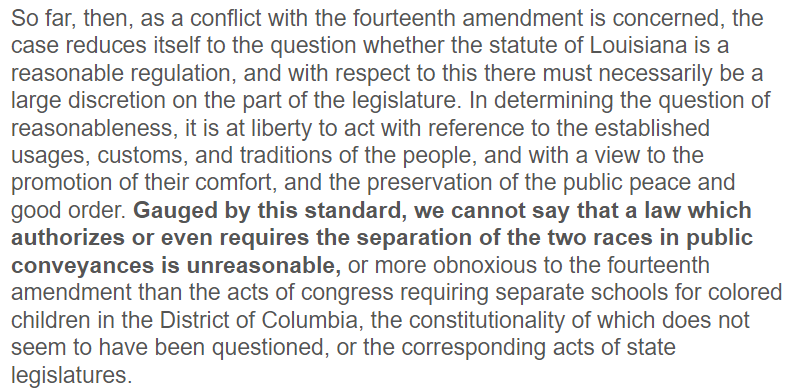
The excerpt above is the legal reasoning for which of the following Supreme Court cases:
| Draggable item | arrow_right_alt | Corresponding Item |
|---|---|---|
Assimilation | arrow_right_alt | enfranchisement |
Upton Sinclair | arrow_right_alt | 16th amendment |
Merit Exams | arrow_right_alt | Chinese Exclusion Act |
nativism | arrow_right_alt | civic responsibility |
establishes an income tax | arrow_right_alt | Homestead Act |
Food Handlers card requirement | arrow_right_alt | Dawes Act |
Ghettos | arrow_right_alt | The Jungle |
jury duty | arrow_right_alt | Meat Inspection Act |
voting | arrow_right_alt | Tenements |
Free Land | arrow_right_alt | Muckrakers |
investigative journalist during the Gilded Age who exposes corruption in Business and Government | arrow_right_alt | Pendleton Civil Service Act |
Select the phrase that recognizes enfranchisement of citizens:
Select all correct responses describing the list above
Direct democracy, for better or for worse, has become California's most distinctive and emblematic political institution. , , and elections were added to the state constitution in 1911 as part of Governor Hiram Johnson's “progressive” movement, which redeemed the state from control by “The Octopus”, meaning the Southern Pacific Railroad monopoly that had a stranglehold on the state's economy and government.
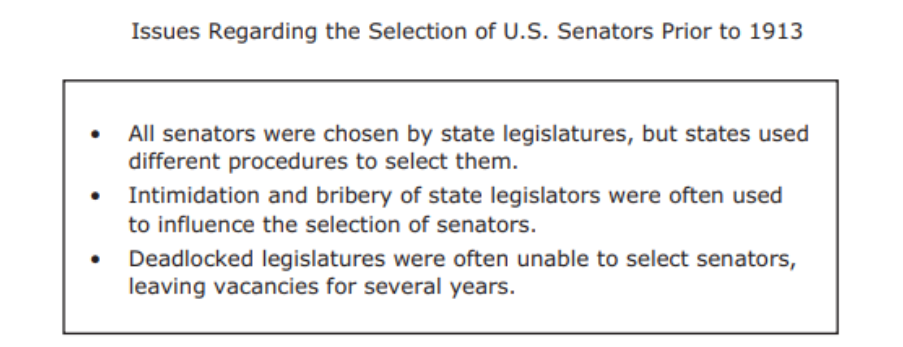
Select all of the following measures that were implemented to in 1913 to solve these problems and responses that describe the list cited above.
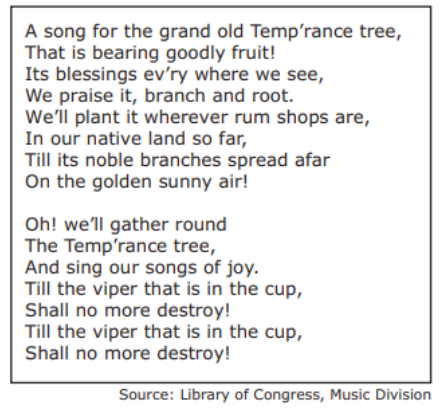
Select all responses that describe the music lyrics cited above.
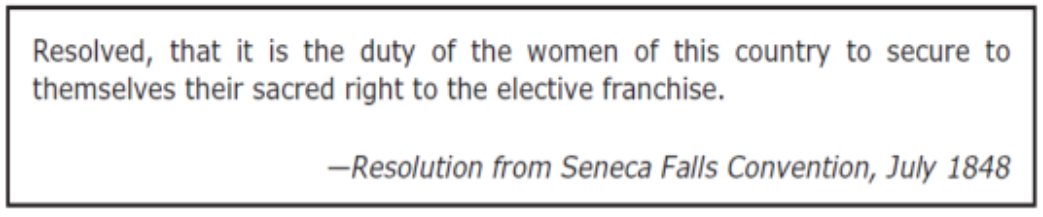
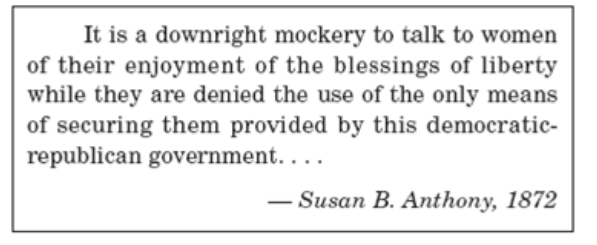
Select all responses that describe the excerpts cited above.
Select all responses that describe the excerpt cited above.
Select all responses that describe the excerpt cited above.
Choose all responses that that describe the photograph above: