Log in
Sign up for FREE
arrow_back
Library
ELA Unit 3 EOU
By Alyssa M Amador
star
star
star
star
star
Share
share
Last updated about 3 years ago
14 questions
Add this activity
zoom_in
zoom_in
zoom_in
1
RL.3.2
1
RL.3.2
1
RL.3.4
1
RL.3.5
1
RL.3.2
1
RL.3.6
Required
2
RL.3.3
zoom_in
Required
1
RI.3.3
Required
1
RI.3.3
Required
1
RI.3.4
Required
1
RI.3.3
Required
1
RI.3.2
Required
2
RI.3.5
Required
2
RI.3.5
Question 1
1.
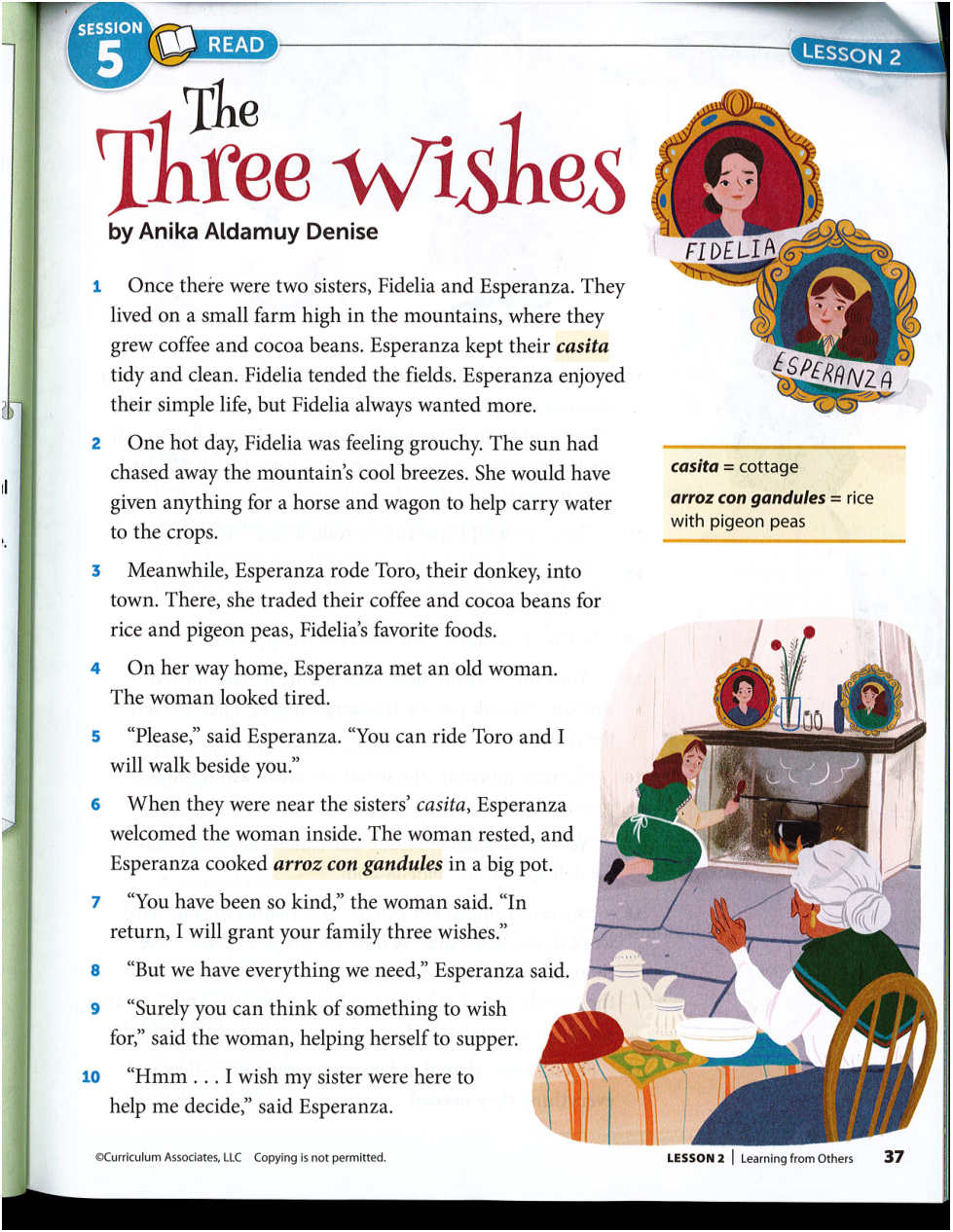
Part A: What is the central message of "The Three Wishes"?
Kindness brings rewards.
Hard work makes life better.
Be polite to those you meet.
Be thankful for what you have.
Question 2
2.
Part B: Which key detail from the text best supports the answer from Part A?
Esperanza keeps the casita tidy and clean/
Esperanza asks the old woman to ride Toro.
Fidelia knows they have everything they need.
Fidelia wants a horse and wagon to carry water.
Question 3
3.
Read this sentence from paragraph 1 of the text: Fidelia
tended
the fields.
What does the word
tended
mean?
found
served
cared for
moved toward
Question 4
4.
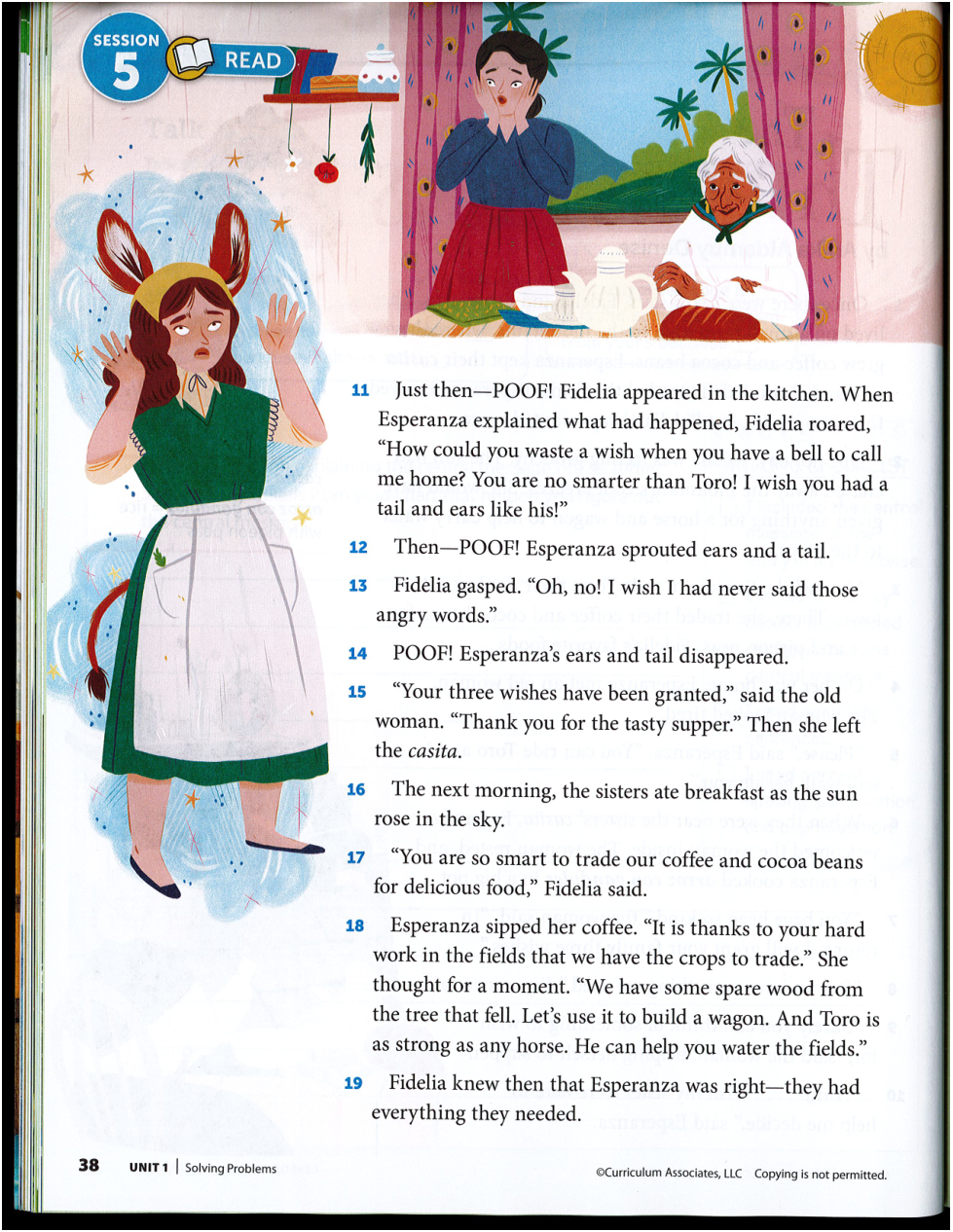
Which paragraph shows that Fidelia is sorry for saying Esperanza is "no smarter than Toro"?
paragraph 11
paragraph 13
paragraph 14
paragraph 18
Question 5
5.
Which sentence from the text shows that Fidelia has learned to value her sister?
"'But we have everything we need,' Esperanza said." (paragraph 8)
"'How could you waste a wish when you have a bell to call me home?'"
(paragraph 11)
"'I wish I had never said those angry words.'" (paragraph 13)
"'You are so smart to trade our coffee and cocoa beans for delicious food,' Fidelia said." (paragraph 17)
Question 6
6.
Who is telling the story?
Fidelia
Esperanza
Narrator
Question 7
7.
List 1 trait to describe Fidelia. Use text evidence to support your answer.
Question 8
8.
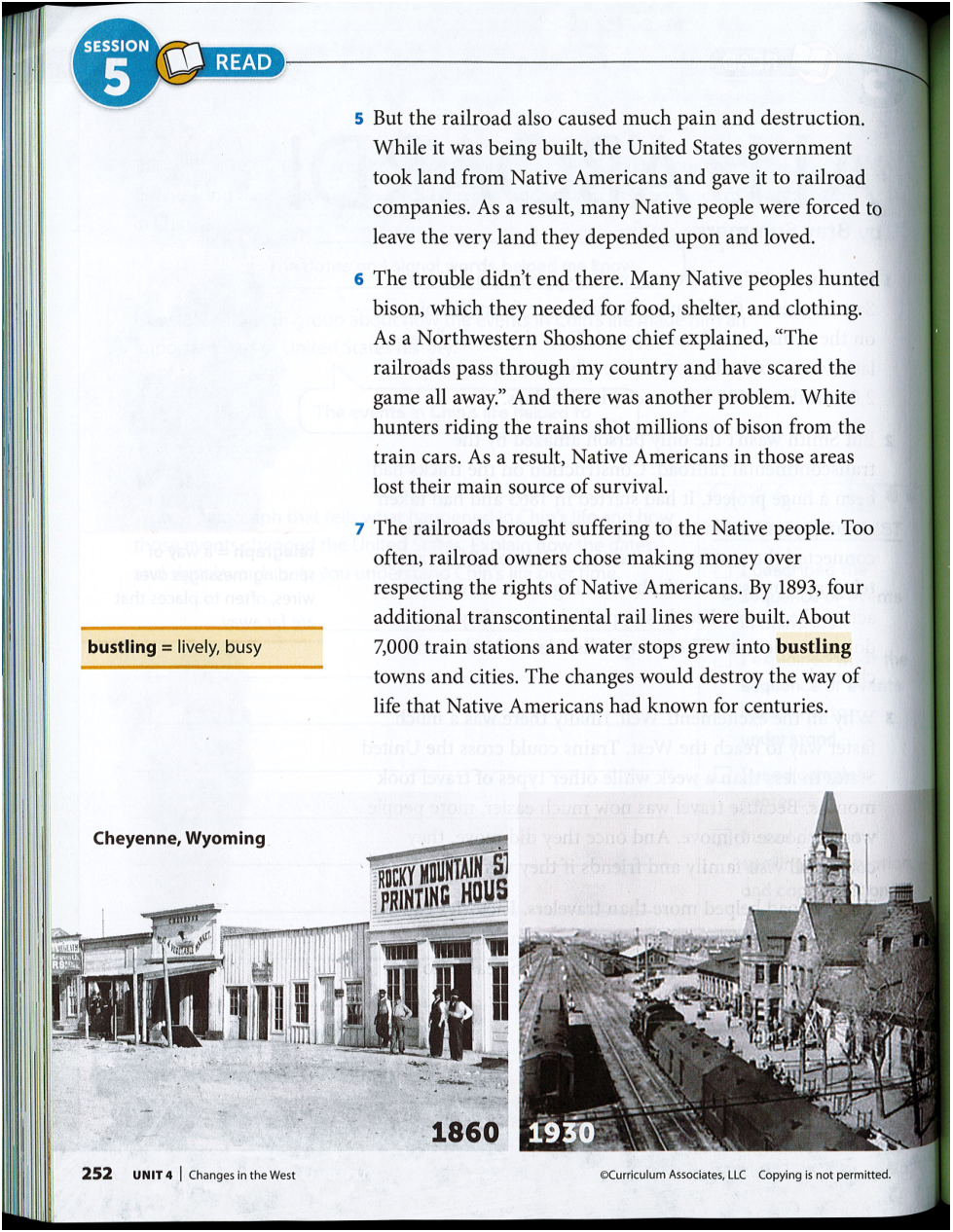
Which sentence from the text shows a cause and effect relationship?
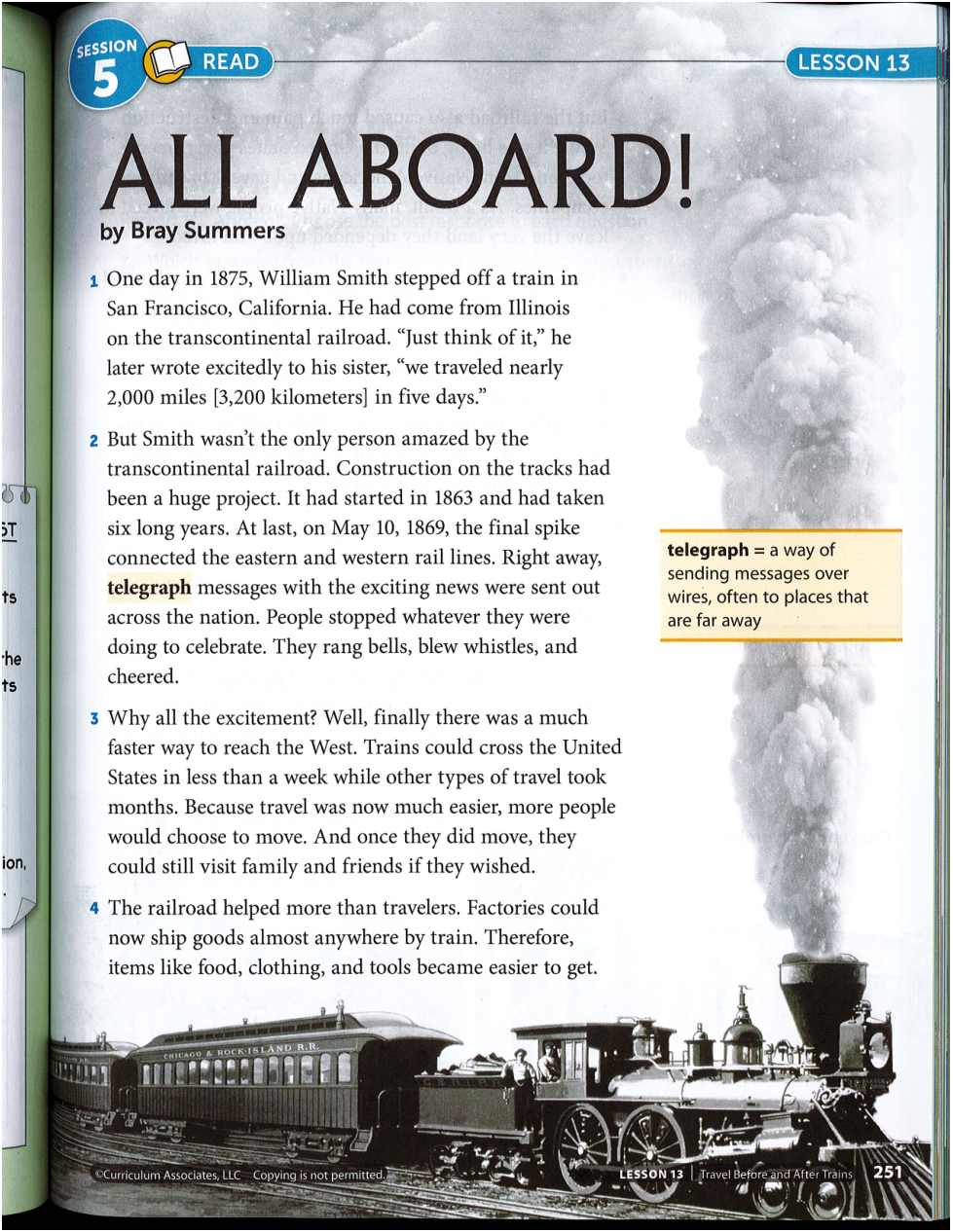
"One day in 1875, William Smith stepped off a train in San Francisco, California." (Paragraph 1)
"Because travel was now easier, more people would choose to move." (Paragraph 3)
"Many native peoples hunted bison, which they needed for food, shelter, and clothing."
(Paragraph 6)
"By 1893, four additional transcontinental rail lines were built."
(Paragraph 7)
Question 9
9.
What happened because of faster, easier train travel?
Factories could send goods almost anywhere in the country.
Towns and cities could bring water from faraway lakes.
Native Americans had better access to shelter.
Railroad track cost less to build.
Question 10
10.
Read this sentence from paragraph 7 of the text.
The railroads brought
suffering
to the Native people.
What does the word
suffering
mean?
food and supplies
a new way to travel
noise and dirt
a time of difficulty
Question 11
11.
What problem did the transcontinental railroad cause?
It became harder for people to move to new cities.
The government was unable to buy more tracks.
Native Americans were forced to leave their land.
The noise from the train scared passengers.
Question 12
12.
What is the main idea of the text?
The construction of the transcontinental railroad created a large number of jobs.
The noise from the transcontinental railroad led to the disappearance of bison.
The transcontinental railroad caused many people to move away from big cities.
The transcontinental railroad made life easier for some but harder for others.
Question 13
13.
What is the text structure of paragraph 3? How do you know?
Question 14
14.
What is the text structure of paragraph 6? How do you know?