Whales and Wolves Comparison
star
star
star
star
star
Last updated over 2 years ago
26 Nsɛmmisa
1
0
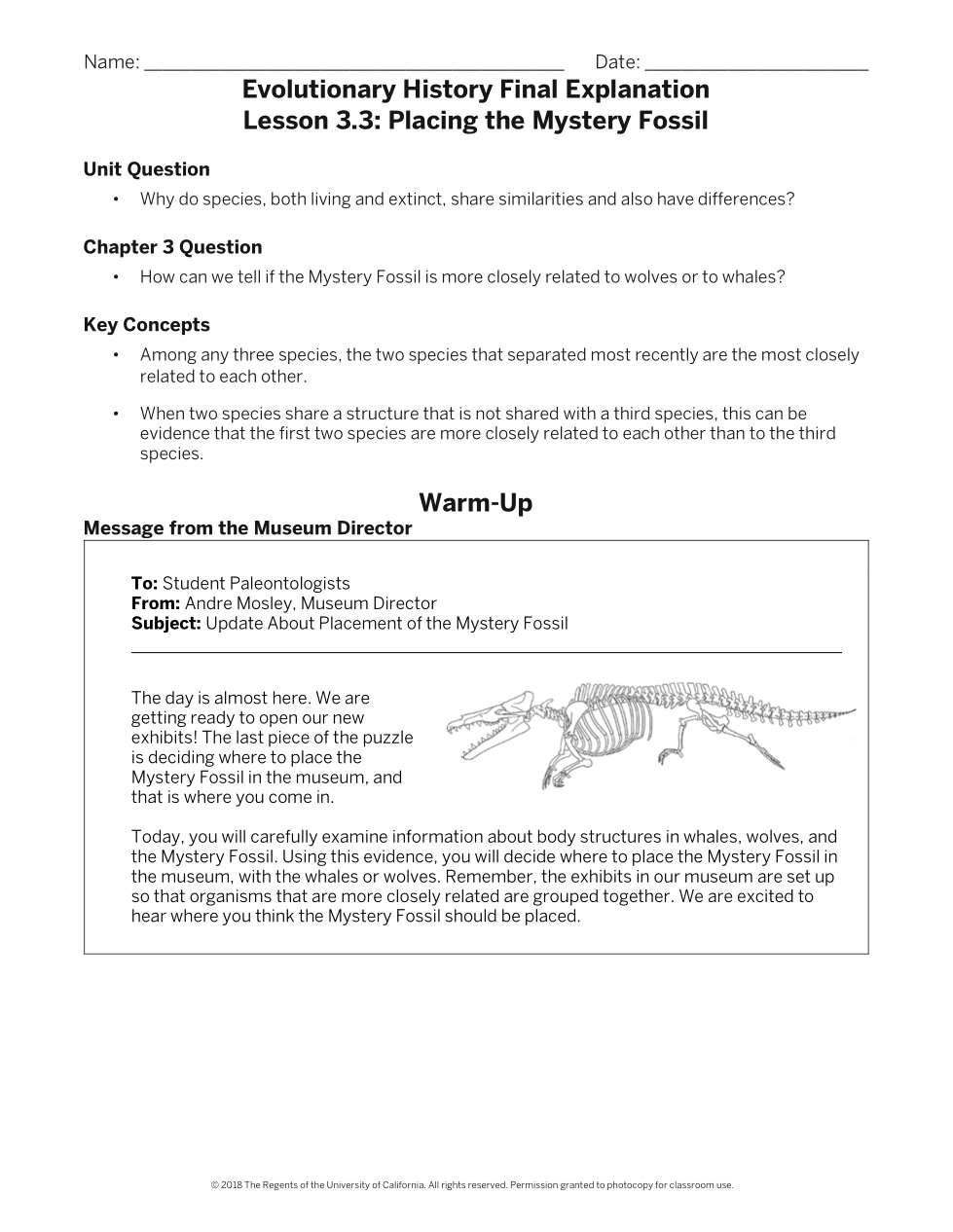
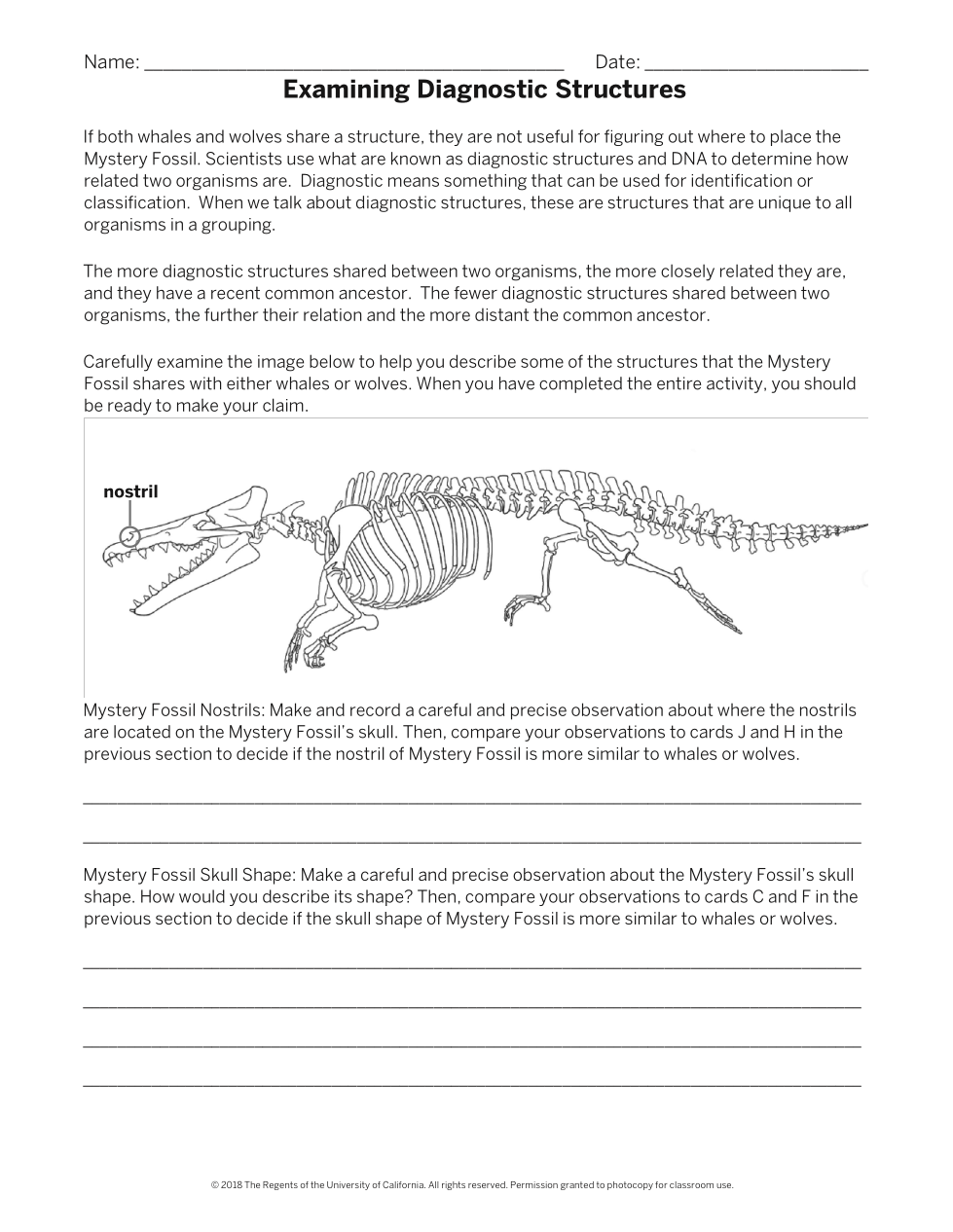
Look at the mystery fossil. State TWO things you notice about the fossil.
In which museum exhibit do you think the mystery fossil belongs?
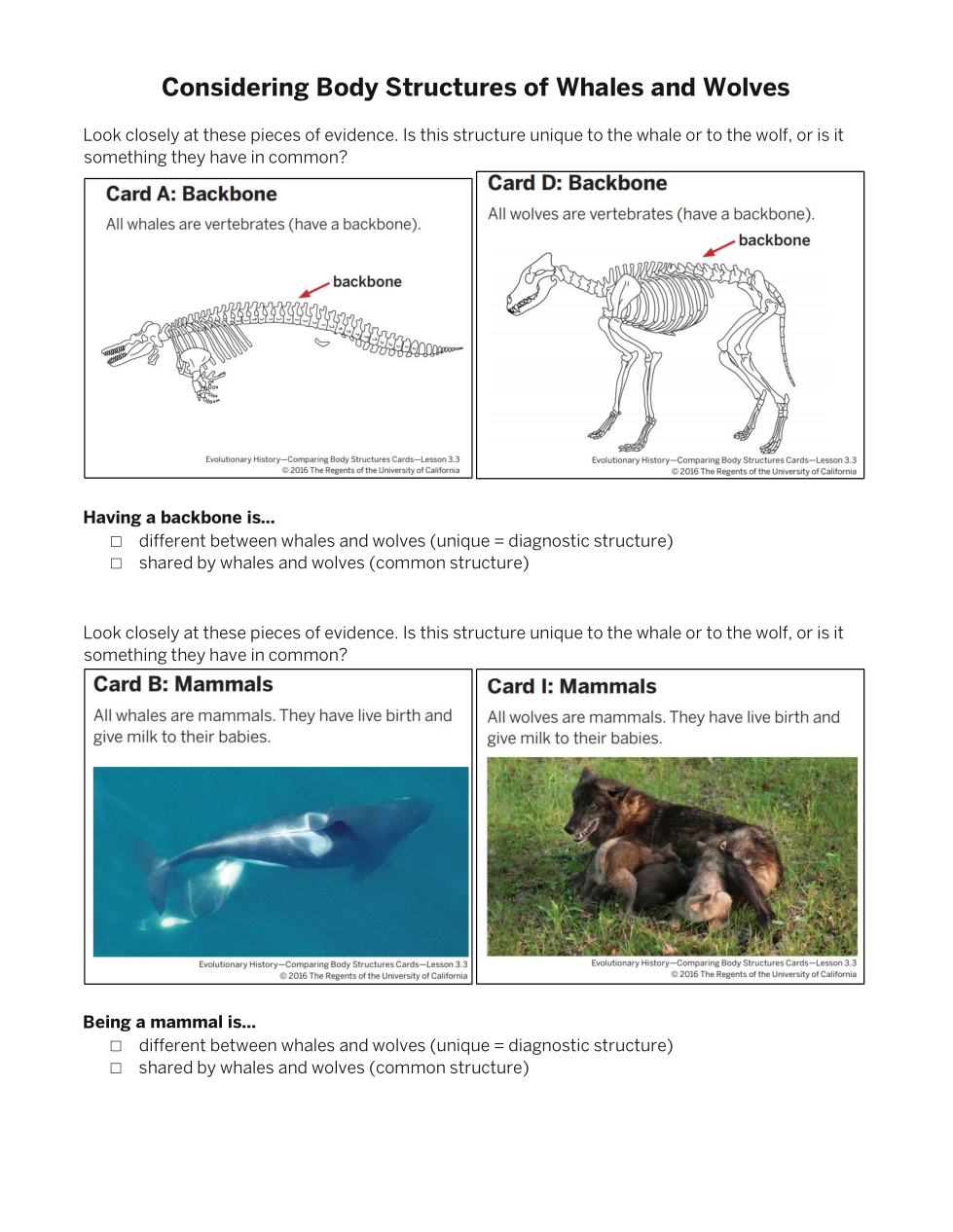
State one thing you notice about the backbone in whales and wolves.
Having a backbone is
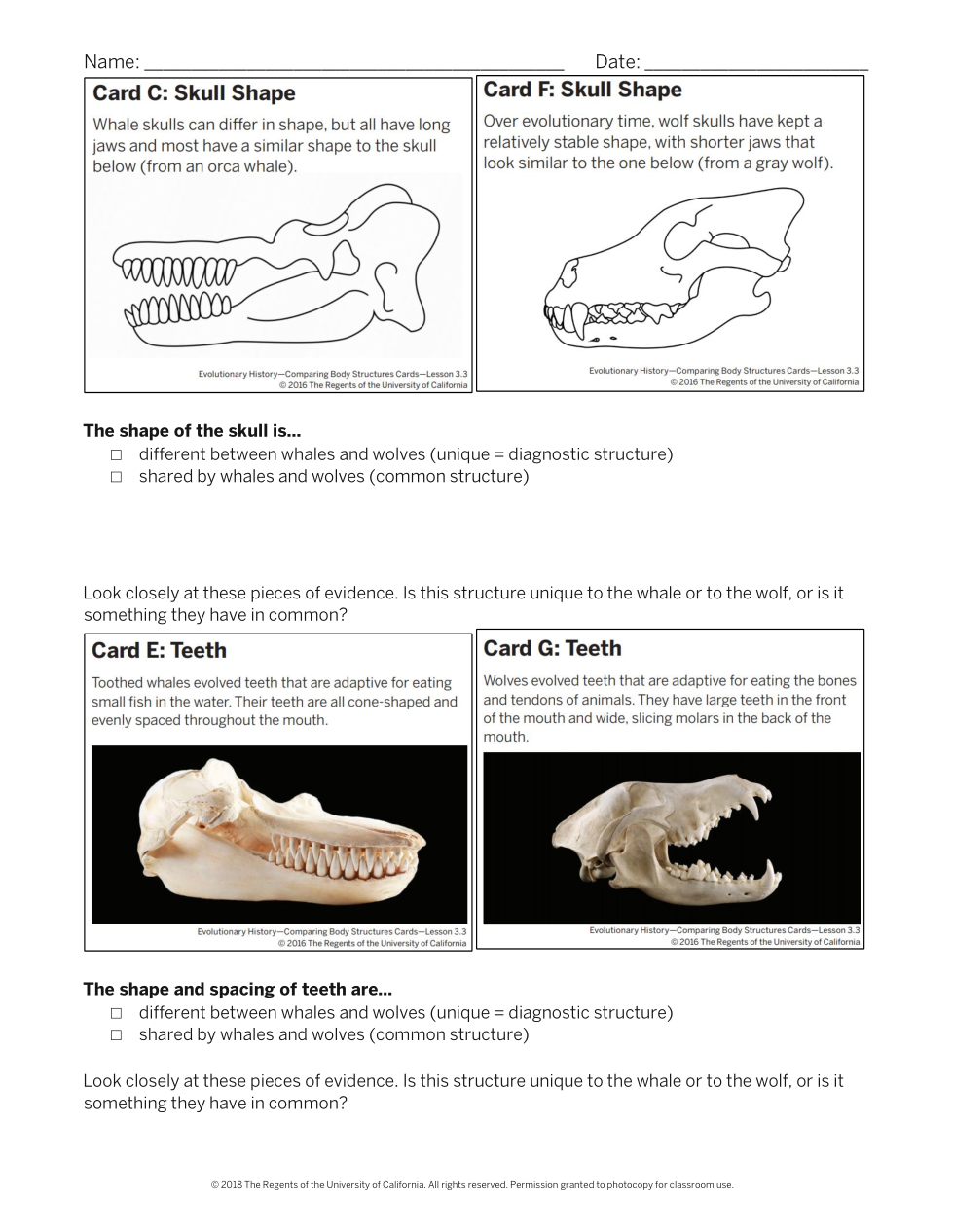
Examine the skull shape (cards C and F). State ONE thing you notice about the shape of the skulls.
The shape of the skull is
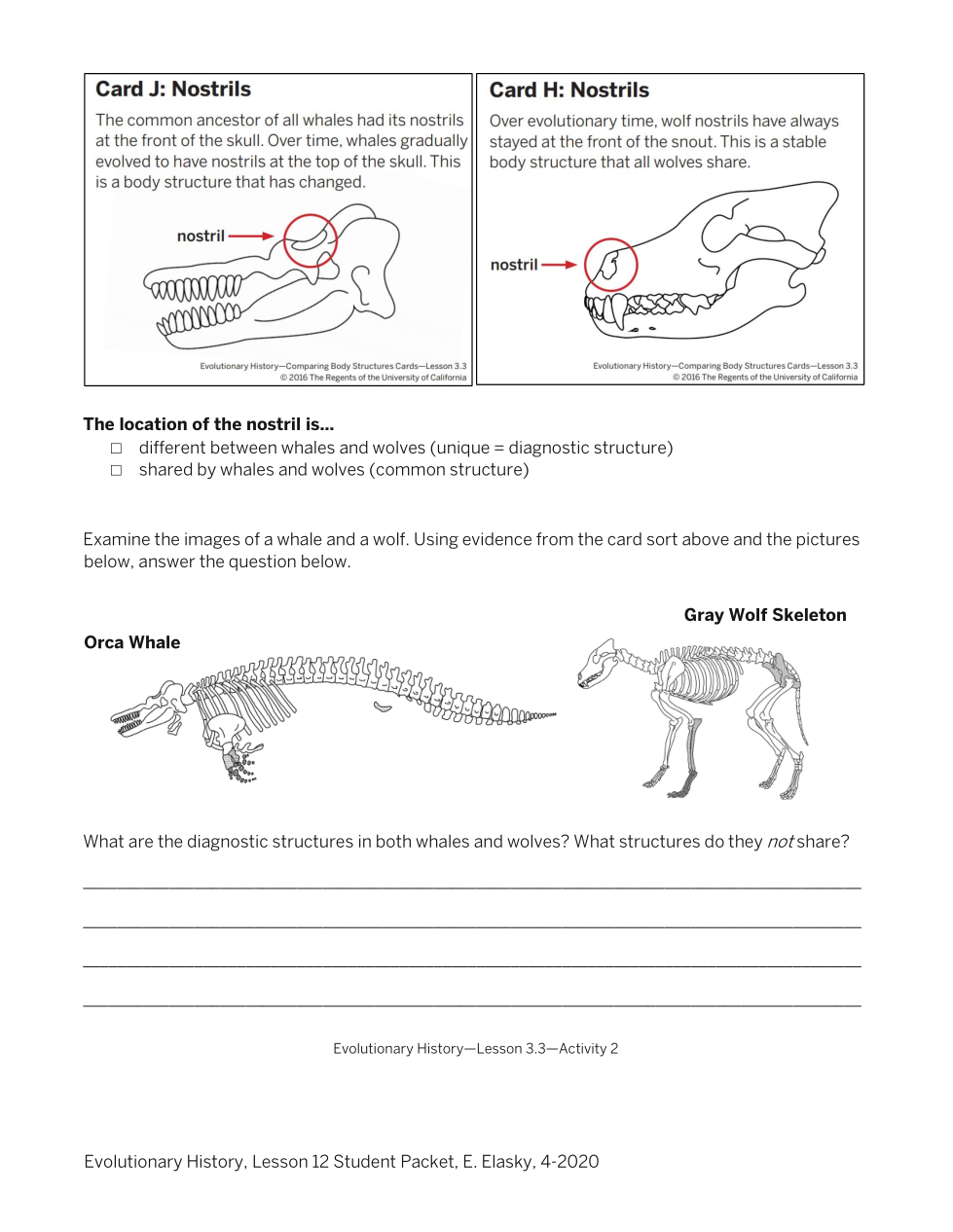
Look at cards J and H (Nostrils). State ONE notice about the nostrils.
Look at the cards J and H (nostrils) the placement of the nostrils has gradually changed in what animal?
Scientists determine how closely related two animals are by comparing diagnostic structures and
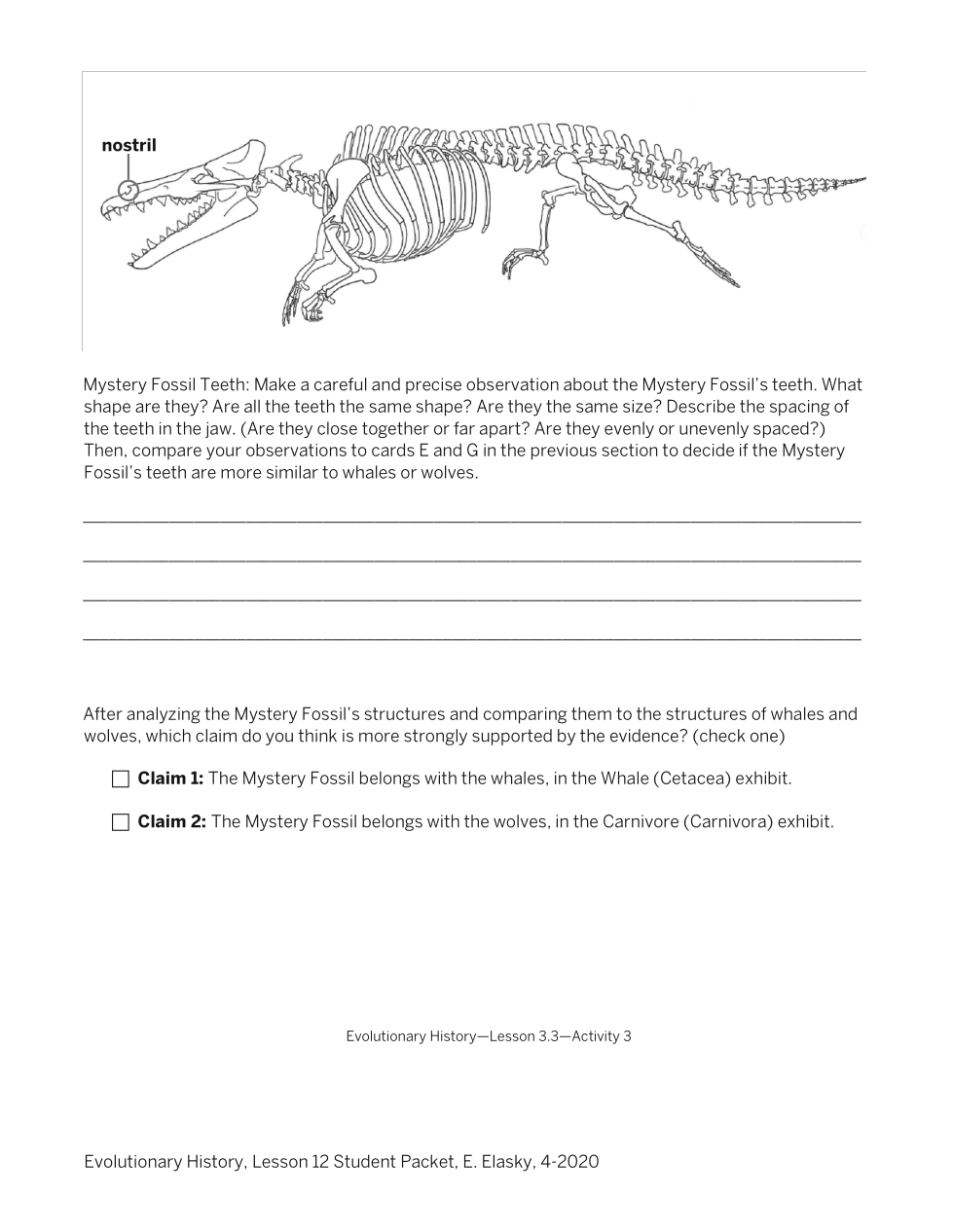
Look at the mystery fossils teeth. The teeth are
Write 3 to 5 sentences to support your claim. Be sure to use specific evidence in your argurment.
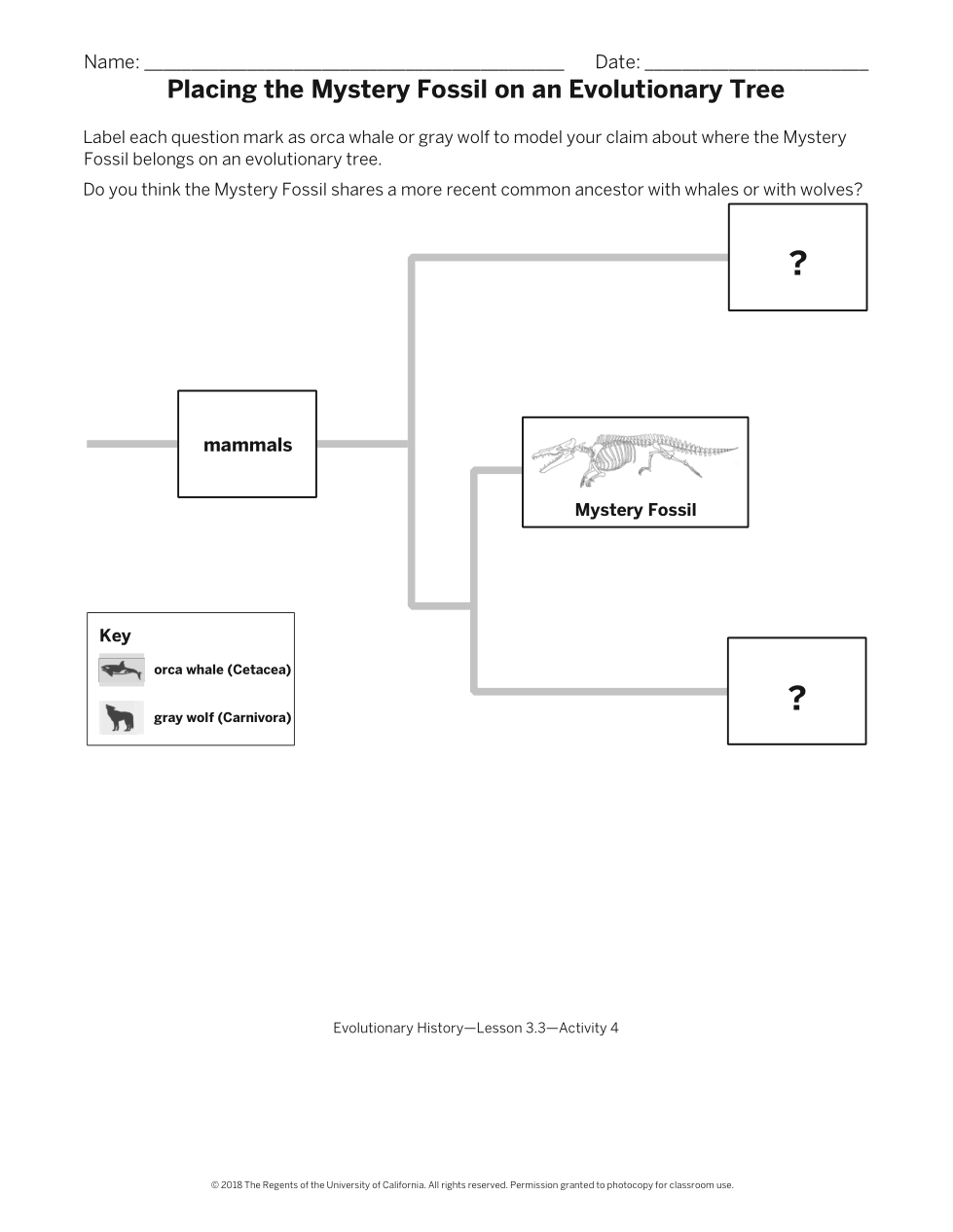
What animal should go here?
What animal should go here?
Look at cards B and I. Are both whales and wolves mammals?
Look at cards E and G (Teeth). State ONE notice about the teeth in whales and wolves.
According to card E, what are the teeth in whales adapated for eating?
According to card G, what are the teeth in wolves are adapated for eating?
The shape and spacing of teeth are
The location of the nostril is
Examine the images of the Orca Whale and Gray Wolf skeleton. What are the diagnostic structures (structures that the skeletons do not share). Click on all the structures.
Look at the mystery fossils nostril. Where is the nostril located?
Looking back to cards J and H, the nostril of the mystery fossil is more similar to
How would you describe the skull shape of the mystery fossil?
Compare the skull shape of the mystery fossil to cards C and F. The skull of the mystery fossil is similar to
Looking back at cards E and G, the teeth shape of the mystery fossil is simalar to
After analyzing the Mystery Fossil's structure and comparing them to the structures of whales and wolves, which claim do you think is more stronlgy supported by the evidence?