Bio Conn Dinosaur
star
star
star
star
star
Last updated over 2 years ago
17 Nsɛmmisa
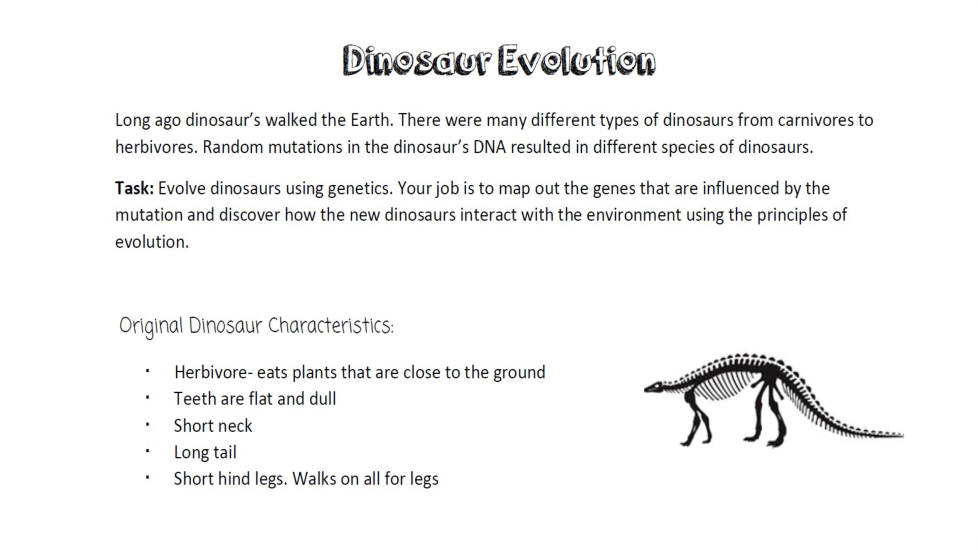
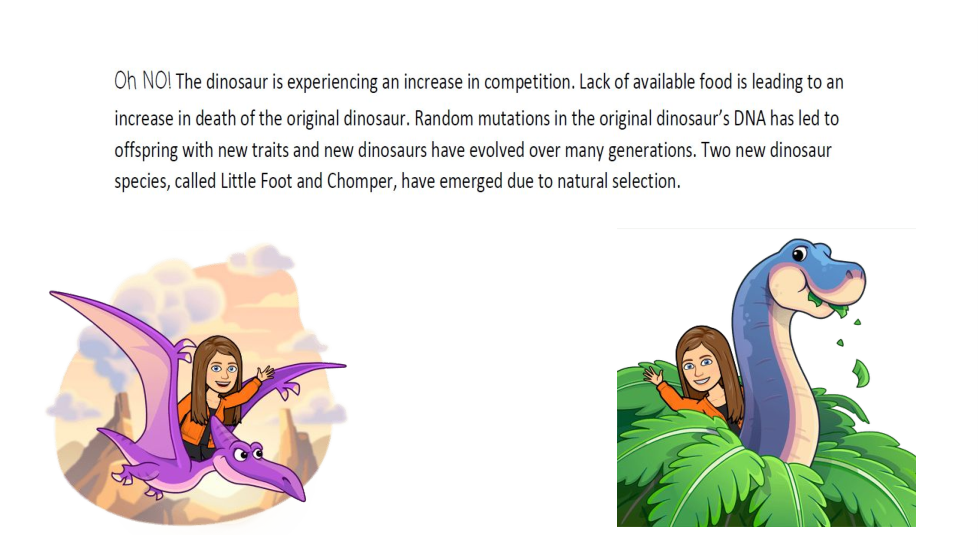
Fill in the Blank: Random ___________ in the original dinosaur's DNA has led to offspring with new traits.
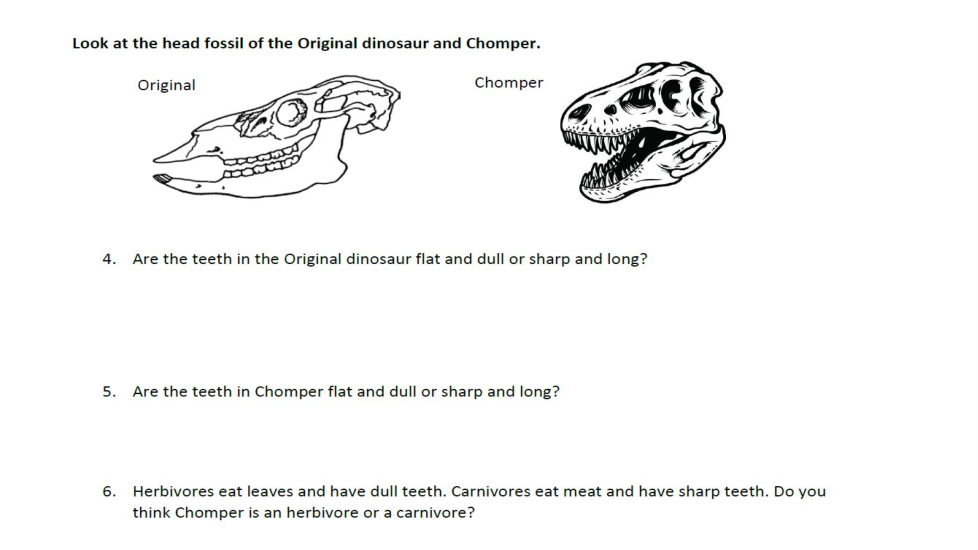
The teeth in the original dinosaur are
The original dinosaur ate plants close to the ground. Explain how natural selection lead to dinosaurs like Chomper (sharp teeth that eat meat)
The original dinosaur ate plants that were close to the ground. Explain how natural selection lead to dinosaurs like Little Foot (dinosaurs with a long neck that can reach food high in the trees)
Which statement correctly describes the concept of natural selection?
The teeth in chomper are
Do you think chomper is a herbivore or carnivore?
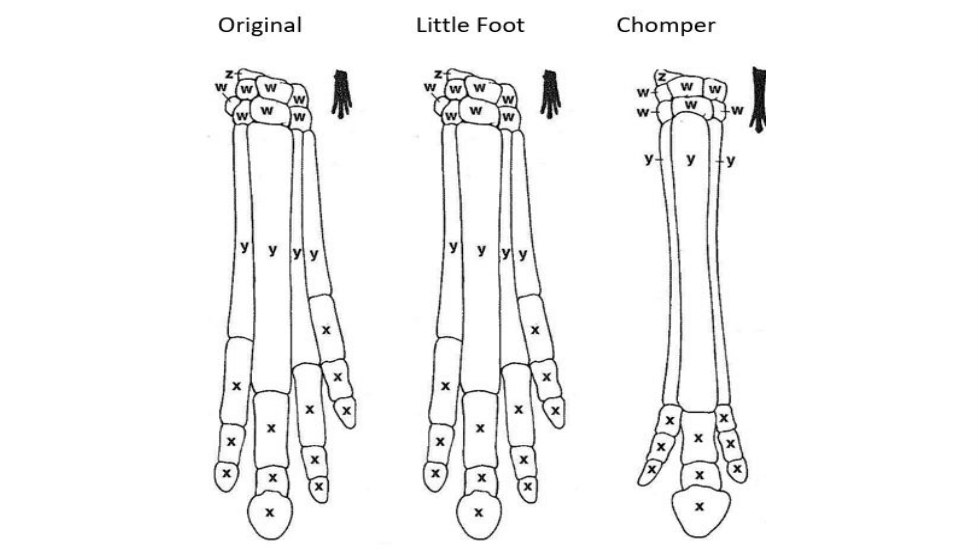
How many toes are in Little Foot?
How many toe bones (X) are in Little Foot?
How many foot bones (Y) are in Little Foot?
How many ankle bones (W) are in Little Foot?
How many toes are in Chomper?
How many toe bones (X) are in Chomper?
How many foot bones (Y) are in Chomper?
How many ankle bones (W) are in Chomper?
Click on all the statements that apply (hint there are 3):
The bones have similar bone structure and indicate a common ancestor. The bones are