Log in
Sign up for FREE
arrow_back
Library

OPSC Whales and Wolves Comparison

star
star
star
star
star
Last updated almost 2 years ago
22 questions
0
1
Question 2
2.

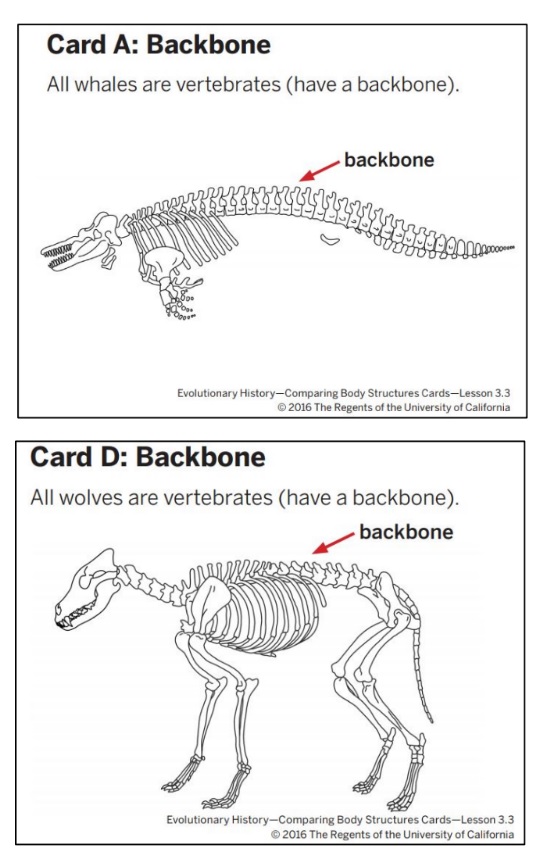
State one thing you notice about the backbone in whales and wolves.

1
1
1
Question 5
5.

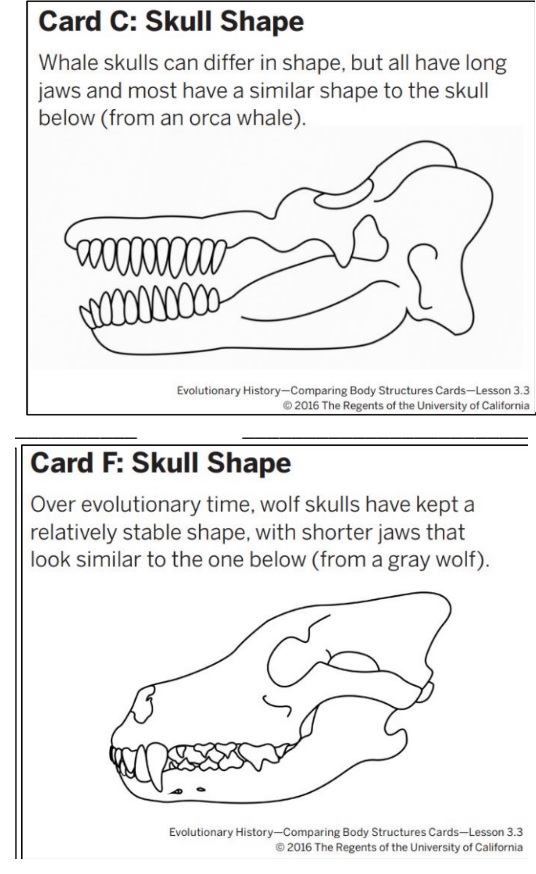
Examine the skull shape (cards C and F). State ONE thing you notice about the shape of the skulls.

0
1
Question 7
7.

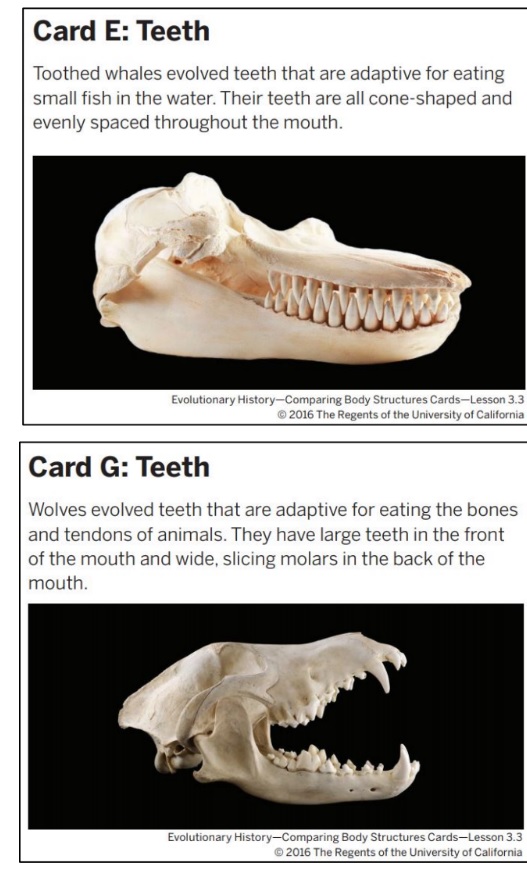
Look at cards E and G (Teeth). State ONE notice about the teeth in whales and wolves.

1
1
0
1
Question 11
11.

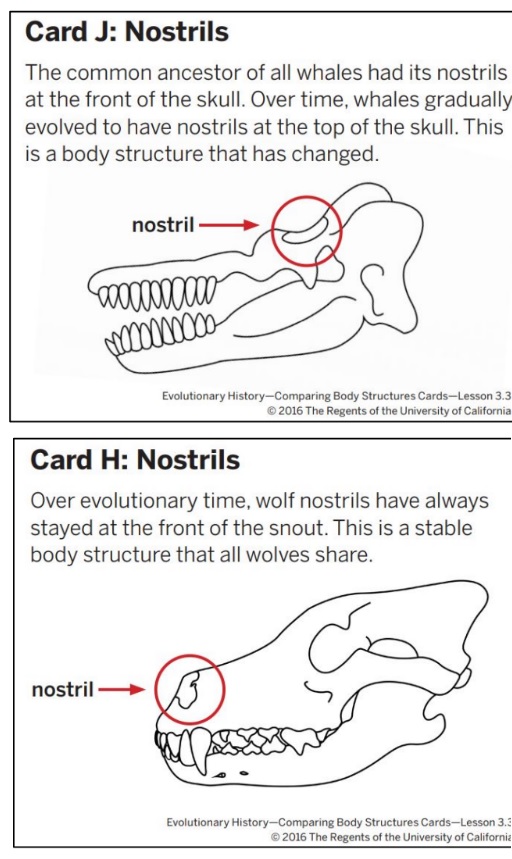
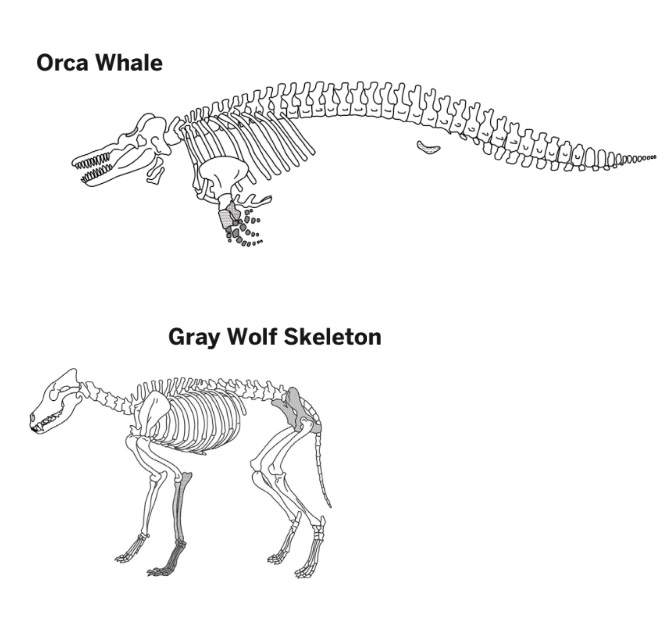
Look at cards J and H (Nostrils). State ONE notice about the nostrils.

1
1
3
Scientists use what are known as diagnostic structures and DNA to determine how related two organisms are. Diagnostic means something that can be used for identification or classification.

The more diagnostic structures shared between two organisms, the more closely related they are, and they have a recent common ancestor. The fewer diagnostic structures shared between two organisms, the further their relation and the more distanct the common ancestor.
1
1
1
1
1
1
1
0
Question 1
1.

Question 3
3.

Question 4
4.

Question 6
6.

Question 8
8.

According to card E, what are the teeth in whales adapated for eating?

Question 9
9.

According to card G, what are the teeth in wolves are adapated for eating?

Question 10
10.

Question 12
12.

Question 13
13.

Question 14
14.

Question 15
15.

Question 16
16.

Question 17
17.

Question 18
18.

Question 19
19.

Question 20
20.

Question 21
21.

Question 22
22.

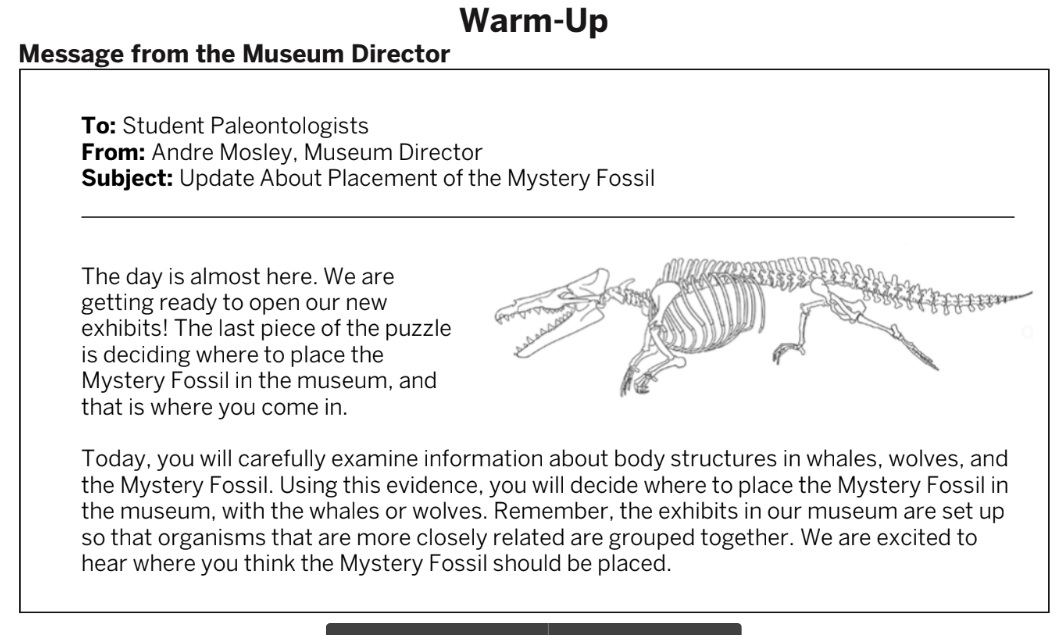
In which museum exhibit do you think the mystery fossil belongs?
A. whales (Cetacea)
B. Wolves (Carnivora)
C. Not sure at this point
Having a backbone is
A. different between whales and wolves (unique= diagnostic structure)
B. shared by whales and wolves (common structure)
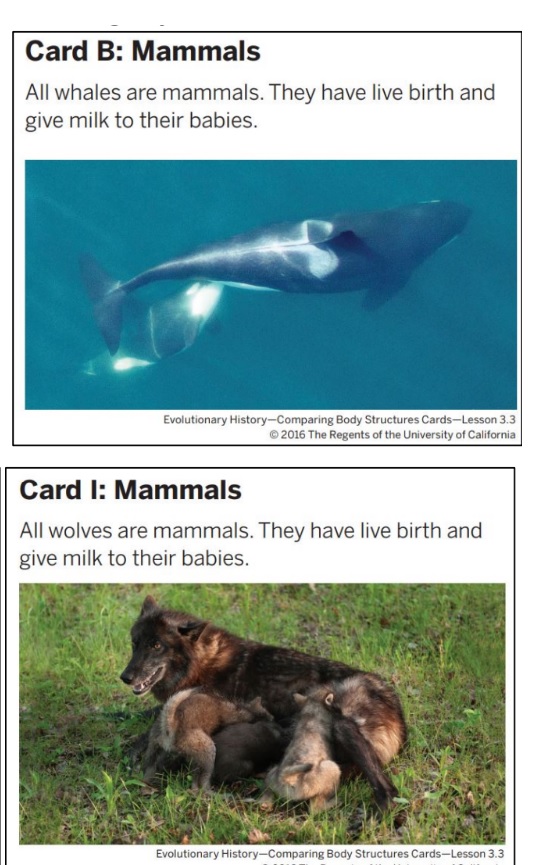
Look at cards B and I. Are both whales and wolves mammals?
A. Yes
B. No
The shape of the skull is
A. different between whales and wolves (diagnostic structure)
B. Shared by whales and wolves (common structure)
The shape and spacing of teeth are
A. different between whales and wolves (diagnostic structure)
B. shared by whales and wolves
Look at the cards J and H (nostrils). In what animal has the placement of the nostrils has gradually evolved to the top of the skull?
A. Whales
B. Wolves
C. Both animals
The location of the nostril is
A. different between whales and wolves (unique= diagnostic structure)
B. shared by whales and wolves (common structure)
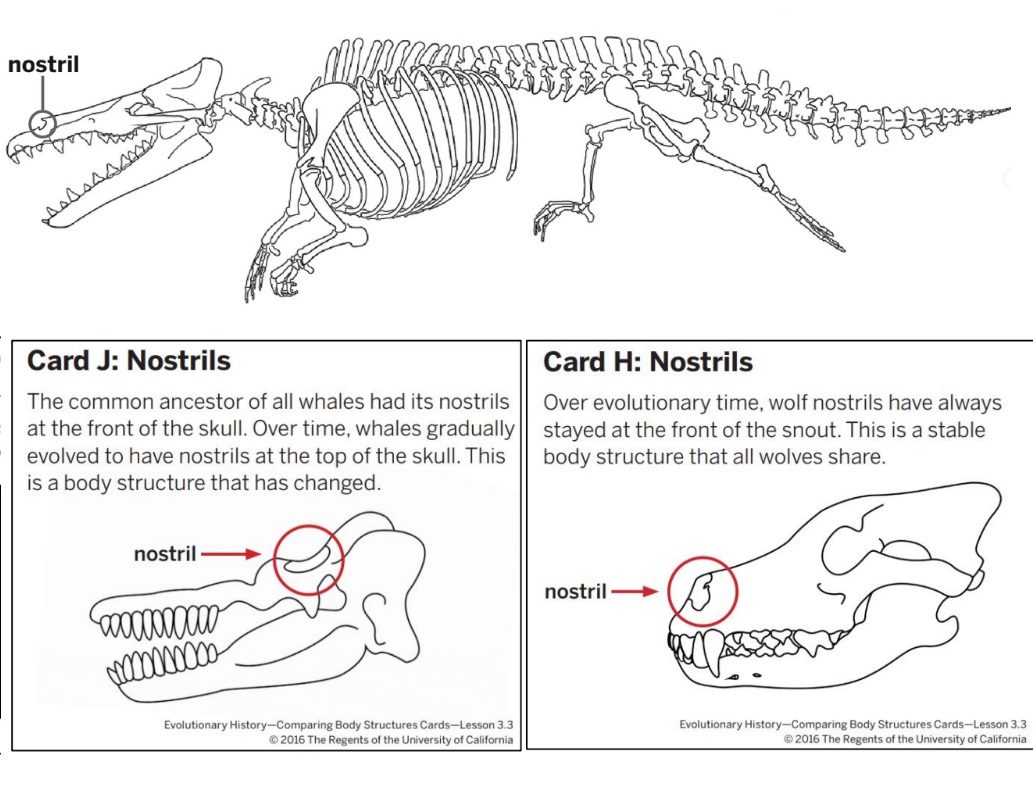
Examine the images of the Orca Whale and Gray Wolf skeleton. What structures are DIFFERENT in the whale and wolf. Click on all the structures.
A. Backbone
B. Being mammals
C. Shape of skull
D. Teeth
E. Nostrils
Scientists determine how closely related two animals are by comparing diagnostic structures and
A. the animals size
B. the animals diet
C. DNA
D. habitat
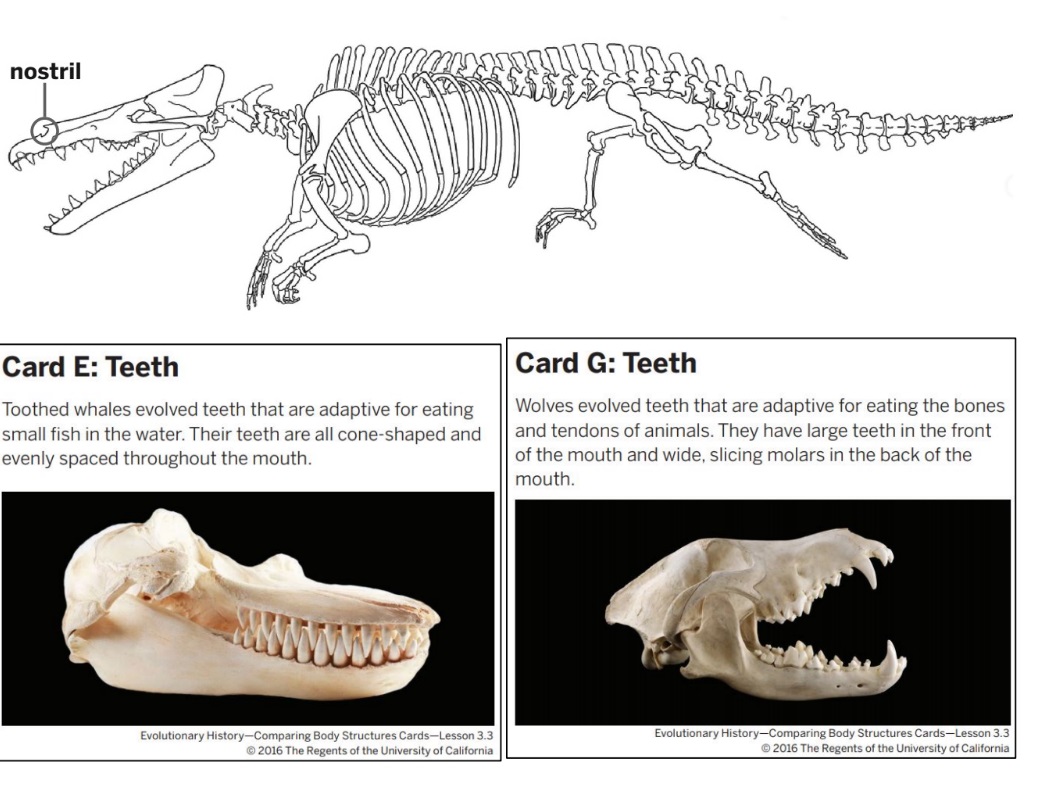
Look at the mystery fossils nostril. Where is the nostril located?
A. top of the skull
B. near the snout
C. in the middle of the skull
Looking back to cards J and H, the nostril of the mystery fossil is more similar to
A. Whales (card J)
B. Wolves (card H)
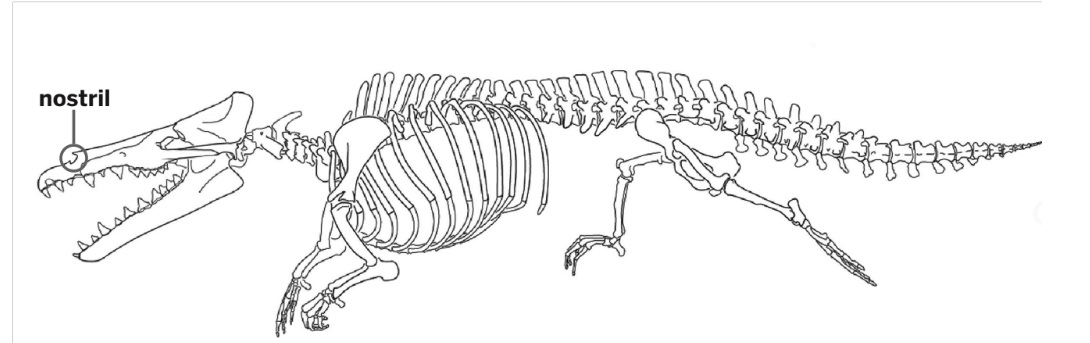
How would you describe the skull shape of the mystery fossil?
A. Skull has a long jaw
B. Skull has a short jaw
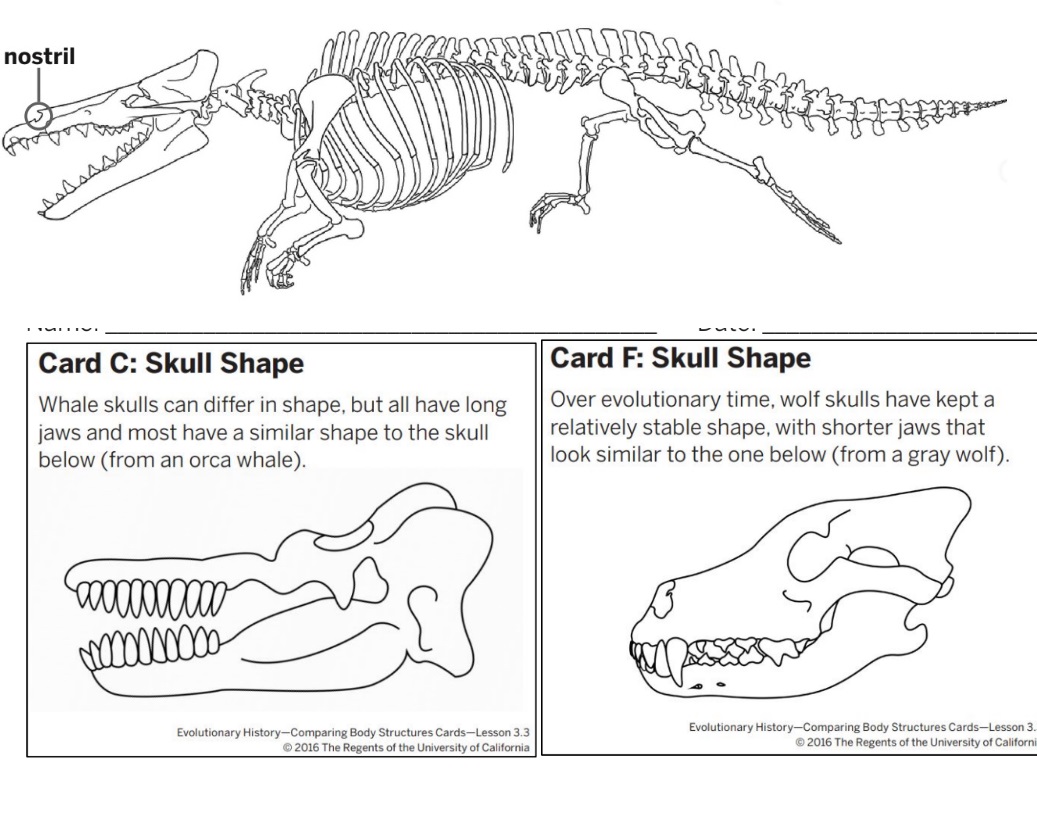
Look at the mystery fossils teeth. The teeth are
A. Cone shaped and evenly spaced. The teeth all touch
B. Different sizes and unevenly spaced. Some teeth are close together and some are far apart
Looking back at cards E and G, the teeth shape of the mystery fossil is simalar to
A. Whales (Card E)
B. Wolves (Card G)
Compare the skull shape of the mystery fossil to cards C and F. The skull of the mystery fossil is similar to
A. Whales (card C)
B. Wolves (Card F)
After analyzing the Mystery Fossil's structure and comparing them to the structures of whales and wolves, which claim do you think is more stronlgy supported by the evidence?
A. The Mystery Fossil belongs with the whales in the Whale exihibit.
B. The Mystery Fossil belongs with the wolves in the Carnivore exhibit