Compounds, Molecules, Bonding & IMFs: ReviewQ1 & Explore U7
star
star
star
star
star
Last updated almost 3 years ago
27 questions
1
Made up of 2 or more different elements.
1
A group of atoms held together by covalent bonding that acts as an independent unit.
1
Categorize the items below.
- NaCl
- N2
- H2O
- H2
- Compound
- Molecule
1
A chemical bond formed when two atoms share one or more pairs of valence electrons.
1
How does an atom (other than helium) with less than 8 valence electrons become stable?
1
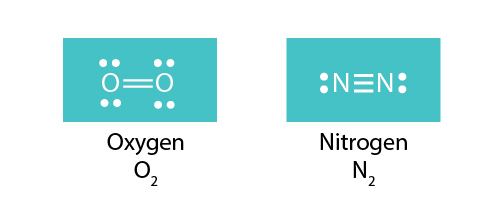
Which one has the stronger bond?
1
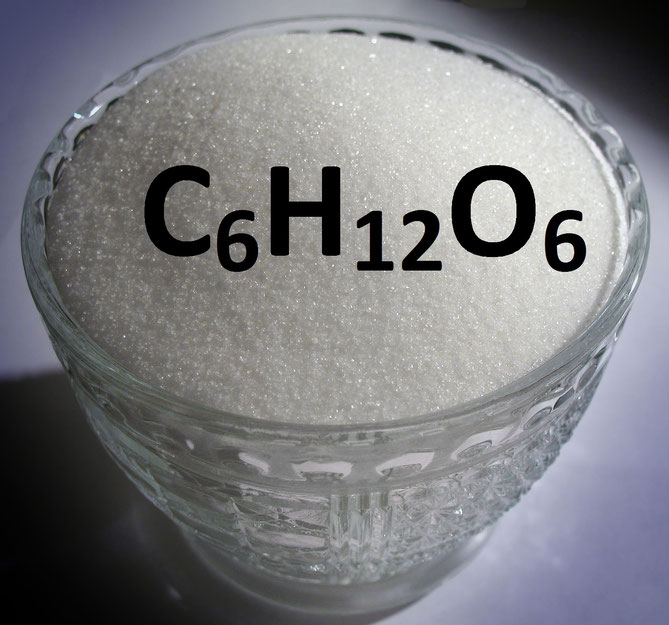
How many atoms make up this compound?
1
How many valence electrons are shared in each (singular) covalent bond?
1
What kind of chemical bonding is taking place with Bromide?
1
A molecule that has a partial positive end and a partial negative end because of unequal sharing of electrons.
1
Polar molecules dissolve in _________________ solvents.
1
A group of chemical symbols and numbers that represent the elements and the number of atoms of each element that make up a compound
1
The number of valence electrons for an Oxygen atom.
1
The number of valence electrons for a Sulfur atom.
1
The number of valence electrons for a Chlorine atom.
1
The number of valence electrons for a Carbon atom.
1
An ionic bond represents connection between ______________ and _______________ .
1
A metallic bond represents the connection between __________ and _______________ .
1
Why is water polar?
Why is water polar?
1
VSEPR Theory is used to ...
1
Draw the dot diagram for Nitrogen.
1
Draw the dot diagram for Carbon.
1
Will the following pair of elements make an ionic bond, a covalent bond, or no bond? C and O
1
Will the following pair of elements make an ionic bond, a covalent bond, or no bond? C and F
1
Will the following pair of elements make an ionic bond, a covalent bond, or no bond? Na and Al
1
Will the following pair of elements make an ionic bond, a covalent bond, or no bond? N and K
1
Give an example of atoms that could form a metallic bond (not a band - Au4 is actually a band).