1
Have you ever played the board game "Monopoly" before?
Have you ever played the board game "Monopoly" before?
1
1
Please complete this formative independently in class. Any part of the formative you do not complete is homework. Make sure to press submit once you have completed all of the questions.
Please complete this formative independently in class. Any part of the formative you do not complete is homework. Make sure to press submit once you have completed all of the questions.
Have you ever played the board game "Monopoly" before?
Review: Before we dive in, let's make sure we know where we are in history. Start by reviewing the topics we have covered over the last two months. We just finished the Reconstruction Era. Now, find the Gilded Age on the timeline and circle it.
*Note: last week we learned about U.S. Imperialism. U.S. imperialism of places like Puerto Rico, The Philippines, and Hawaii is happening during the Gilded Age.
“The Gilded Age” refers to the time period
However, this time period in American History is also known for the
The Gilded Age was a result of the
Millions of immigrants and struggling farmers arrived in cities such as New York, Boston, and Chicago, looking for work. This led to the rapid
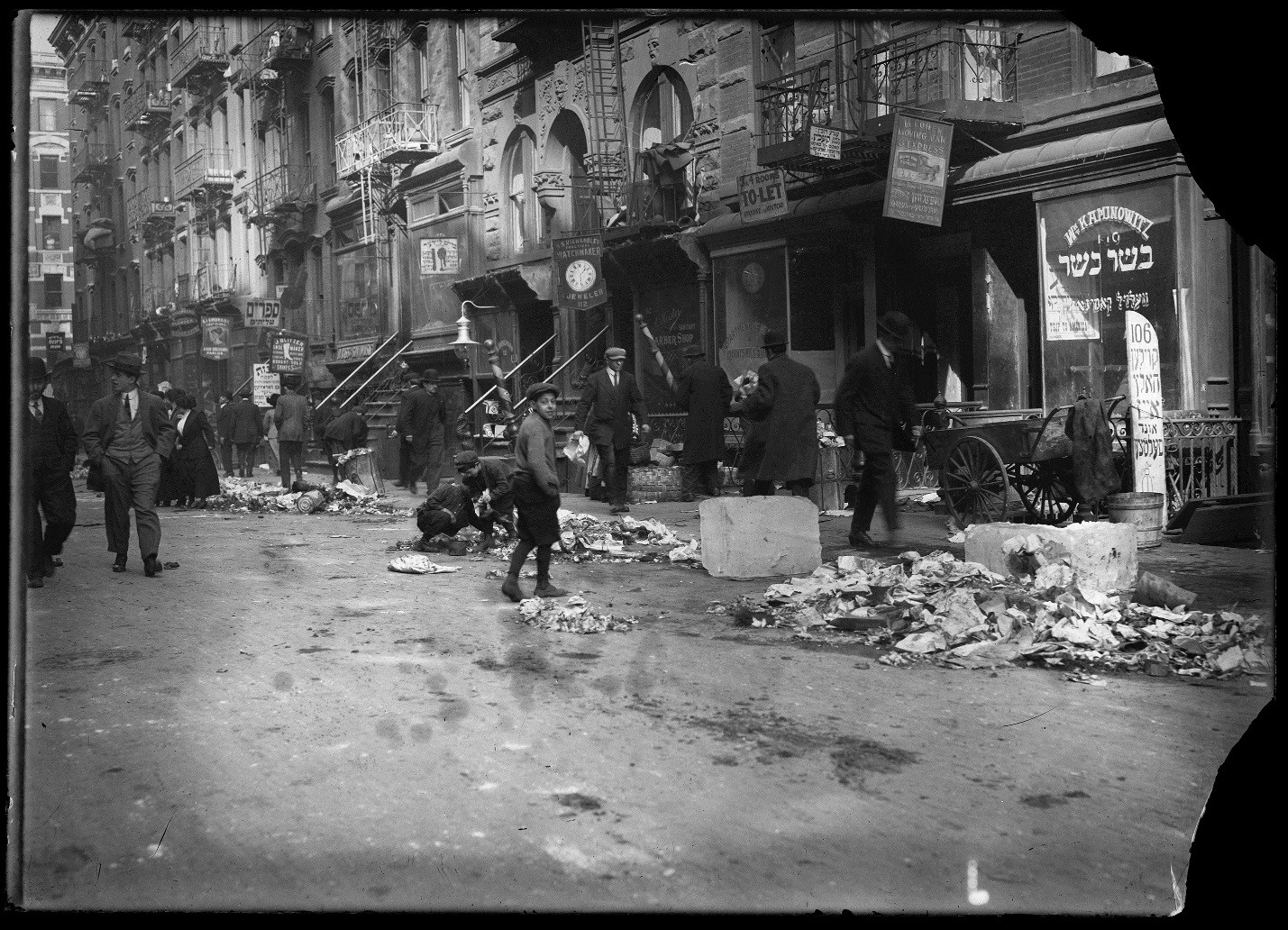
Most cities were
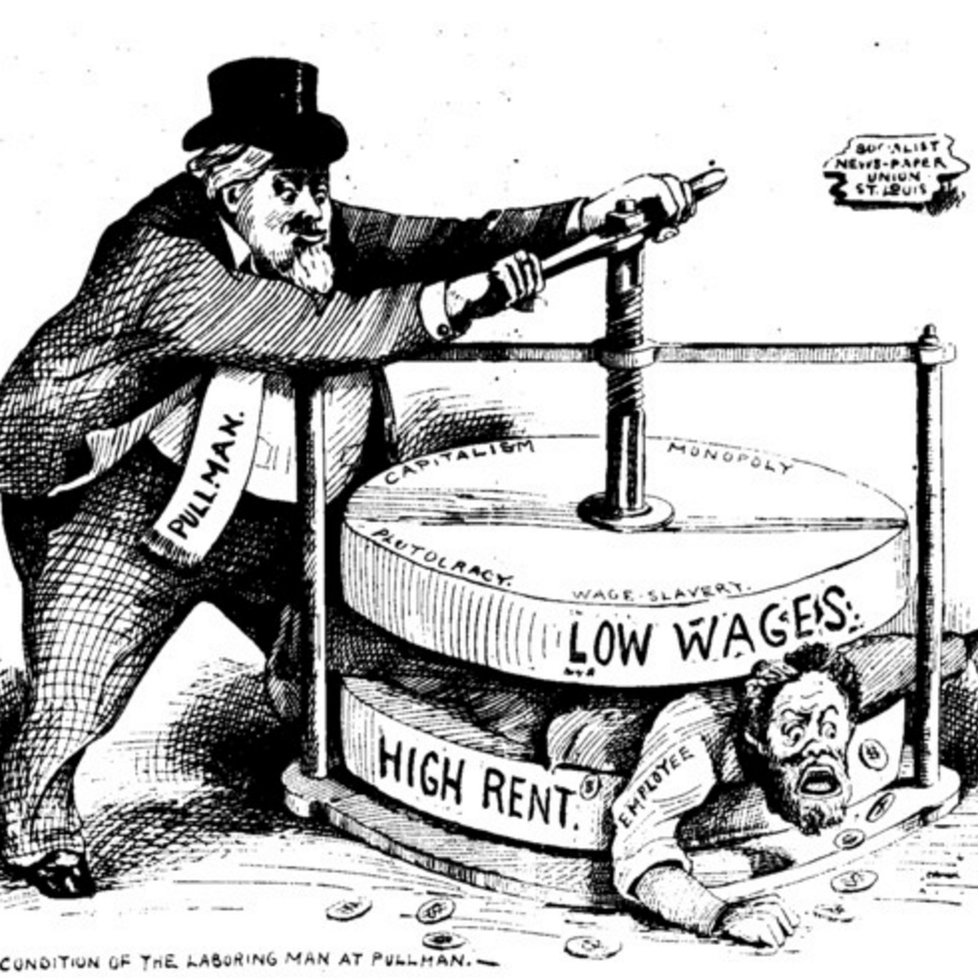
Many new
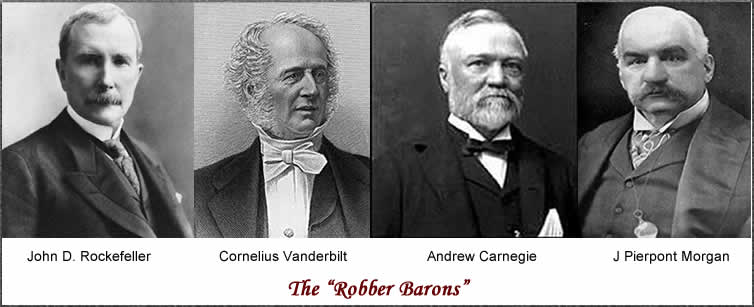
These wealthy industrialists and businessmen became critically known as “
Robber Barons made a fortune by
The best known Robber Barons were John D. Rockefeller, Andrew Carnegie, Cornelius Vanderbilt, and J.P. Morgan.
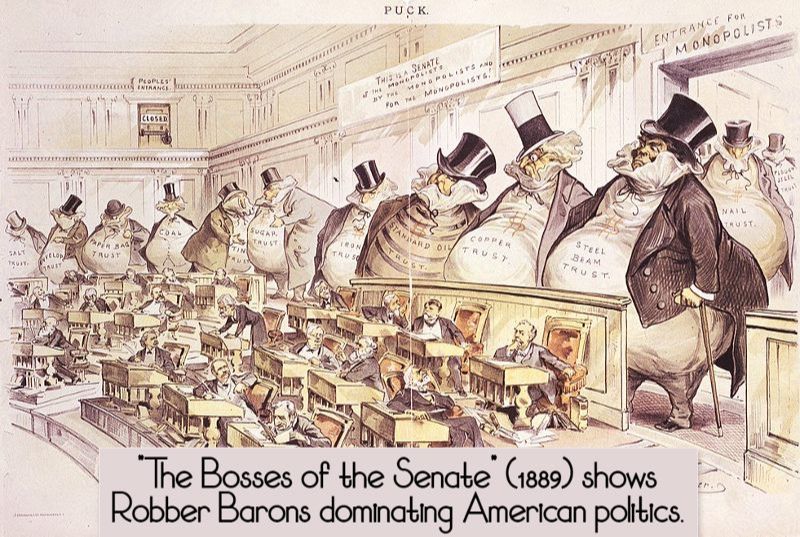
At the beginning of this unit during our four corners activity, we asked you your opinion on whether big businesses should influence the government. Has your opinion changed at all since learning about the Gilded Age?
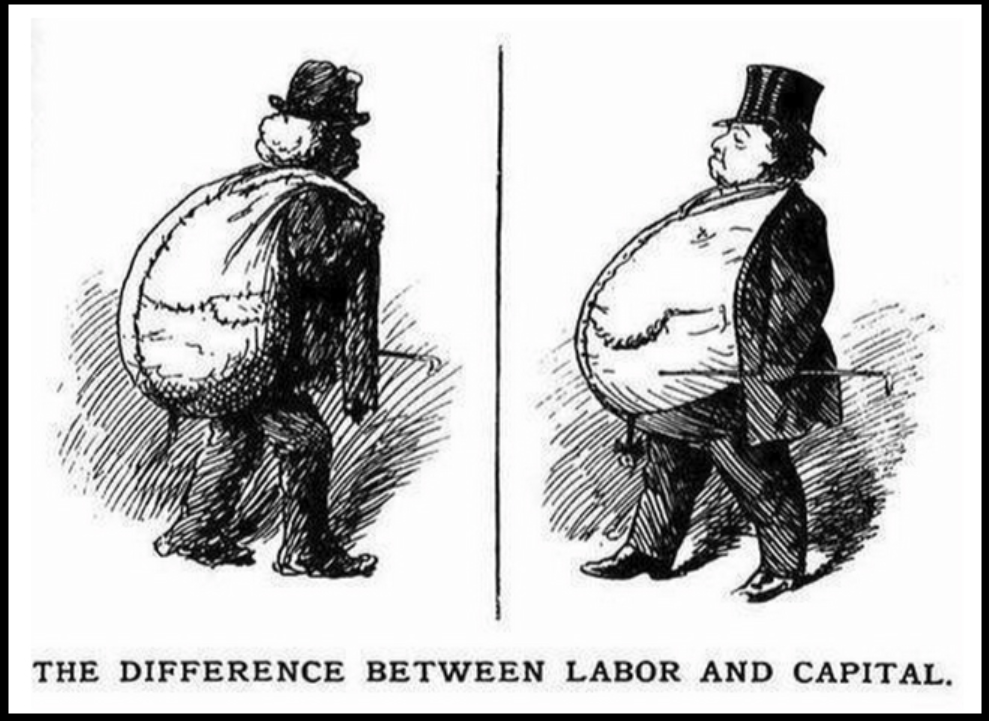
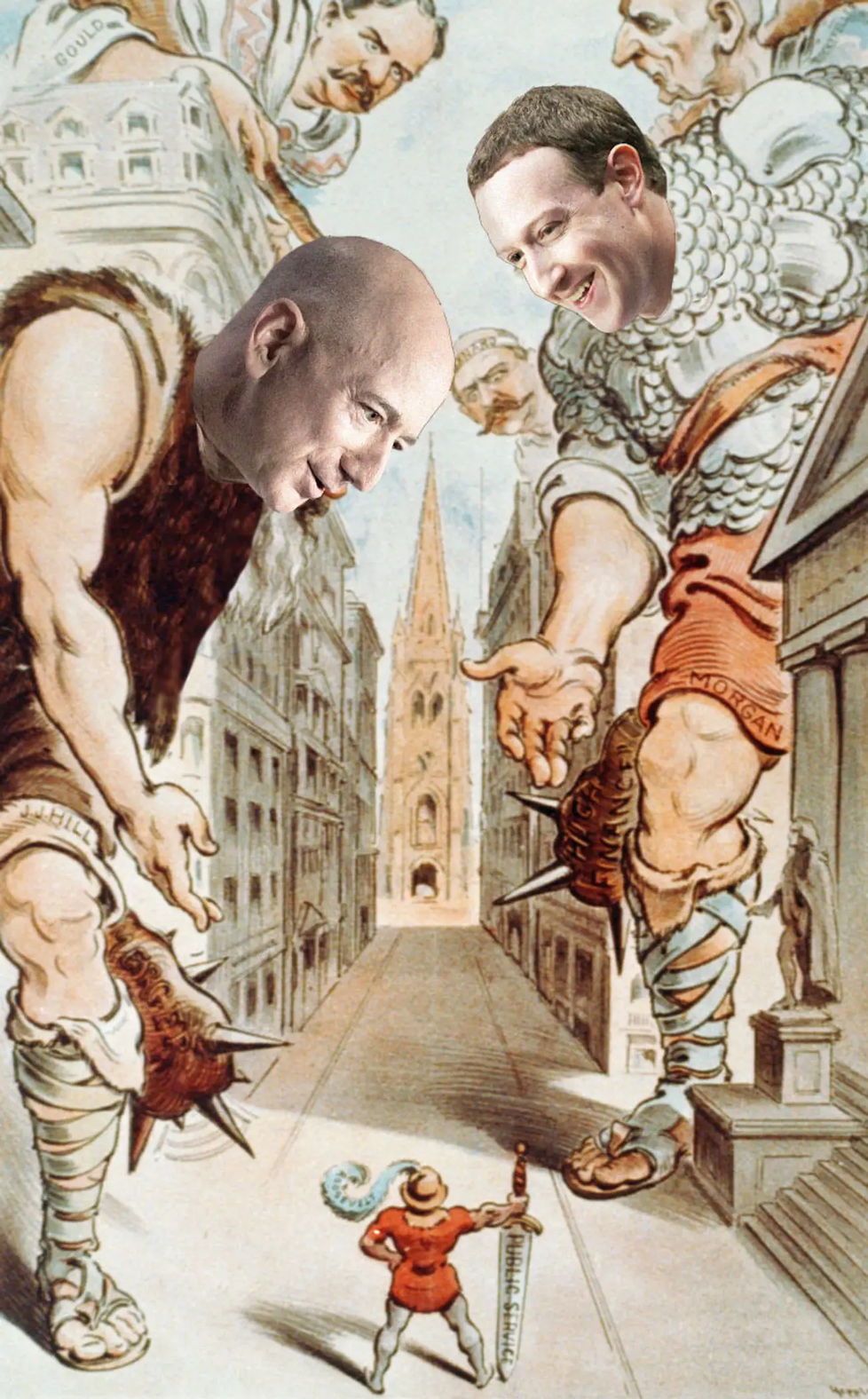
Examine the political cartoon closely. Circle any key details you notice about the cartoon. Make sure to look for the difference between the characters left and right!
Do you think "labor" is represented on the figure to the left or the right? How do you know this?
Do you think "capital" (money/wealth) is represented on the figure to the left or the right? How do you know this?
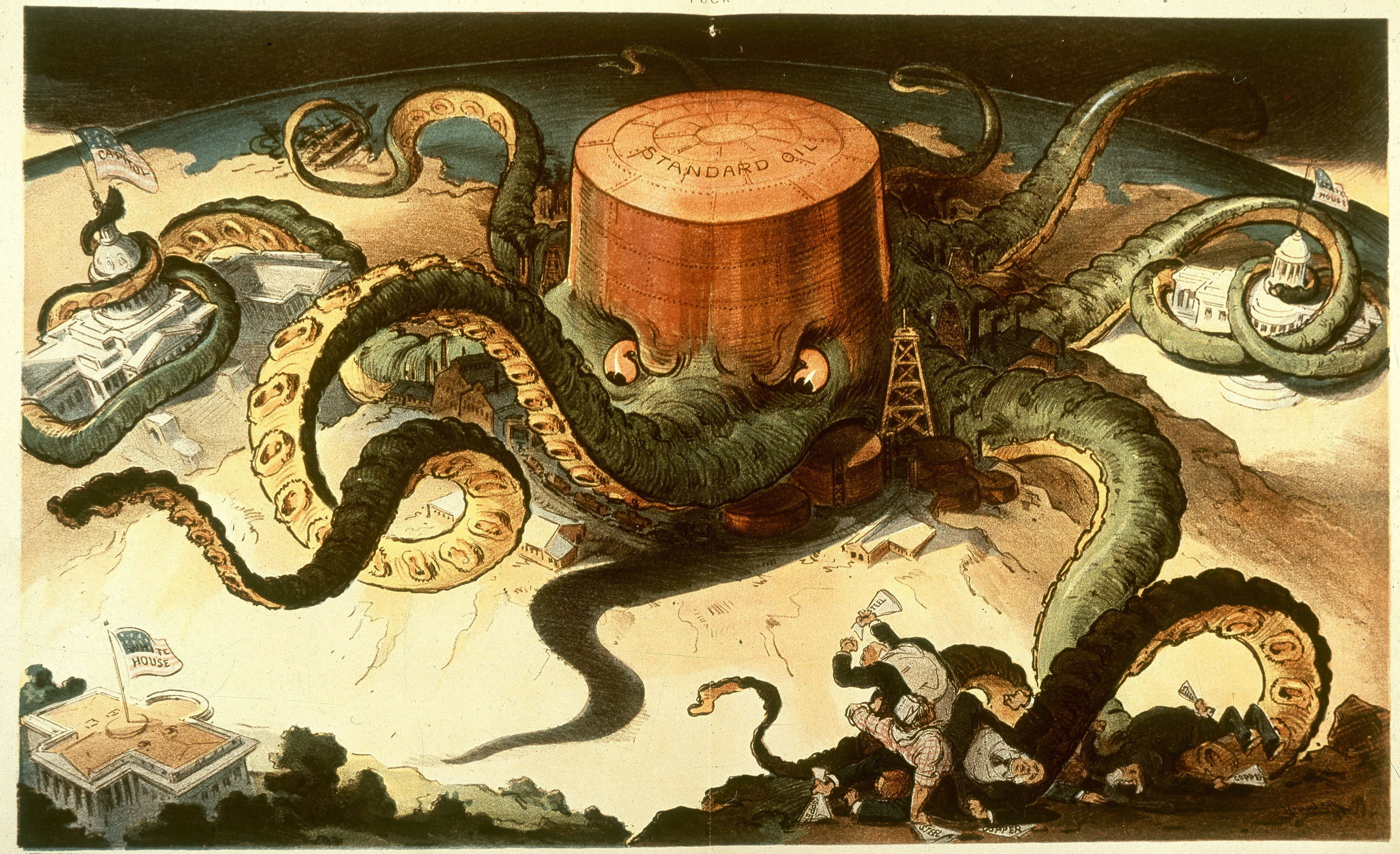
Examine the political cartoon closely. Circle any key details you notice about the cartoon.
What analogy does the political cartoonist make to prove its point? If you don't remember what an analogy is, look it up in our political cartoon packet!
What is the author's message about monopolies? How do you know?
Close Out: In at least one complete sentence, describe what the Gilded Age was in your own words.
Please rate how well you understood the content of today's lesson.
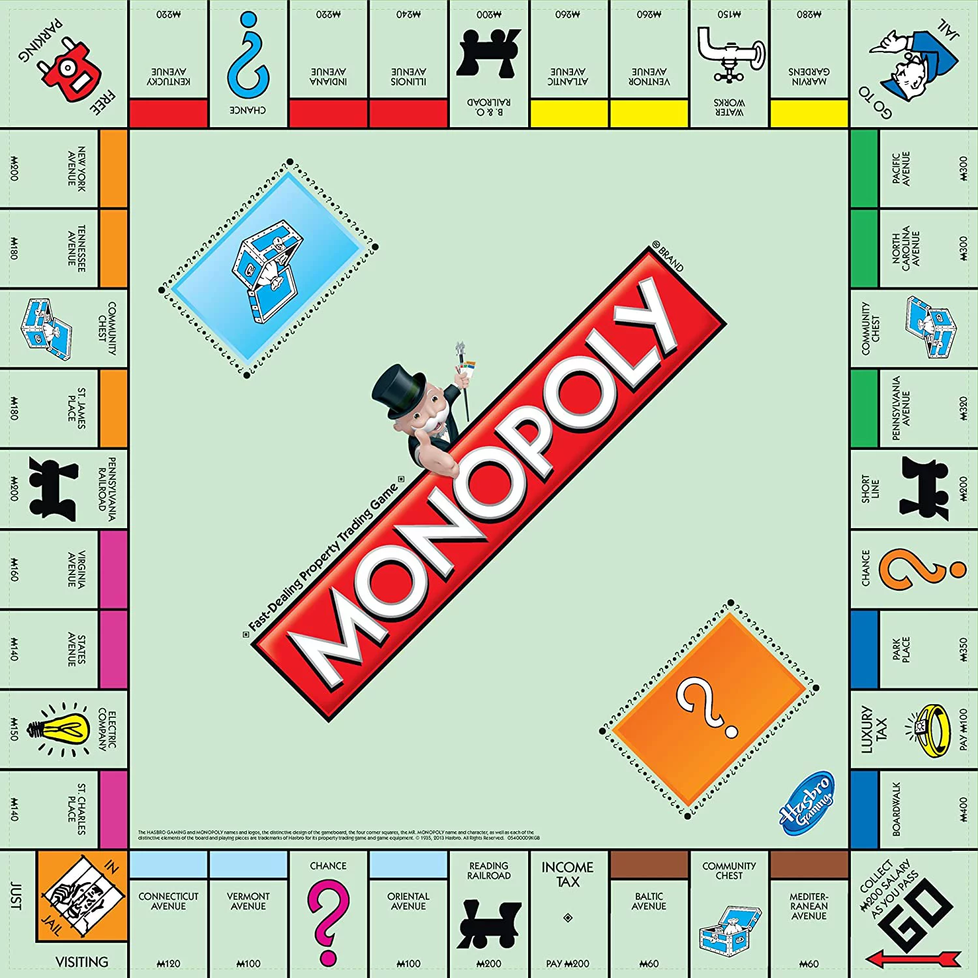
What is the goal in Monopoly? How does a person win the game? If you have never played, take a guess by looking at the board!
Do you know what a "monopoly" is? In your own words, describe what you think it means. If you are unsure, first write "unsure" and then look up the definition on Google. Once you have looked up the definition of monopoly, paraphrase it in your own words below.
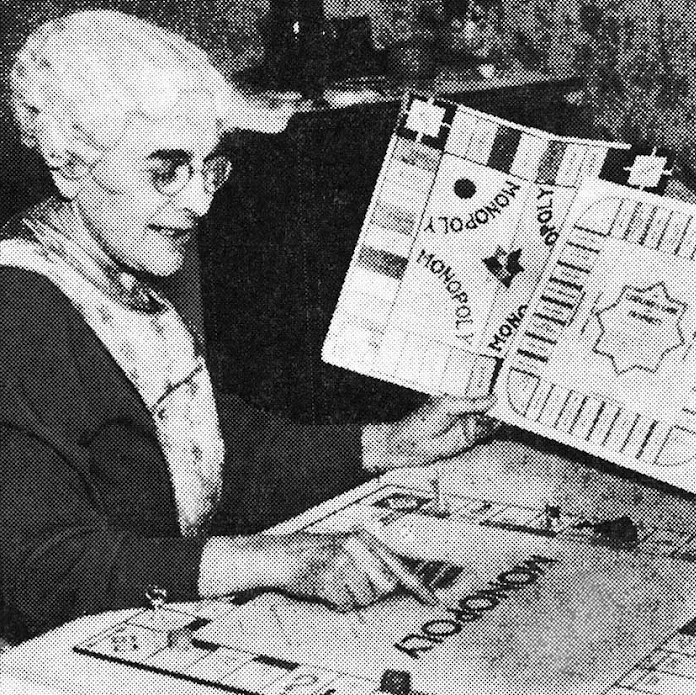
Fun fact: Monopoly was actually invented during the Gilded Age by a woman named Elizabeth Magie. In 1903, she invented a game called The Landlord’s Game (later changed to Monopoly.) Her goal was to teach people about the harmful effects of monopolies and the dangers of companies that become too powerful.
Although she invented the game, she did not get credit for its design. Check out more of the history of Monopoly by watching the video below!
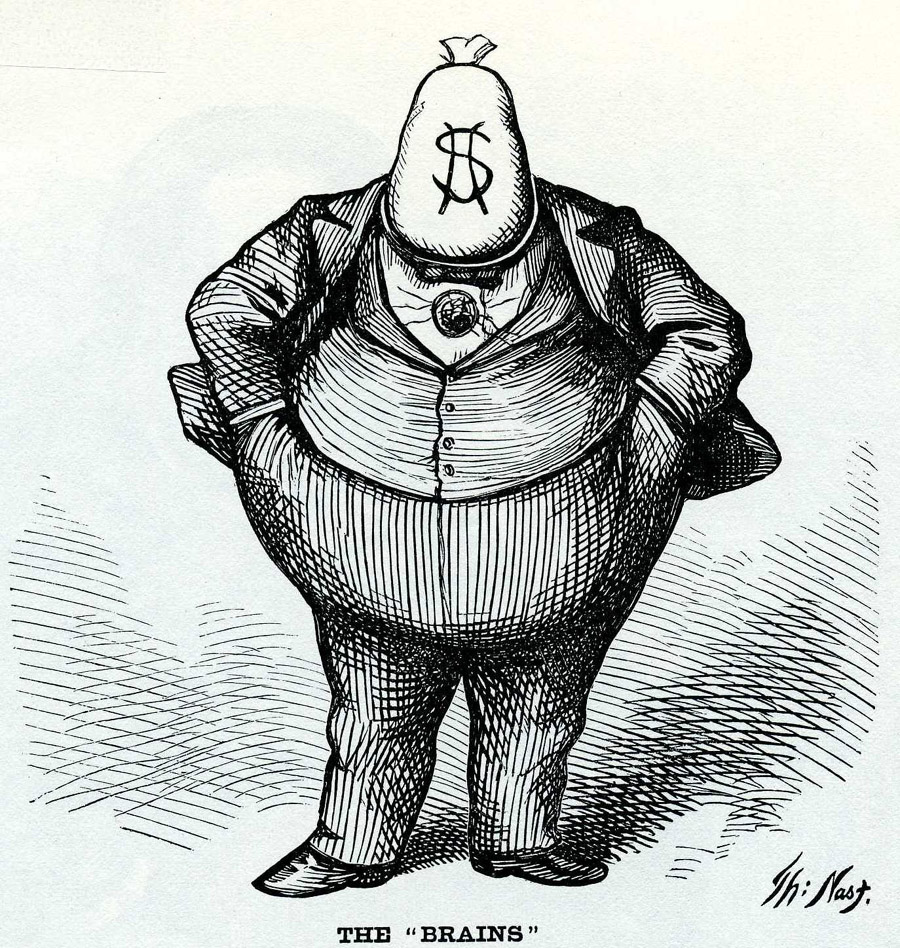
What is the irony of this image? If you don't remember what irony is, look it up in your political cartoons packet!
What is the artist's message about Robber Barons? How do you know?