Complete the following questions about Occupational Disease - some of the slides have been removed. Feel free to consult the full slideshow in Classroom AND/OR the textbook if needed.
Occupational disease can develop hours, weeks, months, or years after exposure.
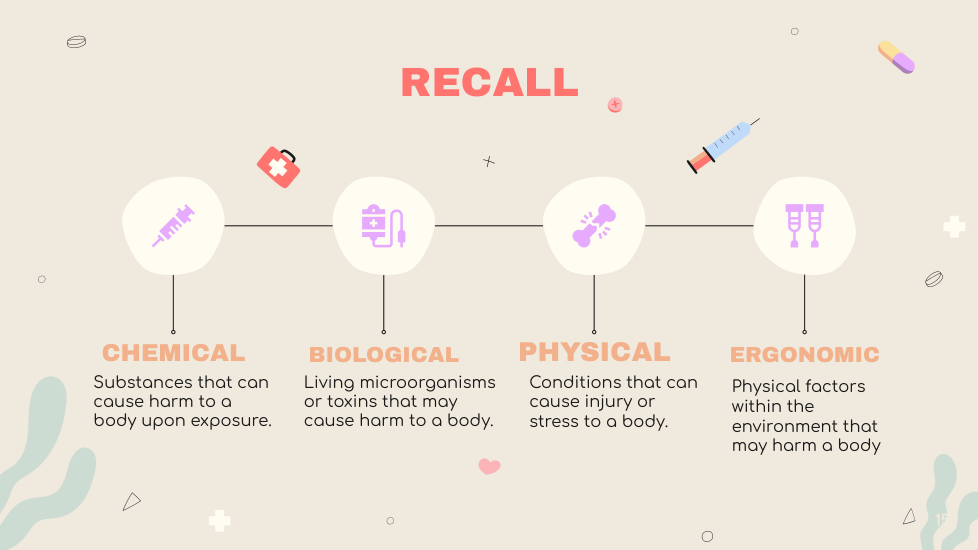
Each occupational hazard will belong to one of the four categories (see slide)
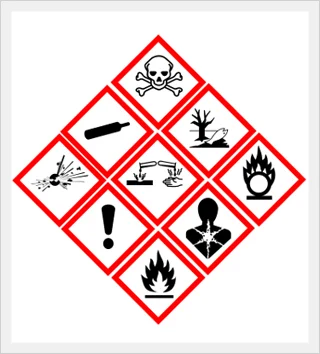
What is an example of a (workplace) chemical hazard
UV light
Diesel
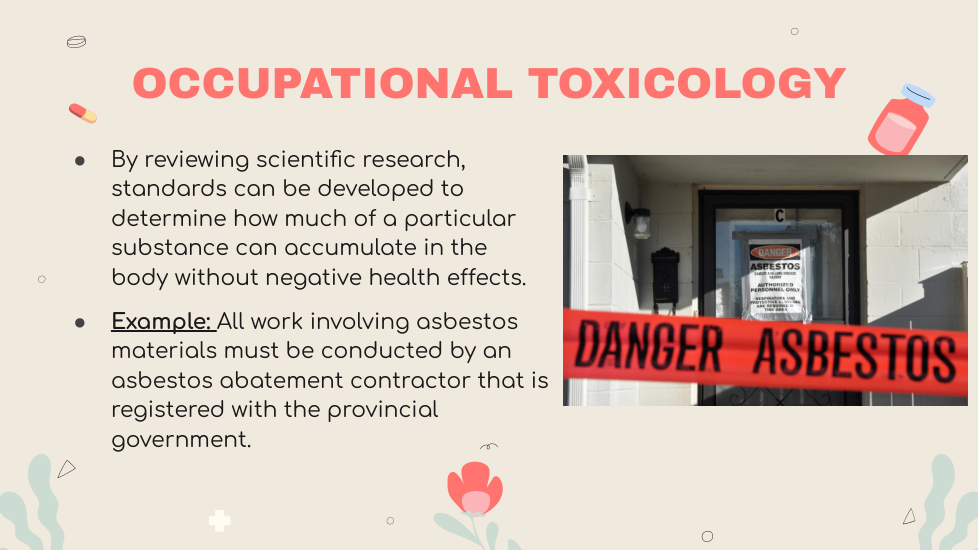
Asbestos
Disinfectants
Radiation
Covid-19
Chemical Hazard
Non-Chemical Hazard
Match the type/form of chemical hazard to its definition.
| Draggable item | arrow_right_alt | Corresponding Item |
|---|---|---|
Aerosols | arrow_right_alt | Substance in the form of finely divided solid particles of material |
Smokes | arrow_right_alt | Liquid particles suspended in air |
Dust/Fibres | arrow_right_alt | Particles formed when material condenses in cooler air |
Fumes | arrow_right_alt | Gas from a normally solid or liquid material that has evaporated |
Vapors | arrow_right_alt | Solid or liquid particles resulting from incomplete combustion |
What are 3 physical hazards would you may encounter working on a highway construction/repair crew?
What is an example of a biological (bio) hazard?
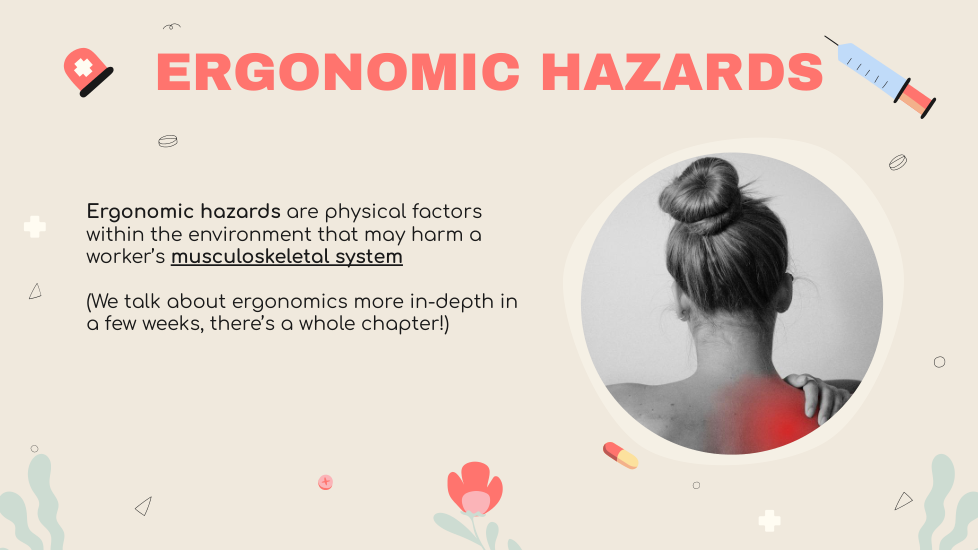
All hazards come from factors or hazards.
Physical 💪
Ergonomic 🦾
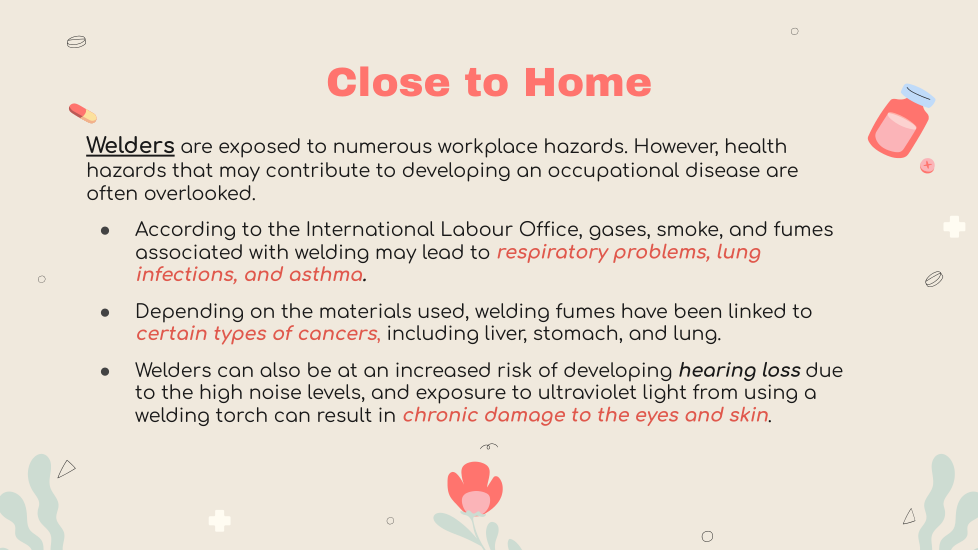
What item(s) of PPE could a welder wear that would protect their respiratory system?
What item(s) of PPE might they wear to protect their eyes and skin from ultraviolet light?

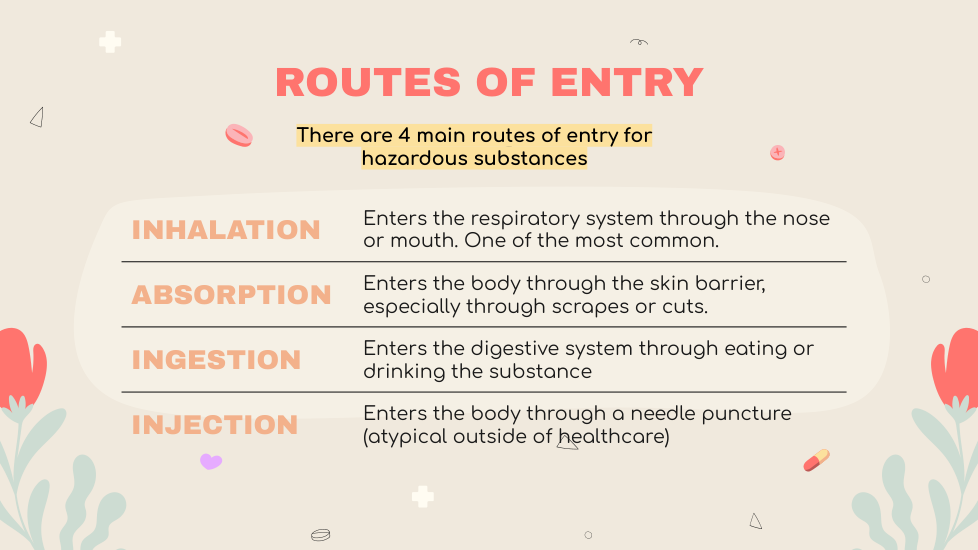
What are the 4 main routes that through which a toxin can enter the system?
The lower-respiratory tract is the first area affected by an inhaled hazard.
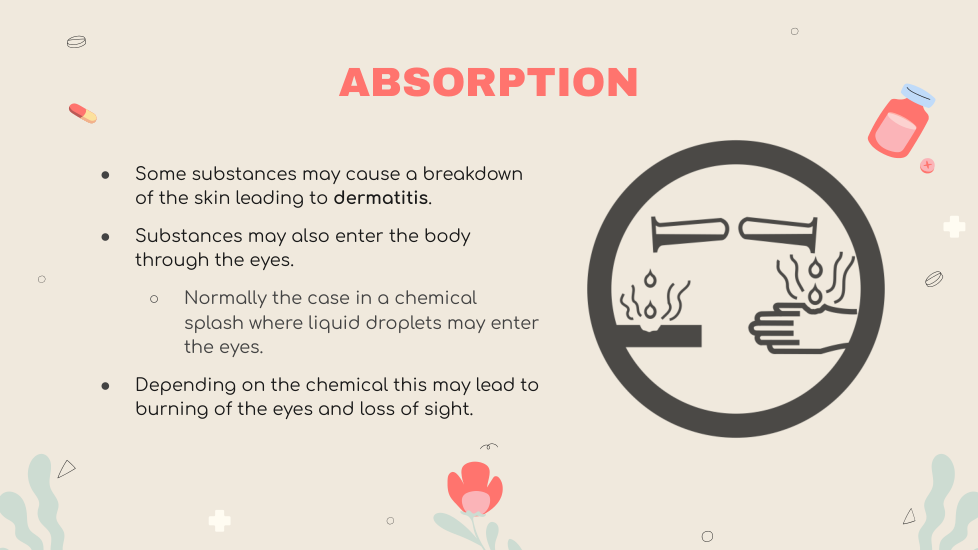
Why do you think toxins can be absorbed more easily in areas like the eyes, nose, and mouth?
What type(s) of PPE can we wear to prevent absorbing hazardous materials?
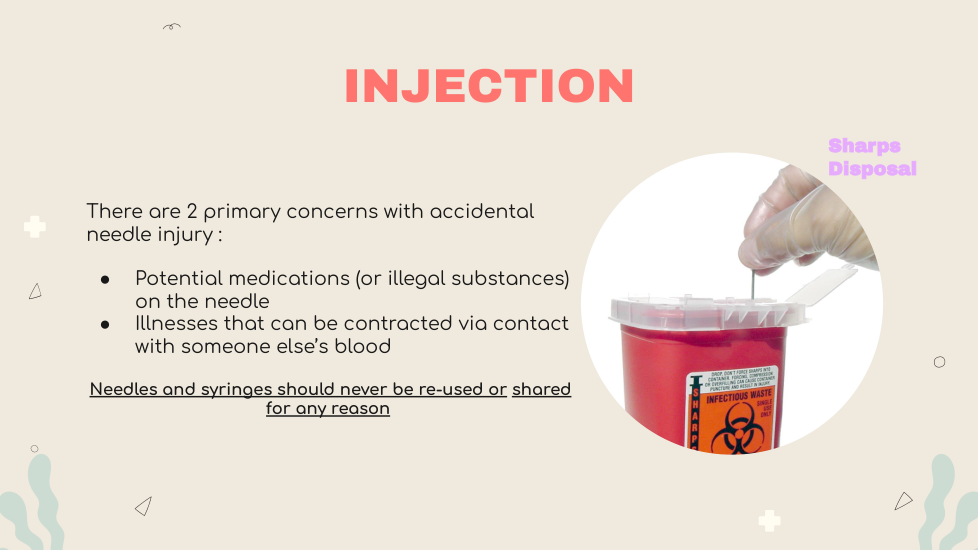
Outside of healthcare you do not need to be concerned about needle injuries.