Log in
Sign up for FREE
arrow_back
Library
HW: Macromolecules and Digestion Reading
By Katelyn Owens
star
star
star
star
star
Share
share
Last updated over 1 year ago
14 questions
Add this activity
zoom_in
1
1
1
1
Question 1
1.
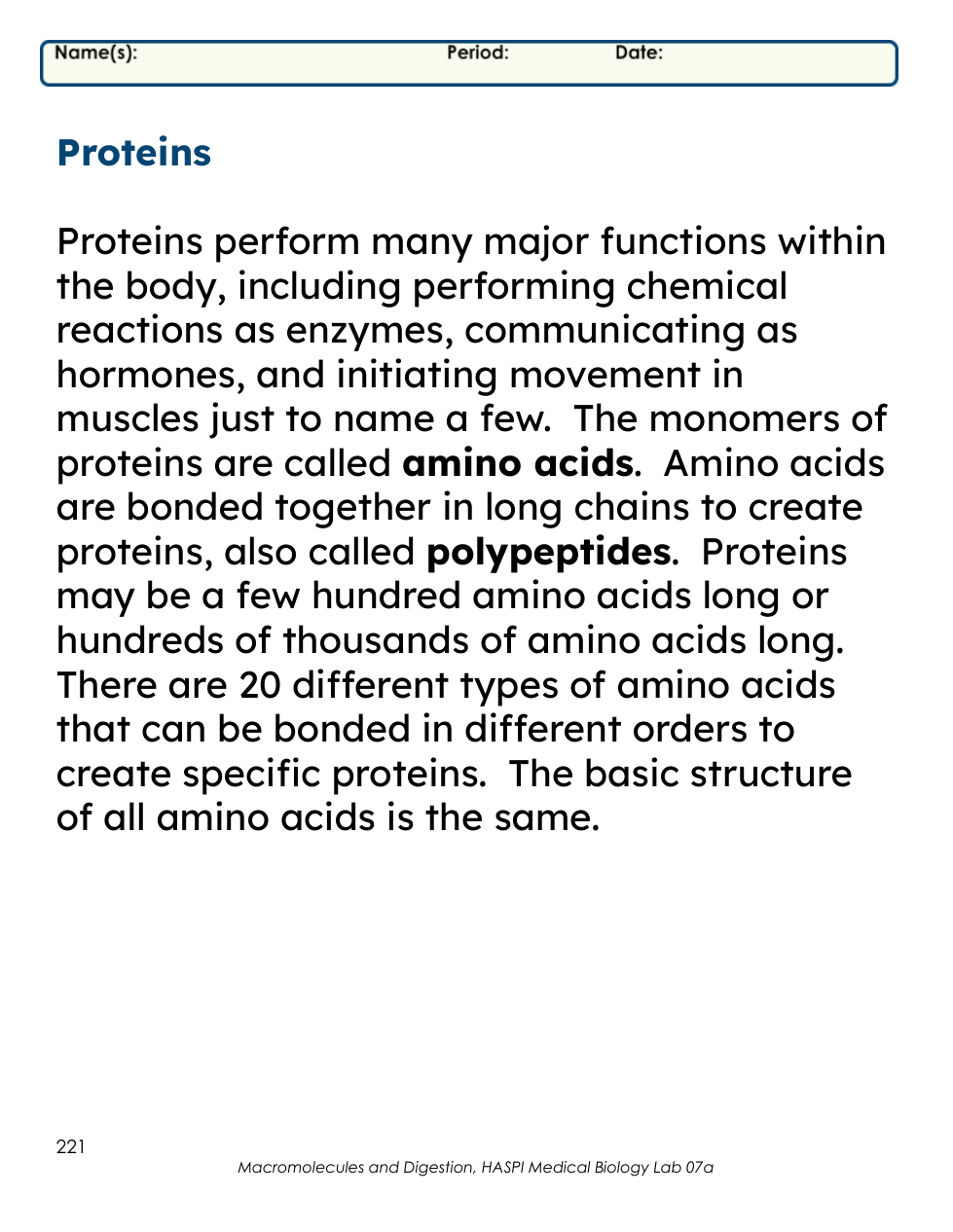
Click on two major functions of proteins
A. perform chemical reactions as enzymes
B. make up the cell membrane
C. communicate as hormones
D. long term energy storage
Question 2
2.
The monomers of proteins are called
A. monosaccharides
B. fatty acids
C. nucleotides
D. amino acids
Question 3
3.
Amino acids are bonded together to created proteins also known as
A. triglycerides
B. polypeptides
C. sucrose
D. disaccharides
Question 4
4.
How many different types of amino acids are there?
A. 6
B. 100
C. 64
D. 20
zoom_in
1
1
1
Question 7
7.
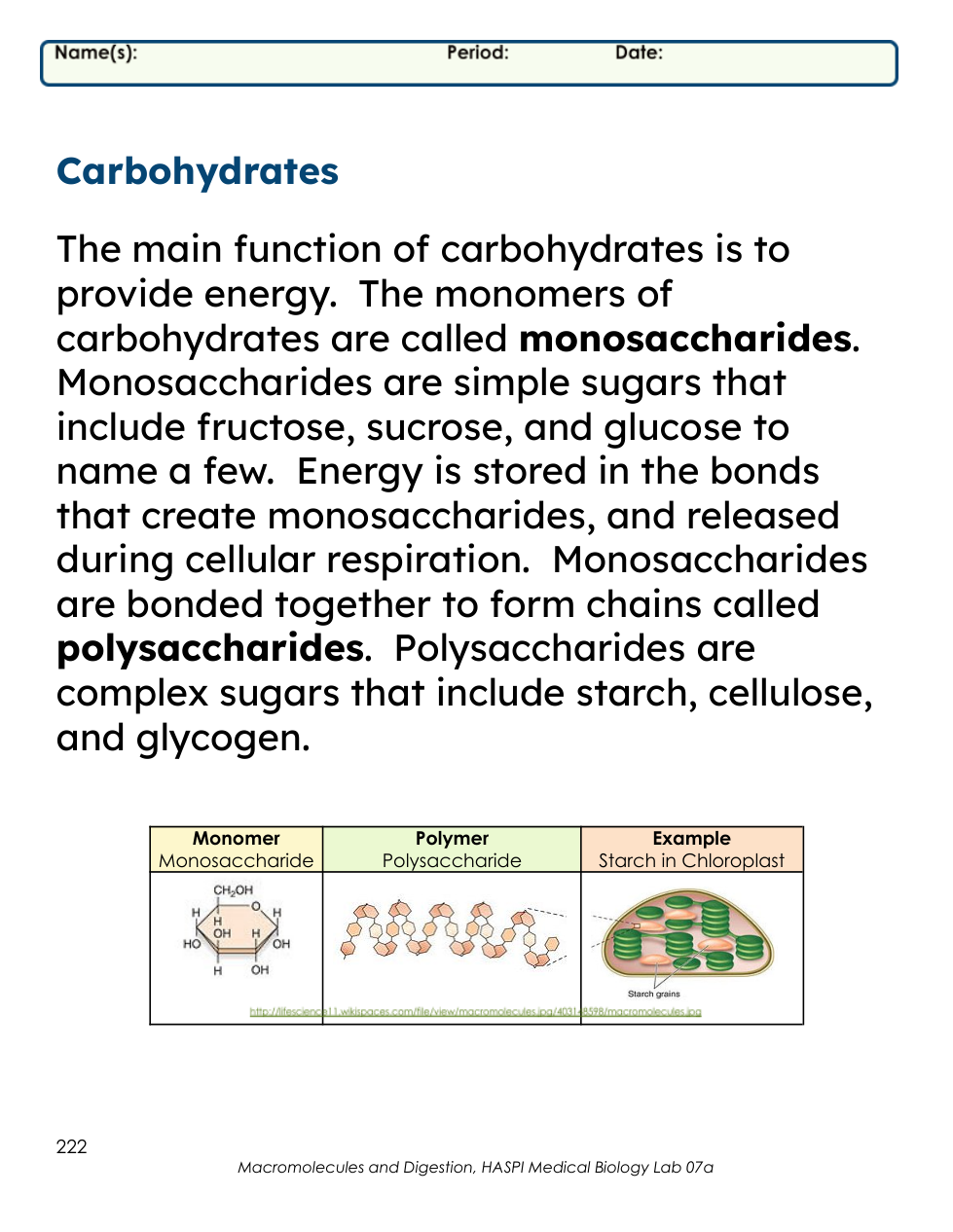
Monosaccharides are __________ that include fructose, sucrose, and glucose
1
Question 8
8.
Energy is stored in the bonds that create monosaccharides and is released during __________
1
zoom_in
1
Question 10
10.
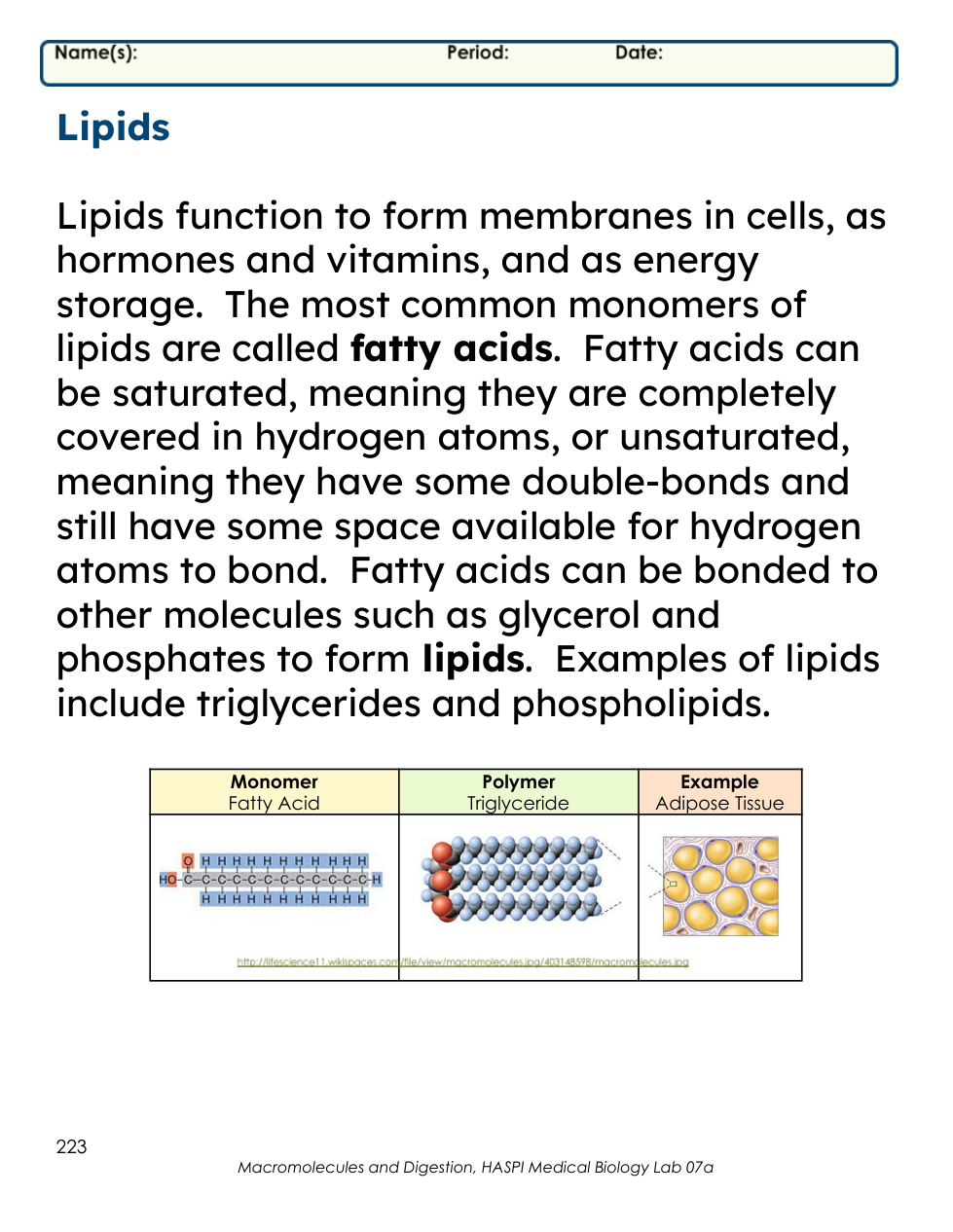
Lipids form membranes in cells and store energy
True
False
1
1
zoom_in
1
Question 13
13.
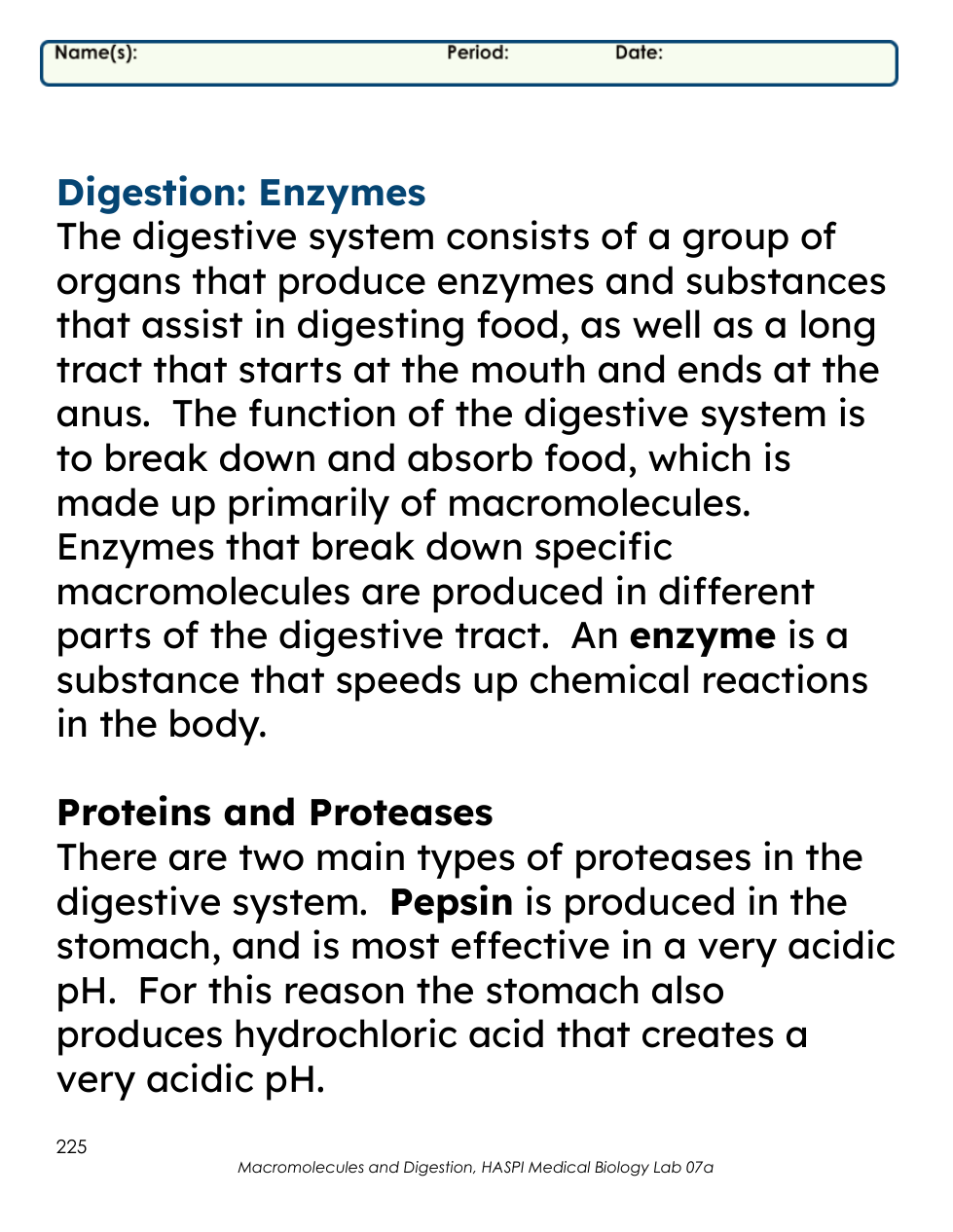
An __________ is a substance that speeds up chemical reactions in the body
1
Question 5
5.
The main function of carbohydrates is to
A. provide structure
B. store genetic information
C. create the plasma membrane
D. provide energy
Question 6
6.
What is the monomer of carbohdyrates?
A. amino acids
B. fatty acids
C. nucleotides
D. monosaccharides
Question 9
9.
Monosaccharides are bonded together to create large chains called
A. polysaccharides
B. polypeptides
C. triglycerides
D. DNA
Question 11
11.
The monomer of lipids are
A. amino acids
B. fatty acids
C. monosaccharides
D. nucleotides
Question 12
12.
Examples of lipids are triglycerides and phospholipids
True
False
Question 14
14.
What enzyme is produced in the stomach and is most effective in a very acidic pH?
A. amylase
B. helicase
C. pepsin
D. lipase