Ɛhia
1
What part of the mRNA nucleotide contains the information to make a protein?
What part of the mRNA nucleotide contains the information to make a protein?
What part of the mRNA nucleotide contains the information to make a protein?
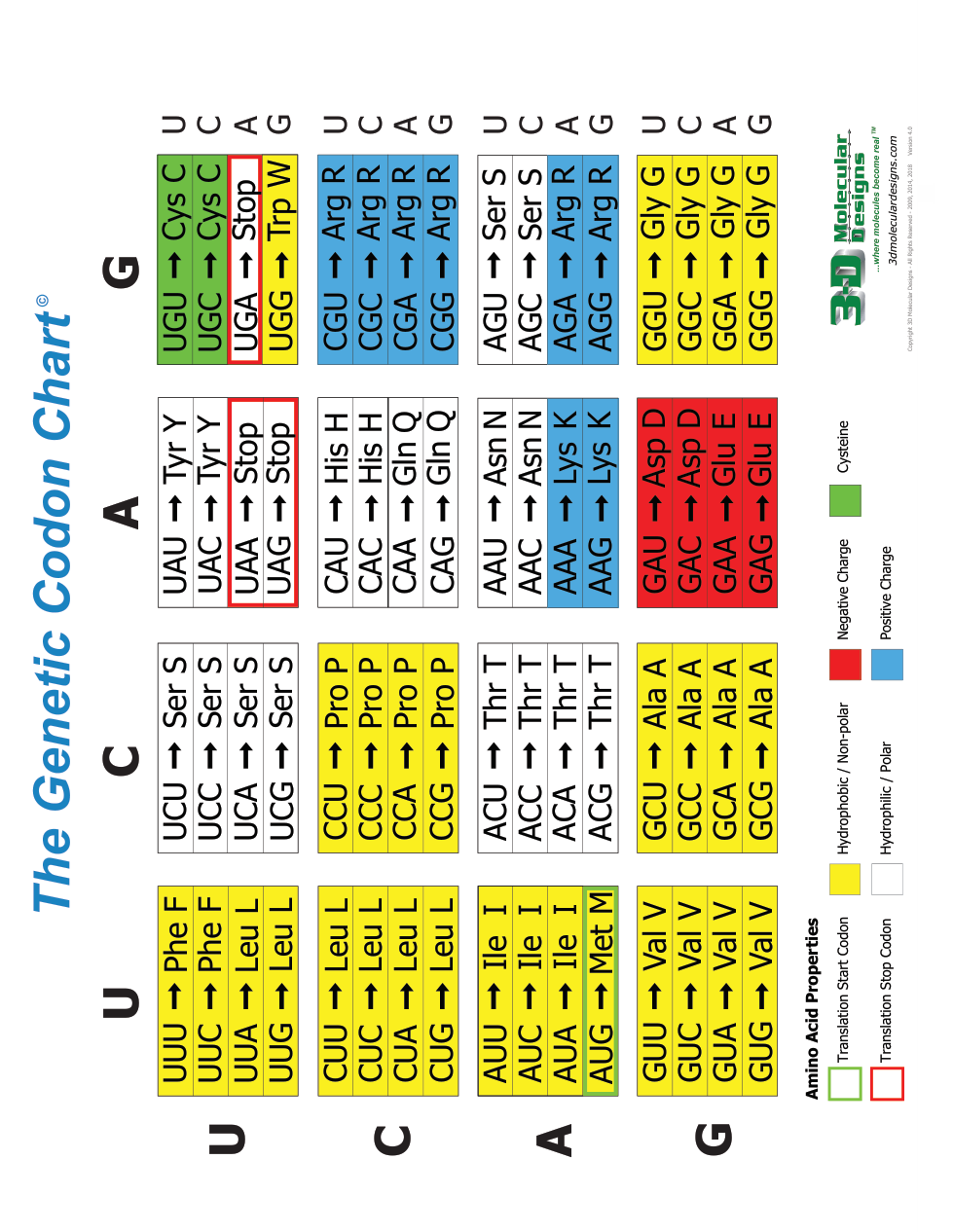
Identify the three-letter abbreviation for each amino acid in the table: (note - I skipped codon 9 in this question)
| Draggable item | arrow_right_alt | Corresponding Item |
|---|---|---|
UAG | arrow_right_alt | met |
AUA | arrow_right_alt | cys |
CAU | arrow_right_alt | glu |
UGG | arrow_right_alt | Ile |
AGA | arrow_right_alt | his |
GAG | arrow_right_alt | trp |
AUG | arrow_right_alt | pro |
CCA | arrow_right_alt | arg |
UGU | arrow_right_alt | stop |
| Draggable item | arrow_right_alt | Corresponding Item |
|---|---|---|
| arrow_right_alt | ||
| arrow_right_alt | ||
| arrow_right_alt |
Discuss the answer to this question with your partners. We discussed this question and...
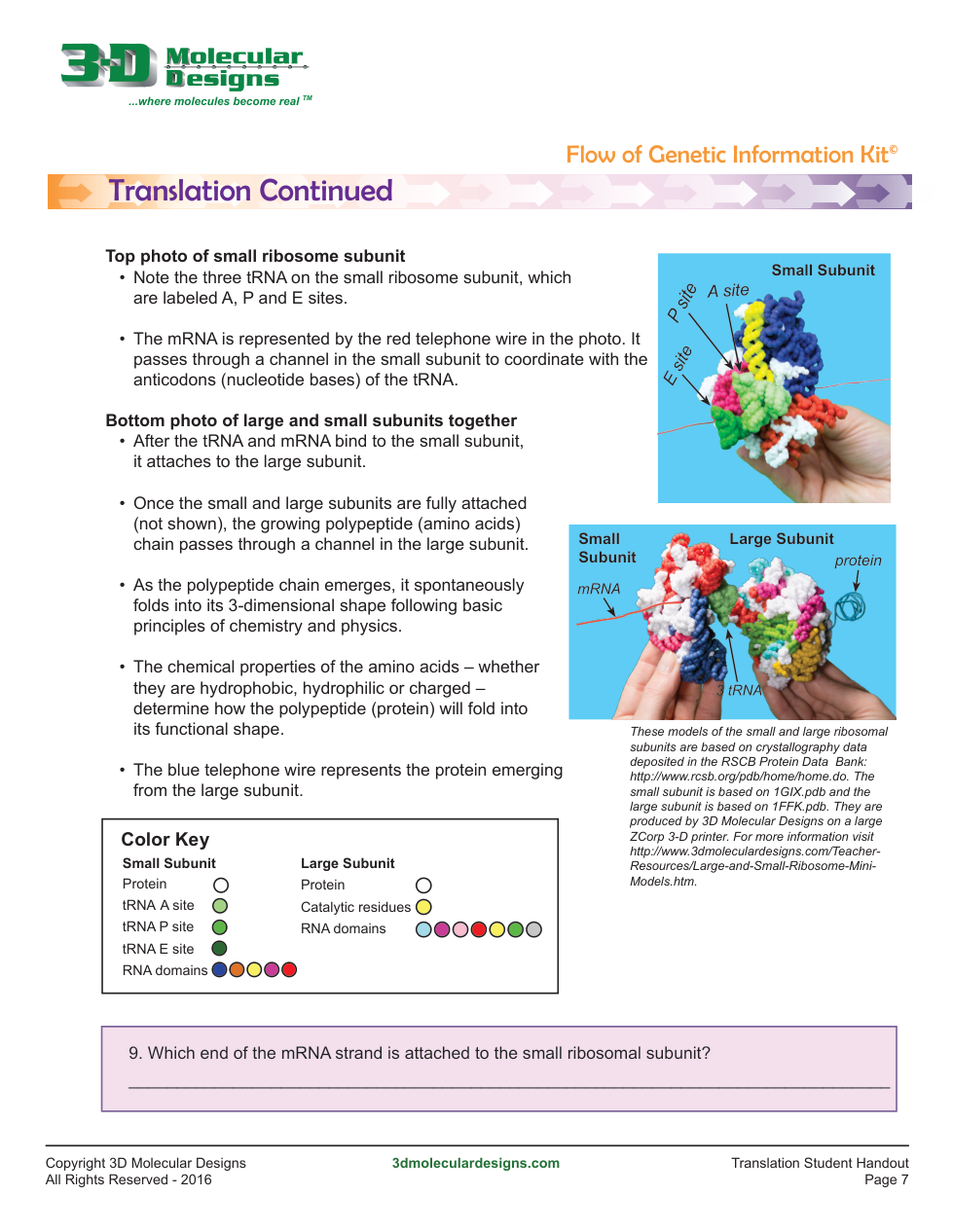
Which end of the mRNA strand attaches to the small ribosomal subunit?
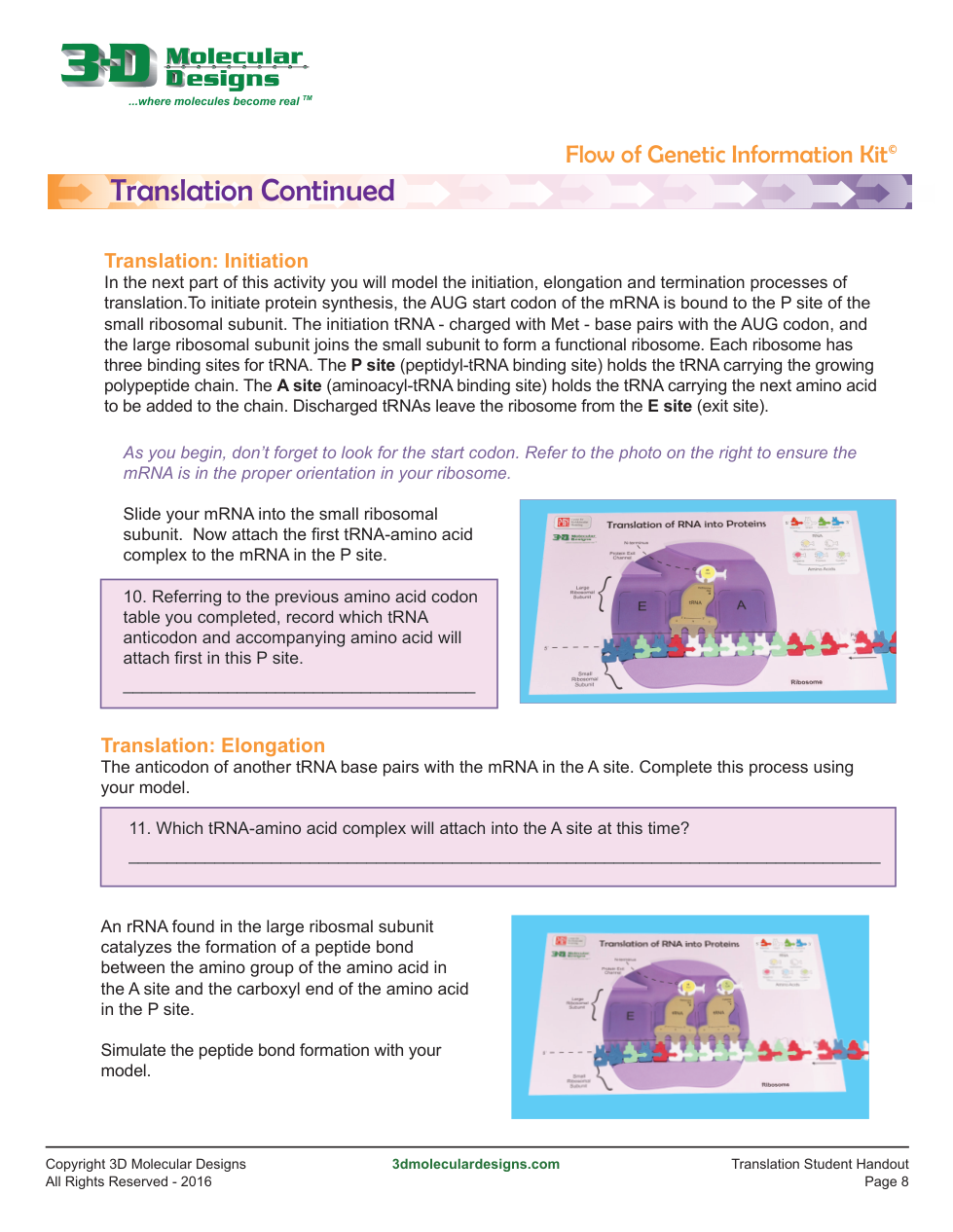
Referring to the previous amino acid codon table you completed (see Q7), record which tRNA anticodon will attach first in this P site.
At this rate, how many seconds would it take to make a protein such as actin which is 375 amino acids long?
Discuss the entire process of transcription and translation with your lab group. Record your answers in your notebook. Which part would your group like to present to the class?
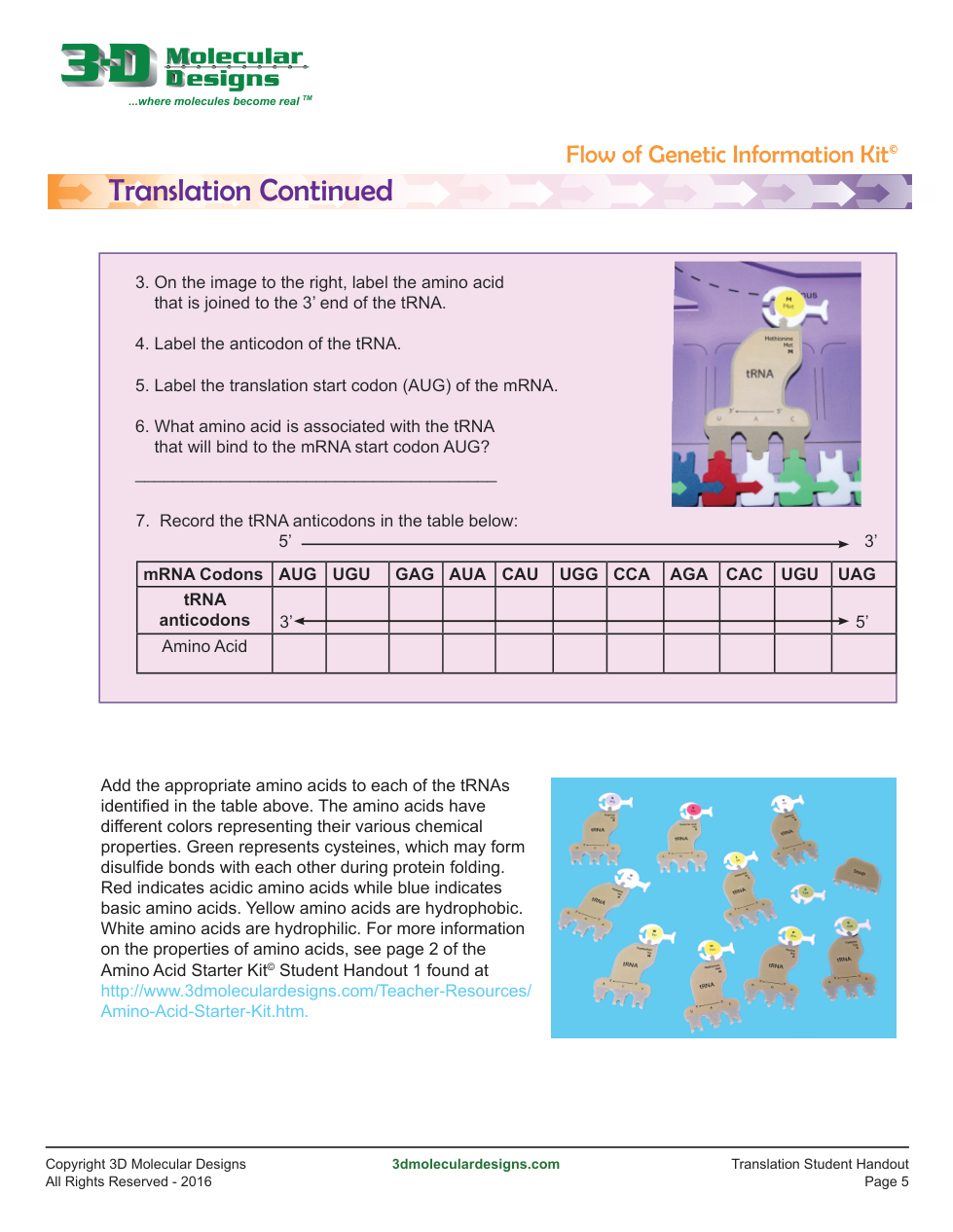
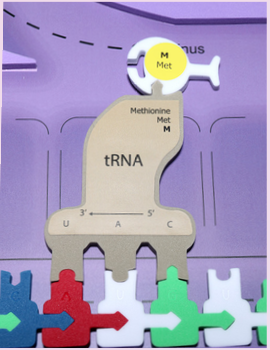
Identify the amino acid that is joined to the 3’ end of the tRNA
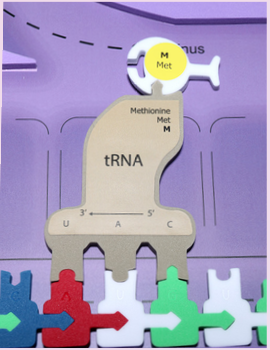
Identify the anticodon of the tRNA.
Label the start codon of the mRNA
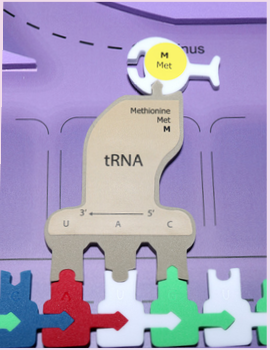
What amino acid is associated with the tRNA that will bind to the mRNA start codon AUG?
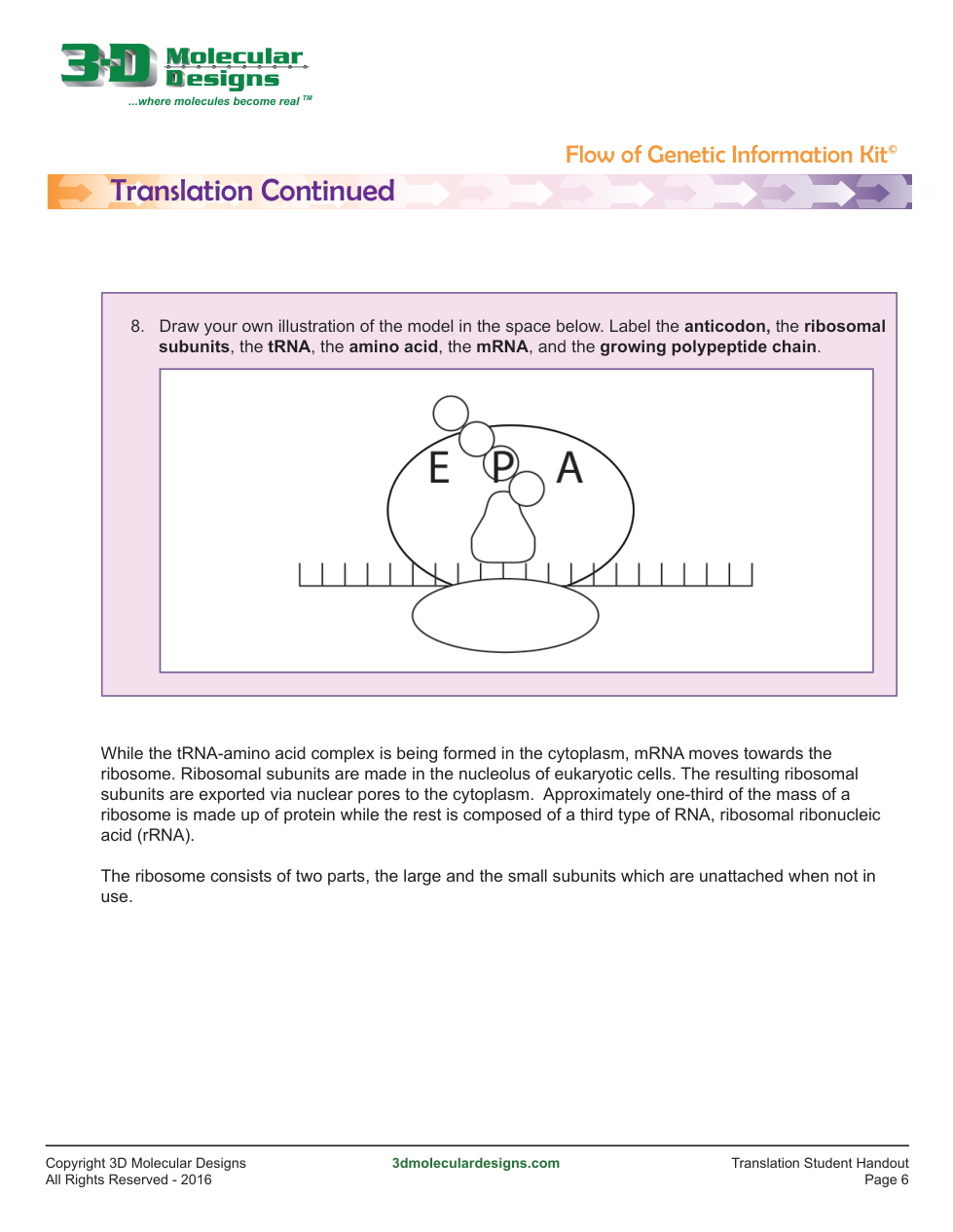
Record the tRNA anticodons that are complementary to each of the mRNA codons
| Draggable item | arrow_right_alt | Corresponding Item |
|---|---|---|
CAU | arrow_right_alt | UAC |
CCA | arrow_right_alt | ACA |
UGU | arrow_right_alt | CUC |
UAG | arrow_right_alt | UAU |
AUA | arrow_right_alt | GUA |
CAC | arrow_right_alt | ACC |
AUG | arrow_right_alt | GGU |
GAG | arrow_right_alt | UCU |
AGA | arrow_right_alt | GUG |
UGG | arrow_right_alt | AUC |
Which tRNA-amino acid complex will attach into the A site at this time?
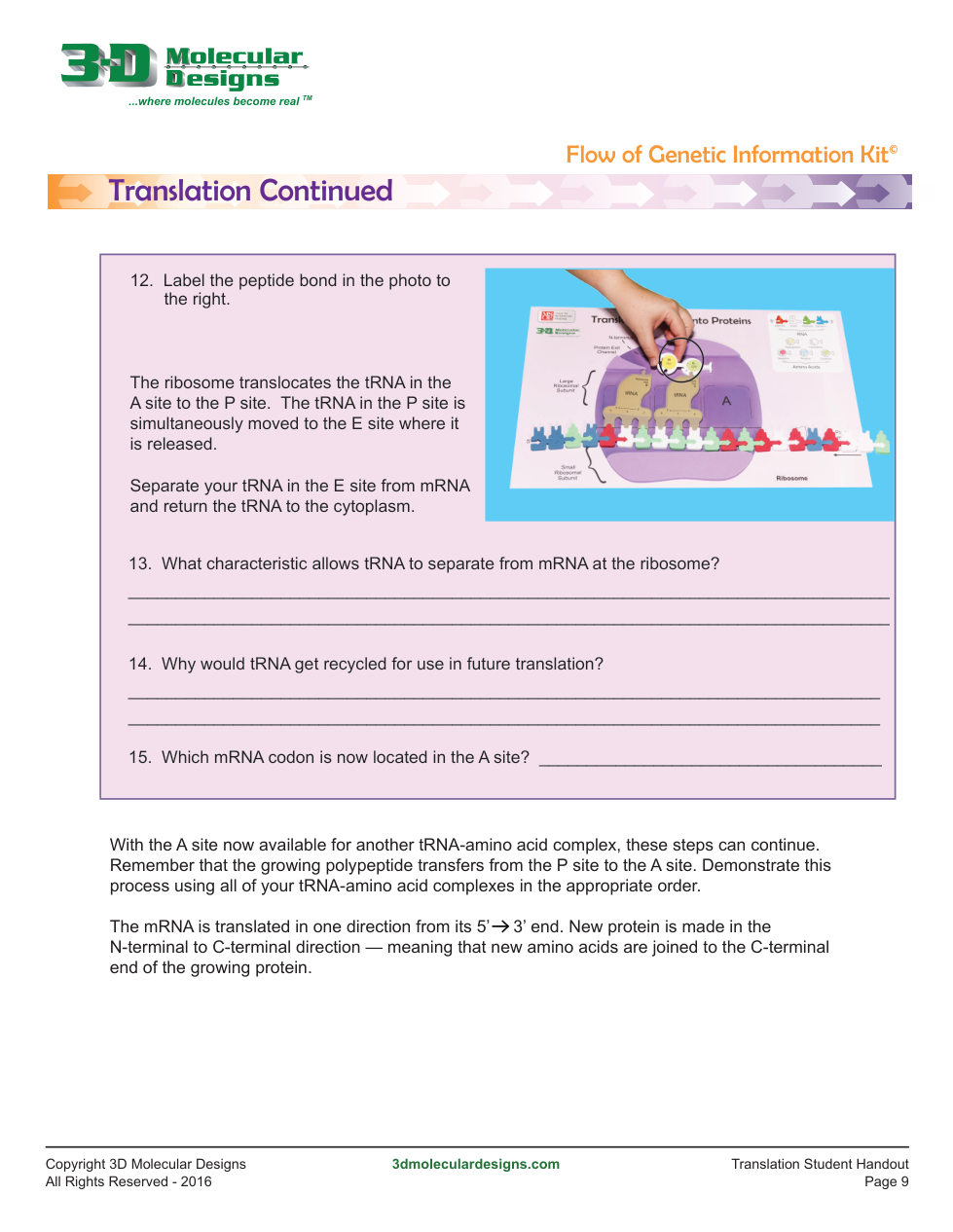
Identify the peptide bond in the photo to the right.
The tRNA is easily separated from mRNA because they are held together by
Discuss the benefits of recycling the tRNA with your partners.
Which mRNA codon is now located in the A site?
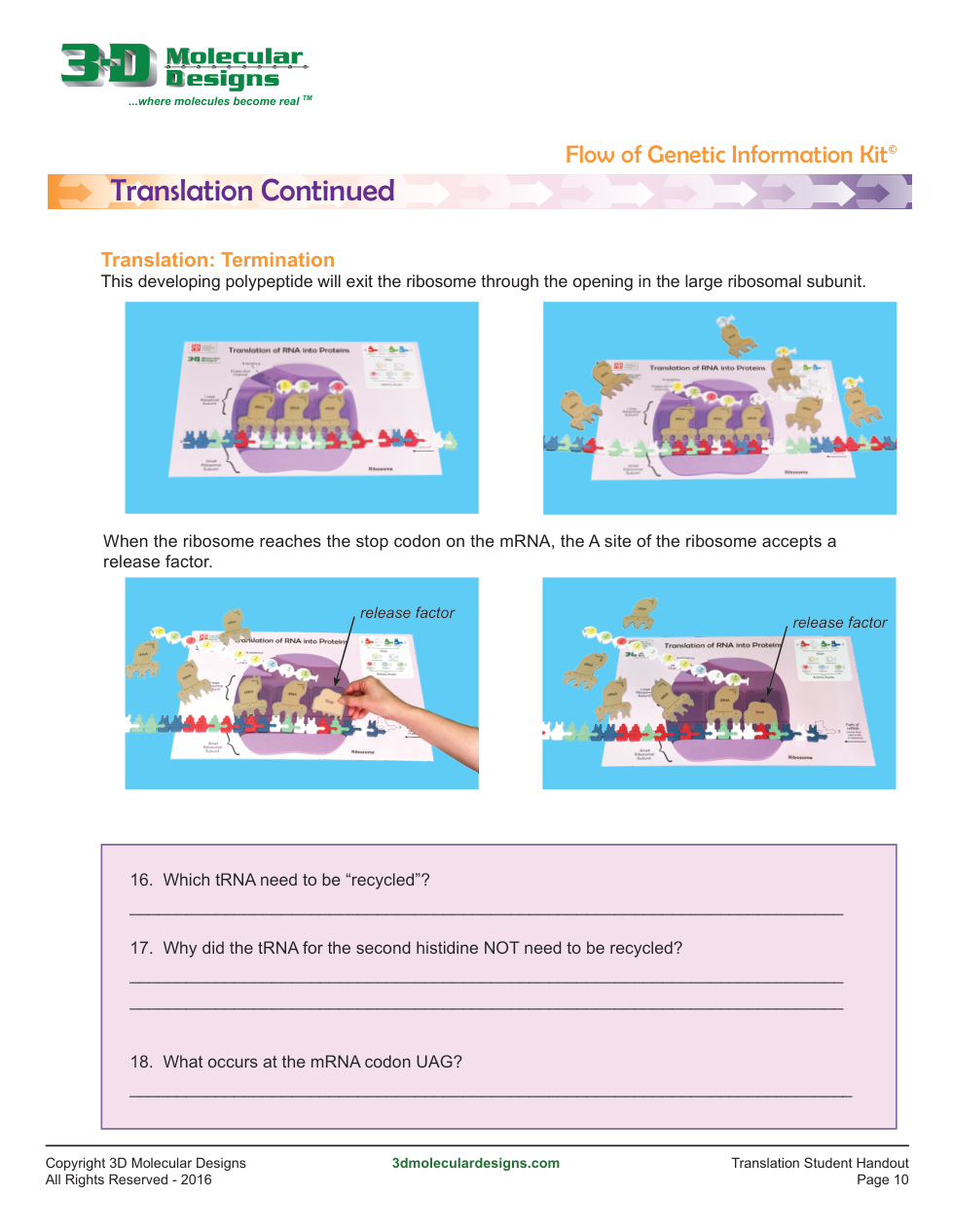
Which tRNA need to be “recycled”? (you used the same tRNA twice when building your polypeptide)
Why did the tRNA for the second histidine NOT need to be recycled?
What occurs at the mRNA codon UAG?
Using The Genetic Codon Chart© included in the kit or the one at the end of the handout, identify the various stop codons.
What is the order of amino acids in your polypeptide? Start with Met at the top.
met
ile
his
arg
glu
cys
trp
his
pro
cys
Compare the amino acid sequence of the polypeptide you created to the sequence predicted in question 7. How do your sequences compare?
Discuss what happens to the polypeptide as the mRNA strand is being translated with your partners.
What will happen next to the polypeptide? Select all correct answers
As you have followed this process of translation, what steps are now left to be completed? What will happen to the various molecules at the end of this process?
Discuss this question with your partners: How long did this process of translation take for you and your lab group? Do you think the cell could operate at this rate?