Log in
Sign up for FREE
arrow_back
Library
4th Grade Reading Review
By Rachel Andrews
star
star
star
star
star
Share
share
Last updated almost 3 years ago
40 questions
Add this activity
zoom_in
zoom_in
1
2
3
zoom_in
1
1
1
4
5
6
zoom_in
1
1
1
7
8
zoom_in
1
1
zoom_in
zoom_in
9
10
11
zoom_in
1
1
1
12
13
14
zoom_in
1
1
1
15
16
zoom_in
1
1
zoom_in
zoom_in
zoom_in
17
18
19
zoom_in
1
1
1
20
21
22
zoom_in
1
1
1
23
24
zoom_in
1
1
zoom_in
zoom_in
25
26
zoom_in
1
1
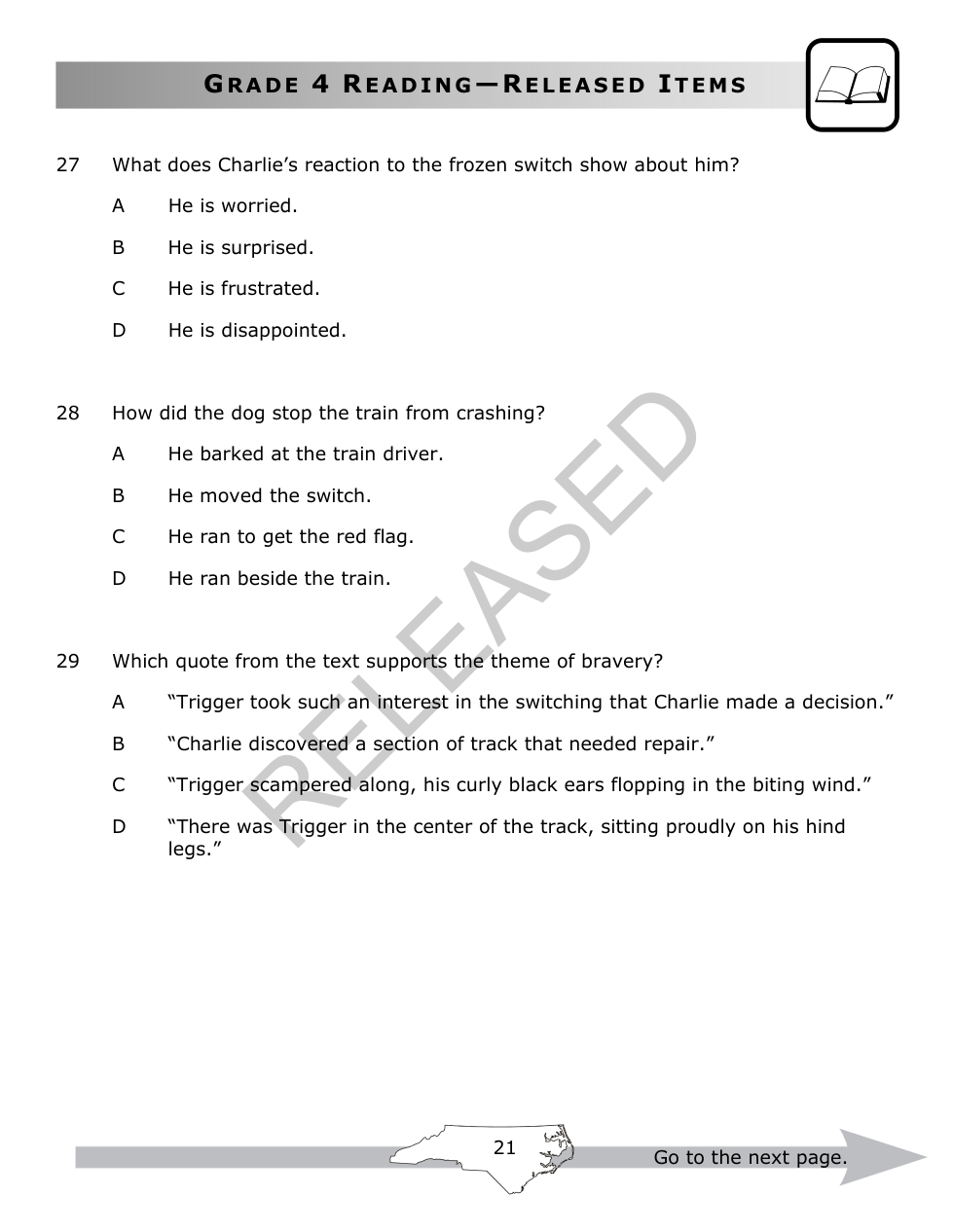
27
28
29
zoom_in
1
1
1
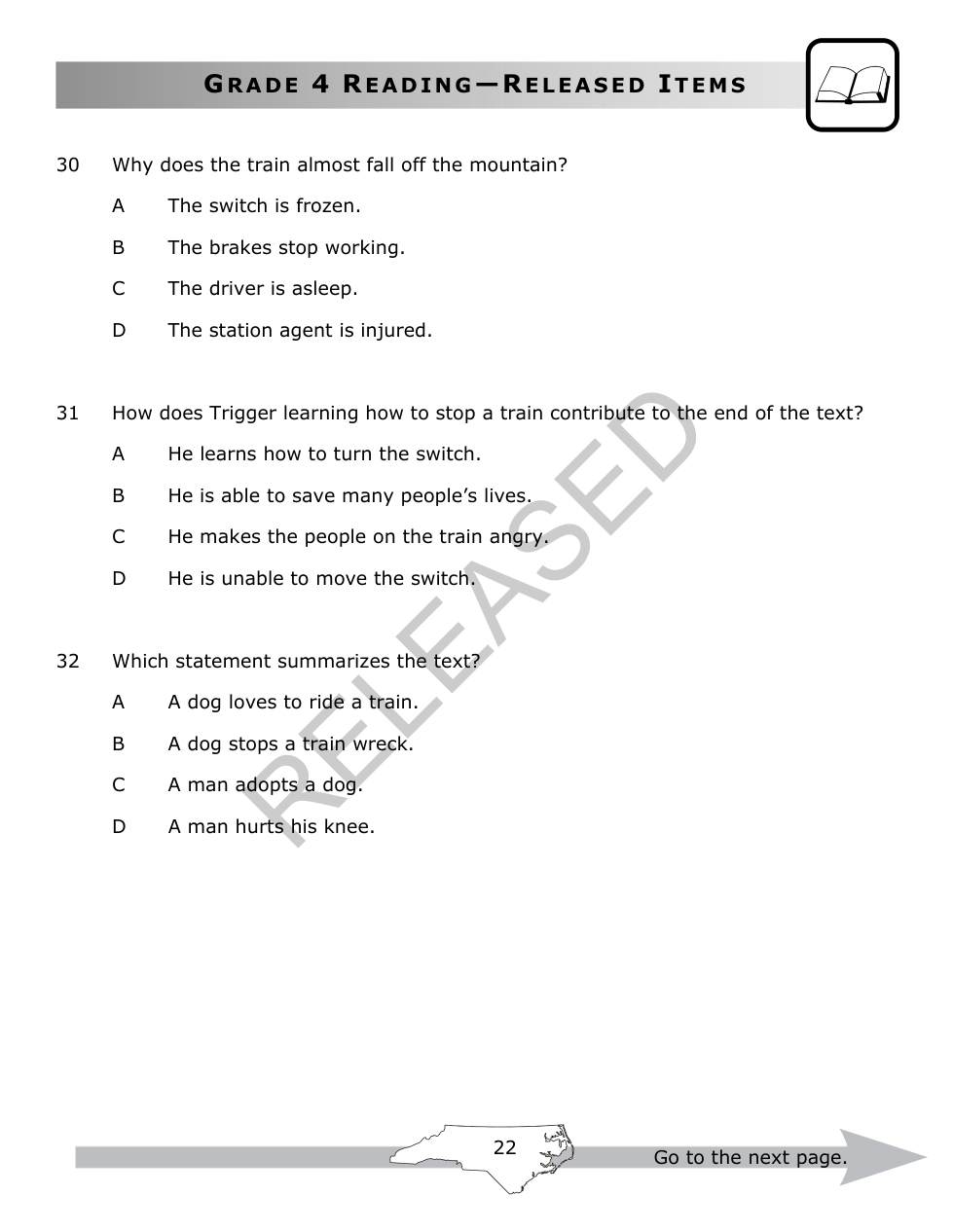
30
31
32
zoom_in
1
1
1
zoom_in
zoom_in
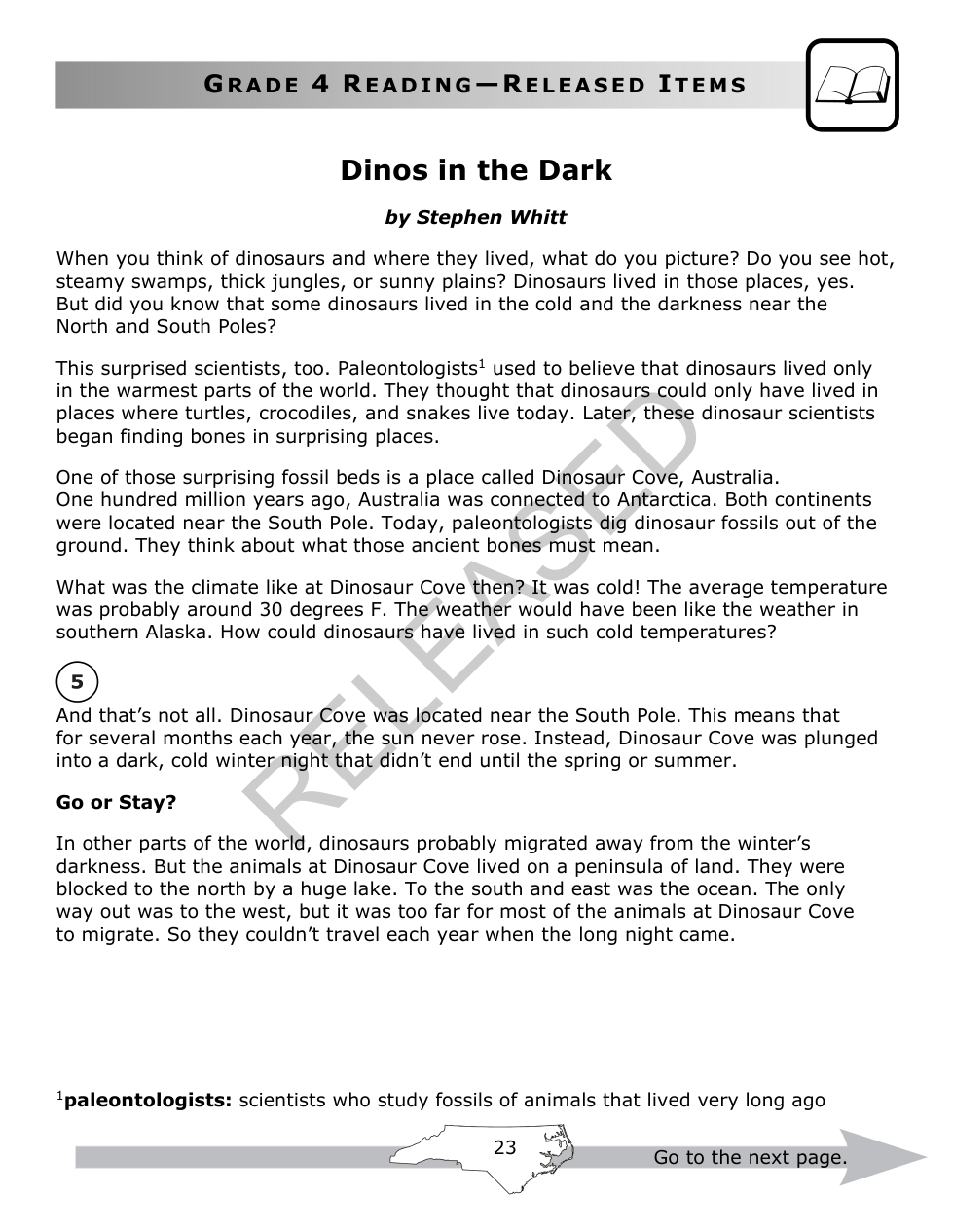
33
34
35
zoom_in
1
1
1
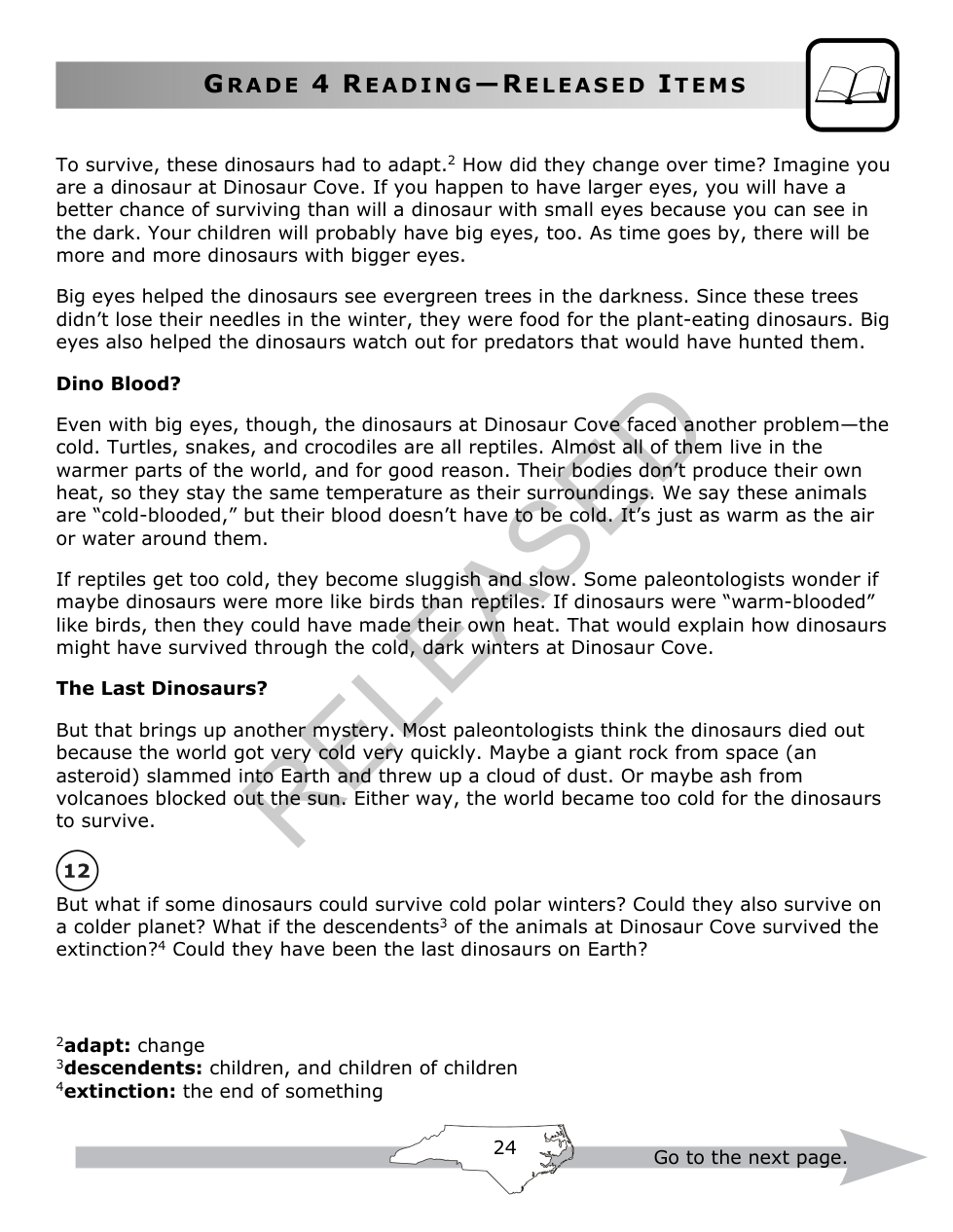
36
37
38
zoom_in
1
1
1
39
40
zoom_in
1
1
Question 1
1.
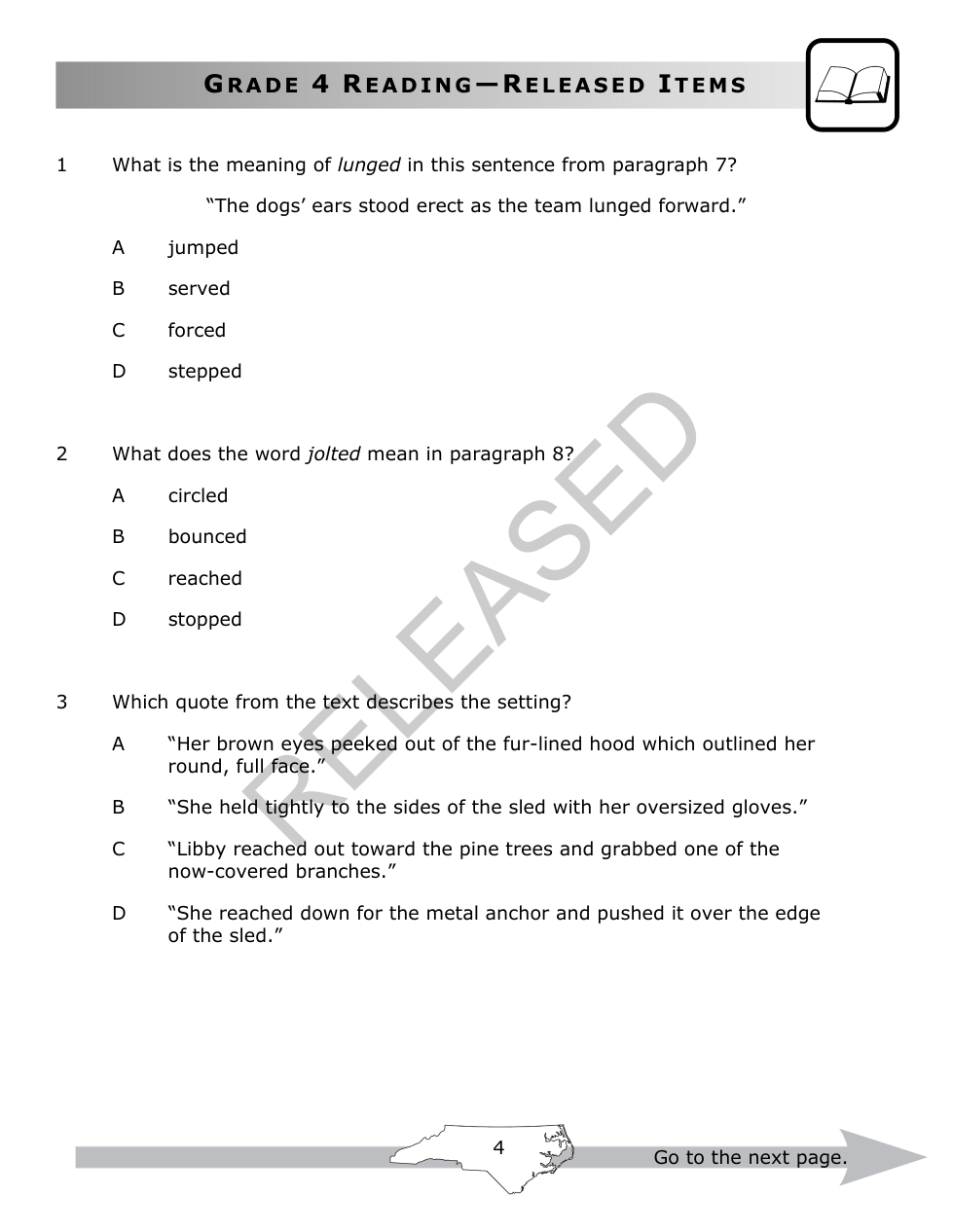
What is the meaning of
lunged
in this sentence from paragraph 7?
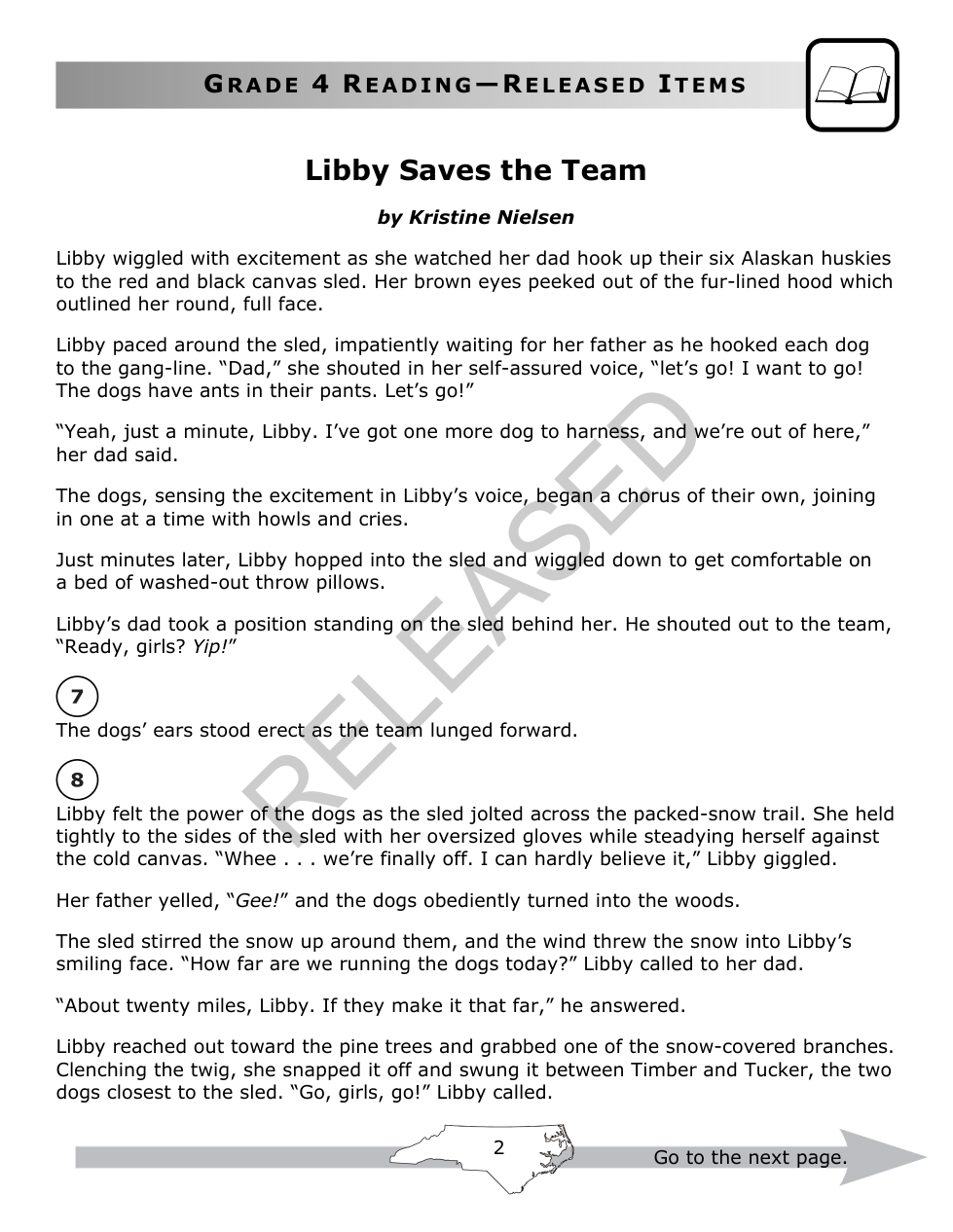
“The dogs’ ears stood erect as the team lunged forward.”
A jumped
B served
C forced
D stepped
Question 2
2.
What does the word
jolted
mean in paragraph 8?
A circled
B bounced
C reached
D stopped
Question 3
3.
Which quote from the text describes the setting?
A “Her brown eyes peeked out of the fur-lined hood which outlined her round, full face.”
B “She held tightly to the sides of the sled with her oversized gloves.”
C “Libby reached out toward the pine trees and grabbed one of the now-covered branches.”
D “She reached down for the metal anchor and pushed it over the edge of the sled.”
Question 4
4.
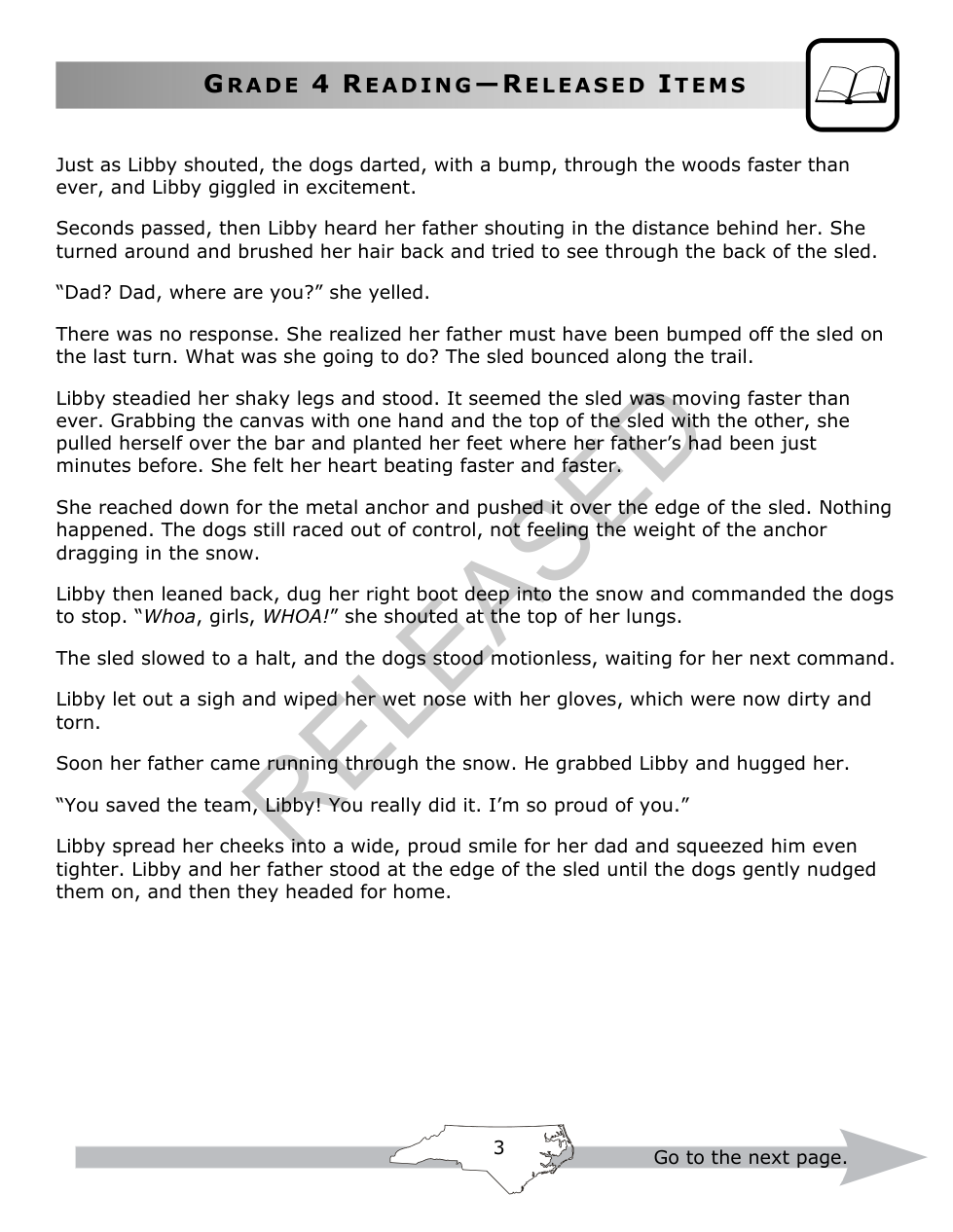
Which event changes how Libby feels about the sled ride?
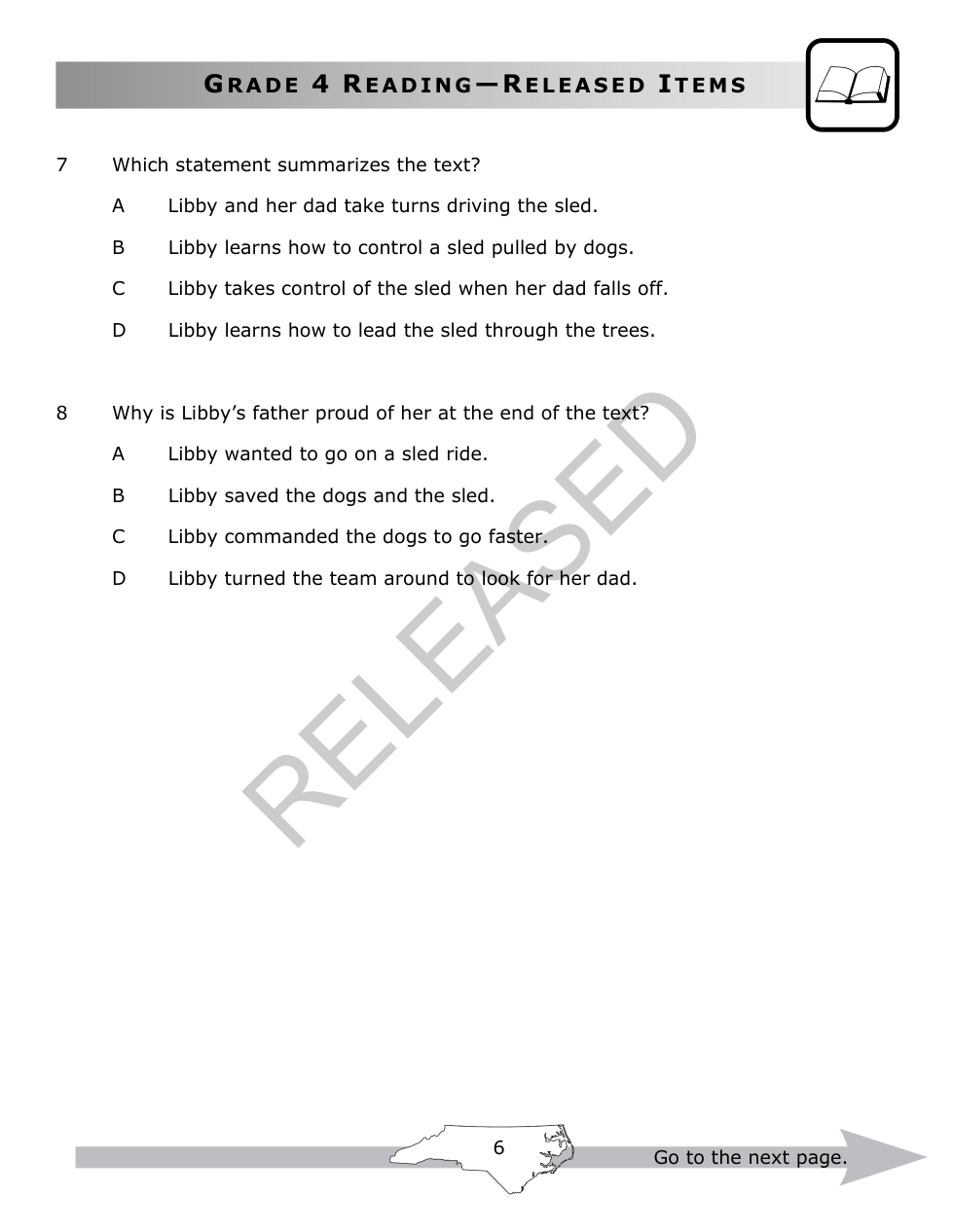
A Snow gets stirred up all around them.
B Her dad is bumped off the sled in the last turn.
C The wind throws snow in her face.
D The dogs run through the woods faster than ever.
Question 5
5.
Why does Libby snap off a pine twig and swing it between Timber and Tucker?
A to make the dogs start walking
B to make the dogs go into the woods
C to make the dogs stop running
D to make the dogs go faster
Question 6
6.
What does the action that Libby took to save the team show about her character?
A She is brave.
B She is frightened.
C She is excited.
D She is comfortable.
Question 7
7.
Which statement summarizes the text?
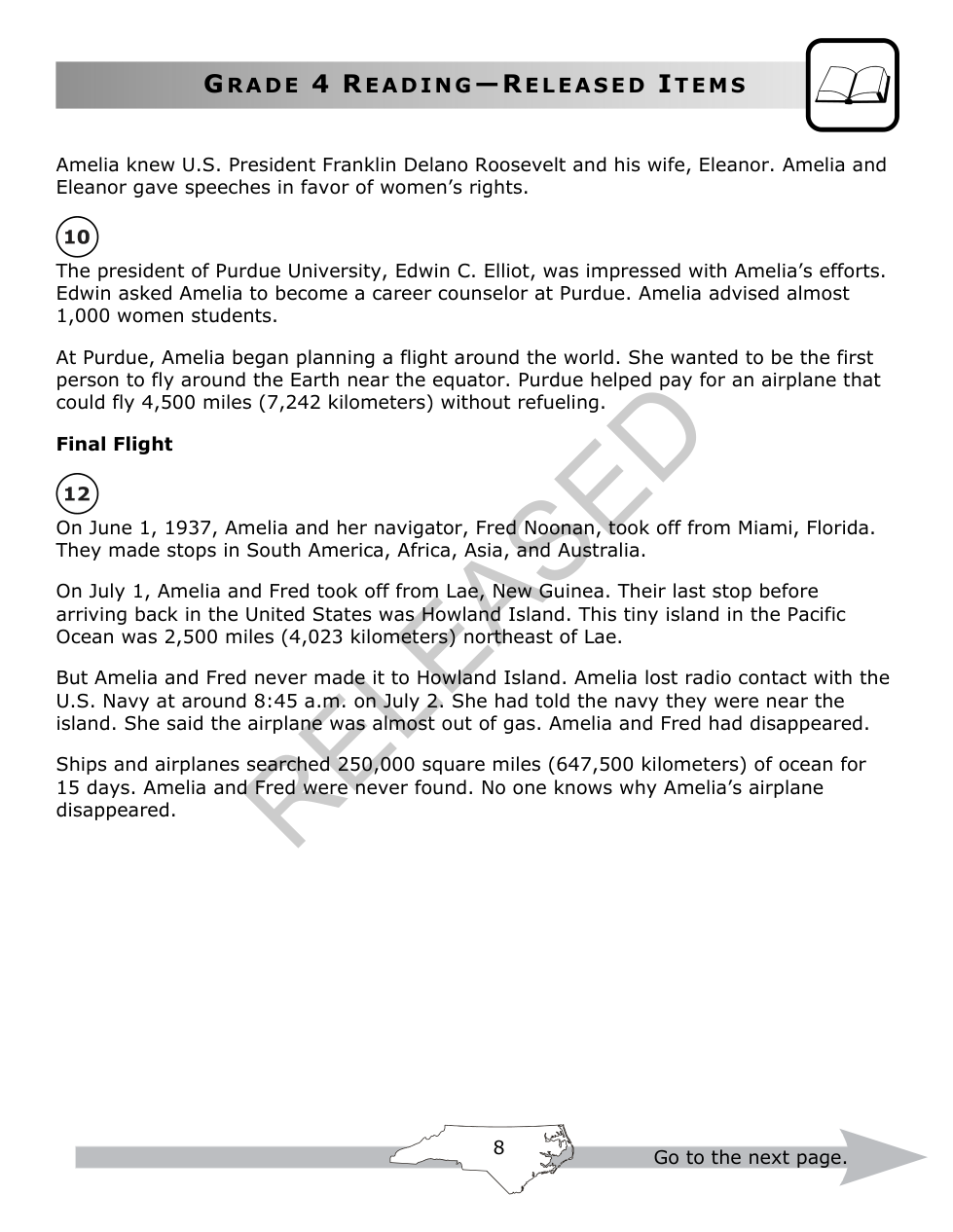
A Libby and her dad take turns driving the sled.
B Libby learns how to control a sled pulled by dogs.
C Libby takes control of the sled when her dad falls off.
D Libby learns how to lead the sled through the trees.
Question 8
8.
Why is Libby’s father proud of her at the end of the text?
A Libby wanted to go on a sled ride.
B Libby saved the dogs and the sled.
C Libby commanded the dogs to go faster.
D Libby turned the team around to look for her dad.
Question 9
9.
According to the selection, why was Amelia unhappy with her flight on Friendship?
A Her landing was not smooth.
B She did not fly across the Pacific.
C Her plane disappeared.
D She was not the pilot.
Question 10
10.
What evidence from the selection shows how Amelia supported other women who wanted to become pilots?
A Amelia wrote books and gave talks about flying.
B Amelia accepted a job at Purdue University.
C Amelia gave speeches with Franklin D. Roosevelt.
D Amelia started the group The Ninety-Nines in 1929.
Question 11
11.
In paragraph 8, what is the meaning of the word originally?
A in the middle
B at the end
C in the beginning
D at a slow rate
Question 12
12.
Whose wife made speeches with Amelia Earhart?
A Franklin Roosevelt’s
B Wilmer Stultz’s
C Edwin Elliot’s
D Fred Noonan’s
Question 13
13.
In paragraph 10, what is the meaning of the word impressed?
A admired
B disliked
C forced
D imitated
Question 14
14.
Why was Amelia Earhart asked to be a career counselor?
A She planned a flight around the world.
B She encouraged women’s rights.
C She knew the president and his wife.
D She advised women students at Purdue.
Question 15
15.
In paragraph 12, what is another name for
navigator
?
A fighter
B target
C customer
D guide
Question 16
16.
What is the main idea of the selection?
A Amelia Earhart and Eleanor Roosevelt gave speeches to support women’s rights.
B Amelia Earhart was the first woman to cross the Atlantic Ocean in an airplane.
C Amelia Earhart was a determined female pilot who disappeared on a flight around the world.
D Amelia Earhart became a career counselor at Purdue and advised women students.
Question 17
17.
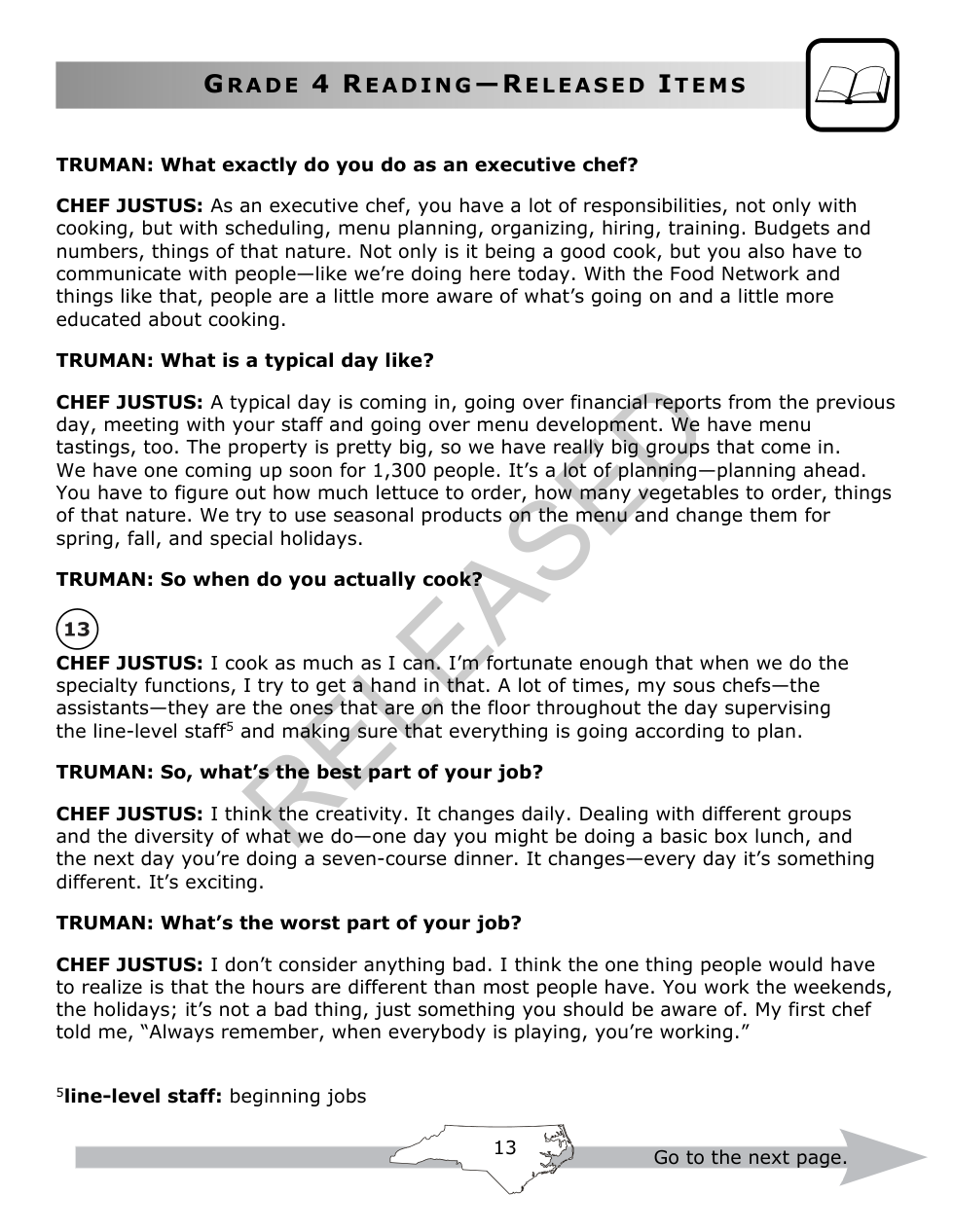
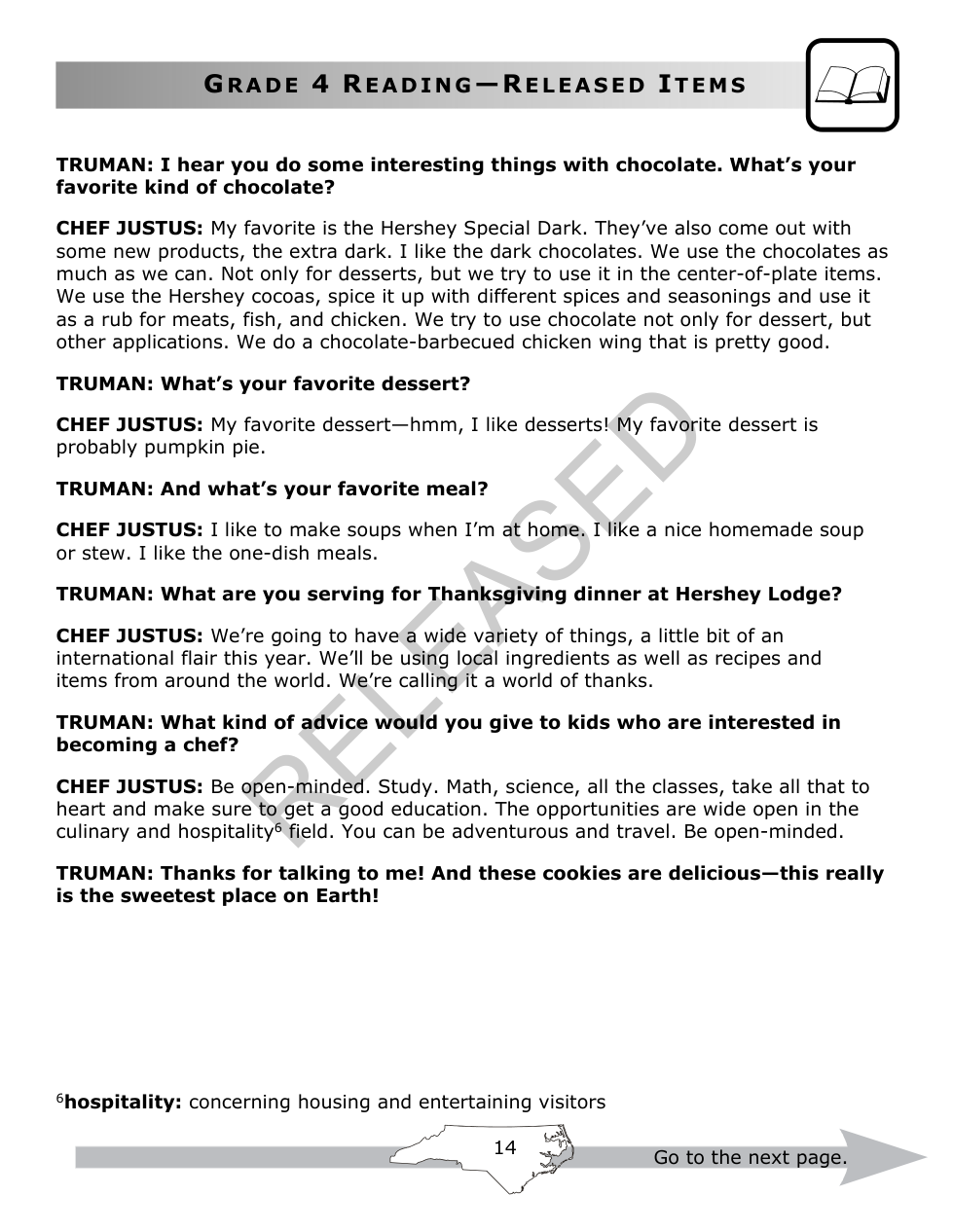
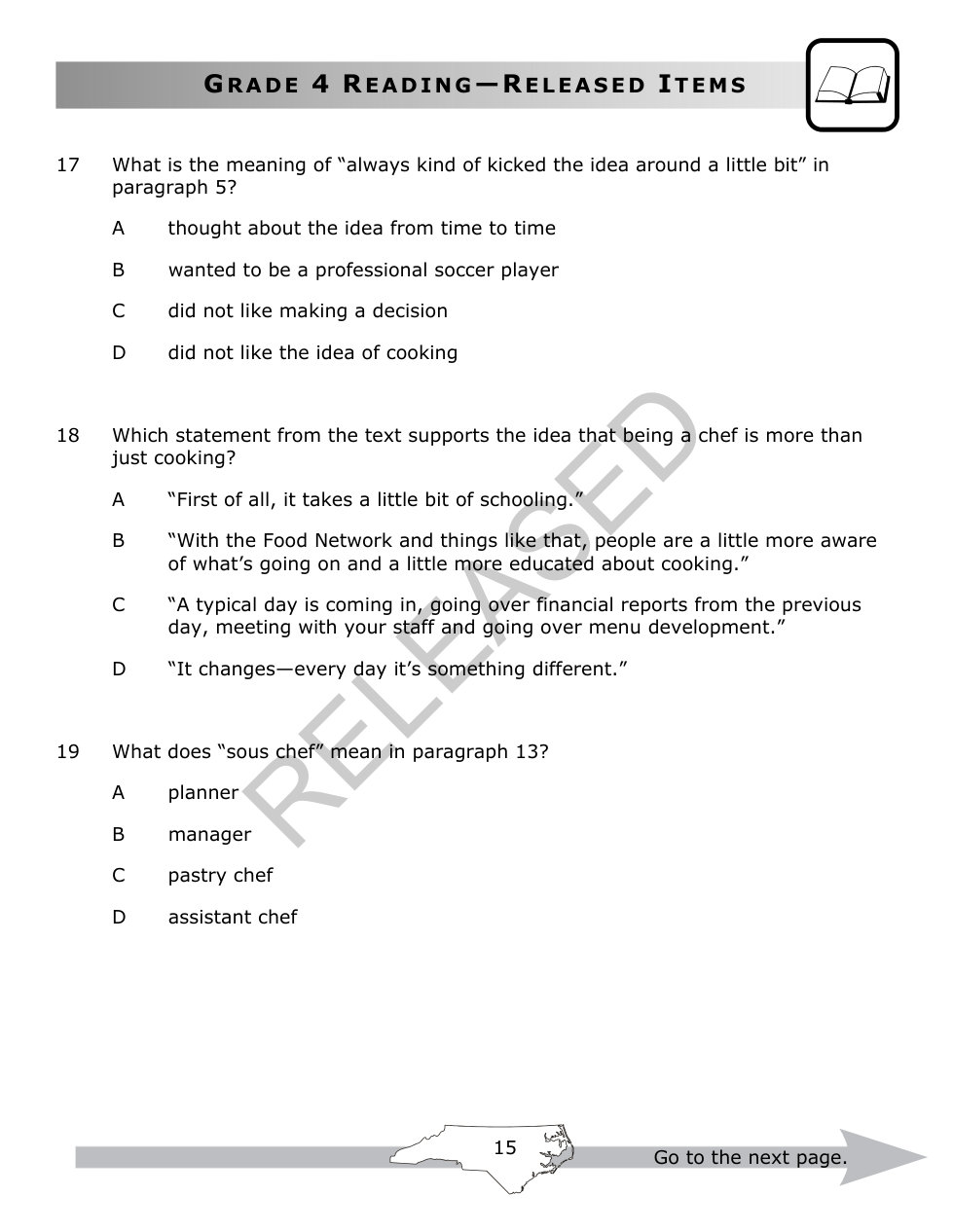
What is the meaning of “always kind of kicked the idea around a little bit” in paragraph 5?
A thought about the idea from time to time
B wanted to be a professional soccer player
C did not like making a decision
D did not like the idea of cooking
Question 18
18.
Which statement from the text supports the idea that being a chef is more than just cooking?
A “First of all, it takes a little bit of schooling.”
B “With the Food Network and things like that, people are a little more aware of what’s going on and a little more educated about cooking.”
C “A typical day is coming in, going over financial reports from the previous day, meeting with your staff and going over menu development.”
D “It changes—every day it’s something different.”
Question 19
19.
What does “sous chef” mean in paragraph 13?
A planner
B manager
C pastry chef
D assistant chef
Question 20
20.
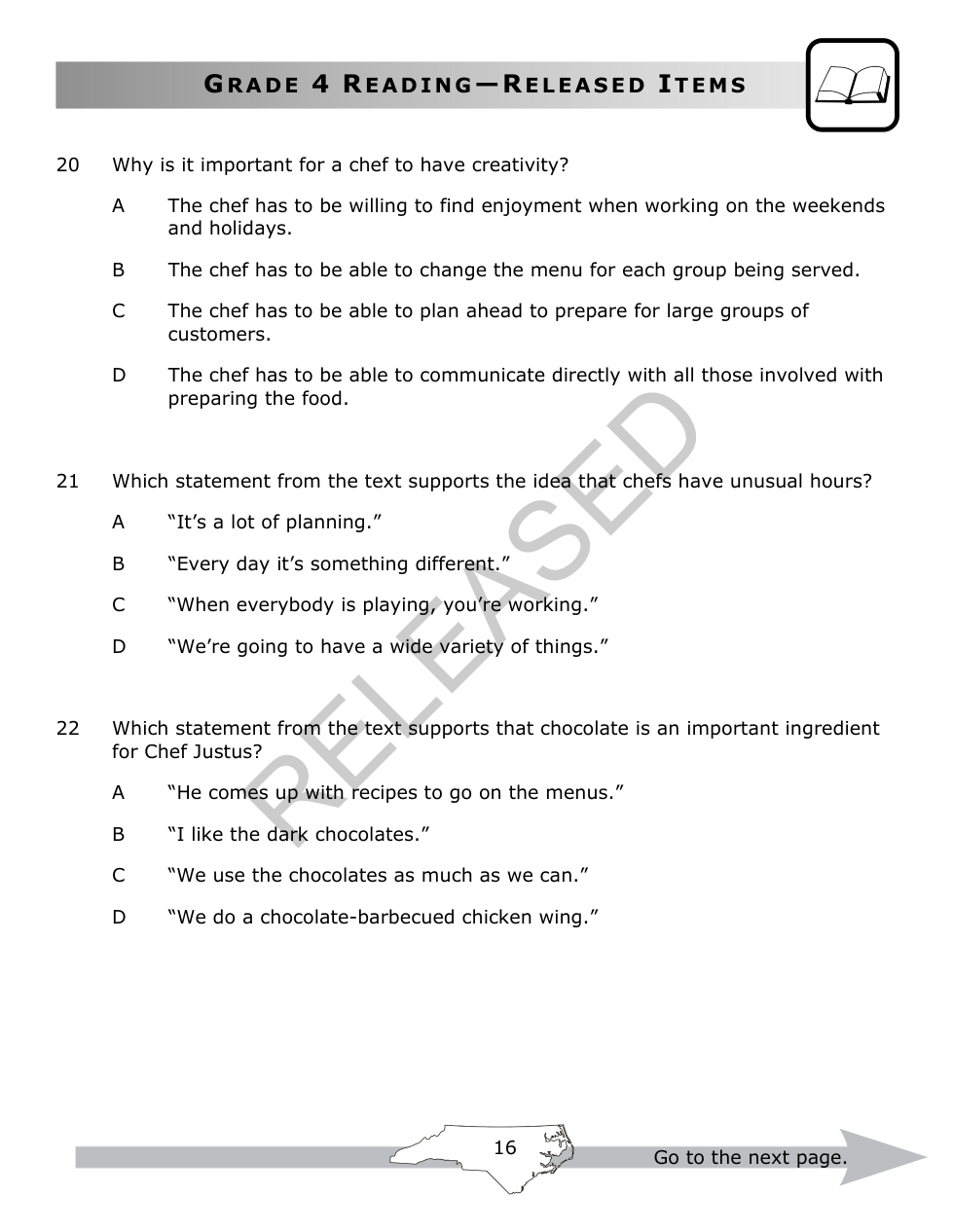
Why is it important for a chef to have creativity?
A The chef has to be willing to find enjoyment when working on the weekends and holidays.
B The chef has to be able to change the menu for each group being served.
C The chef has to be able to plan ahead to prepare for large groups of customers.
D The chef has to be able to communicate directly with all those involved with preparing the food.
Question 21
21.
Which statement from the text supports the idea that chefs have unusual hours?
A “It’s a lot of planning.”
B “Every day it’s something different.”
C “When everybody is playing, you’re working.”
D “We’re going to have a wide variety of things.”
Question 22
22.
Which statement from the text supports that chocolate is an important ingredient for Chef Justus?
A “He comes up with recipes to go on the menus.”
B “I like the dark chocolates.”
C “We use the chocolates as much as we can.”
D “We do a chocolate-barbecued chicken wing.”
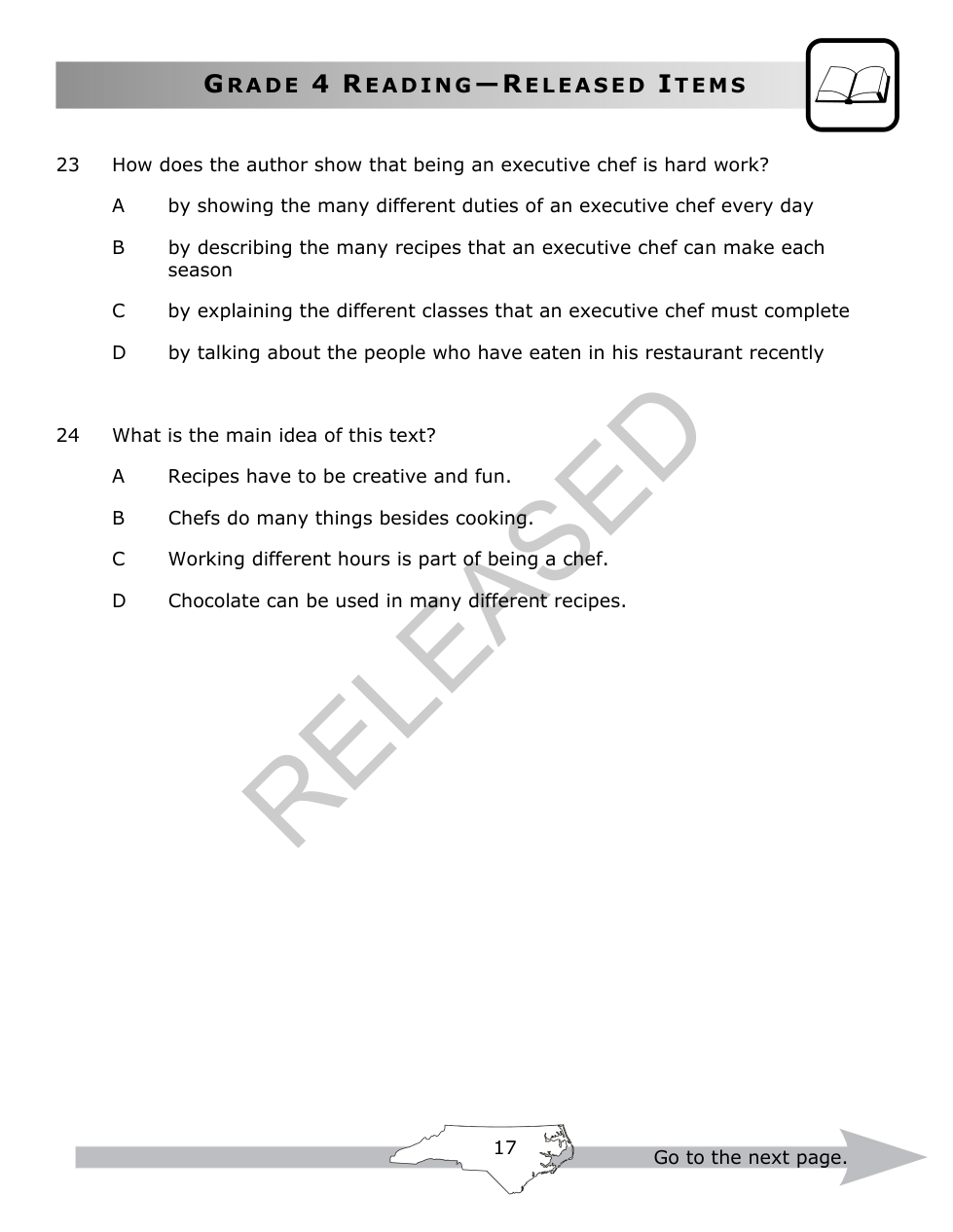
Question 23
23.
How does the author show that being an executive chef is hard work?
A by showing the many different duties of an executive chef every day
B by describing the many recipes that an executive chef can make each season
C by explaining the different classes that an executive chef must complete
D by talking about the people who have eaten in his restaurant recently
Question 24
24.
24 What is the main idea of this text
A Recipes have to be creative and fun.
B Chefs do many things besides cooking.
C Working different hours is part of being a chef.
D Chocolate can be used in many different recipes.
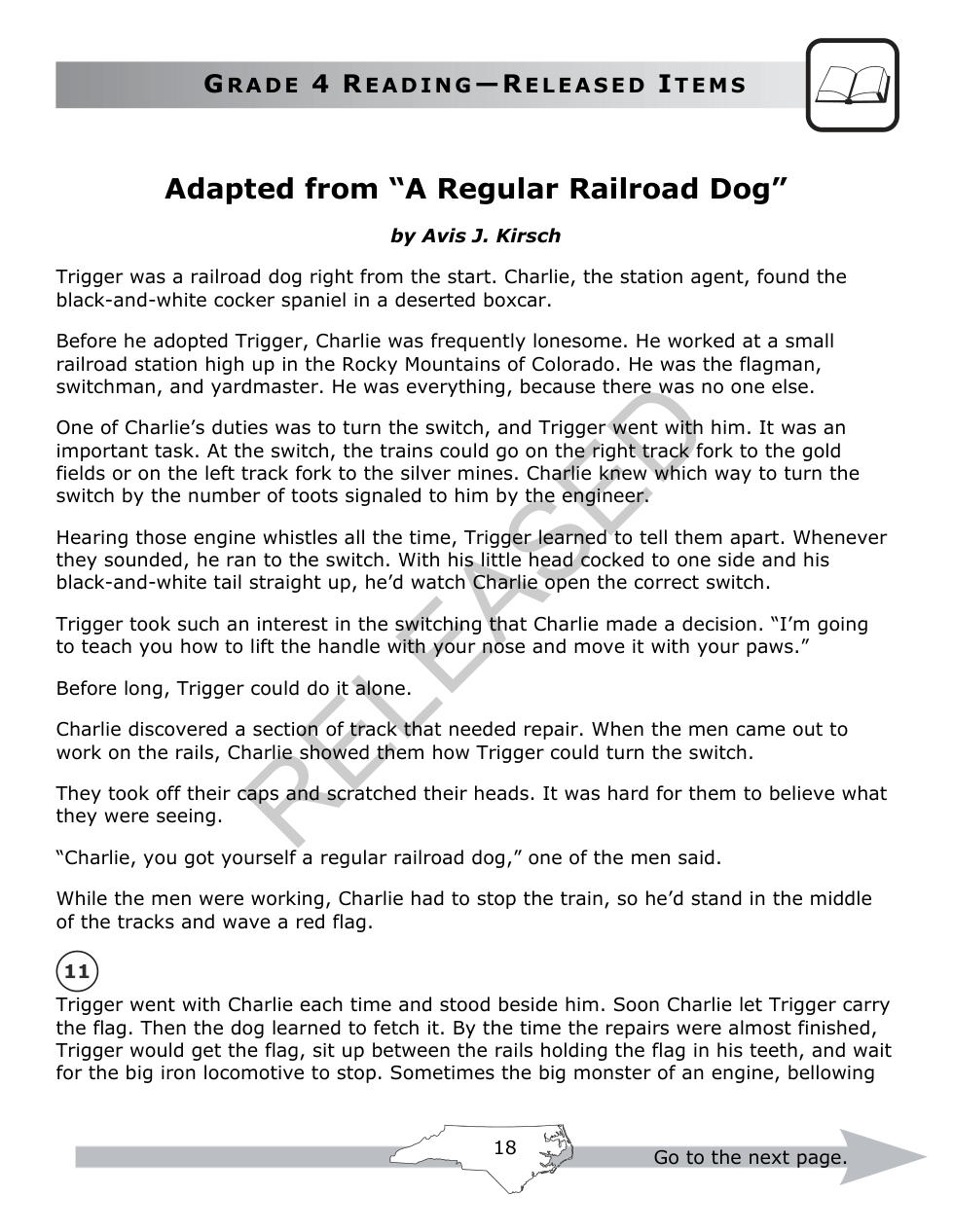
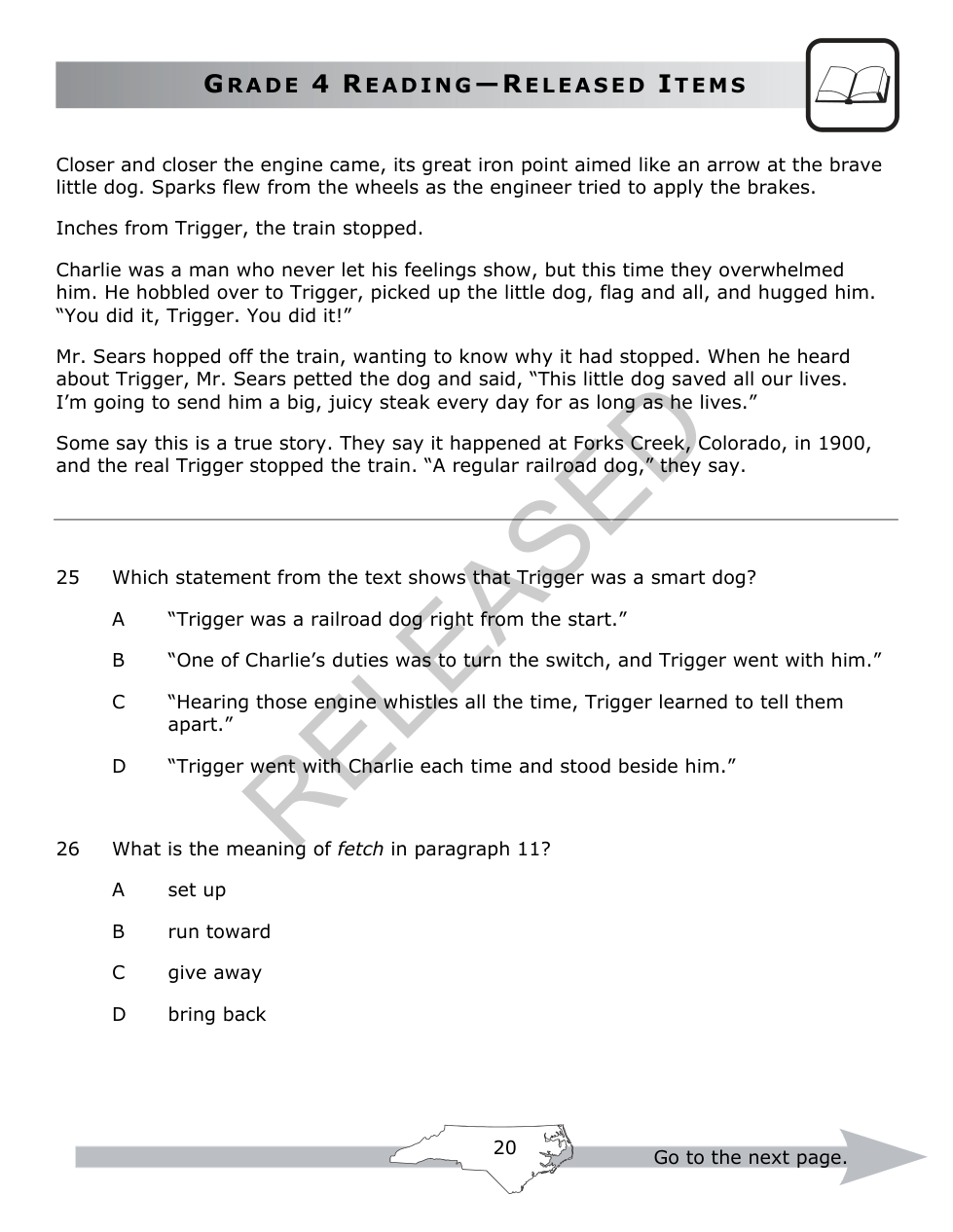
Question 25
25.
25 Which statement from the text shows that Trigger was a smart dog?
A “Trigger was a railroad dog right from the start.”
B “One of Charlie’s duties was to turn the switch, and Trigger went with him.”
C “Hearing those engine whistles all the time, Trigger learned to tell them apart.”
D “Trigger went with Charlie each time and stood beside him.”
Question 26
26.
What is the meaning of
fetch
in paragraph 11
A set up
B run toward
C give away
D bring back
Question 27
27.
What does Charlie’s reaction to the frozen switch show about him?
A He is worried.
B He is surprised.
C He is frustrated.
D He is disappointed.
Question 28
28.
How did the dog stop the train from crashing?
A He barked at the train driver.
B He moved the switch.
C He ran to get the red flag.
D He ran beside the train.
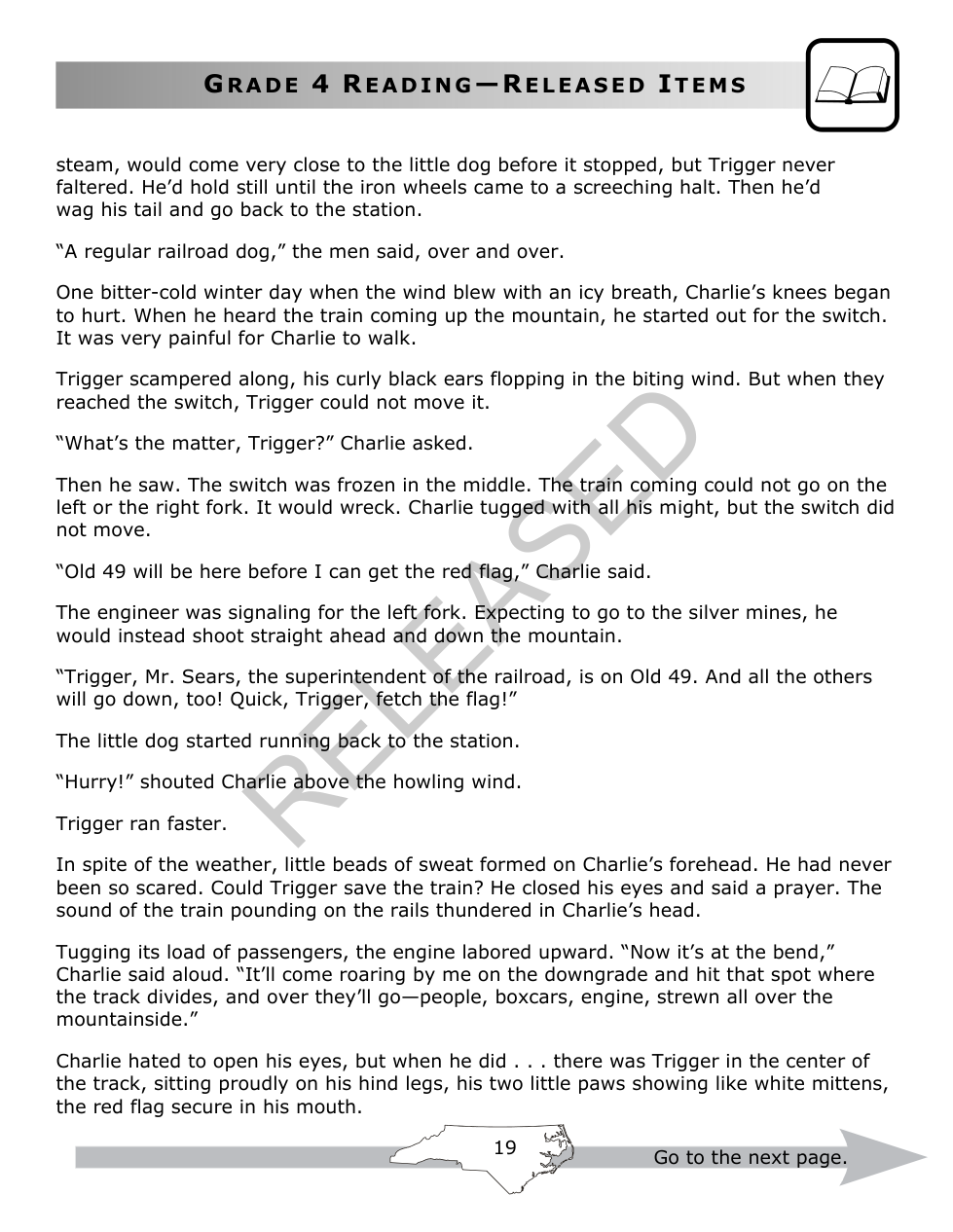
Question 29
29.
29 Which quote from the text supports the theme of bravery?
A “Trigger took such an interest in the switching that Charlie made a decision.”
B “Charlie discovered a section of track that needed repair.”
C “Trigger scampered along, his curly black ears flopping in the biting wind.”
D “There was Trigger in the center of the track, sitting proudly on his hind legs.”
Question 30
30.
Why does the train almost fall off the mountain?
A The switch is frozen.
B The brakes stop working.
C The driver is asleep.
D The station agent is injured.
Question 31
31.
How does Trigger learning how to stop a train contribute to the end of the text?
A He learns how to turn the switch.
B He is able to save many people’s lives.
C He makes the people on the train angry.
D He is unable to move the switch.
Question 32
32.
Which statement summarizes the text?
A A dog loves to ride a train.
B A dog stops a train wreck.
C A man adopts a dog.
D A man hurts his knee.
Question 33
33.
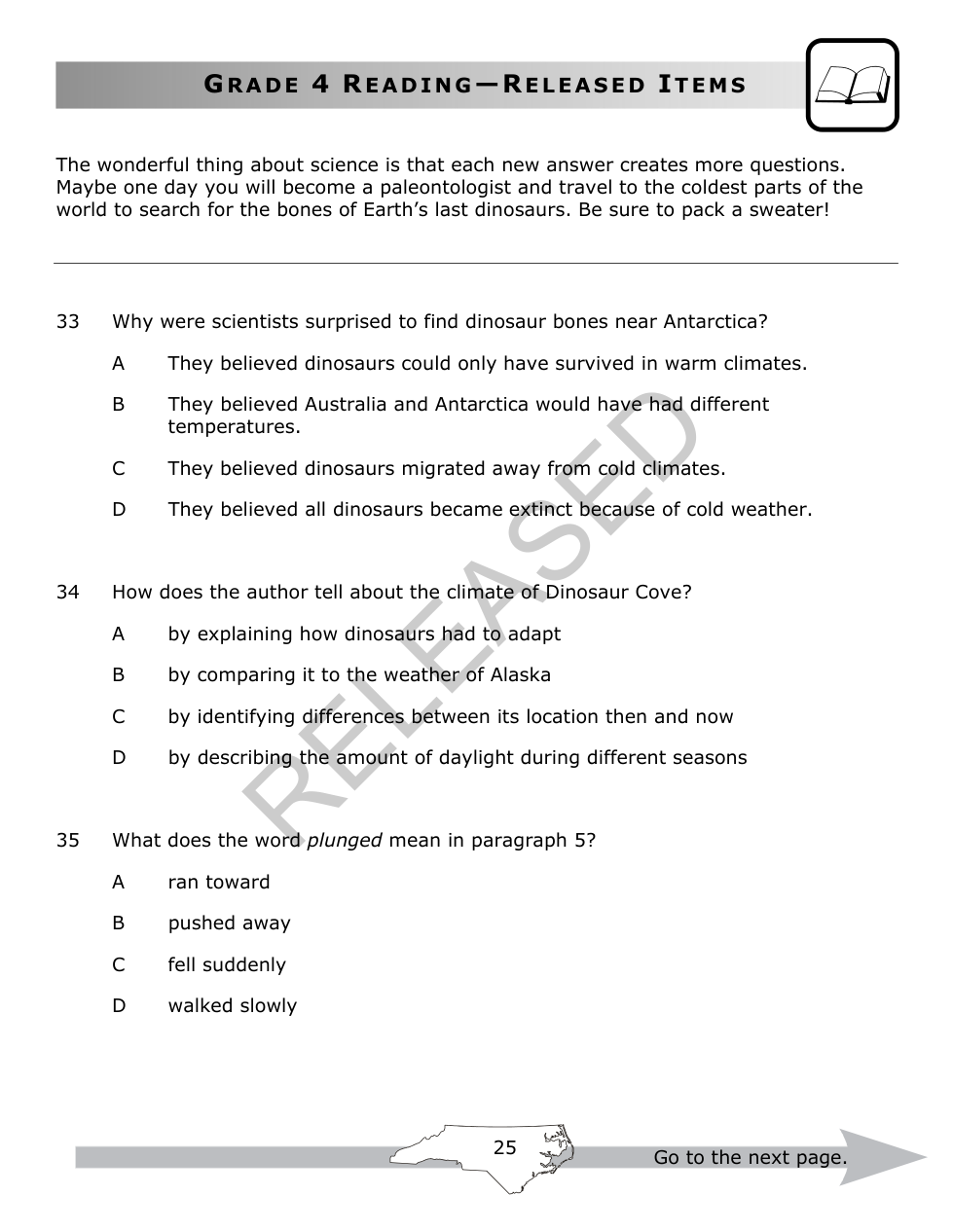
Why were scientists surprised to find dinosaur bones near Antarctica?
A They believed dinosaurs could only have survived in warm climates.
B They believed Australia and Antarctica would have had different temperatures.
C They believed dinosaurs migrated away from cold climates.
D They believed all dinosaurs became extinct because of cold weather.
Question 34
34.
How does the author tell about the climate of Dinosaur Cove?
A by explaining how dinosaurs had to adapt
B by comparing it to the weather of Alaska
C by identifying differences between its location then and now
D by describing the amount of daylight during different seasons
Question 35
35.
What does the word
plunged
mean in paragraph 5
A ran toward
B pushed away
C fell suddenly
D walked slowly
Question 36
36.
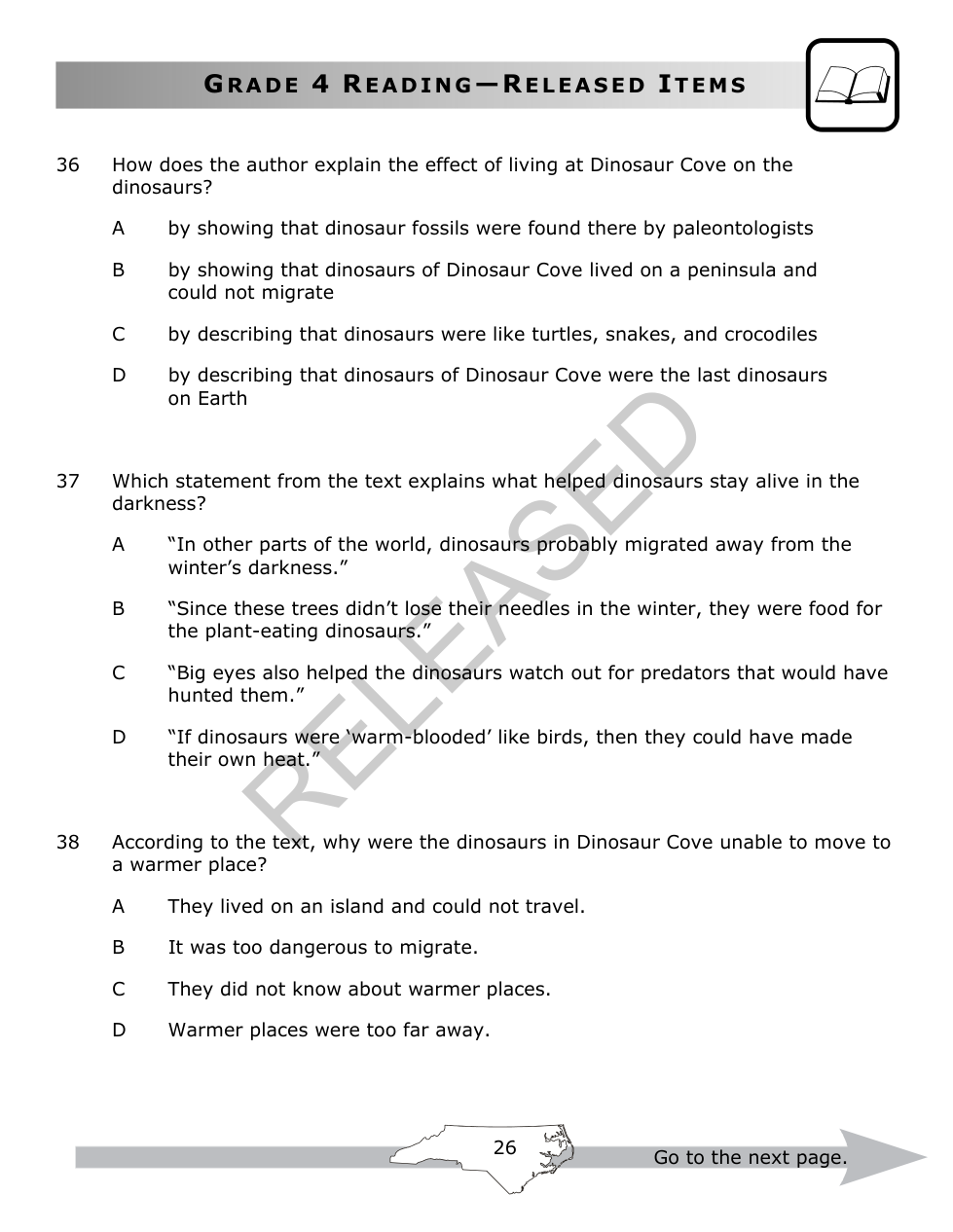
How does the author explain the effect of living at Dinosaur Cove on the dinosaurs?
A by showing that dinosaur fossils were found there by paleontologists
B by showing that dinosaurs of Dinosaur Cove lived on a peninsula and could not migrate
C by describing that dinosaurs were like turtles, snakes, and crocodiles
D by describing that dinosaurs of Dinosaur Cove were the last dinosaurs on Earth
Question 37
37.
Which statement from the text explains what helped dinosaurs stay alive in the darkness?
A “In other parts of the world, dinosaurs probably migrated away from the winter’s darkness.”
B “Since these trees didn’t lose their needles in the winter, they were food for the plant-eating dinosaurs.”
C “Big eyes also helped the dinosaurs watch out for predators that would have hunted them.”
D “If dinosaurs were ‘warm-blooded’ like birds, then they could have made their own heat.”
Question 38
38.
According to the text, why were the dinosaurs in Dinosaur Cove unable to move to
a warmer place?
A They lived on an island and could not travel.
B It was too dangerous to migrate.
C They did not know about warmer places.
D Warmer places were too far away.
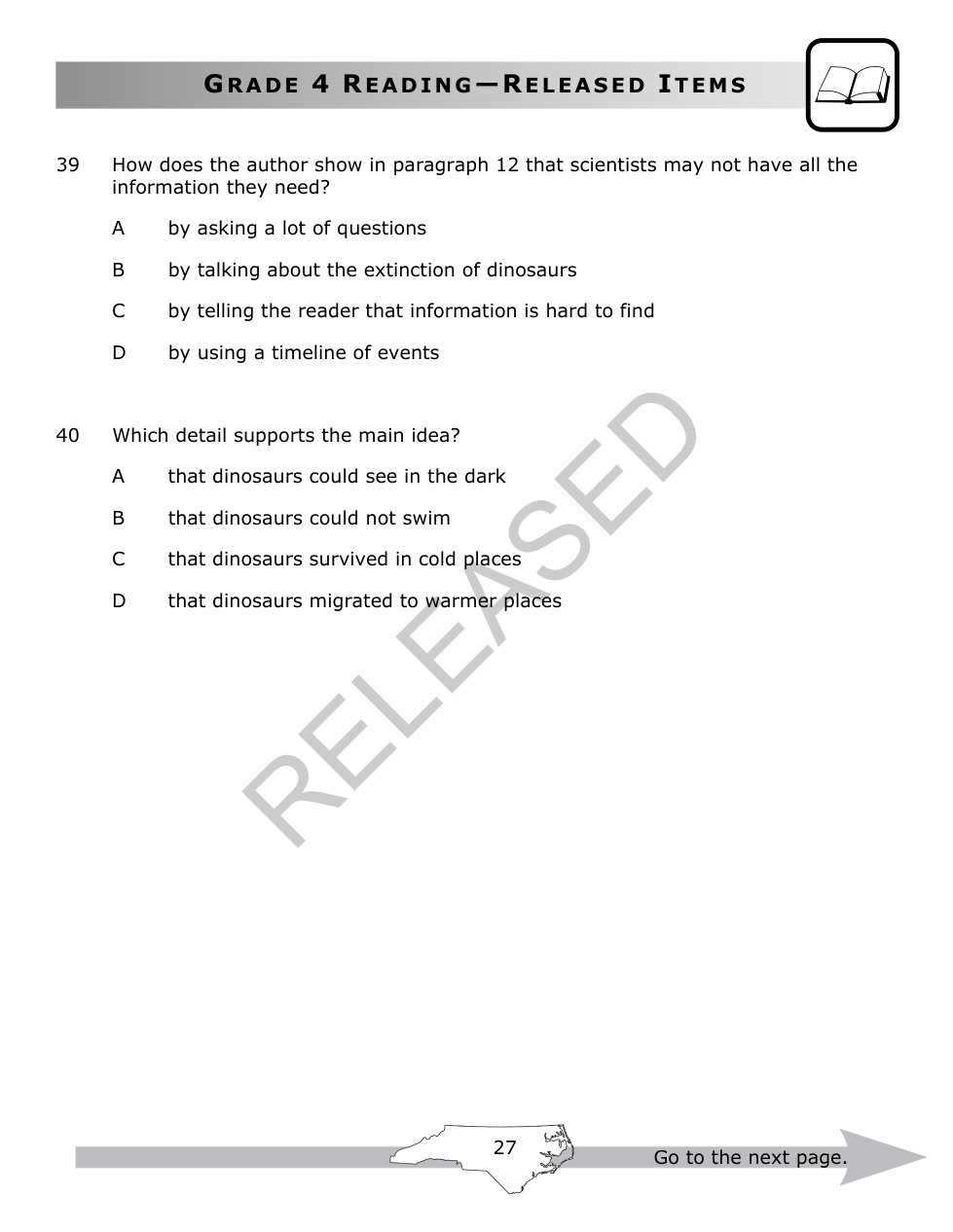
Question 39
39.
How does the author show in paragraph 12 that scientists may not have all the information they need?
A by asking a lot of questions
B by talking about the extinction of dinosaurs
C by telling the reader that information is hard to find
D by using a timeline of events
Question 40
40.
Which detail supports the main idea?
A that dinosaurs could see in the dark
B that dinosaurs could not swim
C that dinosaurs survived in cold places
D that dinosaurs migrated to warmer places