1
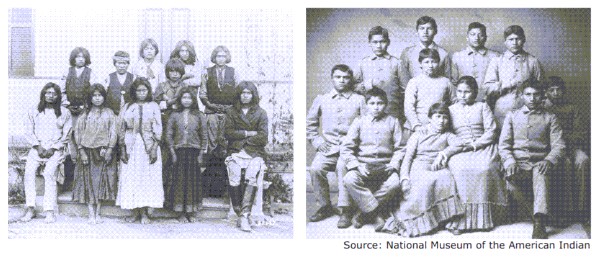
These photographs provide evidence that one goal of the Carlisle Indian School was to —
These photographs provide evidence that one goal of the Carlisle Indian School was to —
Which benefit resulted from the introduction of the Bessemer steel process?
Escape from religious persecution
Hope for freedom and equality
Hope for better economic conditions
Escape from political turmoil and war
A high school teacher wrote these bullet points on the whiteboard. What was the most likely topic of discussion?
How did Andrew Carnegie contribute to civic and social life in the United States?
A homesteader had only to be the head of a household or at least 21 years of age to claim a 160-acre parcel of land. Settlers from all walks of life including newly arrived immigrants, farmers without land of their own from the East, single women and former slaves came to meet the challenge of “proving up” and keeping this “free land.” Each homesteader had to live on the land, build a home, make improvements and farm for 5 years before they were eligible to “prove up.” A total filing fee of $18 was the only money required. . . .
—National Park Service, www.nps.gov (accessed November 14, 2013)
The process described in the excerpt led to —
These photographs provide evidence that one goal of the Carlisle Indian School was to —
How did the Homestead Act encourage people to move West?
Most practices and objects associated with American cowboys were modified from ranchers.
In 1850 Chicago had a population of around thirty thousand people. By 1900 its population grew to 1.7 million. The massive movement of people into cities was a national trend known as
The potato famine in Ireland forced many Irish families to leave their nation and migrate to the United States in the 1840s and 1850s. This is an example of...
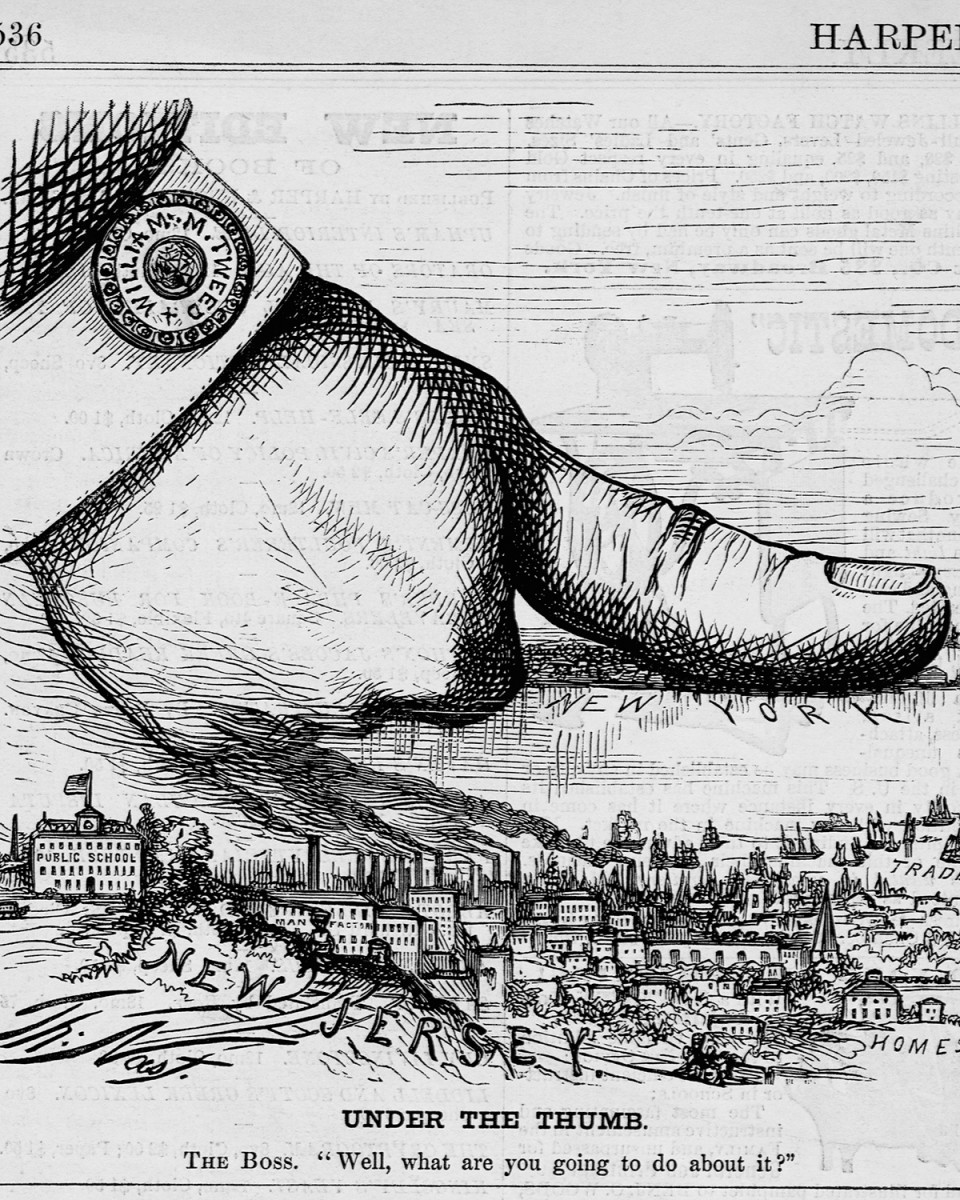
The political cartoon best represents what social issue during the Gilded Age
Ida B. Wells' book, Southern Horrors, was a major contributing factor the the outlawing of what Southern issue?
Rockefeller and Carnegie were known to donate large amounts of money to community projects. This is an example of _________________.
What is the result of competition in an industry?
For which action did Theodore Roosevelt win the 1906 Nobel Peace Prize?
Why did Americans take offense to the de Lome Letter?
The U.S. gained control of the land it needed to build the Panama Canal by...
The rapid growth of industry in the United States helped fuel imperialism because
Soon after this ship was destroyed, the United States declared war on Spain.
Through his book, The Influence of Sea Power Upon History, Admiral urged the U.S. to construct many new battleships and become a naval power.
is a sensational style of writing that exaggerates the news to lure readers.
Which President initiated "big stick" diplomacy?
“Here is the case of a woman employed in the manufacturing department of a Broadway house. It stands for a hundred like her own. She averages three dollars a week. Pay is $1.50 for her room; for breakfast she has a cup of coffee; lunch she cannot afford. One meal a day is her allowance. This woman is young, she is pretty. She has “the world before her.” Is it anything less than a miracle if she is guilty of nothing less than the “early and improvident marriage,” against which moralists exclaim as one of the prolific causes of the distresses of the poor? Almost any door might seem to offer a welcome escape from such slavery as this. “I feel so much healthier since I got three square meals a day,” said a lodger in one of the Girls’ Homes. Two young sewing-girls came in seeking domestic service, so that they might get enough to eat. They had been only half-fed for some time, and starvation had driven them to the one door at which the pride of the American-born girl will not permit her to knock, though poverty be the price of her independence.”
-Jacob Riis, How the Other Half Lives, 1890
Which of the following would be the most likely to support the perspective expressed by Riis in the passage above?
Seventeenth Amendment
Nineteenth Amendment
Direct Party Primaries
Initiative
Referendum
Recalls
As a result of the Progressive Era reforms listed —
W.E.B. DuBois and other prominent Progressive leaders, like Ida B. Wells, founded the—
"The Jungle" by Upton Sinclair ultimately led to which progressive reform(s)?
This enabled voters to remove public officials from elected positions
The purpose of the Sherman Antitrust Act and the Clayton Antitrust Act was to
Which Progressive Era President was known as the "Trust Buster"?
What was the Zimmerman Telegram?
What was the spark that ignited World War I?
The Selective Service Act allowed the American government to
The sinking of which British passenger liner led to the United States joining the war?
Agreement between the Allies and the Central Powers that officially ended WWI.
The Sherman Anti-Trust Act gave the federal government the authority to dissolve monopolies
John D. Rockefeller created the Standard Oil Company by eliminating competition through vertical mergers.
The Bessemer Process made it possible to produce cars at a faster, more efficient rate.
The Dawes Act sought to speed up the Americanization of Native Americans
Yellow Journalists used their writing to expose problems and corruption in the government.
The 19th Amendment gave African Americans the right to vote.
Temperance is the outlawing of the transportation, manufacture, or consumption of alcohol.
Plessy v. Ferguson ruled that racial groups could legally be separate as long as accommodations were equal.
The sinking of the USS Maine pushed the United States into World War I.
Woodrow Wilson would have preferred to spread democracy rather than control foreign affairs.
Concerns like those expressed by Riis in the passage above led most directly to which of the following?
Riis’s work as an investigator of the lives of the poor can most directly be associated with which of the following