Log in
Sign up for FREE
arrow_back
Library

Africa Unit Final Summative Assessment

star
star
star
star
star
Last updated about 3 years ago
20 questions
Required
5
7.1.1.PR
7.1.2.ER
Required
5
7.1.1.PR
7.1.3.HS
Required
5
7.1.1.PR
7.1.3.HS
Required
5
7.1.1.PR
7.1.2.ER
7.1.3.HS
Required
5
7.1.1.PR
7.1.2.ER
7.1.3.HS
Required
5
7.1.1.PR
7.1.3.HS
…
Required
5
7.1.1.PR
7.1.3.HS
…
Required
5
7.1.1.PR
Required
5
7.1.1.PR
7.1.3.HS
7.1.4.HS
Required
5
7.1.1.PR
7.1.3.HS
7.1.4.HS
Required
5
7.1.1.PR
7.1.4.HS
7.1.5.HS
Required
5
7.1.1.PR
7.1.4.HS
7.1.5.HS
Required
5
7.1.1.PR
Required
5
7.1.1.PR
Required
5
7.1.1.PR
PLEASE NOTE: THIS IS YOUR COMPREHENSIVE SUMMATIVE ASSESSMENT OF AFRICA COVERING ALL PROFICENCY READINESS STANDARDS, CONCEPT MEASURES, AND EMBEDDED ACADMEIC VOCABULARY.
  • YOU ARE EXPECTED TO APPLY INSTRUCTIONAL BASED LEARNING, KNOWLEDGE, AND SKILLS ACQUIRED THROUGHOUT THE 7 WEEK UNIT OF AFRICA.

DIRECTIONS: Answer the following questions to the best of your ability. Be sure to analyze (BREAK DOWN) the questions and answer choices carefully.
  • Once your assessment is submitted and scored - all students will correct any missed questions for a better understanding.
  • YOU ARE ENCOURAGED TO USE ANY/ALL RESOURCES, MATERIALS, & ASSIGNMENTS POSTED IN OUR GOOGLE CLASSROOM.
  • OPEN NOTES: Africa Unit Application Activities & THE SUMMATIVE READINESS GUIDE.

Table of Content Quick-Check Reference Guide
Africa Unit Application Activities
· INTRO Section: Slides 1-3
· GEOGRAPHY Section: Slides 4-6
· COUNTRIES Section: Slides 7-9
· WILDLIFE Section: Slides 10-12
· POACHING Section: Slides 15-16
· HISTORY Section: Slides 15-16 (colonialism/European control)
· ANCIENT EGYPT Section: Slides 17-18
· PEOPLE Section: Slides 19-20
· TRIBES Section: Slides 21-23
· LANGUAGES Section: Slides 25-26
· ECONOMY Section: Slides 27-28
· POVERTY Section: Slides 29-30
· ATTRACTIONS Section: Slides 31-32
· PYRAMIDS Section: Slides 33-34
· REFLECTION Section: Slides 35-37
Question 1
1.

Question 2
2.

Question 3
3.

Question 4
4.

Question 5
5.

Question 6
6.

Question 7
7.

Required
5
7.1.1.PR
7.1.3.HS
…
Required
5
7.1.1.PR
7.1.3.HS
…
Question 10
10.

Question 11
11.

Question 12
12.

Question 13
13.

Question 14
14.

Question 15
15.

Question 16
16.

Question 17
17.

Required
5
7.1.1.PR
7.1.3.HS
…
Required
5
7.1.1.PR
7.1.3.HS
…
Required
5
7.1.1.PR
7.1.3.HS
…
The ECONOMY of Africa is mostly dependent upon the rural based industry of _________; nearly 2/3 of the African population is employed within this industry.
Business
Agriculture
Urban Industries
Restraunt Food Chains
What does it mean to be poor or to live in poverty below the poverty line?
People are considered to be poor when they don't have sufficient funds to afford most basic needs, the minimum level is called the "poverty line".
The poverty line is based off the expenditures of what each household spends.
People are poor when they don't have sufficient funds to afford most basic wants and desires, the minimum level is called the "poverty line".
The poverty line is based off the desired affordability's in each household.
People who live in urban areas are most affected by poverty.
True
False
Algeria is a landlocked country.
True
False
Chad is a landlocked country.
True
False
Colonialism has continued to have a lasting impact across the continent of Africa.
True
False
Africa has experienced minor loss and death due to Civil War.
True
False
Question 8
8.

Question 9
9.

Niger is the largest country of Africa.
True
False
All tribes live in permanent remote areas.
True
False
A TRIBE is group of people who smile together and share the same culture, interest, and ancestors.
True
False
Most African colonies gained their independence in the 1900s. Africa's hard-earned freedom quickly revolted into a power-struggle of economic and political unrest, leading to ethnic violence and civil war because many countries were not able to establish stable governments.

In an effort to solve these problems, the African countries established...
The United Nations
The African Nations
The African Union
The United States of Africa
We know nearly 2/3 of African’s live in rural villages, how does the rural life of Africa align with what we know about Africa’s agriculturally based economy and primary source of stability?
The rural areas provide agriculturally rich soil and environmental conditions to produce subsistence crops and resources for self-sufficient stability.
The urban areas provide agriculturally rich soil and environmental conditions to produce subsistence resources for self-sufficient stability.
The rural and urban areas provide agriculturally rich soil and environmental conditions to produce subsistence resources for self-sufficient stability.
The rural areas provide agriculturally rich soil and environmental conditions to produce unstable crops.
The longest river that runs through Africa is the...
Congo River
Victoria River
Orange River
Nile River
The largest lake of Africa is...
Congo Lake
Great Lakes
Lake Victoria
Lake Madagascar
The tallest peak in Africa is...
Sahara Mountains
Mount Kilimanjaro
Mount Everest
Atlas Mountains
Question 18
18.

Question 19
19.

Question 20
20.

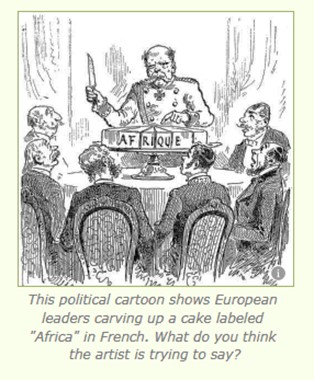
Analyze the political cartoon to determine if the following statement is true or false...

Upon requesting permission European powers invaded and seized control of African borders, regions, and natural resources while further impressing their own foreign languages, cultures, traditions, and beliefs upon the people of Africa. Some of these languages are still spoken and considered official languages across the continent.
True
False
Analyze the political cartoon to answer the following...

Which of the following is NOT a reason as to why Europeans wanted to control Africa?
Territories in Africa could give European companies more opportunities for trade.
Africa provides an abundance of important natural resources that Europe didn’t have, such as: copper, rubber, diamonds, and tea.
The African Union provided great government stabilization to help support Europe as they worked together.
European rulers also hoped that controlling more territories would make them more powerful to their rivals.
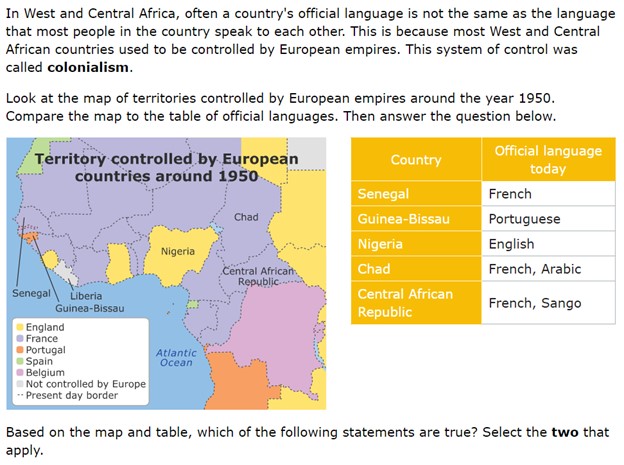
Based on the map and table, which of the following statements are true?

Select the TWO that apply.
Every country in West and Central Africa was controlled by a European empire in 1950.
France controlled most countries in West and Central Africa, but England controlled several as well.
Europeans brought European languages to West and Central Africa, and those languages are still used today.
There are no present-day effects of colonialism in West and Central African countries.
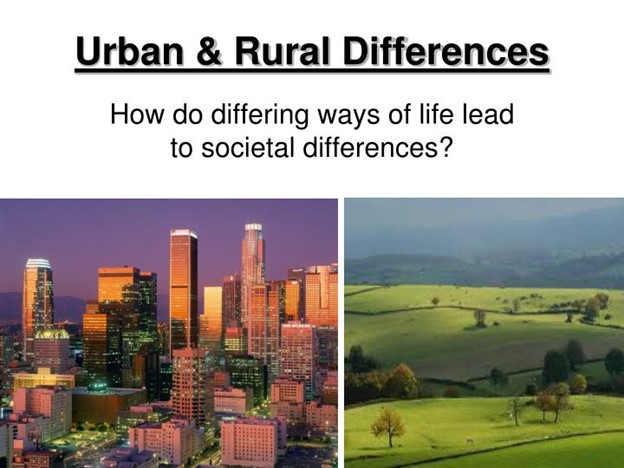
Analyze the image to answer the following...

The image represents a rural environment.
True
False
Analyze the image to determine the following...

The LEFT image represents an urban environment.
True
False