According to the video, the type of energy possesed by an object or a system due to the constant movement of particles within the object or the system is a type of kinetic energy called
Watch the video in Discovery Education, under the Engage tab.
This Formative will cover Unit 3.2-3.5
This Formative will cover Unit 3.2-3.5
Energy is defined as the ability to do
Energy be made from nothing. We have to convert it from other forms to make electricity. Many power plants rely on fossil fuels which are a source of energy. The energy in fossil fuels such as oil and coal is a form of energy. Once we run out of fossil fuels, we will have to rely on alternative energy sources, such as wind and solar which sustainable.
According to the video, the type of energy possesed by an object or a system due to the constant movement of particles within the object or the system is a type of kinetic energy called
Watch the video in Discovery Education, under the Engage tab.
Most of the energy on Earth originally came from the
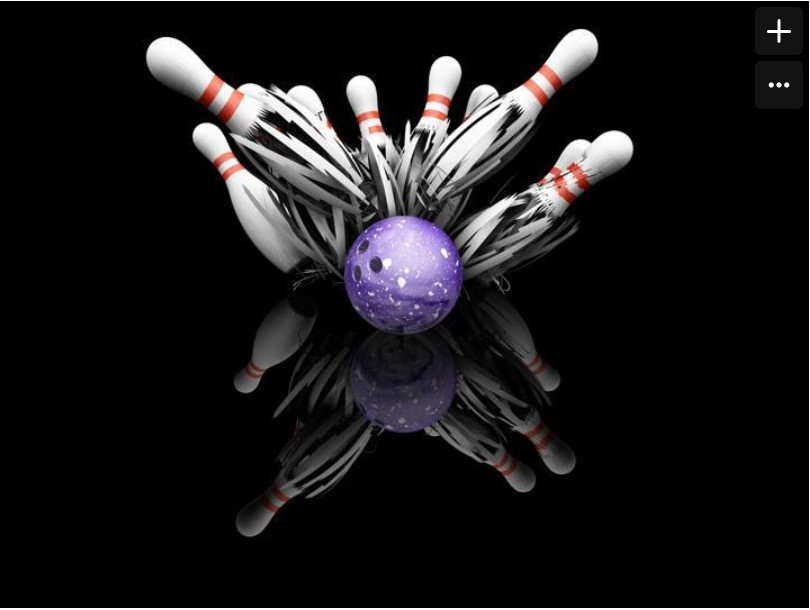
According to this picture, the bowling ball is energy and the pins are energy.
What does the law of conservation of energy state?
Stored energy is also known what kind of energy?
Energy of motion is also referred to as what type of energy?
Which formula describes each type of energy
| Draggable item | arrow_right_alt | Corresponding Item |
|---|---|---|
KE (kinetic energy) | arrow_right_alt | =mgh |
PE (potential energy) | arrow_right_alt | =1/2(m)(v)2 |
For the equation PE=mgh, the m represents
For the equation KE=1/2(m)(v)2, the m represents
A tennis player strikes a tennis ball from underneath with her racket. The ball is sent straight up with an initial velocity of 19 m/s. How high above the striking point will the ball travel? Include units.
A photographer sitting near the open door of a news helicopter accidentally drops his 140-g mobile phone out the door at an altitude of 990m. How fast will the phone be falling when it strikes the ground? Include units.
Match the following equations to the correct type of energy they must calculate
| Draggable item | arrow_right_alt | Corresponding Item |
|---|---|---|
Electric Potential Energy | arrow_right_alt | |
Change in Gravitational Potential Energy | arrow_right_alt | |
Elastic Potential Energy | arrow_right_alt |
A boy with mass 25 kg climbs into a small tree. He sits on a branch that is 2.0 meters above the ground. What is his gravitational potential energy with respect to the ground?
A cat with mass 4.0 kg jumps down to the floor from a bookcase 2.0 m high. What is the cat's change in gravitational potential energy? Include Units
To store stacks of clean plates, a cafeteria uses a closed cart with a spring-loaded shelf inside. Customers can take plates off the stack one at a time through a hole in the top. A stack of plates compresses the spring 0.40 m. The spring constant is 240 N/m. What is the elastic potential energy of the spring? Include units.
Customers take plates from the same cart as question 21. As a result, the spring moves up to be compressed by only 0.30 m. What is the change in elastic potential energy. Include units.
For Electric Potential Energy, two particles with the same charge (both positive or both negative) will move
A fixed source charge particle of 4.1 nC and a second particle with charge 2.4 nC are separated by a distance of 3.5 cm. What is the electric potential energy between the particles? And if the second particle is released, will it move toward or away from the source charge? Include units.
A toy cannon launches a 46-g golf ball straight up into the air with a kinetic energy of 6.8 J. What must be the ball's velocity be as it leaves the cannon? Include units.
A hockey player shoots a puck across the ice with kinetic energy 63 J and velocity 28 m/s. What is the mass of the puck in grams? Include units.
To demonstrate the law of conservation of energy, measure the gravitational
Thermodynamics describes limits on energy exchange as
is the transfer of thermal energy from one object to another. is transferred any time a lower-temperature object is brought into contact with a higher-temperature object. Thermal energy flows from objects to objects. Eventually, heat will transfer enough energy that the two objects will reach a state of .
Match the type of system with the correct description.
| Draggable item | arrow_right_alt | Corresponding Item |
|---|---|---|
Isolated System | arrow_right_alt | Mass cannot enter or leave the system, but energy is free to enter or leave the system |
Closed System | arrow_right_alt | Both mas and energy can enter or leave the system. |
Open System | arrow_right_alt | Neither energy nor mass can enter or leave the system. |
In the context of thermodynamics, internal energy of an object is the sum of all the
The law of thermodynamics stating that if object A=B (in thermal equilibrium) and A=C (in thermal equilibrium), then B=C too, must be in thermal equilibrium is known as the . The states that in any natural process, the total entropy of a system and its surrounding environment must increase. The is another way of stating the principle of conservation of energy (that energy is neither created nor destroyed) and is expressed in equation form as the change in internal energy of a system is equal to the thermal energy added by heat to the system plus the word done on the system. The states that at absolute zero, all processes stop and entropy reaches a minimal value.
A reversible process is one that can be done in reverse without changing the total energy of the system, which in reality, does not exist due to what factors?
Match key vocabulary with their definitions (use the glossary in DE to assist if necessary)
| Draggable item | arrow_right_alt | Corresponding Item |
|---|---|---|
magnetic field | arrow_right_alt | a current flows through a substance when light hits its surface; also known as the Hertz effect |
frequency | arrow_right_alt | a set of lines that defines the motion of charged particles near each other |
electromagnetism | arrow_right_alt | a wave that can transport its energy through a vacuum i.e. space |
electric field | arrow_right_alt | a set of forces due to stationary or moving electric charges |
voltage | arrow_right_alt | the number of waves that pass a given point during a specified period of time |
photoelectric effect | arrow_right_alt | a distribution of electrons within a conductor caused by a varying magnetic field |
electromagnetic wave | arrow_right_alt | a set of lines that defines the motion of charged particles near a magnet |
induction | arrow_right_alt | a measure of the electrical potential difference between two points |
The photoelectric effect as explained by Einstein requires us to think about light as distinct energy packets, called
Every charged particle is surrounded by a(n) field. One big difference between electrical forces and gravitational forces act only to two bodies, whereas electrical force can be .
Magnetic forces affect magnetic objects. Magnetic fields arise either from permanent magnets or from the flow of
An electric field is present with one or more
The mutual interaction between electric and magnetic fields is known as
What type of wave are electromagnetic waves?
What element is the video referring to?
Why can't we 'harvest' (that is to say, why can't we get) hydrogen from the atmosphere (air)?
Instead of getting hydrogen from air, we can get it from water by splitting hydrogen from oxygen...but there's one problem...what is that problem?
What is the solution the speaker is suggesting for producing hydrogen with the least amount of energy?