DE_Phys_Unit2_Forces at a Distance
star
star
star
star
star
Last updated over 2 years ago
33 questions
2.3 Electric Forces
1
A positively charged spherical object is placed equidistant between two other identical uncharged spherical objects. How would the charges in the middle sphere be distributed?
1
The greater the magnitude of the two charges, the stronger the electric force.
2
Two charged particles Q1 and Q2 are at a distance R. Classify some of the following as either increase electric force, decrease electric force, or stay the same.
- Decrease distance
- Decrease the charge on Q2
- Double the charge on Q1 and double the distance
- Increase charge on Q1
- Double Q1 and half Q2
- Increase Electric Force
- Stay the Same
- Decrease Electric Force
2
Static shock is caused from the transfer of charges from carpet to body caused by _______.
The concept of charge is due to the gaining or losing of _______ by an atom.
2
Rubbing a balloon with a cloth towel is an example of producing a charged body by __________.
When a charged balloon attracts pieces of neutral paper, this is due to__________.
4
Consider the following objects and their environments and determine if they will produce an electric charge.
Gasoline combusting. __________
Two socks stuck together when they come out of the dryer. __________
A charged balloon bending a stream of water coming from a faucet. __________
Two papers glued together. __________
A tree growing around a piece of metal. __________
A cloud in a storm about to discharge lightning. __________
A tennis ball being thrown from someone's hand. __________
1
What is the equation for Coulomb's law?
1
What is the value of K in Coulomb's law?
K = _______
2
If two objects have like charges, the electric force is _______. It will _______ the objects away from each other.
If two objects have unlike charges, the electric force is _______. It will _______ the two objects toward each other.
1
Two copper spheres are currently 1.2 meters apart. One sphere has a charge of +2.2 x 10⁻⁴ C and the other has a charge of -8.9 x 10⁻⁴ C. What is the force between the charged spheres? Is the force attractive or repulsive?
1
Two metal rods in a factory are oppositely charged and placed 8.9 cm apart. One rod has a charge of +7.5 x 10⁻⁷ C and the other has a charge of -5.1 x 10⁻⁵ C. What is the force between the rods? Is it an attractive or repulsive force?
3
Seamus is conducting an experiment on electric force. He wants to get an approximate idea of how much force the charges will generate. Reorganize each example to show the force of each situation in increasing order from lowest to highest (with repulsive forces being positive and attractive forces being negative).


2.4 Gravity
1
Two students stand close to each other. Why do they not get pulled closer to each other due to the gravitational pull they exert on each other?
5
Each of the following statements describes some aspect of an unknown force. Determine whether each statement could possibly describe a gravitational force.
- causes two objects to move closer together
- binds electrons to the nucleus of an atom
- increases with increasing mass
- plays a role in the radioactive decay of some atoms
- is a repulsive force
- acts over large distances
- Possible
- Not Possible
1
Why do astronauts in outer space feel like they are floating?
1
Gravitational force is _______ proportional to the square of the distance between the two objects. As the distance _______, the force becomes weaker. As the distance _______, the force becomes stronger.
1
What is the equation for measuring Gravitational Force?
1
A 485 kg sphere sits at 14.0 km due north of an 852 kg sphere. What is the force of gravity on the first sphere due to the second sphere? Compare this to the force of gravity on the second sphere due to the first sphere.
1
Two 2.5 kg bowling balls are 0.50 m apart. What is the force of gravity on the first bowling ball due to the second? Compare this to the force of gravity on the second bowling ball due to the first.
1
What is the distance between two objects if one (a 185,000 kg object) experiences a gravitational force of 0.00200 N due to a 225,000 kg object.
1
Using the universal law of gravitation, solve for r if given two masses (122,000 kg and 225,000 kg) and a gravitational force between two of 0.00500 N.
2
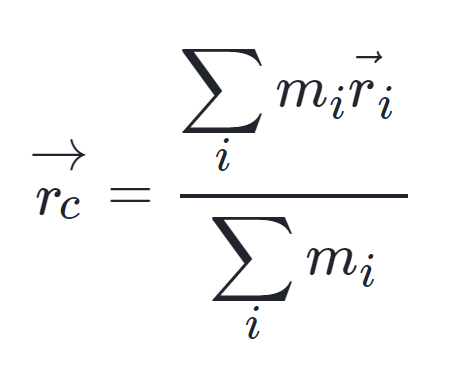
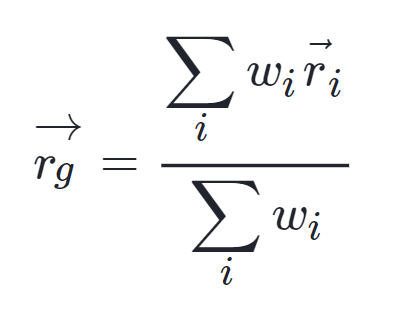
Categorize the following items on whether they match with the center of mass or center of gravity.
- The average location of the gravitational force on the system.
- The average location of the mass in the system.
- Calculated using object's weight
- Calculated using object's mass
- Center of Mass
- Center of Gravity
1
What is the equation used to calculate the gravitational force of objects near the Earth's surface?
1
What is the force of gravity due to Earth on a 215 kg boulder on the Earth's surface?
1
You can use Newton's law of universal gravitation to find the _______ force between two masses. If gravitational force is given, Newton's second law can be used to describe the _______ of the object.
2.5 Movement in Space
3
Classify the following words into the following three categories: movement, position, body.
- meteor
- equinox
- apogee (or solstice or perigee)
- lunar phase
- asteroid
- revolution
- retrograde
- comet
- eclipse
- planet
- rotation
- Movement
- Position
- Body
1
As Earth revolves around the Sun and rotates on its axis, the seasons change. When it tis summer in the Northern Hemisphere, it is winter in the Southern Hemisphere. Some think the distance from the Sun determines the seasons; however, summer in the Northern Hemisphere occurs when Earth is farthest from the Sun. How is this possible?
3
According to Kepler’s first law of planetary motion, the orbits of the planets are ellipses, and the sun is located at one focus of each of the orbital ellipses.
An ellipse is an elongated circle. The degree of elongation is called _______. An eccentricity of 0 produces _______. An eccentricity of 1 produces a _______ (parabola). An eccentricity between 0 and 1 produces an _______. Located within every ellipse are two points, called _______.
2
According to Kepler’s second law of planetary motion, the ______________ line joining a planet to the sun sweeps out __________ areas of space in equal amounts of _________ as the planet travels around the ____________ of its orbit.
Other Answer Choices:
unequal
distance
ellipse
circle
equal
time
imaginary
1
According to Kepler’s third law of planetary motion, the square of a planet's orbital period (defined as one year for Earth) is directly proportional to the cube of its average distance from the sun.
What is the simplified equation that represents this law of planetary motion?
According to Kepler’s third law of planetary motion, the square of a planet's orbital period (defined as one year for Earth) is directly proportional to the cube of its average distance from the sun.
What is the simplified equation that represents this law of planetary motion?
1
Suppose an asteroid orbits the sun with a mean radius 11 times that of Earth. Use the simplified version of Kepler’s third law to find the period of the asteroid? Round your answer to the nearest Earth year.
1
We know that the orbital period of Haley's Comet is about 75 years. What is its mean radius from the sun as compared to Earth?
3
Which law of phenomenon explains each of the following facts? Drag each fact into the correct category.
- Earth experiences seasons.
- Earth experiences tides.
- Satellites stay in orbit around Earth.
- Earth is not always the same distance from the sun.
- The length of years varies among planets.
- Earth experiences equinoxes and solstices.
- Planetary orbits are elliptical.
- People weigh more on Jupiter, in newtons, than on Earth.
- Law of Universal Gravitation
- Kepler's Laws of Planetary Motion
- Earth's Tilt on its Axis