APUSH Chapter 33-34 - FDR and the Shadow of WWII (1933-1945) - SY23
star
star
star
star
star
Last updated about 2 years ago
41 Nsɛmmisa
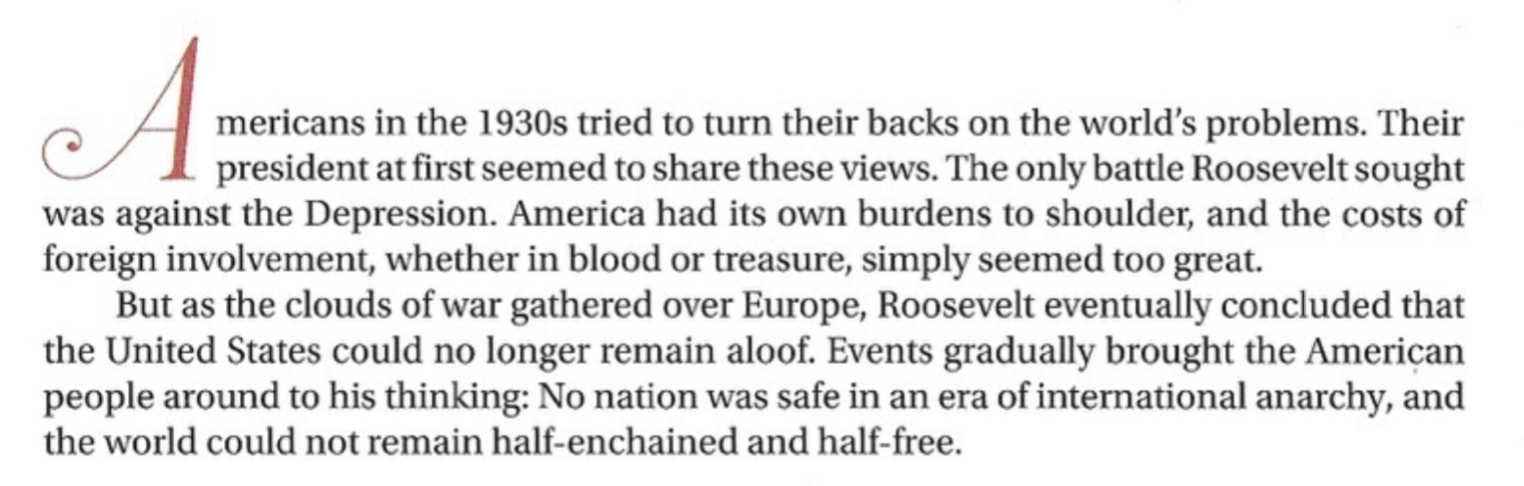
What are your thoughts on war? Is conflict between multiple nations something that should be avoided at all costs or a necessary evil?
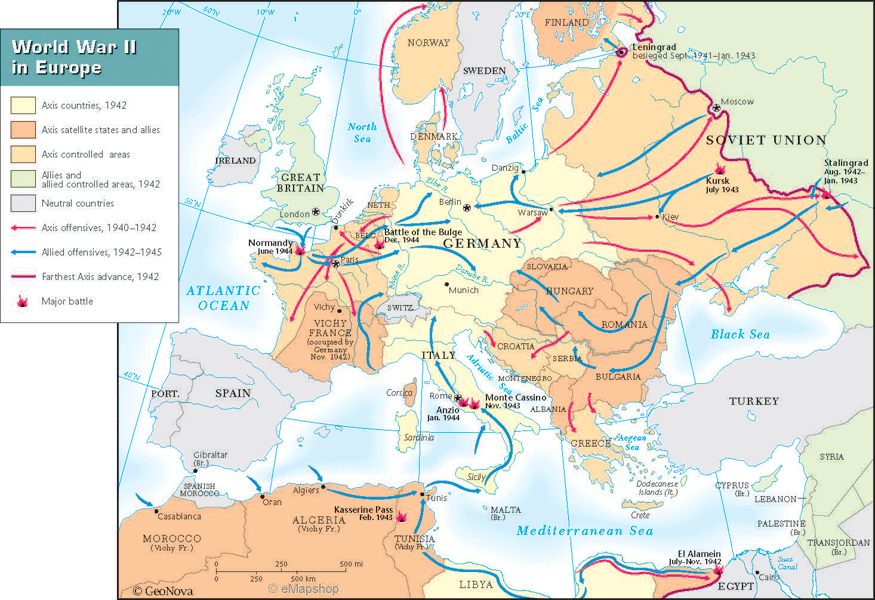
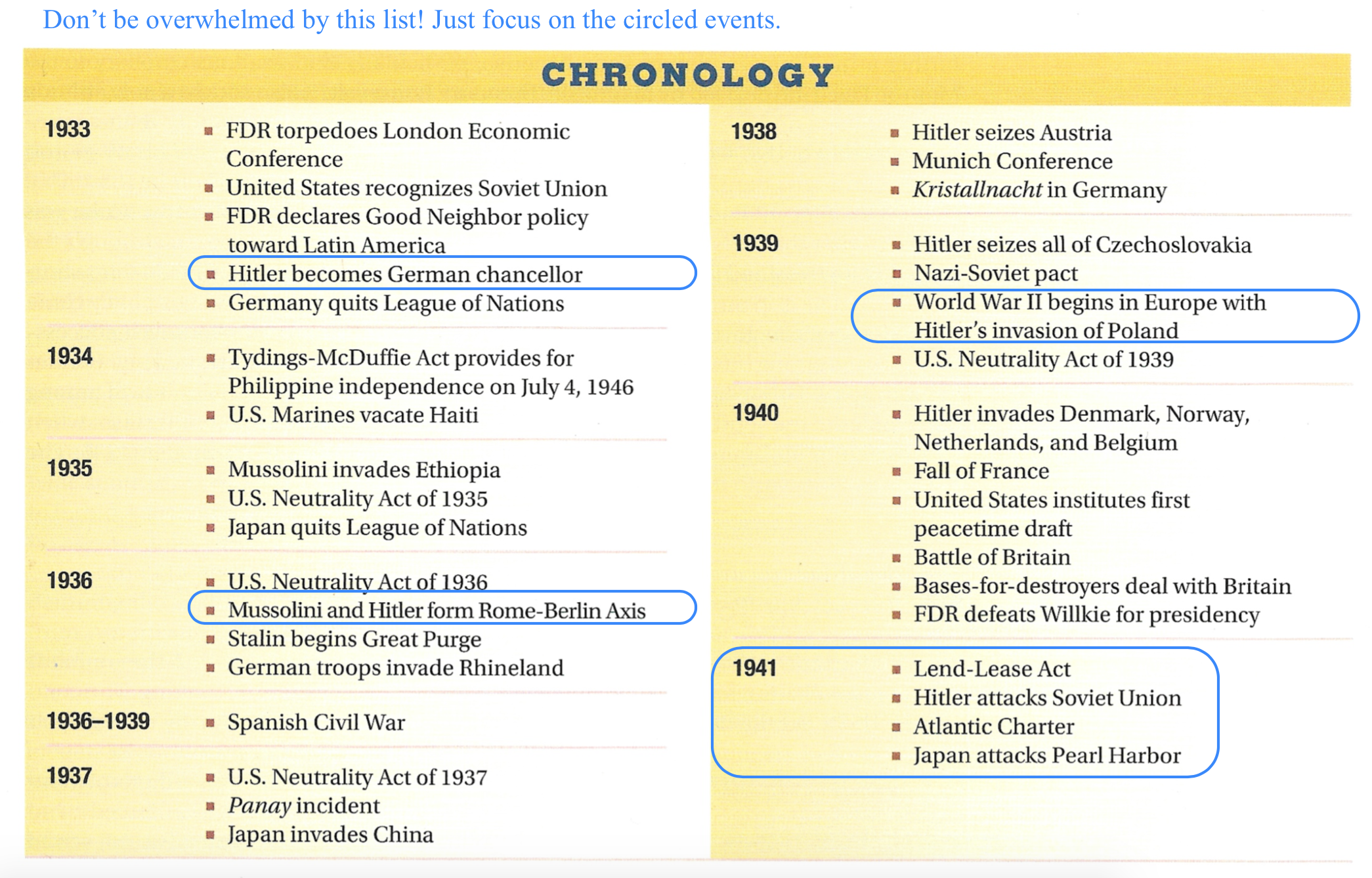
World War II was the biggest and deadliest war in history, involving over
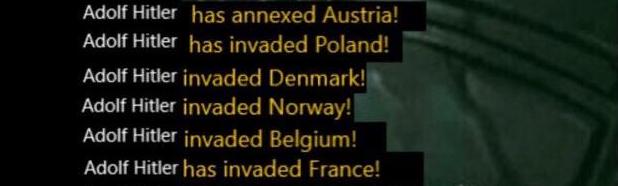
Sparked by Nazi Germany invading
Due to
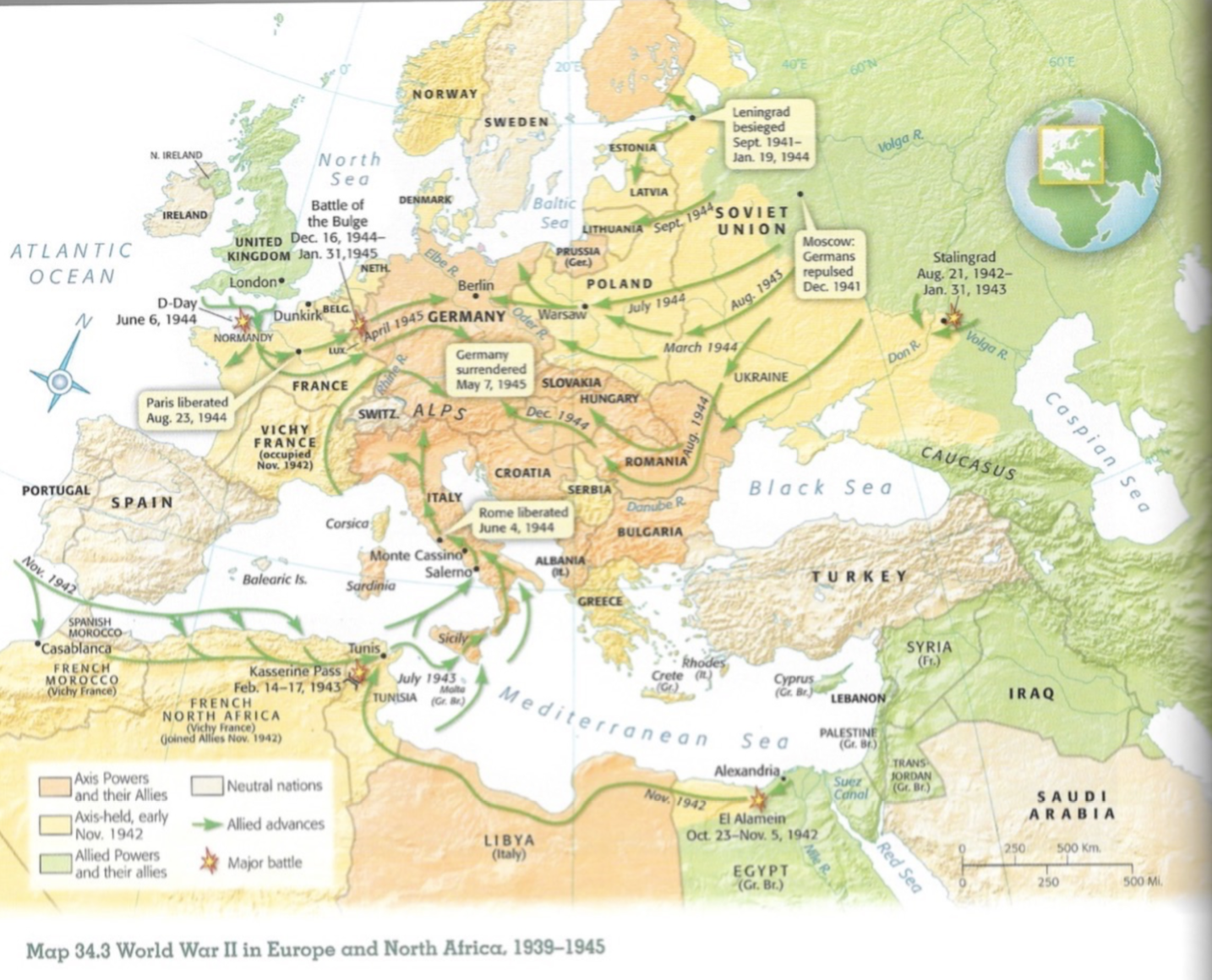
Please categorize each country to the corresponding side in World War II.
France
Japan

Great Britain
Italy

Russia
Germany

United States

Axis Powers
Allied Powers
Both (Axis -> Allied Power)
The worldwide Great Depression of the 1930s took its toll in different ways throughout the world. In Europe, political power shifted to
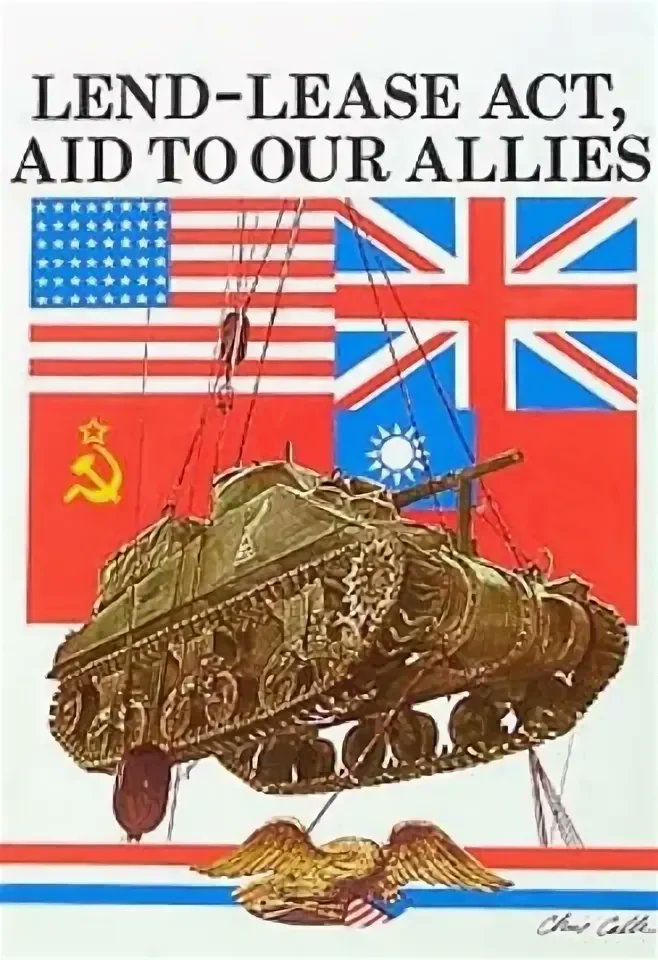
The United States, however, chose to withdraw from world affairs and concentrate on its own economic problems.
What is the Point of View of this political cartoon regarding the U.S. government's handling of WWII?
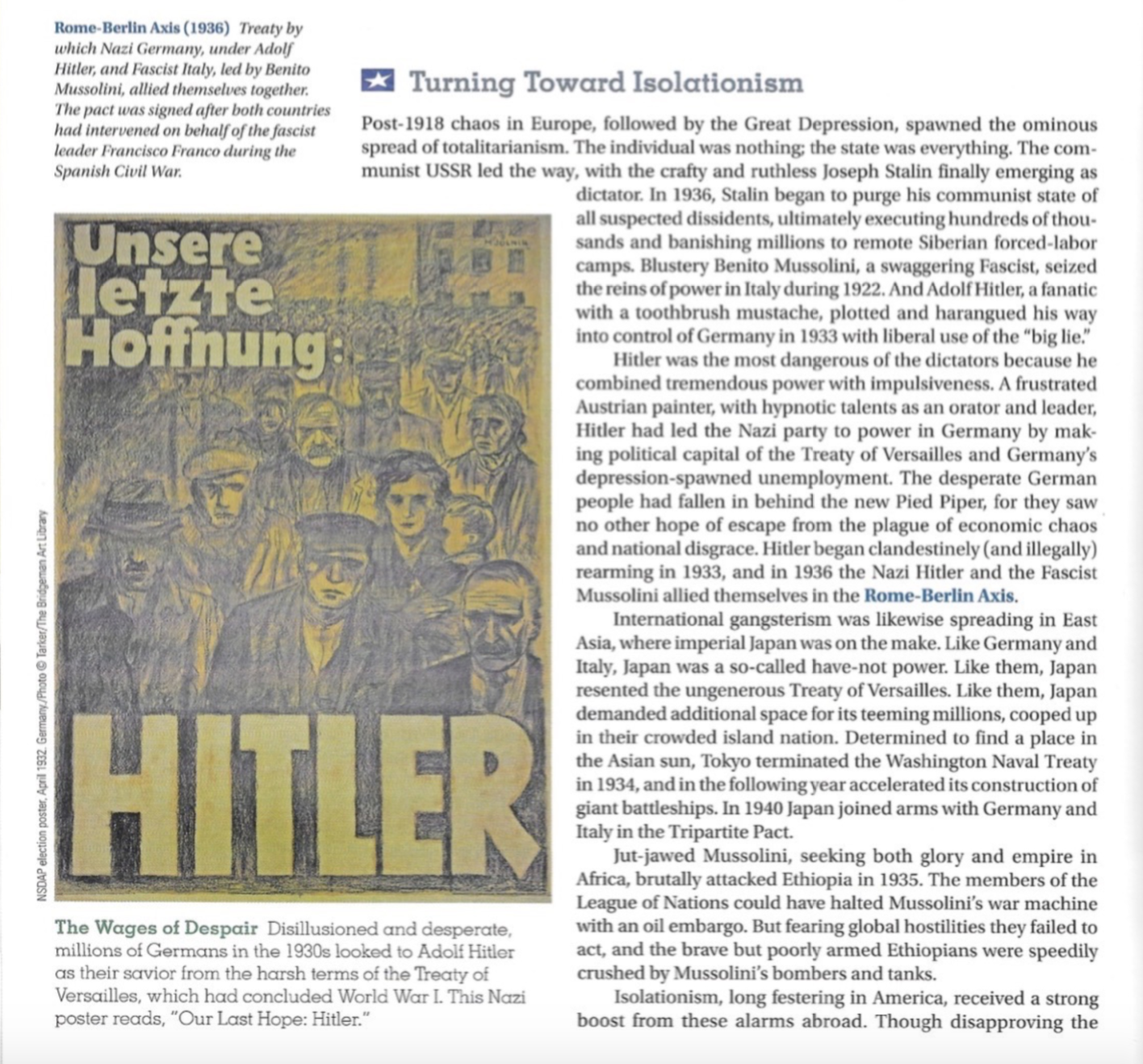
The main idea of totalitarianism is
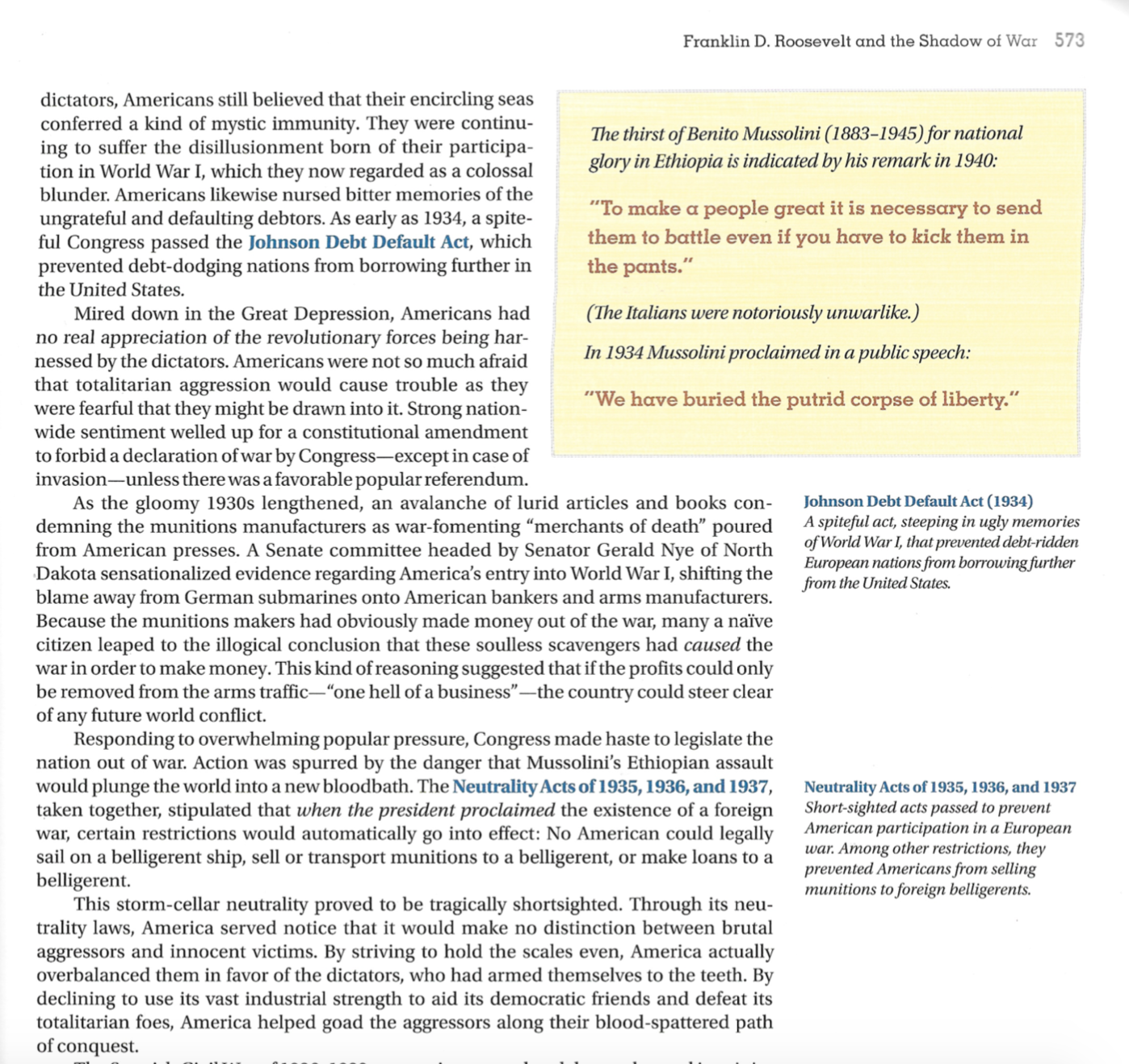
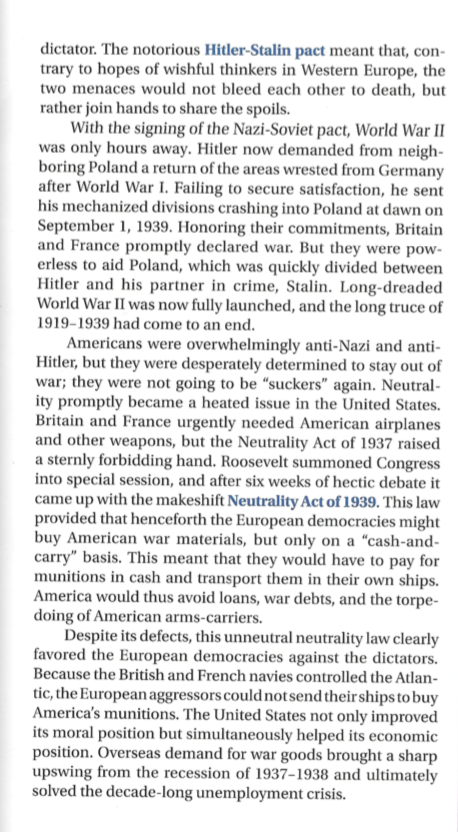
The passage indicates that the American people responded to the aggressive actions of Germany, Italy, and Japan by
Which choice provides the best evidence for the answer to the previous question?
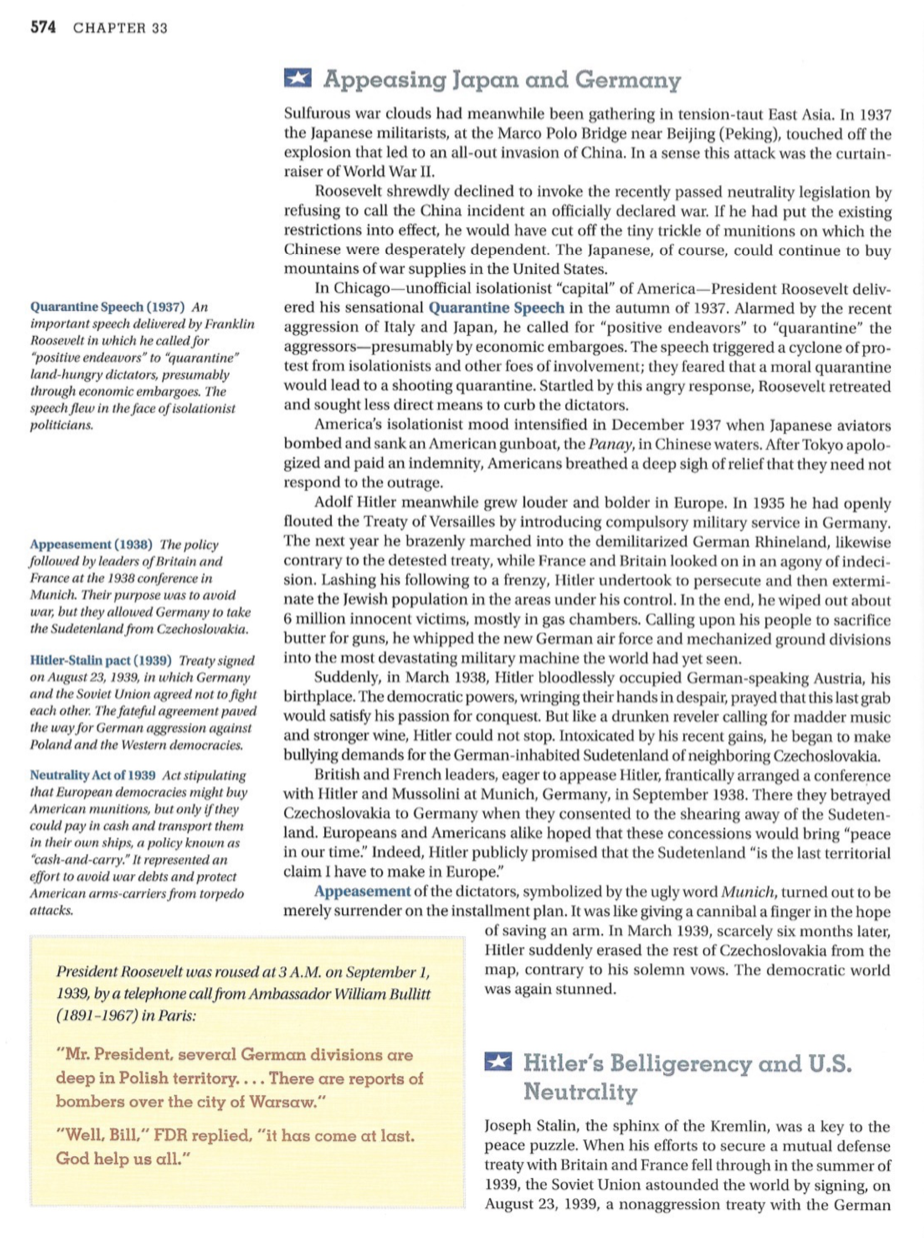
As used in line 1, "appease" most nearly means

That's all due in-class on Thursday-Friday, 4/13-14/2023. Any questions?
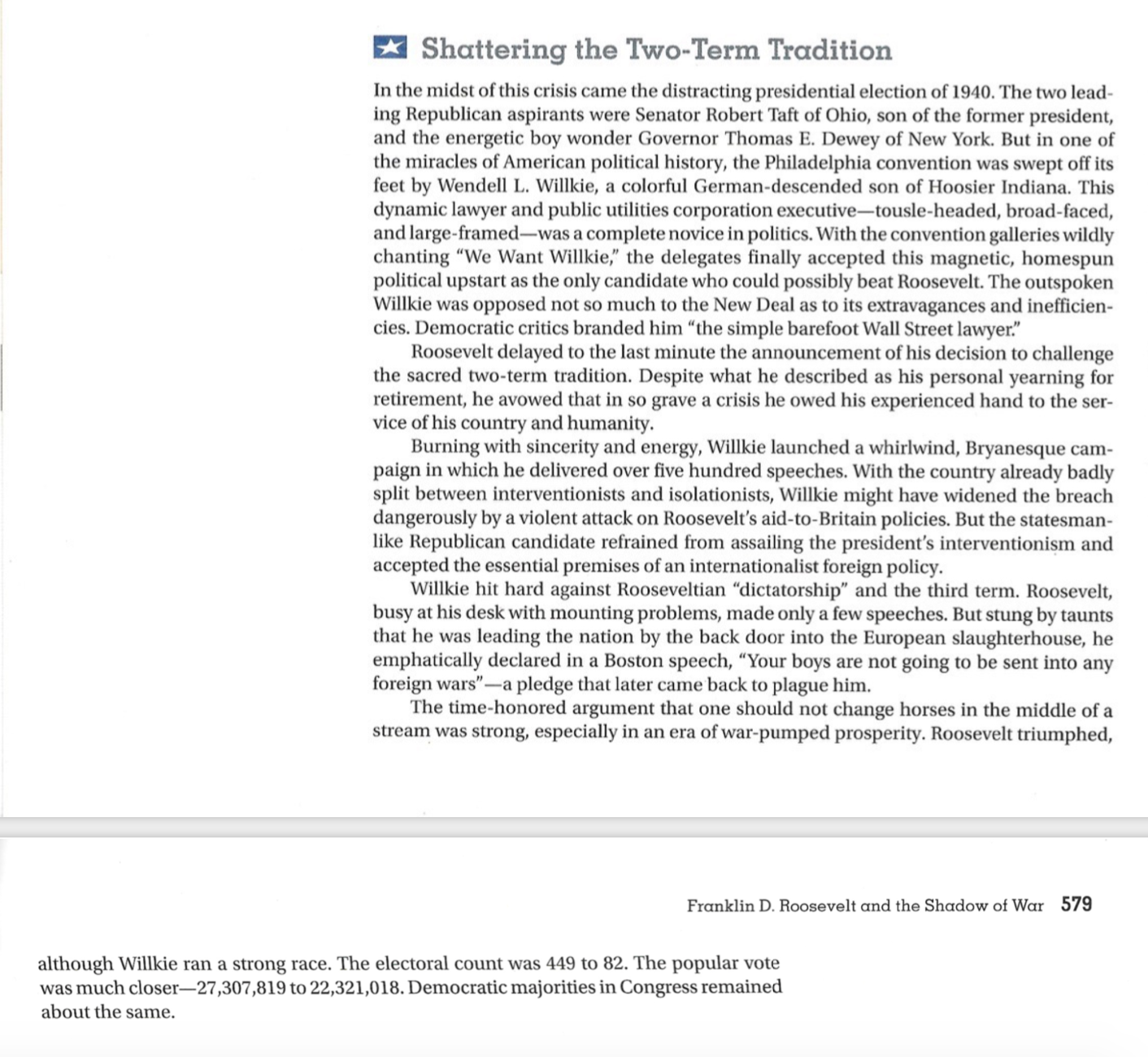
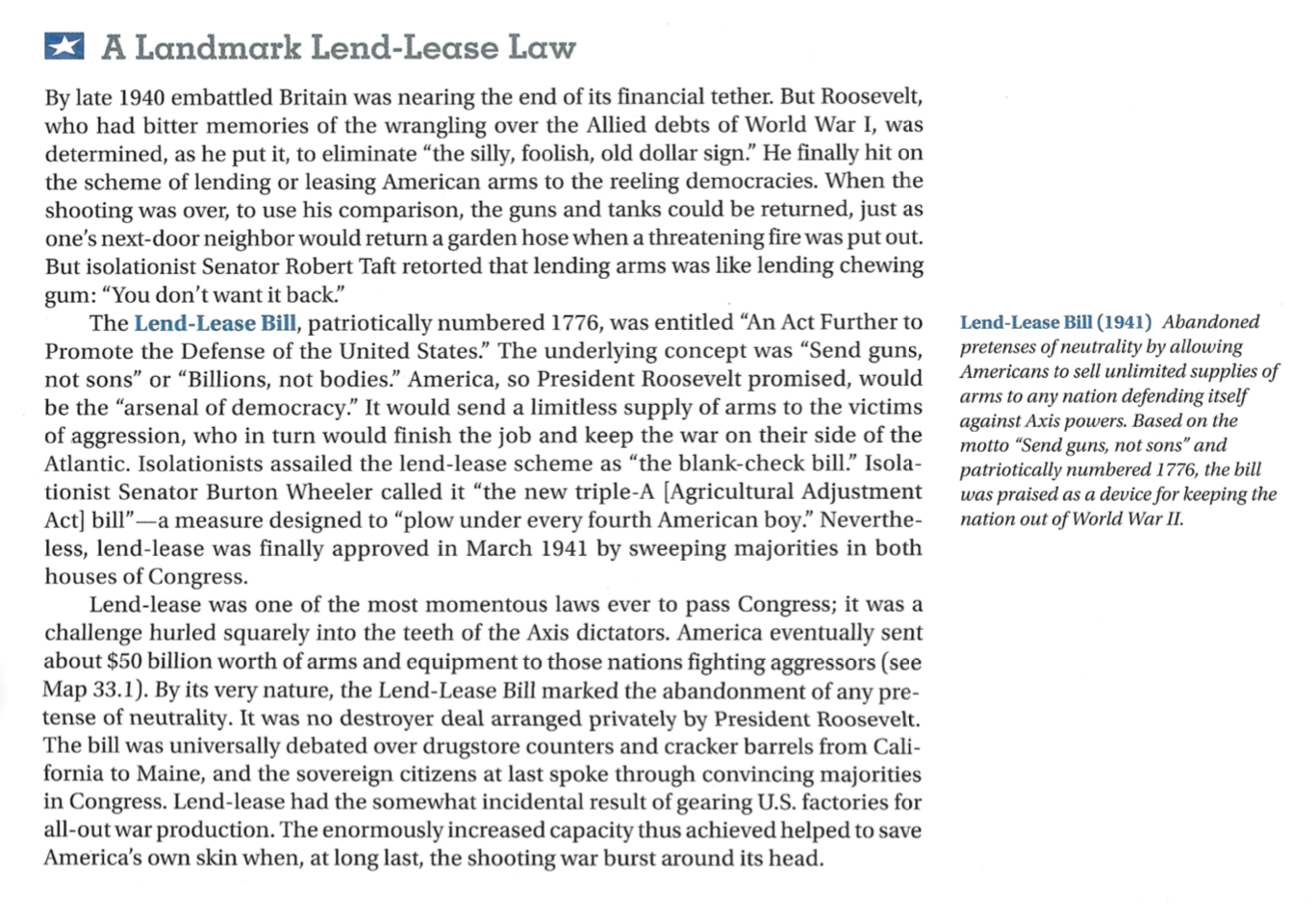
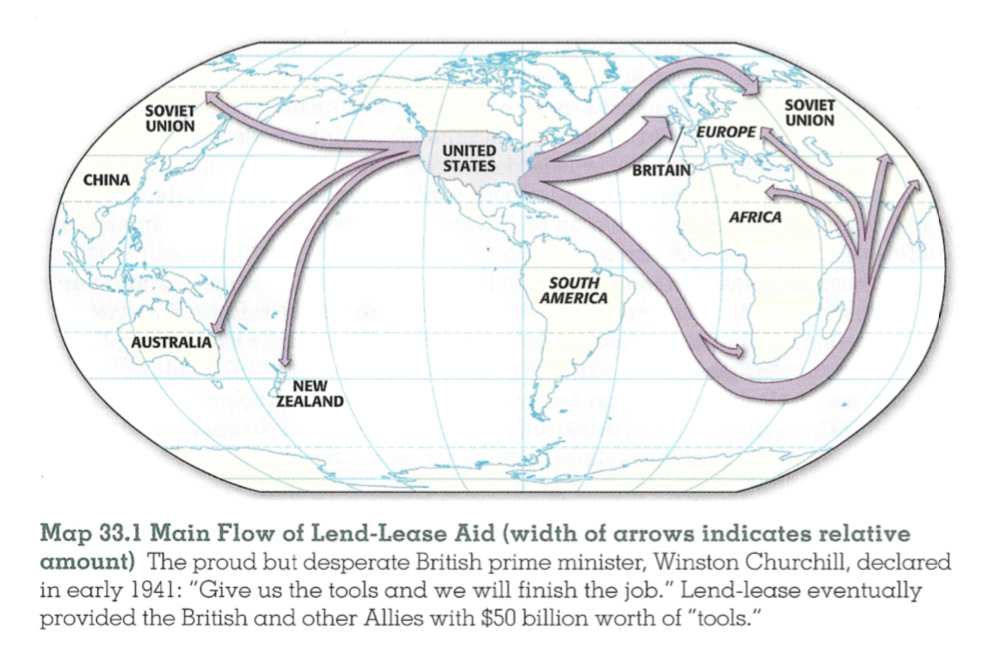
The passage indicates that the 1941 Lend-Lease Act was
Which choice provides the best evidence for the answer to the previous question?
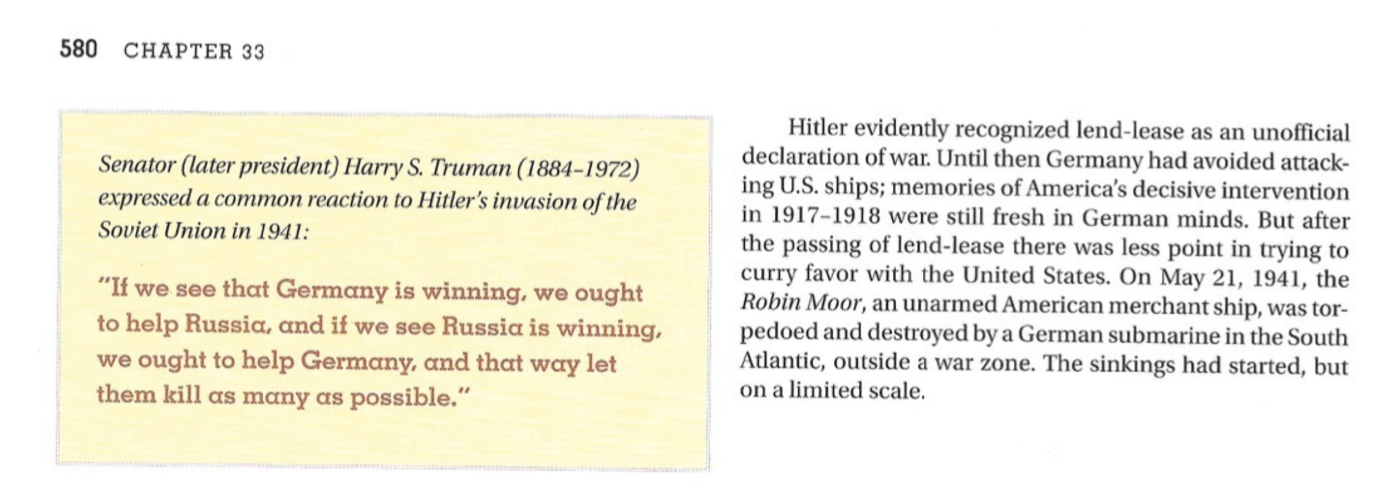
As used in line 1, "evidently" most nearly means
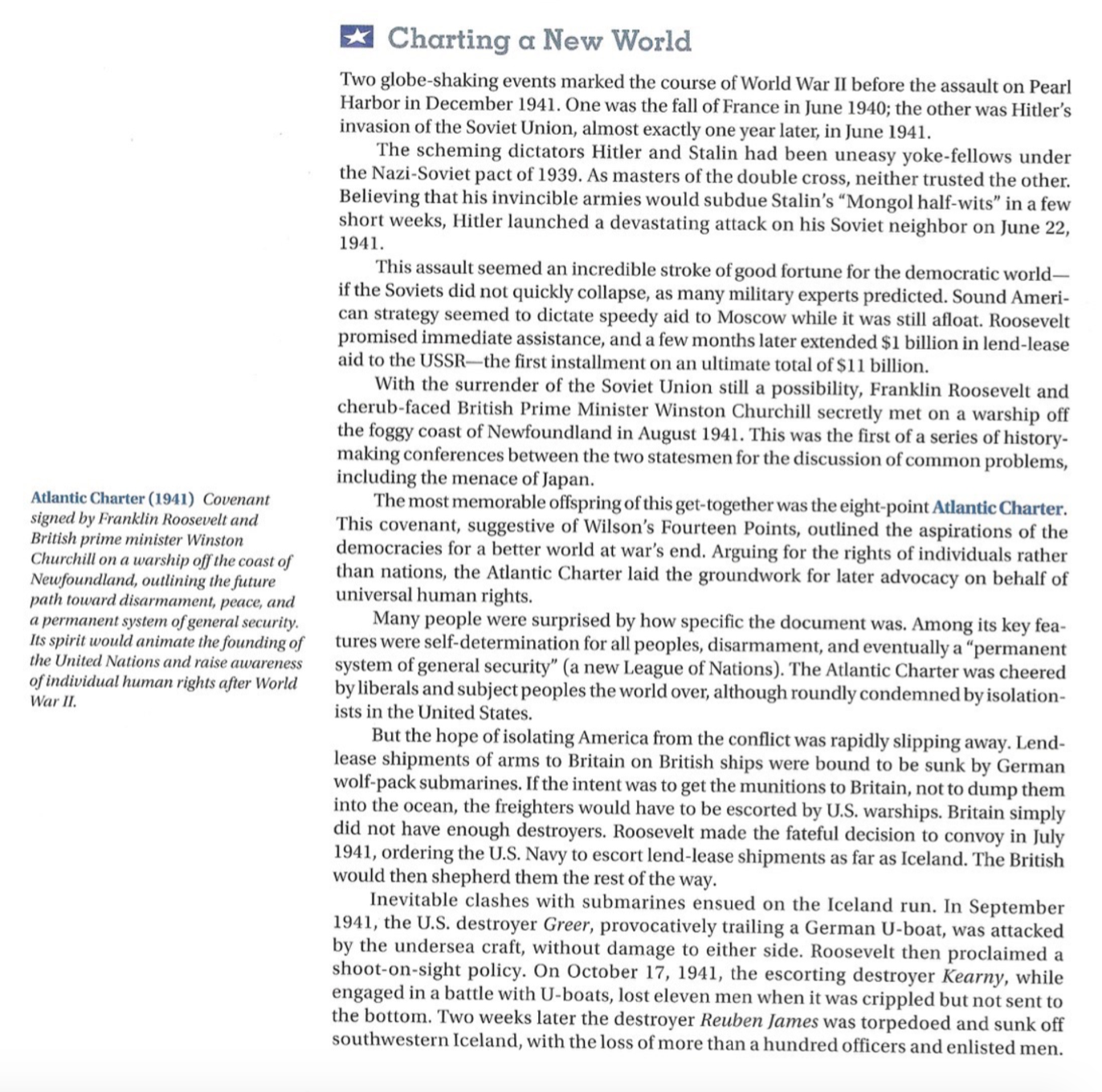
The Atlantic Charter signed by the United States and Britain in August 1941 called for
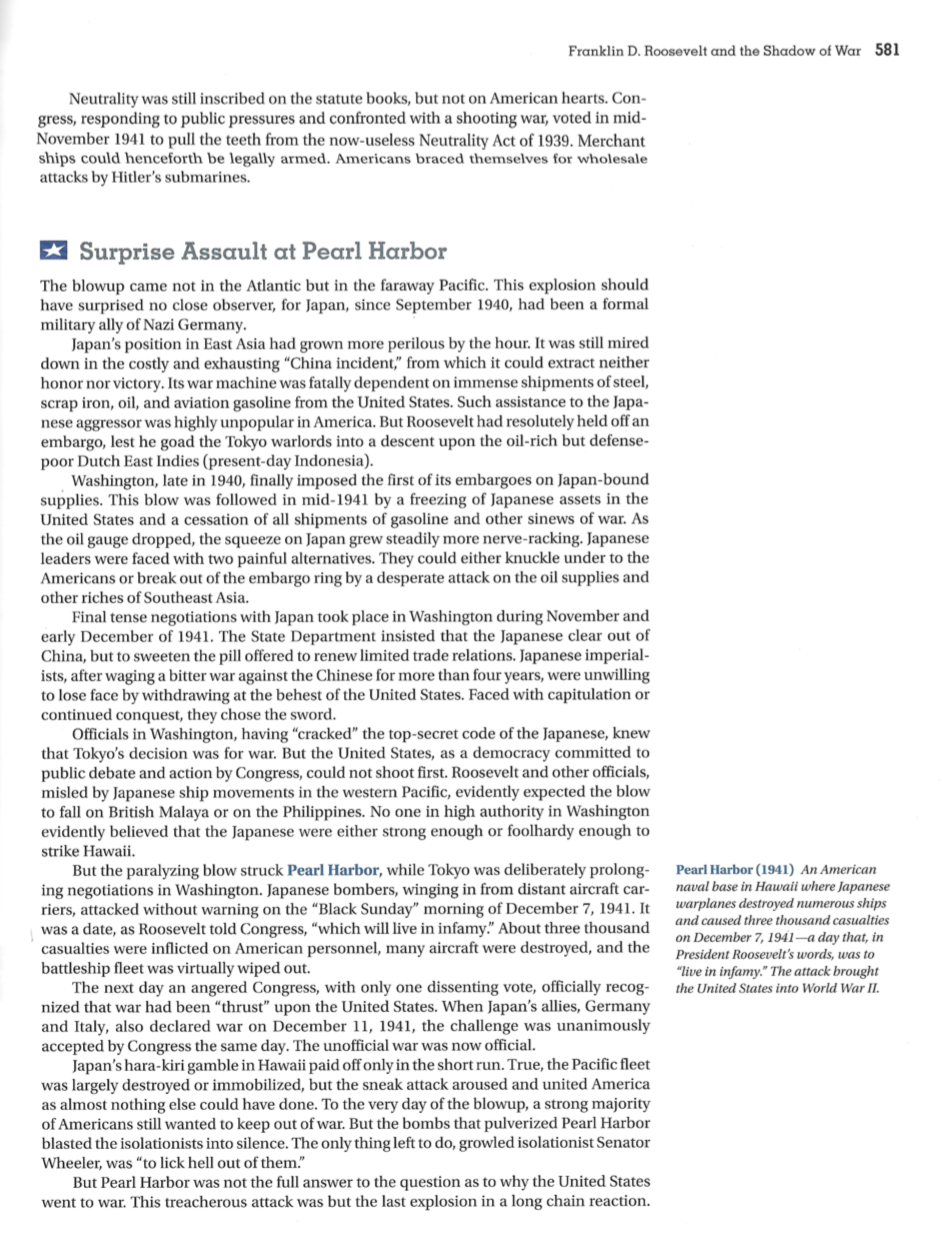
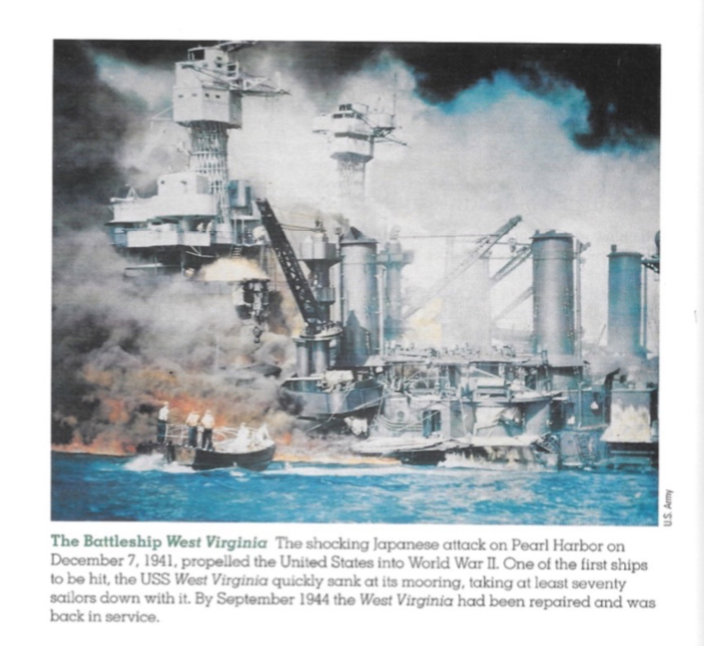
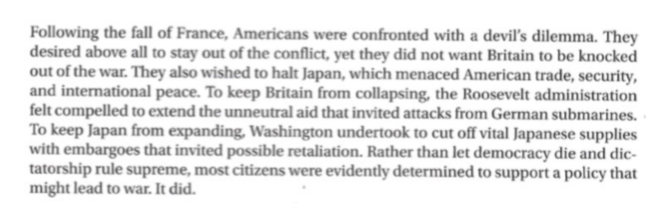
Which choice best reflects the perspective of the Japanese government regarding Pearl Harbor?
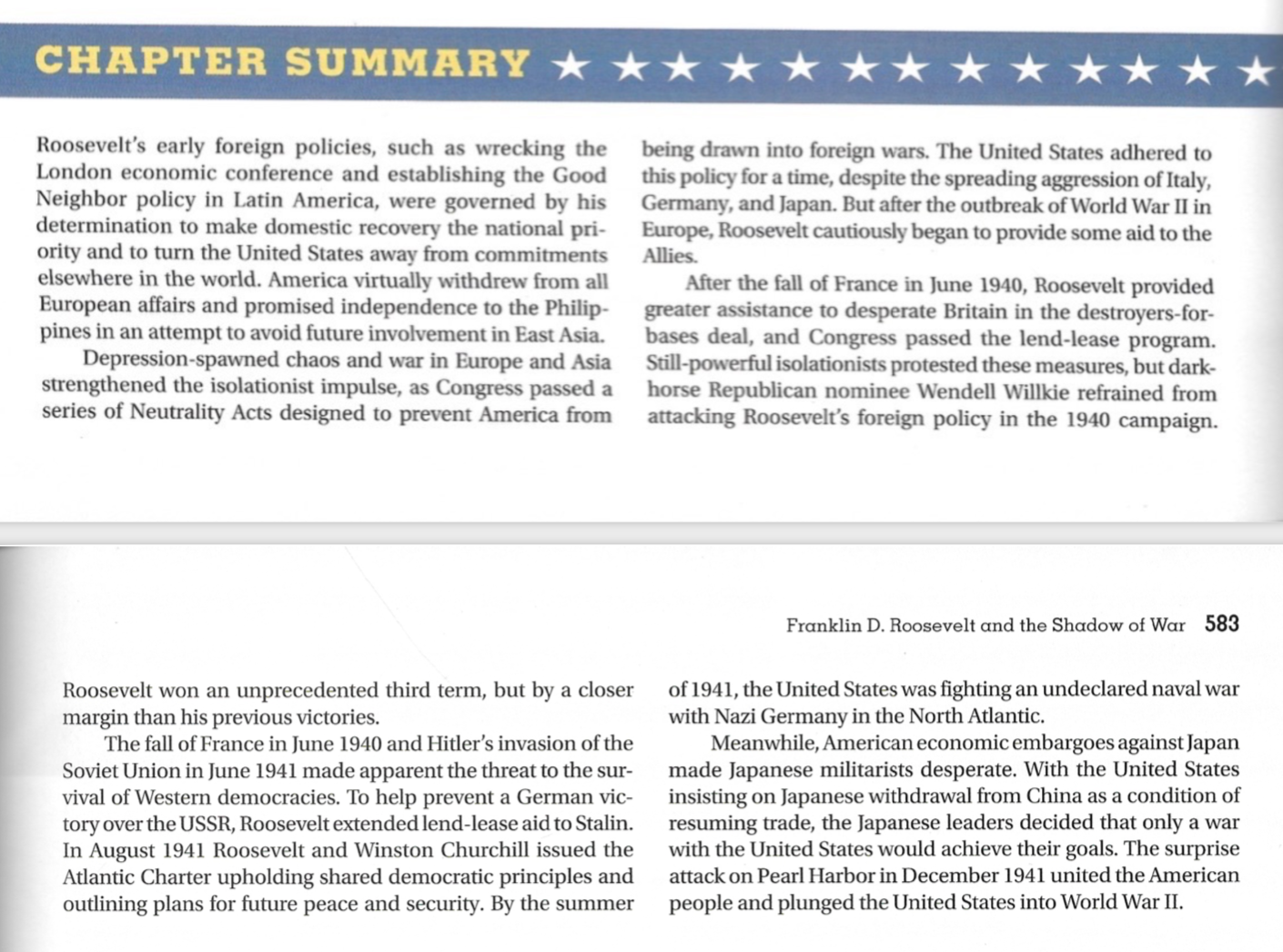
Excellent reading! Close out this Chapter by reviewing the "Chapter Summary" and using the "rectangle" tool to box the 5 most important key terms in the space provided.
That's all due on Monday, 4/17/2023. Any questions?
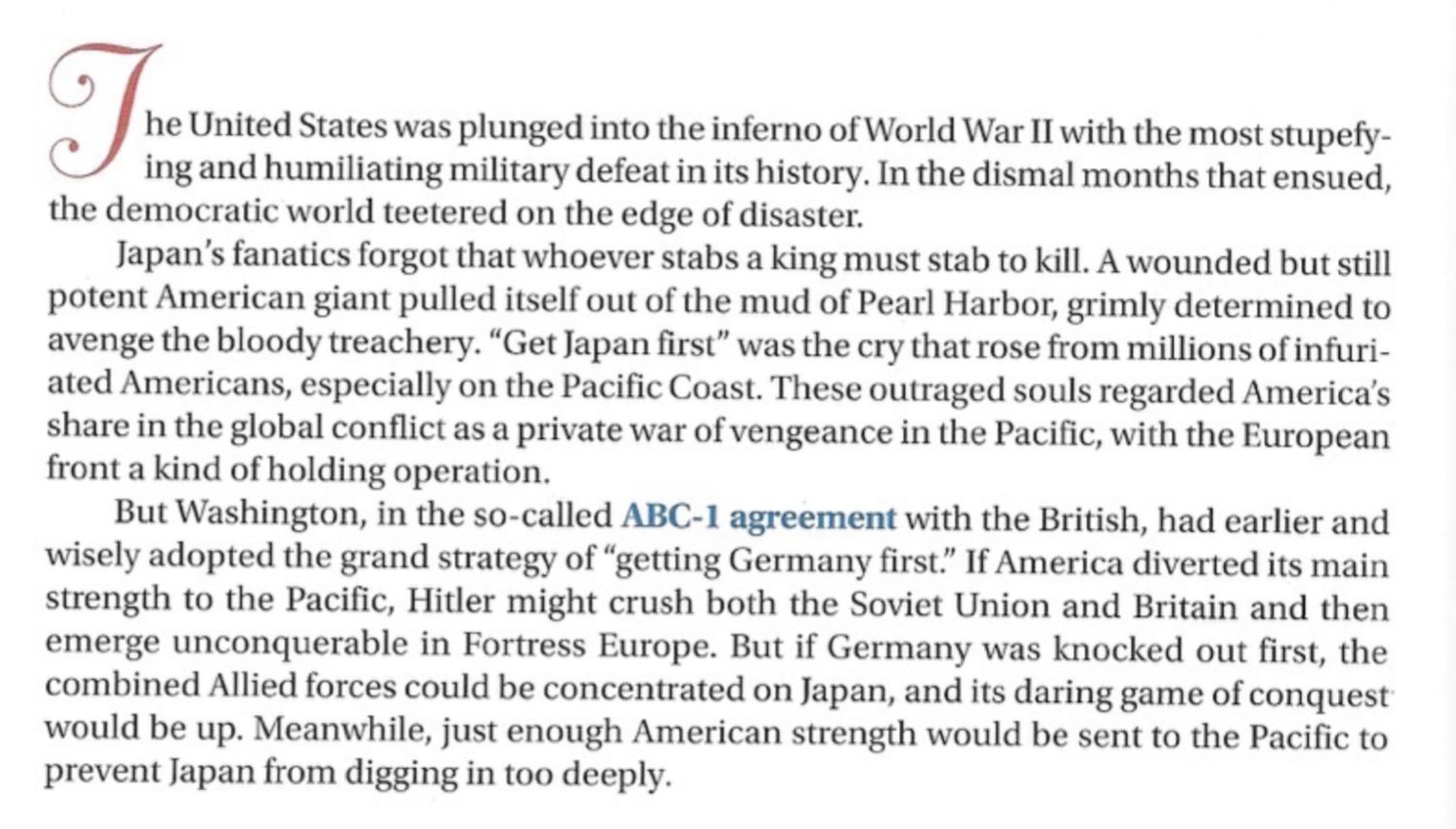
In sharp contrast to World War I, U.S. entry into WWII received near unanimous support from Americans. Why do you think this was the case after the U.S. had a long history of isolationism?
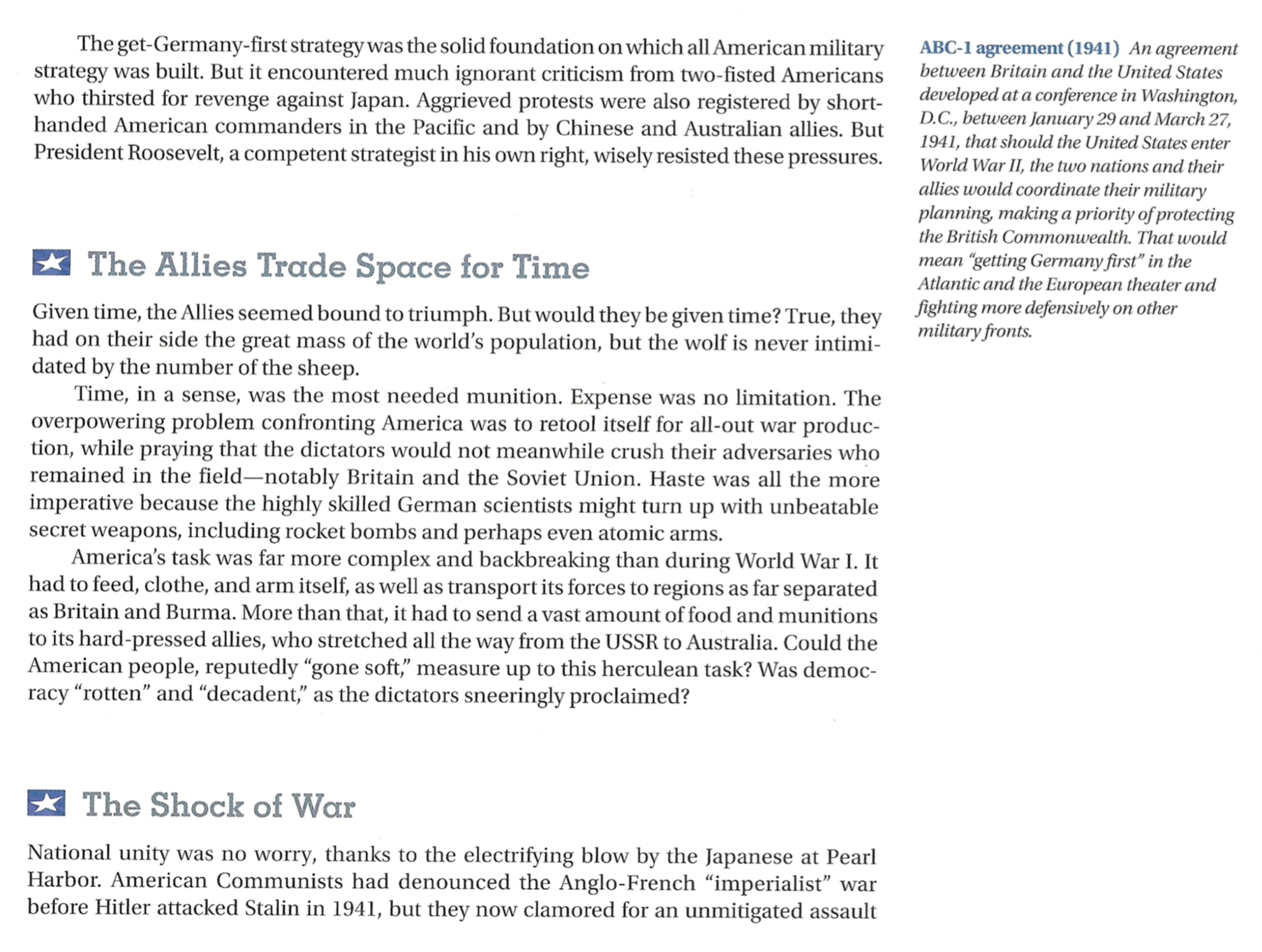
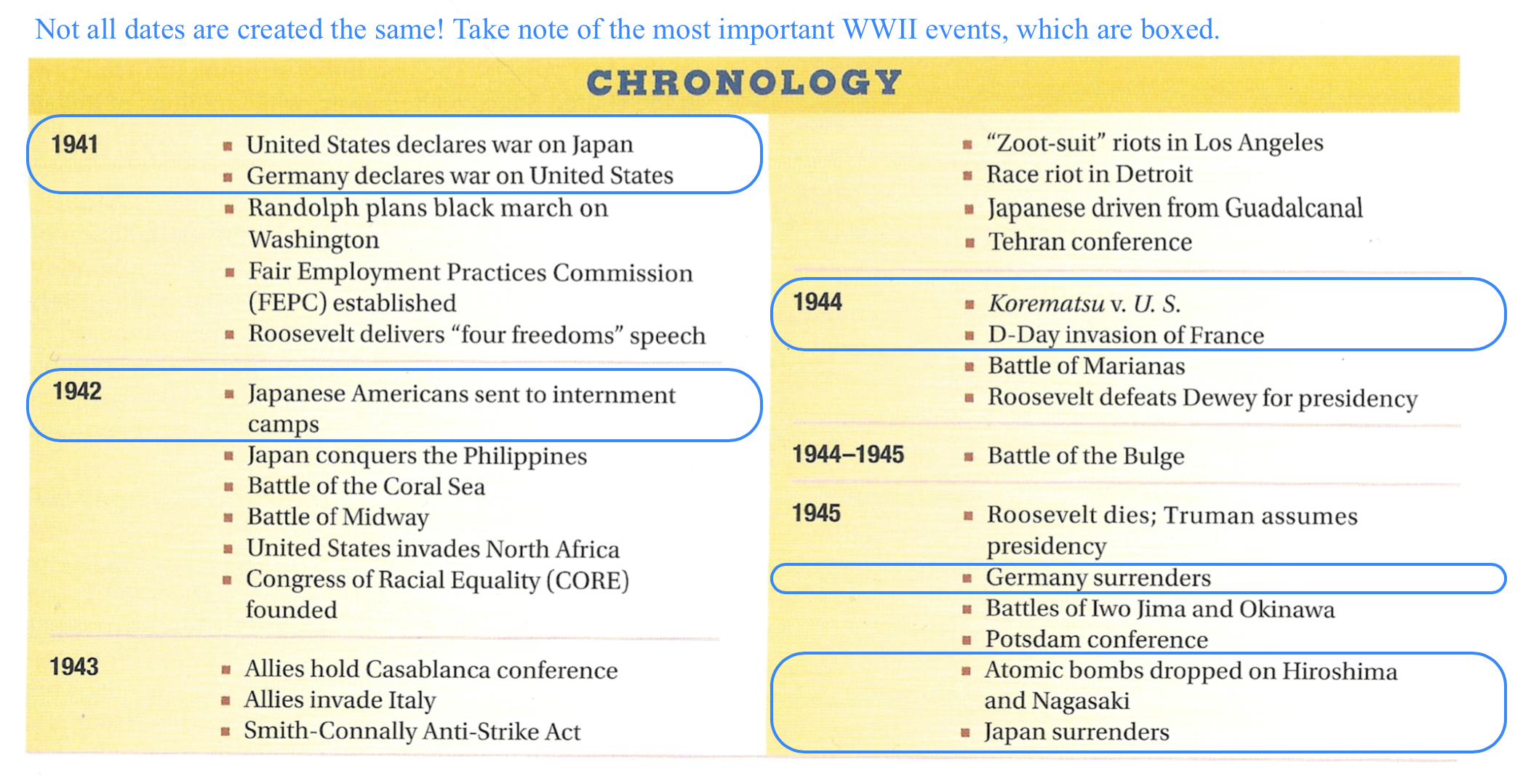
Once at war, America's first overpowering challenge was to
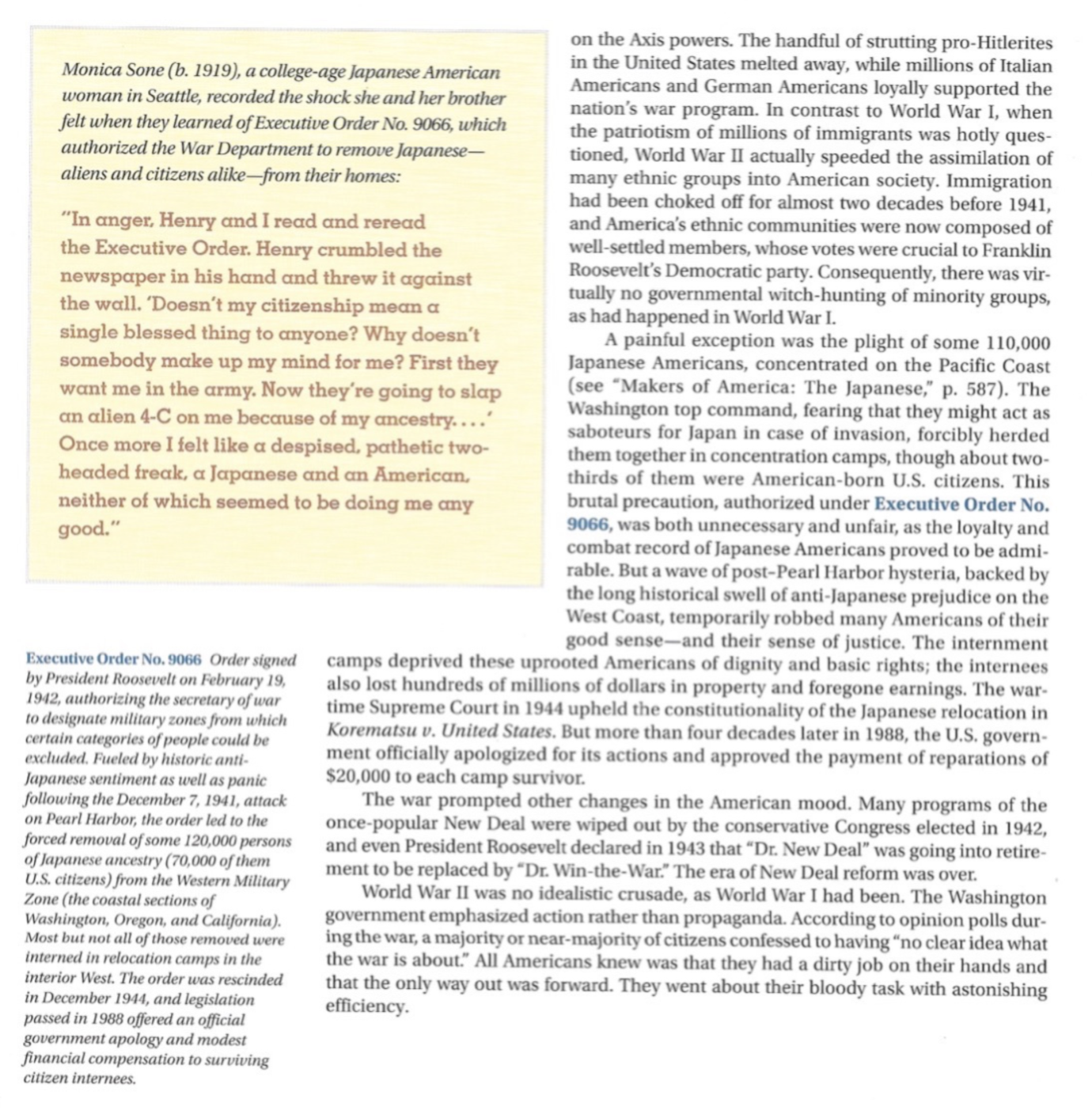
The passage indicates that Japanese relocation to concentration camps during World War II was mainly due to
Which choice provides the best evidence for the answer to the previous question?
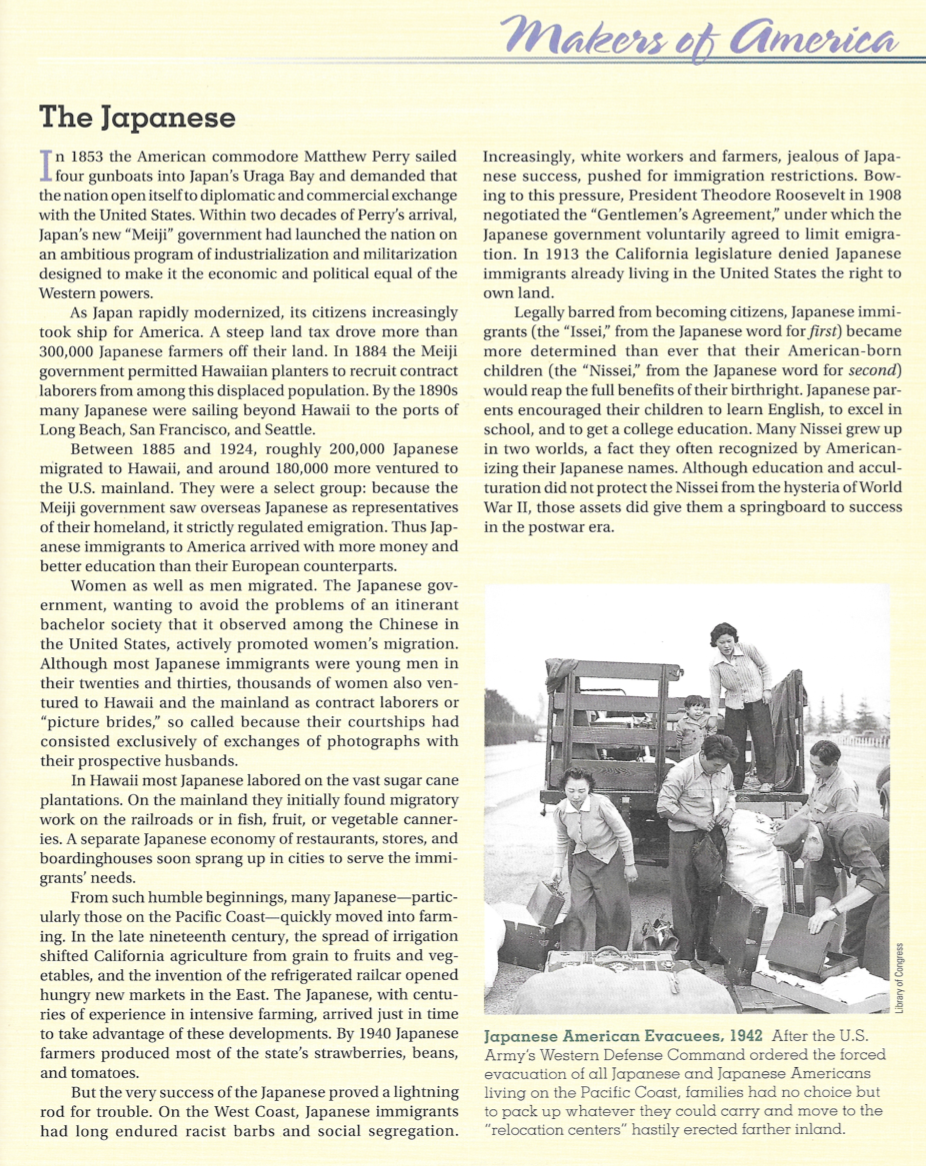
All of the following are true statements about the effect of Executive Order #9066 EXCEPT

That's all due for Thursday, 4/20/2023! Any questions?
Can you think of any previous wars we've studied that resulted in tons of war debt?
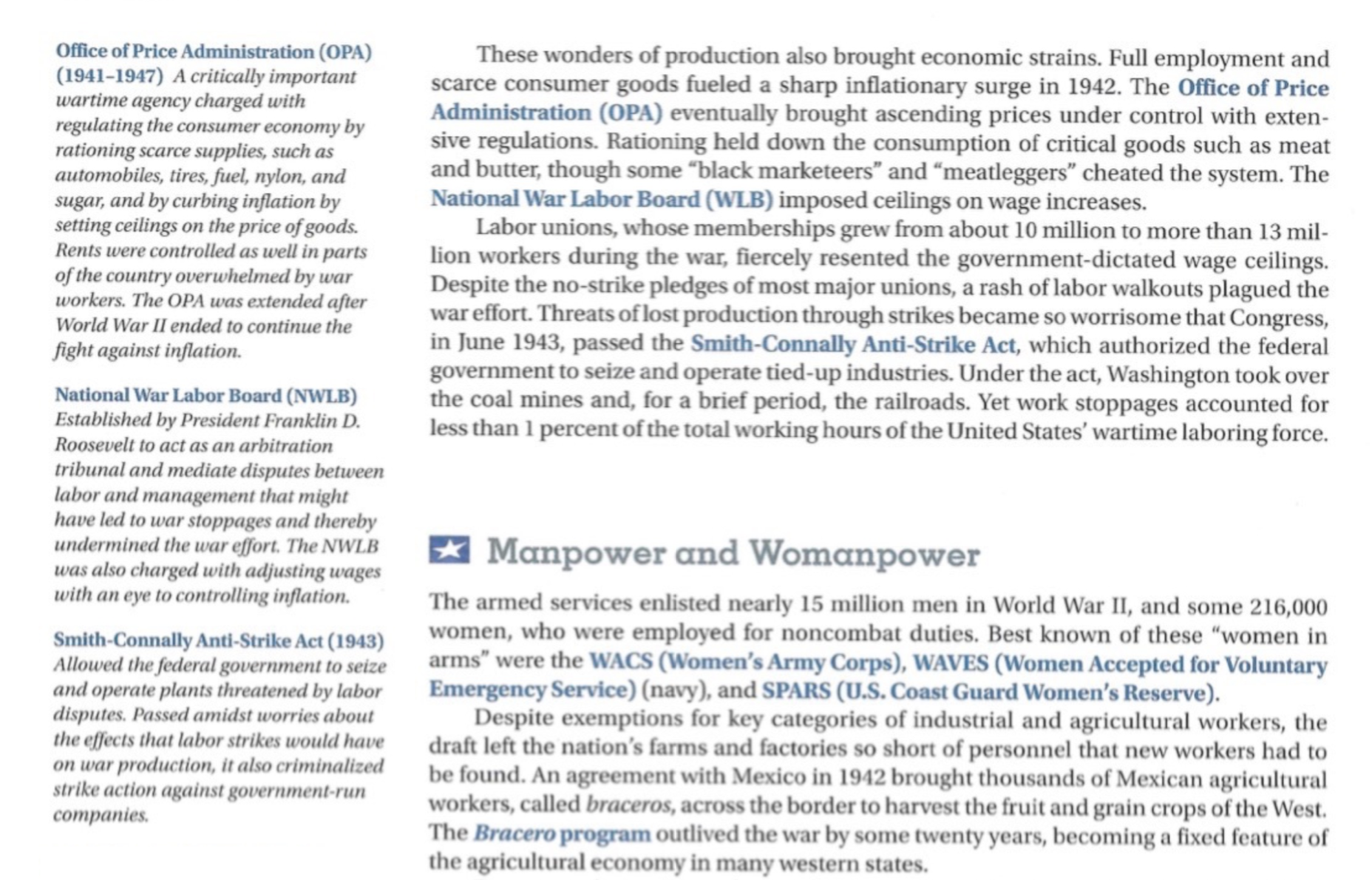
As used in line 6, "fixed" most nearly means
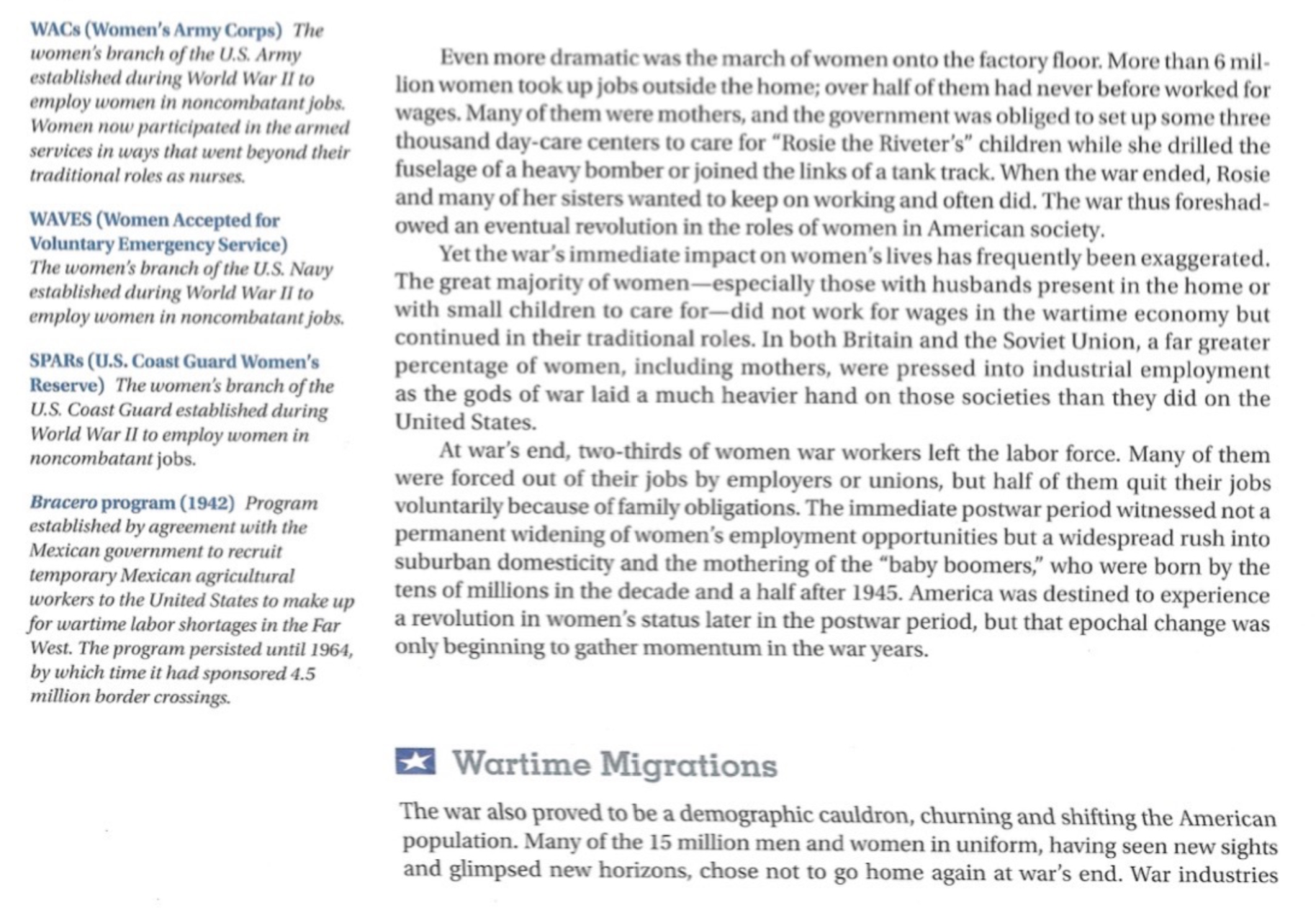
The employment of more than six million women in American industry during World War II led to
Which choice provides the best evidence for the answer to the previous question?
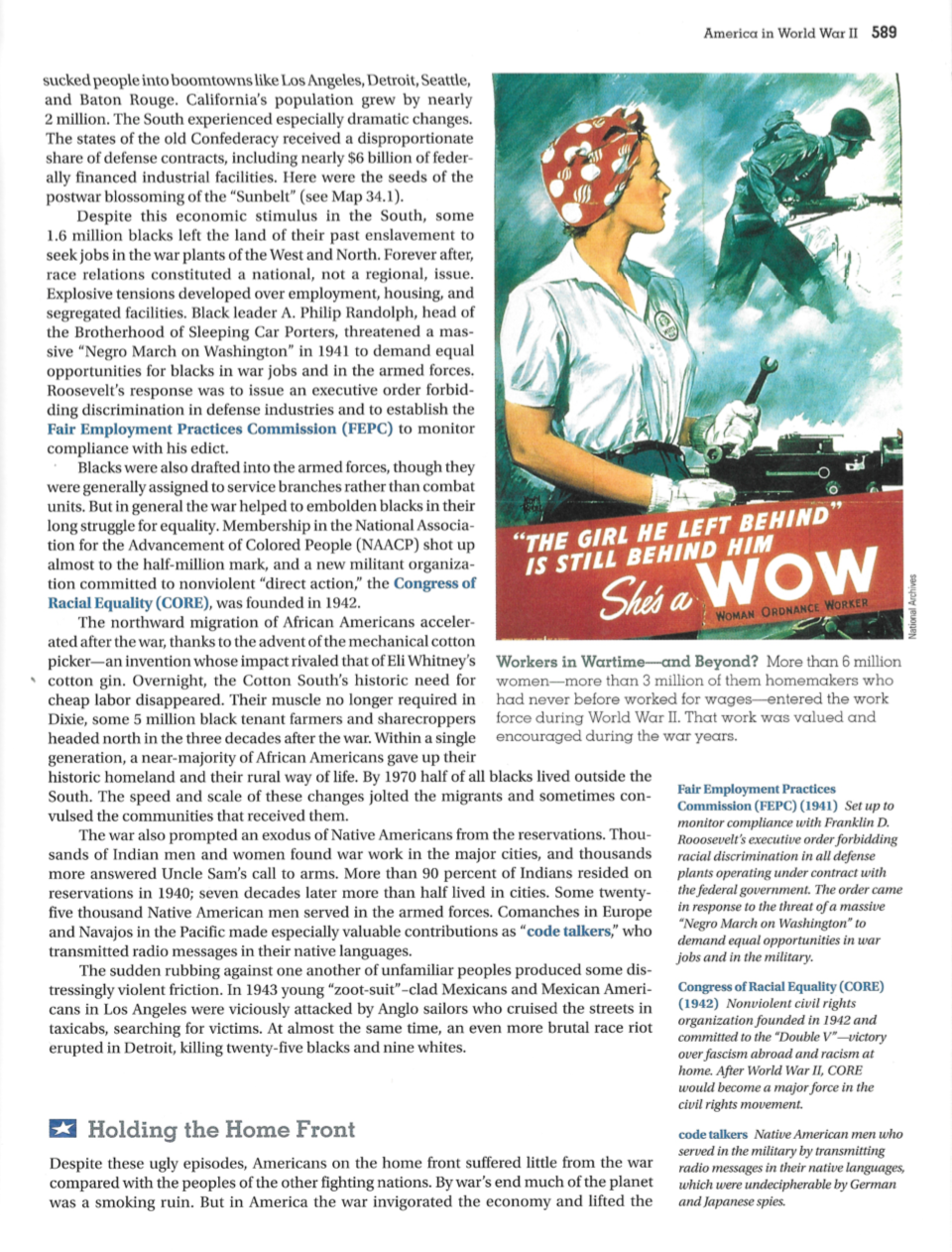
During WWII, some Native Americans contributed to the war effort by
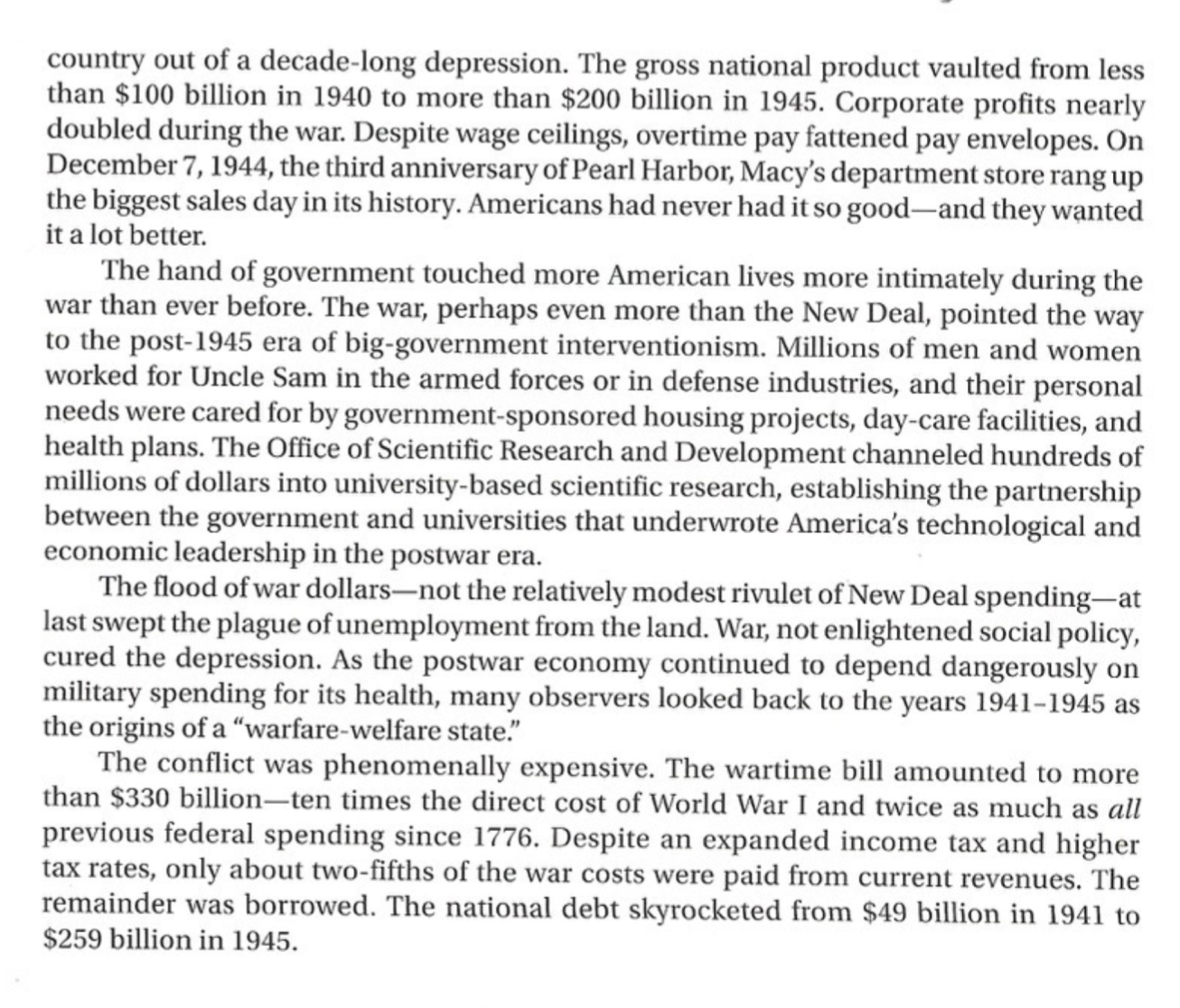
As used in line 7, "intimately" most nearly means
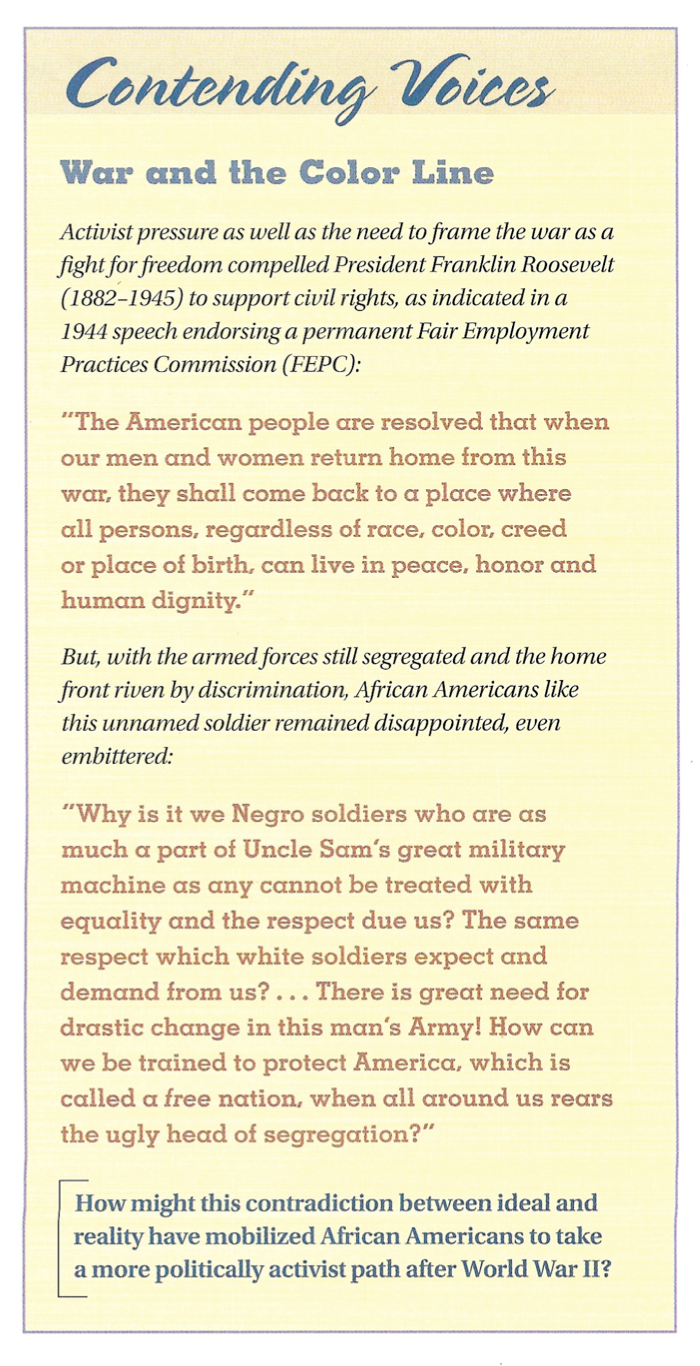
It can be reasonably inferred from the passage that African American soldiers
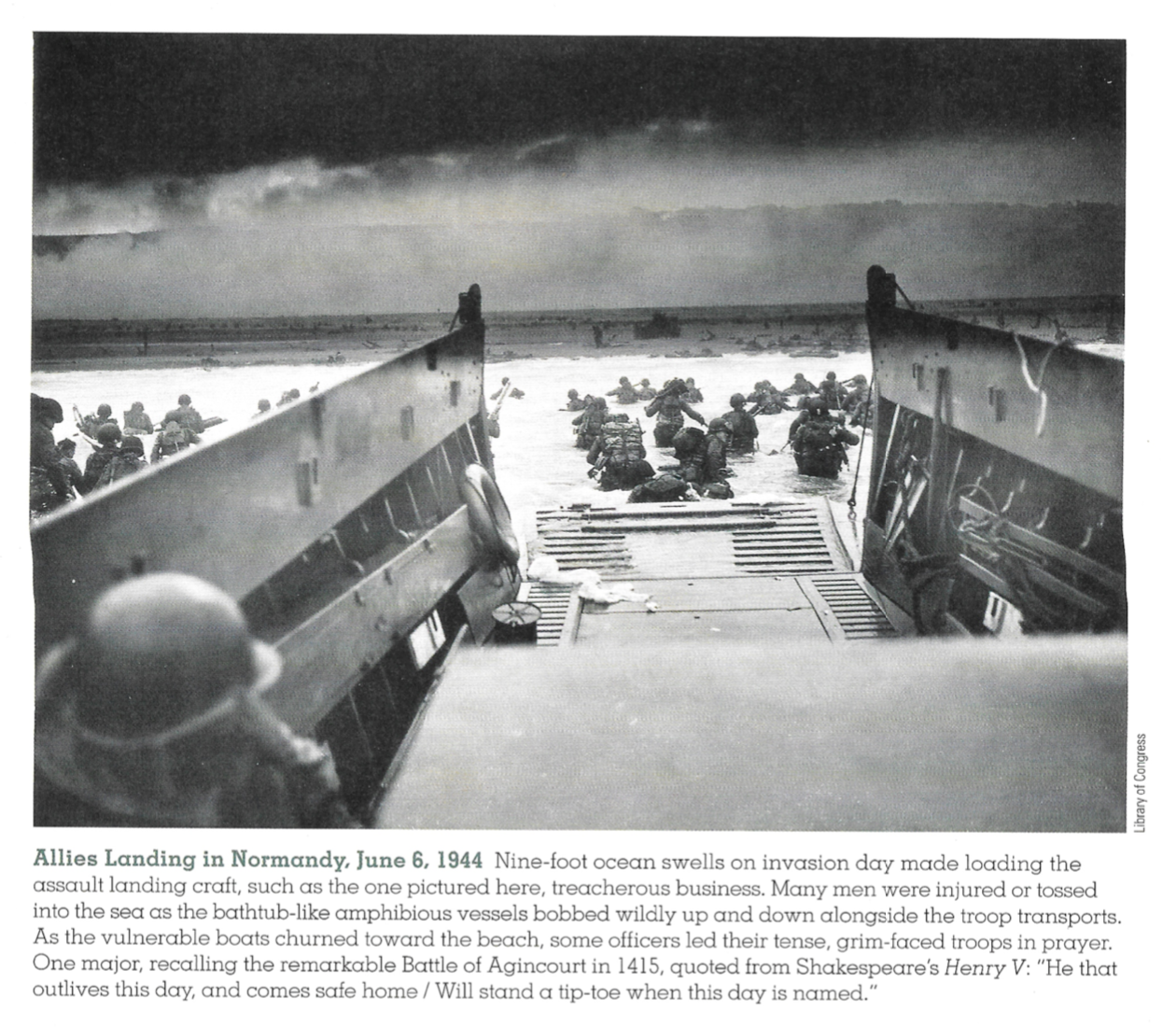
Within two months of the D-Day invasion,
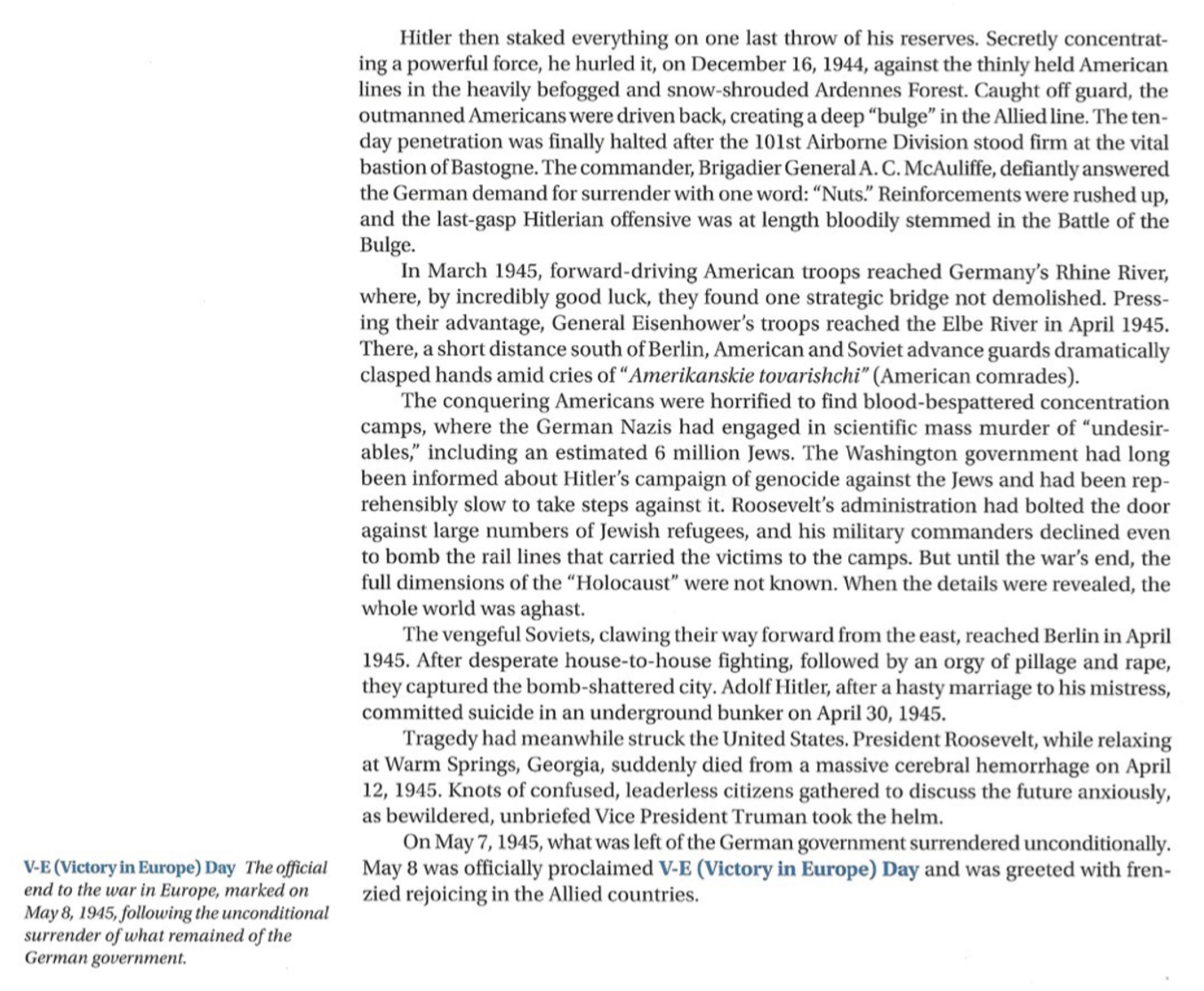
The passage indicates that U.S. action against Adolf Hitler's campaign of genocide against the Jews
Which choice provides the best evidence for the answer to the previous question?

That's all due for Friday, 4/21/2023! Any questions?
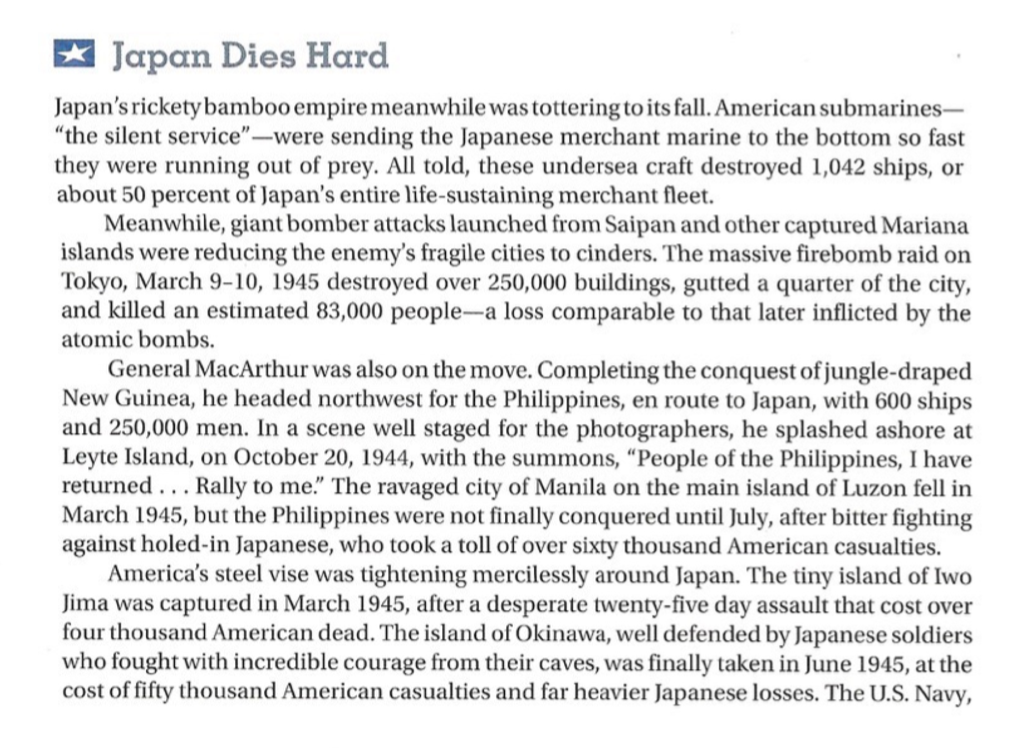
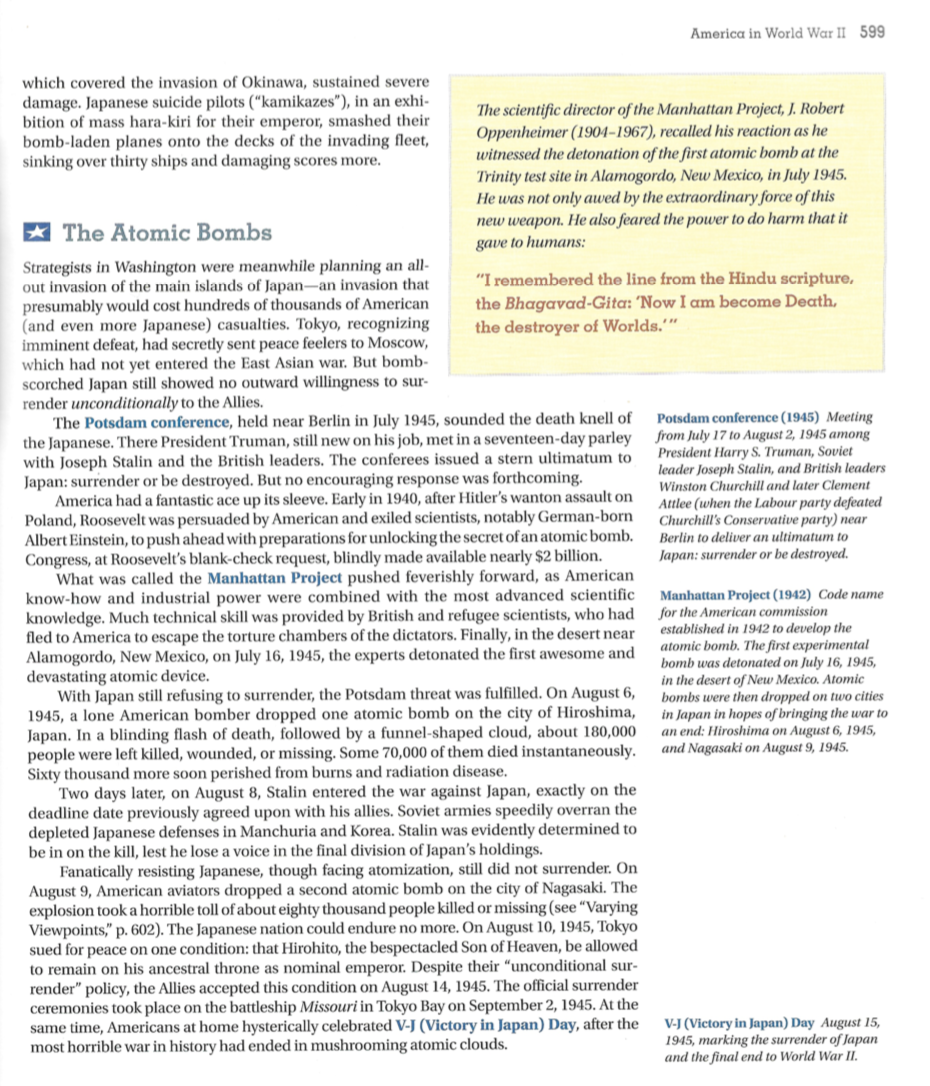
The passage suggests that the enormous spending on the Manhattan Project was spurred by the belief that
Which choice provides the best evidence for the answer to the previous question?
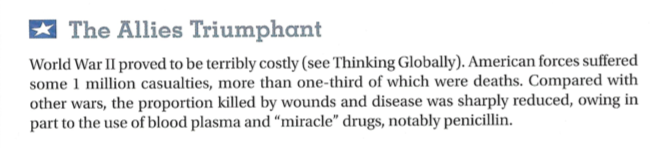
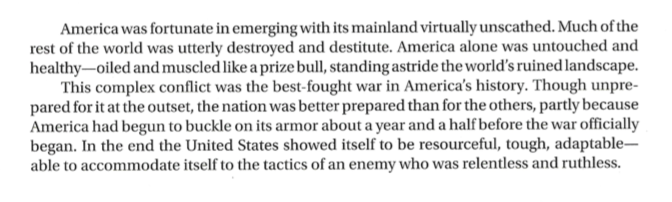
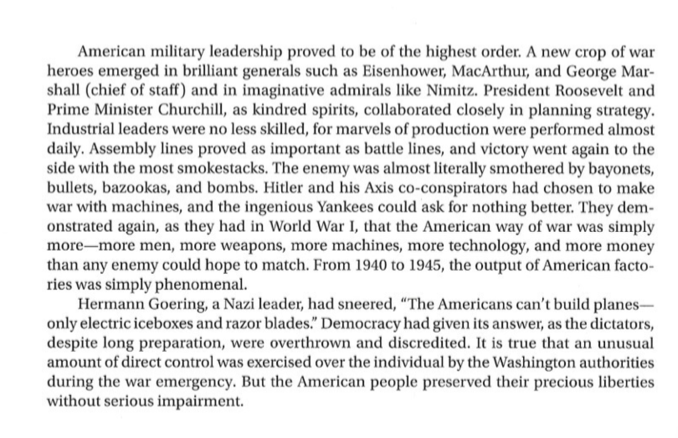
The main effect of the phrase "Assembly lines proved as important as battle lines" (line 6) is to
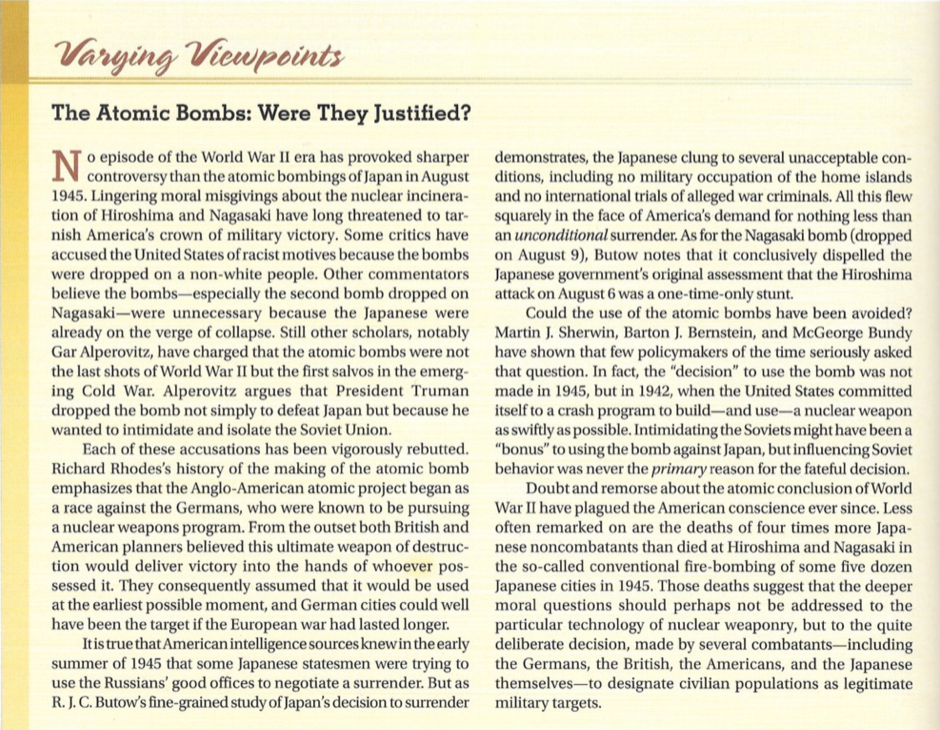
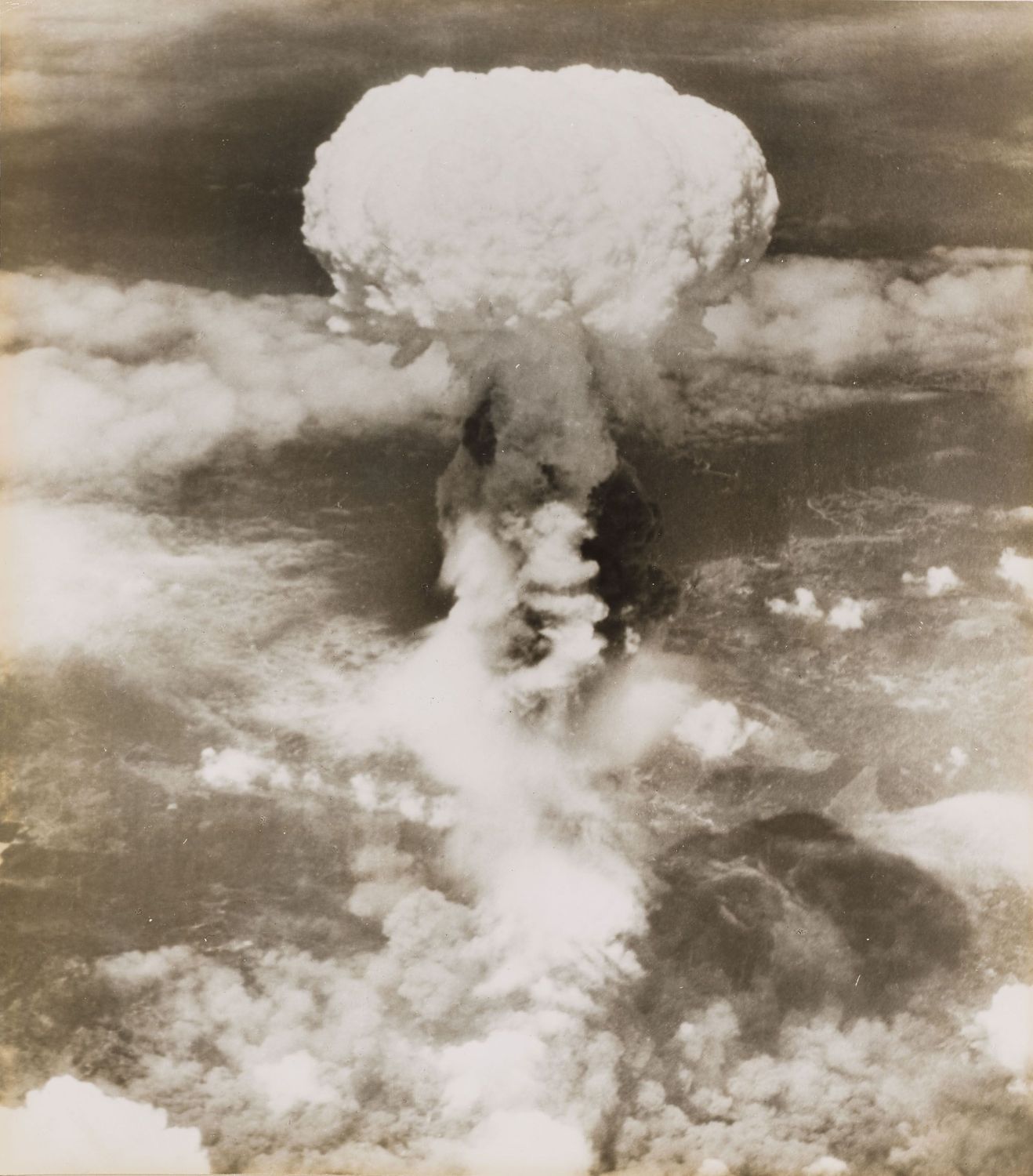
In your opinion, was the United States justified in dropping the atomic bombs on Japan? Explain why or why not based on the argument that you found to be most persuasive from this article.
Your response should be in complete sentences in order to earn full credit for this assignment.
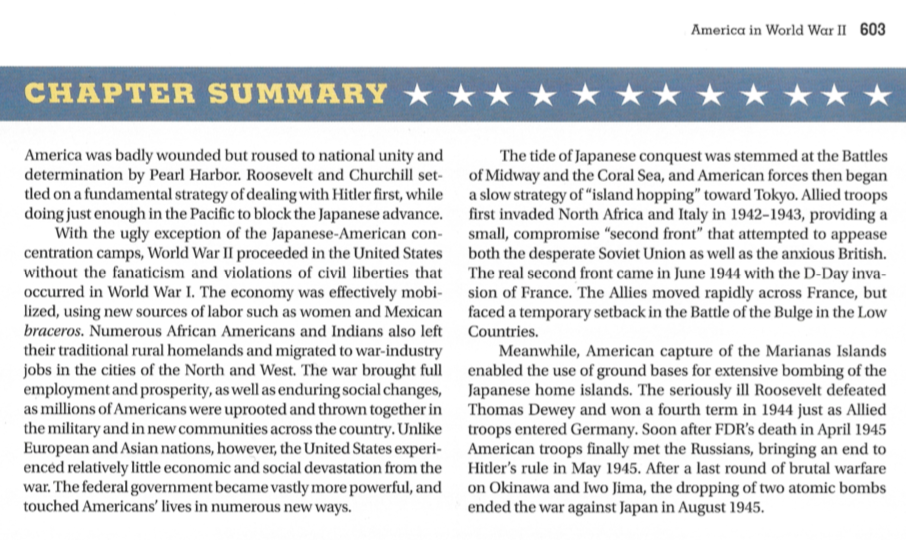
Excellent reading! Close out this Chapter by reviewing the "Chapter Summary" and using the "rectangle" tool to box the 5 most important key terms in the space provided.
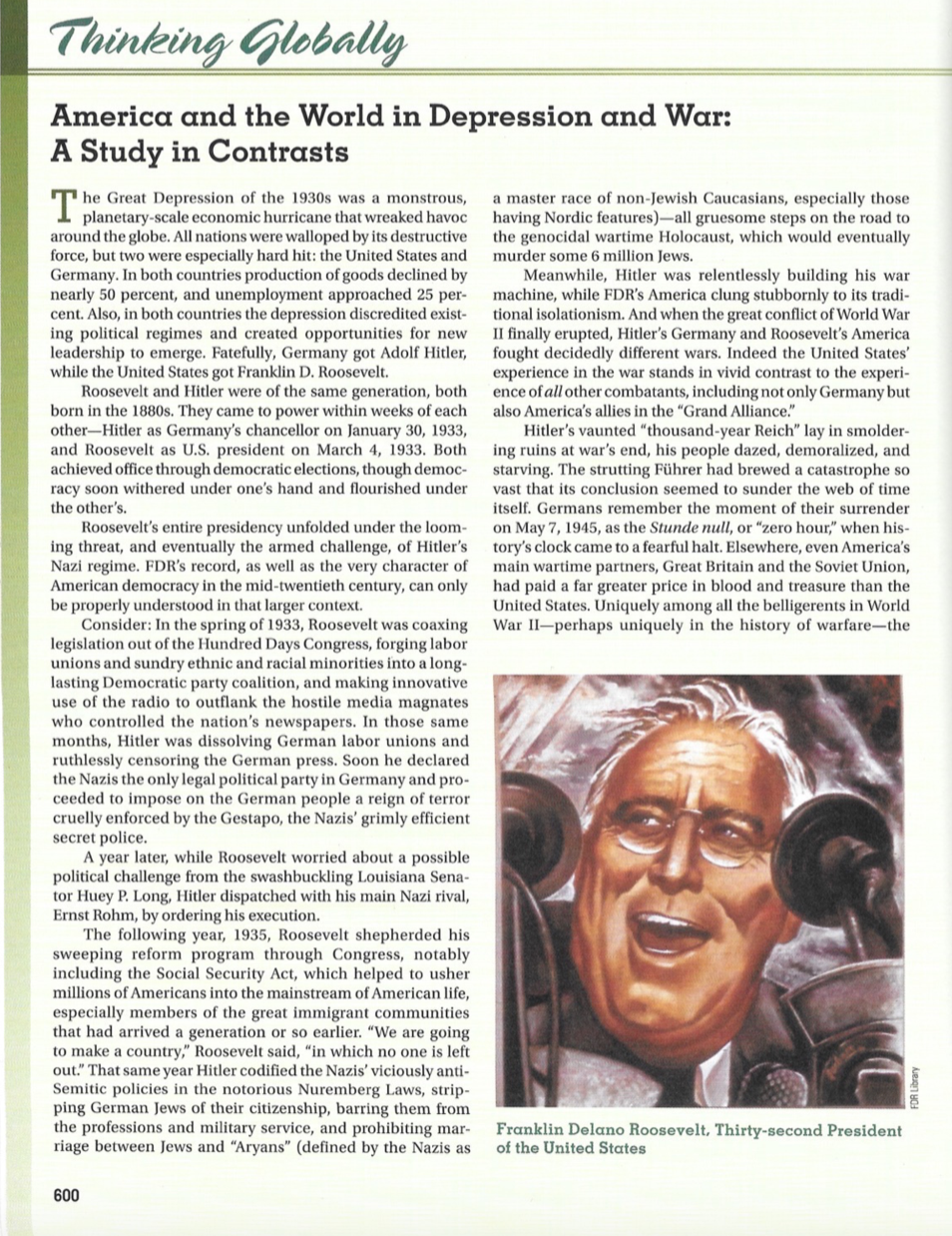
Class Poll: What do you think rescued the U.S. from the Great Depression?

Final Chapter before the AP Exam is complete! Any questions?