Log in
Sign up for FREE
arrow_back
Library

APUSH Chapter 27 - Empire and Expansion (1890-1909) - SY23

star
star
star
star
star
Last updated over 1 year ago
29 questions
Note from the author:
Required
0
Required
0
1
Required
1
IIRC.02
Directions: Please answer #1-6 in class and then complete the Chapter 27 reading as indicated in Google Classroom. Notes for #3-6 can be found here.
Question 1
1.

How do you feel now that we've taken a second DBQ exam?

Please drop any questions/comments in the "Show Your Work" area. Your responses will be kept private, though Ms. Truong may follow up with you individually!

Question 2
2.

Question 3
3.

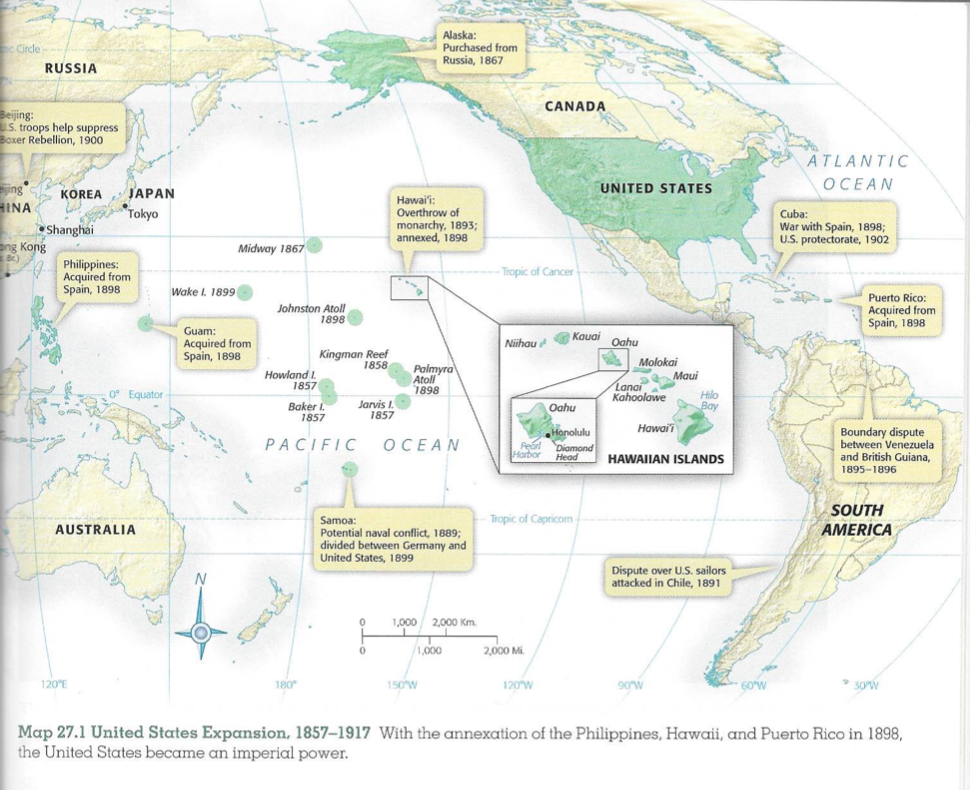
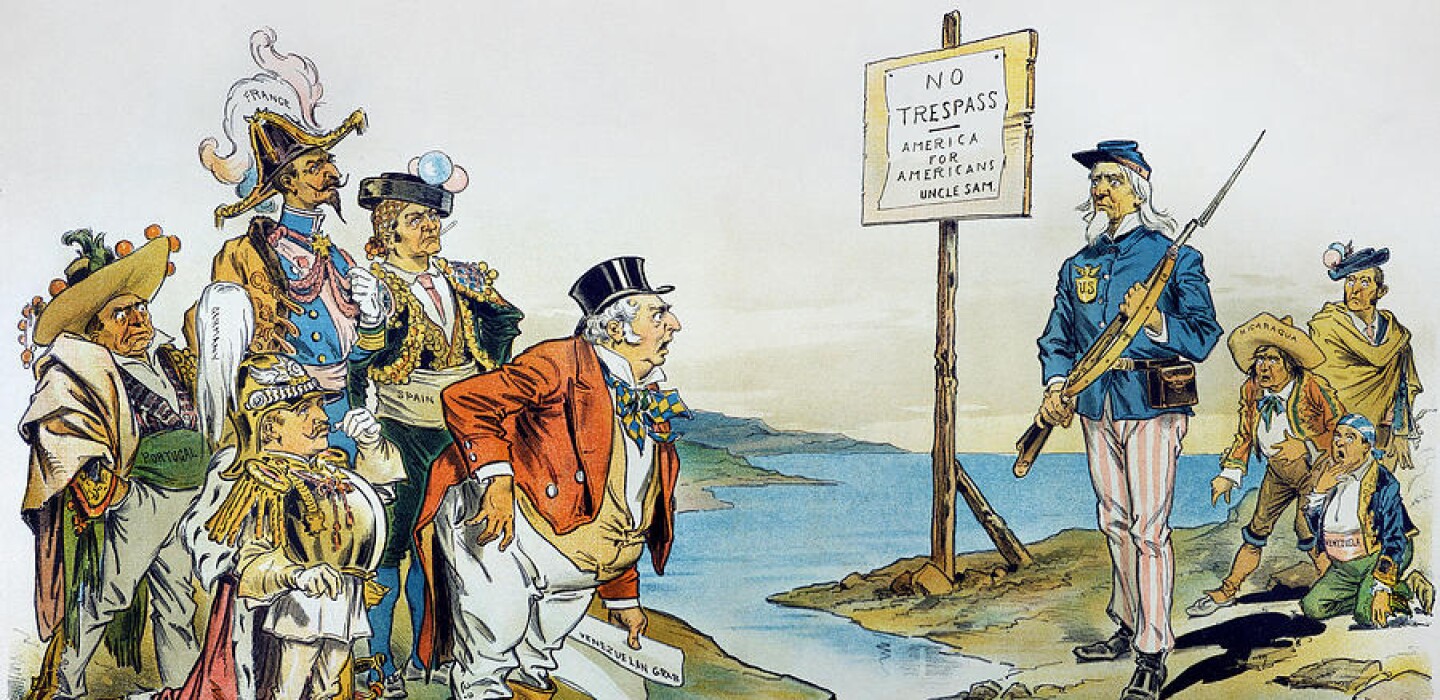
What do you remember noticing about this map back in September? If you cannot recall, what do you notice?

Required
1
Question 4
4.
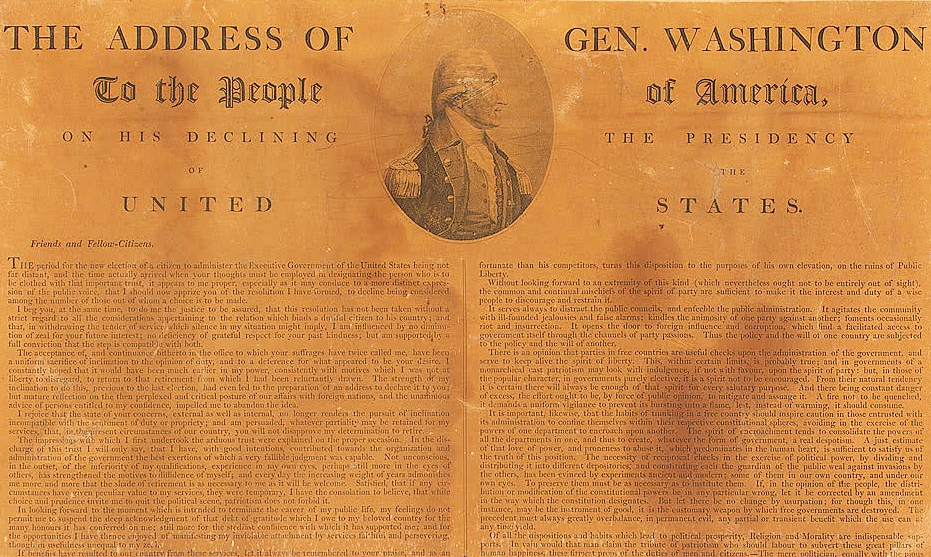
Review: The United States had once been a _______ , which meant that it was politically and economically tied to Great Britain. In the Revolutionary War, our new nation was able to rebel against colonial rule with the help of _______ . But the help of European powers always came with strings attached, entanglements that the American government found potentially dangerous as the nation struggled to grow and thrive. Having observed the effect of foreign alliances on his administration, when George _______ left office he cautioned his successors to avoid entangling foreign alliances in his Farewell Address of 1796, which came to be known as _______ .
Required
1
Question 5
5.
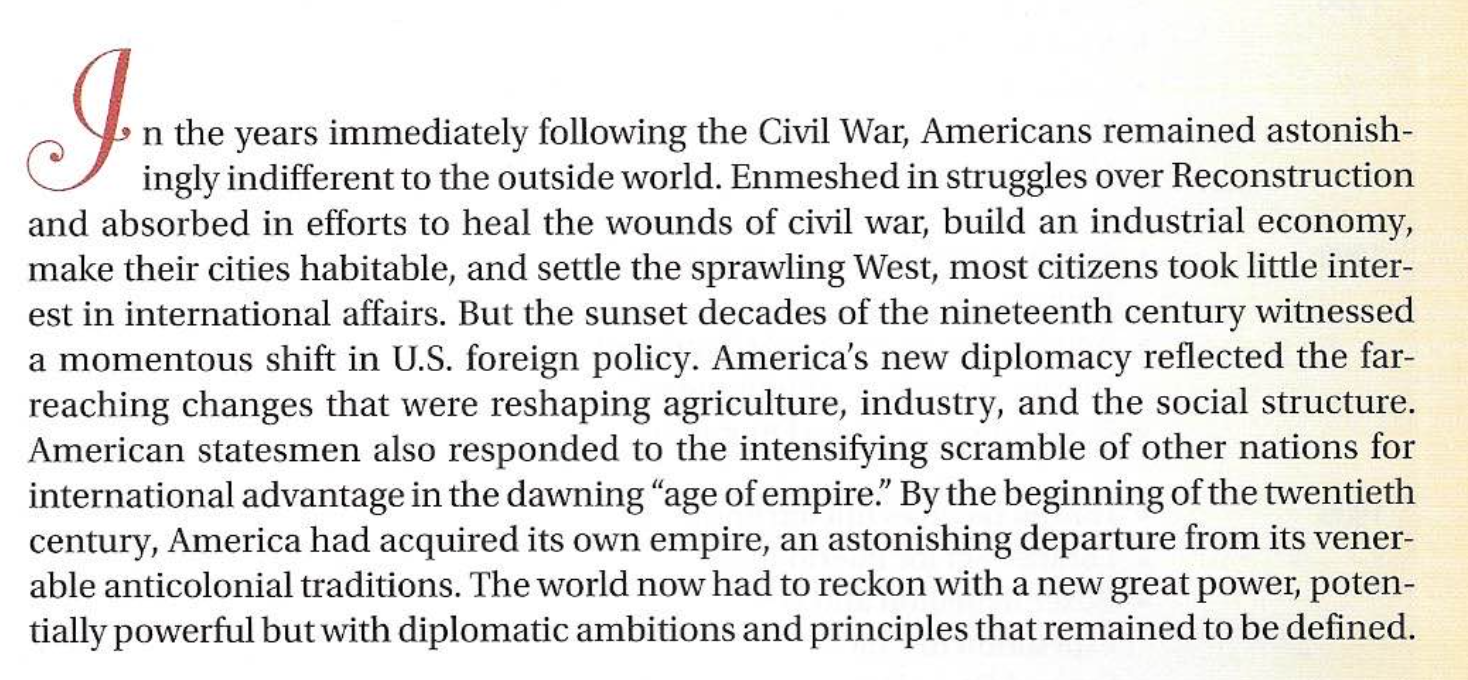
For one hundred years, with few exceptions, Washington's successors obeyed. With an _______ separating it from Europe, the United States quietly developed into a vast and productive country as wars, famines, and revolutions elsewhere brought _______ to its shores. Taking Washington's advice to heart, the United States pursued a policy of isolationism, avoiding _______ and international intrigue as best it could.
Required
1
Question 6
6.
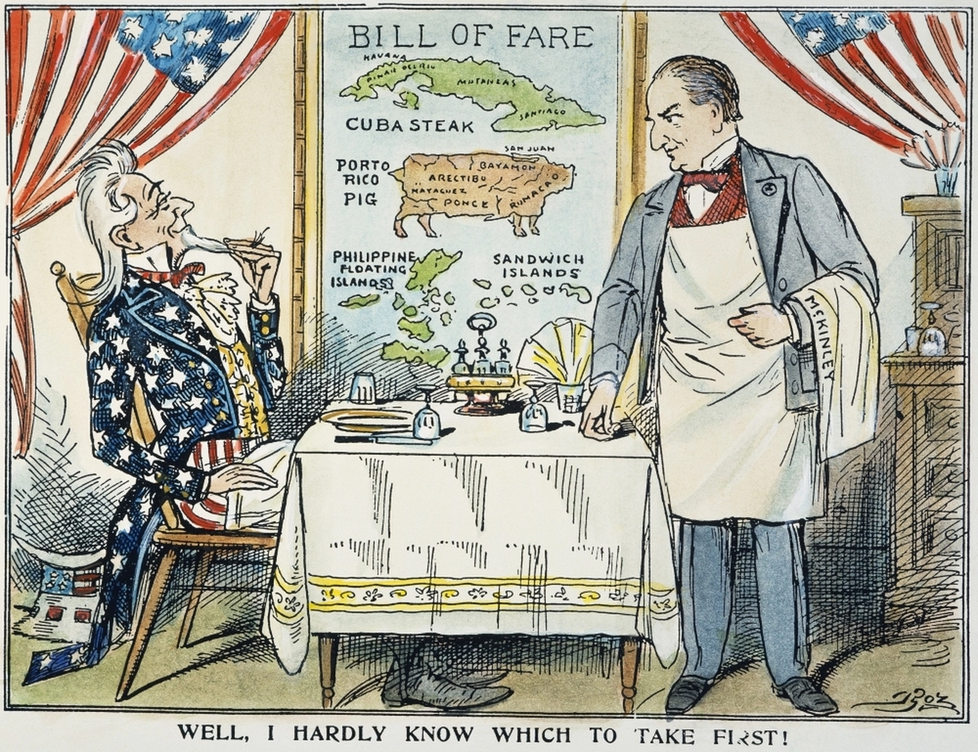
But in the late nineteenth century all of that changed rapidly. In the space of just _______ years, from 1898 to 1901, the United States went from being a former outpost of the British Empire to an imperial power in its own right, claiming _______ or influence over no fewer than five islands outside its territorial boundaries (Cuba, Hawaii, Guam, Puerto Rico, and the Philippines).

Why, in such a short time, did the United States abandon its policy of isolationism and take on _______ of its own?
That's all for classwork on Tuesday, 3/14/2023. Before you proceed, please make sure you have...
  • watched the Period 7.1 EdPuzzle on American Imperialism
  • taken the Period 6.1 SAQ on Boss Tweed
Required
1
Question 7
7.

A major factor in the shift in American foreign policy toward imperialism in the late
nineteenth century was the

IIRC.02
Required
1
IIRC.01
Required
1
IIRC.02
Required
1
Question 10
10.

It can be reasonably inferred that Hawaii's Queen Liliuokalani was removed from power because

IIRC.02
Required
0
Question 11
11.

That's all that is due for Wednesday, 3/15/2023. Any questions?

Required
1
Question 12
12.

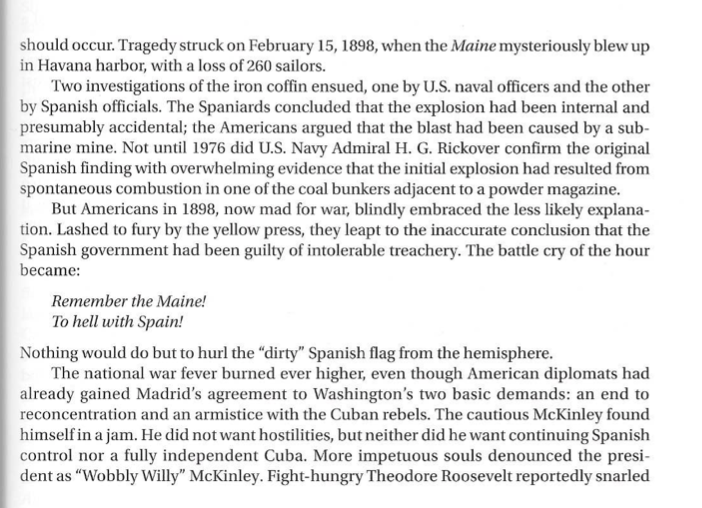
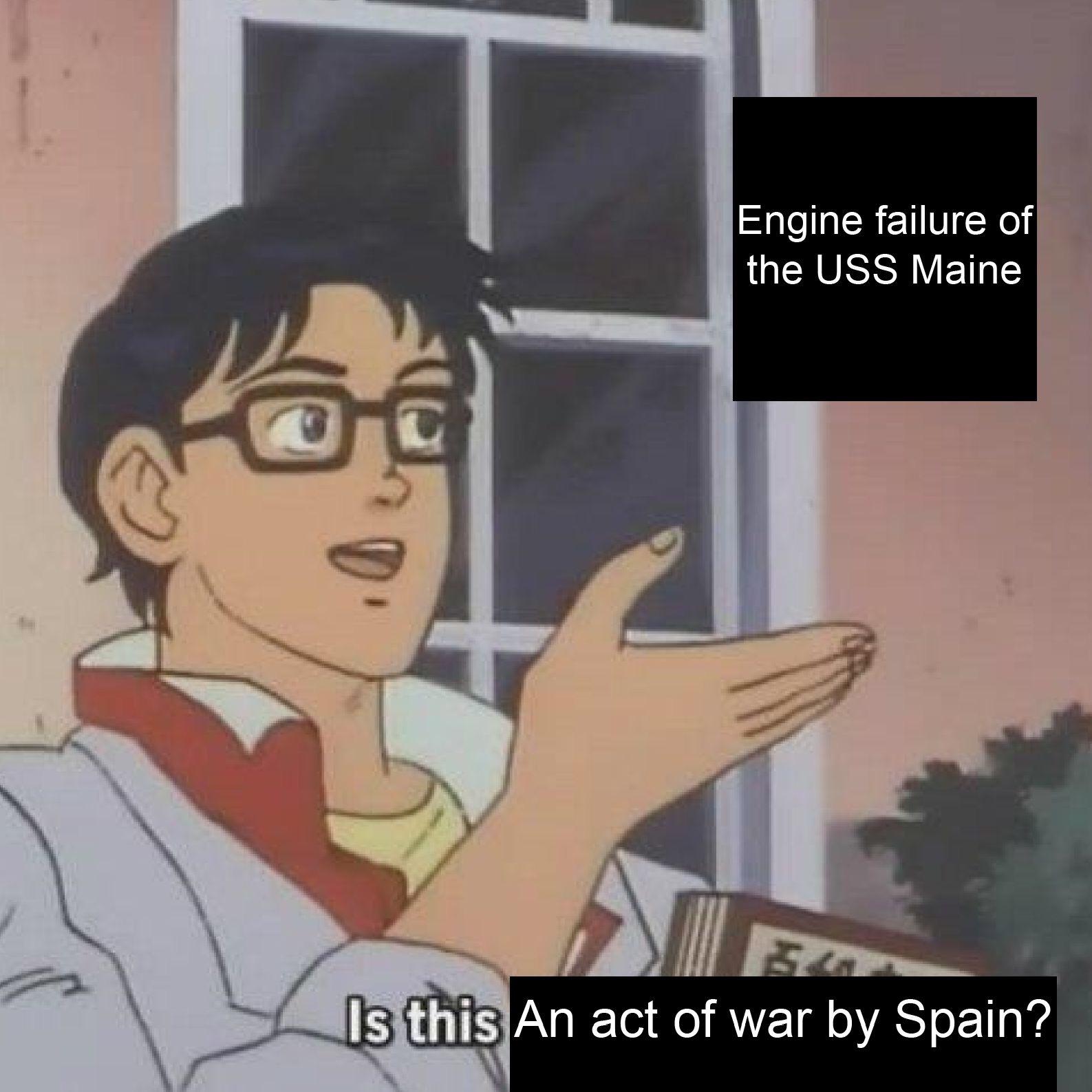
Later investigations showed that the battleship Maine was sunk by

IIRC.01
Required
1
Question 13
13.

IIRC.01
Required
1
Question 14
14.

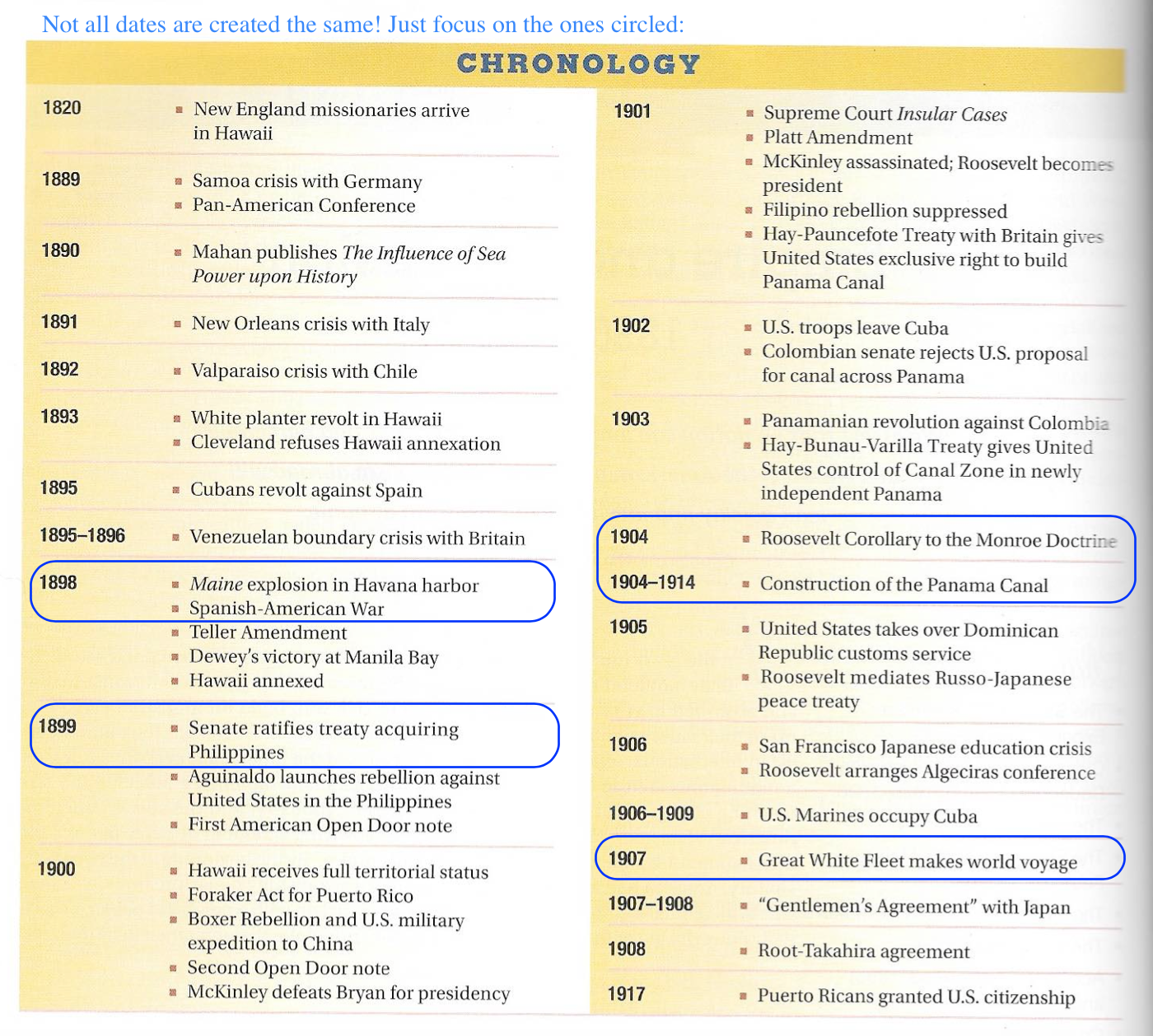
All of these island countries became possessions of the United States in 1898−1899 EXCEPT

IIRC.01
Required
1
Question 15
15.

Anti-imperialists were outraged by the U.S. acquisition of the Philippines, claiming that

IIRC.01
0
Question 16
16.

That's all that is due for Thursday, 3/16/2023. Any questions?

Required
1
Question 17
17.

IIWD.01
Required
1
Question 18
18.

Starting in 1917, many Puerto Ricans came to the mainland United States seeking

IIRC.01
Required
1
Question 19
19.

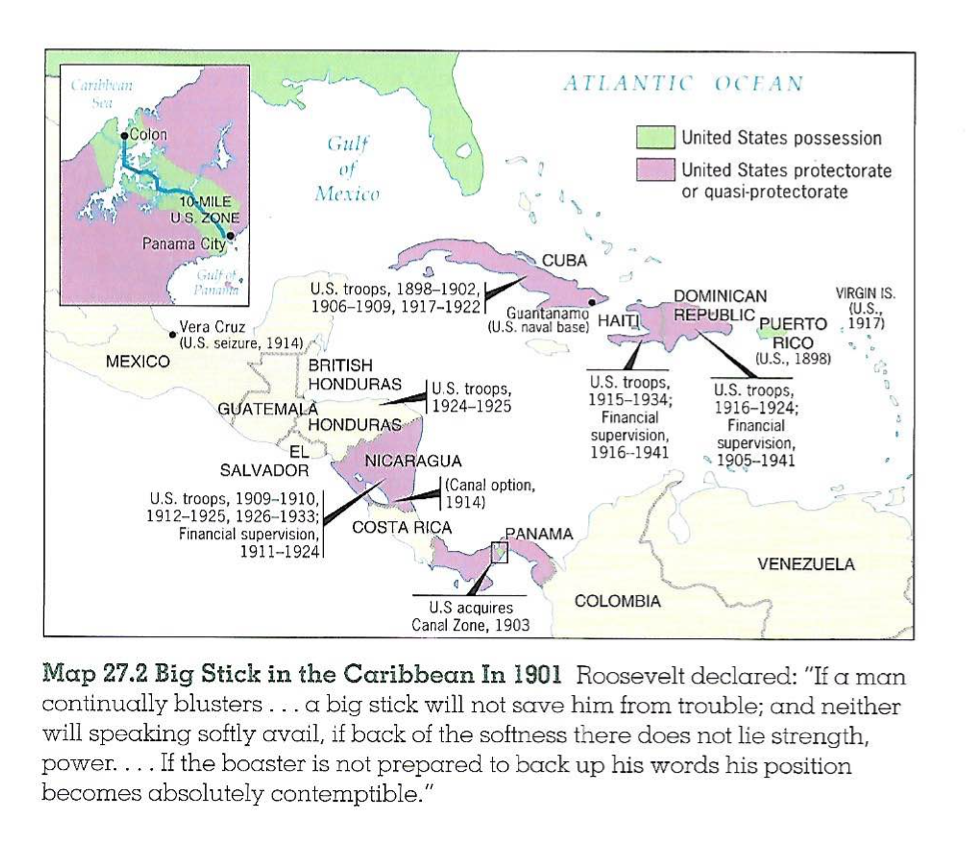
All of the following were ways that the U.S. used the Platt amendment to control Cuba EXCEPT

IIRC.01
Required
0
Question 20
20.

IIWD.01
Required
1
Question 21
21.

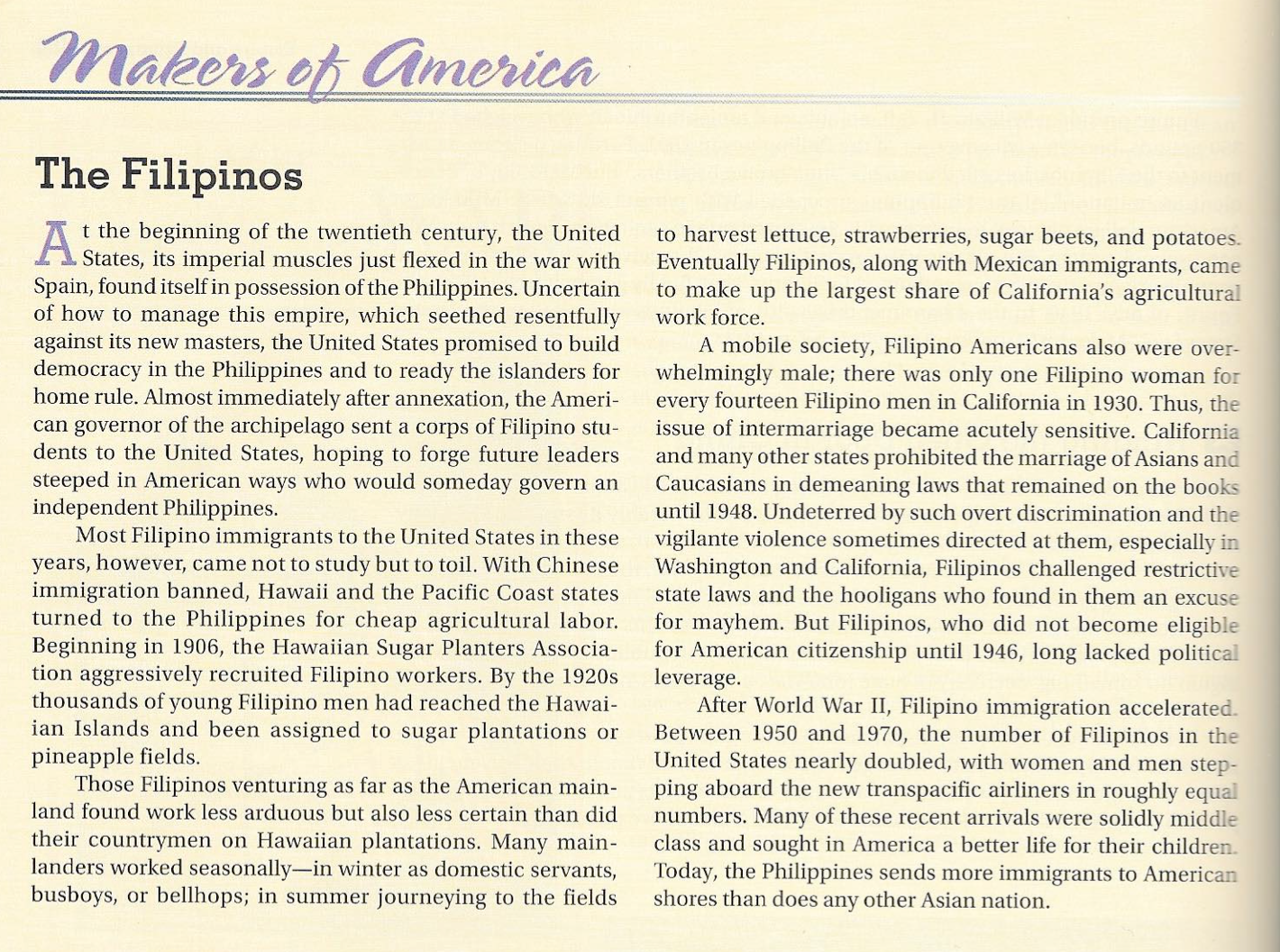
The 1899 Philippine insurrection began because

IIRC.02
Required
1
Question 22
22.

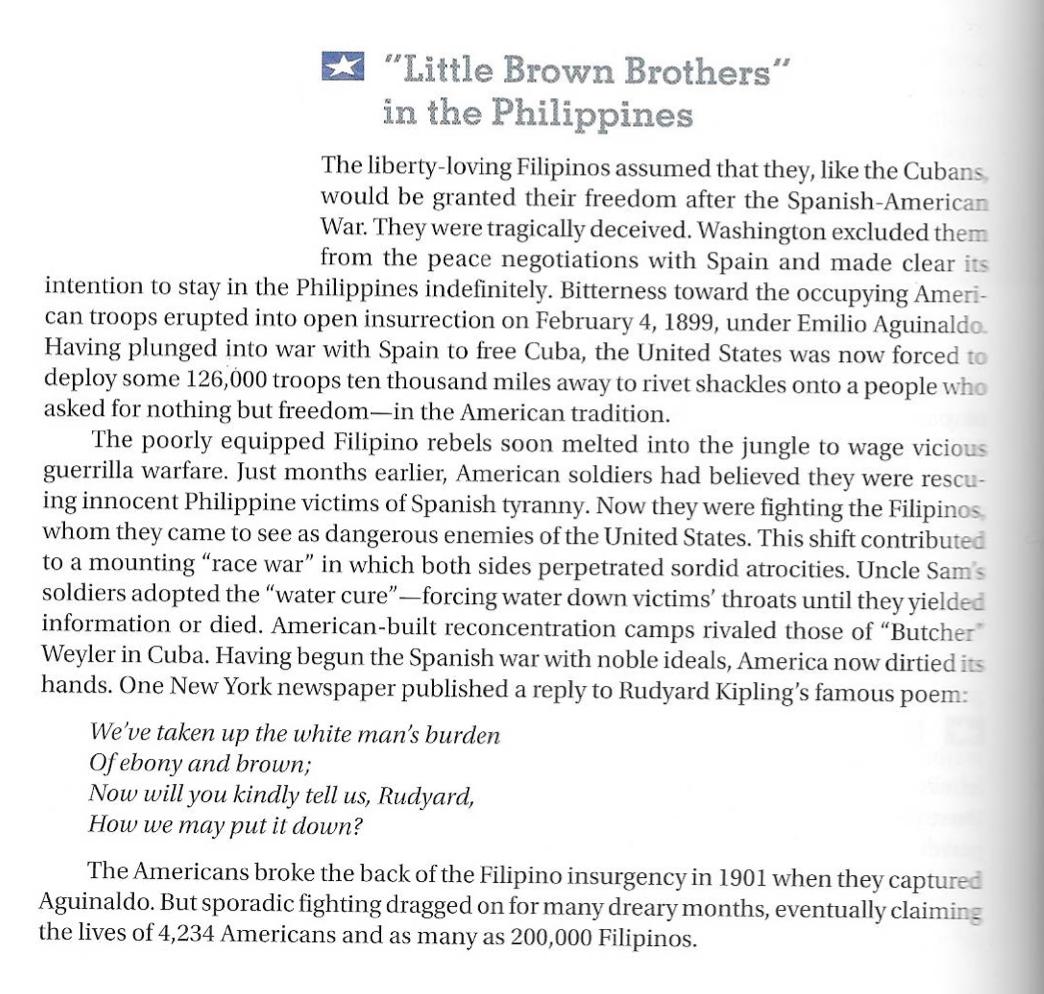
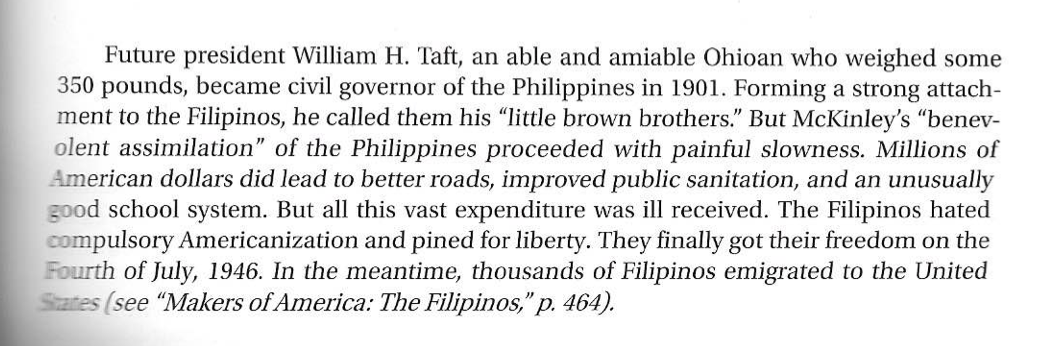
The author uses the phrase "little brown brothers" mainly to suggest that

RWC.01
0
Question 23
23.

That's all that is due for Friday, 3/17/2023. Any questions?

Required
1
Question 24
24.

The American desire to construct a canal across Central America was motivated primarily by

IIRC.01
Question 25
25.

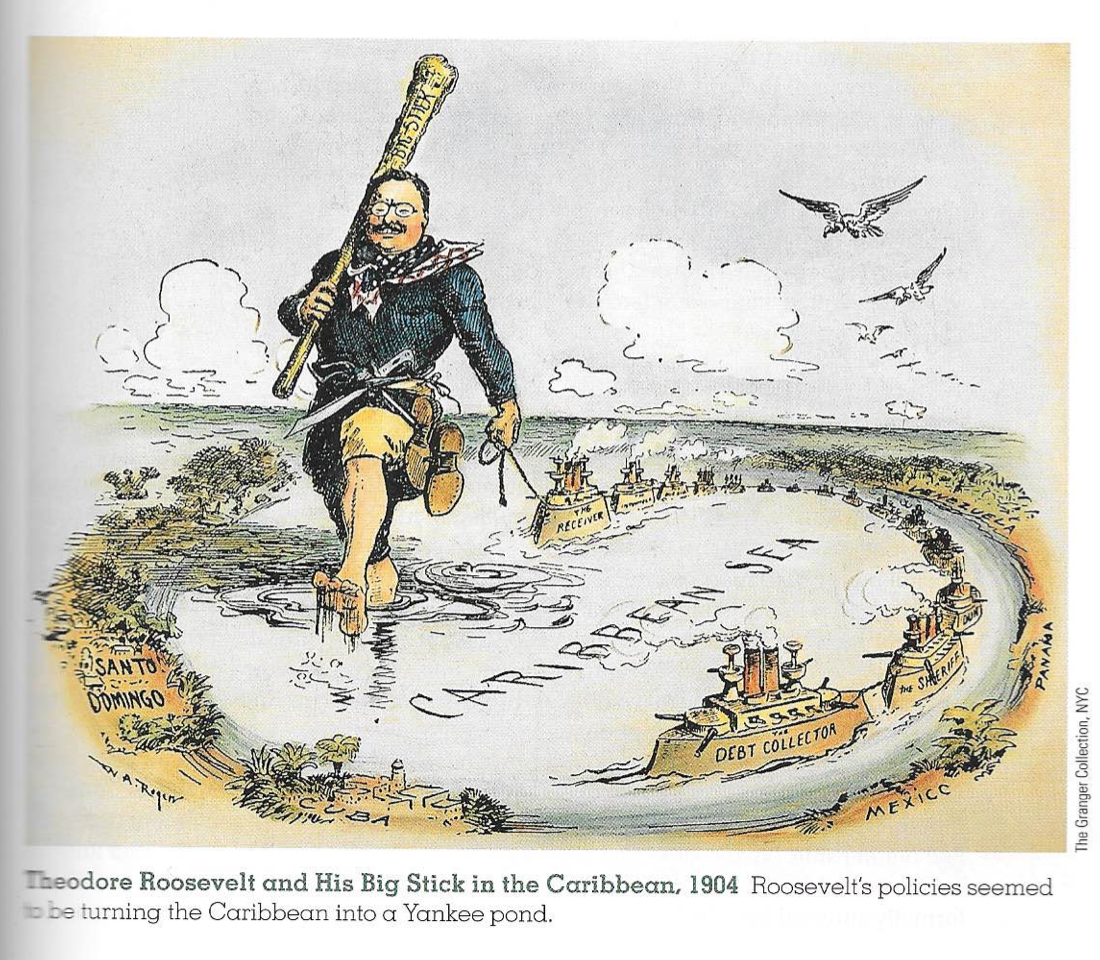
What did the Roosevelt Corollary to the Monroe Doctrine declare?

Required
1
Question 26
26.

IIWD.01
0
Question 27
27.

Do you think American imperialism is hypocritical or beneficial for the country? Explain.

0
Question 28
28.

Excellent reading! Close out this Chapter by reviewing the "Chapter Summary" and using the "rectangle" tool to box the 5 most important key terms in the space provided.

0
Question 29
29.

Chapter 27 complete! Any questions?

Be sure to click "Submit" in Formative and Google Classroom by Monday, 3/20/2023.
0 - I didn't take it and know that the assignment is currently marked as Missing or Absent in PowerSchool (50% in Mastery). I will explain my plan to complete the assignment under "Show Your Work."
4 - I am proud of my DBQ performance and feel that I learned more the second time around with this assignment.
3 - The DBQ is done and what will be will be. I have a plan to do better in Period 7, the last full unit before the AP Exam on Friday, May 5th, 2023.
2 - While I did take the DBQ, I know what I did or did not do in Period 5-6 that contributed to why I don't feel good about my performance.
1 - I took it, but I don't feel great about it. I truly think I earned the lowest score on the grading scale (D) and need help figuring out where I went wrong in Period 5-6.
Here are all of the different supports that were provided on the Period 5-6 DBQ essay! Which ones worked for you? (Check all that apply)

Please elaborate under "Show Your Work" if necessary. For instance, if you did not feel ready for the DBQ, what supports would you have liked to have?
Period 3.6 EdPuzzle on How to Write a DBQ
Peer Exemplars on How to Earn the Contexualization, Thesis, and Outside Information points
Answer Key for the Period 3 DBQ
Individualized Feedback and Reflection Assignment
Graphic Organizer Provided to Plan Out Essay
In-Class Time to Review DBQ Documents with Peers
Three Nights of Homework of Prep for the DBQ Independently
Modeling How to Break Down a DBQ Document
desire for overseas markets for increased industrial and agricultural production.
construction of an American-built isthmian canal between the Atlantic Ocean and Pacific Ocean.
desire for more farmland along the American frontier.
need for additional population to fuel the Southern economy.
Question 8
8.

American authors who supported overseas expansion wanted to

Question 9
9.

Advocates of imperialism like Theodore Roosevelt and Henry Cabot Lodge argued that America
should acquire colonies because

she refused to allow Christian missionaries in her country.
Hawaiian agriculture had failed under her leadership.
many Hawaiians found her rule corrupt.
she insisted that native Hawaiians should control Hawaii.
reporters working for William Randolph Hearst.
an explosion on the ship.
Cuban rebels.
the Spanish.
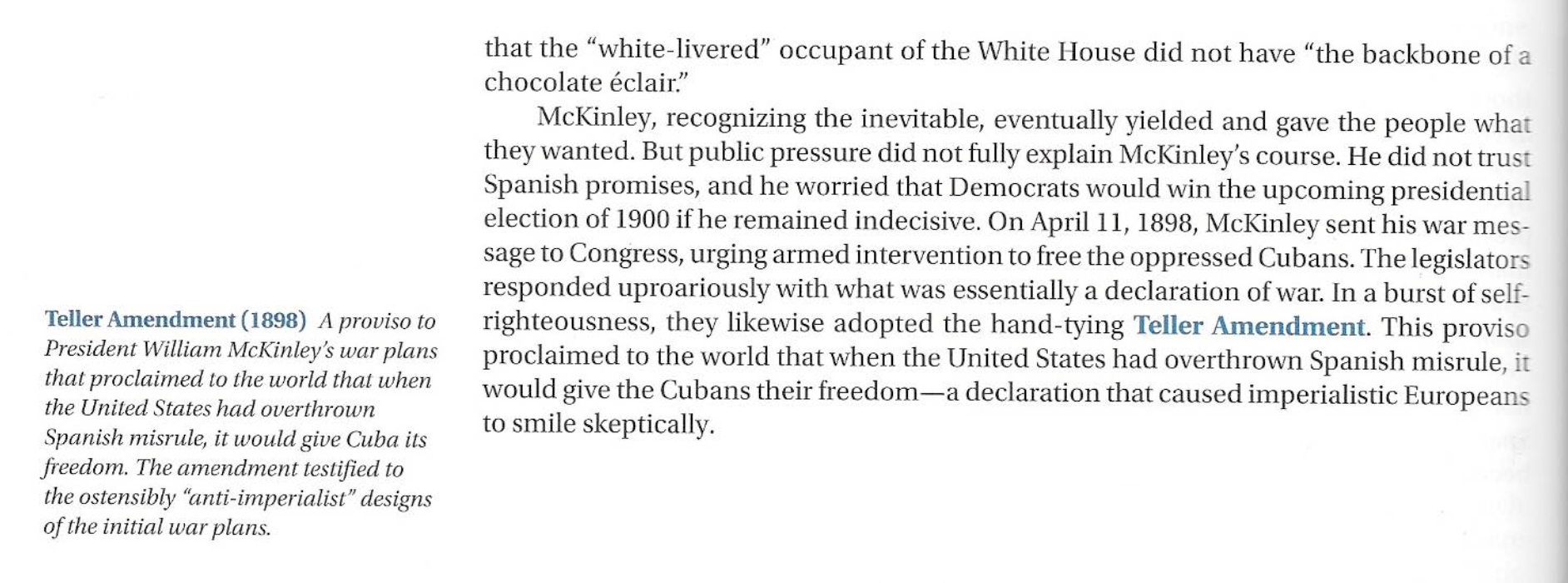
The Teller Amendment proclaimed the U.S. promise to ____ once it won the war against Spain.
grant freedom to the Cubans
lower the McKinley Tariff
accept Puerto Ricans as U.S. citizens.
purchase Cuba from the Spanish for a fair price.
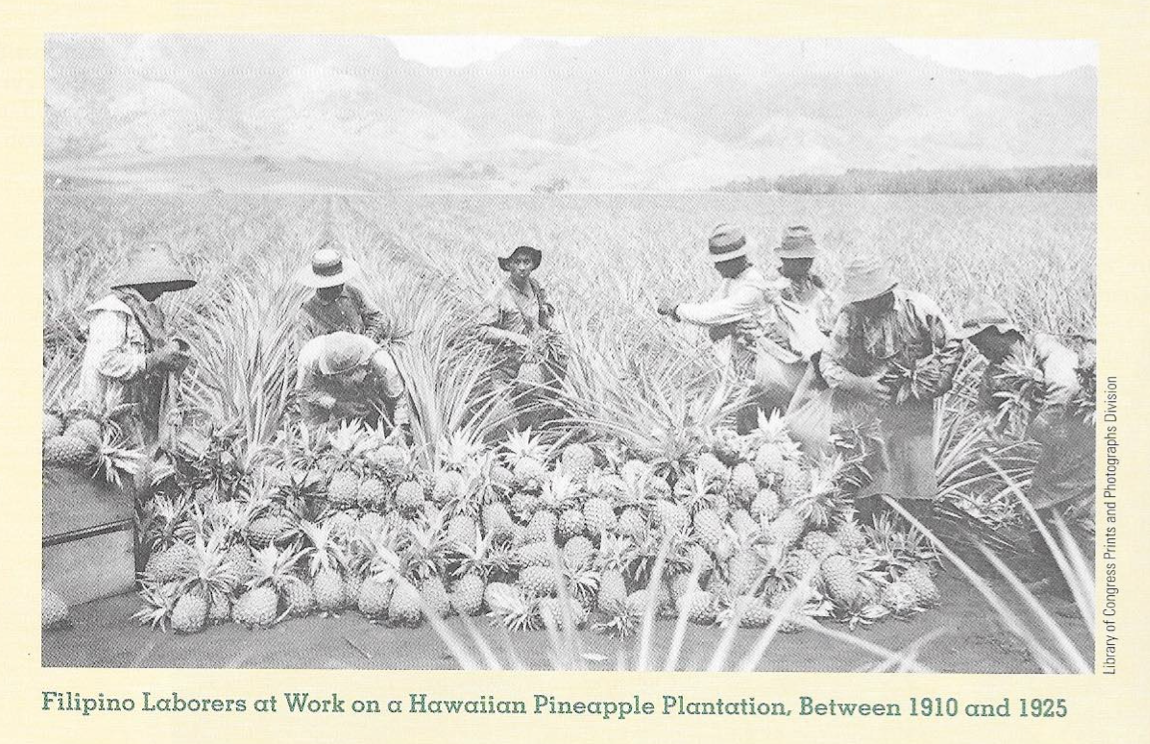
We skipped the section in the reading that covers the fighting in the Phillippines. All you need to know is that Hawaii became a U.S. territory because America wanted to use it as a coal and provision station since it was closer to the Philippines.
the Virgin Islands.
the Philippine Islands.
Puerto Rico.
Guam.
Filipinos might come to the United States and demand American citizenship.
the Filipino people would prefer to remain with Spain.
it violated principles of the Declaration of
Independence and U.S. Constitution.
it would be difficult to grant statehood to the Philippines.
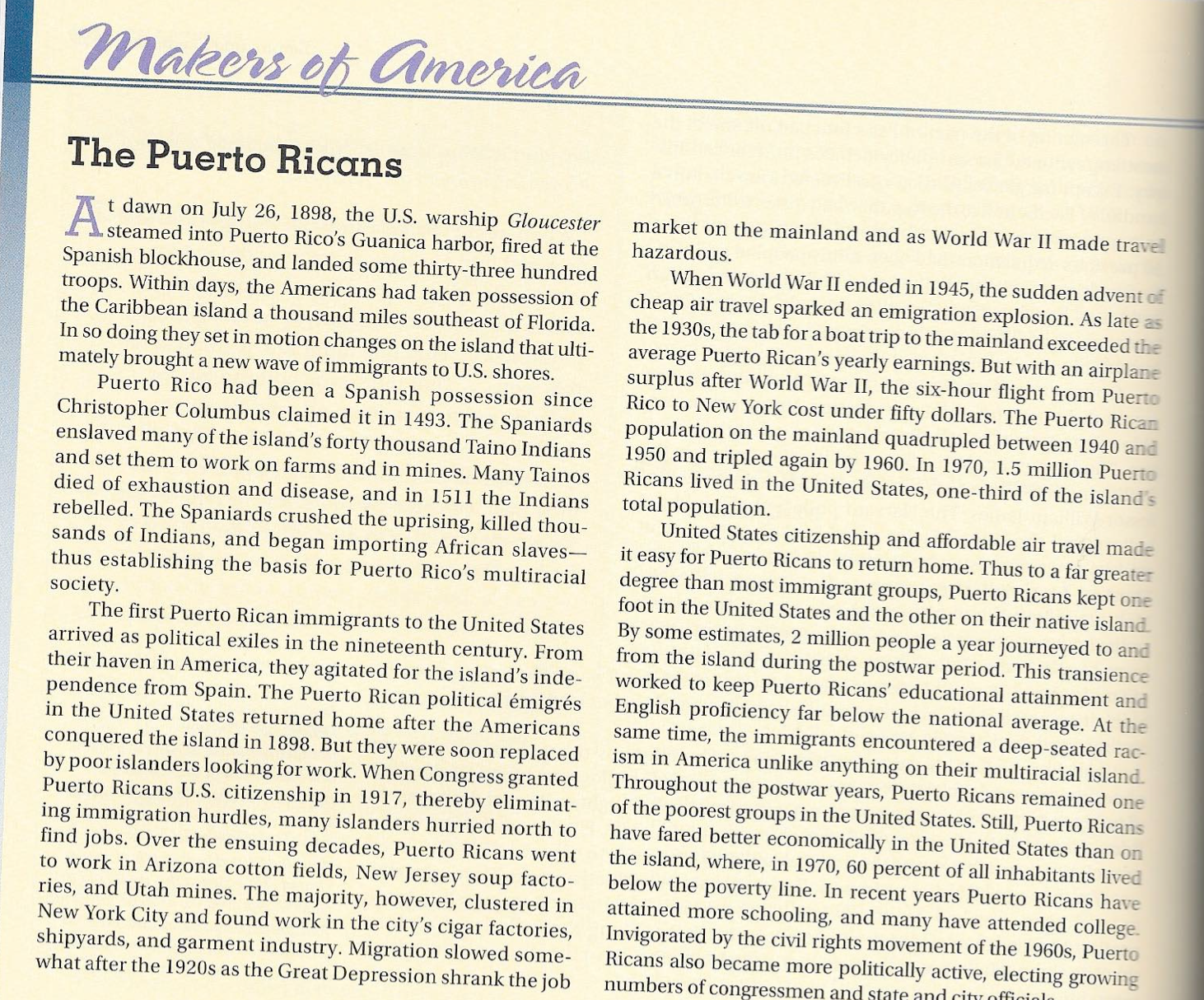
As used in line 6, "aspired to" most nearly means
yearned for
looked up
set aside
reflected upon
independence.
citizenship.
freedom from political persecution.
employment.
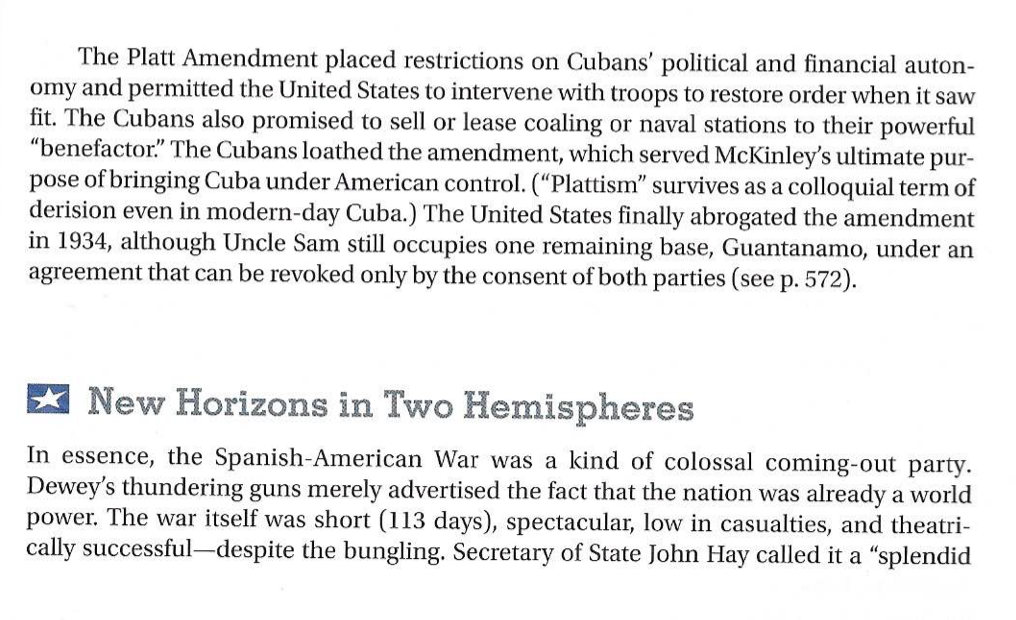
force Cuba to sell or lease coaling or naval stations to the U.S.
allow Cuba to revoke consent at any time.
maintain a permanent naval base in Guantanamo Bay.
assert its right to militarily intervene in Cuba.
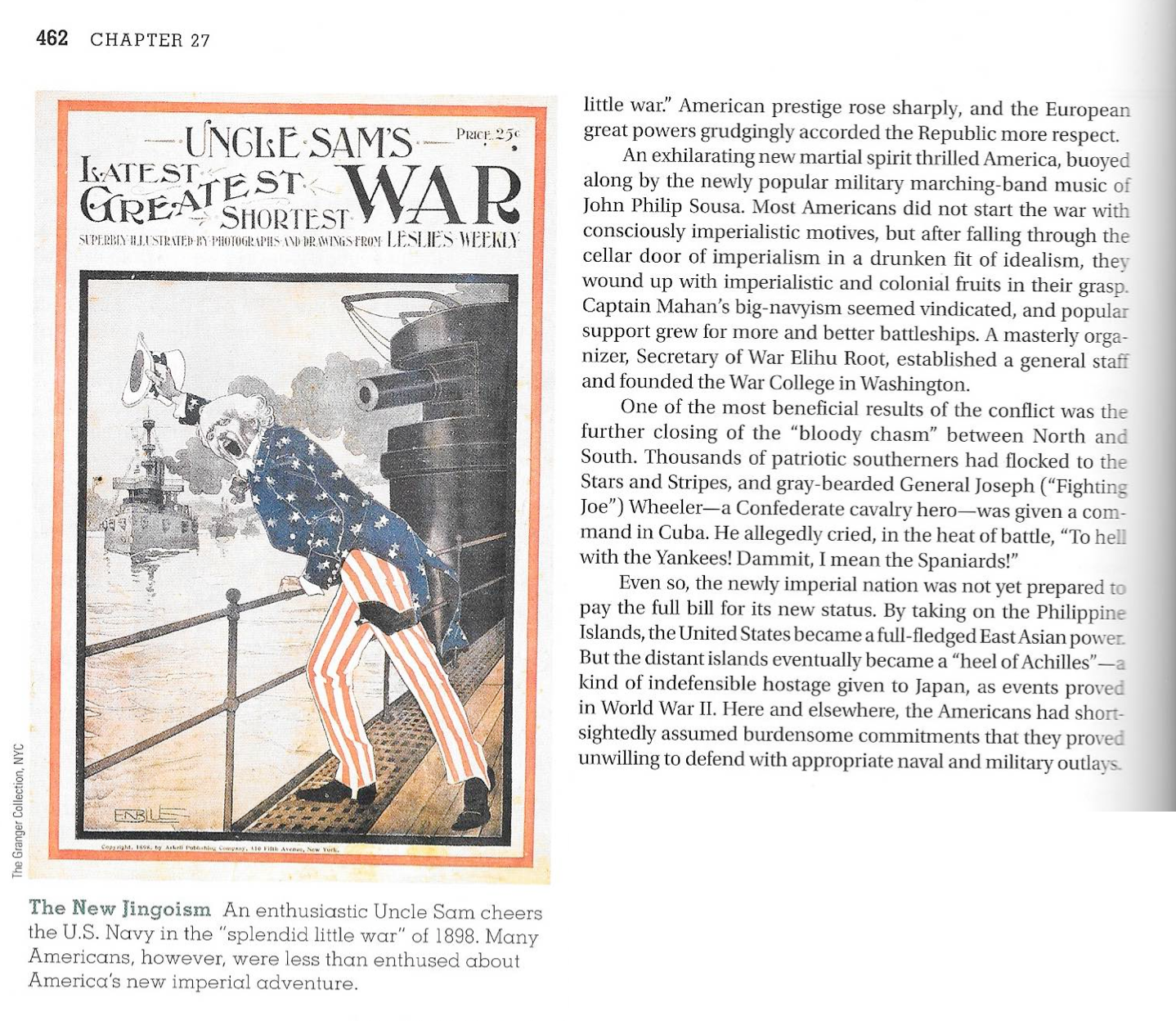
As used in line 3, "martial" most nearly means
soldierly
power-hungry
civil
belligerent
American missionaries tried to convert Catholic Filipinos to Protestantism.
the United States refused to give the Filipinos their independence.
remaining Spanish officials tried to regain political control.
Communist insurgents attempted to seize control of the islands.
the U.S. had good intentions in acquiring the Philippines from Spain.
a gradual U.S. citizenship program will be created for Filipino immigrants.
the Philippines looked up to the United States as a older brother.
President McKinley's policy of "benevolent assimilation" was patronizing.
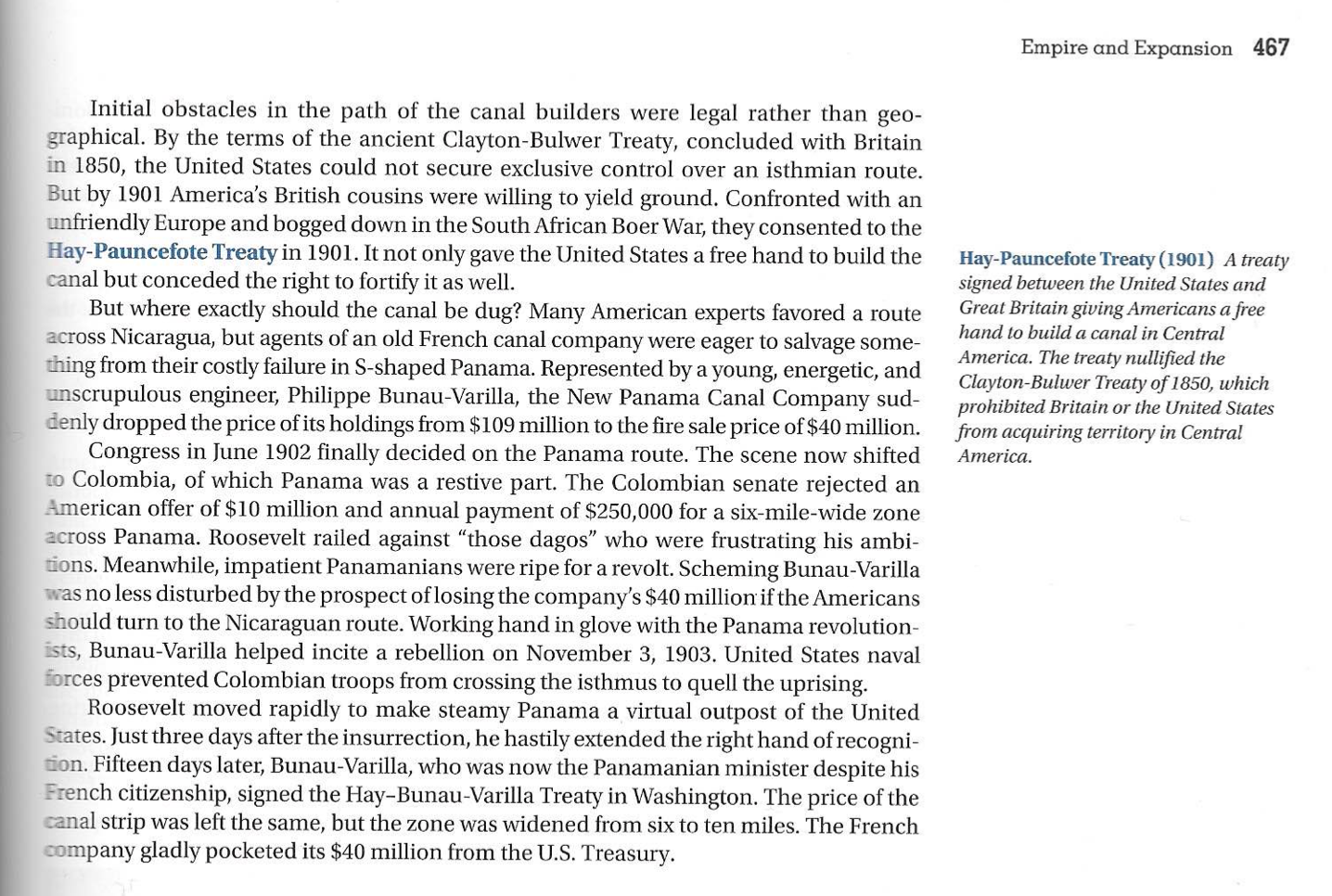
concerns about the Panamanian Revolution.
the need to prevent the French or British from building a canal there.
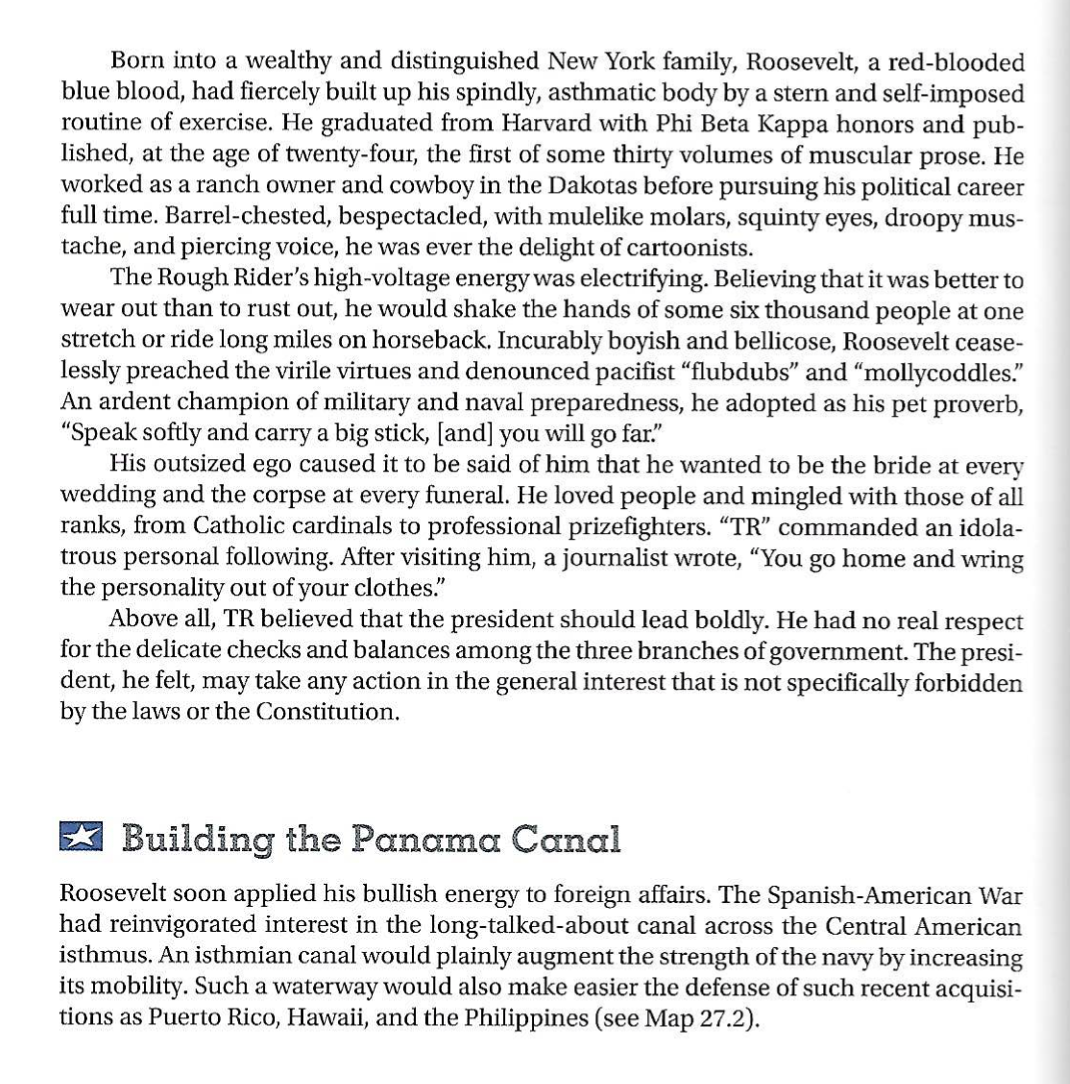
an interest in strengthening the position of the U.S. navy
hopes of expanding commercial shipping between the east and west coasts.
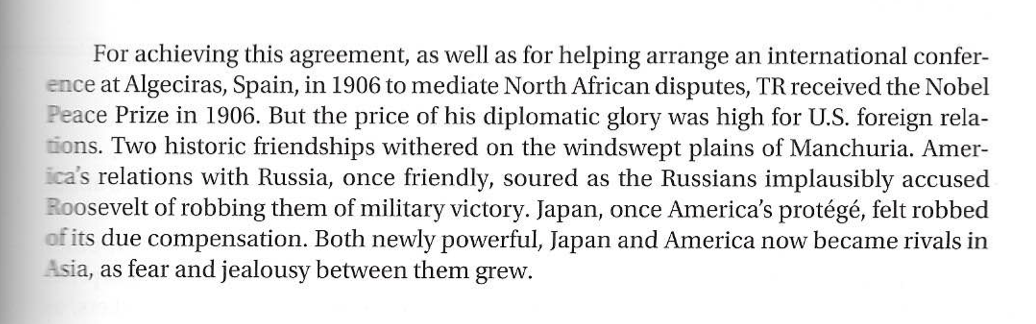
As used in line 7, "compensation" most nearly means
reward.
payment.
recognition.
settlement.