Ɛhia
1
Between 1870 and 1890, the
Content Objective: I will be able to explain the justification for American imperialism in my own words.
Standard Objective: I will be able to draw reasonable inferences and logical conclusions from a historical poem and political cartoon.
Absent? Just want to review the slides? Click here.
Content Objective: I will be able to explain the justification for American imperialism in my own words.
Standard Objective: I will be able to draw reasonable inferences and logical conclusions from a historical poem and political cartoon.
Absent? Just want to review the slides? Click here.
Warm Up: Please rate how well you understood last night's pre-work on a scale from 1 to 4. If you have any questions, drop them in the "Show Your Work" area.
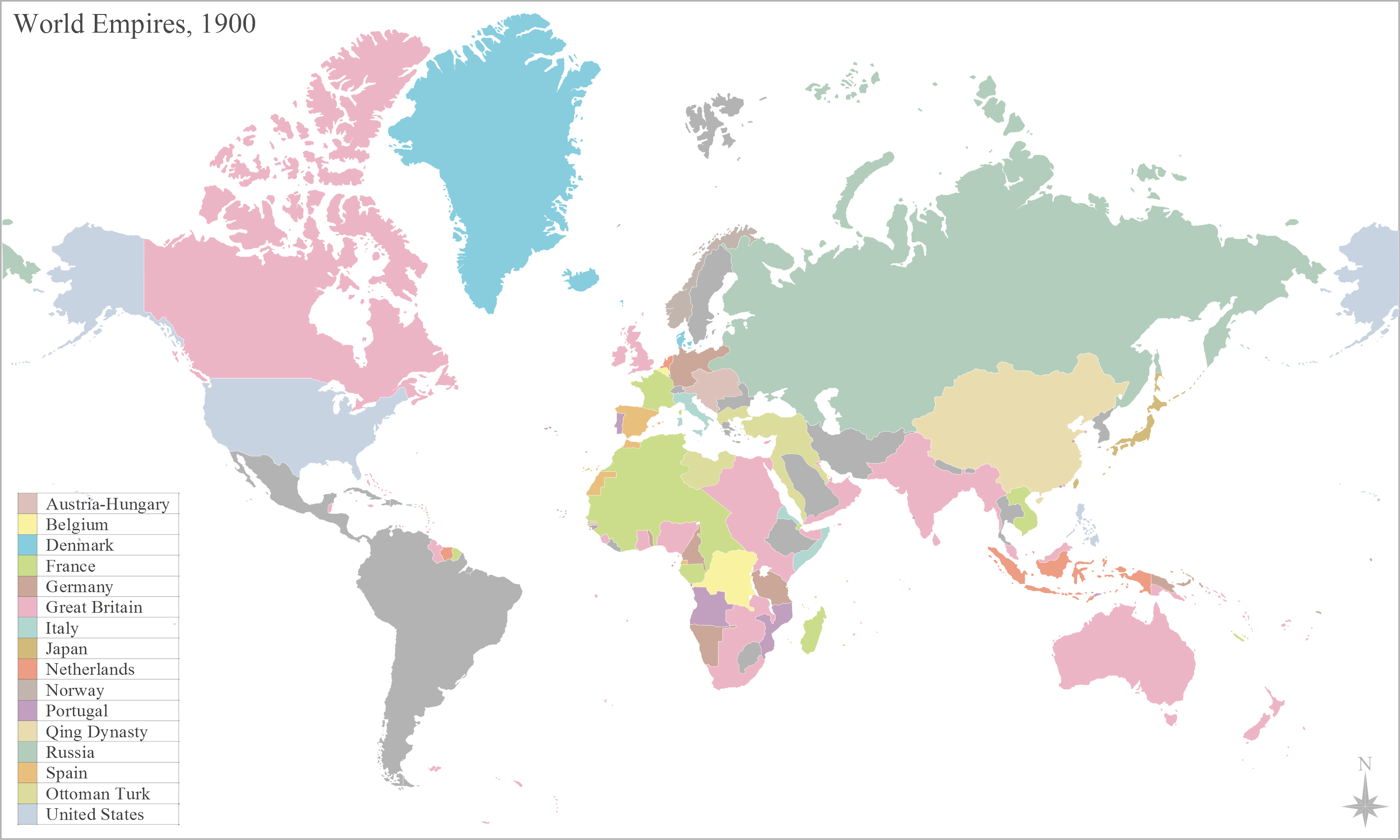
Warm Up: Do you know anyone from Cuba, Puerto Rico, Hawaii, Guam, Panama, or the Phillippines? Explain.
If you finish early, identify those 6 countries on the World Map.
Warm Up: One interesting historical fact I learned from the pre-work is…
Between 1870 and 1890, the
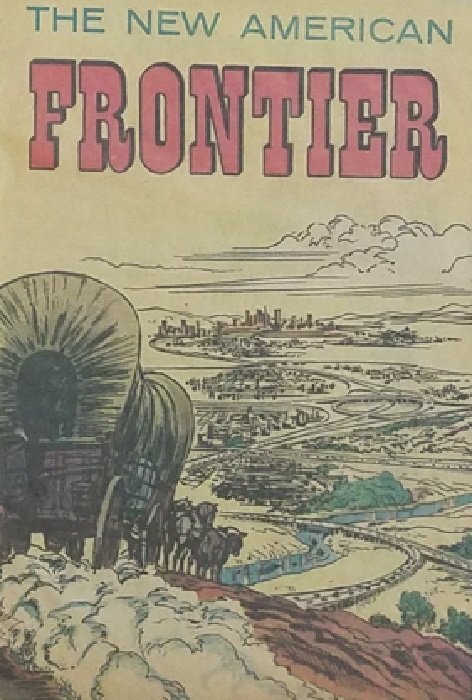
Markets were particularly important for the United States, which had emerged as the world's
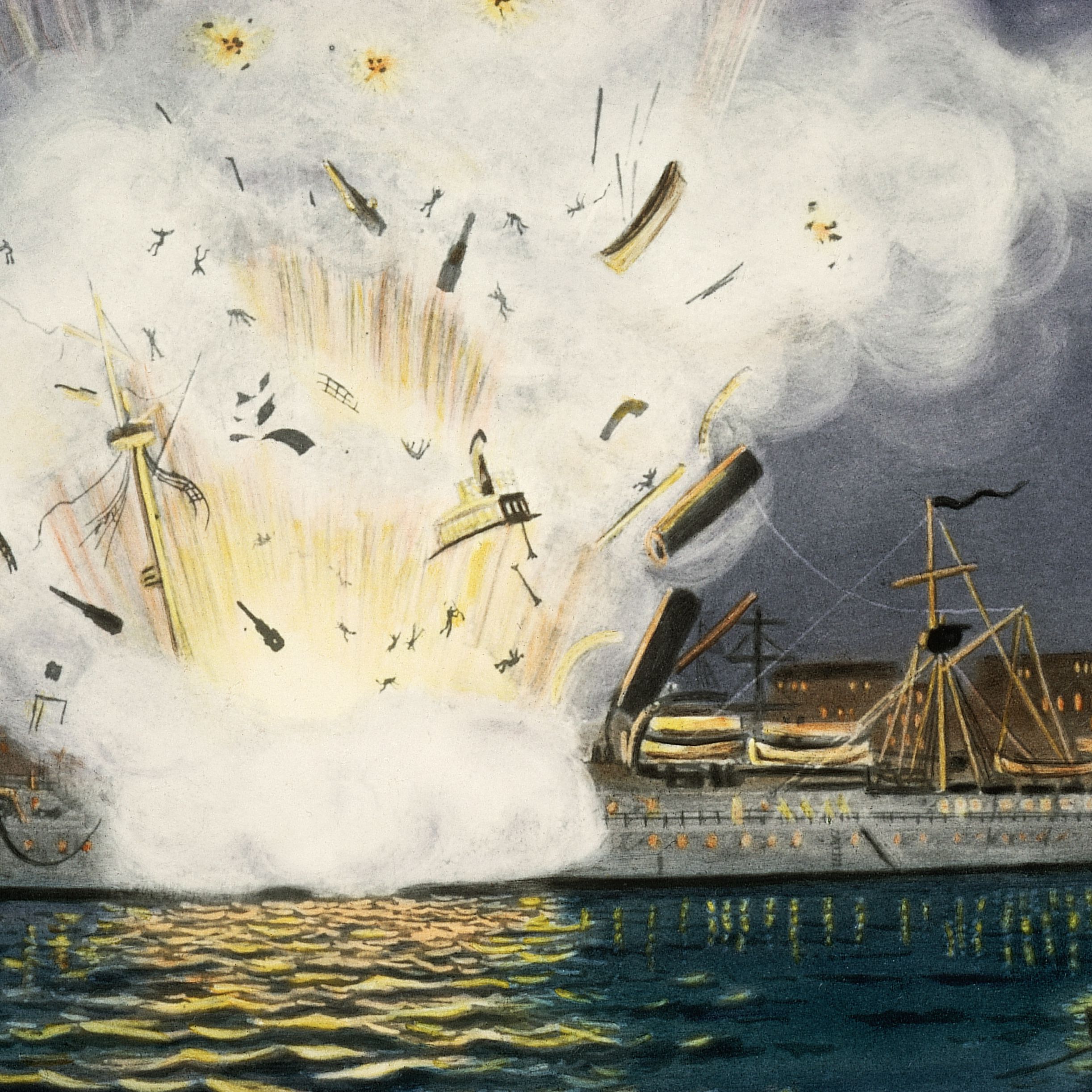
While the United States was considering its fate now that relentless expansion west was no longer possible, Cuban rebels were attempting to overthrow
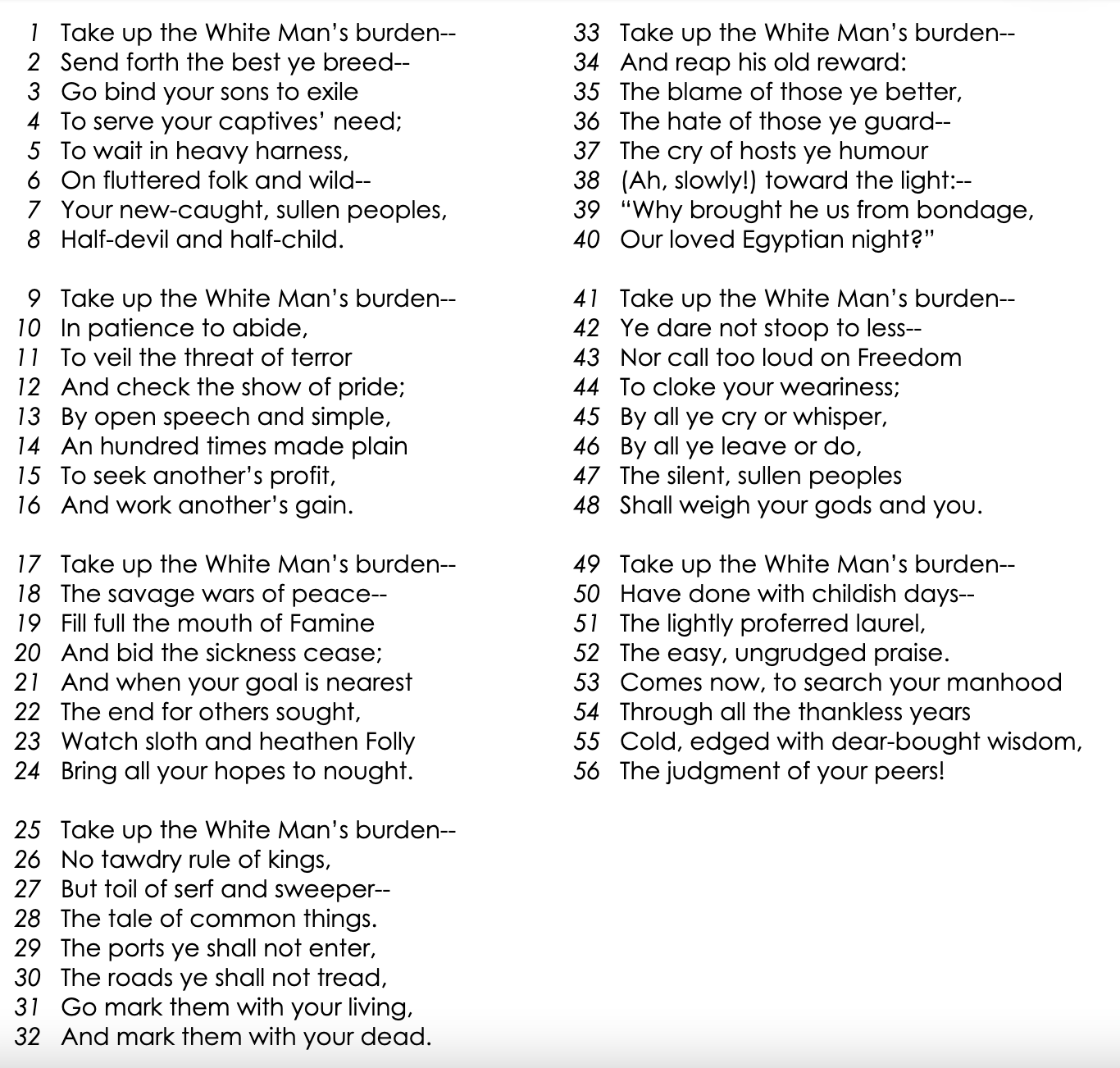
According to Kipling, what is the “white man’s burden”?
What rewards does Kipling suggest that the “white man” gets for carrying this “burden”?
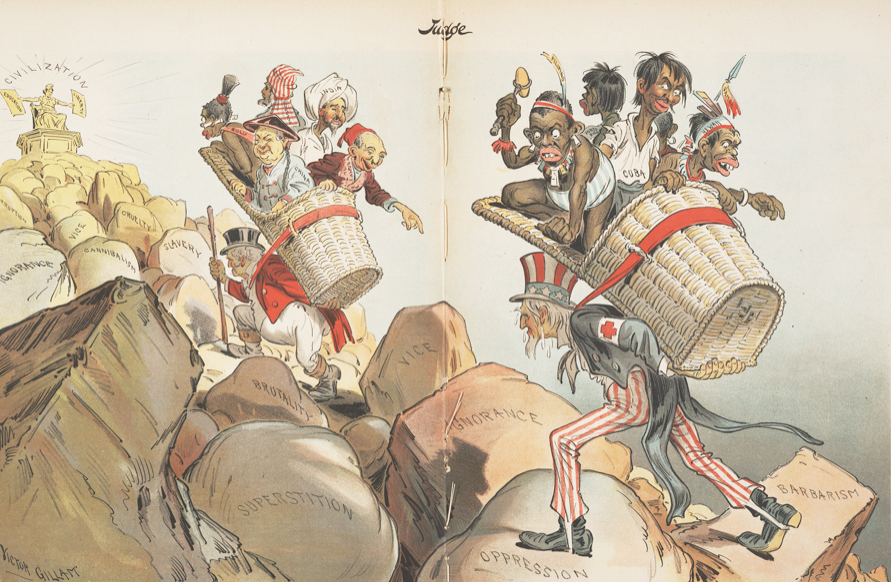
How is Kipling’s perspective about American imperialism portrayed in this political cartoon?
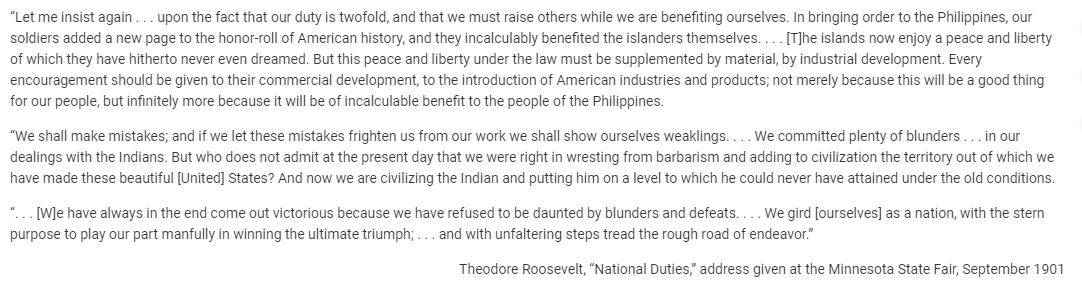
Exit Ticket: Which of the following best explains a conclusion about United States foreign policy in the early 1900s supported by the point of view expressed in the excerpt?
Exit Ticket: The speech’s point of view can best be used to support which of the following historical arguments about the early 1900s?
Exit Ticket: Please evaluate how well you understood today’s lesson on a scale from 1 to 4: