Log in
Sign up for FREE
arrow_back
Library

3.10 MOD Unit 3 Assessment: Prairie Ecosystem Gizmo

star
star
star
star
star
Last updated about 2 hours ago
15 questions
Required
4
HS-LS2-6
Required
2
Required
1
Required
1
Required
1
4
1
Required
4
Required
1
Required
5
HS-LS2-1
Required
1
Required
5
HS-LS2-6
Required
3
5
HS-LS2-6
Required
5
HS-LS2-6
Before you can complete this assignment, you need to click here log in to Gizmos.
  1. Use ISWAewiner as the username.
  2. Select Biology B T3 as the class.
  3. Select your name from the student list.
  4. Select Gizmos.
  5. Enter your password.
  • Your password is the first letter of first name, full last name, grade number
  • Example: KMartin12
  • Include hypens, spaces, Jr, etc, if you have multiple parts in your last name. Examples: KDuncan-Martin12, K Martin Duncan, Kmartin Duncan III12
  • Still need help? E-mail ewiner@k12insightwa.org
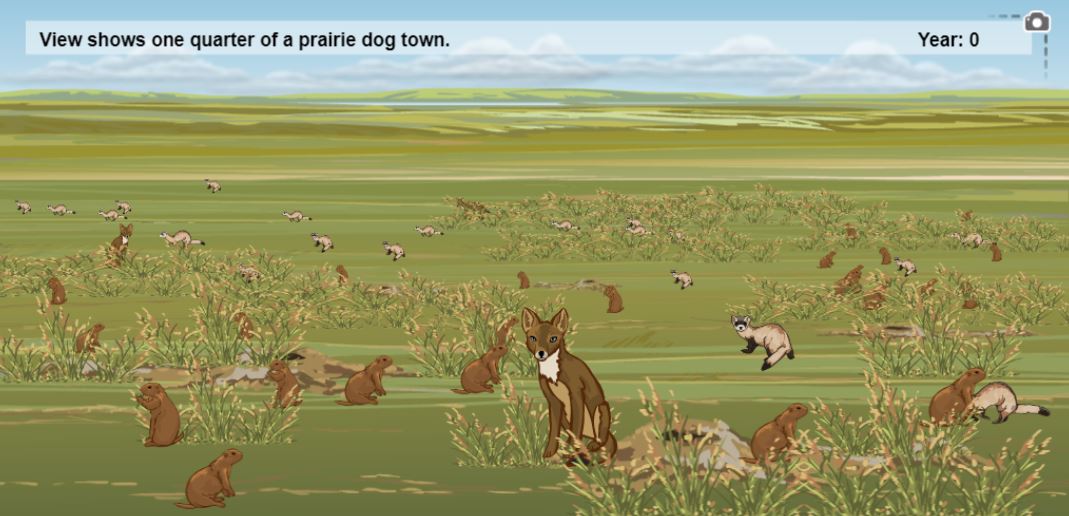
In order to complete this assignment, you will need to use the Prairie Ecosystem Gizmo. Click the link to open the Gizmo in a new tab.


A prairie is a flat or gently rolling grassland with few trees and can be found in parts of central united states and canada.

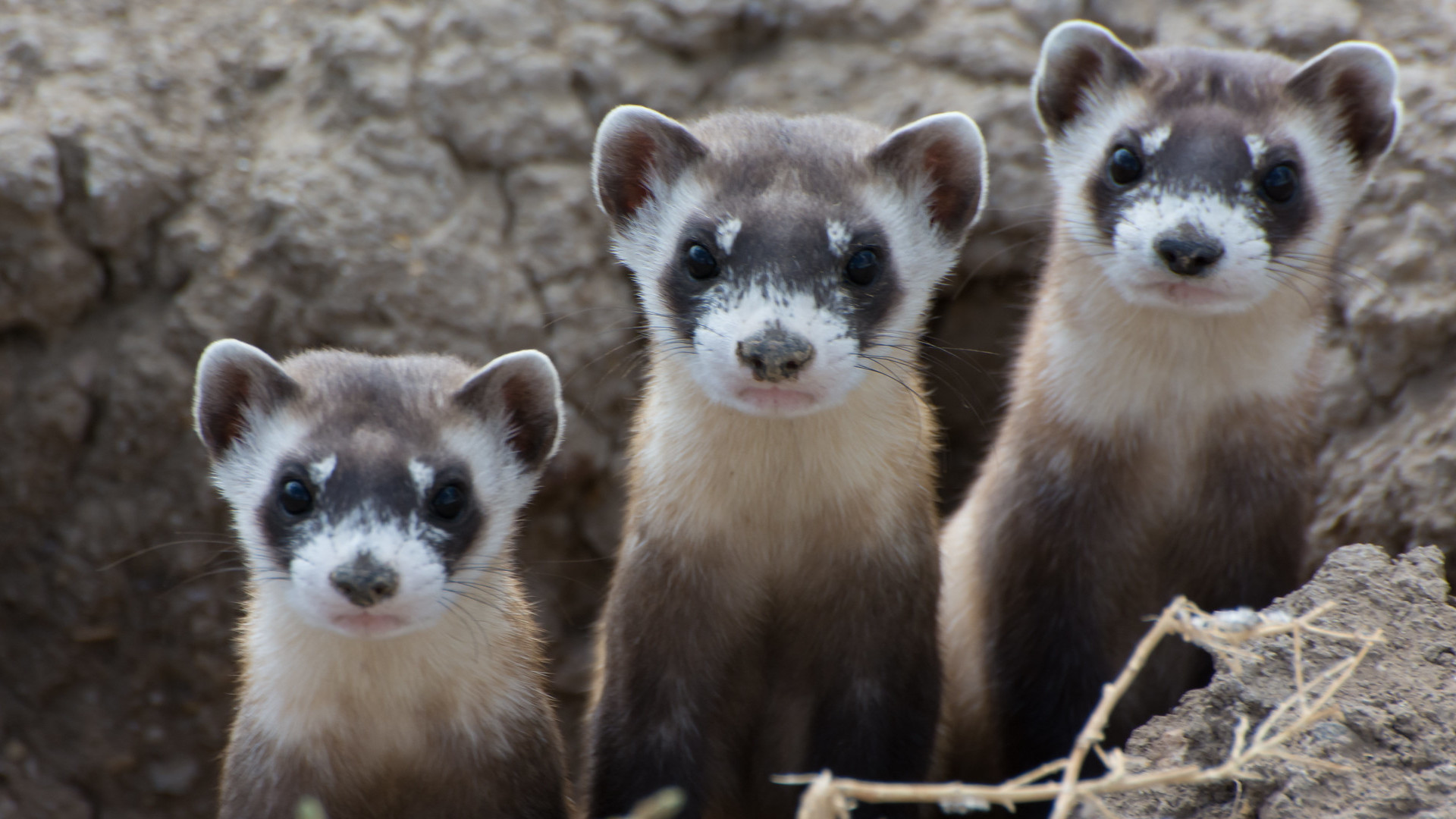
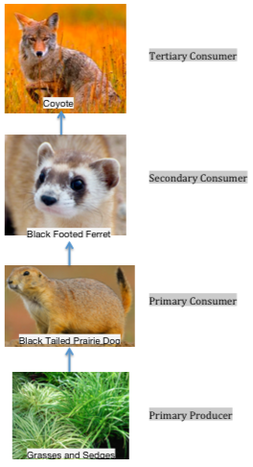
Common organisms in a prairie include prairie dogs, swift foxes, black footed ferrets, and various species of grasses.

In a prairie, the producers are the grasses, the primary consumer is the prairie dog.

The prairie dog is preyed upon by both the black-footed ferret and the swift fox.
Question 1
1.

Question 2
2.
What are the starting populations in the gizmo?

Grass: __________ tons
Prairie Dogs: __________
Ferrets: __________
Foxes: __________
Question 3
3.

Click Advance year 10 times.
On the DATA tab, look at the Bar graph and the Line graph.
Select the correct response:
The populations of all species __________.
Question 4
4.

Part 1:

Observe:
Remove ALL animals from the prairie by clicking the minus (–) button next to each animal many times. Click Advance year 20 times.

Grass __________ by itself.
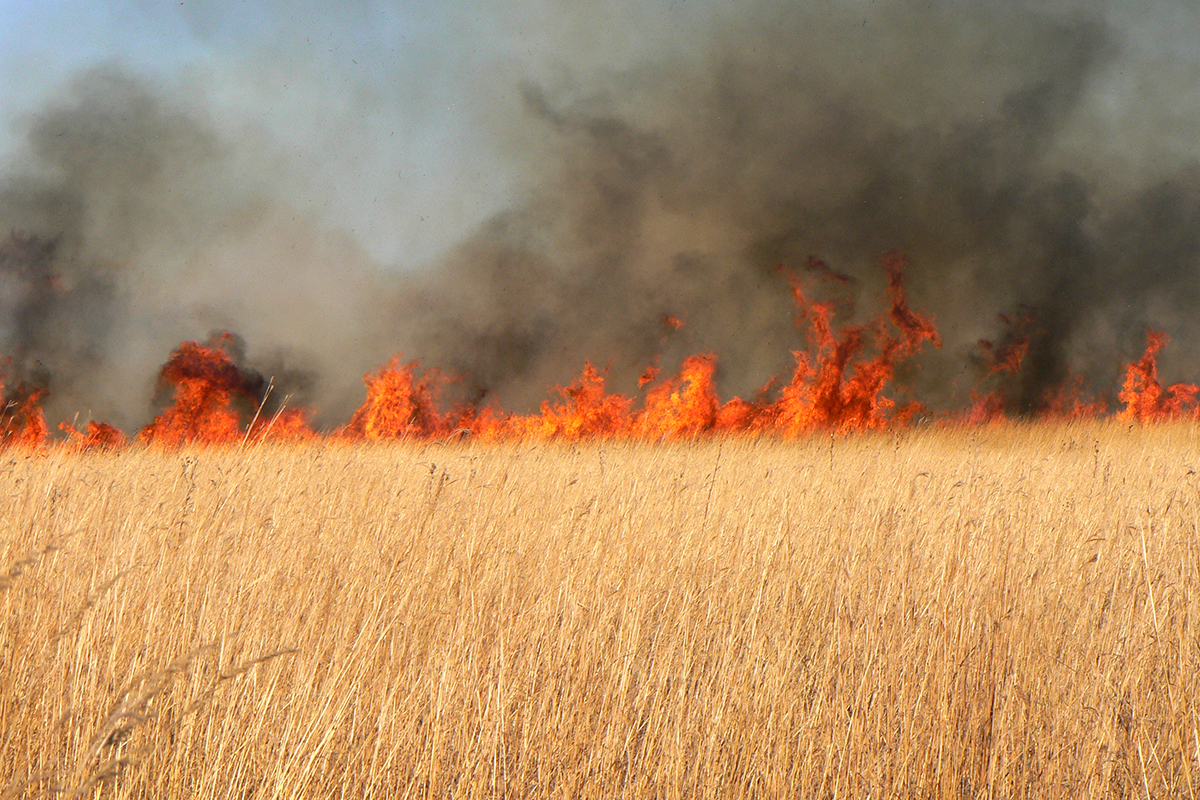
Before Europeans settled the Great Plains and upper Midwest, vast prairies and savannas once covered over 110 million acres, and these grasslands burned on a regular basis.

Some fires were caused by lightning strikes, while many more were started by Native Americans who burned to clear the land for agriculture, improve grazing and forage for game species, direct game migration and clear brush to ease travel or prevent hostile forces from approaching unnoticed.
Question 5
5.
Predict:
If we were to remove half of the grass from the prairie due to a fire, then the prairie dog population would __________, the ferret population would __________, and the fox population would __________
Question 6
6.
Experiment:
Remove half of the grass by clicking the minus – button.
There should now be 2,000 tons of grass.

Click Advance year twice, and look at the Bar graph or the Line graph under the Data tab.

What happened to each population?

Grass: __________
Prairie Dog: __________
Ferret: __________
Fox: __________
Question 7
7.
Predict:

Complete this hypothesis with what you think will happen.

If half of the grass is removed from the prairie ecosystem, then the grass population will __________, the prairie dog population will __________, the ferret population will __________, and the fox population will __________ after 20 years.

Experiment: Test your prediction by clicking Advance year until 20 years have passed.


Use the data to answer the following questions:
Question 8
8.
Results:
At the end of the experiment, what were the population numbers?

Grass: __________ tons
Prairie Dogs: __________
Ferrets: __________
Foxes: __________
Question 9
9.
My hypothesis (prediction) was __________
Question 10
10.


The Story of the Black-Footed Ferret:

Long ago, the black-footed ferret was a common sight on the prairie in the central united states. Due to habitat loss, disease, and a decline in the prairie dog populations (which are the ferret's primary prey), the black-footed ferret was placed on the endangered species list in 1967. In 1974, the black-footed ferret was thought to be extinct. A small population was found in Wyoming in 1981. In 1986, there were only 18 black-footed ferrets alive.
Question 11
11.

Part 2:

Create a hypothesis (prediction):
What do you think will happen if the black-footed ferret did become extinct in 1974?

If the black-footed ferret were to become extinct, then the grass population would__________, the prairie dog population would__________, and the fox population would__________.
Question 12
12.

Explain:
Why do you think your prediction is correct?

Question 13
13.
Experiment: Click Reset, and remove all the ferrets from the prairie dog town.

Click Advance year for 12 years.

Record your data.

Grass Population: _______ tons
Prairie Dog Population: _______
Fox Population: _______
Question 14
14.

Reflect:

Why did the grass survive when all of the animals were removed from the prairie ecosystem (part 1) , but the grass did not survive when only ferrets were removed from the ecosystem (part 2)?

Question 15
15.

What were the ferrets providing for the ecosystem? Think about what role they play and how they affect other populations.

Warm-up


Consider all of the living and non-living things in the prairie dog town. Categorize each item as biotic or abiotic.
Black Footed Ferret
Prairie Dog
Grass
Clouds
Water
Soil
Biotic Factors
Abiotic Factors
Explain:

Which TWO pieces of evidence support this claim?

Claim: The prairie ecosystem was able to recover twenty years after the fire.
There were more foxes than ferrets.
The prairie dogs did not return to the prairie.
The amount of grass approximately doubled.
The foxes returned to their pre-fire numbers.