Log in
Sign up for FREE
arrow_back
Library
China Test 2022-23 (TCI without Philosophies)
By Janifer A Douglas
star
star
star
star
star
Share
share
Last updated almost 3 years ago
30 questions
Add this activity
1
1
1
1
1
1
1
1
1
1
1
1
1
1
1
1
1
1
1
1
1
1
1
1
1
1
1
1
Question 1
1.
What were the names of the two major rivers of Ancient China?
Nile and Amazon
Yangtze and Yellow
Mississippi and Ganges
Tigris and Euphrates
Question 2
2.
The disadvantages of the physical barriers that surround China might be...
protection from invaders
trade with other civilizations was more diffictult
people could interact with new cultures
getting to fight with other countries
zoom_in
1
Question 3
3.
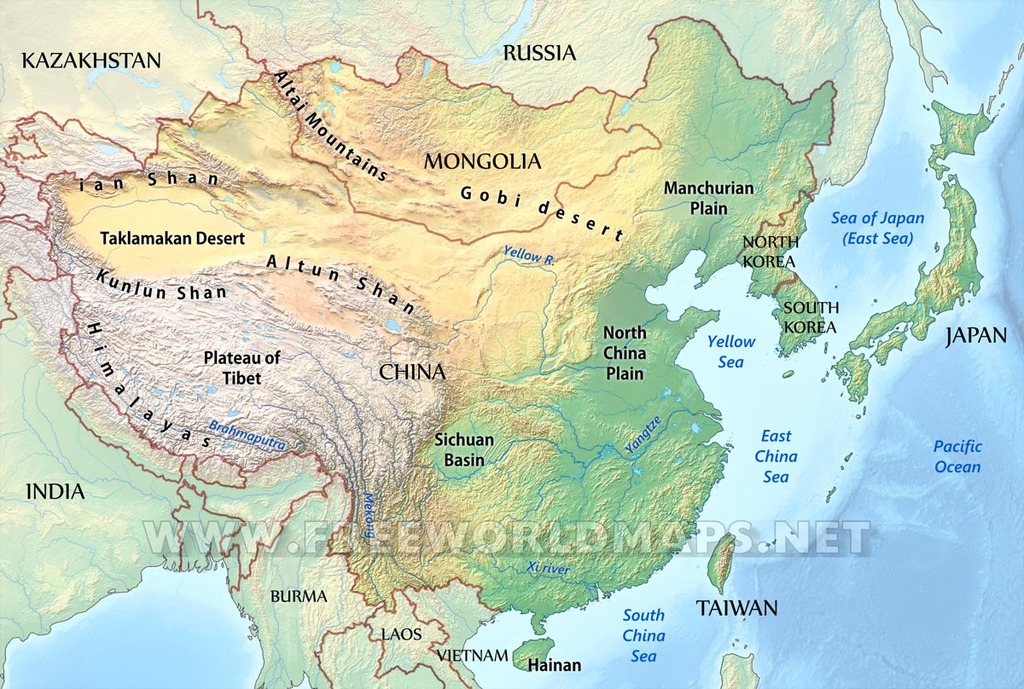
Which geographical physical features isolated China from other civilizations, but also protected ancient China from invaders?
Himalayan Mountains and Gobi Desert
Tibetan Plateau and the Manchurian Plain
Yellow Sea and Yangtze River
Atlantic Ocean and Europe
Question 4
4.
What metal was the
Shang Dynasty
known for using to create goods and weapons?
Steel
Jade
Bronze
Gold
Question 5
5.
How did scholars learn that the
Shang Dynasty
was real and not just a myth?
they found artifacts
they read newspapers on them
they learned the language
they asked Chinese leaders
Question 6
6.
What occurred during the end of the Zhou dynasty?
Lords tried to take over power creating civil wars within the states.
Crop production decreased.
Cities declined in importance.
Weak states took over strong states.
Question 7
7.
The Warring States Period was...
a time when the king honored those who fought in wars
a time when peasants joined the army to honor the king
people were against taking over other countries
a time when China's states were fighting with each other for control
Question 8
8.
What was the Mandate of Heaven?
A set of laws that were dictated from the gods
The name of a special palace built for the king
What the Ancient Chinese called their king
A concept that said rulers were given authority to rule from the gods
zoom_in
1
Question 9
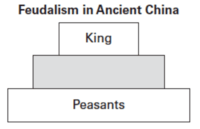
9.
Look at the image. Which group belongs in the shaded area of the diagram representing Zhou social classes?
priests
lords
artisans
slaves
Question 10
10.
Which of these did Qin Shi Huangdi
NOT
accomplish?
common currency (money)
one written language
development of gunpowder
unified weights and measurements
Question 11
11.
To set rules to make things more similar
standardize
censor
code
develop
Question 12
12.
How long did the Qin Dynasty last?
about 15 years
about 100 years
about 250 years
about 400 years
Question 13
13.
Who was the king of the Qin State and called himself "first emperor"?
Shi Huangdi
Confucious
Laozi
Huang He
Question 14
14.
Shi Huangdi would order his armies to destroy city walls of the towns they conquered and take away weapons because...
He hated walls and weapons
He didn't like their artwork
The town trapped his armies inside
He wanted control of the towns and wanted to prevent them from going against him
Question 15
15.
With the same money and written language, _______ between regions became much easier!
relationships
building homes
farming
trade
Question 16
16.
Choose
THREE
important building projects that
Emperor Shi Huangdi
was known for during his reign.
temples to praise the gods
network of roads to help with transportation and trading
canals & irrigation for water and farming
universities to teach Confucian ideas
The Great Wall to protect from invaders
Question 17
17.
What did Qin Shi Huangdi have created for him so he could rule in his afterlife?
terra cotta army
The Great Wall
the pyramids
statues of Buddha
Question 18
18.
What allowed the Han to expand their dynasty?
their great wealth which allowed them to buy land
their military methods and new weapons
their ability to build alliances with their neighbors
their skill in negotiating treaties
Question 19
19.
What was the advantage of fish-scale armor produced by Han ironworkers?
It allowed soldiers to float if they fell into water.
It was flexible enough to move with the body.
It allowed warriors to withstand very cold water.
Question 20
20.
What did the Han do with kites?
The Han used them to transport goods over long distances.
The Han used them for a variety of military purposes.
The Han used them to capture electricity during lightning storms.
The Han children used them for entertainment.
Question 21
21.
How did Han emperors rule their vast empire?
They made all decisions personally to avoid having to share power.
They used a large, complex bureaucracy to run the government.
They shared control with local governments run by their male relatives.
They divided the duties of government between themselves and their wives.
Question 22
22.
In addition to growing food for their families, Han farmers had to...
grow enough food to stock the shared granaries
build their own homes.
give one month of unpaid labor to the government.
all of the above
Question 23
23.
Which invention helped Han farmers move much heavier loads than they could carry?
iron plow
chain pump
wheelbarrow
horse cart
Question 24
24.
Which artistic material was invented during the Han dynasty?
ink
paper
pens
paint
Question 25
25.
Under
Emperor Wudi
in the
Han Dynasty
, what became China'a official government policy?
Confucianism
Daoism
Legalism
Buddhism
Question 26
26.
In order to get a good position as a civil servant or worker in the Han government, a person had to...
have strong military skills and strategies
be born into a royal family
pass a test to show knowledge and ability
receive the mandate of heaven
Question 27
27.
During the Han period, the Chinese invented...
paper and the concept of zero
the thermometer and acupuncture
paper and algebra
acupuncture and a seismograph
Question 28
28.
Why was silk China's most valuable trade item during this time period?
The Syrians thought wool was too itchy.
The Indians found cotton to be too expensive.
The Romans wanted to use it to praise their Christian God.
The Chinese were the only ones who knew how to make it.
Question 29
29.
What was the
most
important reason why traders formed long
caravans
to cross the desert?
to learn the route
to lift heavy goods
to protect each other
to prevent sandstorms
Question 30
30.
How did the Silk Road most affect the spread of Buddhism?
Travelers carried Buddhist beliefs from India to China.
Chinese philosophers wrote Buddhist texts to sell.
The Buddha encouraged people to seek enlightenment in the desert.
Dangers on the route supported the Buddhist idea that life is suffering.