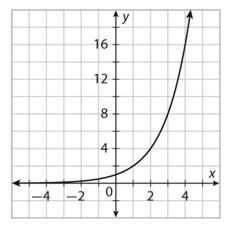
Which exponential function matches the values in the table below?
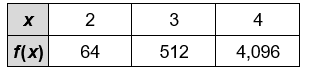
Which exponential function matches the values in the table below?
Formulas
Exponential function:
Exponential GROWTH Function:
Exponential DECAY Function:
Which exponential function matches the values in the table below?
What are the next three terms in the sequence 20, 10, 5, 2.5, ...?
When a ball is dropped, the function
The first term of a geometric sequence is 8 and the common ratio is 3. What is the fifth term of the sequence?
Evaluate
What is the value of
The population of a town over the past 10 years can be represented with the equation
Which statement below is FALSE?
Which set of ordered pairs satisfies an exponential equation?
Select ALL expressions that equal 4 when simplified.
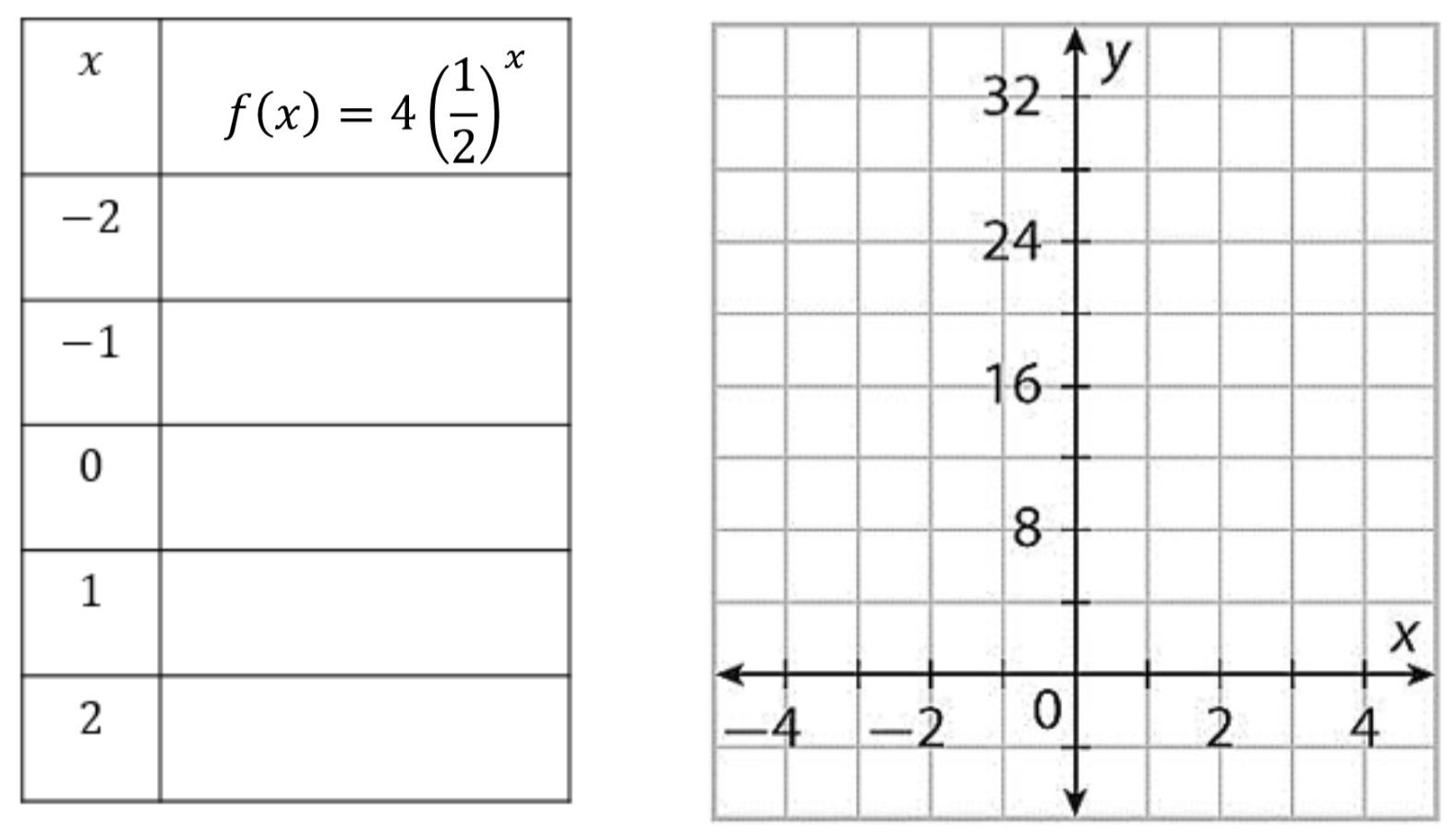
Complete the table and graph the function.
Click "show your work".
Does this function represent growth or decay?
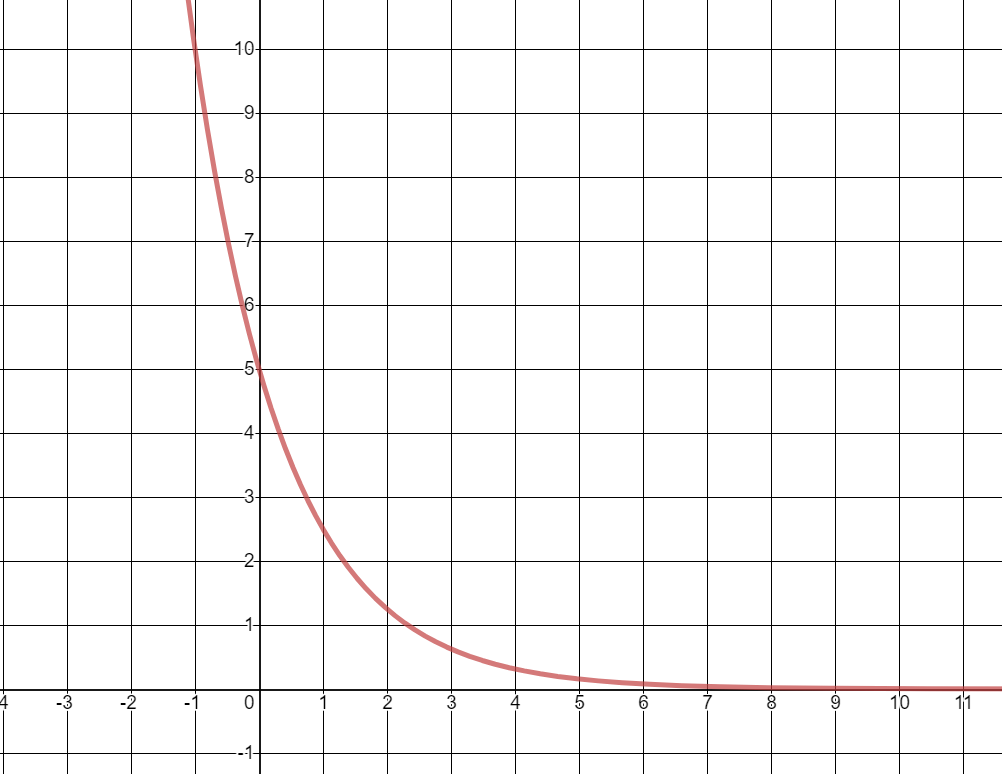
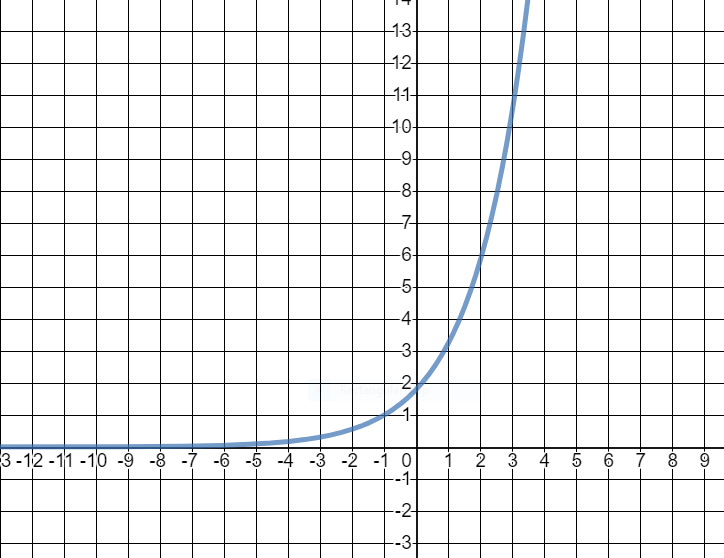
Select the correct Domain and Range for the graph below.
Select TWO:
A pond has 130 fish, and the population decreases by 8% each day. Find the number of fish in the pond after 4 days.
Round to the nearest whole number.
Ira has $100 in his savings account. He is looking at two savings plans.
Under Plan A, his account balance can be represented with the equation
Under Plan B, his account balance can be represented with the equation
Complete the table then select the THREE statements that are TRUE.
Describe the end behavior for the function:
A scientist tracked the population of northern sea otters from 2015 to 2020. In 2015 there were 70 sea otters. According to the scientist, the population was increasing at a rate of 18% annually.
Write the function