Content Objective: I will be able to describe the effect of urbanization on American life in the late 19th century.
Standard Objective: I will be able to synthesize information and ideas from multiple texts.
Absent? Just want to review the slides? Click here!
Content Objective: I will be able to describe the effect of urbanization on American life in the late 19th century.
Standard Objective: I will be able to synthesize information and ideas from multiple texts.
Absent? Just want to review the slides? Click here!
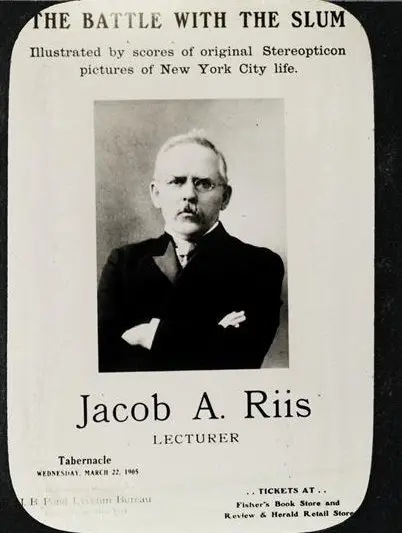
“Long ago it was said that ‘one half of the world does not know how the other half lives.’ That was true then. It did not know because it did not care. The half that was on top cared little for the struggles, and less for the fate of those who were underneath, so long as it was able to hold them there and keep its own seat.”
- Jacob Riis
How does this quote relate to the Gilded Age?
Your answer should include the term "Robber Barons" (This was covered in Unit 4.5 Classwork!)
READ ----> One of the major characteristics of the Gilded Age was rapid growth of cities. This is known as "urbanization." Urbanization brought many challenges for working class Americans during this time period.
Urbanization = The rise of cities and the ways in which cities adapt to the growing urban population.
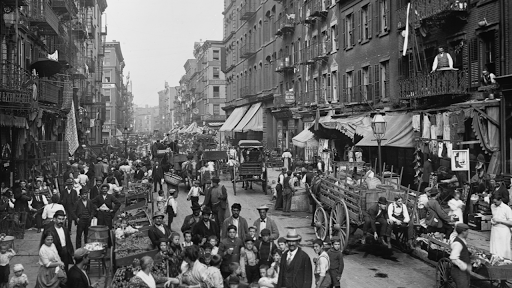
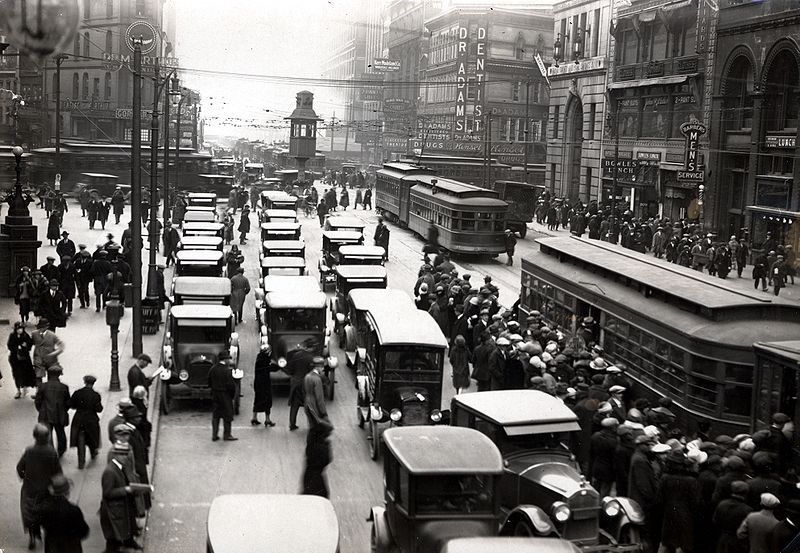
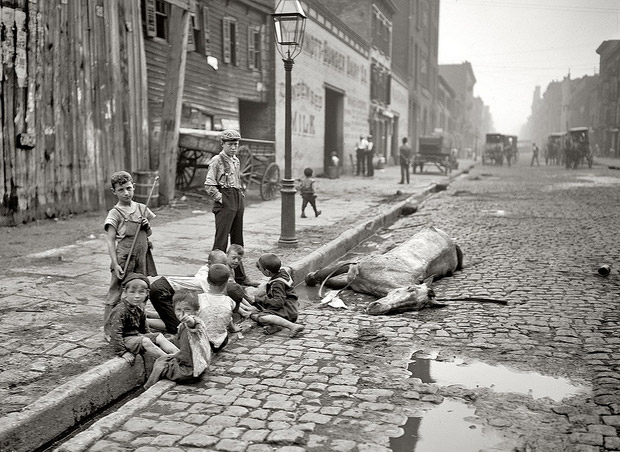
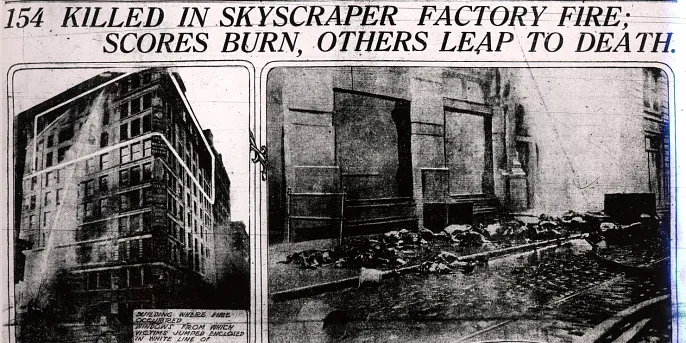
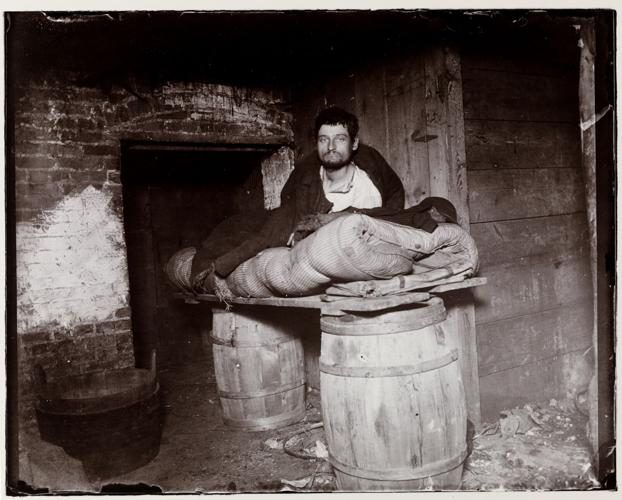
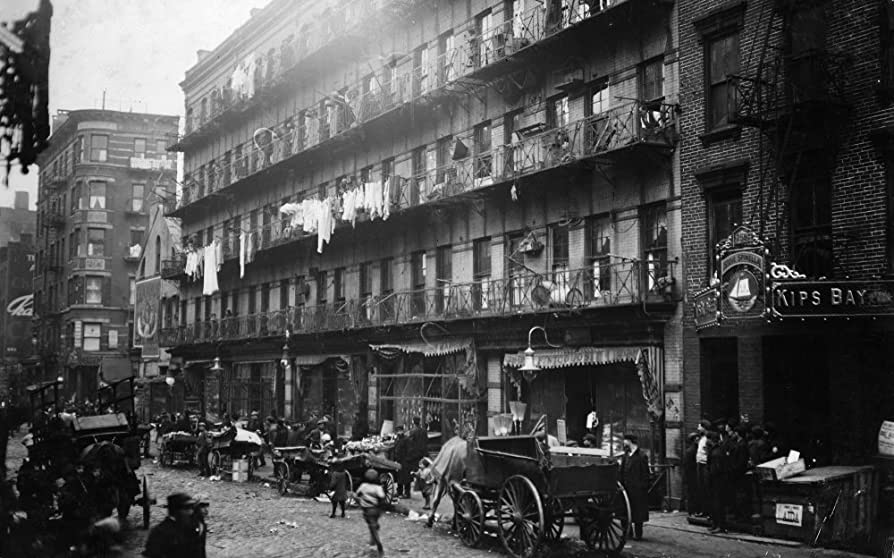
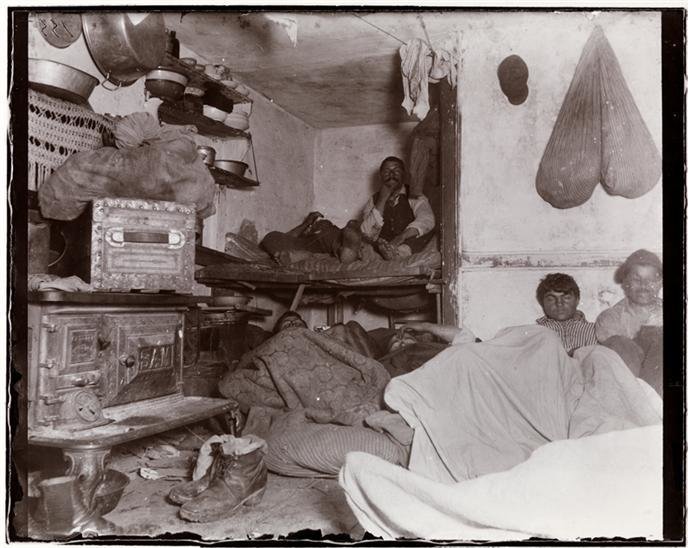
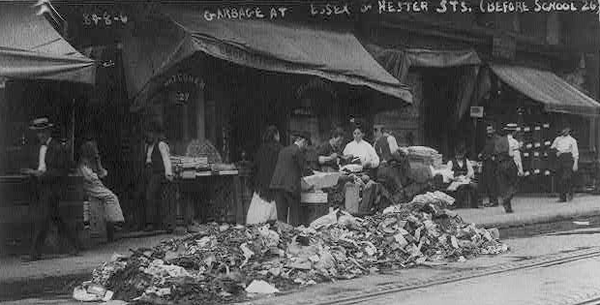
All of the pictures in your folder are primary source images taken from major cities during the Gilded Age. As you read the Challenges of Urbanization quotes, decide which image best reflects each component of that reading.
| Draggable item | arrow_right_alt | Corresponding Item |
|---|---|---|
"Without dependable trash collection, people dumped their garbage on the streets. Since garbage was picked up infrequently, people sometimes dumped it into the air shafts, where it attracted vermin. To keep out the stench, residents nailed windows shut." | arrow_right_alt | Image 1
|
"As the cities grew, so did the challenge of keeping them clean. Horse manure piled up on the streets, sewage flowed through open gutters, and factories spewed foul smoke into the air." | arrow_right_alt | Image 2
|
"After working-class families left the central city, immigrants often took over their old housing, sometimes with two or three families occupying a one-family residence. These multifamily urban dwellings, called tenements, were overcrowded and unsanitary." | arrow_right_alt | Image 3
|
"During this time, as the populations of cities increased, so did the homeless population, and pickpockets and thieves flourished. Although New York City organized the first full-time, salaried police force in 1844, it and most other city law enforcement units were too small to have much impact on crime." | arrow_right_alt | Image 6
|
"The limited water supply in many cities contributed to the spread of fires. Major fires occurred in almost every large American city during the Industrial Era. In addition to lacking water with which to combatblazes, most cities were packed with wooden dwellings, which were like kindlingwaiting to be ignited. The use of candles and kerosene heaters also posed a fire hazard." | arrow_right_alt | Image 5
|
"As the urban population increased, working-class families in cities had two housing options. They could either buy a house on the outskirts of town, where they would face transportation problems, or rent cramped rooms in a boardinghouse in the central city. Boarding houses were poorly kept, and exteriors of the buildings were unsightly." | arrow_right_alt | Image 4
|
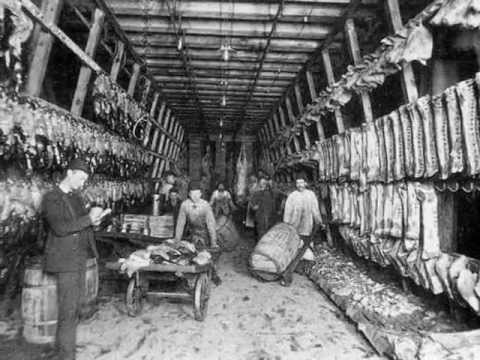
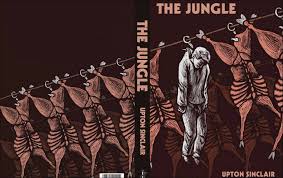
Directions: In your folder are excerpts from “The Jungle” by Upton Sinclair. He described the filthy conditions of the meat packing industry in Chicago. Sinclair’s vivid and disturbing descriptions of the industry led to the creation of the Food and Drug Administration, which regulates food producers.
Not in class today? Read the excerpt here!
Answer Before You Read: Have you ever thought about where your food comes from? How do you know it's clean and safe to eat?
Sentence-Starter:
I have/have not thought about where my food comes from...
I determine whether something is clean and safe to eat by...
Answer After You Read: Now that you’ve read about the horrendous conditions of the meat-packing industry in Chicago, which two lines were the most shocking to your group? Type the quotes in the box below.
Sentence-Starter:
Two lines that were most shocking to my group were "QUOTE 1" and "QUOTE 2" because...
Does your group think problems such as these exist in food production today (factories, restaurants, shops?) Explain why or why not.
Sentence-Starter:
My group and I believe that food production today...