Log in
Sign up for FREE
arrow_back
Library

Common Assessment SOL 8.5

star
star
star
star
star
Last updated about 3 years ago
7 questions
SLO - I can use the relationships among pairs of angles that are vertical angles, adjacent angles, supplementary angles, and complementary angles to determine the measure of unknown angles. I will have it when I score 71% (5/7) or better on this quiz.
Required
1
Required
1
Required
1
Required
1
Required
1
Required
1
Required
1
Question 1
1.

Question 2
2.

Question 3
3.

Question 4
4.

Question 5
5.

Question 6
6.

Question 7
7.

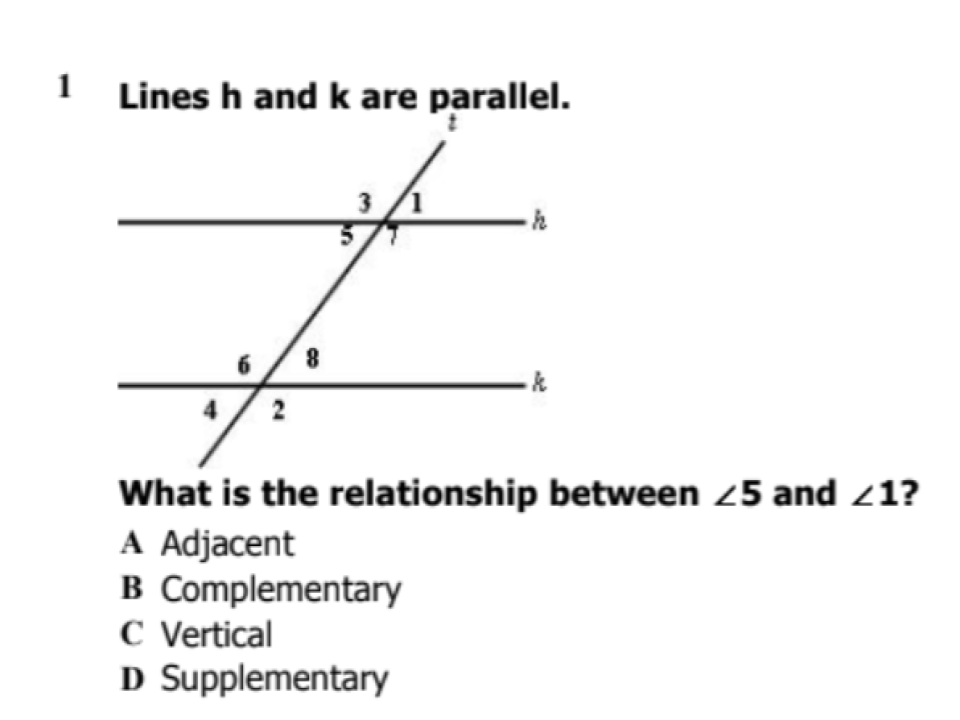
Lines h and k are parallel. What is the relationship between <5 and <1?
A) Adjacent
B) Complementary
C) Vertical
D) Supplementary
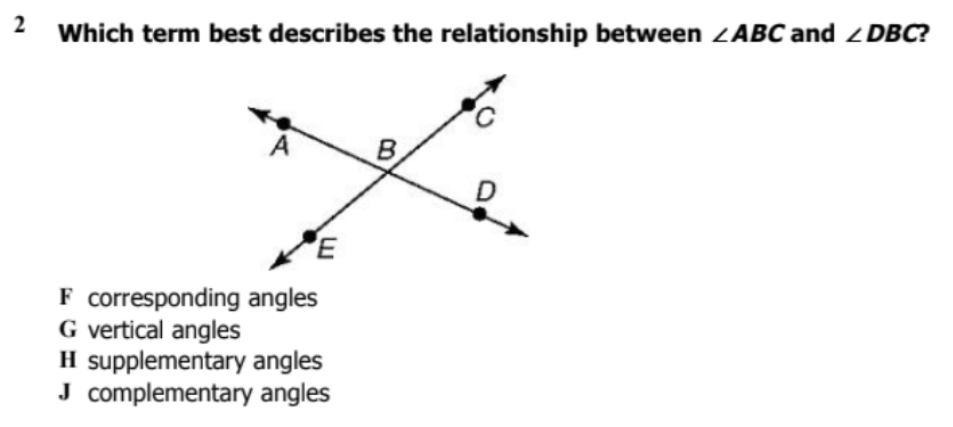
Which term best describes the relationship between <ABC and <DBC
F) corresponding angles
G) vertical angles
H) supplementary angles
J) complementary
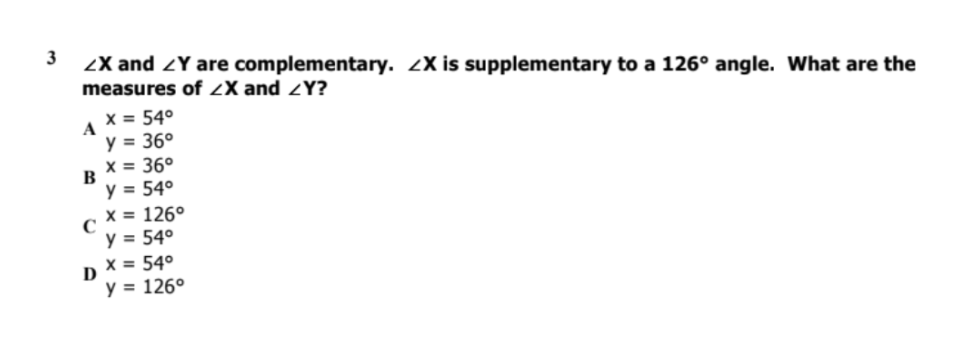
<X and <Y are complementary. <X is supplementary to a 126* angle. What are the measures of <X and <Y?
A) x = 54* / y = 36*
B) x = 36* / y = 54*
C) x = 126* / y = 54*
D) x = 54* / y = 126*
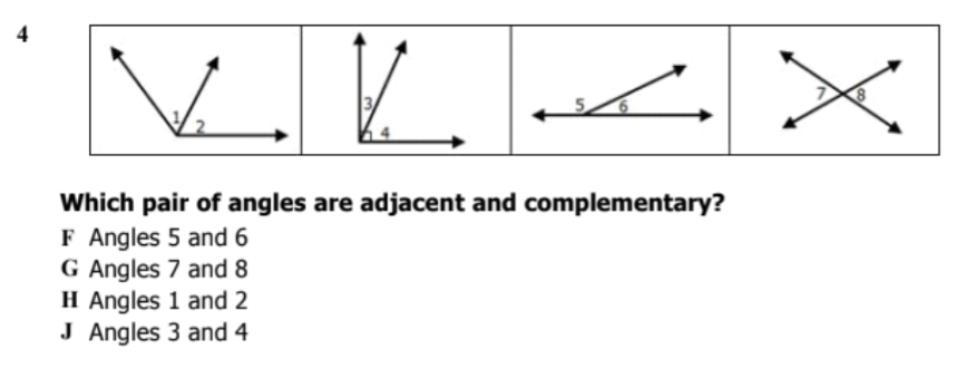
Which pair of angles are adjacent and complementary?
F) Angles 5 and 6
G) Angles 7 and 8
H) Angles 1 and 2
J) Angles 3 and 4
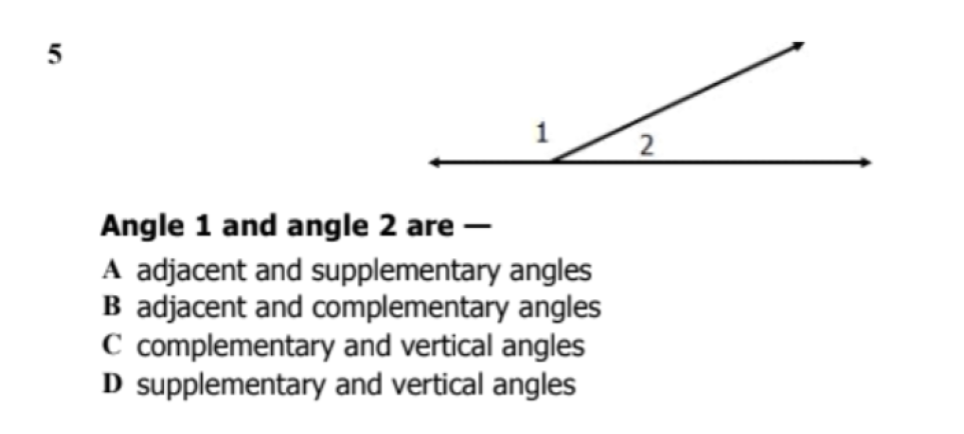
Angle 1 and angle 2 are --
A) adjacent and supplementary angles
B) adjacent and complementary angles
C) complementary and vertical angles
D) supplementary and vertical angles
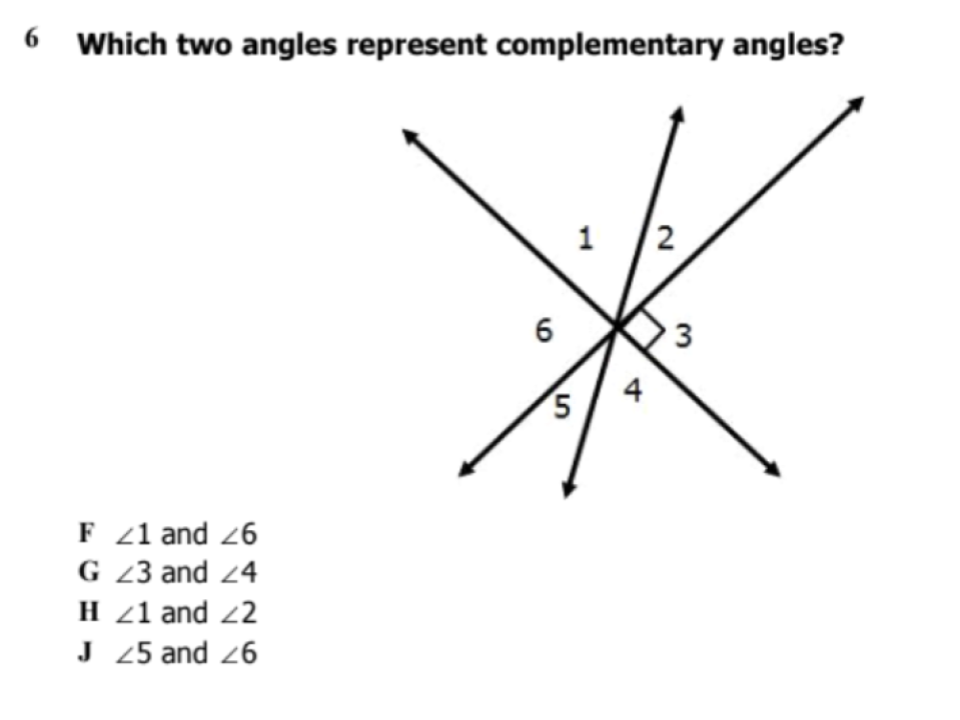
Which two angles represent complementary angles?
F) <1 and <6
G) <3 and <4
H) <1 and <2
J) <5 and <6
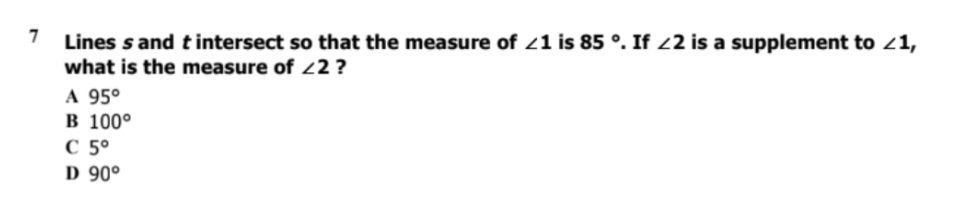
Lines "s" and "t" intersect so that the measure of <1 is 85*. If <2 is a supplement to <1 what is the measure of <2?
A) 95*
B) 100*
C) 5*
D) 90*