Asemmisa {{asɛmmisaAhyɛnsode}}
4.
Some of the biotic factors of this biome consist of huge populations of herbivores of different sizes (birds, rodents, zebras, buffaloes, wildebeest, gazelles, etc), as well as carnivores such as wild dogs, lions, leopards, eagles, and scavengers such as vultures, jackals, and hyenas. The dominant vegetation is grass. The abiotic factors are a mostly dry weather with big seasonal rains, a hot temperature, and occasional fires.
The previous paragraph is a description of which biome?
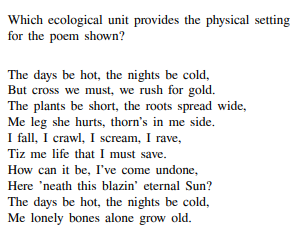
The following are non-living factors typically found on the desert biome:
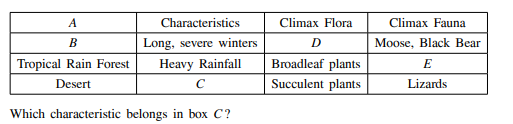
Receives less than 25 cm. of rain per year. Very dry and warm climate. Animals & plants store water to adapt to the lack of rain. Animals are active at night & plants have a thick & waxy covering.
Compare the Temperate Grassland vs the Savanna. Drag the correct descriptions under the correct biome. Number next to it is how many answers you should have! Watch out for the BOTH section!
fires and droughts
Great range of temperature
distinct wet and dry periods
nutrient poor soil for farming
temperatures remain high year round
prairie dogs/bison/rodents
near the equator
hot summers, cold winters
nutrient rich soils, good for farming
zebra/rhino/giraffe
grasses and no trees
grasses and some trees
primarily covered with grasses
adequate regular precipitation
Temperate Grassland (6)
BOTH (2)
Savanna (6)
Compare the Temperate Grassland vs the desert. Drag the correct descriptions under the correct biome. Number next to it is how many answers you should have! Watch out for the BOTH section!
extreme heat during the day, cools down at night
almost no rain
grasses and shrubs
rich soil
rattlesnake/kangaroos/camels
bison/prairie dogs/coyotes
grasses as the dominant vegetation
hottest biome
fire
hot summers/cold winters
most animals are nocturnal
high precipitation
plants have waxy layer and longer roots
hot summers
Temperate Grassland (7)
BOTH (1)
Desert (6)
Match the correct plants and animals to the correct biome.
only grasses, wildflowers, woody shrubs, free trees
coyote, jackrabbit, kangaroo rat, rattle snake, camel
giraffe, cheetah, wildebeest, lion, hippopotamus, elephant
bison, gophers, prairie dogs, coyotes, antelopes
grasses, cacti, arid-adapted trees and shrubs
purple needle grass, buffalo grass, sagebrush and some types of cacti
Temperate Grasslands
Savannas
Desert

What are Grasslands?
On what continent will you not find Grasslands?
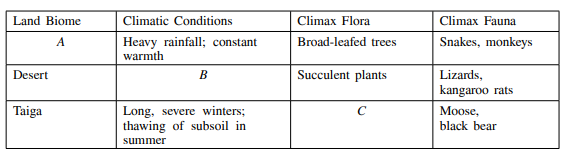
Which information should be included in Box B?
How much of the Earth's land is grassland?
Why does fire play an important role during the dry season?
What kind of bark have the trees developed?
What two things help keep trees from invading the temperate grasslands?