0
1
0
1
0
1
0
1
Skills on review here:
Number system notation and Forms of numbers: using forms of numbers to classify a number as a rational, irrational, integer
Exploration into the nature of Irrational Numbers
Simplification of surds, roots and radicals
Radicals addition, subtraction, multiplication and division
Rationalising the denominator
Absolute values
Absolute value equations
Which of the following is a rational number?
Which type of number is -8/3?
Simplify √12.
Simplify √72
Which expression is equivalent to √12?
Which operation(s) can be performed between radicals with the same index?
What is the result of √5 - √3?
What is the result of √12 + √27?
Simplify: sqrt(50) + sqrt(2) - sqrt(8) ÷ sqrt(2)
What is the simplified value of (5+sqrt(7))/(sqrt(7)-2)?
What is the rationalized form of 1/(√3-2)?
Which is the best way to rationalize the denominator?
What is the absolute value of -7?
Plot |x| = 5 on the number line.
Solve.
Simplify the following expression:
Simplify the following expression:
Simplify the following expression:
Put into simplest radical form.
Put into simplest radical form.
Which of the following is an irrational number?
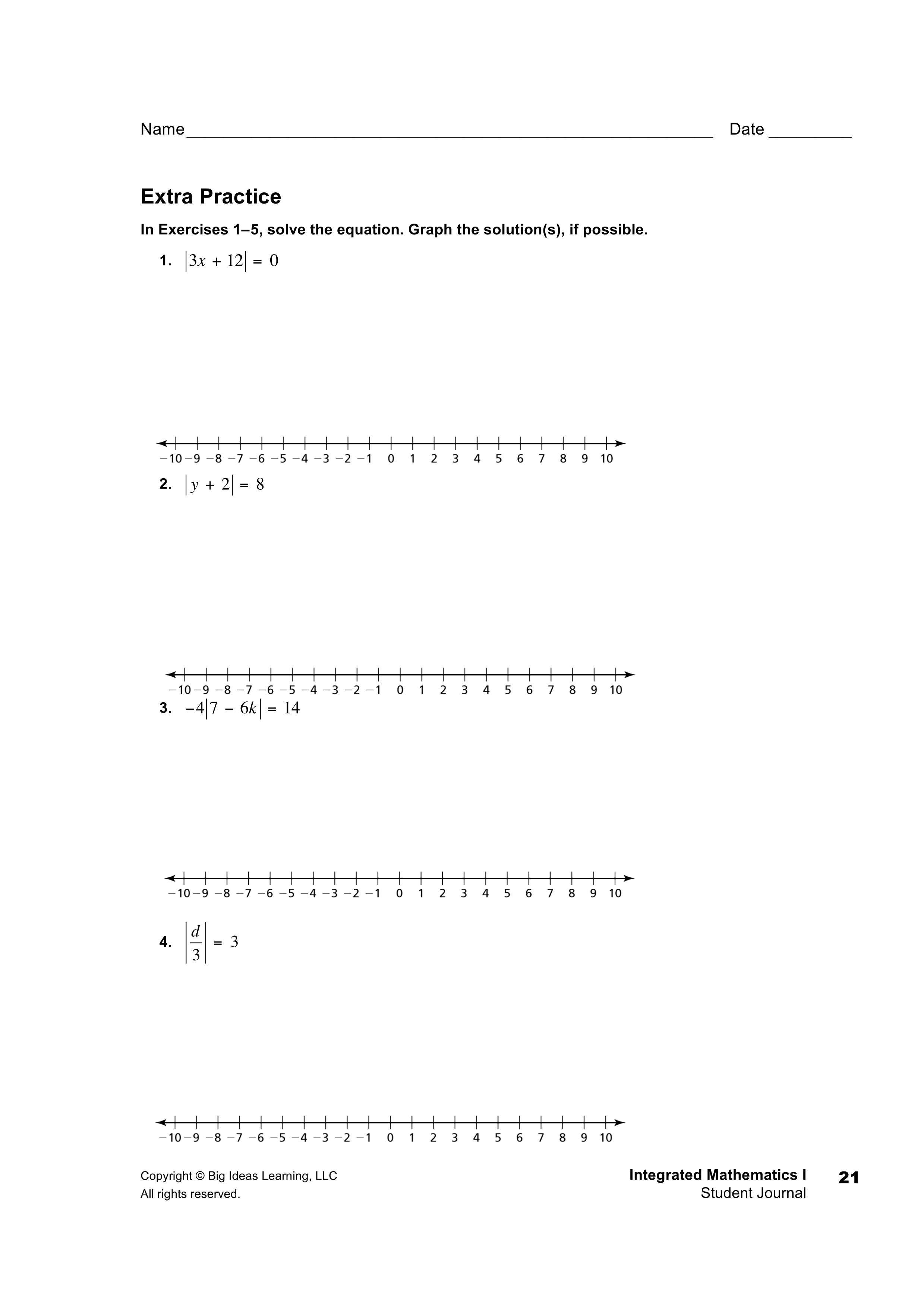
|3x+12|=0
|3x+12|=0
|y+2|=8
|y+2|=8
Write the answer in order of size e.g. -5, 5 (space after comma)
−4|7−6k| =14
−4|7−6k| =14
Write the answer in order of size e.g. -5, 5 (space after comma)